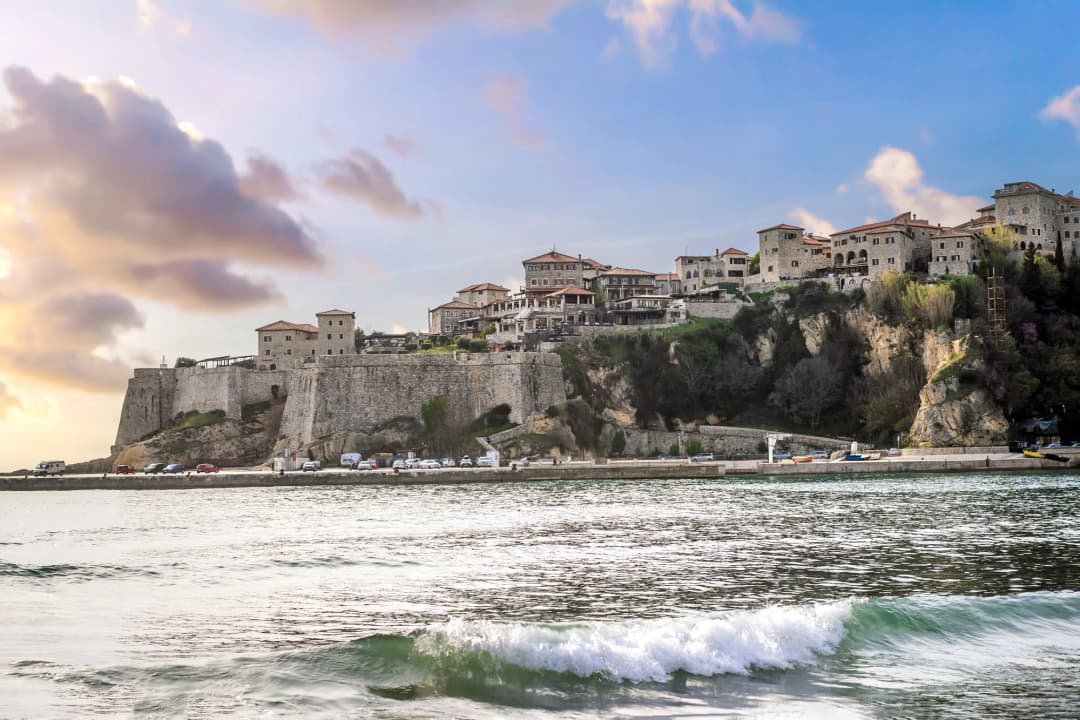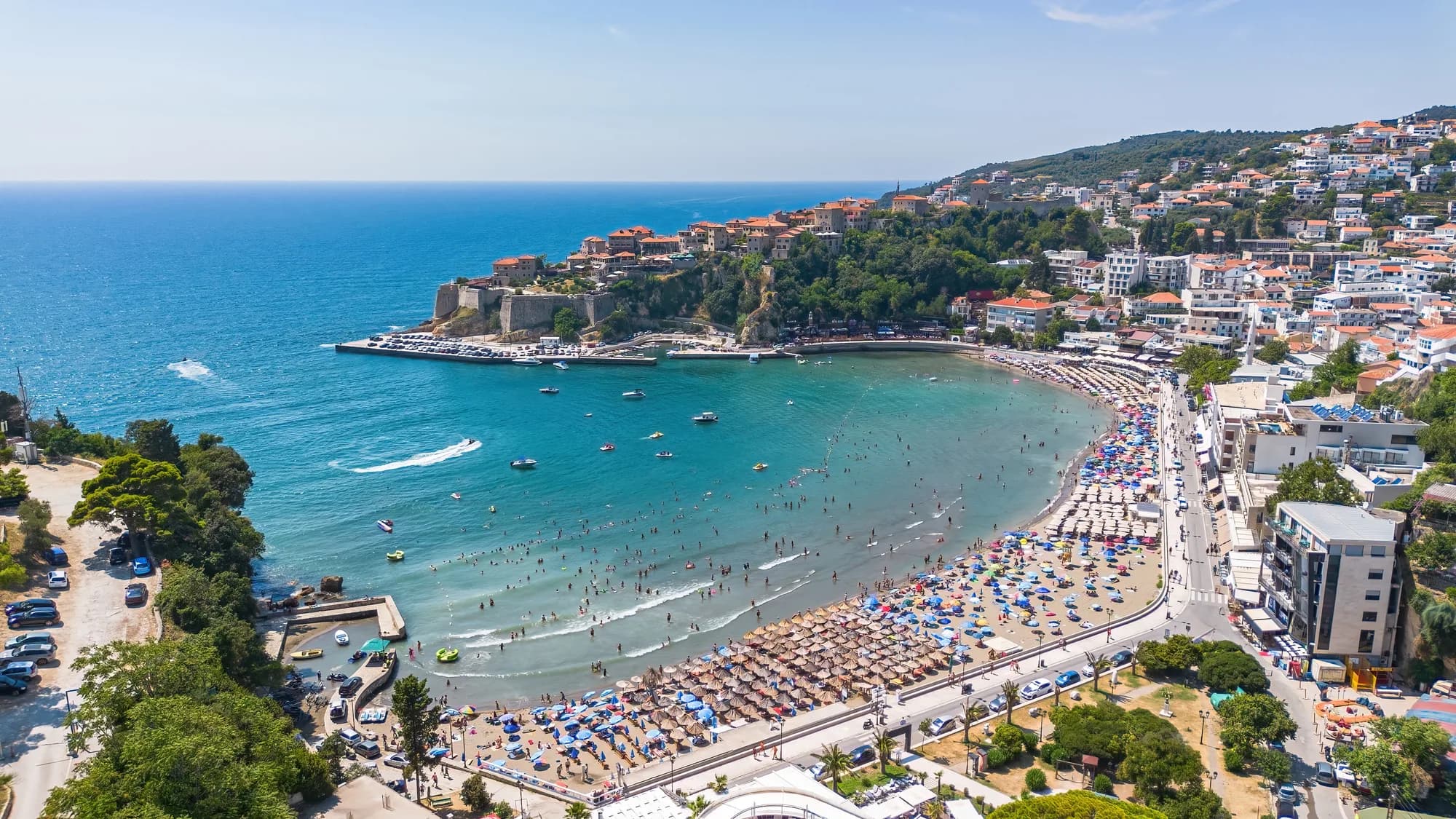
Just inside the gates of Ulcinj's Old Town opens a small stone square with a heavy past and a literary alias. For some two centuries under Ottoman rule this was the Square of Slaves — the marketplace where Ulcinj's corsairs sold the captives their ships brought home. Today the same space is called Cervantes Square, after the most famous prisoner it is said to have held: Miguel de Cervantes, author of Don Quixote. Whether he ever stood here is another matter — and the honest telling is better than the postcard version.
The corsair republic
First, the history that needs no embellishment. After the Ottoman conquest of 1571, Ulcinj became one of the Adriatic's most formidable corsair havens. Its sailors — joined over time by crews of North African origin — raided deep into the Mediterranean, seizing ships, cargo and, above all, people. Captives were ransomed when wealthy and sold when not, and Ulcinj's slave market operated on this square for more than two hundred years, one of the busiest on the Adriatic. A visible human legacy remained long after the trade ended: descendants of enslaved Africans lived in Ulcinj into the twentieth century, a small community whose presence made the town unique on this coast and whose story local historians have worked to document. None of this is legend; it is the hard commerce on which the town's famous seamanship partly ran, and Ulcinj is more honest than most former corsair ports in naming it.
The legend of the captive writer
Now the story the town loves best. In 1575 the young Cervantes — a soldier freshly distinguished at Lepanto — was captured at sea by corsairs under the renegade captain Arnaut Mami, and spent five years in captivity awaiting a ransom of 500 gold pieces. The Ulcinj legend holds that some of that captivity was served here: that the future novelist languished in the town's cells, sang Spanish serenades that drew local girls to their windows, and fell for a woman of Ulcinj whose memory he later smuggled into literature. The claimed evidence is a name: Cervantes' idealised beloved, Dulcinea, echoes Dulcigno — the Venetian-Italian name of Ulcinj. On this reading, Don Quixote's imaginary lady is a daughter of this very coast.
Here honesty must intervene: this is a legend, and historians place Cervantes' captivity firmly in Algiers. The documentary record — including ransom negotiations and his own escape attempts — locates his five years (1575–1580) in the corsair capital of North Africa, and mainstream Cervantes scholarship gives Ulcinj no verified role. The connective tissue is real but thin: Arnaut Mami was of Albanian origin, Ulcinj's corsairs sailed in the same networks as Algiers', and Dulcigno–Dulcinea is a genuinely seductive echo. A captured Spaniard passing through an Adriatic corsair port is not impossible; it is simply unproven, and the Dulcinea etymology is romance, not philology. Ulcinj's claim belongs to the Mediterranean's rich family of Cervantes legends — and the town, to its credit, mostly presents it with a wink.
Why the legend still earns its square
Yet the legend persists because it fits. Ulcinj really was the kind of place where a Cervantes could have washed up: a polyglot corsair town trading in exactly the human cargo he became. The story compresses a true history — captivity, ransom, the Mediterranean's brutal economy of chance — into one memorable face. Cervantes himself, who turned his real Algerian captivity into fiction more than once, might have appreciated a town improving its history with a good story. The square holds both truths comfortably: the documented slave market, and the invented prisoner who keeps its memory alive.
Visiting
Slave Square lies within the walled Old Town on Ulcinj's fortified headland, near the museum complex and the Balšić Tower; the citadel is a stage on the Pinjes Pines walk, which climbs from the shore to the ramparts. The square itself is freely accessible at all hours; look for the Cervantes memorials placed by local hoteliers and the interpretive plaques, then pair it with the Museum of Local History a few steps away, where the town's Ottoman and corsair centuries are laid out with artefacts rather than anecdotes. Come toward evening, when the day-trippers thin out, the stone glows, and the square is quiet enough to imagine both its histories — the one that happened, and the one it wishes had.