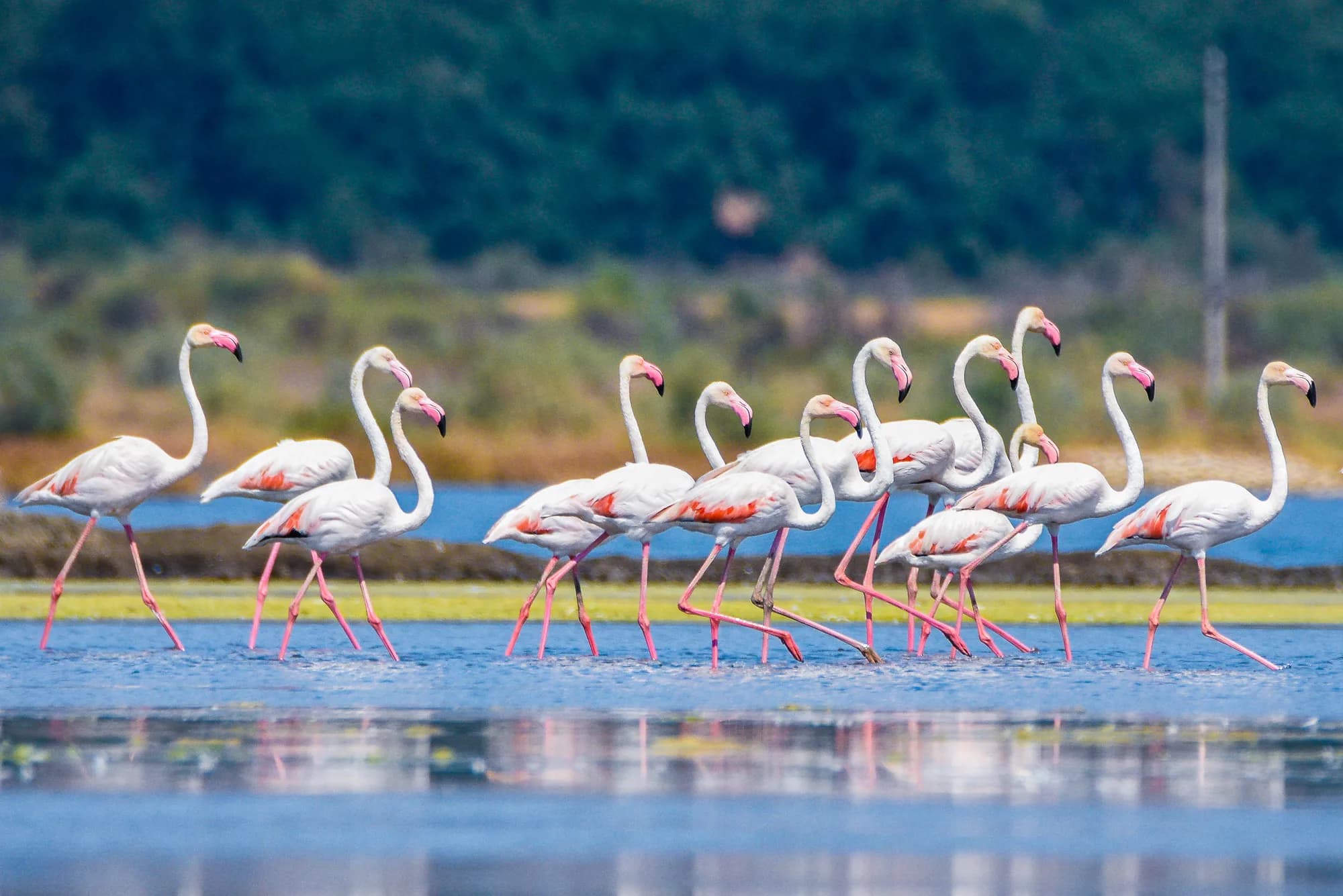
Just inland from Ulcinj's Velika plaža lies a vast chessboard of shallow basins, dikes and rusting salt machinery where, on a good spring morning, the pink of several hundred greater flamingos shimmers over the water. This is Solana Ulcinj — the Ulcinj Salina — nearly 15 square kilometres of former saltworks that has become one of the most important bird habitats on the entire eastern Adriatic.
Salt first, birds after
The salina is not a natural lagoon but an industrial landscape that nature adopted. The saltworks were built between 1926 and 1934 on a former lagoon by the Bojana delta, and for decades they were among the region's biggest salt producers: seawater was pumped through a cascade of ever-shallower evaporation basins until harvestable salt crystallised in the final pans. The genius of the system, ecologically, is that a working saltworks is a managed wetland — endless shallow, food-rich water of graded salinity, exactly what wading birds need. Workers made salt; birds made a living alongside them.
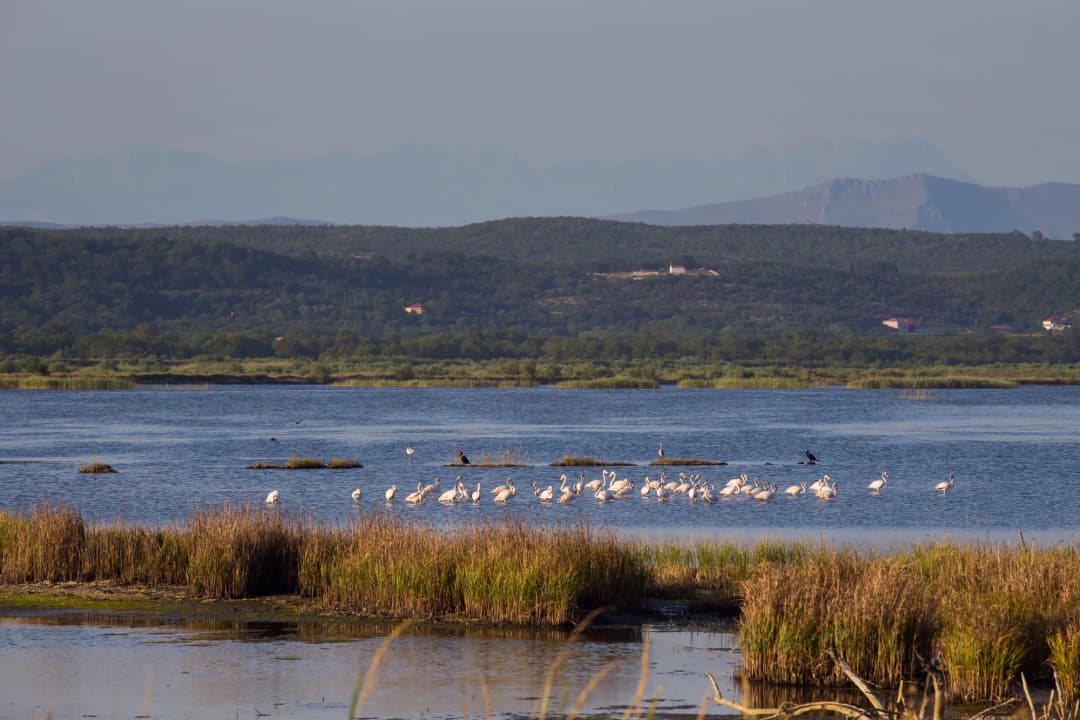
When salt production collapsed in the 2010s, the pumps stopped, the basins began to dry, and the whole ecosystem — by then internationally recognised — came under threat, with privatisation schemes eyeing the land for development. What followed was one of the Balkans' most heartening conservation stories: a long grassroots campaign by local activists and birders, backed by the German foundation EuroNatur and Montenegrin partners such as CZIP, with petitions, protests, international pressure and years of stubborn advocacy. It worked. In June 2019, the municipality declared Ulcinj Salina a Nature Park, giving it protected status for the first time in its history.
The airport of the Adriatic Flyway
Why does one former factory matter so much? Geography. Millions of birds migrating between Europe and Africa follow the Adriatic Flyway along this coast, and the salina is its great refuelling stop — conservationists call it the "birds' airport" of the flyway. More than 250 species have been recorded here, roughly half of all bird species found in Europe, from stilts, avocets and terns to raptors hunting the dikes.
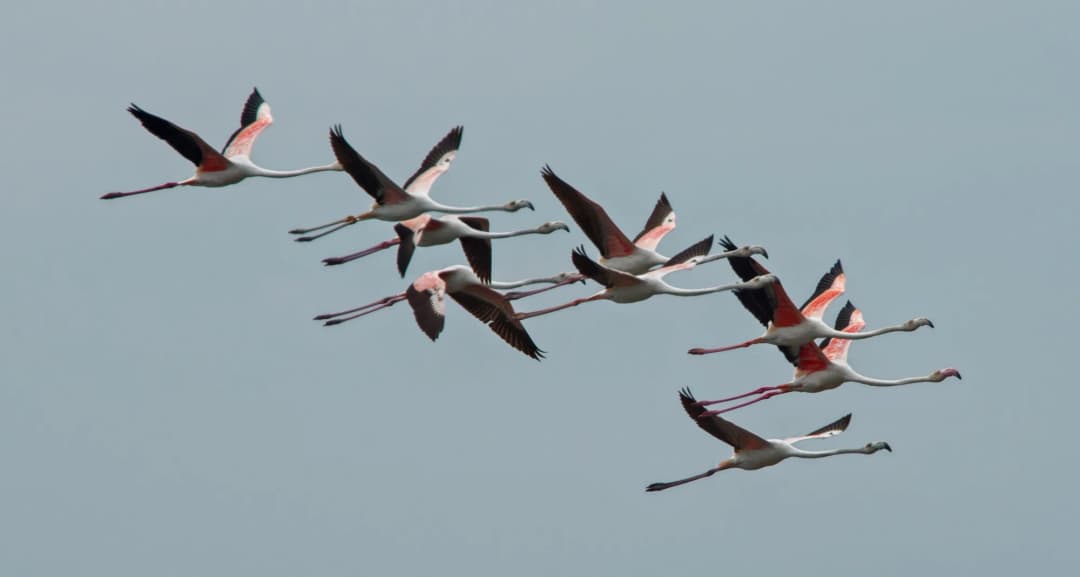
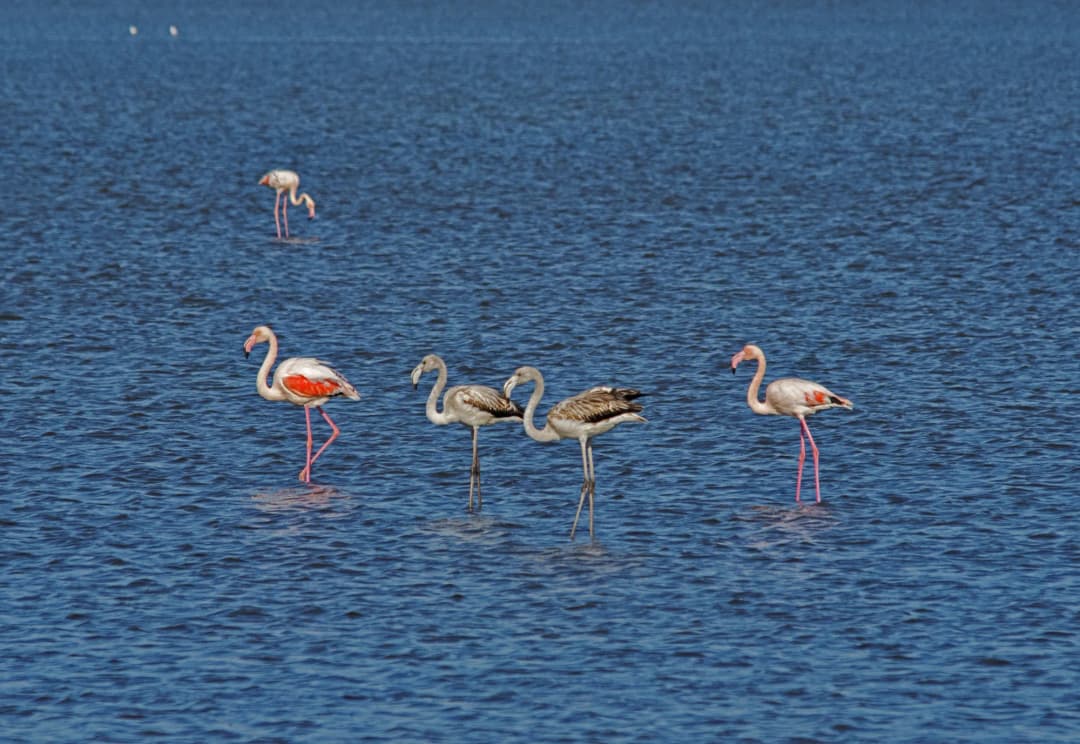
Two celebrities headline the cast. The greater flamingo has become the salina's signature bird — this is the only site on the eastern Adriatic coast where flamingos have nested, and some birds are present essentially year-round. And the globally threatened Dalmatian pelican, one of the world's largest flying birds, visits regularly, with flocks of up to a hundred recorded in autumn.
When to come and what you'll see
- March to June is prime time: migration peaks, breeding plumage is at its finest, and flamingos are at their most active in the nesting season.
- Mid-August to November brings the southbound migration and the big pelican gatherings.
- Early morning is best in any season — calm water, active birds, soft light and summer heat still hours away.
Bring binoculars if you have them; the basins are wide and the birds keep a sensible distance. Observation points along the embankments let you watch feeding flamingos without disturbing them, and local operators in Ulcinj run guided birdwatching visits that add expert eyes and access logistics. Even for non-birders, the landscape itself — mirror-flat water, salt-crusted timbers, Rumija's ridge on the horizon — is hauntingly photogenic. And the salt-making heritage is still legible everywhere: the grid of basins, the channels and sluice gates, the rail lines and rusting machinery of the old works all remain in place, an open-air industrial museum that happens to be full of birds. Conservationists hope that limited, bird-friendly salt production may one day resume, since it was the working of the pans that made the habitat in the first place.
Visiting
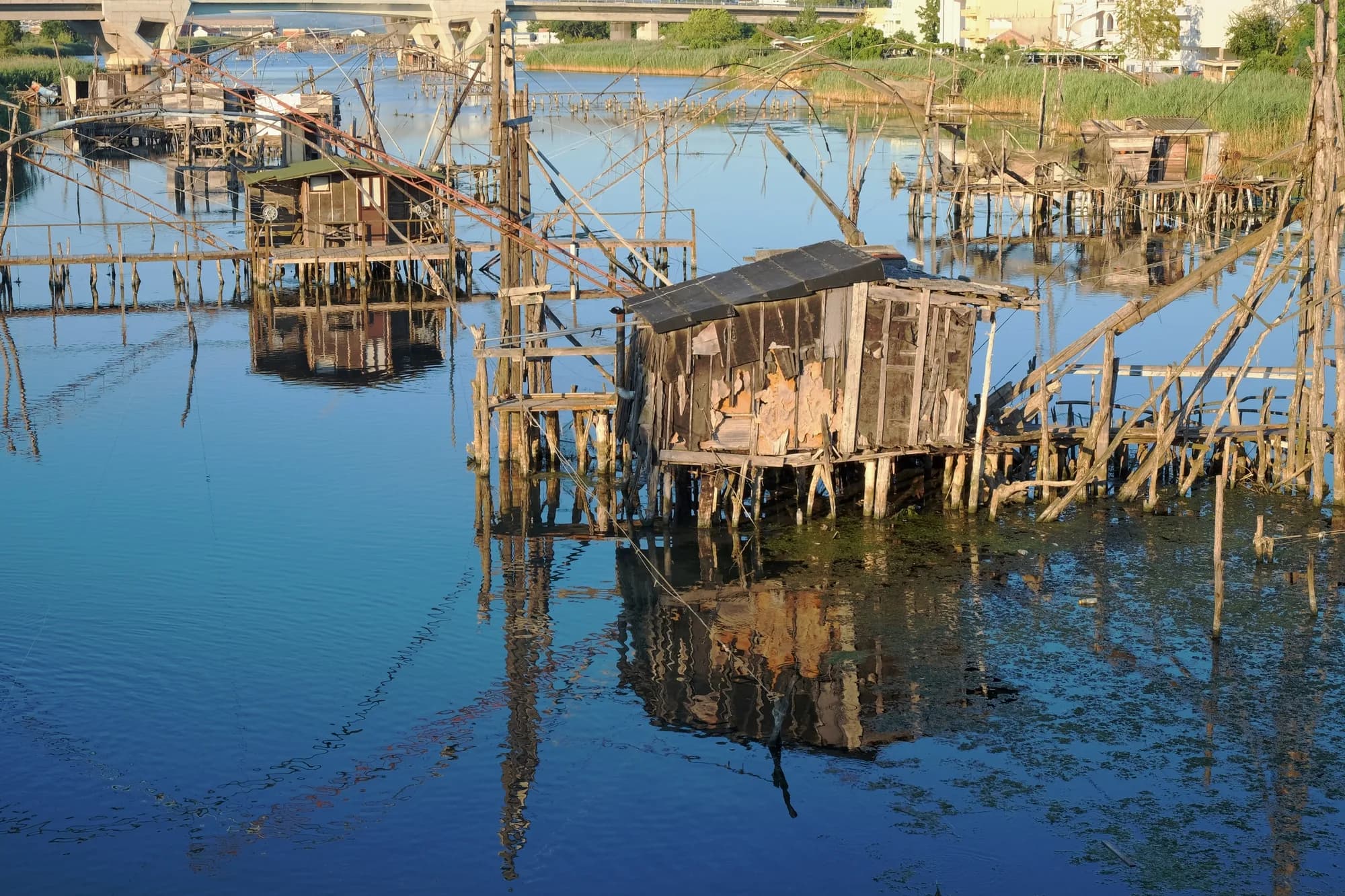
The salina lies a few kilometres east of Ulcinj town, its entrance near the Port Milena canal with its famous kalimera fishing cranes — the two make a natural pairing, and the canal is a stage on the Pinjes Pines walk, from which the salt flats and their birds are within easy reach. Check locally for current access arrangements and guided-tour times, as visitor infrastructure in the young Nature Park is still developing. Wear sun protection — there is almost no shade on the dikes — carry water, and give nesting birds a wide berth in spring. Come at dawn in May, when the flamingos feed in pink lines across the silver basins, and you will understand why a town fought for a salt factory.