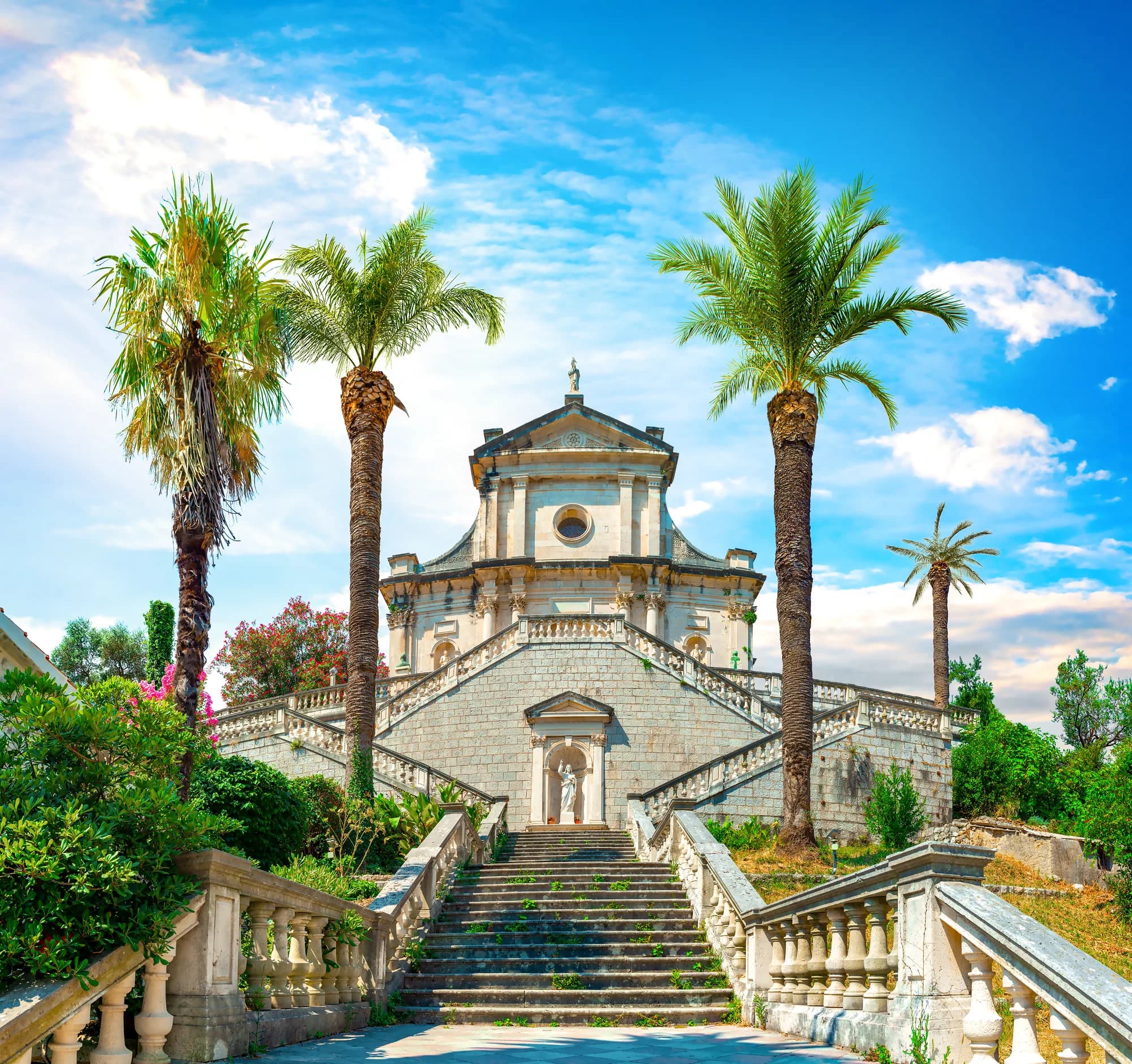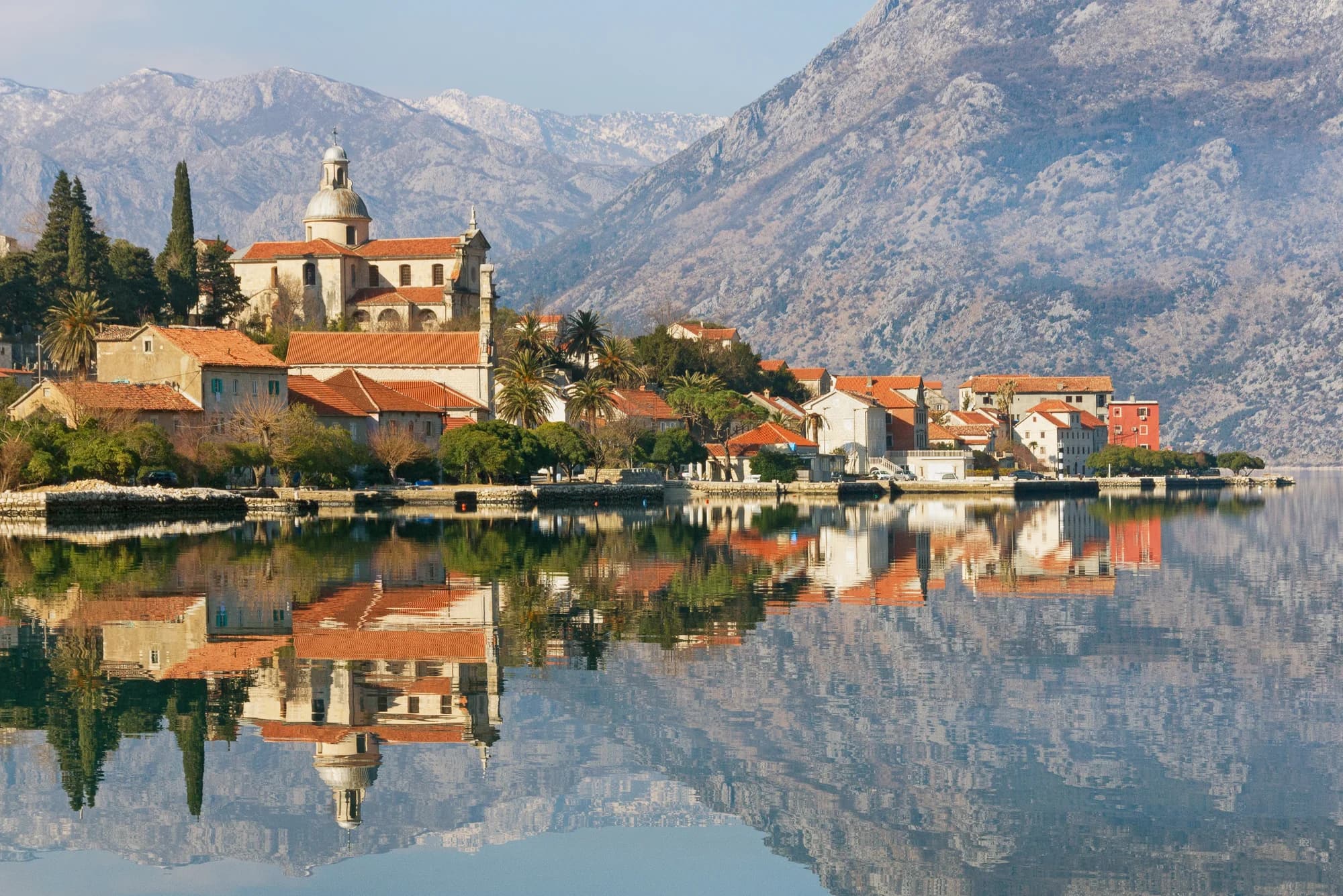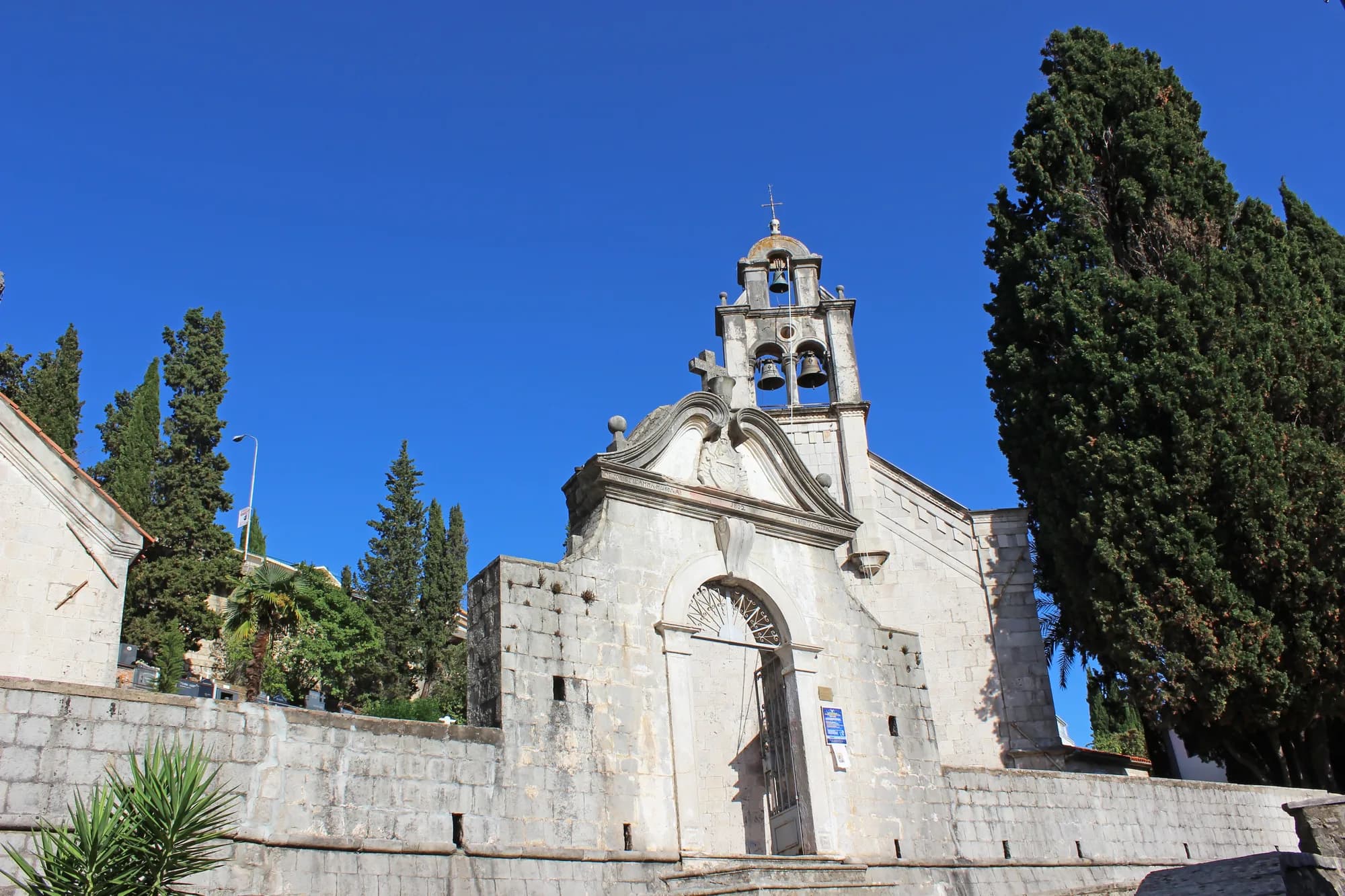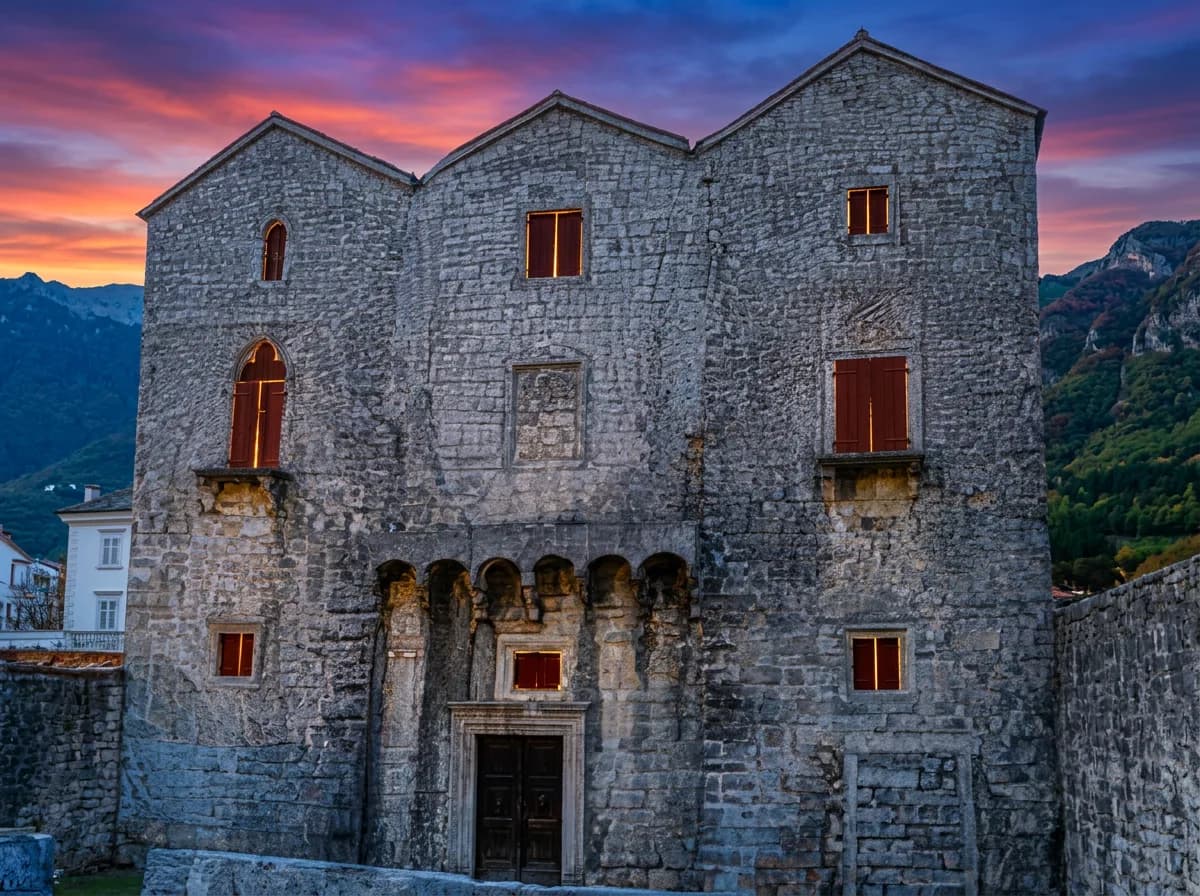
Walk the shore road out of Prčanj toward Muo and you pass it without ceremony: a low stone palace at the water’s edge in the hamlet of Glavati, its three near-identical sections standing shoulder to shoulder under three separate roofs. There is no ticket office and no interpretive panel doing the talking. What the building has instead is a name — Tre Sorelle, the Three Sisters — and one of the most retold legends on this coast.
What the record says
Strip the story away for a moment and the building is remarkable enough on its own. Tre Sorelle is dated to the fifteenth century and is generally described as the only fully preserved Gothic palace in the Bay of Kotor outside the walls of Kotor itself. Secular Gothic architecture is rare here; churches survived the centuries far better than houses did, which makes this modest seafront residence one of the most important civil monuments in the bay. It has been under legal protection as a cultural property since 1954.
The documents tie the palace to the Buća family, one of Kotor’s great noble houses, whose members served medieval Balkan courts as merchants, financiers and diplomats. The palace at Glavati was their summer residence, and their coat of arms can still be found in several places on the building. Intriguingly, the earliest written mention of the house, from the sixteenth century, already calls it Villa trium sororum — the villa of the three sisters. Whatever happened here, or whatever people believed had happened, the name is at least five hundred years old.
The legend
The story, as it is still told in Prčanj — especially by older residents — goes like this. Three sisters from a noble family lived in the house by the sea: their names change with the telling, sometimes Fiomena, Gracijana and Rina, sometimes Nera, Bjanka and Roza. All three fell in love with the same young sailor. In some versions he returned the love of one sister, and she, unwilling to wound the other two, renounced him; in the version most often repeated, he was simply a restless man who asked for time to decide, boarded a ship, and never came back.
The sisters waited. Each kept watch from her own window — one window for each of the three wings of the house — studying every sail that entered the bay. Years passed. As they aged, they made a pact: when one of them died, the others would wall up her window, so that if the sailor ever returned he would see from the water which of the sisters was no longer waiting. The eldest died and her window was sealed. Then the second. The last sister died alone, with no one left to close her window behind her.
Stand in front of the palace today and the legend does its work: the facade’s blocked and altered openings are pointed out as the sealed windows, and it is genuinely hard, on a quiet evening with the water slapping the shore, not to read the architecture as grief in stone.
Legend versus record
How much of it is true? Honestly: the documents confirm a Gothic summer palace of the Buća family with a very old three-sisters name, and nothing more. No archive names the sisters or the sailor; the versions contradict each other on the most basic points, which is usually the signature of folklore rather than chronicle. But dismissing it as “just a story” misses what the legend actually is. The tale of Tre Sorelle is recognized as part of Montenegro’s intangible cultural heritage — one of dozens of legends preserved around the Boka, and among the best known of them all. It encodes something the archives record only dryly: this was a coast of sailing households, where the men were at sea for years and the women watched the water. Prčanj’s whole shoreline of captains’ houses is a monument to that arrangement; Tre Sorelle is its myth.
What you’ll see
The palace is privately held and not open for visits, so this is an exterior stop — but a rewarding one. Look for:
- The three matching sections, each with its own roof — the architectural quirk that almost certainly seeded the legend.
- Gothic details in the stonework, rare survivors of their kind in the bay.
- The Buća coat of arms, carved in several places on the building.
- The walled-in openings that the legend claims as the sisters’ sealed windows.
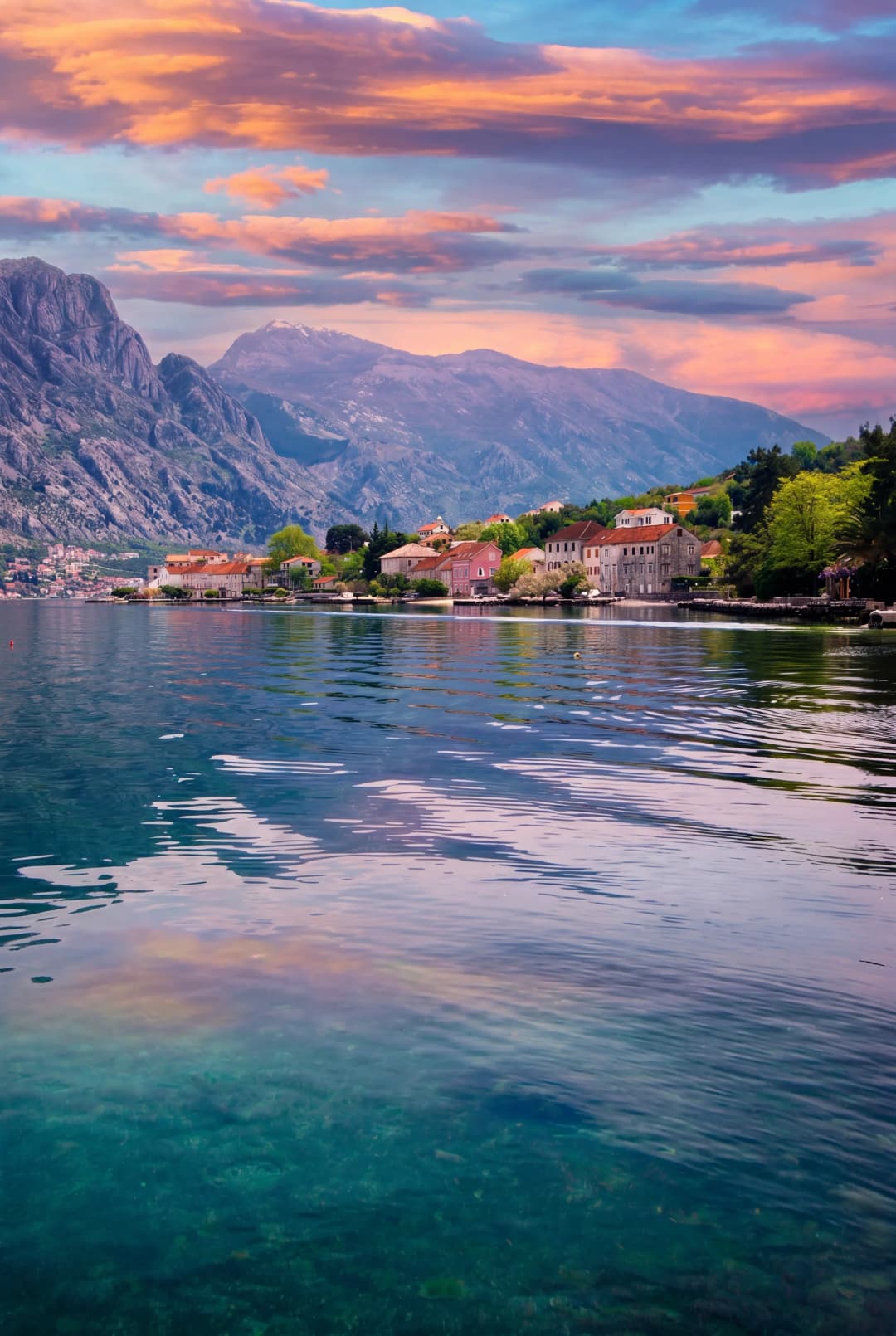
The setting matters as much as the stone. The palace faces the narrow channel between Prčanj and the Vrmac shore, with Kotor’s mountains stacked behind — the exact stretch of water the sisters are supposed to have watched.
Visiting
Tre Sorelle stands directly on the old shore road at Glavati, on the southeastern edge of Prčanj toward Muo, and the easiest way to reach it is on foot along the Boka shore road walk, which passes right in front of the facade. There is no entry and no fee — the palace is viewed from the road and the waterline. Come in the late afternoon or at dusk, when the light falls on the seaward front and the channel traffic dies down; it is the hour the legend seems written for. Ten minutes further along the shore, Prčanj’s captains’ houses and its enormous parish church continue the same story in a happier key.