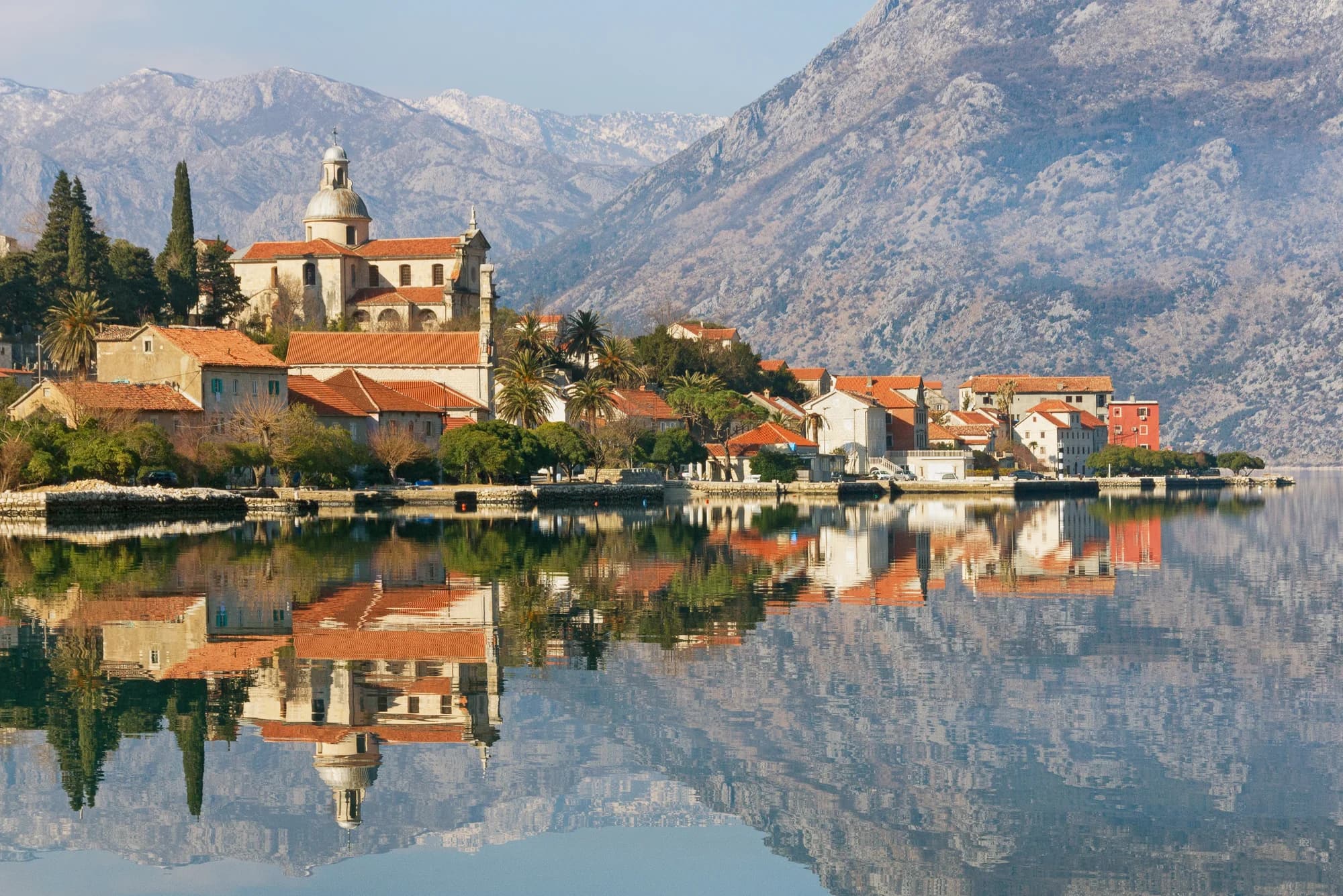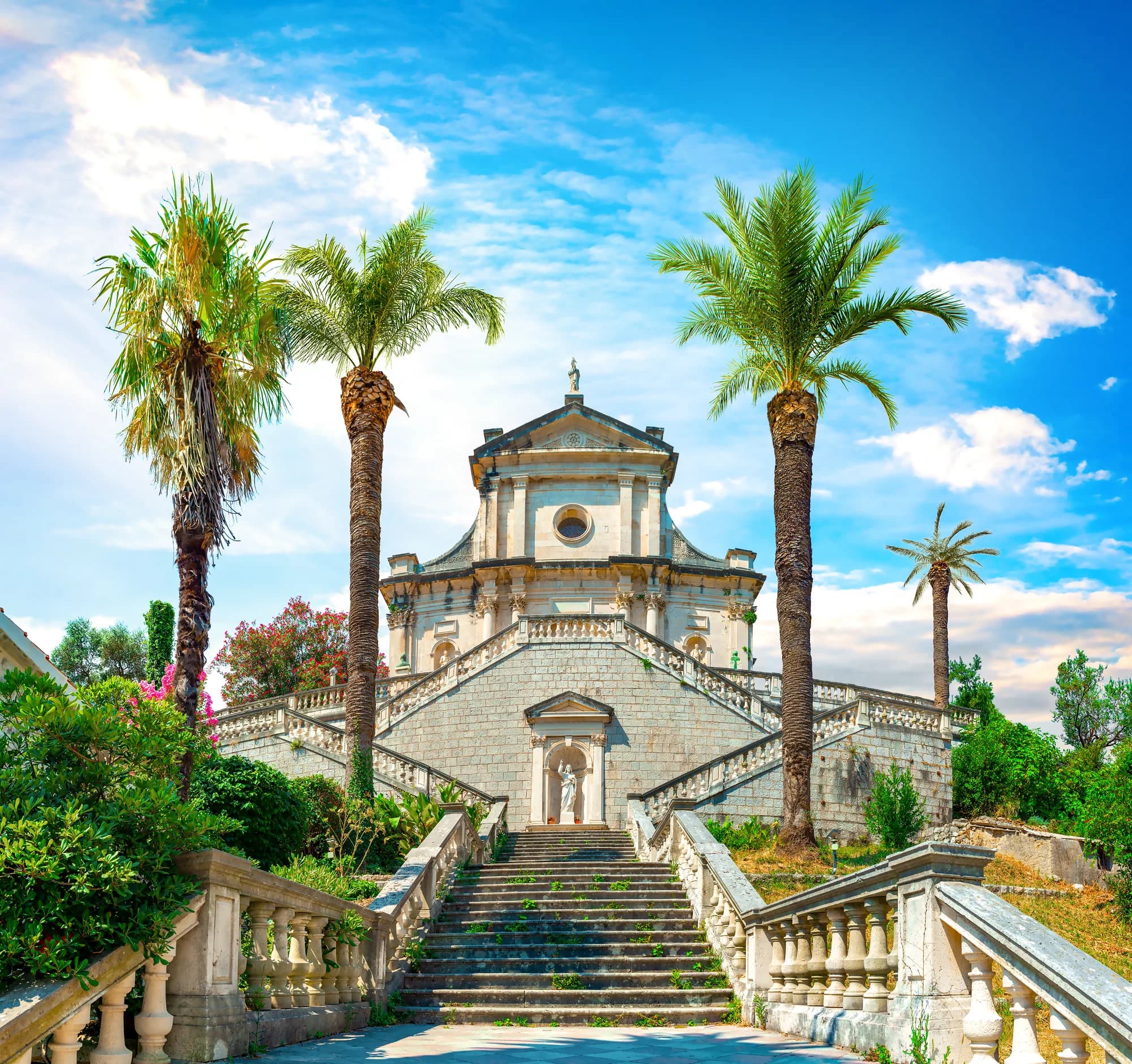
Nothing about Prčanj prepares you for its parish church. The village is a single ribbon of stone captains’ houses along the shore, home today to a few hundred people — and above it rises the Church of the Birth of Our Lady (Bogorodičin hram), by most accounts the largest sacred building in the Bay of Kotor, a domed basilica that would not look out of place in Venice. The disproportion is the whole point. This church is a statement, in cut stone, of what a tiny community of shipowners believed it was worth.
A 120-year vow
Construction began in 1789, to a design by the Venetian architect Bernardino Maccaruzzi — a monumental baroque conception with a grand staircase, dome and columned facade. Then history intervened. The fall of Venice, the Napoleonic wars and the collapse of the local economy halted the work, and the building stood interrupted for two generations, roughly from 1807 until 1867, before Prčanj’s recovering maritime fortunes revived it. The church was finally completed in 1909 — 120 years after the first stone.
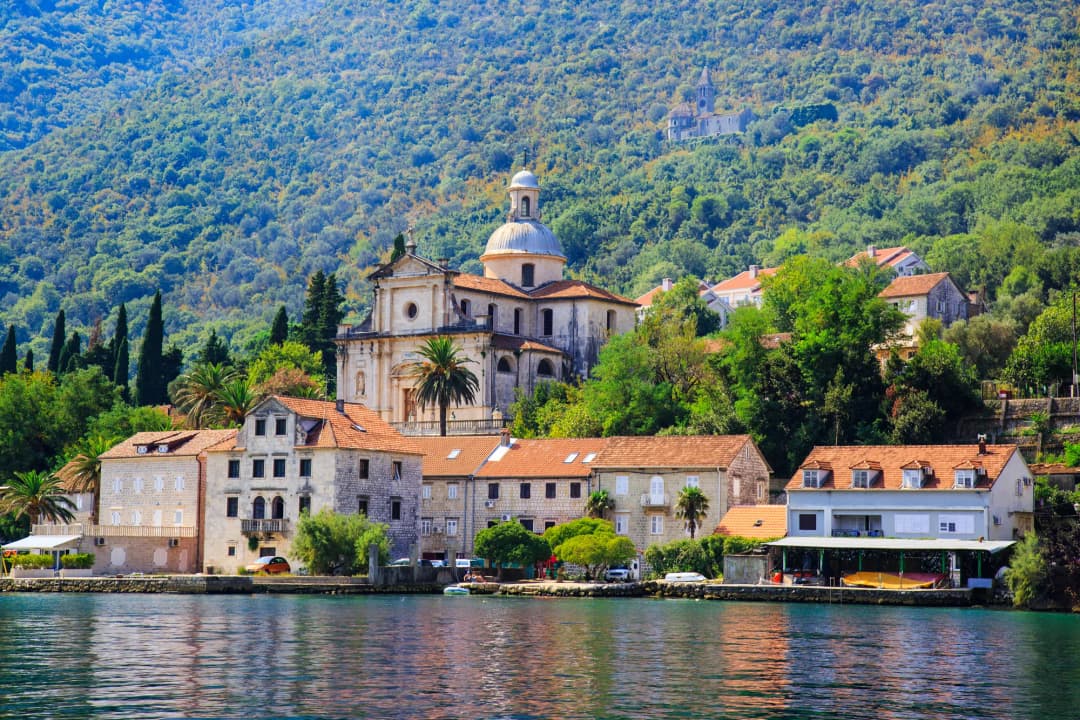
What makes the project extraordinary is how it was paid for. To finance the construction, Prčanj’s shipowners committed themselves to setting aside half of their profits toward the building costs. Every successful freight run to Constantinople or Alexandria, every cargo landed in Trieste, carried the church a little higher. It is hard to think of a purer expression of the old Boka bargain between the sea and the sacred: the community that lived by ships taxed itself, voluntarily and heavily, to raise a church visible from far out on the water.
The finishing flourish came from the other side of the Adriatic world’s stone-carving tradition: the monumental access staircase, built in 1912–1913 and often described as the grandest sea-approach stairway to any church on the eastern Adriatic, was carved in the workshop of Ivan Fabris on the islet of Vrnik near Korčula — the same quarries whose stone built Dubrovnik.
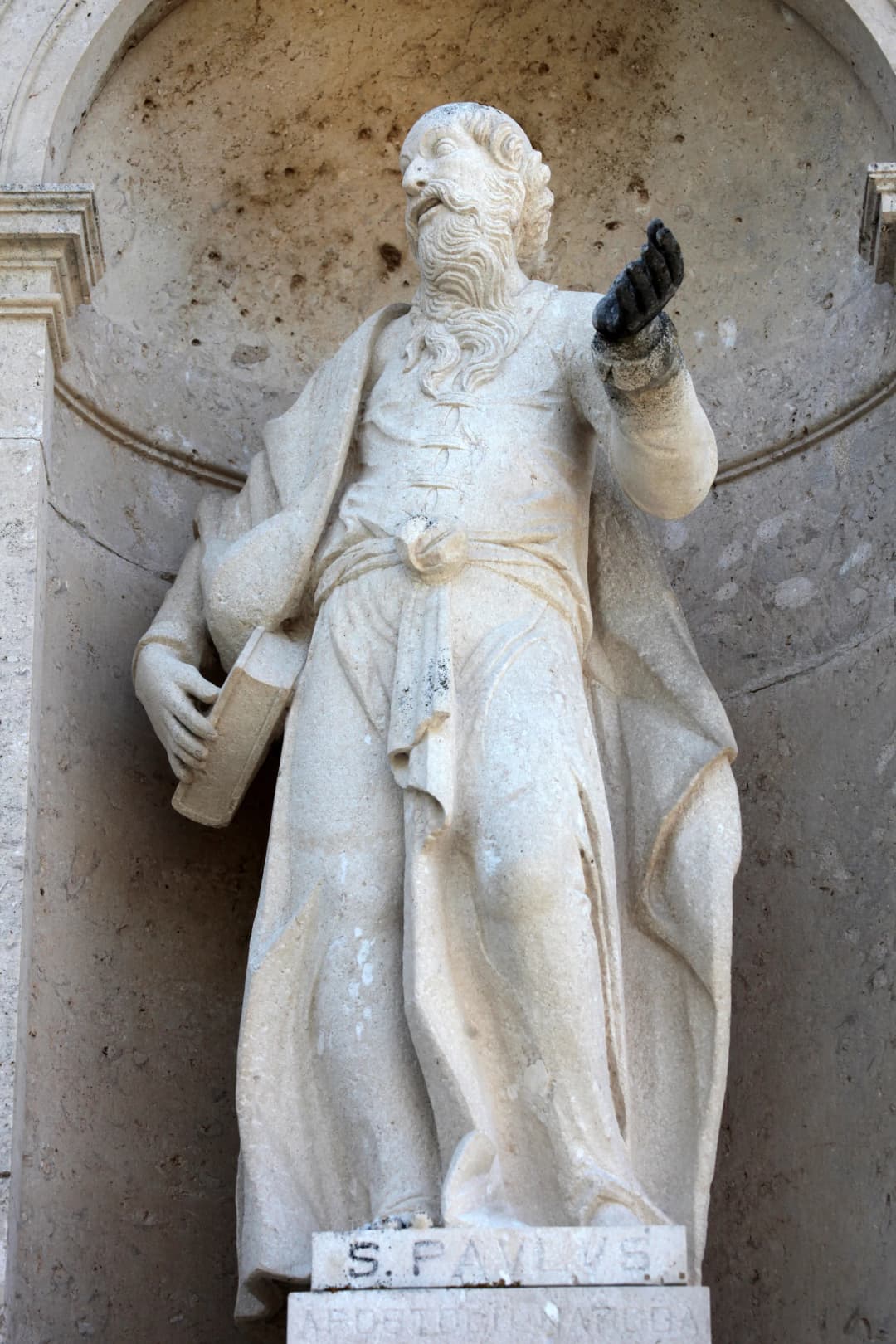
Inside, the church holds an art collection out of all proportion to the village at its feet — paintings and sculpture attributed to masters including Piazzetta and Balestra alongside later works, with pieces by the great Yugoslav sculptor Ivan Meštrović among them. Prčanj once had more votive plaques than even Perast; many were melted down to make the ornaments of the altar and sacristy, devotion recycled into devotion.
The captain in the treasury
One object in the church’s keeping outranks all the art: a flag. It belonged to Ivan “Ivo” Visin (1806–1868), a shipmaster born in Prčanj, and it is the Merito navali — the honour flag awarded to him by Emperor Franz Joseph for a feat no one from this part of Europe had accomplished before.
In 1852, Visin sailed from Antwerp in command of his own vessel, the Splendido, a brig of about thirty metres carrying 311 tonnes of cargo and a crew of eleven. What followed was not a sprint but a seven-year working circumnavigation: trading voyage stitched to trading voyage — around Cape Horn, across the Pacific, through the East — until the Splendido finally dropped anchor in Trieste in 1859, having logged, by the reckoning of the voyage, over 100,000 nautical miles. Visin had become the first South Slav to sail around the world, and local maritime historians rank him among the first handful of captains anywhere to circumnavigate as both master and owner of his own ship.
The imperial recognition — the Merito navali flag of honour — was an exceptionally rare distinction in the Austrian merchant marine, and Prčanj has guarded it ever since in the treasury of this church. That the village keeps its greatest secular trophy inside its greatest sacred building is, again, exactly the Boka way: in these communities the church was the archive, the museum and the memory of the fleet.
Reading the church from the shore
Seen from the waterfront, the basilica explains the whole village behind you:
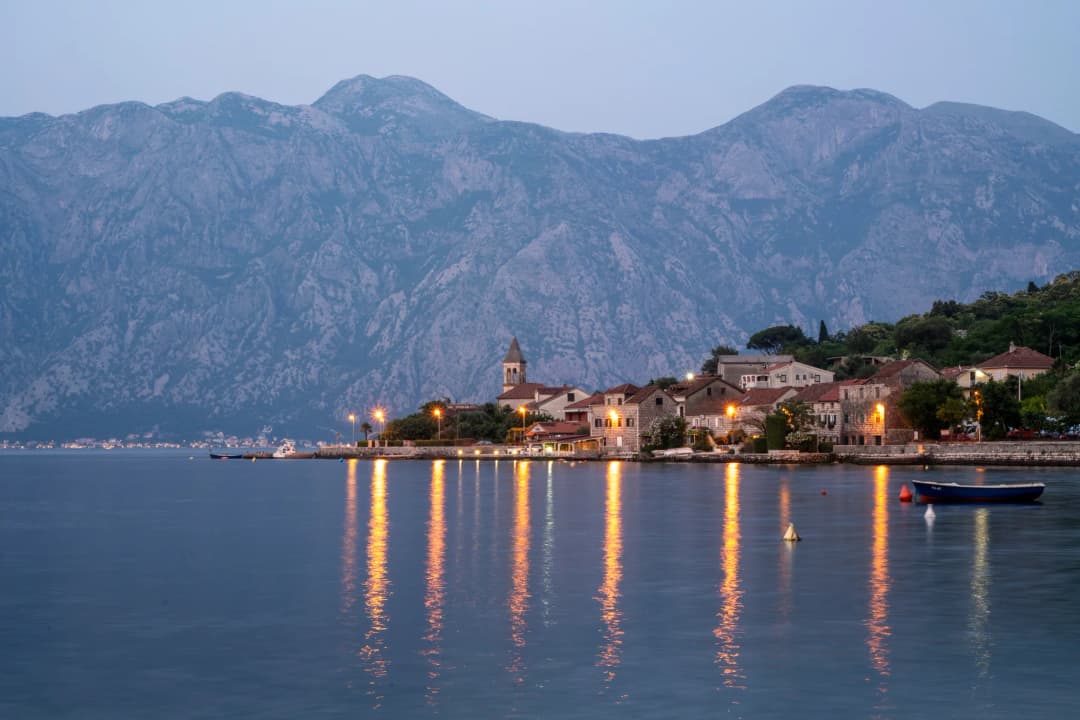
- The scale — a dome and facade sized for the sea horizon, not the street — announces a community that measured itself against Venice and Trieste, not against its neighbours.
- The staircase from the shore was built for arrivals by boat; the sea was the front door.
- The long construction pause is legible in the fabric — a baroque design of 1789 completed by hands of 1909.
- The treasury, with Visin’s flag, ties the building to the ships that paid for it.
Visiting
The church stands on the rise above the middle of Prčanj’s waterfront and is best reached on foot along the Boka shore road walk, which passes directly below it; from the shore you climb the great Korčula-stone staircase to the terrace, itself worth the stop for the view across the channel to Dobrota. Opening hours are irregular outside mass times, as in most Boka churches — mornings and early evenings in summer are your best chance to find the interior and treasury open, and a small donation is customary. Even closed, the terrace and staircase are freely accessible at any hour; come in late afternoon, when the west light hits the facade and the bay below turns to metal.