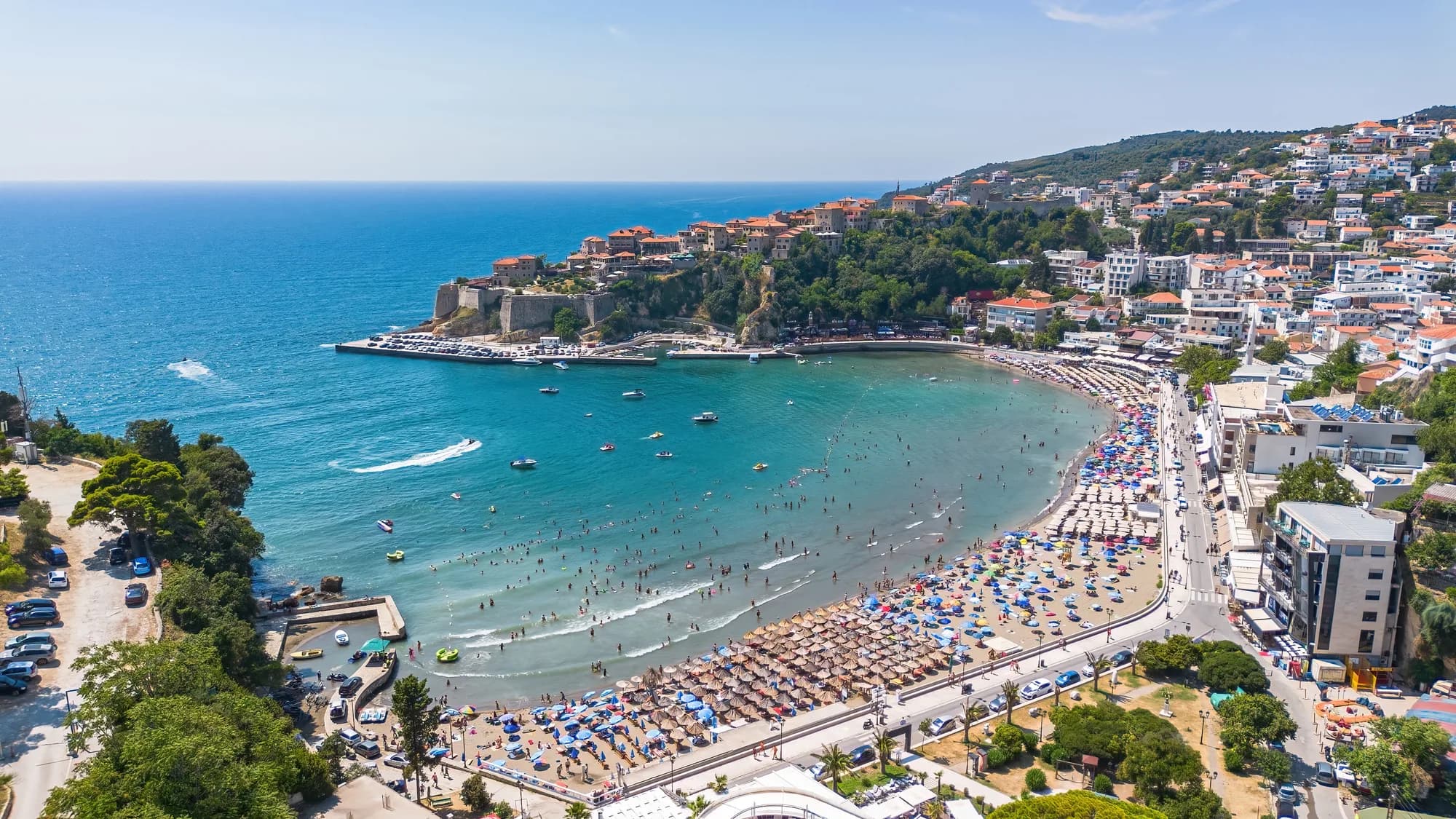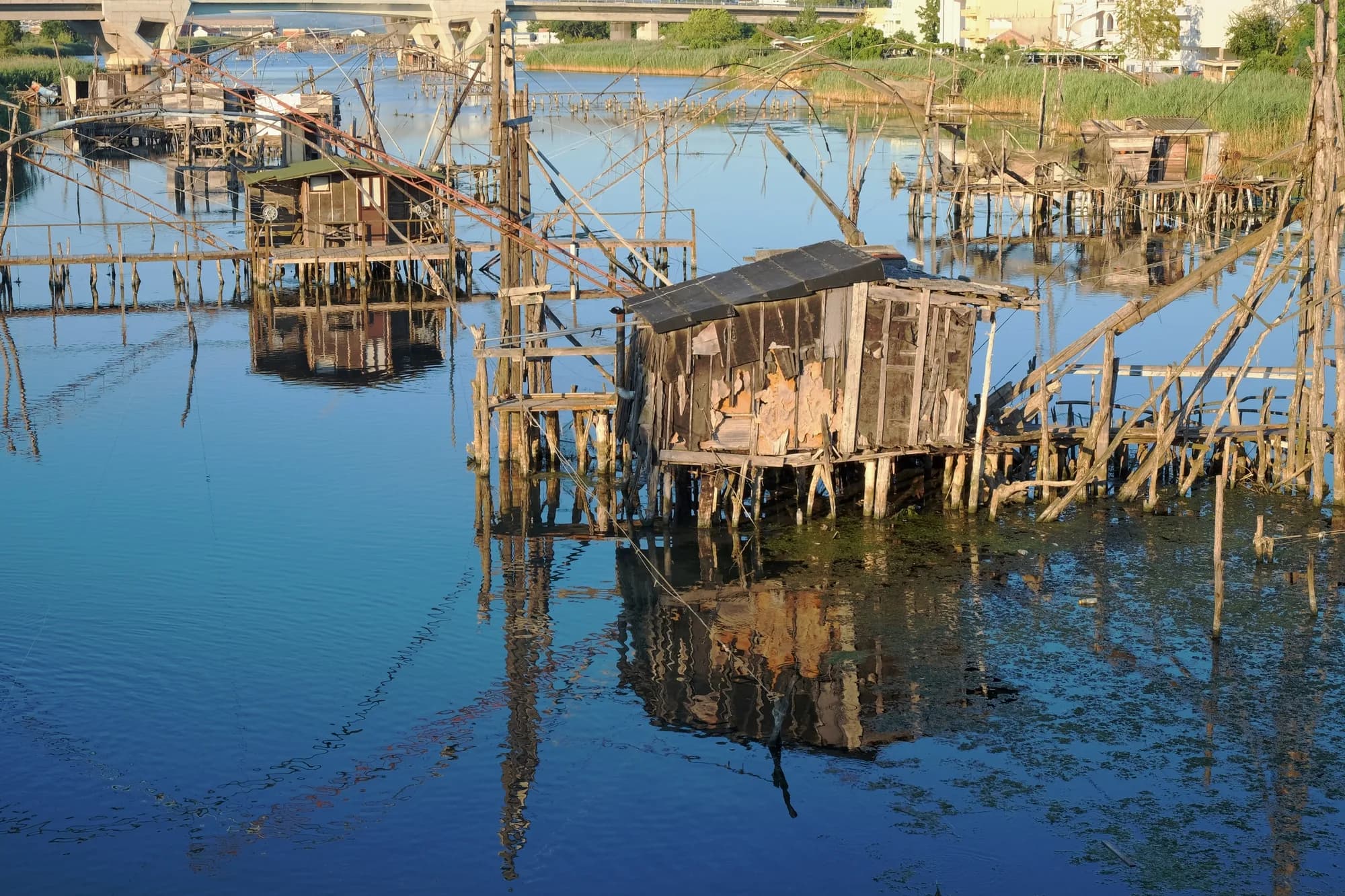
South of Ulcinj, where the road runs out toward Velika plaža, a canal cuts through the flatland to the sea — and along its banks stands one of the strangest and most photogenic sights in Montenegro: rows of wooden huts on stilts, each extending a long counterweighted boom over the water with a great square net slung beneath it. These are the kalimeras of Port Milena, and they are working monuments — a fishing technology that has outlived the empire, the kingdom and the country it was born under.
A canal fit for a queen
The canal itself is a piece of nineteenth-century engineering. Completed in 1885, only a few years after Ulcinj joined Montenegro, it was designed by the court engineer Vladimir Varman to drain the malarial waters of Zogaj lake into the Adriatic. Prince Nikola gave the new waterway its name in the most direct way possible, declaring that it would be called after his wife — Princess, later Queen, Milena Petrović-Njegoš. The gesture stuck: nearly a century and a half later, fishermen still tie up along a canal that carries a queen's name.
The drainage scheme had an unplanned dividend. The brackish channel became a superb fish highway — mullet, sea bass and eels moving between the lagoon system and the open sea — and for decades Port Milena was famed as one of the richest fish nurseries on this part of the Mediterranean.
How a kalimera works
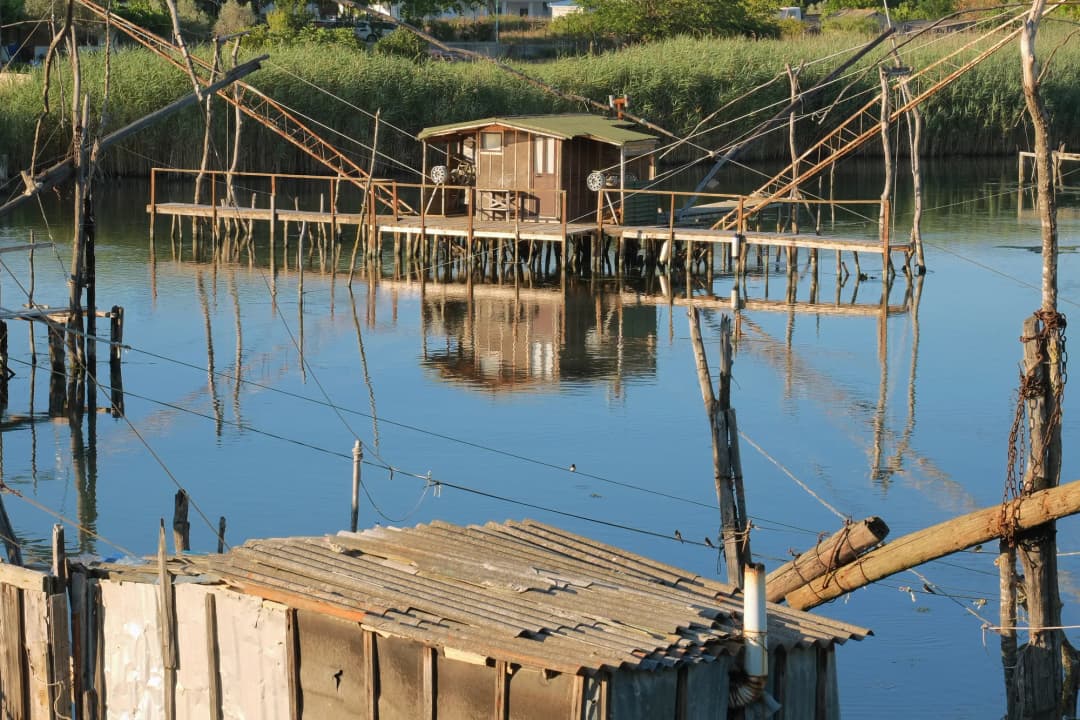
The kalimera is a beautifully simple machine. A timber hut on stilts anchors a long lever arm — a crane — from whose end hangs a large, horizontal square net, held open by crossed spars. The fisherman lowers the net flat to the canal bed and waits. Fish moving with the tide or current pass over it; then, with a haul on the counterweighted arm (traditionally by winch and muscle), the net rises quickly beneath them, lifting the catch clear of the water. No hooks, no chase — just patience, timing and an intimate knowledge of when the fish run. Whole families kept their kalimeras for generations, the huts doubling as summer kitchens, tool sheds and social clubs on stilts. The name itself, pleasingly, sounds like the Greek greeting kaliméra — "good morning" — fitting for a device whose best hours are dawn.
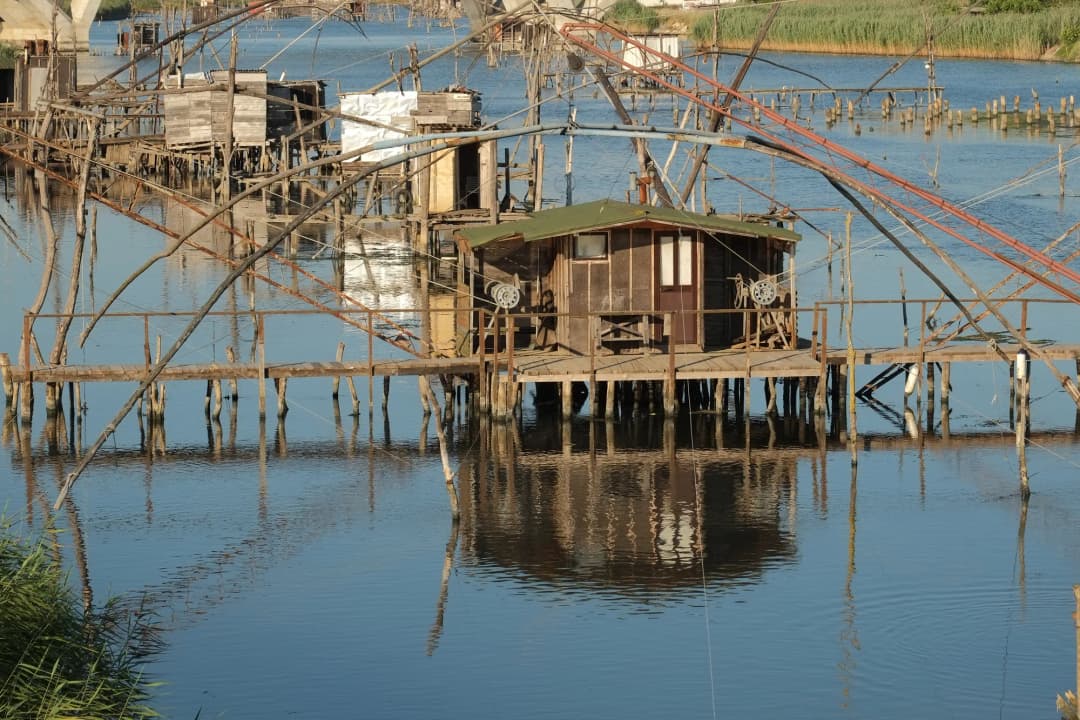
The tradition's cultural weight was formally recognised in 2017, when Montenegro's heritage authorities declared fishing with kalimeras an intangible cultural asset — an official acknowledgement that these odd wooden birds on the waterline are as much a part of Ulcinj's identity as its stone ramparts.
Decline, honestly told — and a slow revival
It would be dishonest to paint Port Milena as untouched idyll. Through the late twentieth century the canal suffered badly: untreated wastewater found its way in, flows weakened, and the once-famous fishery deteriorated along with the water quality. Many kalimeras fell derelict, their nets rotted, their huts sagging into the reeds — sad, beautiful wrecks that photographers loved and fishermen mourned. In recent years the tide has begun, slowly, to turn: cleanup initiatives, infrastructure work and the renewed attention that came with the neighbouring salina's protection have started to restore some of the canal's old life, and huts and cranes have been repaired as owners sense the place has a future again. It is a work in progress, and visitors should expect a landscape that is part living tradition, part restoration project — which is, in its way, the truthful version of most heritage.
Visiting
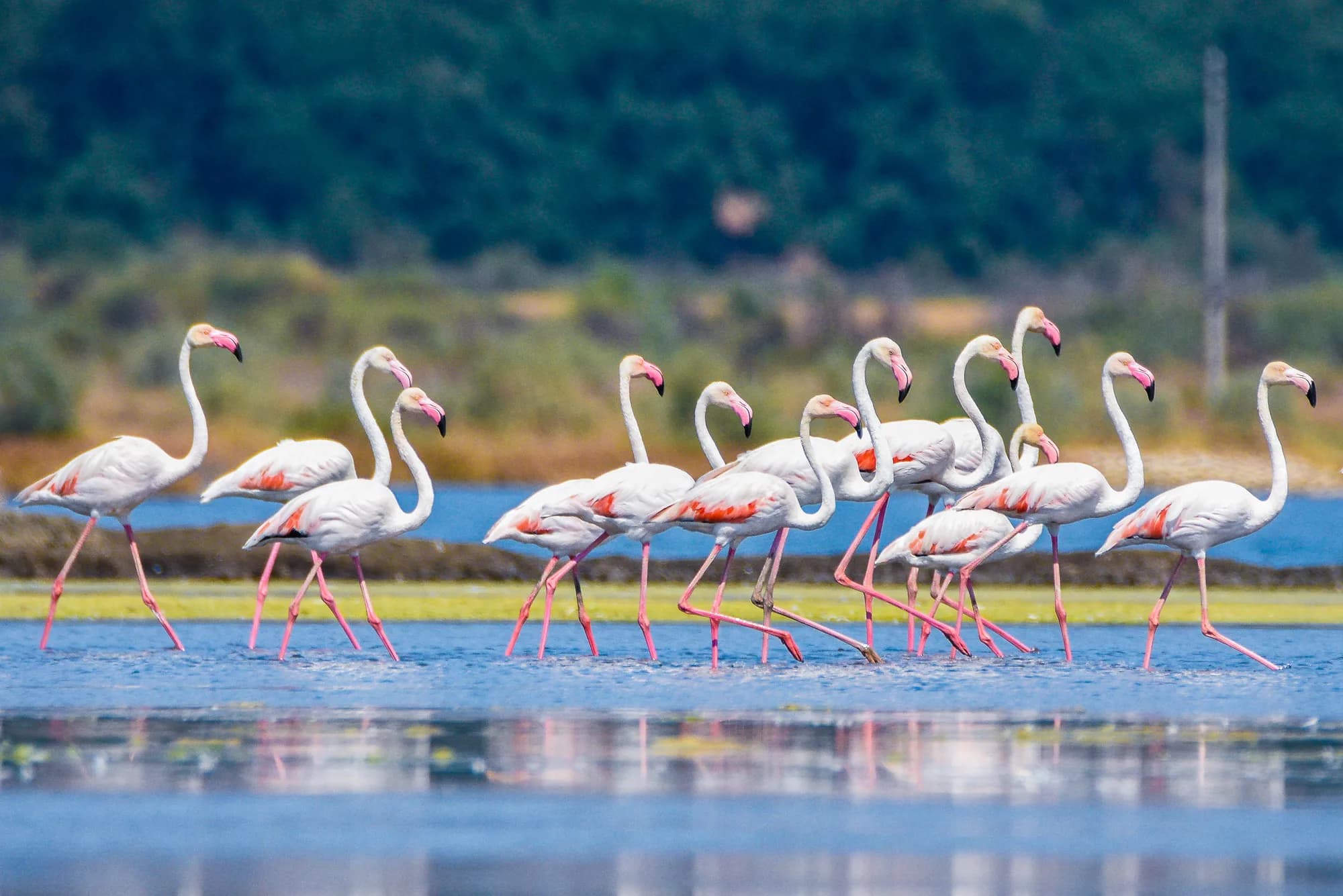
Port Milena lies an easy walk or short drive southeast of Ulcinj's centre, on the way to Velika plaža and the Ulcinj Salina — the canal and its cranes form a natural stage of the Pinjes Pines walk, which drops down from the pinewood ridge to the waterline. The best light is early morning or the last hour before sunset, when the kalimeras stand in black silhouette against burning water and you may catch a fisherman actually working his net. There is no ticket and no gate; this is a lived-in place, so photograph the huts freely but treat them as the private property they are. Pair the visit with the salina's flamingos next door, then finish with grilled fish in a canal-side konoba — caught, if you are lucky, by the very contraption you have been admiring.