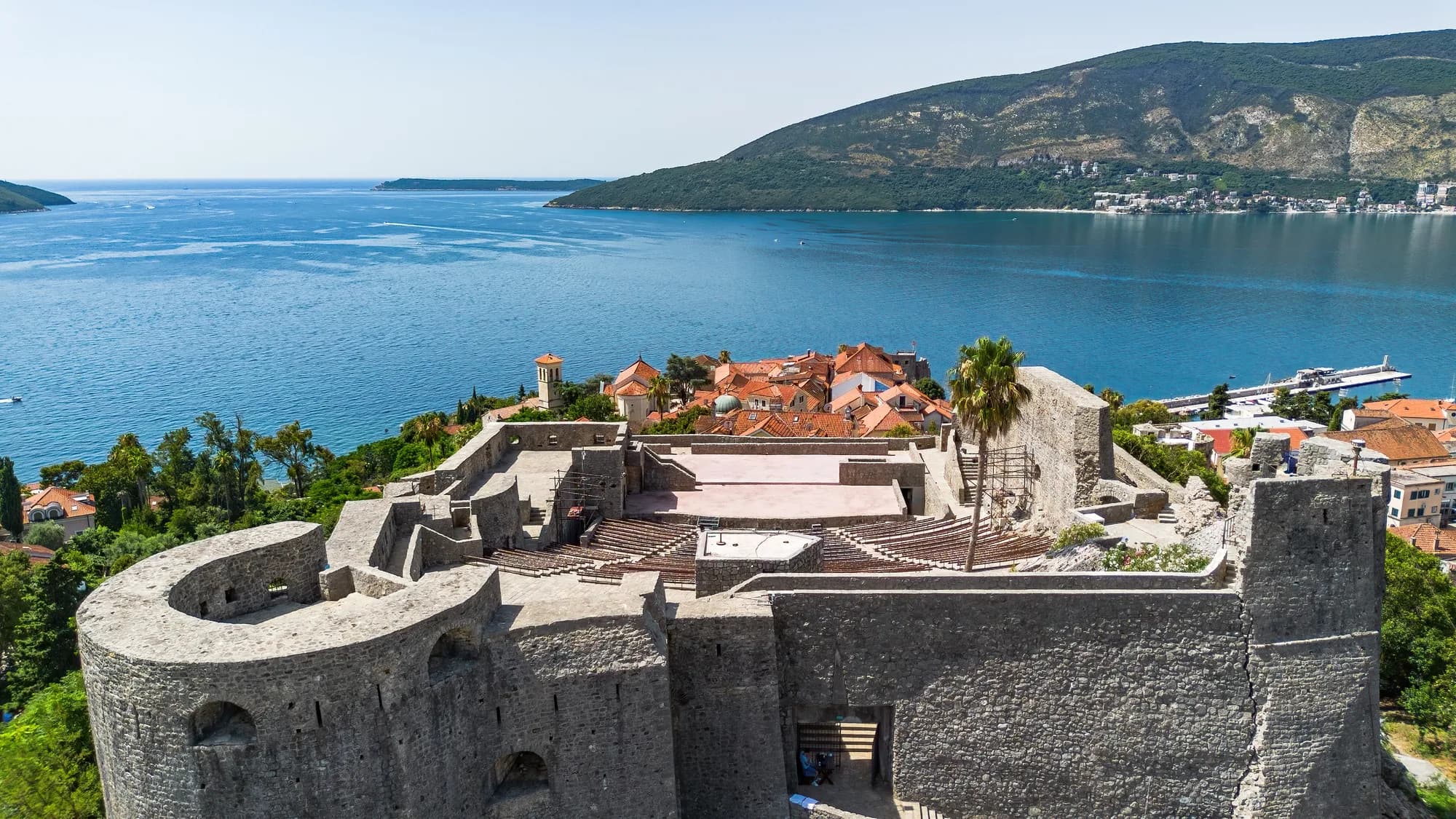
Herceg Novi is a town built on a slope so steep that its main streets are staircases, and at the top and bottom of all those stairs stand two fortresses. Above the old town, massive and windowless, rises Kanli Kula — Turkish for “bloody tower”, a name it earned honestly. Below, on a rock washed by the open sea, sits Forte Mare, the “sea fortress”, whose oldest stones go back to the founding of the town itself. Between them lies five and a half centuries of sieges, occupations and changes of flag that few towns anywhere on the Mediterranean can match.
A town founded as a fortress
Herceg Novi began not as a fishing village that slowly grew, but as a deliberate act of state. In 1382 the Bosnian king Tvrtko I Kotromanić, squeezed by Venetian and Ragusan control of the salt trade and unable to take Kotor, founded a new fortified port at the entrance to the Bay of Kotor to give his kingdom its own outlet to the sea. The fortress guarding the landing was the ancestor of today's Forte Mare. The settlement was at first called Sveti Stefan, then simply Novi — “the new town”. Its lasting name came in the mid-fifteenth century from Herceg (Duke) Stjepan Vukčić Kosača, the powerful Bosnian magnate whose title also survives in the name Herzegovina: Herceg Novi is, literally, “the Herceg's new town”.
Ten flags in five hundred years
What followed was a parade of rulers extraordinary even by Balkan standards. After a century of Bosnian rule, the Ottomans took the town in early 1482. In 1538 a Holy League fleet seized it and installed a Spanish garrison — and in the summer of 1539 the Ottoman admiral Hayreddin Barbarossa arrived with an enormous fleet to take it back. The Spanish tercio of roughly 3,500 men under Francisco de Sarmiento refused terms and was wiped out almost to a man; the siege of Castelnuovo, as the town was known in the West, became legendary in Spanish Golden Age literature as a byword for doomed courage. The Ottomans then held Novi for a century and a half, until a Venetian-led army finally took it in 1687. Venice ruled until the Republic itself fell in 1797, after which the town passed in bewildering succession to Austria (1797), Russia (1806), Napoleonic France (1807), a brief joint Montenegrin administration (1813), and then Habsburg Austria again from 1814 until 1918, when it entered Yugoslavia. Count the flags — Bosnian, Ottoman, Spanish, Ottoman again, Venetian, Austrian, Russian, French, Montenegrin, Austro-Hungarian, Yugoslav — and you understand why the townspeople like to say that Herceg Novi is a town of ten masters.
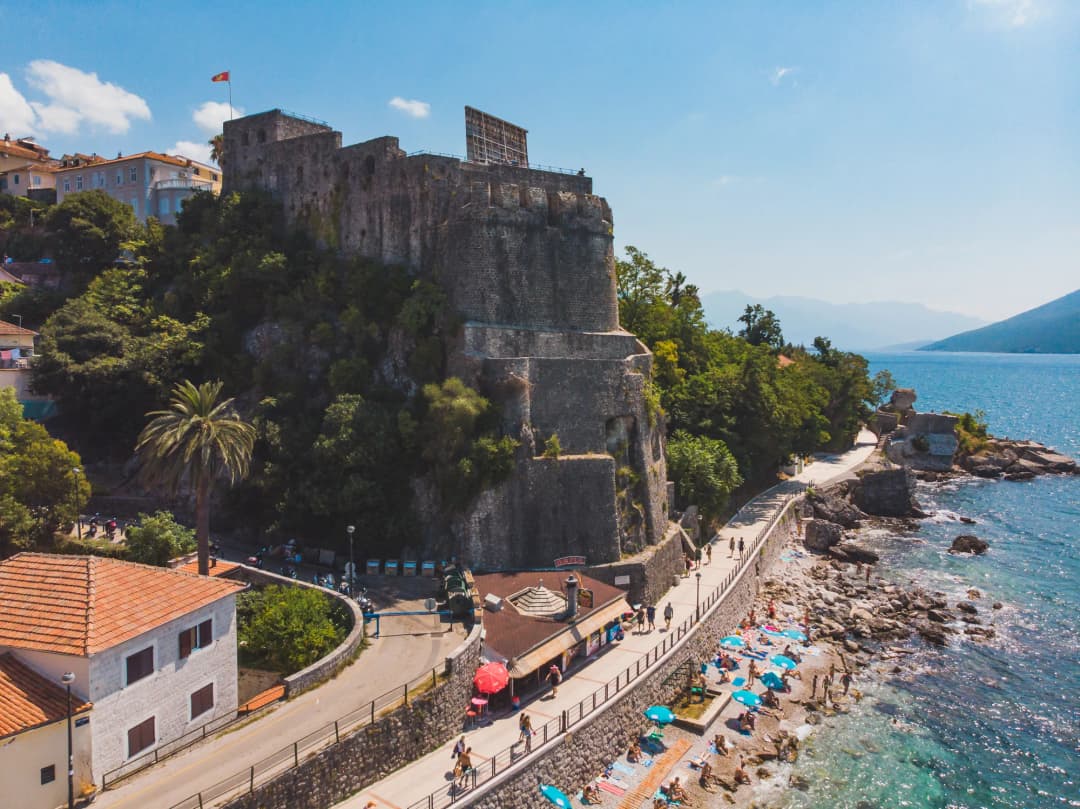
Kanli Kula: the Bloody Tower
The great fortress at the top of the old town is the most visible Ottoman legacy on this stretch of coast. Kanli Kula was built by the Ottomans around 1539, in the aftermath of the Barbarossa siege, as the strongpoint of the town's landward defences; the Venetians repaired and extended it after 1687. Its grim name comes from its second career: during Ottoman rule the tower served as a prison, a place of torture and execution whose reputation spread far beyond the bay. The prisoners left an extraordinary trace — drawings scratched into the walls of the dungeons, many of them of ships. Because the vessels depicted are types that sailed in the sixteenth and seventeenth centuries, historians have been able to date the prison years from the graffiti of the men held there.
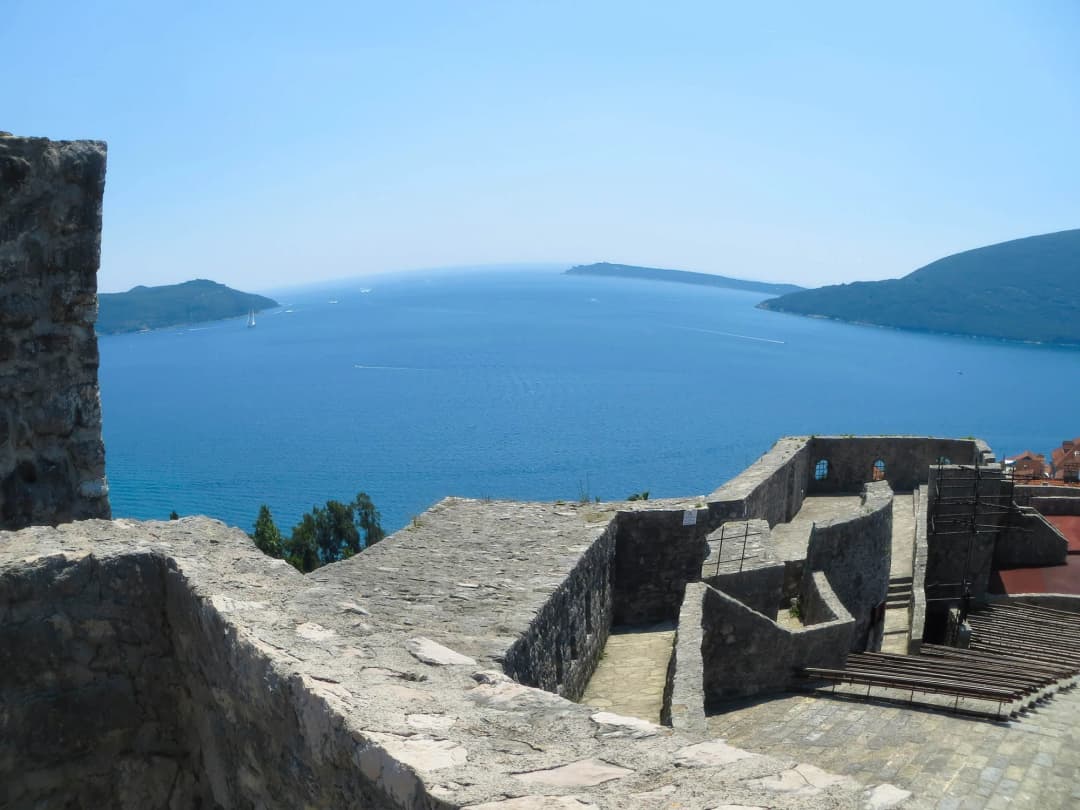
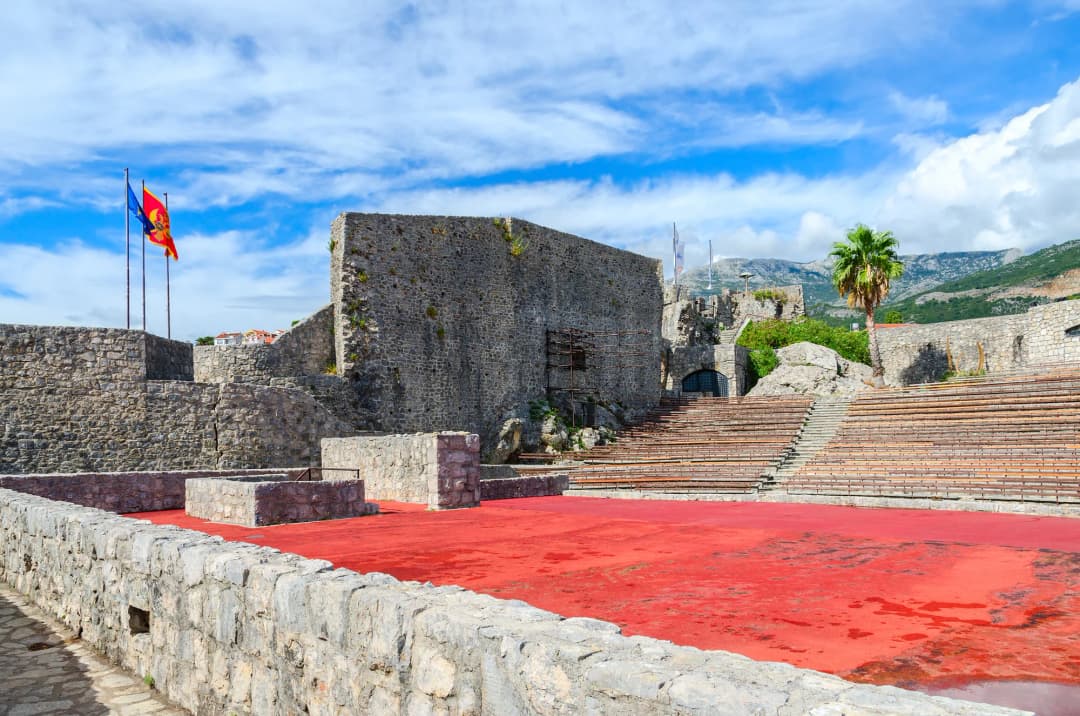
The transformation of this dark place is one of the happier stories of the coast. In 1966 the interior was converted into an open-air amphitheatre seating more than a thousand spectators, with the sea and the Orjen foothills as a backdrop. Summer evenings now bring film screenings, concerts and opera to a courtyard that once held condemned men: the Herceg Novi Film Festival, the Guitar Art Summer Fest and the Operosa opera festival have all played inside its walls.
Forte Mare: the fortress of the sea
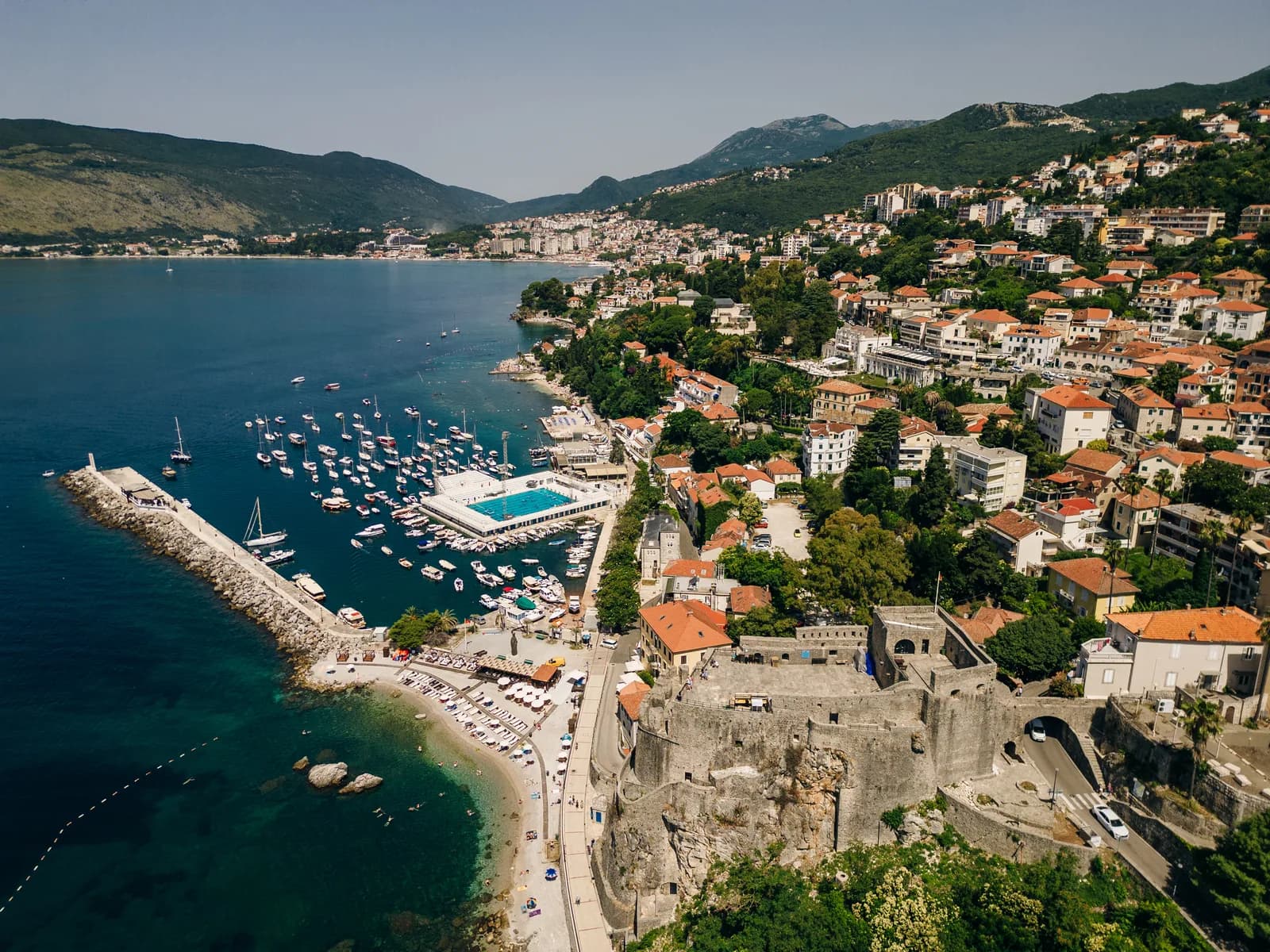
Down at the waterline, Forte Mare is the older and quieter of the pair. Its core belongs to Tvrtko's foundation of 1382, and elements from the Bosnian period survive around the Sea Gate on its upper side, where boats once landed under the protection of its guns. The fortress was rebuilt repeatedly between the fourteenth and seventeenth centuries; the Venetians restored it after 1687 and gave it the Italian name it still bears, and the Austro-Hungarians remodelled it in the nineteenth century into more or less the form you see today. In the twentieth century it, too, was pressed into cultural service, and its terrace still hosts open-air screenings and events on summer nights — there are few more atmospheric places to watch a film than a fortress roof above the open sea.
Between the two forts, the walled old town cascades downhill through Belavista square and past the seventeenth-century clock tower, so that a walk from Kanli Kula down to Forte Mare takes you through every layer of the town's history in about ten minutes — provided your knees forgive the stairs.
Visiting
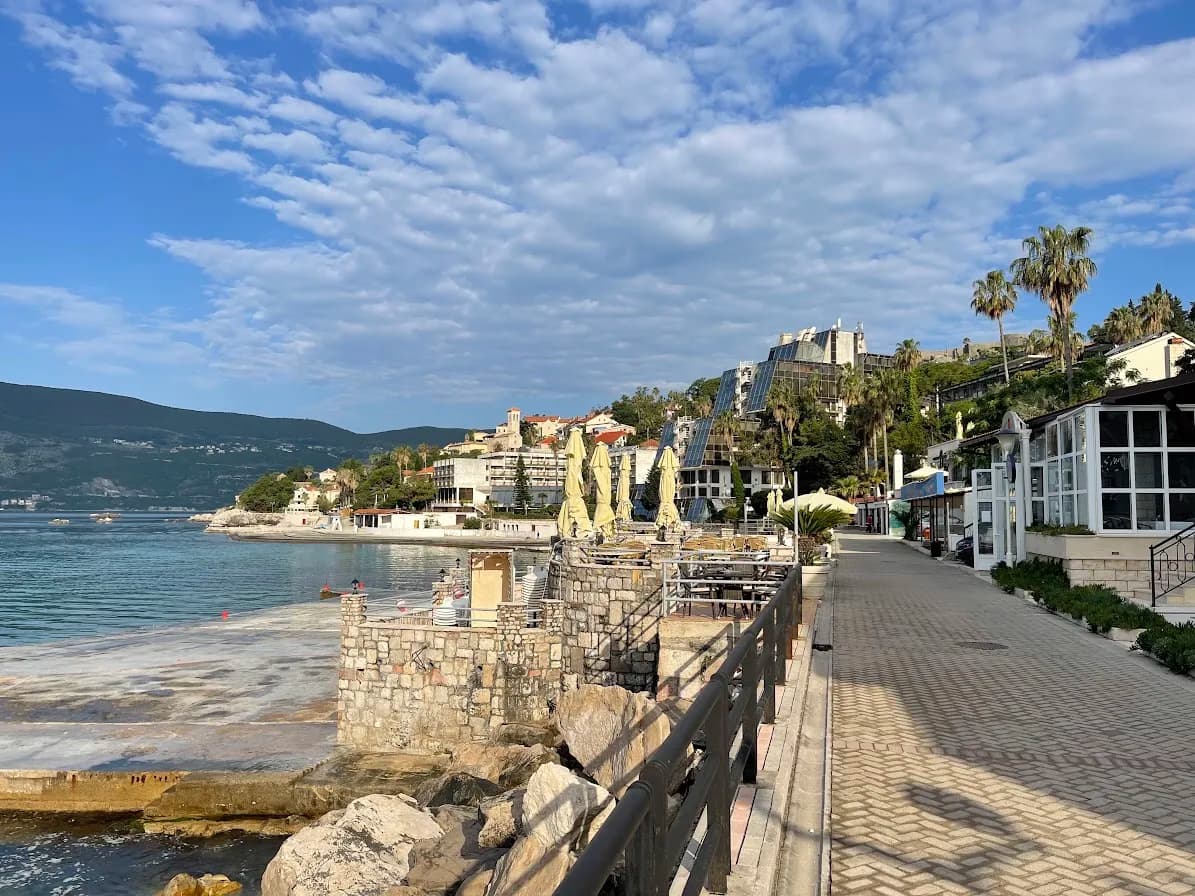
Both fortresses stand directly above the Pet Danica promenade, which runs along the shore at the foot of the old town: from the promenade below Škver, climb the stairs into the old town and you reach Forte Mare in two or three minutes, with Kanli Kula a further ten-minute climb above it. Both charge a small entrance fee of a few euros and are open daily in the warmer months; opening hours shrink in winter, and Kanli Kula sometimes closes by day when an evening event is being staged. Come late in the afternoon, when the stone glows and the light over the bay entrance is at its best — and check the summer programme, because seeing a concert inside the Bloody Tower is the finest way to meet it.