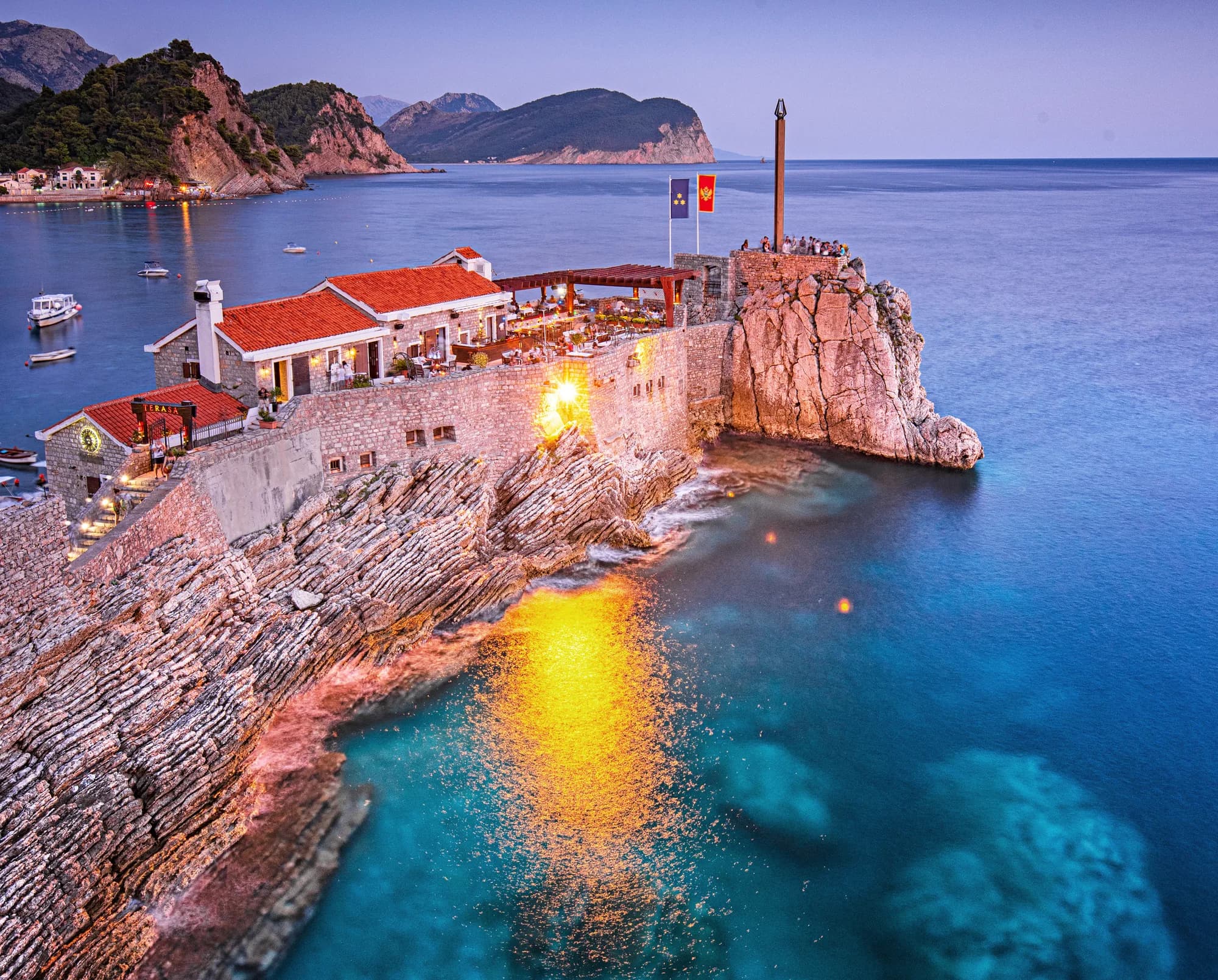
Walk to the southern end of Petrovac's promenade and the town comes to a natural full stop: a low, weathered fortress on a rock, jutting into the sea with the twin islets of Katič and Sveta Nedjelja floating beyond it. This is Kastello — sometimes written Kastio — and for four centuries it gave the town its name and its shape.
Built against the pirates
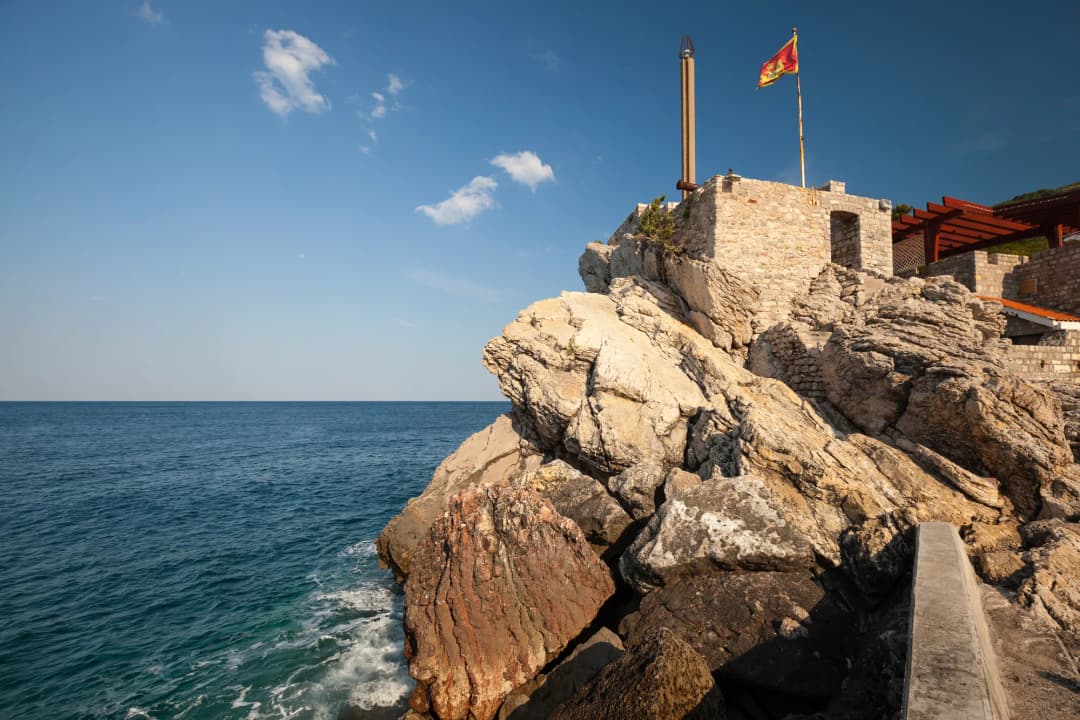
Venice raised the fort in the 16th century, at a time when the Adriatic coast was a dangerous place to keep a harbour. Corsairs and raiders worked the sea between the Venetian and Ottoman worlds, and an exposed bay like this one needed teeth. The Kastello was those teeth: a compact stronghold on the rock, garrisoned by a permanent Venetian force, watching the approaches to the bay and the little fleet of boats that worked from it.
The fort was also a warehouse. Inside its walls were stockrooms where wine and other produce were kept before being loaded onto boats and shipped out — the commercial engine behind the military purpose. For as long as it stood on guard, the settlement below it was known not as Petrovac but as Kaštel Lastva, or simply Kastio, after the fortress itself.
The name reaches back further than Venice. The oldest recorded name for the settlement here was Lastva, a name that appears as early as the medieval Chronicle of the Priest of Duklja, so that the Venetian fort simply attached its own word — kastel, castle — to a place that already had a long identity. Only around the end of the First World War did the town shed the fortress name and become Petrovac, in honour of King Peter I. Even so, the fort's older word survives in local speech: many people still call the rock and its stronghold Kastio.
The Lazaretto
Around and beside the fort the Venetians built a Lazaretto, a sanitary station that was one of the coast's defences against a threat as deadly as any pirate: disease. Ships and travellers arriving from ports where plague might be circulating were held here in quarantine before they were allowed to mix with the town. Over its long life the Lazaretto also served other hard functions — a place of administration, and a prison during both World Wars — but its founding logic was public health, the enforced pause that kept an epidemic on the far side of the walls. In an age before medicine could do much against plague, the quarantine wall was the most effective public-health tool a port possessed, and a busy trading coast like this one could not do without it. The low stone ranges of the Lazaretto beside the fort are part of what gives Petrovac its distinctive silhouette to this day.
The obelisk above
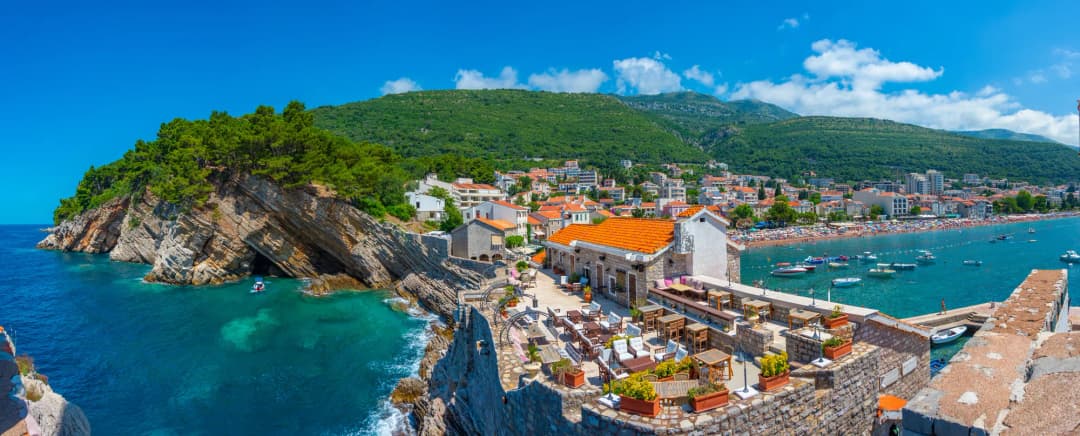
Rising above the fort is an obelisk, a memorial to the fighters and townspeople who died in the Second World War. It doubles as the fort's highest lookout: from the platform beside it the whole sweep of Petrovac opens up — the red roofs, the pebble beach, the caves in the rocks below, and the turquoise water running out to the islets. It is a small monument, but it marks the fort's transition from a working defence to a place of memory and view.
A fort you can sit in
Today the Kastello has been softened into hospitality. Renovated for catering use, it now holds a terrace venue and lounge bar built into the old stone, with arguably the best seat in Petrovac: a table on the ramparts as the sun goes down behind the headland and the promenade lights come on below. There is something apt about it — a building raised to keep strangers out now exists to welcome them in for an evening drink over the bay. The fort and its Lazaretto together remain the single most recognisable image of the town.
The fort anchors the whole seafront. Petrovac's promenade runs out to it past the stone houses of the town's old families, and in the warm months that paved waterfront is the centre of the town's evening life — cafes and restaurants spilling out under the walls, music and children and the smell of grilled fish, with the lit fort at the end of it all. The Kastello sits on the line of the old coastal route through Petrovac; you can place it in that longer story on the Roman Road walk's Petrovac stage, which links the fort to the town's ancient and Venetian layers.
Visiting
The fort stands at the end of the seafront promenade, a level five-minute stroll from the centre of Petrovac, and the walk out to it is free and open. The terrace bar keeps seasonal hours, busiest and most atmospheric in the warm evenings; go up at sunset for the view from the obelisk platform, and bring a little cash for a drink if you want to linger on the ramparts.