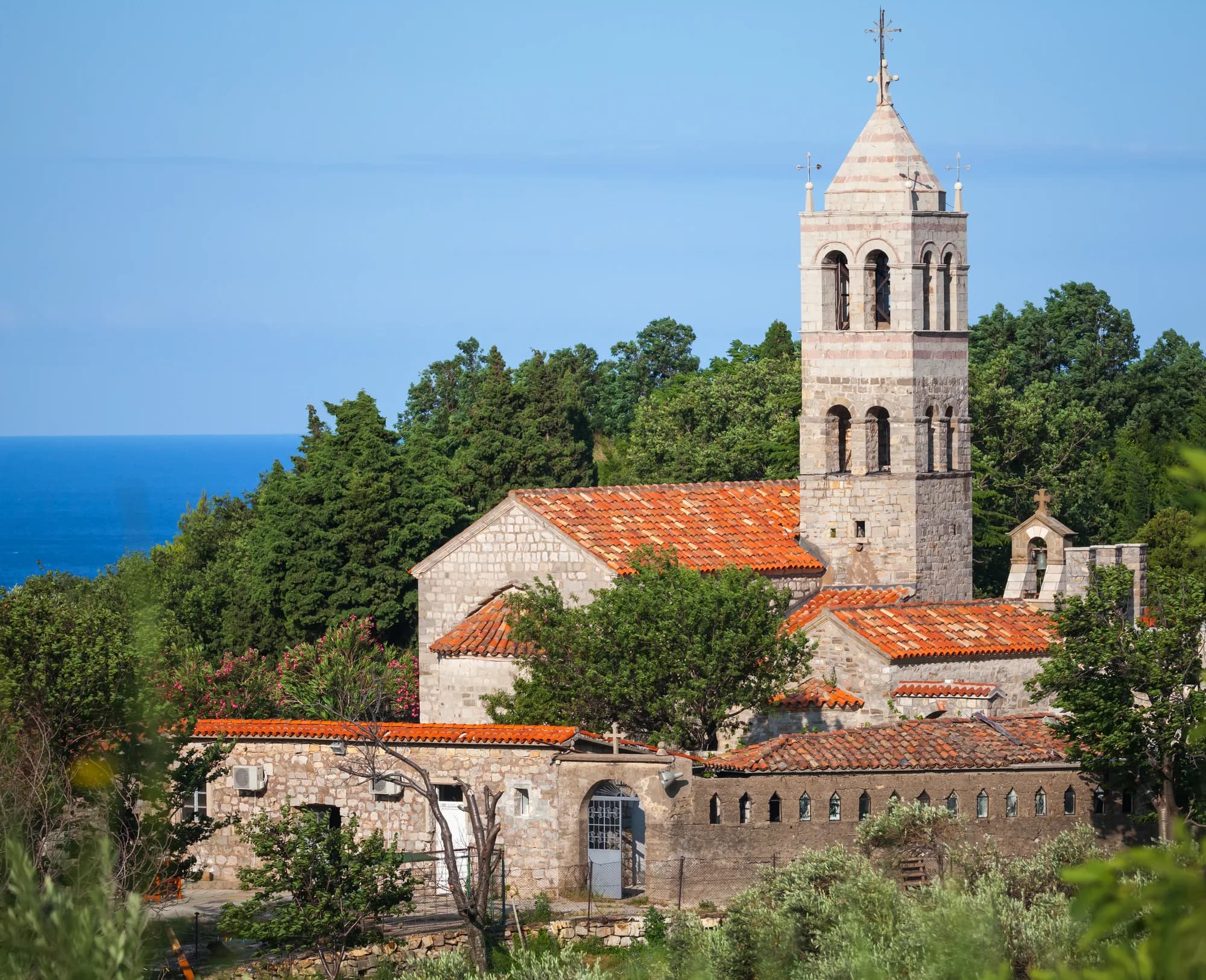
On the high ground between Petrovac and Budva, with the sea falling away below it, stands the small Serbian Orthodox monastery of Reževići. It is easy to pass on the coastal road, but it holds one of the loveliest customs of the old Montenegrin coast — a stone cup of wine that stood, for centuries, ready for any stranger who was thirsty.
A king and a roadside cup
The monastery's origins run back, by tradition, to the early 13th century. Local legend tells of a column standing before a roadside guesthouse on the route between Budva and Petrovac, and set into that column a hollowed stone vessel — the kamenica — kept perpetually filled with wine so that thirsty travellers on the road could drink freely and without payment.
Into that legend steps a king. Stefan the First-Crowned, the first crowned king of Serbia, is said to have drunk from this stone cup as he travelled the coast, and to have been moved enough by the place to found a church beside the guesthouse — the Church of the Dormition of the Mother of God — around 1226. A second church on the site, dedicated to the Archdeacon Stephen, is attributed by tradition to the later ruler Stephen Uroš IV Dušan in 1351, so that the monastery grew across the medieval centuries rather than in a single stroke.
Six centuries of hospitality
What makes Reževići memorable is that the kamenica was not a one-off royal gesture but a standing institution. For roughly six hundred years the monastery is said to have kept the stone cup filled with wine for passing strangers — a formalised act of hospitality toward whoever came down the road, pilgrim or pauper or merchant. On a coast where travel was hard and often dangerous, a guaranteed drink of wine at a fixed point on the route was no small kindness. The custom turned the monastery into a landmark of generosity as much as of faith, and it is still the first thing most people learn about the place. It also says something about how these coastal monasteries saw their role: not as sealed retreats but as fixtures on the road, obliged to the traveller as much as to the liturgy. A cup that anyone could drink from, kept full for centuries, is hospitality made into an institution.
Heart of the Paštrovići
Reževići took its name from the Reževići clan, one of the constituent clans of the Paštrovići, the tribal community that held this stretch of coast between Budva and the Bar region. The monastery was more than a house of prayer for them: it was a meeting place. The Paštrovići gathered here to take important decisions and to elect their leaders, using the monastery as a kind of communal parliament and civic centre. That double life — sacred site and assembly ground — was typical of these coastal monasteries, which anchored both the religious and the political identity of the people around them.
Two churches on the ridge
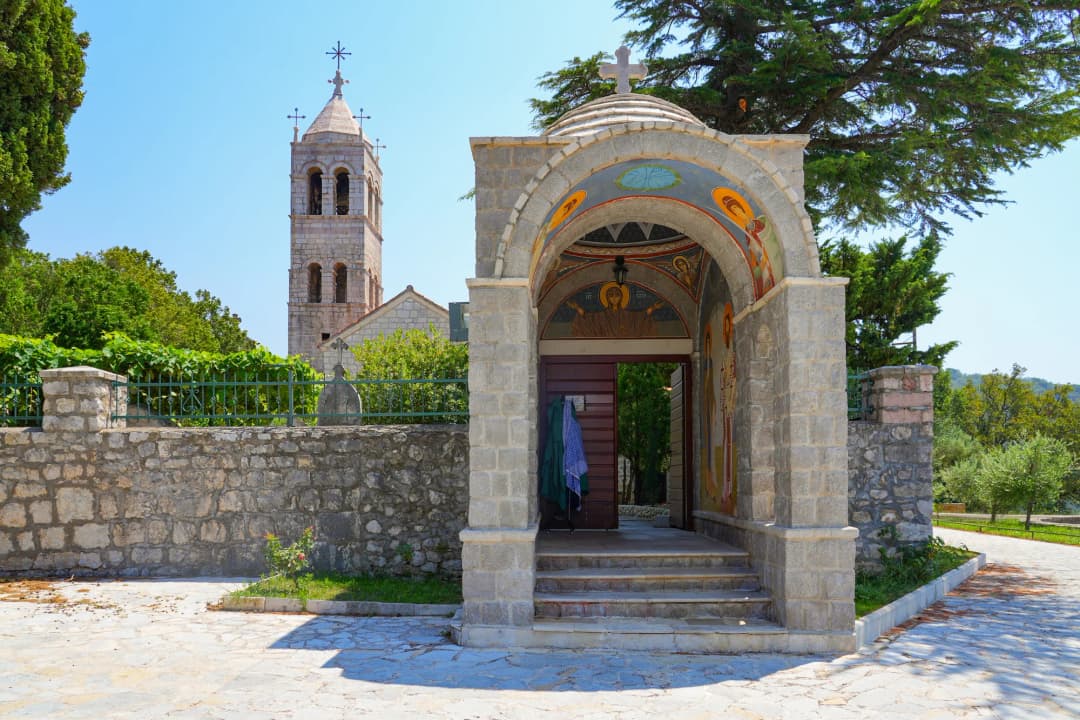
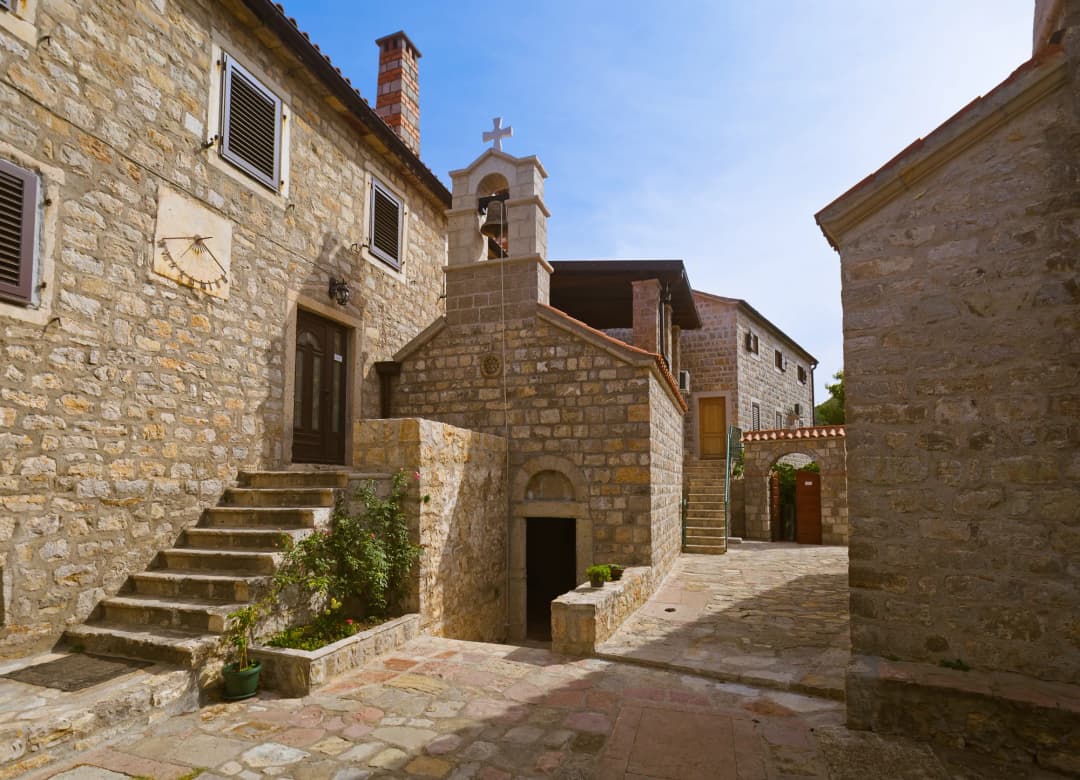
The monastery you visit today is really two churches sharing one walled courtyard on the ridge. The older and smaller, the Church of the Dormition of the Mother of God, carries the tradition of Stefan the First-Crowned and the 1220s; the larger, dedicated to the Archdeacon Stephen, is linked to Emperor Dušan and the mid-14th century. Between them they span the golden age of medieval Serbian statehood, which is part of why the site matters beyond its size — it is a small place with a long memory, a working monastery that has weathered earthquakes, empires and wars while keeping its churches in use. The position is half the experience: perched above the sea between Petrovac and Budva, with the coast opening out below and the highway traffic falling away, it holds the kind of quiet that made it a natural place both to pray and to decide. The monastery has been damaged and repaired more than once across its long history, as war and earthquake took their toll on this coast, but it has never been abandoned, and it remains a living community rather than a museum piece — which is why the old stories of the wine cup and the tribal assemblies still feel present rather than merely commemorated here.
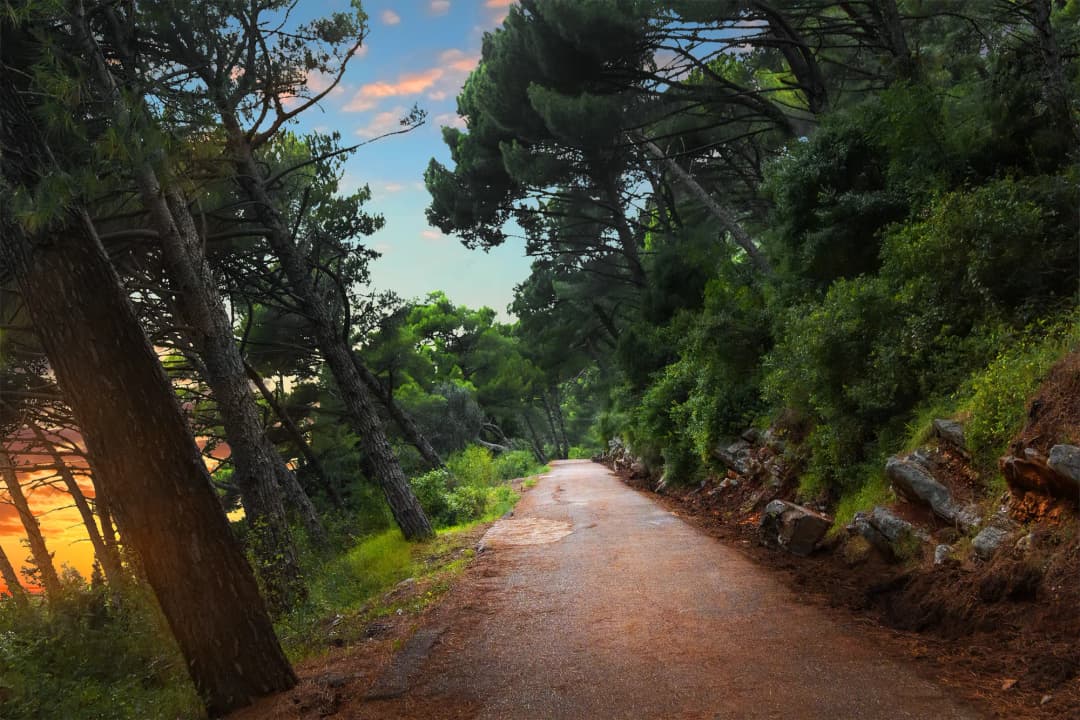
The monastery sits on the old land route linking the coastal settlements; you can place it in that line on the Roman Road walk's Reževići stage, which follows the ridge road above the sea.
Visiting
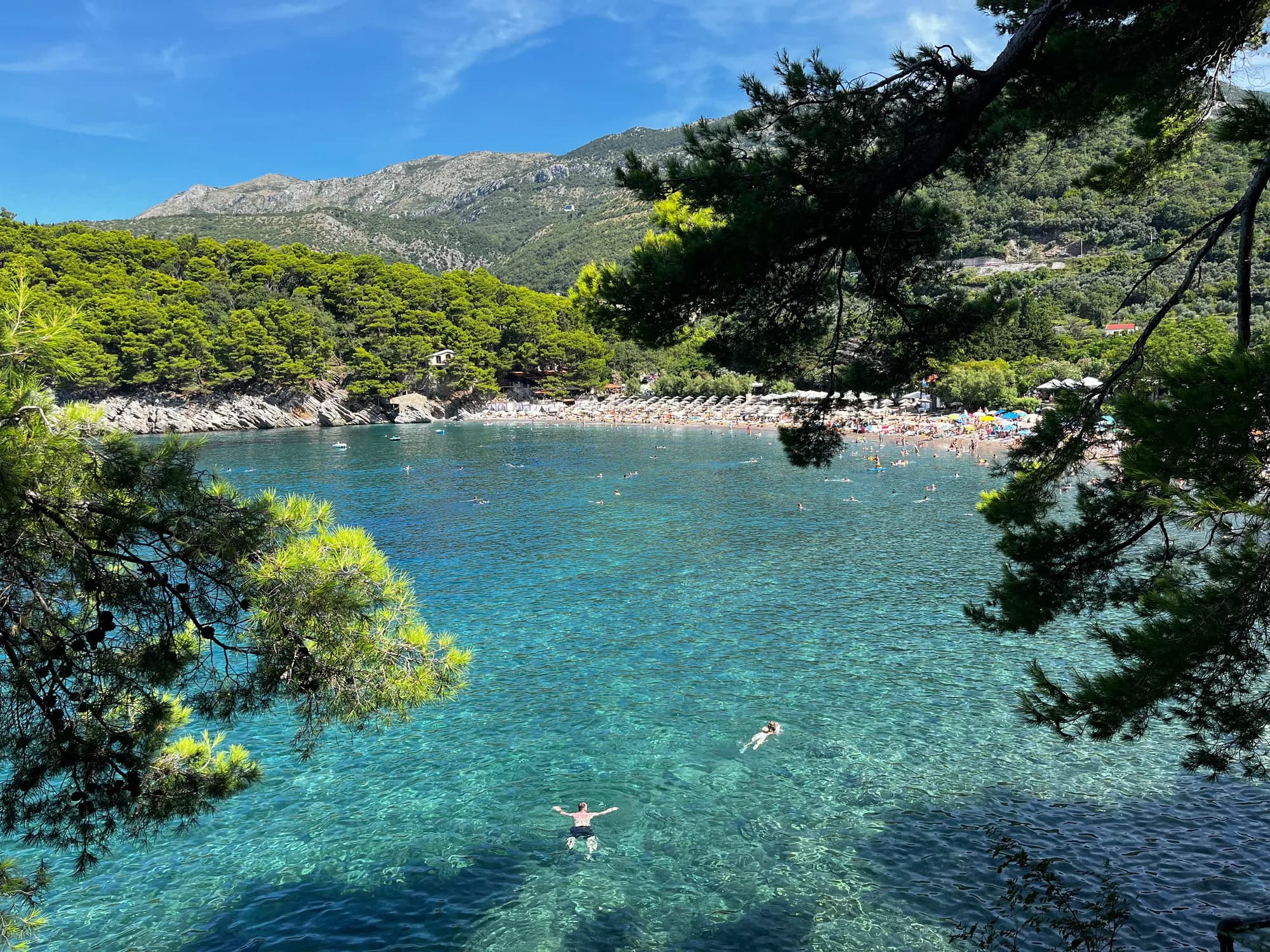
Reževići lies just off the Adriatic highway between Petrovac and Budva, a short detour from either town and an easy stop by car or on a coastal walk. It is a working monastery, so dress modestly — covered shoulders and knees — and keep quiet around any service in progress. The setting alone rewards the visit: two old stone churches, a monastery courtyard, and a wide view over the sea from the terrace where, by tradition, the wine cup once waited.