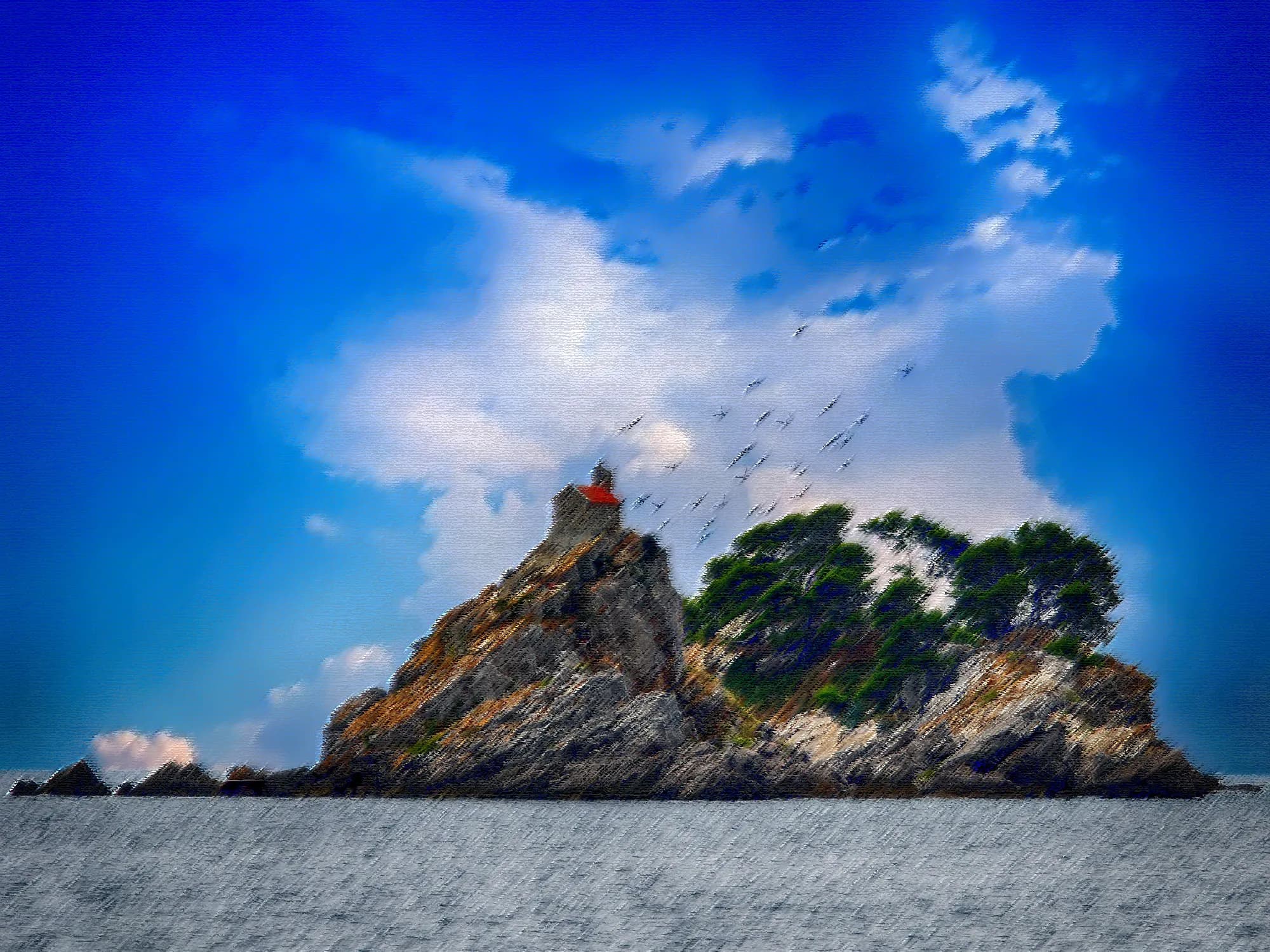
Look out from Petrovac's beach and two small islets sit on the water a short way offshore, so much a part of the view that the town would feel wrong without them. They are called Katič and Sveta Nedjelja, and the smaller of them carries a single white chapel that holds one of the coast's most enduring stories.
A vow made in a storm
The chapel is said to have been built out of gratitude. As the story goes, a group of sailors — remembered locally as Greek — was wrecked in a storm off Petrovac and managed to struggle ashore onto the rocky islet, surviving when they might easily have drowned. To honour the deliverance, they built a small church on the rock that had saved them. Because the shipwreck fell on a Sunday, they dedicated it to Sveta Nedjelja — Holy Sunday — and the islet has carried the name ever since.
It is the kind of legend that grows from something true: this is a coast of seafarers, and a chapel raised on a bare islet by men who expected to die is exactly the sort of vow the Adriatic has always inspired. Whether every detail is history hardly matters to the town, which has kept the story alive across generations.
Two rocks, one view
The pair are easy to tell apart once you know them. Katič is the bare rock, low and green-tufted, with no building on it; Sveta Nedjelja is the one that carries the chapel. Together they sit just off Petrovac's shore, close enough to feel like part of the town rather than something out at sea, and they have become its emblem — the shape every postcard and every holiday photograph reaches for. Small as they are, they give the wide bay a focus and a scale, two full stops of rock on the blue. Their names appear on every map of the town and in the name of countless local businesses, and no view of Petrovac feels complete without them — proof of how thoroughly a legend and a pair of rocks can become the identity of a place.
Rebuilt after the earthquake
The chapel you see today is not the original. In 1979 a powerful earthquake struck the Montenegrin coast, causing enormous damage from Ulcinj to the Bay of Kotor, and the little church on the islet was among the casualties. It was rebuilt afterwards, in the late twentieth century, on the same rock — so the white chapel standing there now is both new and old, a modern structure keeping a very old promise.
Ringing the bell for luck
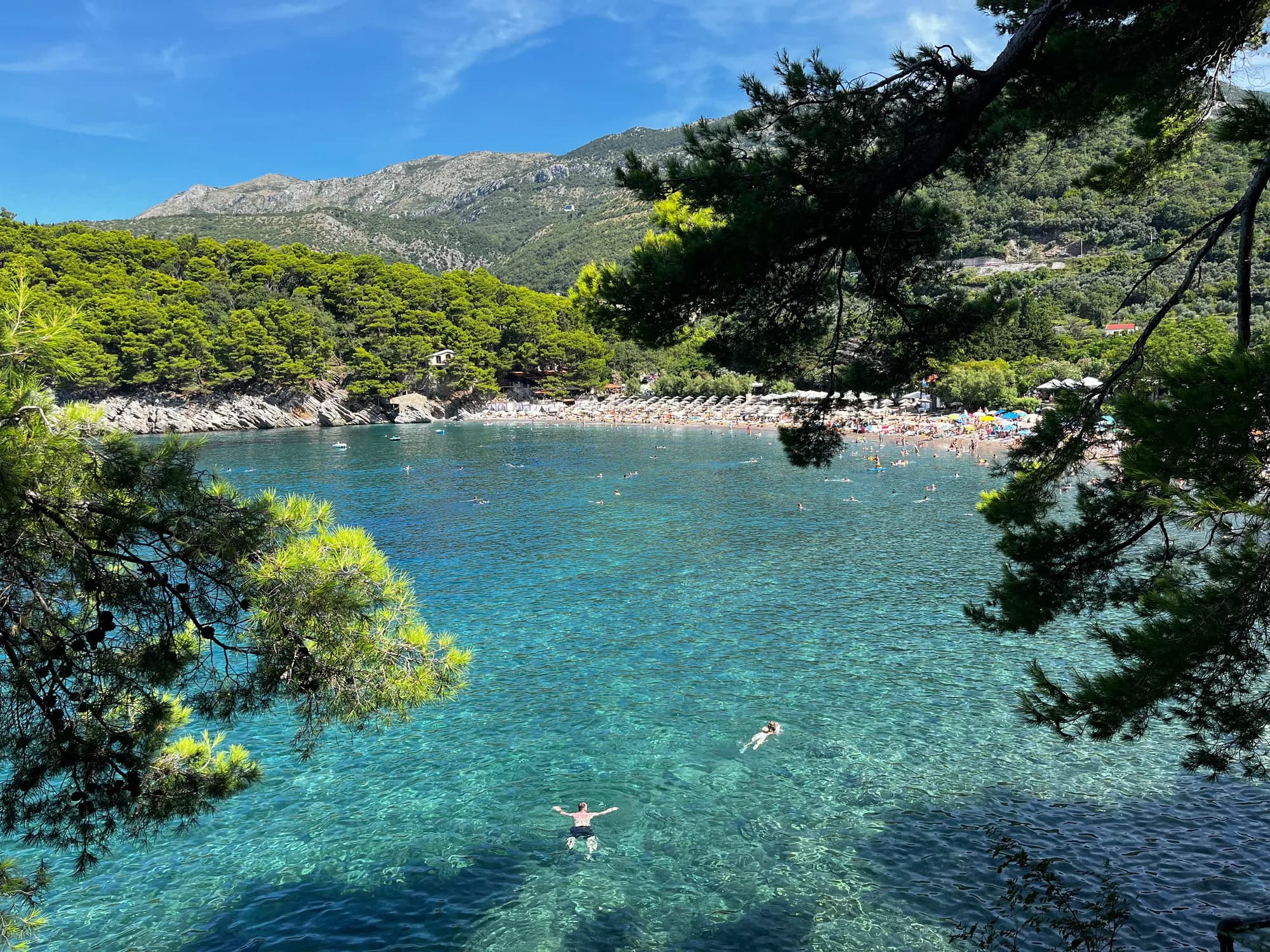
The islets are close enough to the shore that reaching them is part of the pleasure. In summer, strong swimmers strike out from the beach, and others row or take a small boat across the short stretch of clear water. The tradition, once you land, is simple: ring the chapel bell. Local belief holds that ringing it brings health and happiness, and generations of visitors and townspeople have pulled the rope for a little luck before swimming back. It turns a scenic swim into a small pilgrimage, which is more or less how the sailors intended their rock to be treated. The chapel is tiny — a single whitewashed cell with its bell — and it is not a place you visit for long; the point is the crossing, the touch of the rope, and the swim back to the beach with the town in front of you. Boatmen working the Petrovac shore will happily make the short run out and back, and in high summer a steady trickle of swimmers and small craft moves between the beach and the rock through the day, each visitor keeping a custom alive that began with a handful of frightened sailors giving thanks for their lives.
Even from dry land the islets change character with the light — hard grey rock at midday, gold at sunset, a dark silhouette when the chapel stands against the dusk. They anchor the view from the Kastello fort at the end of the promenade, and the habit of rowing out to ring the bell keeps the sailors' vow woven into the life of the town rather than left as a curiosity on a rock.
You can take in the islets from the shoreline on the Roman Road walk's Petrovac stage, which follows the seafront where the two rocks sit closest to the town.
Visiting
The islets lie just offshore from Petrovac's main beach and are best reached in calm, warm weather. Confident swimmers can make the crossing, but the safer and easier option is one of the small boats that run from the beach in season; agree the trip and any wait time before you set off. Landing is on bare rock with no facilities, so bring water shoes and respect the chapel — and do ring the bell.