Ostrog is not merely a cliff-side landmark. It is an active Serbian Orthodox monastery, a major pilgrimage destination and a place where ordinary sightseeing habits should yield to worship. This guide separates verified history from devotional belief, compares realistic ways to arrive, and preserves thirteen photographs from a Montenegro.com journey made in 2000. The result is a practical plan for visiting without rushing the monastery—or mistaking an archive road trip for current travel advice.

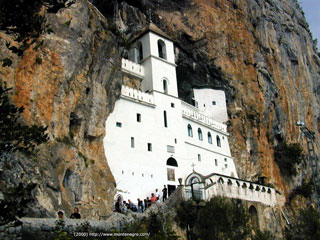
What Ostrog is—and what the cliff conceals
What the sources say
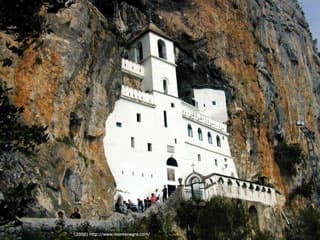
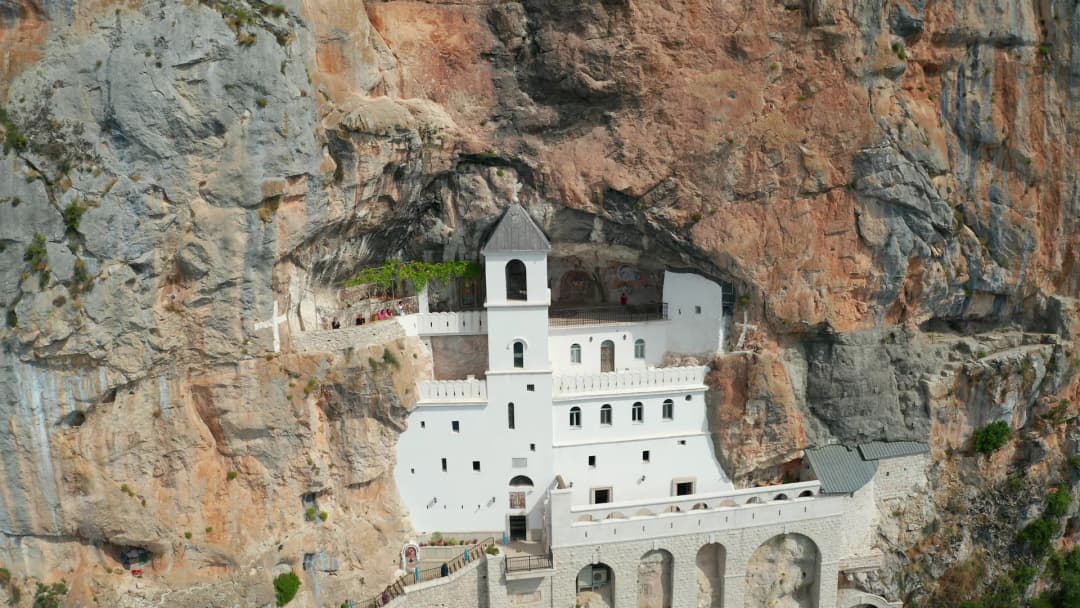
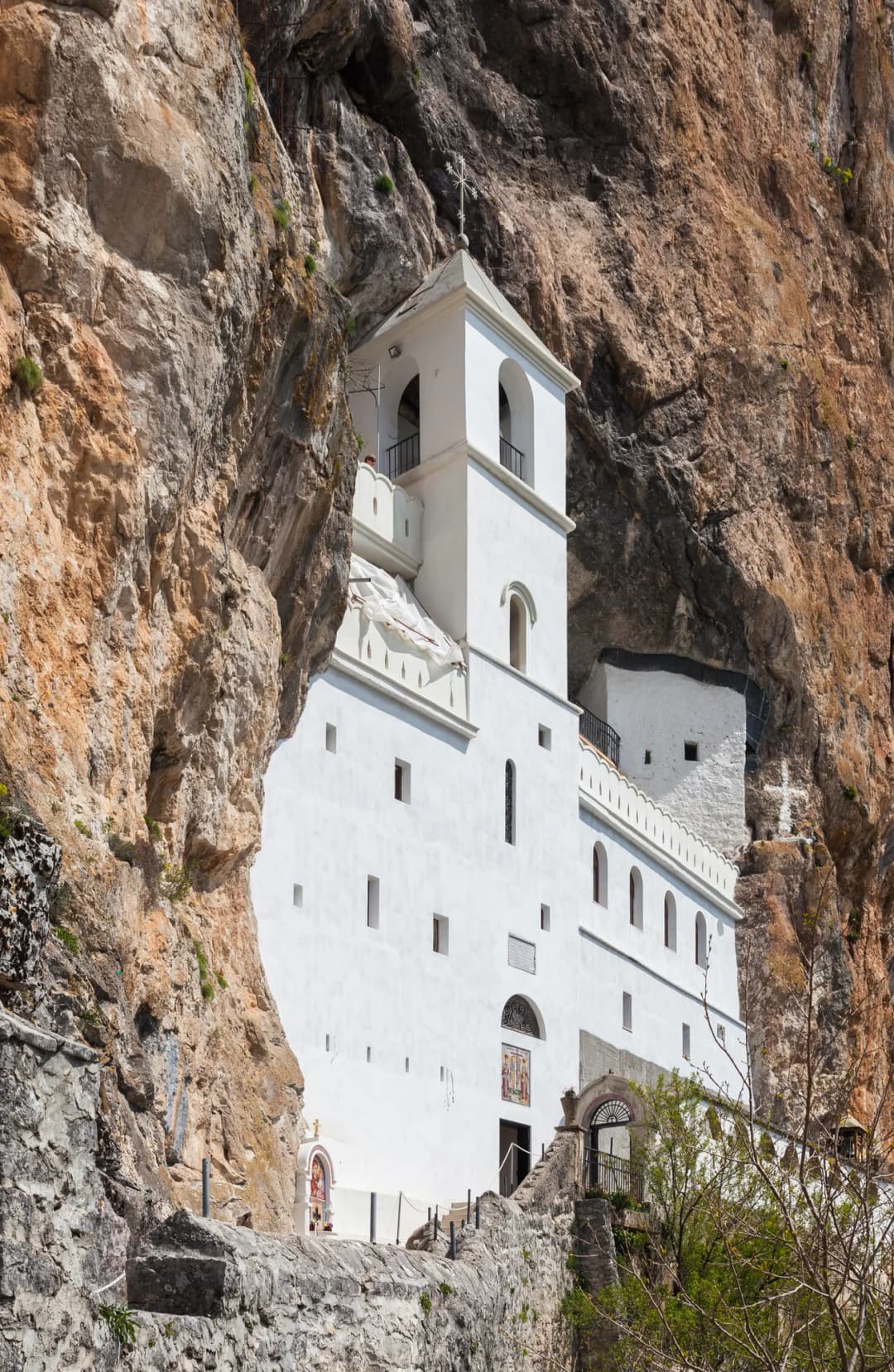
Upper Ostrog occupies natural caves in an almost vertical face of Ostroška Greda, between Danilovgrad and Nikšić. The Tourism Organisation of Podgorica places it at about 900 metres above sea level and associates its foundation with Saint Basil of Ostrog in 1665. That date belongs to the seventeenth-century cave sanctuary, not to every structure visitors see today. Lower Ostrog, later buildings, terraces and circulation spaces form a larger religious landscape.
Orthodox believers venerate Saint Basil and understand Ostrog through prayer, relics and accounts of healing. Those claims belong to faith and testimony. A travel article can report their central place in the monastery's life; it cannot independently certify a miracle. This distinction matters because visitors of many backgrounds come here. The National Tourism Organisation describes Ostrog as receiving people of different faiths, while its official monastery portal documents a working calendar of liturgies, feast days and community events.
For a wider account of the site and its sacred history, read our complete Ostrog guide. This page has a narrower purpose: how to structure the journey and how to read the 2000 archive responsibly.
The 2000 route: valuable record, poor modern itinerary
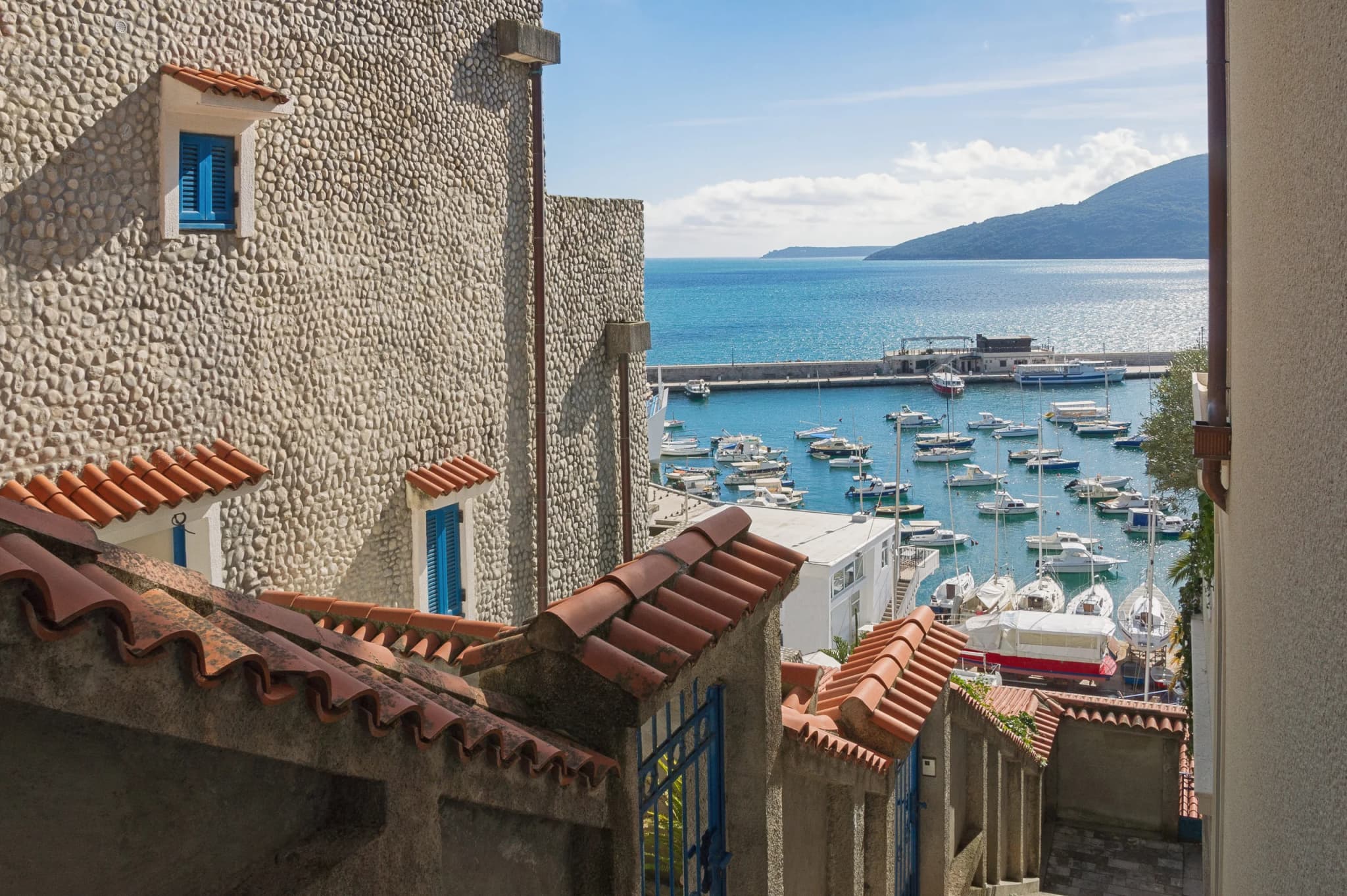
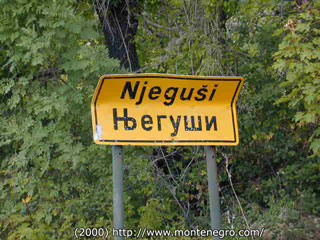
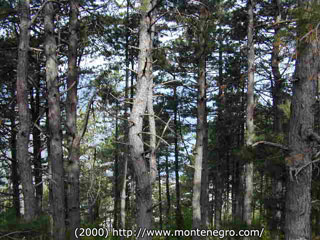
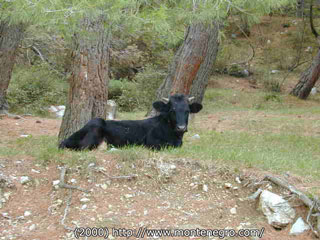
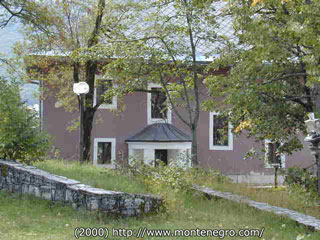
The original Montenegro.com report began in Herceg Novi, followed the Bay of Kotor through Risan, Perast and Kotor, climbed to Njeguši, crossed through Podgorica, Spuž and Danilovgrad, visited Ostrog, then returned by Budva. It is a revealing snapshot of how early web travel writing treated a journey: many photographs, quick impressions and almost no operational detail.
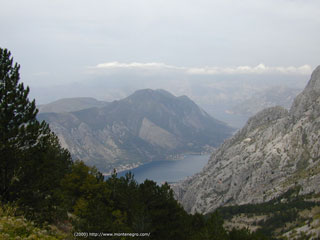
As a present-day itinerary, that circuit asks too much. It combines a coastal heritage route, the old mountain road, a capital crossing, a monastery visit and another coastal transit. Traffic, stops and the emotional pace of Ostrog make the day brittle. If the inner bay is a priority, use our Risan, Perast and Kotor day guide. If Njeguši is the purpose, give its food and royal history the time described in our Njeguši field guide.
A stronger plan gives Ostrog most of a day. Add at most one compatible stop—perhaps Danilovgrad or a deliberate meal—then protect time for the ascent, queues, worship and weather. Travelers based in the capital can prepare with our Podgorica city guide. Those starting in Herceg Novi should treat the monastery as a long independent excursion; our guide to Savina Monastery offers a closer sacred site for a separate day.
Choose an arrival strategy before departure
| Mode | What it solves | What it does not solve | Verify on the day |
|---|---|---|---|
| Private car | Flexible departure and control over stops | Narrow approaches, queues, weather or a guaranteed parking space | Road notices, forecast, feast-day controls and driver confidence |
| Taxi or booked transfer | No need to drive the final approach yourself | Automatic return transport unless explicitly agreed | Total price, waiting time, pickup point and cancellation terms |
| Organised excursion | Planned transport and a defined return | Quiet time or a pace suited to individual prayer | Time at Upper and Lower Ostrog, language, group size and inclusions |
| Train to Ostrog station | A rail connection searchable on the official timetable | The final transfer or climb to the monastery complex | Exact date, return train, daylight, weather and safe onward route |
| Walk from Lower Ostrog | A pilgrimage-style ascent away from the vehicle | A fixed duration or suitability for every traveler | Surface, heat, rain, footwear, mobility and return capacity |
The official tourism material contains a useful discrepancy. One National Tourism Organisation page describes a roughly 2.5-kilometre, 40-minute walk from Lower to Upper Ostrog; another describes a three-kilometre forest climb. Endpoints and rounding may explain the difference, but neither figure is a promise. Uphill pace, crowds, heat, rain and stops can substantially change the experience. Budget conservatively and turn back if the route no longer fits your ability or daylight.
Rail needs particular care. The official railway timetable allows a date-specific search for Ostrog, but the railway stop is not the monastery door. Before relying on it, solve the final ascent and the return in advance. Do not copy a departure time from a blog or an old search result: query the exact travel date, allow margin and keep a fallback that does not depend on an informal ride appearing.
Why feast dates change the journey
Saint Basil's feast brings exceptional pressure. For 11–12 May 2026, Montenegro's Police Directorate introduced a temporary one-way system from Ostrog toward Ždrebaonik because increased attendance was expected. The notice was date-specific; it is not a permanent traffic rule. It demonstrates why a pilgrim should check current police and monastery announcements rather than assume last year's circulation plan still applies.
| Stage | What to settle |
|---|---|
| 1. Check | Monastery events; Traffic + weather |
| 2. Choose | Car, transfer, tour, rail or walk |
| 3. Protect | Ascent, queues and quiet time |
| 4. Exit | Return plan and fallback |
Source: gov.me
On high-attendance dates, arrive with more patience than itinerary. Do not block vehicle routes, follow temporary signs and instructions, and expect the site's religious purpose to take precedence over photography. Outside feast periods, current monastery events can still alter where services take place. The official monastery portal is the first operational check; contact the monastery directly for questions the site does not answer.
How to behave in an active monastery
There is no need to perform someone else's faith, but there is a duty not to interrupt it. Dress with shoulders and knees covered as a conservative baseline. Keep voices low, silence alerts, let worshippers pass, and never enter a queue only to obtain a photograph. If a service is underway, pause at the edge until movement is clearly appropriate. Follow posted signs and instructions even when they differ from a previous visit.
Ask before photographing clergy, worshippers, relics or interiors. A lack of a visible prohibition is not consent. Avoid flash, tripods, drones and posed content unless explicit permission has been granted. The site is not a scenic studio with a monastery attached; it is a monastery with an extraordinary setting.
Believers may kiss icons or relics, light candles and follow devotional practices. Non-Orthodox visitors are not required to imitate them. Stand respectfully, observe without commentary and leave space. Donations should be voluntary and handled through clearly designated channels. Do not repeat miracle accounts about identifiable people as medical evidence, and never encourage someone to replace healthcare with pilgrimage.
Read the landscape, not just the façade
Ostrog's visual force comes from contrast. A pale constructed face occupies a dark limestone recess; below it, the Bjelopavlići plain opens toward the Zeta valley. The architecture does not simply sit on a viewpoint. Cave, cliff, route and religious meaning are inseparable. The upward approach slows the body before entry, while the terrace makes height and exposure immediately legible.

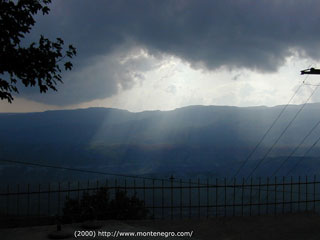
This is also why weather deserves respect. Limestone can become slippery, cloud can erase the view, and a hot ascent can be more demanding than its distance suggests. Carry water, wear shoes with reliable grip, and pack a light rain layer even if the plain appears clear. If thunder is near, avoid exposed terraces and defer to staff instructions. Montenegro uses 112 as the national emergency number; it is for genuine emergencies, not route planning.
Practical checklist for a respectful Ostrog day
Check three live sources before leaving: the monastery's event page, official road or police notices, and the forecast for the monastery area rather than only the coast. Confirm transport in both directions. Carry water, modest layers, rain protection and footwear suitable for polished or wet stone. Keep the day deliberately light, with enough margin to wait without anxiety. If anyone in the group has limited mobility, vertigo, heat sensitivity or difficulty with stairs, contact the monastery or a transport provider for current access information instead of assuming photographs reveal the route.
- Before departure: verify current events, route controls, weather and the return.
- At Lower Ostrog: reassess whether to walk or continue by arranged transport; published distances are approximate.
- At Upper Ostrog: follow the worship flow, signs and staff directions; put phones away when they would intrude.
- Before leaving: check that the planned descent and onward connection remain safe in the actual conditions.
If traveling in summer from the coast, do not build the plan around a perfect drive time. Montenegro's Ministry of Tourism has explicitly warned that coastal congestion can be severe in season. A missed scenic stop is preferable to rushing worshippers, taking risks on a narrow approach or losing the final train.
A better one-day structure
Early: leave your base with the current route and return confirmed. Arrival: orient at the lower complex and decide whether the ascent fits the group and weather. Core visit: give the upper monastery unhurried time without scheduling a hard departure immediately after arrival. Descent: retain daylight and energy for the return. Optional stop: add one only if the monastery visit finishes comfortably.
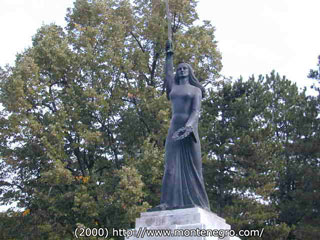
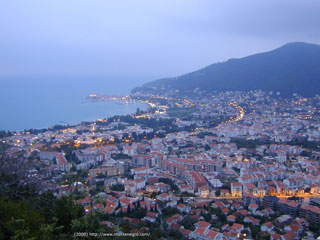
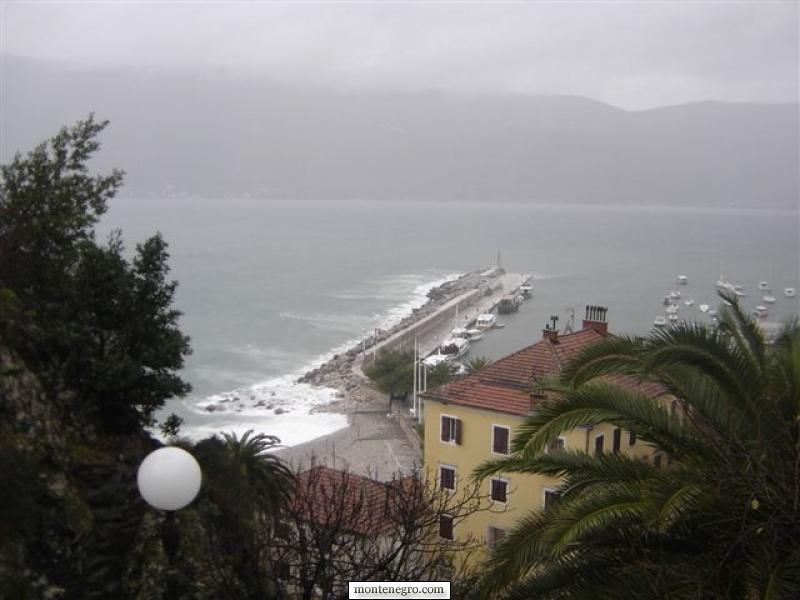
The 2000 reporters experienced Montenegro's dramatic transitions in a single sweep: bay, mountain village, capital plain, cliff sanctuary and storm. The photographs retain that value. The modern editorial lesson is different. A route can be memorable without being maximal. Depth, margin and respect are better measures of a pilgrimage day than the number of towns crossed.
Frequently asked questions
Can anyone visit Ostrog Monastery?
Official tourism material describes visitors and pilgrims of different faiths coming to Ostrog. Treat that welcome as an invitation to behave respectfully, not as permission to interrupt worship. Current access, services and crowd controls can change, so check the monastery's own announcements before travel.
How long is the walk from Lower to Upper Ostrog?
Official tourism pages give two approximate descriptions: about 2.5 kilometres and 40 minutes, or a three-kilometre forest climb. Fitness, surface, heat, rain and congestion change the result. Use those figures for orientation only and leave substantially more time than the shortest estimate.
Can I take the train?
Ostrog appears in Railway Transport of Montenegro's date-specific timetable search, but the station is below the monastery and does not complete the visit. Verify the exact outward and return services, then independently plan the safe final ascent. Do not assume a taxi or transfer will be waiting.
Is there an entrance fee, parking or overnight accommodation?
This guide does not freeze those details because operations can change and the available official pages do not provide one stable, complete visitor specification. Consult the monastery portal and contact the monastery directly. Never interpret an old review or a past trip report as a guarantee.
When should I avoid crowds?
Saint Basil's feast around 12 May is a major pilgrimage period and can prompt special traffic rules. Other services and events also affect flow. If quiet is important, check the live calendar and avoid major dates, but remember that an active monastery cannot promise a tourist-style low-crowd window.