Most travelers fly into Podgorica and leave within the hour, heading straight for the coast or the mountains. That is a mistake. Montenegro's capital is not a postcard-perfect medieval town, and it does not pretend to be. What it offers is something rarer: a living city with layers of history buried under concrete and glass, a food and wine scene that punches above its weight, and a position at the crossroads of every landscape Montenegro has to offer. If you are wondering about Podgorica things to do, the answer is more than you would expect from a capital that most guidebooks dismiss in a single page.
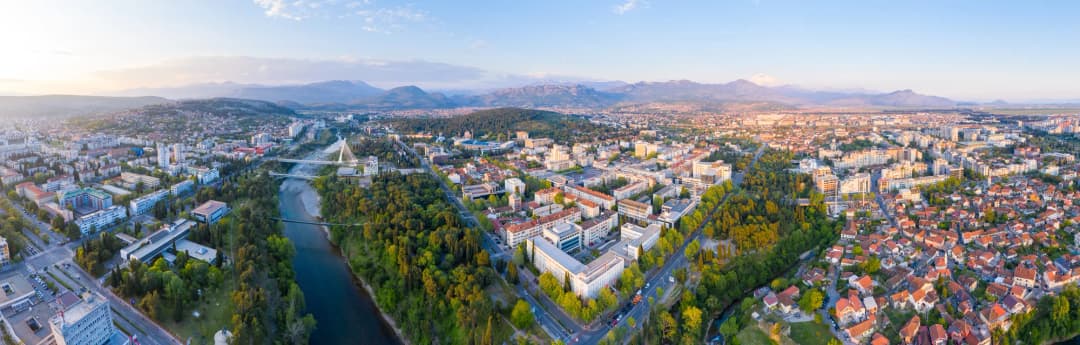
Podgorica is easy to misread. From a car window it can look like a loose collection of boulevards, apartment blocks and low-rise neighborhoods. On foot, another capital appears: rivers cut through limestone, Ottoman lanes meet postwar civic architecture, and the remains of ancient Duklja sit only a short journey from the center. This is not Montenegro's prettiest postcard. It is the place where the country's history, institutions and everyday life are most legible.
I have spent years exploring this city on foot, by bike, and from the terraces of its riverside cafes. Podgorica rewards the curious traveler — the one willing to look past the socialist-era apartment blocks and discover an Ottoman quarter, a world-class winery fifteen minutes from the center, and a national park that begins where the city bus route ends. For travelers, that difference is the point. Podgorica makes a useful first or final stop, but it deserves more than an airport night. Give it one full day for the historic core and museums; add a second for Duklja, the Cijevna falls or a slow meal outside the central grid. For a broader shortlist of attractions, compare this cultural reading with our Podgorica city guide, then use the itineraries below to decide what is worth your time.

Brief Overview
Podgorica has been Montenegro's capital since 1946, though a settlement has existed here for millennia. The city sits at the confluence of two rivers — the Ribnica and the Moraca — in a broad, sun-baked plain ringed by mountains. It is not merely Montenegro's administrative address. The 2023 census published by MONSTAT counted 179,505 usual residents in the municipality — 28.78% of the national population of 623,633 — at the 31 October 2023 reference moment. Older summaries commonly round the capital to roughly 200,000 residents and about a third of Montenegro's population; either way, this is where the country's administrative, economic and cultural weight sits. That figure refers to the municipality, which is larger than a tightly defined city center, but it explains the capital's gravitational pull. Universities, ministries, courts, hospitals, jobs, daily services and major transport connections are concentrated here. Montenegro's coast can feel seasonal; Podgorica feels inhabited year-round.
| Measure | Verified finding | Traveler implication |
|---|---|---|
| Population | 179,505 usual residents in the municipality in 2023 | Expect a functioning national capital, not a resort town |
| National share | 28.78% of Montenegro's population | Services and transport options are comparatively concentrated |
| Historic record | The name Podgorica appears in a 1326 archival reference | The city's visible layers predate its modern boulevards |
| Archaeology | Duklja is protected cultural property of national significance | Allow extra time and respect access or conservation restrictions |
| Airport transfer | Official bus information is published but explicitly subject to change | Check the operator on the day rather than relying on an old timetable |
The city you see today is largely a product of reconstruction. During World War II, Allied bombing destroyed an estimated seventy percent of Podgorica's buildings. What rose from those ruins was built in the utilitarian Yugoslav style — wide boulevards, concrete apartment blocks, socialist-realist monuments. For decades, that was the face Podgorica showed the world.
Look more closely, though, and you will find Ottoman-era stone bridges standing alongside cable-stayed modern landmarks, fragments of Roman-era Doclea in the northern suburbs, and a massive Orthodox cathedral completed just over a decade ago. The mix of modern, Ottoman, and Yugoslav architecture gives the city a texture unlike anywhere else in the Balkans. Modern reconstruction explains the wide roads and heterogeneous architecture; it should not be dismissed as a failed old town.
Geography is the other thing to understand. From the center, you can reach Skadar Lake in twenty minutes, the Adriatic coast in under an hour, the old royal capital of Cetinje in thirty minutes, and the Moraca Canyon in about the same. Podgorica is not just a destination — it is the best base camp in Montenegro.

Old Town and Turkish Quarter
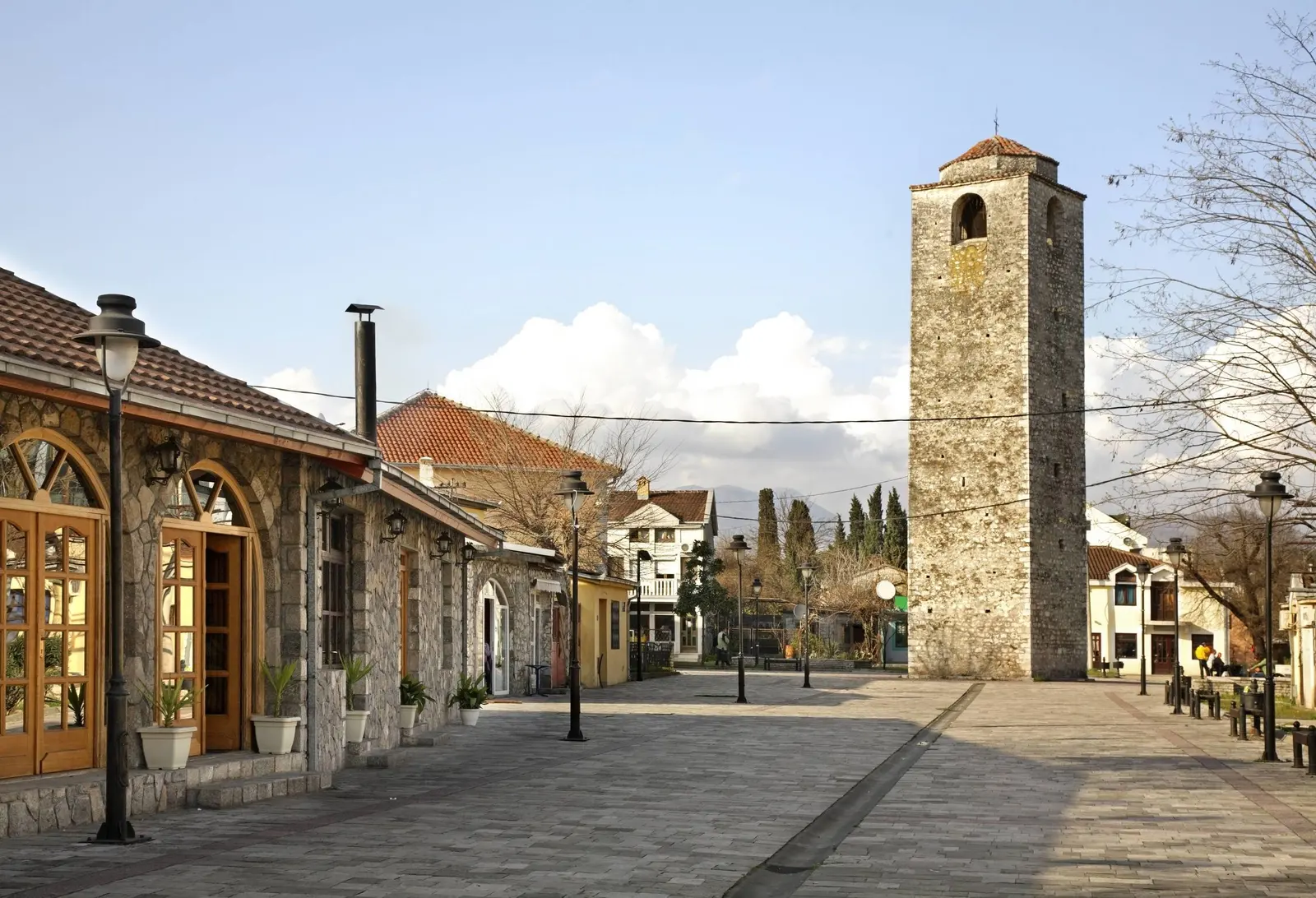
The neighborhood known as Stara Varos — literally "Old Town" — is the most atmospheric quarter in Podgorica, the one place where the city's pre-war character survives intact. This was the Ottoman Turkish quarter, and wandering its narrow lanes feels like stepping into a small Balkan town that time forgot. Around the Clock Tower, the urban grain is smaller: short lanes, courtyard walls, houses and religious buildings rather than the broad axes found across the river.
This is a neighborhood, not a preserved stage set. Its fabric has been altered repeatedly by war, rebuilding and ordinary development, and the pleasure lies in noticing fragments rather than expecting an intact old city comparable with Kotor. Start here before the streets warm.
Sahat Kula (Clock Tower)
The most prominent landmark in Stara Varos is the Sahat Kula, an Ottoman clock tower dating to the seventeenth century — the official tourism organisation dates it to the 18th century. Standing about sixteen meters tall, it was once used to call the faithful to prayer. The tower has survived earthquakes, wars, and the total rebuilding of the city around it. You cannot enter, but it remains the quarter's clearest vertical marker and an excellent reference point for navigating the old quarter.
The Old Turkish Bridge and Sastavci
Spanning the Ribnica River at the edge of Stara Varos, this small Ottoman stone bridge has a quiet charm, especially in early morning when the light hits the water and there are no crowds. It connects the old quarter to the newer parts of the city.
The small single-arch bridge at Sastavci, where the Ribnica meets the Morača, is another useful hinge between eras. Some visitor literature assigns it an ancient or Roman origin, but its dating is debated — even the official tourism page uses “believed” language. Treat it as a handsome historic river crossing with uncertain dating, not proven Roman infrastructure. The defensible claim is simpler: it is one of the most atmospheric places to observe how water and settlement meet. River levels and surfaces vary; steep, polished or unguarded edges deserve care.
Mosques and Narrow Lanes
Two historic mosques anchor the quarter: the Osmanagic Mosque and the Starodoganjska Mosque. Both are active places of worship — sacred sites, not exhibits. If entry is permitted, follow posted rules and avoid interrupting prayer. The surrounding streets are lined with low stone houses, some renovated, some crumbling gently. Traditional cafes serve Turkish coffee to old men playing cards. Give yourself at least an hour to wander without a fixed route — that is the best way to experience Stara Varos.
Modern City Landmarks
If the Old Town represents Podgorica's Ottoman past, the modern center represents its European ambitions. Since independence in 2006, several new landmarks have become symbols of the new Montenegro. Walk through the central grid rather than judging it only from a taxi.
Millennium Bridge
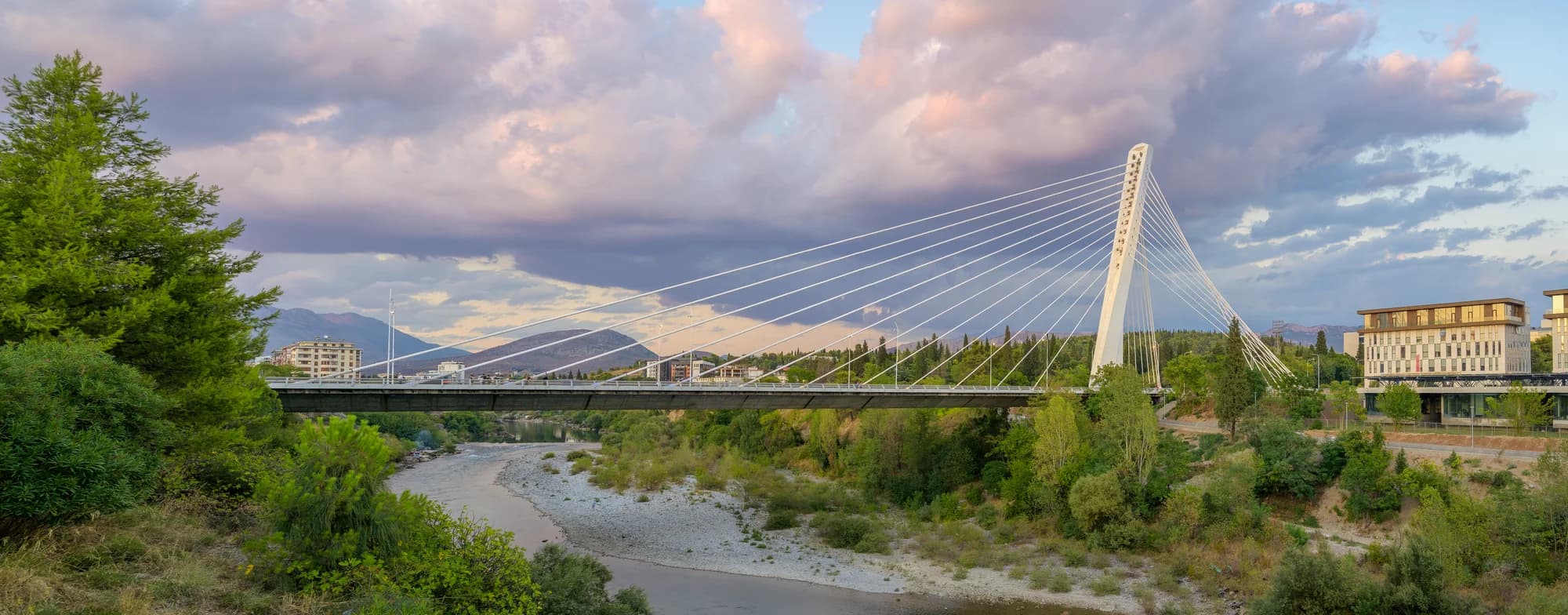
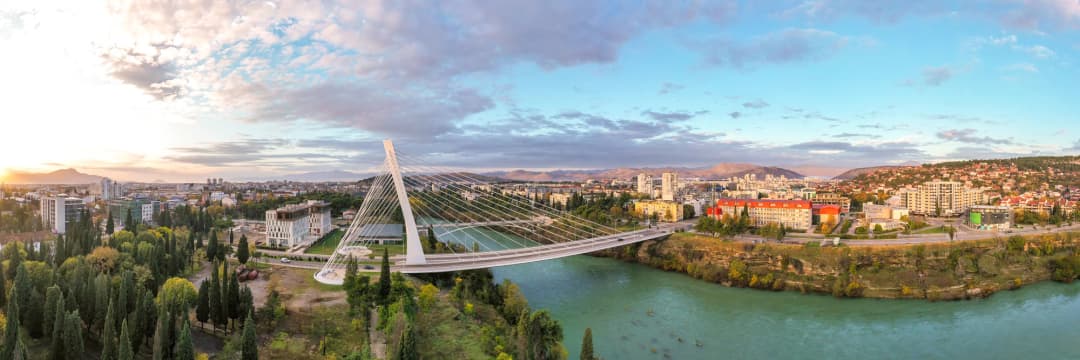
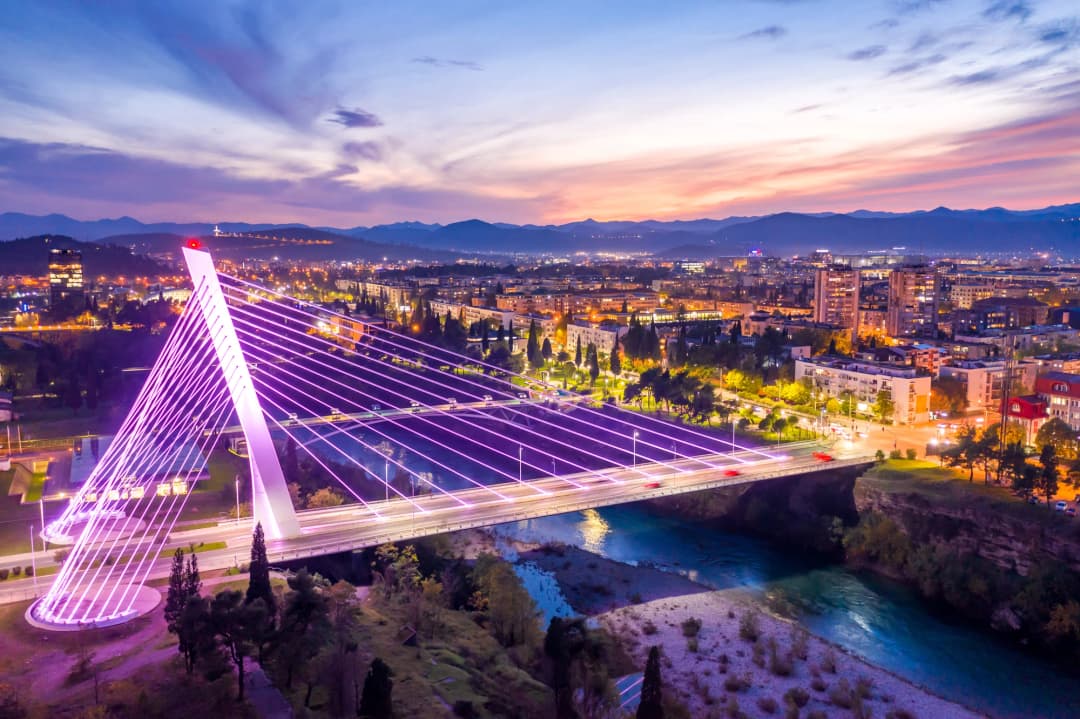
Completed in 2005, the Millennium Bridge is arguably the most recognizable structure in Podgorica. This cable-stayed bridge spans the Moraca with a single pylon and a web of cables that give it a harp-like silhouette. Lit up in various colors at night, it has become the unofficial city logo. Walk across at dusk for the best views — the river below, mountains in the distance, city lights coming on. Continue toward the river from the centre for the contrast between the older stone bridges and this one.
Republic Square and Independence Square
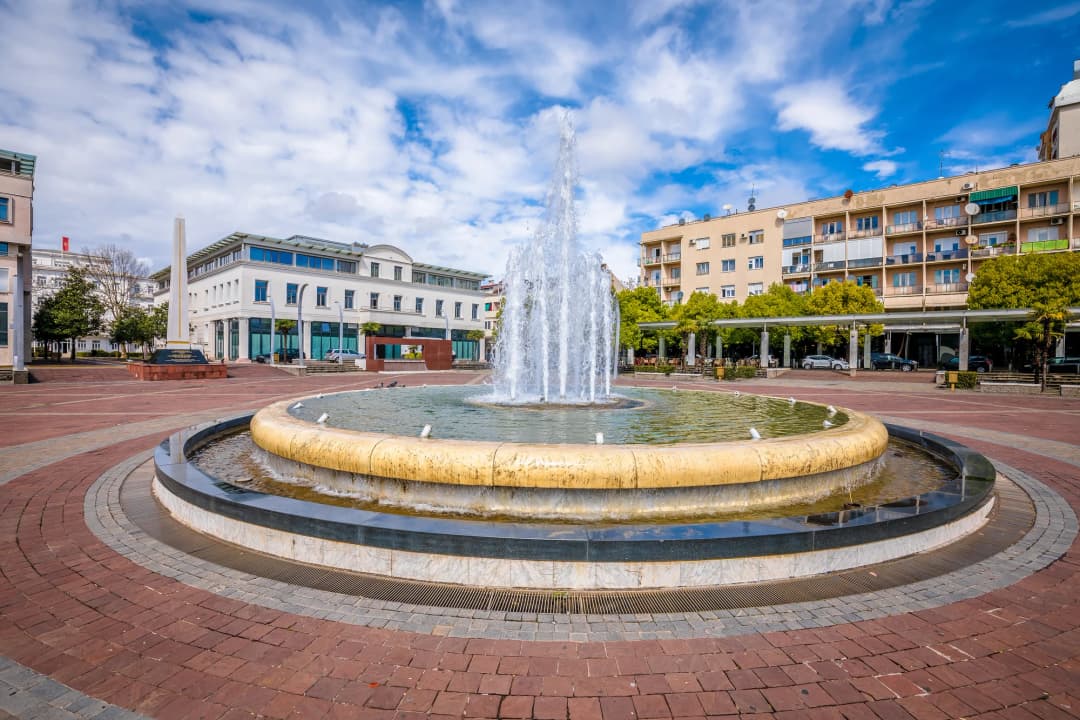
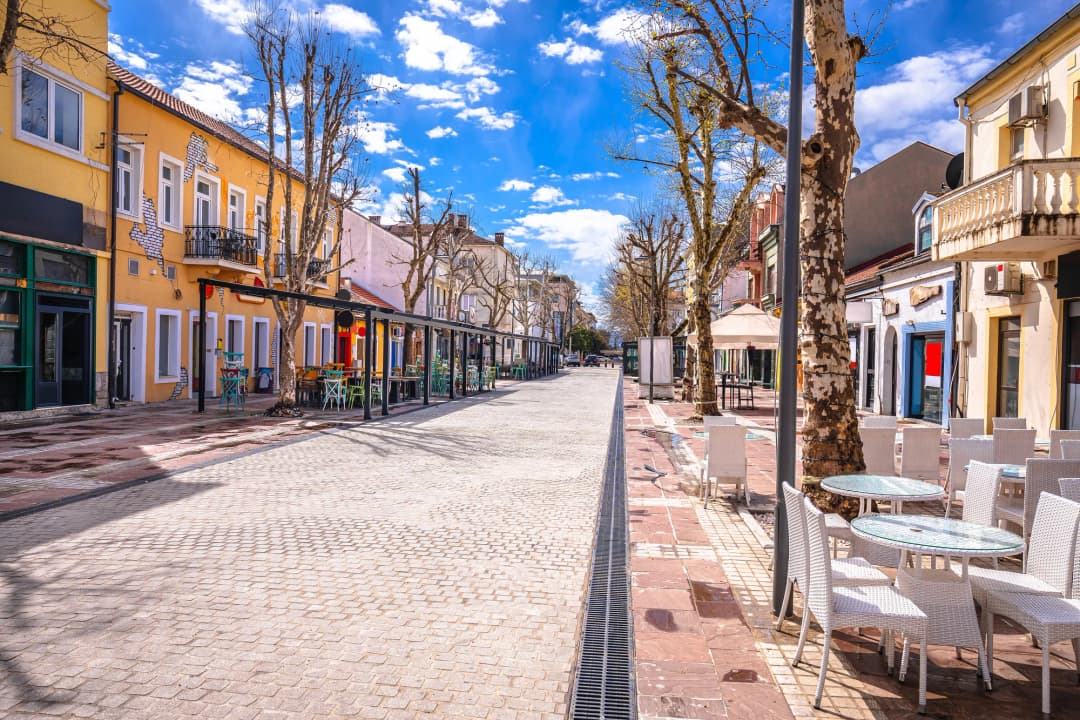
Republic Square (Trg Republike) is the main public square and the center of civic life, flanked by government buildings and City Hall. A short walk away, Independence Square (Trg Nezavisnosti) is a newer, more polished space surrounded by cafes. Independence Square together with Bokeška, Njegoševa and Hercegovačka streets forms the most convenient pedestrian core, and the useful pause for coffee or lunch rather than a checklist stop. Between the two squares lies the heart of modern Podgorica and a good starting point for any walking tour.
Cathedral of Christ's Resurrection
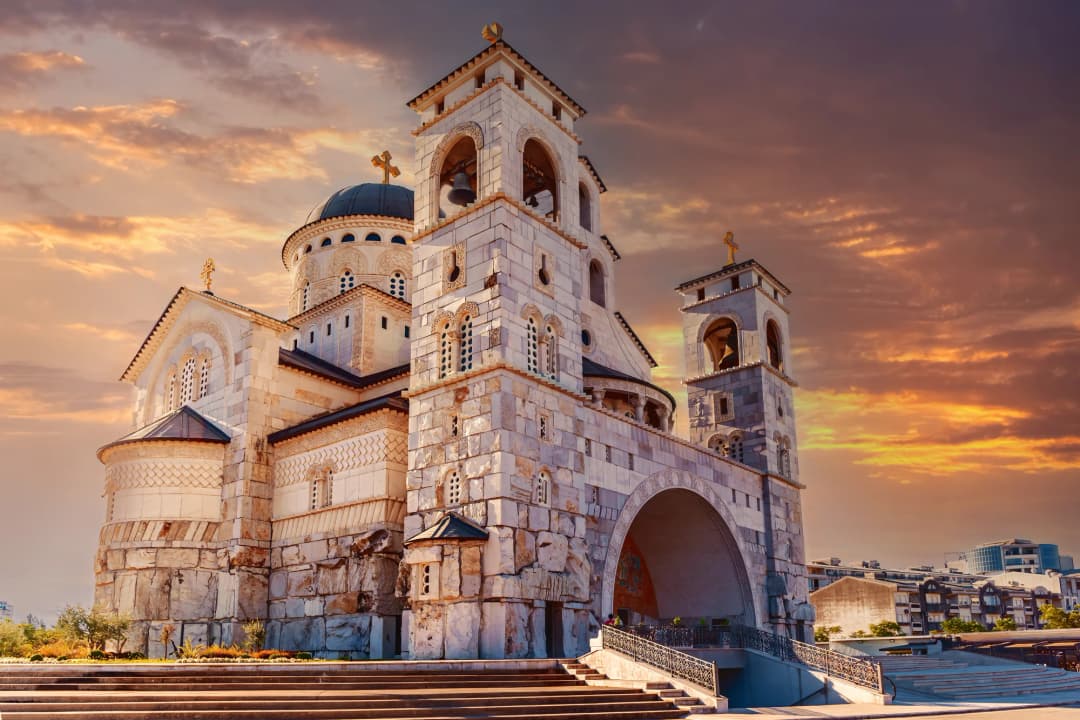
Completed in 2013 after nearly two decades of construction, this is one of the largest Orthodox churches in the Balkans. Its white stone exterior is topped with gilded domes that gleam in the Podgorica sun. The interior is richly decorated with Byzantine-tradition frescoes. Opinions are divided — magnificent to some, oversized to others — but it is undeniably impressive. Entry is free.
Museums and Culture
Podgorica will not rival Dubrovnik for cultural tourism, but it has genuinely worthwhile museums and a growing arts scene. The museum offer is distributed across an institutional network rather than concentrated in a single blockbuster building. The public institution Museums and Galleries of Podgorica says the City Museum was founded in 1950 and now sits alongside archaeological, historical, ethnographic and cultural-history departments. Its network also includes the Marko Miljanov Museum, the Modern Gallery (Moderna galerija), the Risto Stijović Gallery, the Art Gallery and Kuslev House.
The City Museum is more useful than a rushed list of monuments because its archaeological collections connect prehistoric evidence, Roman Doclea and later Podgorica. The museum's archaeological department currently publishes Tuesday–Saturday 10:00–18:00 and Sunday 10:00–14:00, closes Monday and labels the entrance accessible. Confirm before setting out: installations, holidays and maintenance can supersede a web schedule. Its official page is the authority for the current visit, not an old blog.
That range is a reason to check the program, not assume every venue will be open or showing a permanent collection on the day you arrive. Exhibitions, conservation work and hours change. Consult the museum institution's official site, then confirm the specific venue. Do not assume the venues share one ticket, one schedule or one level of step-free access — pick a second venue only after checking its own listing. That protects a one-day plan from becoming a door-to-door closure hunt. If you have only one cultural block, prioritize whichever exhibition best connects with the route you have chosen: archaeology after Duklja, modern art after the civic center, or local history before Stara Varoš.
Beyond that network, the Center for Contemporary Art in Krusevac hosts rotating exhibitions by Montenegrin and international artists — the best place in the country to see what young Montenegrin artists are doing. The Petrovic Palace, one of few pre-war buildings, was built in the late nineteenth century for Montenegro's royal family and now houses a section of the National Gallery with works by Montenegrin and Yugoslav artists. The palace itself, elegant and slightly faded, is as much an attraction as the art. The Natural History Museum offers a small but well-curated look at Montenegro's remarkable biodiversity — more compelling than it sounds for a country with mountains, lakes, coastline, and one of Europe's last wild rivers.
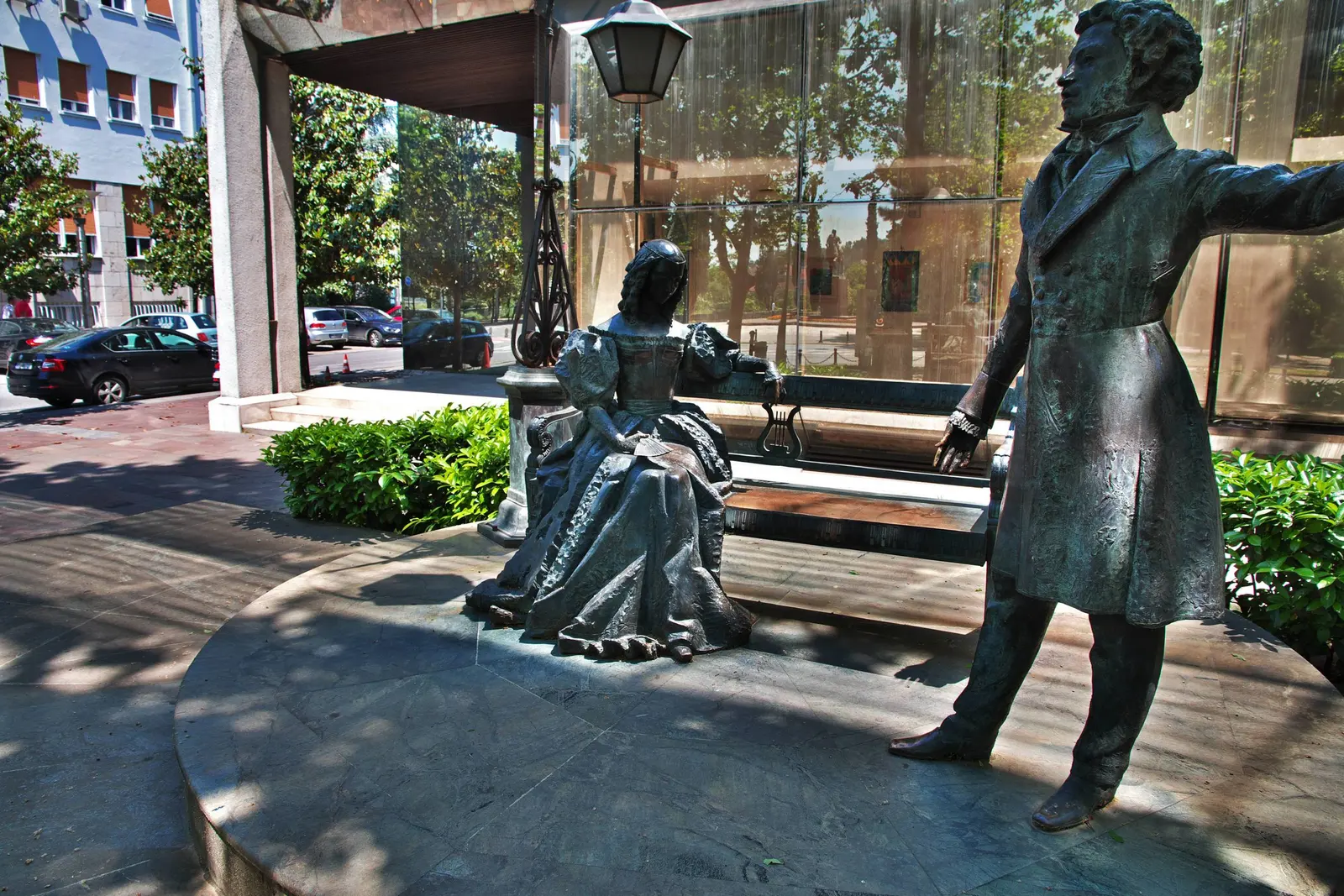
The Podgorica City Theater (Gradsko Pozoriste) hosts drama, dance, and music, usually in Montenegrin. Public art and civic spaces provide a second layer to any museum-focused walk through the centre.
Culture and Events
Montenegrin National Theatre (Crnogorsko Narodno Pozoriste)
Founded in 1953 (originally as Titograd National Theatre, renamed in 1969), the Montenegrin National Theatre is the country’s leading performing arts institution with over 70 years of tradition. It produces 4-5 new works per season spanning drama, ballet, and concerts, and holds a special interest in contemporary drama to encourage emerging Montenegrin playwrights [21].
In recent years, the theatre has expanded into opera production, starting with its first opera in 2020. Highlights include gala concerts featuring excerpts from Verdi’s Rigoletto and La Traviata, and Puccini’s La Boheme and Madama Butterfly [21].
FIAT – Festival of International Alternative Theatre
Running for over 30 years, FIAT is one of Montenegro’s biggest and most important cultural events. Typically held in September, this multidisciplinary international festival connects alternative theatres and artists from across Europe and beyond. The program integrates contemporary theatre with film, visual arts, music, and literature, fostering exchange between European and Montenegrin creators [22][23].
FIAT was created out of the need to form a new space for artistic exchange, exploring contemporary ideas, crossing boundaries, breaking existing models of theatrical expression, and creating new forms of performance [22].
Podgorica Cultural Summer
The annual Podgorica Cultural Summer festival brings outdoor performances, concerts, and cultural events to the city’s parks and public spaces during the warm months, transforming the capital into an open-air stage [23]. During July and August it adds outdoor concerts, theater, festivals, film screenings and open-air cinema to parks and squares across the city — a welcome counterpoint to the heat and a chance to see the city at its most social.
Cafe Culture and the Social Scene
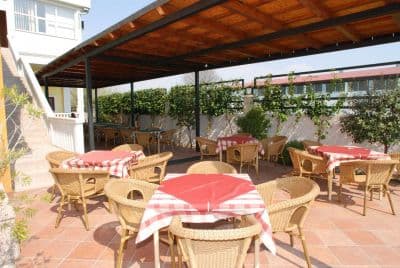
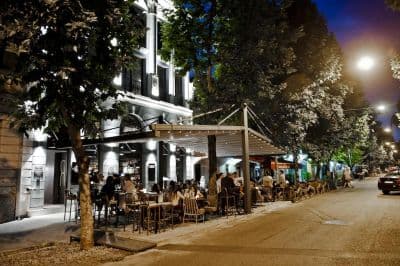
Podgorica has a thriving cafe culture that serves as the backbone of social life. Coffee is central to daily routine, with a quality cup costing between 1 and 2 euros [24]. Cafés serve office workers and students rather than only visitors. Two streets define the social geography:
- Njegoseva Street: The heart of nightlife, lined with bars, cafes, and clubs that come alive after sunset
- Bokeska Street: A pedestrian strip of cafes and restaurants where locals people-watch during the day and socialize at night
The Green Bazaar (Trznice i Pijace) is a bustling open-air market and social hub, giving visitors an authentic glimpse of daily life in the capital [25].
Emerging Gastronomy
Podgorica’s food scene blends Mediterranean and Balkan traditions with an increasingly international influence. Traditional Montenegrin staples include:
- Njeguski prsut: Smoked ham from the Njegos mountain village
- Cicvara: Creamy cornmeal and cheese dish
- Cevapi: Grilled meat sausages
- Pljeskavica: Balkan-style grilled meat patty
- Kacamak: Traditional cornmeal porridge with cheese and cream
Dining is remarkably affordable: a traditional meal at a local restaurant costs 7-12 euros, while a multi-course meal at an upscale establishment runs 30-50 euros [26].
Wine Scene
Montenegro’s wine culture centers on Podgorica, particularly the indigenous Vranac grape. Vranac (meaning “black horse”) produces a bold, dry red wine with dark color from its thick black skin, high alcohol content (~16%), and notes of cherry, blackberry, mint, and plum [27].
Parks, Rivers and Nature in the City
One of Podgorica's genuine surprises is how much green space it contains. For a city often described as "concrete," it offers real relief from summer heat.
Podgorica sits at the meeting of river systems and travel routes. The Morača is the dominant cut through the city; the Ribnica joins it near the historic core. The municipal tourism page also foregrounds the Zeta, Cijevna and Sitnica, a reminder that the capital's wider landscape extends beyond its central blocks. These corridors cool the visual field even when summer air remains hot, and they create short walks that feel surprisingly removed from traffic.
Gorica Hill is the signature green space — a forested hill rising from the city center that gives Podgorica its name (pod Gorica means "beneath Gorica"). Walking paths wind through oak and pine to a modest summit with city views, and official city material describes walking, cycling and exercise trails there. The round trip takes thirty to forty-five minutes, and spring wildflowers are excellent. Treat it as an urban park rather than a mountain excursion: start early or near sunset in hot weather, carry water and stay on established paths. At the foot of the hill, the tourism organisation dates the Church of St George broadly to the 9th–11th centuries and explicitly notes repairs and rebuilding. For a longer walk, the tourism organisation's Gorica–Malo Brdo–Duklja route description presents a roughly two-hour marked route with signage and rest points; verify current trail condition locally, and continue into the forest-park only with enough daylight, water and footwear for your chosen path.
The Ribnica River walk follows the smaller river from the Old Town toward its confluence with the Moraca — a pleasant twenty-minute stroll through a corridor of greenery. The Moraca riverbank is more dramatic, with walking and cycling paths between the Millennium Bridge and the Blaza Jovanovica Bridge. On hot evenings, the riverbank becomes the city's most popular gathering spot, with locals sunbathing and swimming in the cold mountain water. King's Park (Kraljev Park) is the most formal option — manicured grounds with benches, fountains, and shade trees in a central location, and Njegošev Park makes a natural link between the central grid and the river.
For a true highland day, save your energy for Lovćen National Park; for wetlands and lake landscapes, use Podgorica as a launch point for Virpazar and Lake Skadar.
Wine and Food Scene
This is where Podgorica genuinely excels, and the single best argument for spending more than a few hours here.
Plantaze Winery
The Plantaze vineyard on the Cemovsko Polje plain just south of the city is the largest single vineyard in Europe — over 2,300 hectares of vines across a flat, sun-drenched landscape. The star grape is Vranac, a robust, dark red native variety with deep color, rich berry flavors, and a characteristic tannic backbone. They also produce Krstac, a white variety yielding crisp, mineral wines that pair beautifully with local seafood and cheese.
Plantaze offers tours and tastings with a modern tasting room, English-speaking staff, and remarkably low prices. Book ahead in summer; the drive takes about fifteen minutes. A growing number of smaller, family-run wineries nearby are also producing excellent wine.
Best Restaurants
Pod Volat — Widely considered one of the best restaurants in Montenegro. Traditional cuisine elevated with modern technique, exceptional grilled meats, local cheese, and a deep Montenegrin wine list. Reservations recommended.
Lanterna — A beloved institution serving Italian-influenced Mediterranean cuisine with fresh daily pasta and coastal seafood. This is where the business class comes for long lunches.
Niko's — Generous portions of grilled meat and fish in a relaxed setting. Traditional hospitality at its best — the kind of place where waiters bring dishes you did not order because they think you should try them.
Belveder — A hilltop setting with city views, a strong kitchen, and one of the best terraces in town. Hard-to-beat sunset dining.
Coffee Culture
Montenegrins take coffee seriously. A lingering espresso or Turkish coffee is not just a drink but a social ritual. The cafes around Republic Square and along the Moraca fill up in the morning and stay full past dark. Sit down, order, and do not rush it. This is how Podgorica works. A small but growing craft beer scene rounds out the drinking options.
Skadar Lake Day Trip
Skadar Lake is the largest lake in the Balkans, shared between Montenegro and Albania, and one of Europe's most important wetland habitats. The nearest shore is just twenty minutes from central Podgorica.
The small town of Virpazar is the main gateway. Drive there in twenty minutes or take the scenic Belgrade-Bar railway — one of the best short rail journeys in the region. Standard boat tours run two to three hours, covering floating water lily fields (spectacular in summer bloom), island monasteries, fishing villages, and open water where you might spot pelicans, herons, and cormorants. Skadar Lake hosts one of Europe's largest pelican colonies. Private tours offer flexibility and sometimes include lakeside fish lunches featuring carp, bleak, and eel.
The hills above the southern shore form the Crmnica wine region, one of Montenegro's oldest. The warm, humid microclimate produces wines quite different from the Cemovsko Polje variety. Small wineries in the villages of Godinje and Limljani offer tastings, and combining a boat tour with a winery visit makes for a perfect day.
Moraca Canyon Excursion
North of Podgorica, the Moraca River has carved one of the most dramatic canyons in the Balkans. The road clings to the canyon wall high above the river, passing through tunnels and over bridges with vertiginous views. It is the main highway north toward Kolasin and Durmitor, and even if you have no destination in mind, the drive alone justifies the trip. The canyon stretches about thirty kilometers, with walls rising up to a thousand meters in places. The river below runs an intense turquoise-green, and the forest clinging to the canyon sides is dense and wild. Several pull-offs along the road let you stop for photos and take in the scale of the landscape. The drive from Podgorica to the heart of the canyon takes about forty-five minutes.
About halfway through, set into a natural amphitheater on the river's edge, sits Moraca Monastery. Founded in 1252, it is one of Montenegro's most important medieval monasteries. The monastery church contains frescoes from the thirteenth and seventeenth centuries — the earlier ones fragmentary but extraordinary, showing a sophistication of technique that speaks to the ambition of medieval Montenegro. The monastery grounds are peaceful and well maintained, with gardens, a small shop selling honey and rakija produced by the monks, and sweeping views up the canyon walls. Entry is free; modest dress is required. This excursion works well as a half-day trip from Podgorica, or as the first stop on a longer drive north to Kolasin or Durmitor National Park.
Other Day Trips from Podgorica
Podgorica's central position makes it the ideal launching pad for the rest of Montenegro.
The Cijevna falls: the “Niagara Falls of Montenegro”
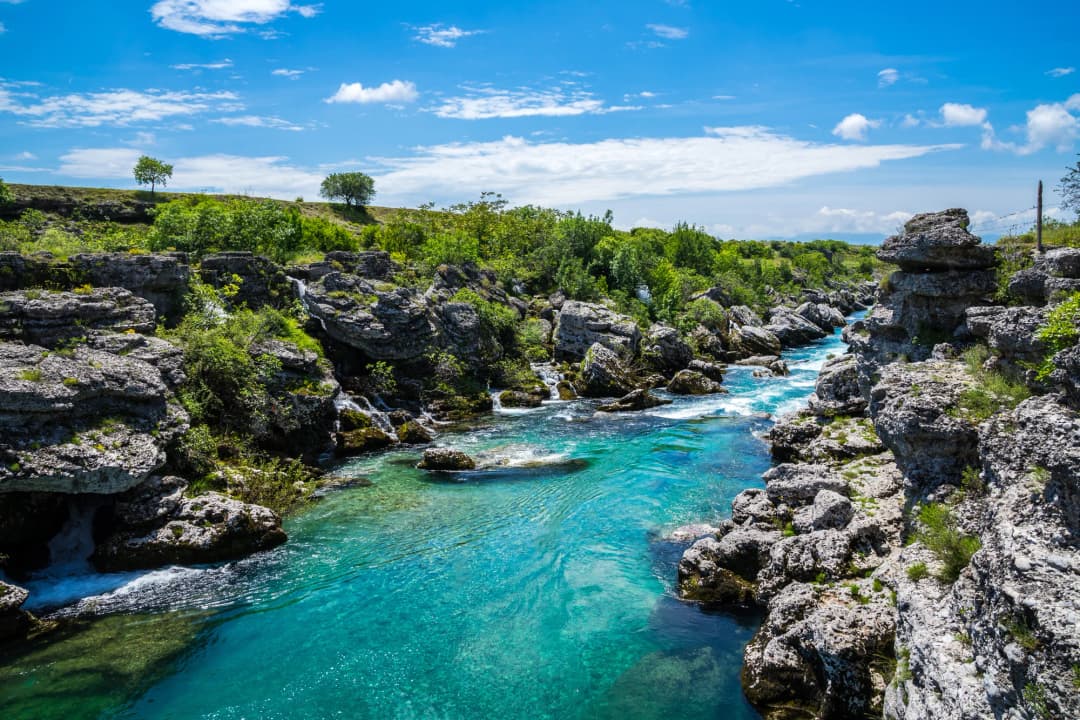
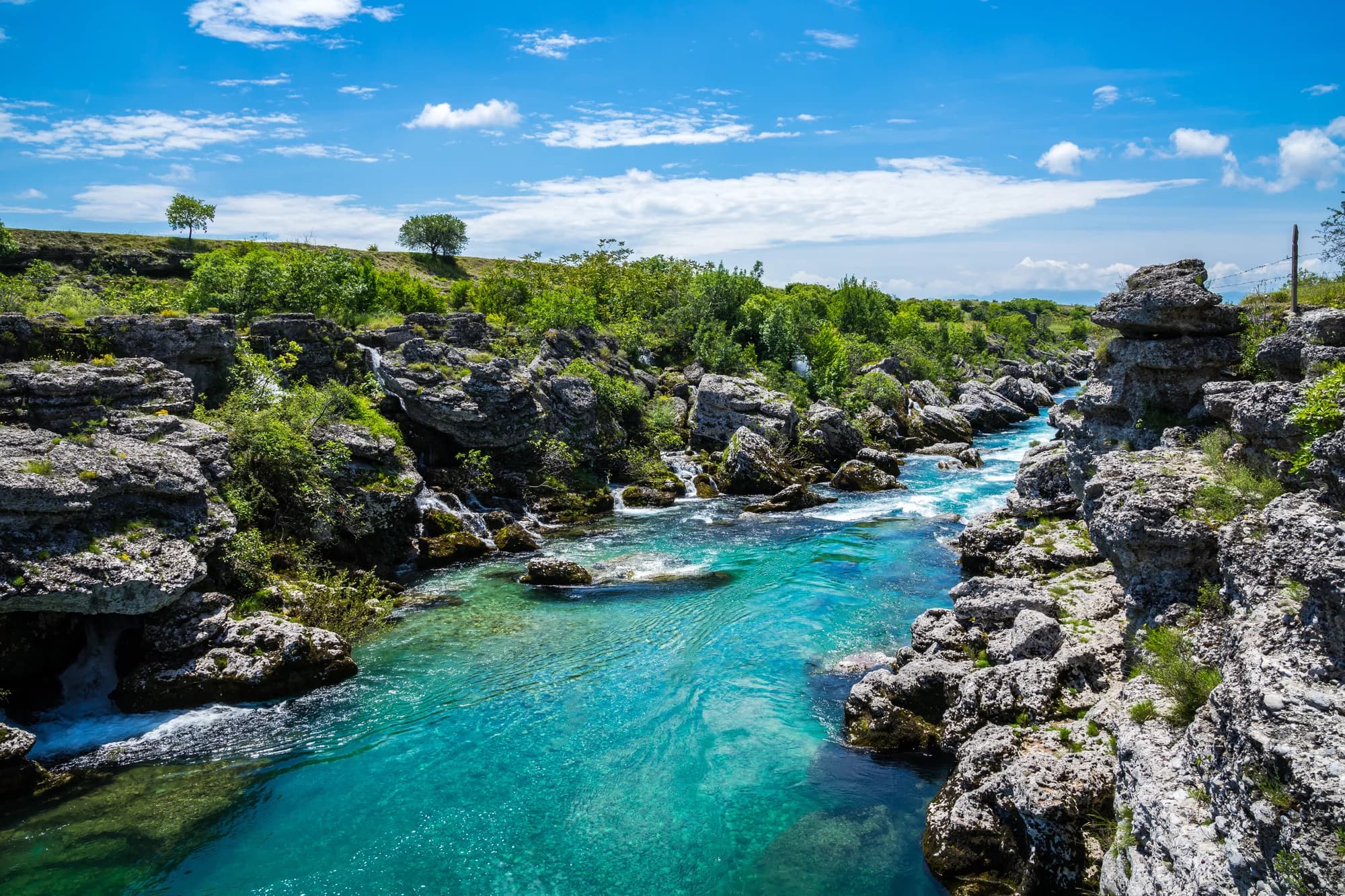
On Podgorica's outskirts, the Cijevna River cascades over a wide limestone shelf in a spot locals call their "Niagara." The nickname oversells it and creates the wrong expectation. This is a compact limestone river landscape whose appearance depends strongly on water levels: after dry periods, the flow can be modest; after wetter weather, the channels and falls become far more dramatic. The stepped waterfall is genuinely beautiful, especially in spring, and the honest reason to go is the geology and river setting, not a comparison with North America. Swimming in the pools below is a favorite local summer activity, and a popular restaurant sits nearby. It is reachable by car or city bus, though the site and other dispersed outer districts require more planning by taxi, local transport or rental car.
There is limited shade around exposed viewpoints and edges can be slippery or unprotected. Keep back from fast water, supervise children closely and do not assume conditions visible in a photograph will match the day of your visit.

Cetinje
Thirty minutes west, the old royal capital is reached via a road climbing through the Loveen mountain pass. A small, elegant town of former embassies, royal palaces, the Cetinje Monastery (housing a claimed relic of the True Cross), and the National Museum of Montenegro. Cooler, quieter, and steeped in history.
Ostrog Monastery
Ostrog Monastery lies an hour north, carved directly into a sheer cliff face above the Zeta River valley. The most visited pilgrimage site in the Balkans, it draws visitors of all faiths to see the relics of Saint Basil of Ostrog. The upper monastery appears to hover on the rock face. Even for the non-religious, the setting is unforgettable.

Budva and the Coast
Budva is under an hour away via the Sozina Tunnel. Budva's fortified old town and beaches are the most popular draw; the Dukley Beach Club area offers a more polished Mediterranean experience. An easy beach day from Podgorica with time left for dinner back in the capital. A rail day trip to Bar can instead pair the journey with the reopened King Nikola’s Palace museum, but confirm both train and museum on the same day.
Suggested Itineraries
The most coherent way to understand Podgorica is chronologically, while accepting that the surviving fragments are scattered. Begin at Duklja, move to Stara Varoš and the Clock Tower, then cross the city center toward the Morača and the monumental architecture of the twentieth and twenty-first centuries. This route turns what can seem like urban discontinuity into the story itself: conquest, destruction, rebuilding and expansion.
Morning: Visit Duklja early, before the exposed site becomes hot. Return to Stara Varoš and walk from the Clock Tower toward Sastavci. Midday: Cross into the central grid — Independence Square, Bokeška, Njegoševa and Hercegovačka — for lunch and one museum or gallery chosen from the current official program. Late afternoon: Walk through Njegošev Park to the Morača, then follow the river viewpoints toward the Millennium Bridge, or climb Gorica hill in the cooler hours. Evening: Stay in the center for dinner or explore the newer districts around the broad boulevards. This sequence minimizes backtracking, orders the day by sun exposure rather than by hype, and lets the city's chronology unfold in order.
If accommodation location matters, compare the old centre, Gorica and Preko Morače in our Podgorica areas guide. Staying central makes the one-day route mostly walkable; an airport-edge room suits a different trip.
| Step | Timing | Stop |
|---|---|---|
| 1 | early | Stara Varoš |
| 2 | late morning | river + centre |
| 3 | midday | City Museum |
| 4 | cooler hours | Gorica hill |
Source: podgorica.travel, muzeji.podgorica.me
If you have two days, use the second for the Cijevna, a slower museum visit or a regional excursion — Skadar Lake, the Moraca Canyon, Ostrog or Cetinje all fit comfortably. Travelers building a longer national itinerary can use the capital as the practical pivot in a first-time Montenegro journey. The city works especially well between coast and mountains because it is a transport interchange rather than a destination reached by a single scenic road.
Nightlife
Podgorica's nightlife will not rival Belgrade or Thessaloniki, but it has been improving steadily and offers enough variety for an enjoyable evening out. The scene is driven largely by the university student population and a growing community of young professionals who have brought more sophisticated tastes to the city's bar culture.
The craft cocktail and wine bar scene has expanded significantly in recent years. Several spots around Republic Square and along the Moraca riverbank serve excellent Montenegrin wines by the glass alongside creative cocktails. The atmosphere in most bars is relaxed and social — Montenegrins are not in a rush, and neither should you be. Ask a bartender to pour you a glass of something local and let the evening unfold.
In summer, the riverside cafes transition from coffee service to cocktails and music as the sun goes down, becoming the undisputed center of social life on warm evenings. The outdoor terraces are the place to be, and the vibe is more Mediterranean than Balkan. A handful of nightclubs cater to the university crowd with regional pop, electronic music, and international hits — do not expect much to happen before midnight.
Shopping
Podgorica has the best retail options in Montenegro. City Mall on the Moraca's east bank was the country's first modern mall; Delta City on the outskirts is newer and larger; TQ Plaza is smaller but more central.
For authenticity, visit the green market (pijaca) near the city center, where vendors sell fresh produce, cheese, honey, dried meats, and regional specialties. Arrive early for the best selection. The best souvenirs are consumable: Vranac wine from Plantaze, local mountain honey, dried figs, coastal olive oil, and rakija in various flavors.
Where to Stay
Podgorica's hotel scene has improved considerably, with options ranging from international brands to boutique properties and well-appointed apartment rentals.
The Republic Square area is the most central location, within walking distance of the Old Town, the main squares, and the best restaurants. This is where you will find most of the mid-range and upscale hotels, and the advantage is pure convenience — you can walk to almost everything. The Moraca riverside offers a slightly quieter setting with easy access to the riverbank walking paths and the Millennium Bridge. This area has seen significant new development and has some of the city's newest properties. Newer neighborhoods around City Mall and Delta City on the east bank offer modern apartment-style accommodation at lower prices, though you will need a car or taxi to reach the center. Our guide to where to stay in Podgorica compares the center with quieter residential areas.
Podgorica is significantly cheaper than the coast, with excellent value at every price point. Booking ahead is less critical here than in Budva or Kotor — the city does not experience the same peak-season crunch — though summer weekends can fill up during events. Apartment rentals on major booking platforms are widely available and often represent the best value, particularly for longer stays.
Who should stay — and who should move on?
Stay overnight if your flight or train timing is awkward, you want museums without rushing, or you prefer a working city’s restaurants and cafés to a resort promenade. Podgorica is also a logical reset between regions. It need not compete with the coast. If your only priority is a stone-walled Adriatic setting, compare Kotor and Dubrovnik or choose a base from the Petrovac areas guide instead.
Move on the same day if the capital is only an airport label and your confirmed connection is comfortable. Do not add a hurried city circuit between separate tickets, or assume a road journey will match a map’s ideal time. Summer traffic, border queues, roadworks and weather can turn a neat plan into a missed departure.
Getting There and Around
From Podgorica Airport
Podgorica Airport (TGD) is the main international gateway, just fifteen minutes from the center with flights across Europe. Small and efficient — do not expect long waits. The terminal itself is at Golubovci, in the separate municipality of Zeta, outside the central city. Taxis to the center run a fixed fare.
The airport's official transport page now identifies a bus stop in front of the terminal and names operators, but the bus timetable displayed when this guide was researched was valid only through 31 May 2025, and the airport itself warned that schedules change. Do not build a 2026 connection around it. Check a current operator departure immediately before travel, use the current airport transport page on the day of travel, or take a taxi from the official airport listing. A pre-agreed transfer is the low-friction choice for a late arrival. Our Golubovci and airport gateway guide explains why the terminal, rail halt and settlement names can confuse first-time arrivals.
By train, intercity bus and city bus
The central bus station connects to every Montenegrin town and regional cities including Dubrovnik, Sarajevo, Belgrade, and Tirana. Buses are frequent and affordable.
Podgorica is also the hub of Montenegro's rail network. The train station nearby sits on the Belgrade-Bar line, one of Europe's most scenic railways. The train to Bar takes about an hour through tunnels and over viaducts; the ten-hour journey to Belgrade crosses some of the most dramatic terrain in the Balkans, including the famous Mala Rijeka viaduct. Railway Transport of Montenegro publishes a live local timetable search and a Podgorica station contact, including services on the Bar–Podgorica–Bijelo Polje corridor and the Podgorica–Nikšić line. Because seasonal works and schedule revisions occur, consult the official rail timetable instead of copying a time from an old guide.
For urban buses, the capital’s official transport portal publishes route and stop information and links Google Maps integration. Treat real-time information as guidance, allow a buffer and confirm the direction at the stop.
By car, taxi and on foot
Rental cars are the most practical option for day trips. Several international and local agencies operate at the airport and in the city center. Roads in Montenegro are generally good but often narrow and winding in the mountains, and Montenegrin driving style is assertive — be prepared for overtaking on blind curves.
Central Podgorica is compact enough to explore entirely on foot, and within the center walking is often faster and more revealing than repeated short rides. Taxis are cheap and widely available — use an app-based service for the most reliable pricing, and agree on the operating method or request the meter before departure. There is a public bus system, but for most visitors, walking and the occasional taxi will cover everything you need within the city. Duklja, Medun, the Cijevna, the airport and spread-out neighbourhoods require a deliberate transport plan.
| Mode | What exists | Caveat | Action |
|---|---|---|---|
| Airport bus | stop exists | published schedule expired | confirm operator now |
| Rail | official search | station contact | check travel date |
| City bus | route + stop portal | live map integration | allow a buffer |
Source: montenegroairports.com, zpcg.me, podgorica.me
Practical Tips
Weather and summer heat: Podgorica is the warmest city in Montenegro; summer temperatures regularly hit 40 degrees Celsius. The city sits in a low basin that traps heat, making July and August genuinely oppressive. MONSTAT’s 2024 Statistical Yearbook reports July and August 2023 means of 29.6°C and 27.8°C at Podgorica station; the observed monthly absolute maxima were 40.9°C and 39.2°C. These are observations from one year — not climate normals or a forecast — but they justify planning exposure rather than improvising at noon. Plan outdoor activities for early morning and late afternoon in high summer, reserve museums or a long lunch for the hottest hours, and check the current official forecast and warnings before an outdoor route.
Bring refillable water, sun protection and shoes that tolerate broken paving. Shade is uneven. Children, older travellers and anyone with health or mobility constraints may need a shorter route, taxis between zones or a complete midday pause. A city is not “done” by enduring unsafe heat.
Best time to visit: Spring (April-May) and autumn (September-October) bring warm but comfortable temperatures, green hills, and a lively city without the heat, and they usually make long urban walks more comfortable. Autumn wine harvest season is a particular highlight. Summer remains workable if you begin early, rest indoors at midday and return to the rivers near evening. Winter is mild but grey and can be quiet and useful for museums; the upside is having the city to yourself and low hotel prices, though rain and reduced daylight affect outdoor plans.
Combining destinations: The smartest approach is using Podgorica as a hub — two or three days in the city and surroundings, then a rental car to the coast or mountains. It also works well as a mid-trip stop between the coast and the north.
Budget: One of Europe's most affordable capitals. A good restaurant meal with wine costs a fraction of what you would pay in Dubrovnik or Split. Accommodation is similarly well-priced.
Language: Montenegrin is the official language; English is widely spoken in tourist-facing businesses. A few local words — hvala (thank you), dobar dan (good day), molim (please) — will be warmly received.
Safety: A safe city by any standard. Petty crime is rare, violent crime against tourists essentially unheard of.
Currency: Montenegro uses the euro despite not being an EU member. Cards are widely accepted; smaller establishments and market vendors prefer cash. ATMs are plentiful.
What to Confirm Before You Go
| Horizon | Details |
|---|---|
| HISTORY | documented dates, monuments and census results |
| SEASONAL | museum access, trail conditions and daylight |
| SAME DAY | bus and train departures, heat and road delays |
Source: podgorica.me, muzeji.podgorica.me, monstat.org, podgorica.travel, montenegroairports.com, zpcg.me
Why Podgorica Is Underrated
Podgorica consistently ranks among Europe’s most overlooked capitals. Many travelers treat it as nothing more than a transit point between the Adriatic coast and the northern mountains. A 2024 Post Office Travel Money study ranked Podgorica the fourth most affordable city among 38 European destinations – its first time in the top 10 [24].
What visitors who pause discover:
- Authenticity: Unlike tourist-saturated Dubrovnik or Kotor, Podgorica is a working city where visitors experience genuine Montenegrin daily life
- Value: Coffee for 1-2 euros, hearty meals for under 10 euros, and wine from one of Europe’s largest vineyards at fraction of Western European prices
- Gateway position: Within 30 minutes to an hour of Skadar Lake, the Moraca Canyon, Cijevna Canyon, Ostrog Monastery, and the historic royal capital of Cetinje
- Safety: Podgorica is consistently rated as a very safe city with low crime and few tourist scams [25]
- Rapid evolution: New restaurants, craft cocktail bars, and cultural spaces are opening regularly, creating a sense of momentum and discovery
As one travel writer noted, Podgorica is “the gastronomic capital you didn’t know you needed” [26]. Another observed that there is genuine “charm beneath the concrete” for those willing to look [33].
The capital also offers something resort Montenegro cannot: an unedited view of the country at work. Cafés serve office workers and students rather than only visitors. Exhibitions speak to domestic debates. Buildings show the ambitions and compromises of different political eras. Rail lines and roads expose the relationships between the coast, the central plain and the northern mountains.
That does not make every street beautiful, nor should a serious guide pretend otherwise. Podgorica's reward is cumulative. One Roman wall, one Ottoman lane or one riverside viewpoint can feel isolated; together they show why this location has repeatedly attracted settlement and power. Travelers who arrive expecting a compact Adriatic old town may leave disappointed. Those who approach it as a layered Balkan capital often find the missing chapter in their understanding of Montenegro.
Frequently Asked Questions
Is Podgorica worth visiting for one day?
Yes, if you want history, museums and ordinary city life rather than a coastal postcard. A focused day can combine Stara Varoš, the river confluence, the central civic district and one cultural venue. Duklja is possible too, but adding it makes an early start important.
How many nights should I stay?
One night works for a transit stop with a half-day walk. Two nights are better if you want Duklja, museums and a nearby river excursion without rushing. A third night makes sense mainly if Podgorica is your base for Lake Skadar, central wine country or business.
Can I explore Podgorica without a car?
The central sights are walkable, and official rail links make some onward journeys possible. Duklja, the Cijevna and dispersed outer districts require more planning by taxi, local transport or rental car. Always verify current airport, bus and train information with the operator.
When is the best time to visit?
Spring and autumn usually make long urban walks more comfortable. Summer remains workable if you begin early, rest indoors at midday and return to the rivers near evening. Winter can be quiet and useful for museums, but rain and reduced daylight affect outdoor plans.
History
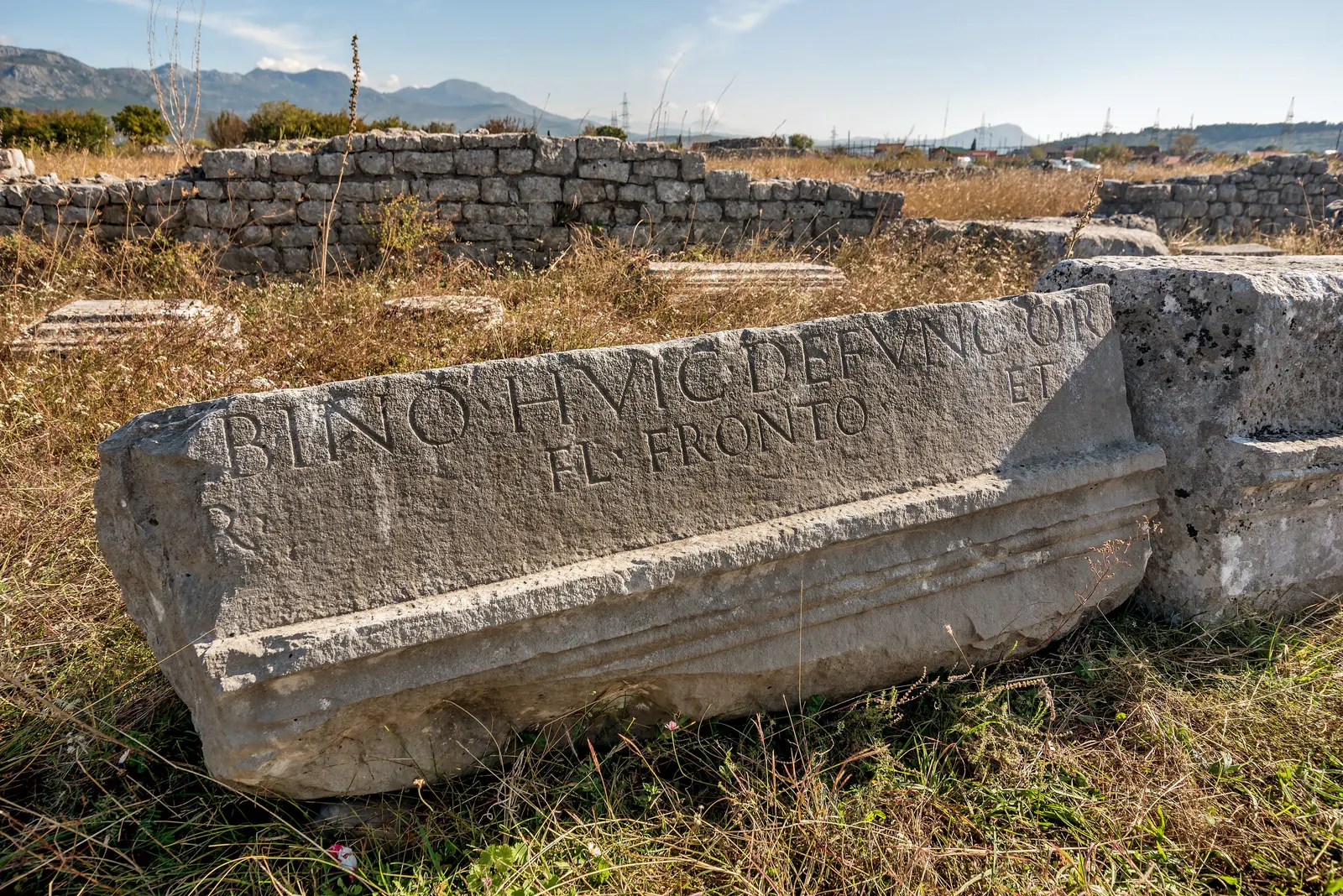
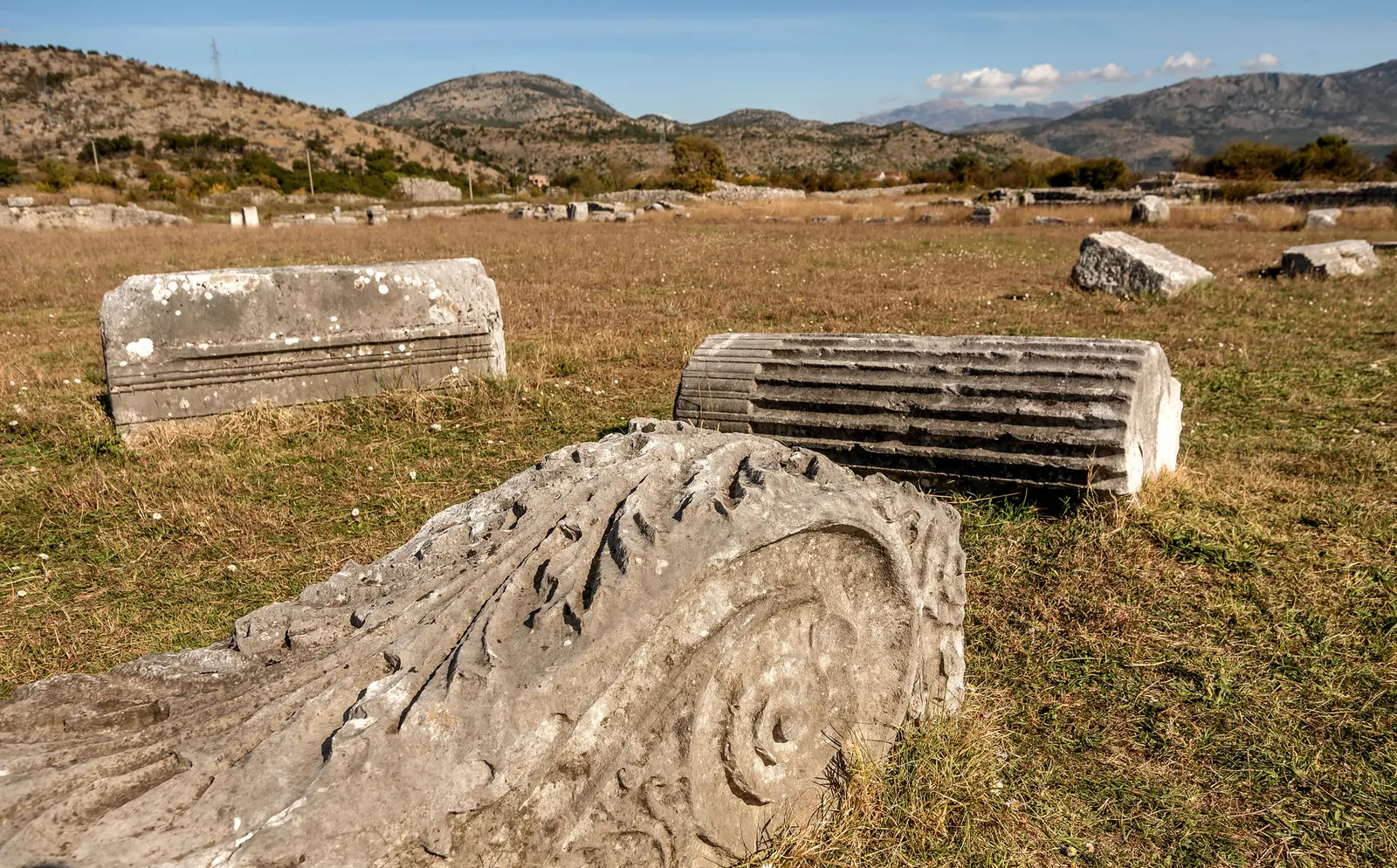
The capital's past is better read as overlapping nearby settlements and political identities than as one straight line. Archaeological evidence around the Zeta plain is much older than the name Podgorica. Doclea developed north of today's centre in the Roman period, while medieval Ribnica and Podgorica appear later in written history. These places belong to the same wider landscape without forming one continuously preserved street plan.

.jpg&w=2048&q=75)