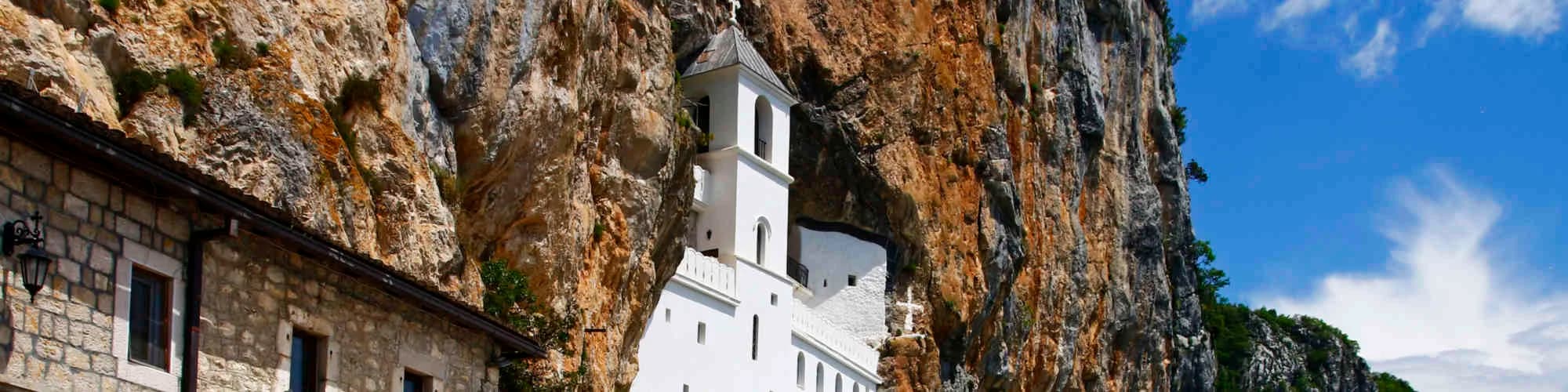
Ostrog is not simply a cliff building to photograph. It is a working Orthodox monastery, a place of pilgrimage centred on Saint Basil of Ostrog, and a compact mountain site where worship, narrow roads and large visitor flows meet. A good visit therefore begins with a choice: come as a quiet guest, leave time for the approach and accept that prayer takes priority over sightseeing.
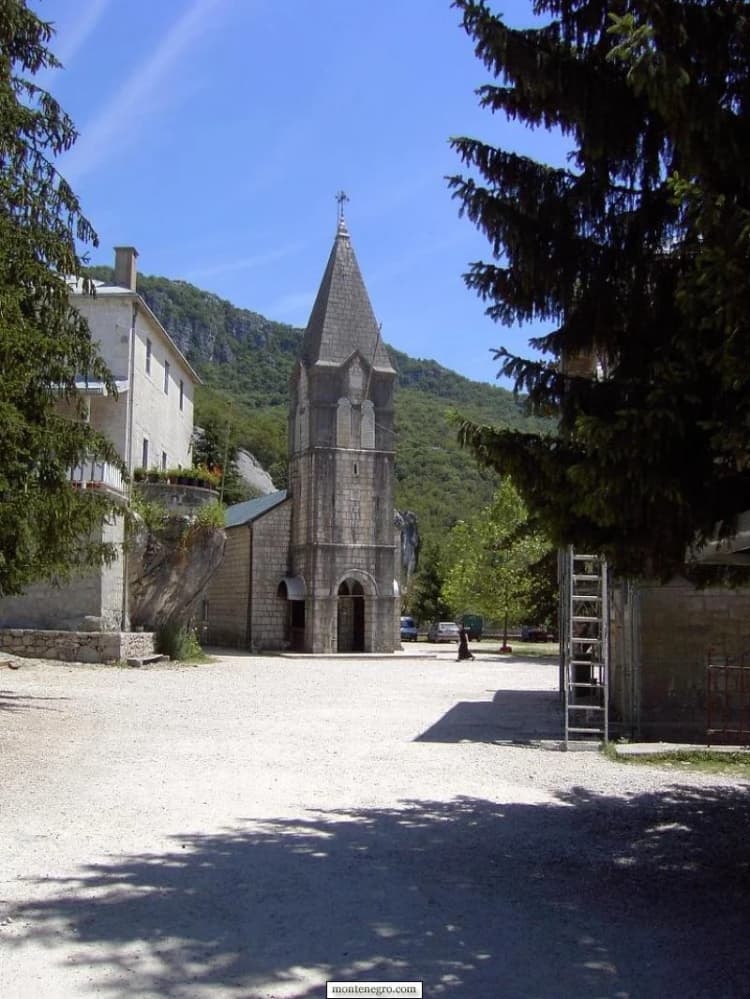
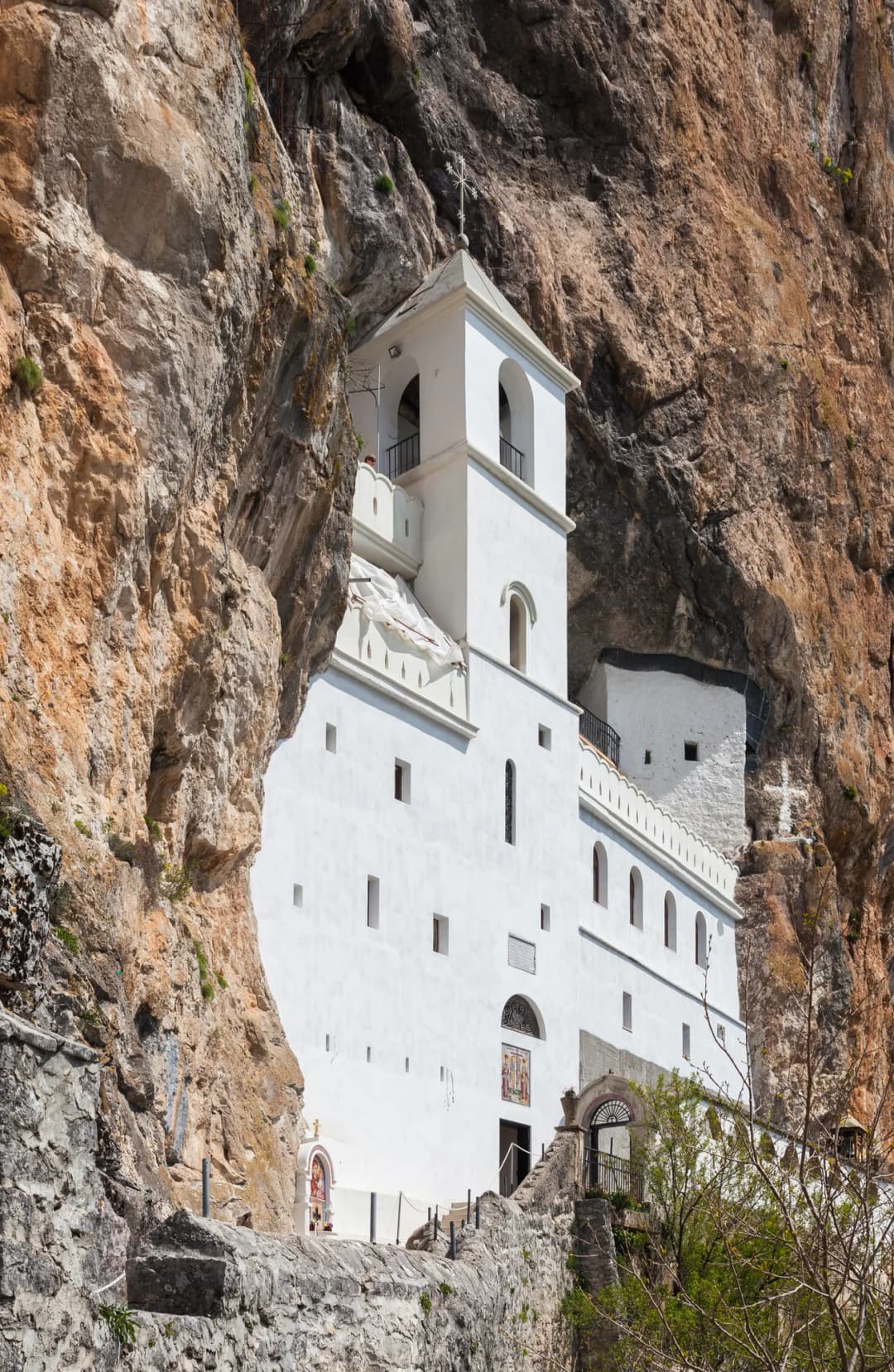
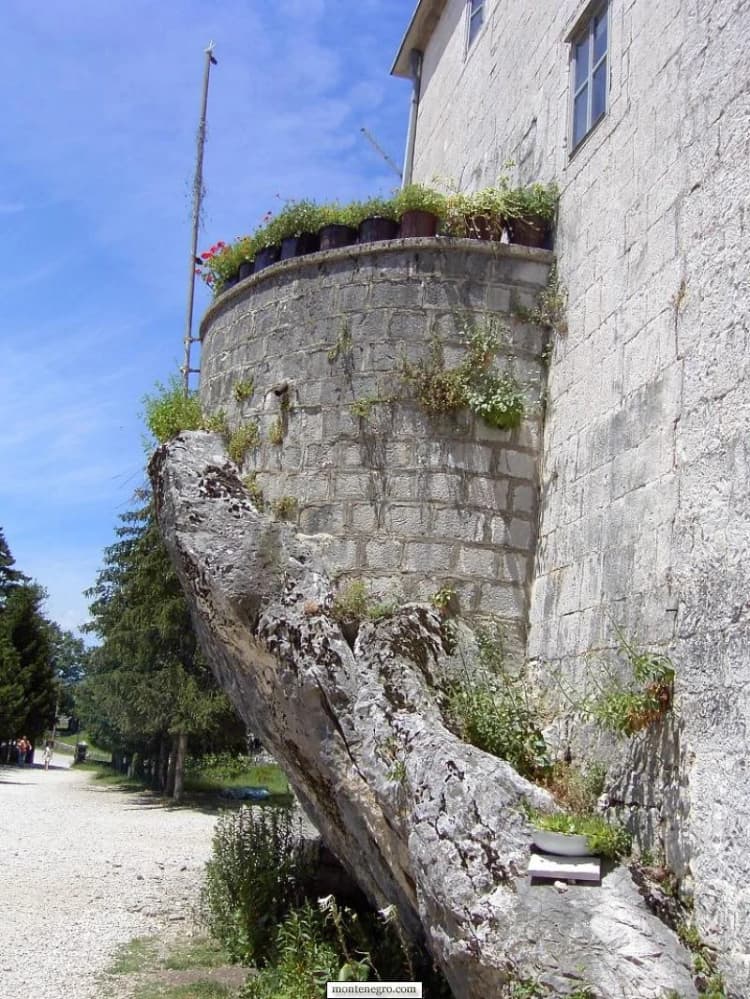
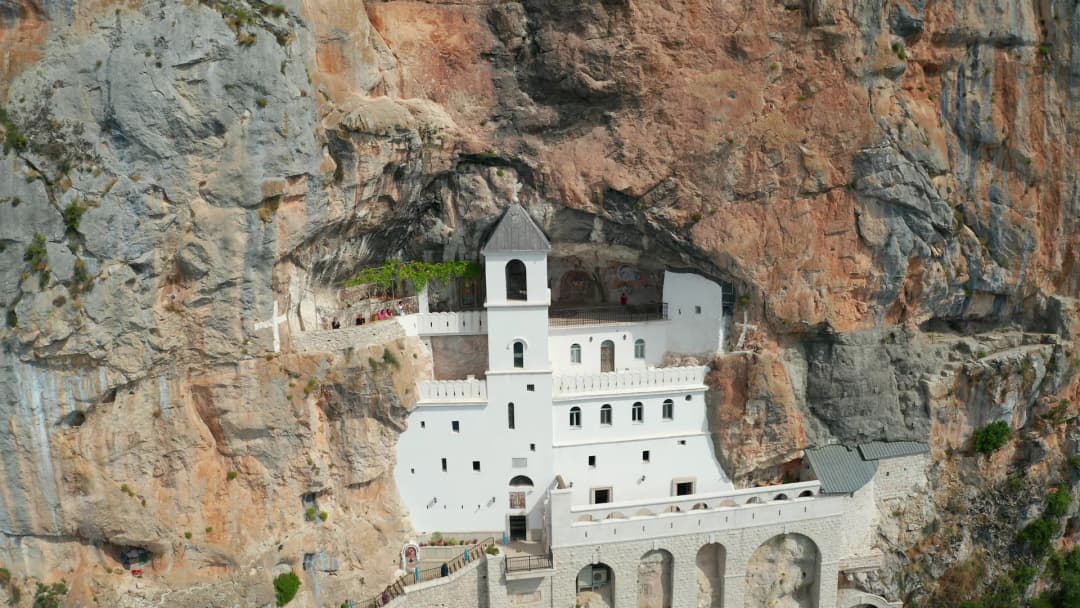
The complex has two principal levels. The Lower Monastery provides the broader arrival space and the Church of the Holy Trinity; the Upper Monastery is the white, cave-built sanctuary fixed into Ostroška Greda above it. Montenegro’s national tourism organisation describes a wooded ascent of roughly three kilometres between the levels and places the Upper Monastery at about 900 metres. Treat those figures as orientation, not a promise of an easy stroll: heat, crowds, wet stone and your own mobility matter more than the number on a map.
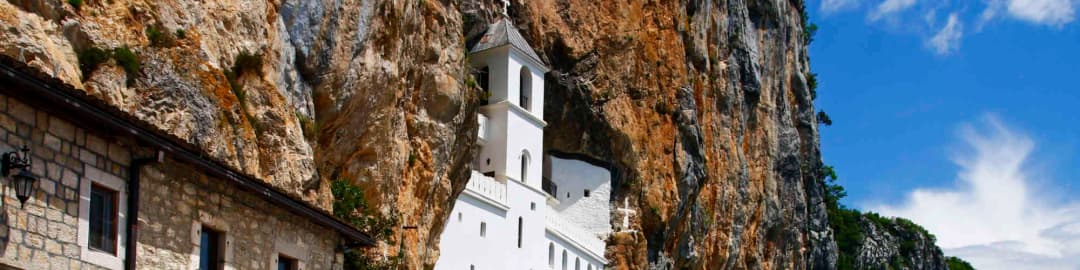
Read Ostrog as a living two-level monastery
The monastery’s official history describes the approach first reaching the Lower Monastery and then climbing to the Upper sanctuary. Its account connects the caves with earlier ascetic life and with Saint Basil’s seventeenth-century renewal. This is more precise than treating 1665 as the construction date of everything now visible. Buildings, chapels, guest facilities and paths developed across different periods.
At the Upper Monastery, circulation narrows through gates, terraces, stairs and tiny cave churches. Saint Basil’s relics are kept in the Church of the Presentation. For believers, this is the spiritual centre of the visit. For a non-Orthodox or non-religious visitor, the respectful response is the same: wait without pushing, keep conversation low, make space for worshippers and do not turn the reliquary room into a photo stop.
The monastery’s biography records Saint Basil’s final years at Ostrog and his death there on 12 May 1671. Claims of healing and miracles belong to the site’s living faith and should be reported as beliefs, not converted into medical promises. Visitors seeking history can recognise both layers: a documented ecclesiastical institution and a devotional tradition that explains why people travel long distances to pray here.
Choose your approach before you arrive
| Approach | Best for | Main constraint | Decision before leaving |
|---|---|---|---|
| Drive toward Lower and Upper Ostrog | Limited time or reduced walking range | Narrow bends, opposing traffic, scarce peak parking | Check current police and monastery notices |
| Walk from Lower to Upper Ostrog | Pilgrims and prepared walkers | Steep three-kilometre ascent, heat and uneven surfaces | Carry water and allow a slow return |
| Train plus onward transfer or walk | Independent travellers avoiding a full car journey | The rail stop is not the Upper Monastery; the last segment needs planning | Confirm the current timetable and safe onward route |
| Organised day trip | Visitors who want transport simplified | Fixed dwell time can conflict with queues or services | Ask which monastery level is included and how long is allowed |
Driving is not automatically the easiest choice. The final mountain road has tight sections, and feast days can require temporary traffic control. For the Saint Basil celebrations in May 2026, Montenegro’s police introduced a one-way arrangement on the Ostrog–Ždrebaonik road because of expected visitor pressure. That order expired, but it is useful evidence of what peak pilgrimage conditions can become. Check the latest official traffic notices, not an old blog timetable.
| Stage | What to do | Note |
|---|---|---|
| Lower Monastery | orient and assess | |
| On foot | walk about 3 km | steep, weather-exposed |
| By vehicle | continue by road | traffic and parking vary |
| Upper Monastery | enter as a guest |
Source: montenegro.travel
Practical plan for the day
Start early in hot weather and avoid building a same-day itinerary around a precise exit time. Check the monastery’s official portal for current services and notices. It publishes telephone and email contacts, including a guesthouse line, but a contact is not a guaranteed reservation. If overnight accommodation is essential, confirm it directly before travel.
Wear shoes suitable for stairs and polished stone. Cover shoulders and knees; avoid beachwear, loud group commentary and clothing chosen mainly for photographs. Bring water, sun protection and a light layer, but keep bags compact because the cave-church spaces are very small. There is no need to imitate barefoot or kneeling pilgrims. Those are personal devotional acts, not a tourist challenge.
Families should keep children close on terraces and stairs. A visitor with limited mobility should ask current staff or the monastery about the highest practical vehicle access and recognise that the oldest spaces cannot be made spacious. Do not assume a coach description such as “Ostrog visit” includes both levels.
For a wider route, pair the monastery with the Bjelopavlići Plain guide or a focused Danilovgrad day trip, rather than racing onward to several distant sights. Our Ostrog pilgrimage archive preserves an earlier journey and explains how the approach feels; it should not replace live access information.
Plan feast days and overnight stays separately
Saint Basil’s feast brings a pilgrimage pattern unlike an ordinary weekday visit. The 2026 police order covered several road sections, temporarily changed the direction of traffic and excluded some categories of vehicle. That level of intervention is a reason to seek the current year’s notice, not to copy the old arrangement. Expect worship, overnight arrivals and pedestrian movement to shape the site more strongly than sightseeing convenience.
If you intend to attend a service, ask the monastery for the current liturgical schedule and arrive with enough margin to follow traffic instructions. Do not reserve a taxi for an exact collection minute without discussing possible delays. Carry what you need, but avoid spreading sleeping gear or picnic equipment across circulation and prayer space. Feast attendance is participation in a religious gathering, not privileged access to a normally quiet landmark.
The monastery lists guesthouse contact information, yet beds, admission rules and meals should all be confirmed directly. A valley hotel may provide more predictable accessibility and privacy. Compare those choices with our broader Ostrog travel guide, then use the official monastery contact for the final decision. Never send payment to an unofficial social-media account merely because it uses monastery photographs.
Etiquette inside an active sanctuary
Pause when a service or procession changes the flow. Let clergy, monastics and worshippers pass. Ask before photographing people, relics, chapels or interiors; an old online image does not establish today’s permission. Switch off flash, calls and audible notifications. If candles or offerings are unfamiliar, observe rather than copying mechanically. Donations are voluntary; access to prayer should not be treated as a purchased performance.
People of different faiths visit Ostrog, a point emphasised by Montenegro’s tourism organisation. Respect does not require pretending to share a belief. It requires avoiding mockery, intrusive questioning and claims that reduce another person’s pilgrimage to folklore. Likewise, do not present a personal religious experience as an objectively guaranteed outcome.
Read the cliff, plain and archive together
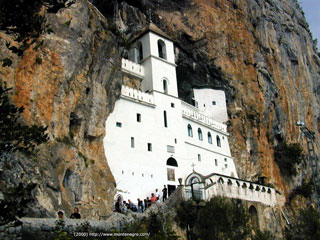
Ostrog’s visual force comes from its relationship with the rock and the broad valley below. The Upper Monastery is intentionally small; the landscape supplies the scale. The national panoramic-road guide places Ostrog in the central route between the Zeta valley and Nikšić, but explicitly notes that the main panoramic road does not itself reach the monastery. Do not follow a scenic-route label as if it were the final access instruction.
If continuing west, use a current road plan and the broader seven-day Montenegro itinerary to decide whether Nikšić belongs on the same day. If returning south, the Podgorica city guide gives a better evening framework than adding another monastery without time to understand it.
When to reconsider the visit
Turn back or change plans if police restrict the road, weather makes the ascent unsafe, parking control directs you away, or the group cannot manage the stairs without pressure. A crowded feast day can be meaningful for a prepared pilgrim and frustrating for a casual sightseer. If your main goal is architectural context, a quieter date will usually allow more attentive observation.
Do not use Ostrog as proof that every cliff road is suitable for an inexperienced driver. Montenegro’s own cycling and panoramic material repeatedly warns about narrow mountain roads and exposed climbs. A transfer, small tour or slower valley-based day may be the responsible choice.
Keep a fallback plan in the valley. Danilovgrad’s town centre, local food stops and the Bjelopavlići landscape can absorb a changed morning without turning a closure into a crisis. This matters especially for families and groups: agreeing in advance that safety, worship and official directions outrank a checklist removes pressure from the driver and from monastery staff.
Frequently asked questions
Is Ostrog open to non-Orthodox visitors?
Montenegro’s national tourism organisation explicitly presents Ostrog as a place visited by people of different faiths. Enter respectfully, follow staff instructions and allow worshippers priority.
Is there a reliable daily opening time?
The monastery publishes current notices and contacts, but this review did not find a stable official visitor timetable that should be promised for every season and feast. Confirm directly when timing is critical.
Must I walk barefoot from Lower Ostrog?
No. Some pilgrims choose demanding devotional practices, but visitors should not imitate them as a stunt. Wear safe footwear and choose a route suited to your health and the conditions.
Can I photograph inside?
Do not assume permission. Follow signs and ask on site, especially around services, relics and the cave churches. Never photograph an identifiable worshipper without consent.
How much time should I allow?
Allow at least a half day if travelling independently, and more if walking between levels or visiting near a feast. Queueing, worship and traffic make a rigid one-hour promise unrealistic.