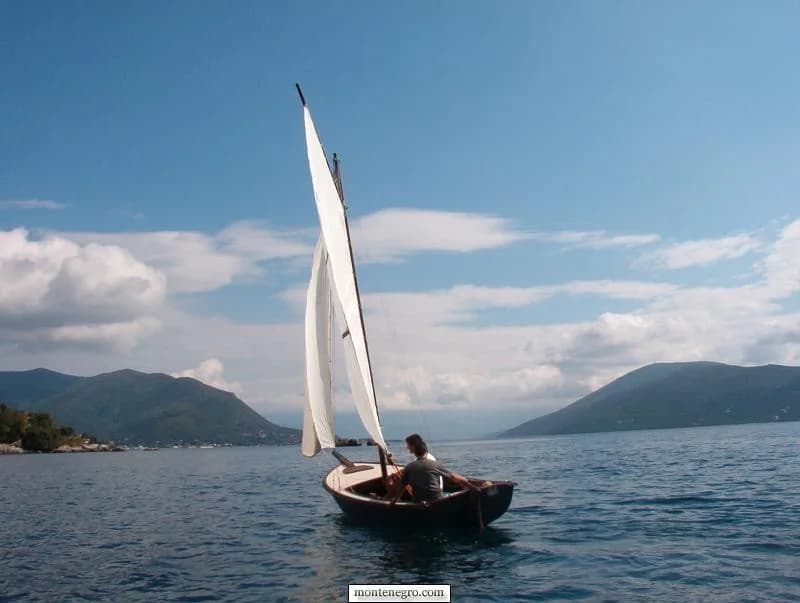
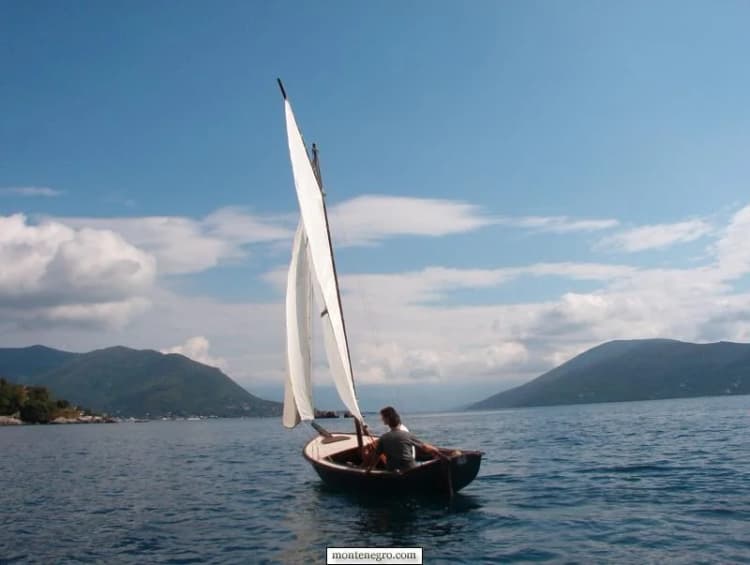
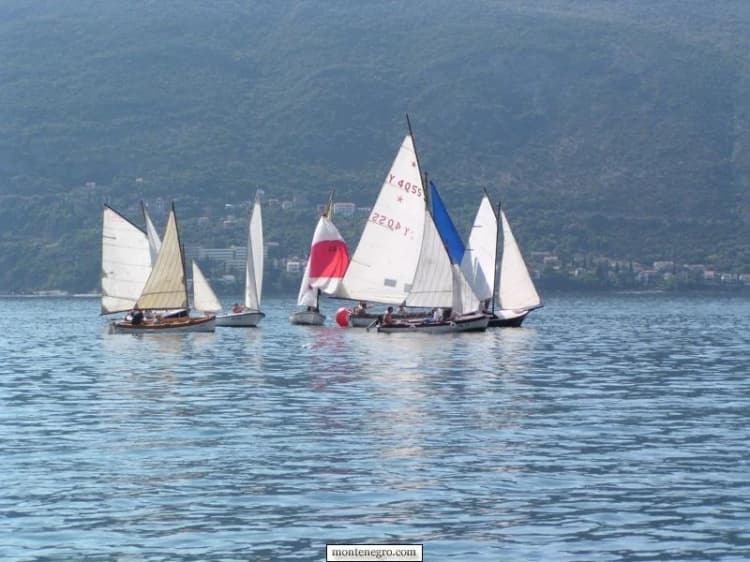
This article documents the Stara Brokva old-timer sailing regatta held off Herceg Novi in October 2004. It is not a current event announcement. The surviving report and photographs preserve a fleet of roughly fifteen classic boats, a short buoy course, a two-hour race and a shore-side art exhibition. They also capture why traditional boats matter: not only as racing machines, but as vessels carrying craft knowledge between generations.
What “Stara Brokva” meant
In the event’s context, Stara Brokva referred to the organizing club and its gathering of old-timer sailboats. This article does not assign an etymology to the name because the available event sources do not explain it reliably. The 2004 fleet was defined by traditional and classic craft rather than a single modern racing class. According to the contemporary report, one participating boat dated to 1908.
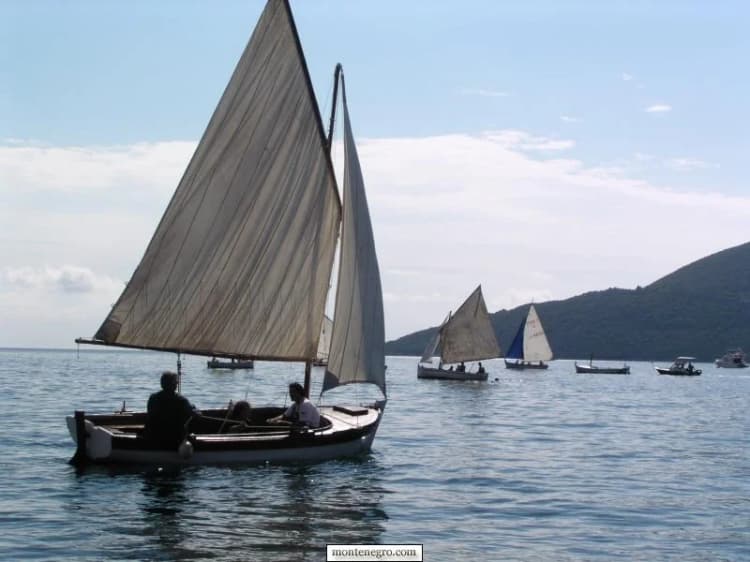
That age changes the meaning of competition. A century-old hull cannot be treated like disposable sports equipment. Its rig, timber, fittings and repairs embody decisions by builders and owners over decades. Getting such a boat to a start line demonstrates maintenance, seamanship and trust before the stopwatch begins. The event could therefore reward speed while allowing spectators to compare forms and restoration approaches.
Herceg Novi was a fitting host. The city’s seafront is not merely a backdrop: workshops, clubs, quays and generations of sailors make the bay a living maritime environment. The archived result itself links the leading finishers to the local Jugole Grakalić club. Our wider Montenegro sailing guide places the scene within the national context.
The archived 2004 race
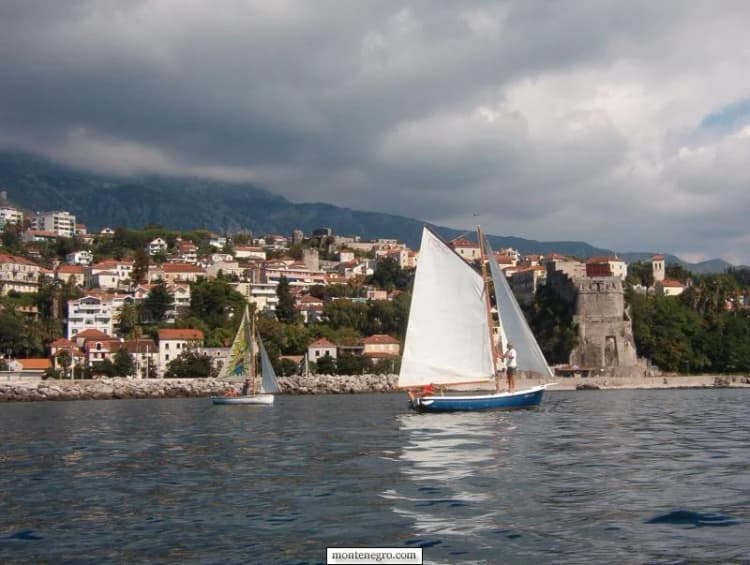
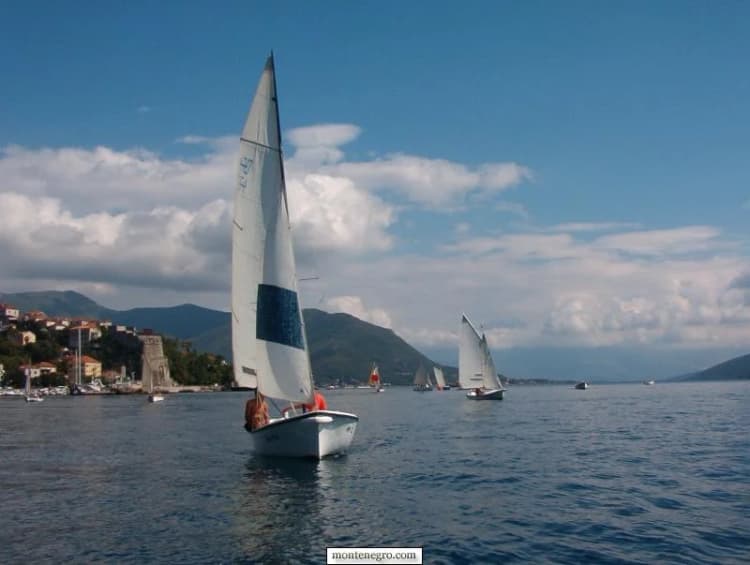
The report says about fifteen boats competed in the water off the city. They sailed three laps around two buoys on a compact course that took roughly two hours. The wording translated as a “sausage” course describes repeated legs between marks; it should not be used as a present-day technical race instruction. No coordinates, start sequence or official notice of race survives in the cited material.
| Element | Detail |
|---|---|
| Buoy A | Course marker |
| Buoy B | Course marker |
| Laps | 3 reported laps |
| Geometry | Exact geometry unknown |
Source: montenegro.com
Archived results place Marko Bjelić of Jugole Grakalić first and his clubmate Dragan Mladenović second. Ognjen Karadžić of Stara Brokva was reported third. The organizers also recognized the oldest sailor and youngest participants, suggesting that continuity across age groups mattered alongside the podium. This archive preserves the names as reported but does not infer later careers or current club affiliations.
| Recorded element | Archived detail | What remains unknown |
|---|---|---|
| Timing | October 2004 | Exact date and current recurrence |
| Fleet | About fifteen old-timer sailboats | Full entry list and specifications |
| Oldest boat | Reported as dating to 1908 | Name, builder and verified provenance |
| Course | Three laps around two buoys | Coordinates, lengths and wind orientation |
| Duration | About two hours | Official elapsed times |
| Podium | Bjelić, Mladenović, Karadžić | Class or handicap calculation |
October was part of the story
The 2004 author emphasized warm, settled conditions and the surprise of water sports continuing after the conventional summer season. That observation belongs to one event, not a climate guarantee. October can deliver gentle sun and warm water, but it can also bring strong wind, rain, reduced visibility and short-notice marine warnings.
This is why nostalgia must not become forecasting. Check the official organizer, a current marine forecast and local harbor information on the day. A photograph of light air in 2004 says nothing about a bora episode now. Our season-by-season Montenegro guide helps frame the trade-offs, while the off-season guide covers transport and reduced services.
The art exhibition ashore
Stara Brokva was not only a race. The report records the eighth solo exhibition by academic painter Zoran Bulatović in the club premises. It described him as a representative of the Herceg Novi and Boka artistic way of life. Sailing and painting shared a local vocabulary: hulls, sails, changing light and the social life of the waterfront.
This pairing kept the regatta from becoming an isolated sporting result. Boats could be viewed as designed objects and cultural inheritance; paintings extended the event after crews came ashore. Anyone seeking that broader context today can use our guide to art and the Herceg Novi museum or follow the literary landscape in Topla.
How to verify a current regatta
No reliable 2026 organizer page found during this update confirmed that Stara Brokva remains an annual event with a fixed October slot. Do not copy the old month into an itinerary. Search current Herceg Novi club, municipal and Tourism Organisation channels. A genuine race notice should identify the year, organizing authority, eligible classes, schedule, course area and contact.
| Field | What to check |
|---|---|
| Year | Edition year |
| Organizer | Organizing body |
| Date | Confirmed race date |
| Race area | Designated race area |
| Contact | Organizer contact |
Source: hercegnovi.travel, gov.me
Social posts can be useful leads, but confirm them against the organizer. Old pages often outrank current notices in search. Look for cancellation or postponement updates on the morning of the event. Never assume the absence of an update means the start is unchanged.
Watching safely from shore
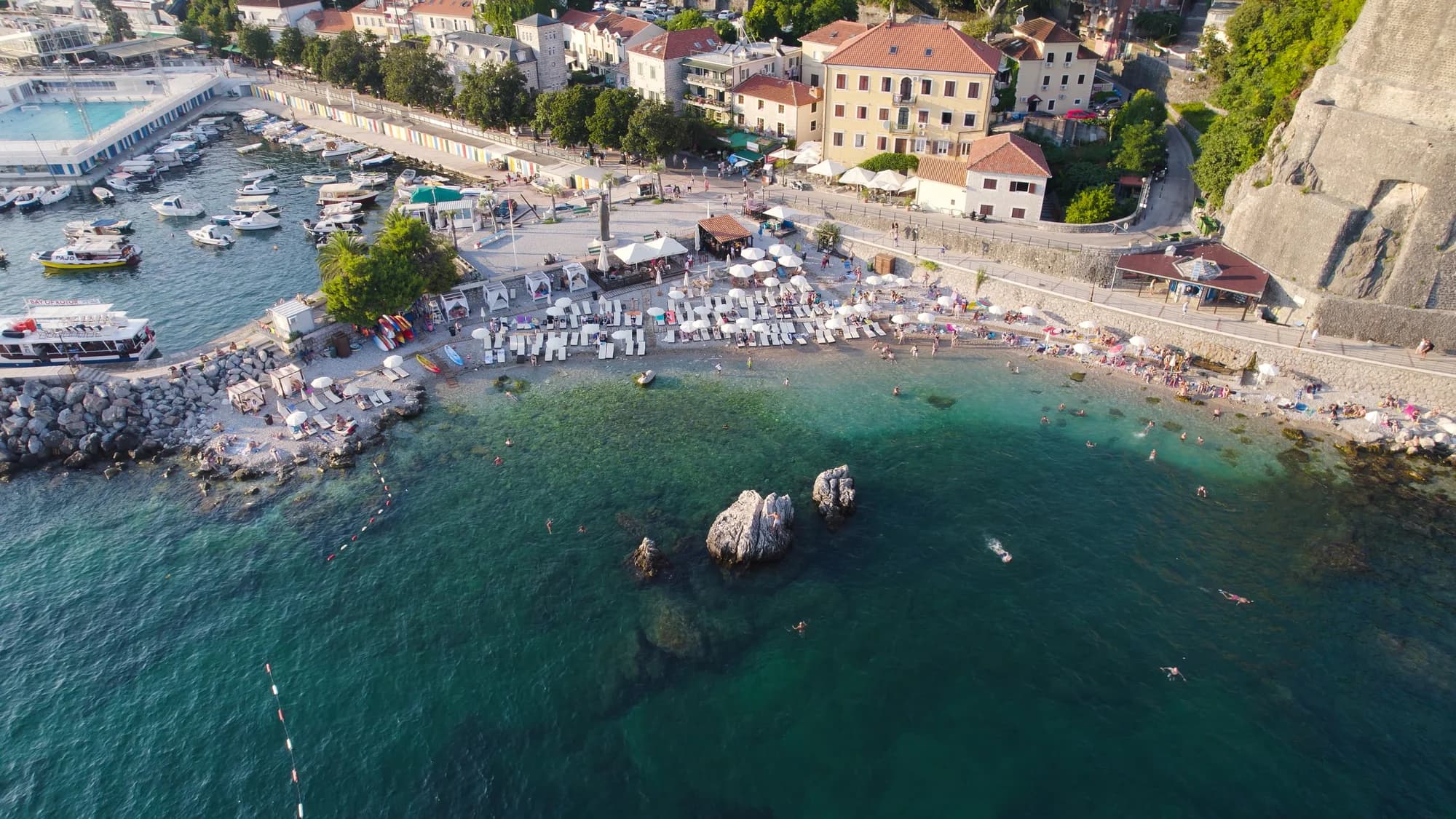
The Pet Danica promenade and public waterfront can provide broad views without entering the race area. Our Pet Danica history and walking guide explains the setting. Choose a lawful public space, keep cycle and pedestrian movement clear, and do not step onto working quays or club pontoons without permission.
Binoculars are more useful than leaning over a rail for a phone shot. Children should stay beside an adult near unguarded edges. In wind or rain, stone can be slippery and waves may overtop lower sections. Follow temporary barriers and instructions from harbor staff, police, race officials or club volunteers.
Practical decision guide for a sailing-event day
Start by deciding whether the goal is to watch, photograph, sail independently or enter a race. Those are four different activities with different permissions. A shore spectator needs a confirmed public viewing area. A photographer requesting close access needs organizer accreditation. An independent skipper needs lawful vessel operation and a plan to remain clear. A competitor needs the official notice of race and eligibility—not this archive.
| Role | Verify first | Do not assume |
|---|---|---|
| Shore spectator | Public route, start time and weather | Every quay or pontoon is public |
| Photographer | Accreditation and restricted areas | A camera grants course access |
| Spectator boat | Qualified skipper, safety gear and exclusion area | Marks can be approached closely |
| Competitor | Notice of race, class, insurance and registration | A historic boat is automatically eligible |
| Family group | Shade, barriers, toilets and exit route | The schedule will run exactly on time |
If the only listing is an undated image, do not travel solely for it. Contact the named club or Tourism Organisation and ask a precise question: “Is this event taking place on this date, at which waterfront location, and where may the public watch?” Save the reply. For accommodation choices within walking distance of likely city venues, consult our Herceg Novi area guide.
Reading classic-boat design from shore
Even without a technical entry list, spectators can compare hull length, freeboard, bow and stern shape, mast position, sail plan and crew movement. These features reveal different compromises among cargo, fishing, coastal passage and racing. Avoid assigning a boat type from one silhouette; restorations and later rigs can alter appearance.
Watch how crews prepare before the start. Reefing, halyard handling, weight placement and mark rounding make seamanship visible. A slower boat may be sailed beautifully, while the first over the line may not be the corrected-time winner if a handicap system applies. Because the 2004 archive does not preserve class rules, it reports the published order without reconstructing scoring.
Ask owners questions only when they are not maneuvering, lifting equipment or solving a problem. Useful questions concern the boat’s builder, documented launch year, repair method and how original material is distinguished from replacement. Never repeat an attractive age claim as verified provenance unless documentation supports it.
Photography without distorting the event
A telephoto lens or binoculars protects both composition and boundaries. Keep horizons level, avoid blocking ramps and never ask crews to delay a maneuver for a portrait. If photographing identifiable children, seek guardian permission before publishing a close image. Wide public-event scenes may be lawful, but respectful editorial judgment remains necessary.
Caption archival and current photographs with the year. Without that label, a 2004 hull or crowd can accidentally become evidence of a 2026 edition. Record the source, photographer if known, exact event name and whether results are provisional or final. The same discipline that preserves boat provenance preserves event history.
Build a waterfront day around uncertainty
A sailing start can move with wind, so pair it with flexible nearby activities rather than a timed long transfer. Walk part of Pet Danica, explore the Old Town exterior or choose a museum. The Blue Cave guide concerns a separate boat excursion and should never be squeezed between race starts without checking sea conditions and return time.
For food, choose a place only after seeing the live menu, opening hours and any event-day reservation policy. Our sea-view restaurant overview supplies ideas, not a guarantee. Keep enough time to leave the waterfront before darkness if rain, crowding or reduced transport makes the promenade slower.
What the archive cannot prove
The article cannot establish that the event was held every year before or after 2004, that the same organizing club still operates in the same form, or that the recorded 1908 boat retains that configuration today. It cannot reconstruct handicap ratings, official finish times, wind direction or the complete art-exhibition catalogue.
Stating these gaps strengthens the record. The verified core is already valuable: a named classic-boat gathering, an approximate fleet, a described short course, a reported podium, intergenerational recognition and an art exhibition. Anything more should come from an organizer archive, boat register, contemporary race notice or participant collection.
How to preserve a family or club archive
Anyone holding photographs, trophies, entry forms or correspondence from Stara Brokva can improve the record without surrendering ownership. Begin by photographing each object front and back in even light. Record dimensions, material, inscriptions, condition, who supplied it and how that person knows its story. Keep the original order of albums and envelopes; that arrangement can reveal relationships that isolated images lose.
For digital files, preserve an untouched master at the highest available quality and create smaller access copies. Use filenames that include date, event and sequence rather than only a person’s name. Store at least two copies in different physical places. A cloud folder is convenient but should not be the only copy, and a social-media upload is not an archive.
Names require care. Ask people how they want to be identified and distinguish certainty from inference in captions. “Believed to be” is better than silently converting family memory into fact. Do not publish addresses, contact details or embarrassing material merely because a document is old. For children pictured in 2004, avoid adding current identity details that the original report did not need.
A local museum, sailing club or federation may help assess material, but agree in writing whether an item is donated, loaned or only scanned. Ask who may reproduce it and how credit should read. The most useful archive links a boat to documents, a crew to a dated event and results to an organizing record.
Why a 2004 result still deserves correction
Small community events are especially vulnerable to disappearing records. A misspelled surname, unlabelled photograph or invented annual recurrence can propagate because later writers copy the only surviving page. This upgrade therefore separates reported facts from current verification and keeps the original podium without pretending to possess full official timing.
If a participant or organizer can supply a race notice, results sheet or boat register, that evidence should be evaluated and the archive amended transparently. Corrections should state what changed and why. The goal is not to make the past look complete; it is to make the surviving record trustworthy enough for future sailors, families and researchers to build upon.
Going afloat is different
A race is not an invitation for spectator boats to gather around marks. Montenegro’s maritime navigation safety law governs vessels, crews and navigation in territorial and internal waters. Follow instructions, maintain a safe lookout and never impede competitors or official craft. If you charter, use a properly authorized operator and ask how the skipper will remain outside the course.
The Maritime Operations Center monitors traffic, transmits navigational and weather information, and coordinates search and rescue. Its current page publishes 129 as the maritime emergency number. This is emergency information, not a substitute for preparation. Wear the required personal flotation equipment and keep children in correctly sized devices.
| Vantage | Requirement |
|---|---|
| From shore | Use public space |
| From shore | Keep paths clear |
| From shore | Obey barriers |
| Afloat | Authorized skipper |
| Afloat | Safety equipment |
| Afloat | Stay outside course |
Source: gov.me
Preserving classic boats without freezing them
Traditional craft survive when used, maintained and documented. Owners must balance original material with safe repair, and historians should distinguish a boat’s verified provenance from an attractive story. Visitors can support this culture by asking respectful questions, attending public displays and commissioning legitimate local maritime work—not by boarding without permission or touching varnish and rigging.
The 2004 report matters because it records activity, not a museum tableau. Boats raced; sailors of different generations participated; art entered the club space. An archive should preserve that vitality while stating exactly what it cannot tell us about the present.
Frequently asked questions
Is Stara Brokva happening this October?
This article cannot confirm that. It documents the 2004 edition. Check current federation, club, municipal and tourism channels for a dated notice.
How many boats raced in 2004?
The contemporary report says about fifteen old-timer sailboats, including one reported to date from 1908.
What course did they sail?
The archive records three laps around two buoys over roughly two hours. Exact geometry, distance and official timing are unknown.
Where can I watch sailing in Herceg Novi?
Public waterfront areas may offer views when a current event is authorized. Confirm the course, obey barriers and never enter working quays or pontoons without permission.
What is the maritime emergency number?
Montenegro’s Maritime Operations Center currently lists 129. Use it for a genuine emergency at sea.