Dani Muzike is Herceg Novi’s July classical-music festival—and its history is richer, and less tidy, than a single founding date suggests. The 43rd edition opened on 10 July 2026. Its published programme placed ten concerts across eleven days, moving between Dvorana Park, the old town, the Music School and Marina Square at Portonovi. That combination of serious recital programming, local institutions and summer settings explains why the festival matters.
This guide does two jobs. It gives future visitors a practical way to read the next programme, and it re-examines the Montenegro.com report and photographs from the 2004 revival. Where official sources disagree—1972 versus 1983, 1981 versus 1983, or 1991 versus 1993—the disagreement remains visible. The secure points are the documented 2004 renewal, the recurring 10–20 July slot, and the 43rd-edition programme published in 2026.
Dani Muzike at a glance
| Question | Best-supported answer | What still needs checking |
|---|---|---|
| What is it? | An international classical- and art-music festival produced by JUK Herceg Fest. | The artistic emphasis changes with each programme. |
| When is it usually held? | Current official profiles give 10–20 July as the established annual slot. | Treat the pattern as guidance until the dated edition programme appears. |
| Where are concerts held? | Dvorana Park and open-air stages are recurring settings; 2026 also used the Music School and Marina Square, Portonovi. | The precise venue and start time for every concert. |
| Who leads it? | Official profiles name pianist Boris Kraljević as artistic director and Milena Lučić as head of the artistic council. | Recheck roles on the current organiser page. |
| Which edition was 2026? | The municipality announced it as the 43rd; a public report identifies 2025 as the 42nd. | A complete public edition-by-edition ledger was not found. |
| How much are tickets? | The 2026 opening was advertised at €10. | Do not apply that price to another concert or year. |
The Municipality’s 43rd-edition announcement is the strongest single source for the 2026 scale: ten concerts during eleven festival days, with established performers and a programme for young artists. The city’s standing festival profile calls 10–20 July the annual pattern. Those are different kinds of evidence: one records a dated edition; the other describes a tradition. For any future trip, use the tradition to choose a likely travel window, then wait for the edition-specific programme before buying transport or accommodation.
Why there is no honest one-line founding date
Current public institutions publish several incompatible chronologies. Herceg Novi’s Culture Development Programme 2024–2027 says the event was founded in the city in 1972 and ran for twenty years in late summer before moving to Sveti Stefan and ceasing. A 2023 municipal retrospective instead describes a Yugoslav festival based first in Budva and then Sveti Stefan, arriving in Herceg Novi in 1981 and remaining through 1993. JUK Herceg Fest’s current profile lists 1983 as the founding year. The inherited Montenegro.com report says the festival lived in Herceg Novi from 1983 to 1991.
These claims may be counting different institutional lineages, host-city periods or branded versions, but none of the sources explains the discrepancy well enough to merge them. The municipal Culture Development Programme and the organiser’s festival profile simply publish different starting points. Selecting one date and deleting the others would create false certainty. The useful approach is to attribute each claim, distinguish a festival lineage from a Herceg Novi residency, and anchor the modern era to the widely documented 2004 revival.
| Date or period | Published claim | Source type |
|---|---|---|
| 1972 | Founded in Herceg Novi. | Municipal Culture Development Programme 2024–2027. |
| 1981 | A travelling Yugoslav festival came to Herceg Novi. | Municipal forty-year retrospective published in 2023. |
| 1983 | Official organiser’s listed founding year; also the inherited archive’s start of the earlier Herceg Novi period. | JUK Herceg Fest profile and Montenegro.com archive. |
| 1991 or 1993 | Conflicting endpoints for the pre-revival Herceg Novi period. | Montenegro.com archive versus 2023 municipal retrospective. |
| 2004 | Festival renewed in Herceg Novi; archive banner identifies the XXI edition. | Current official profiles and contemporary photographs. |
| 2025–2026 | 42nd edition in 2025 and 43rd in 2026. | Municipal public-information record and 2026 programme. |
| Year | Claim |
|---|---|
| 1972 | culture programme: founded in HN |
| 1981 | city retrospective: arrived in HN |
| 1983 | organiser: founded |
| 2004 | sources converge: revived in HN |
| 2025–26 | 42nd then 43rd edition records |
| Reading rule | Attribute the disputed dates; use 2004 as the secure start of the current Herceg Novi era. |
Source: hercegnovi.me, hercegfest.me
The 2004 revival preserved in the archive
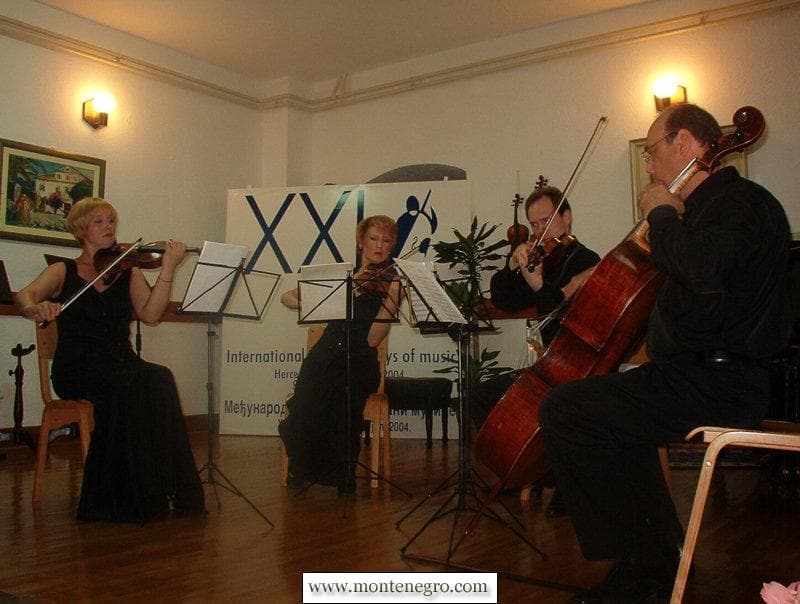
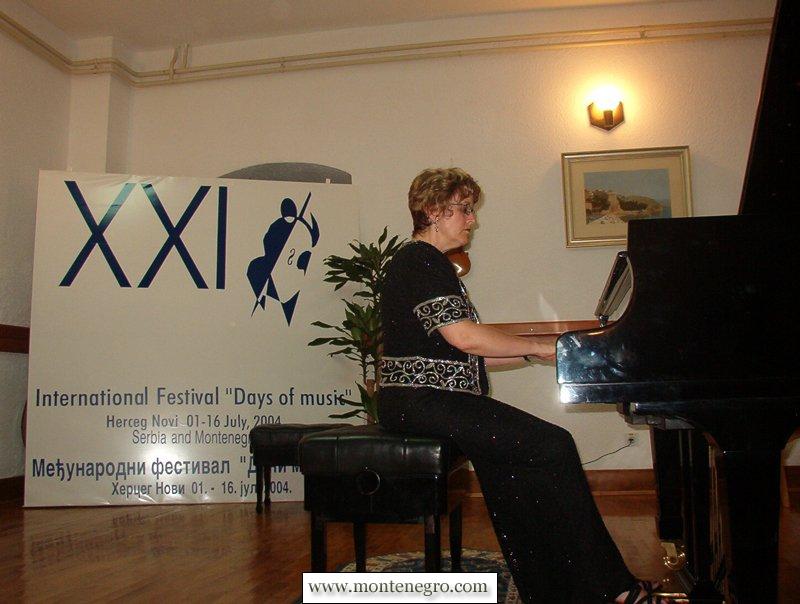
The inherited Montenegro.com report was written at the restart. Its strongest evidence is contemporary rather than retrospective: three stage photographs display a banner for the XXI International Festival, dated 1–16 July 2004. The report records then-mayor Dejan Mandić welcoming the return after the troubled 1990s and artistic director Boris Kraljević describing the challenge of programming a festival in a town where music was already part of daily life.
The opening programme brought together pianist Kraljević, guitarist Goran Krivokapić and an orchestra conducted by Radovan Papović, according to the archive text. The report also previewed performers including Judy Kehler Siebert, Dino Mastroyiannis, Claude and Odile Delangle, Eugene Indjic, Đorđe Stanetti and the Glinka Quartet. Spellings in the old English translation vary, so the archival list is useful as a record of the announcement, not as a substitute for an original 2004 programme booklet.
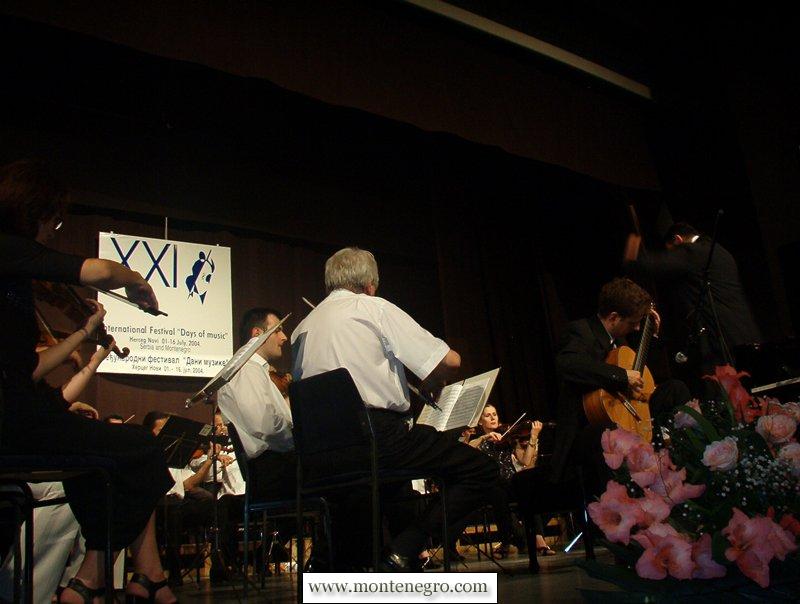
The revival was more than a nostalgic return. It created the institutional form visible today: JUK Herceg Fest as producer, municipal and national cultural support, Kraljević’s artistic direction, and a programme that connects Montenegrin musicians with international guests. The official Culture Development Programme says paid ticketing was introduced later without driving audiences away and describes continued audience growth. That municipal assessment supports the festival’s cultural-policy importance, though it does not provide a concert-by-concert attendance series.
What the 2026 programme reveals
The 43rd edition offers a useful picture of the festival’s present range. An opening concert paired Boris Kraljević with Camerata Herceg Novi under conductor Ivan Velikanov. The announced programme included a work by Miloš Raičković alongside international repertoire; a report by Radio Television Herceg Novi confirms that the opening took place. The municipal programme then named pianist Ksenia Vokhmianina, violinist Jovan Jovović with pianist Andrija Jovović, pianist Petar Milić, violinist Vujadin Krivokapić, flautists Anđela Bratić and Žana Lekić with pianist Dušan Aksentijević, and a guitar-and-flute programme by Goran Krivokapić and Dejan Gavrić.
The published finale was Perpetuum Jazzile’s “Vocal Ecstasy” at Portonovi. That choice widens the frame beyond a narrow recital series: an a cappella ensemble using classical and contemporary arrangements can bring a different audience into the same festival. Because the municipal article was published before the festival, this guide calls later items the announced or published programme unless a post-event record confirms the performance.
| Programme strand | 2026 evidence | Why it matters |
|---|---|---|
| Local artistic leadership | Kraljević with Camerata Herceg Novi at the opening. | The host city is part of the artistic proposition, not just a backdrop. |
| International connections | Guest performers and conductor across recital and chamber formats. | The festival links regional music-making to wider circuits. |
| Living composition | The opening announcement highlighted music by Miloš Raičković. | Programming need not stop at the standard canon. |
| Young performers | Podijum mladih at the Music School on 17 July. | Development work is built into the public programme. |
| Multiple audiences | Recitals, chamber music and the announced Portonovi vocal finale. | Venue and format can change the threshold for first-time listeners. |
The youth platform deserves particular attention. JUK Herceg Fest’s dated notice placed it in the Music School hall and described participants as young prize-winning artists from Montenegro and the region. It is not merely a discounted side event: the 2026 municipal announcement presented work with young musicians as one of the festival’s defining public purposes.
Venues: one festival across a vertical city
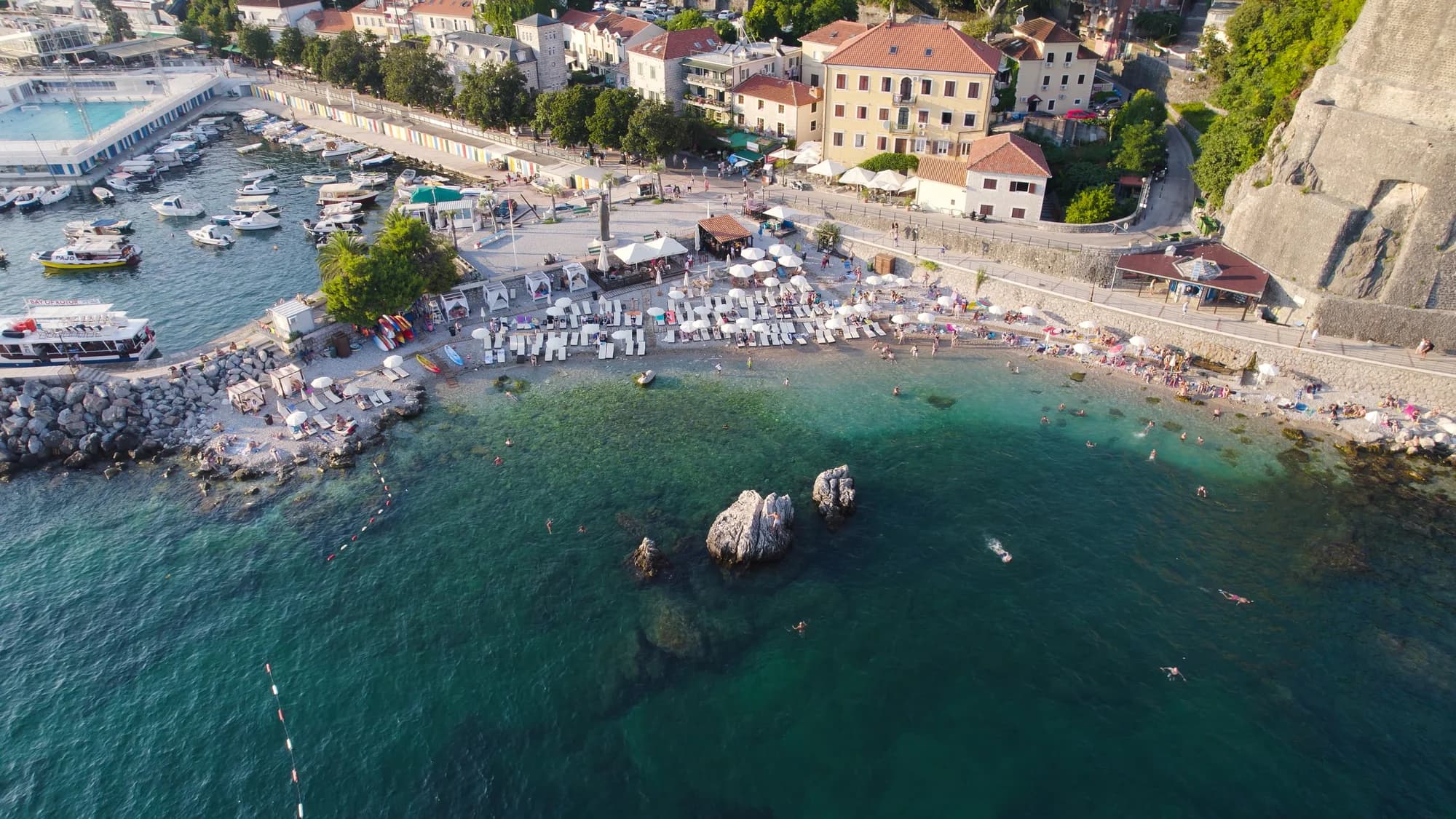
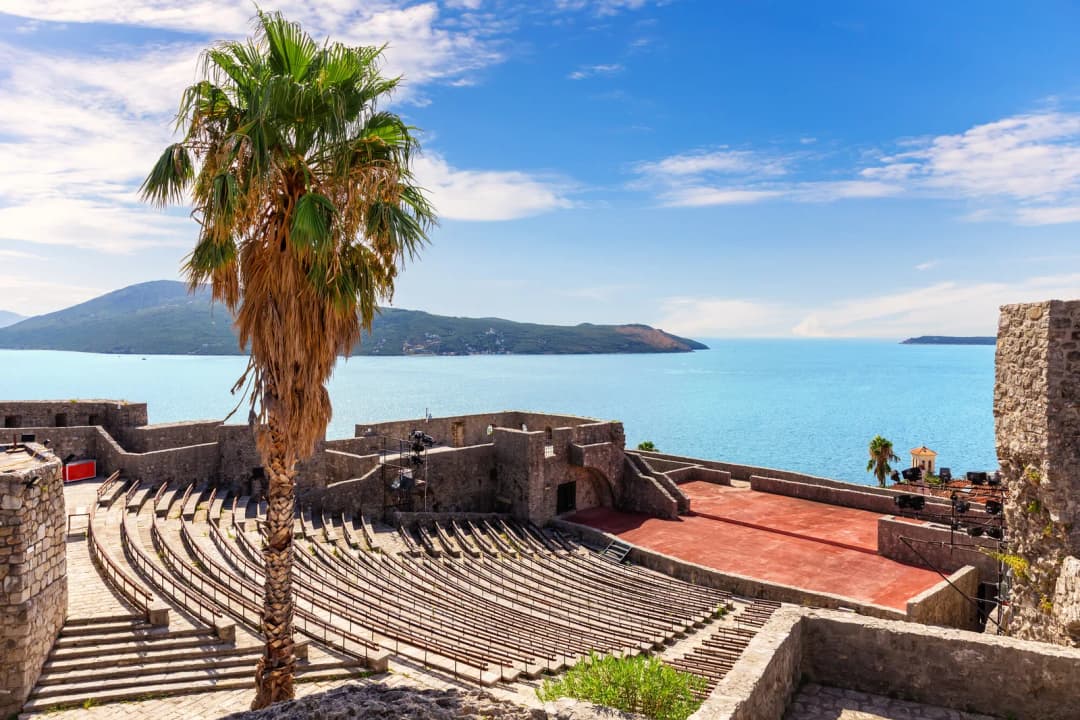
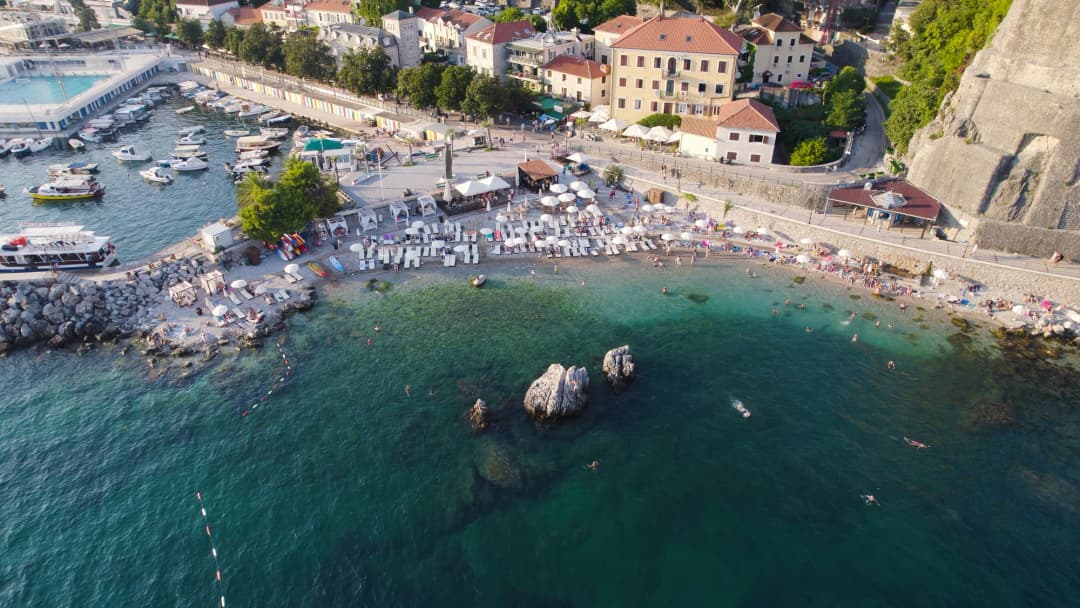
Dani Muzike is not confined to one auditorium. Dvorana Park is the recurring indoor base and JUK Herceg Fest’s institutional address. Old-town stages add historic setting but also introduce stairs, summer heat and weather exposure. The Music School serves smaller and developmental programmes. Portonovi’s Marina Square is down the coast from the centre and requires a different transport plan.
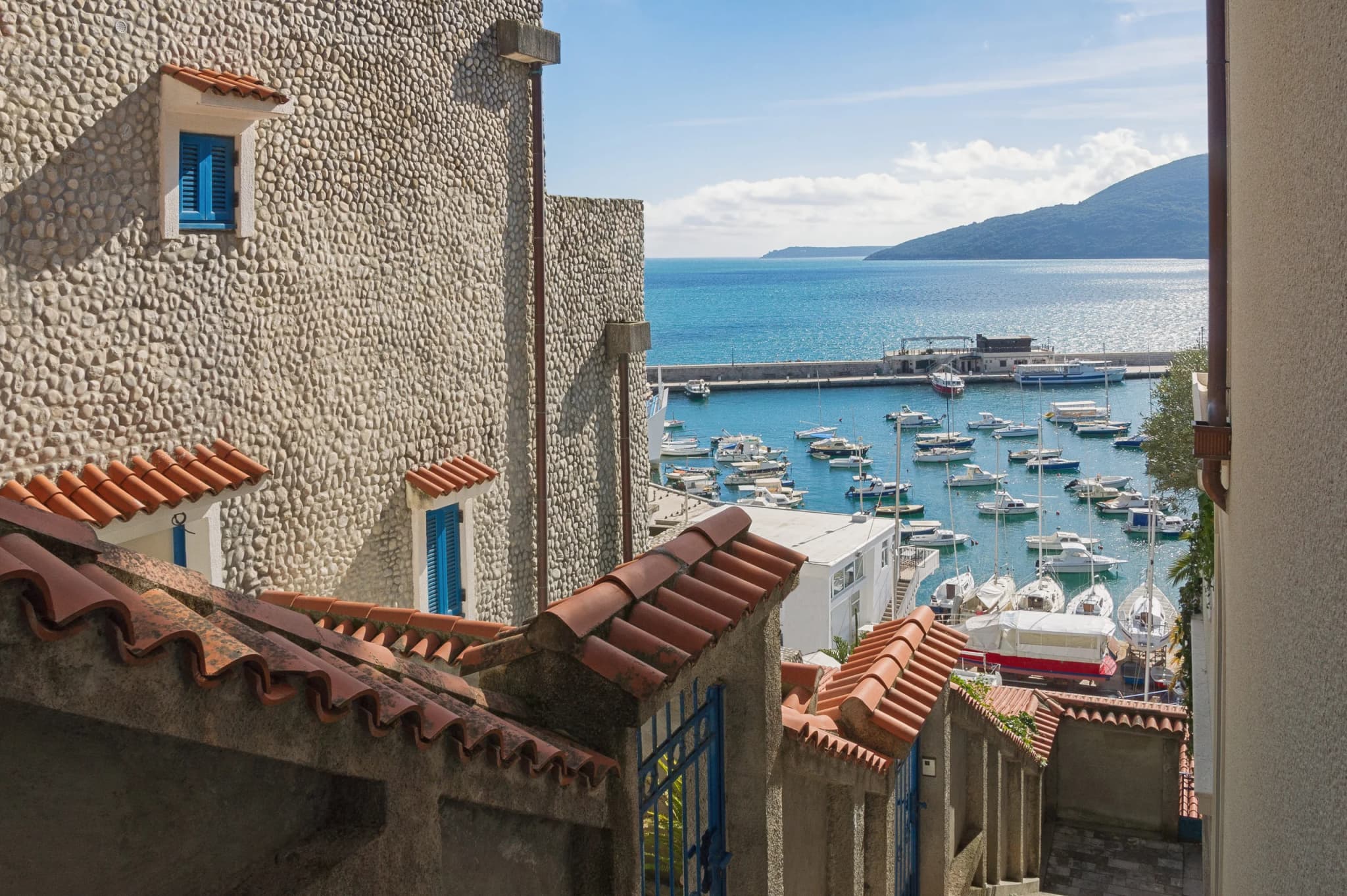
This geography matters in Herceg Novi, a city famous for levels and stairways. Read the Herceg Novi Old Town guide before choosing a base, and use the where-to-stay comparison to balance evening access against beaches and road connections. A hotel described as “central” may still involve a steep return after a late concert.

Several nearby cultural stories can turn a concert trip into a coherent city stay. The Trg od knjige history explains another long-running summer programme in the old town. The Five Danicas promenade story adds the waterfront’s wartime memory. In Topla, the documented links to Njegoš and Ivo Andrić are covered in the Literary Topla guide. Together they show why Herceg Novi’s “city of festivals” identity rests on institutions, places and cultural memory rather than a marketing slogan alone.
Practical planning for the next edition
- Use 10–20 July only as a planning window. Current official profiles describe those dates as the festival’s annual slot, but do not book a non-refundable trip around a concert until the dated programme confirms it.
- Start with the organiser. Check JUK Herceg Fest and the Municipality of Herceg Novi, not an undated event aggregator. Save the exact event page because venue, time and ticketing may differ night by night.
- Separate city centre from Portonovi. Dvorana Park, old-town locations and the Music School form one practical cluster; Marina Square is east along the riviera. Confirm the venue before deciding to walk, drive or arrange a taxi.
- Verify ticket terms for each event. The 2026 opening notice advertised €10, but that is a historical data point—not a current tariff, a festival pass or proof that all concerts charge admission.
- Ask specific access questions. Name the concert and ask about step-free entry, companion seating, toilets and the route from the nearest drop-off. Open-air “square” does not automatically mean step-free.
- Plan for the setting. For outdoor events, check the organiser’s weather update on the day. Carry water and a light layer, but follow venue rules on bags, food and drink.
- Leave margin. Summer road congestion and parking searches can erase a tight schedule. Arrive early enough to find the stated entrance rather than relying on the map pin alone.
| Step | What to check |
|---|---|
| 1. Dated programme | edition, artist, date; official event page |
| 2. Exact venue | Park, old town, school or Portonovi |
| 3. Entry details | ticket, entrance, seating and access route |
| 4. Same-day check | start time, traffic, weather or relocation |
| Note | A recurring July tradition is not a substitute for a current concert notice. |
Source: hercegnovi.me, hercegfest.me
A two- or three-day cultural itinerary
For a short stay, put the concert at the centre and keep the surrounding plan flexible. On day one, orient yourself in the old town and locate the venue in daylight. On day two, follow the promenade or visit Topla before an evening performance. If the programme uses Portonovi, reserve a separate block for the eastern riviera rather than squeezing it between old-town stops.
Travellers continuing along the coast can connect this stay to the site’s seven-day Montenegro itinerary. Those interested in the beginnings of organised tourism near Herceg Novi can add the documented story of Hotel Plaža in Zelenika. For the broader argument about timing a visit while the country’s cultural calendar remains approachable, see why visit Montenegro now.
FAQ
When is Dani Muzike held?
Current official profiles give 10–20 July as the established annual slot. The 43rd edition used those dates in 2026. Confirm the next edition on JUK Herceg Fest or the Municipality’s dated programme before booking around a performance.
Is Dani Muzike only classical music?
Its official identity is an international classical- and art-music festival. Programmes can include solo recitals, chamber ensembles, orchestral work, contemporary composition, youth performances and crossover-adjacent formats such as the announced 2026 a cappella finale.
Where does it take place?
There is no single festival compound. Dvorana Park and open stages recur; the 2026 programme also used the Music School hall and Marina Square at Portonovi. Always check the venue attached to the individual concert.
Was the festival founded in 1972 or 1983?
Official sources disagree. The municipal Culture Development Programme says 1972; the organiser lists 1983; a separate municipal retrospective says a travelling predecessor came to Herceg Novi in 1981. The evidence does not justify collapsing those claims into one certain founding date.
What happened in 2004?
Dani Muzike was renewed in Herceg Novi. Current official profiles agree on that point, and Montenegro.com’s contemporary archive photographs show the XXI festival banner with dates 1–16 July 2004. The revival begins the secure modern phase.
Are concerts free?
Do not assume so. The 2026 opening was advertised at €10, while admission can differ by event. Check the organiser’s event page or box office for the specific concert and year.
Is formal dress required?
No current official source reviewed here publishes a festival-wide dress code. Choose comfortable, respectful clothing for the venue and weather; outdoor squares, an indoor hall and a music-school recital do not create identical conditions.
Is the festival accessible to limited-mobility visitors?
Accessibility must be checked event by event. Herceg Novi’s slopes and stairs, venue entrances and temporary outdoor seating vary. Ask the organiser about the named concert, entrance, seating, toilet access and drop-off route.