Fašinada is not a tourist boat parade with a historical theme. It is Perast’s living July 22 ritual: local boats carry stones toward Our Lady of the Rocks at dusk, renewing the relationship between the town, its maritime community and the artificial islet. Visitors can witness it from the waterfront, but should not assume a right to join the procession or approach its working boats.
The 2026 observance has already happened, so this guide separates evidence from anticipation. Radio Kotor’s next-day report confirms the procession took place on 22 July and calls it the 575th Fašinada. Future editions retain the fixed traditional date, but gathering time, access, traffic measures and any companion programme must be confirmed for that year.
| Question | Verified evidence | Do not assume |
|---|---|---|
| Date | Held annually on 22 July; 2026 edition confirmed after the event | The same clock time or programme every year |
| Ritual | Connected boats carry stones from Perast toward Our Lady of the Rocks | That spectators may board or add a private boat |
| Heritage status | Protected Montenegrin intangible cultural heritage | UNESCO inscription; that belongs to a different Boka tradition |
| Viewing | The procession is visible from the Perast waterfront | Reserved space, step-free sightline or uncrowded access |
| Island visit | Our Lady of the Rocks has an active church and cultural interior | Normal tour boats, hours or island access during the ritual |
| Regatta | Fašinada Cup ran as a separate two-day sailing event in 2026 | That race boats form the stone-carrying procession |
What happened in 2026
On 23 July 2026, local public broadcaster Radio Kotor reported that the previous evening’s Fašinada had been held for the 575th time. Its account says boats filled with stones and decorated with poplar branches formed a ceremonial procession toward Our Lady of the Rocks before sunset. It records the stone-casting as the symbolic renewal of the artificial island.
The “575th” label is the organizer-community count reported by Radio Kotor, not an independent audit of every annual edition. It aligns arithmetically with a tradition dated to 1452 when the starting and 2026 editions are counted inclusively. The date 1452 itself belongs to Perast’s founding narrative about the icon; official municipal language introduces it as according to tradition, not as a newly verified archival finding.
What the sources say
The National Tourism Organisation’s event listing carried the 2026 date and gives Tourism Organisation Kotor as the contact: +382 32 325 947. The listing confirms July 22 at dusk but does not publish a minute-by-minute programme, transport plan, accessible viewing zone or visitor boarding process.
| Layer | Evidence | Caveat |
|---|---|---|
| Tradition | 22 July · municipal description | 1452 "according to tradition" |
| 2026 listing | date + dusk · tourism contact | not an access guarantee |
| After-event record | held 22 July · stones + connected boats | reported as 575th |
| Next edition | Verify the current-year programme | — |
Source: radiokotor.info, montenegro.travel, kotor.me
The ritual, step by step
Before the procession, local boats are loaded with stone and decorated with green branches. They gather at Perast, are tied into a line and move toward the island around sunset. At Our Lady of the Rocks, participants cast the stones into the water around the islet. The act is both practical symbolism and communal remembrance: the artificial island exists through repeated human intervention.
HRT’s 2026 documentary announcement identifies Pošovo harbour as the departure point in the customary account. Radio Kotor’s day-of report says boats gathered a little before 19:00, then formed the procession toward sunset. “Before 19:00” describes gathering in 2026; it should not be advertised as the departure time of every future edition.
The convoy is the defining form. The name is commonly connected to Italian fascia, a band or binding, because the boats are joined. Visitors should understand the joining as part of the ritual’s choreography and safety, not as an invitation to attach an independently hired craft.
| Step | Action |
|---|---|
| 1 · Prepare | stone + branches |
| 2 · Connect | boats form a line |
| 3 · Process | Perast → island |
| 4 · Renew | cast stones around islet |
| Spectator rule | Observe the working formation from shore; do not enter, shadow or obstruct the convoy without organizer authorization |
Source: radiokotor.info, hrtprikazuje.hrt.hr
Legend, heritage status and current fact are different things
Perast tradition holds that fishermen found an icon of the Madonna and Child on a reef on 22 July 1452. The island and church developed through the depositing of stones and, in customary accounts, the sinking of old vessels. The story explains why July 22 matters and why stone remains the ritual material.
That does not make every narrative detail an archival fact. Kotor municipality’s event page explicitly marks the icon discovery as tradition. A careful account therefore says “according to Perast tradition” rather than presenting the fishermen, exact day and every construction step as independently documented.
What the sources say
The legal-cultural status is firmer. Montenegro’s Administration for the Protection of Cultural Properties currently lists Fašinada among the country’s protected intangible cultural goods. A government record says it received intangible-cultural-property status in 2013. This is national protection, not a UNESCO inscription. The same government page identifies the Boka Navy as Montenegro’s intangible element on UNESCO’s representative list; confusing the two inflates Fašinada’s status.
For wider Boka context, use our Bay of Kotor guide. Other local memorial traditions, such as the people behind the Five Danicas promenade, show why a living place should not be reduced to a photograph or a tourism slogan.
| Claim | Year | Basis | Verb |
|---|---|---|---|
| Tradition | 1452 | icon-discovery narrative | say: "holds that" |
| Protected status | 2013 | national intangible good | say: "is listed" |
| Dated record | 2026 | procession confirmed | say: "was held" |
Source: kotor.me, gov.me
Correcting the branches and the songs
Even official pages can conflict or translate badly. The English national tourism listing says the boats are decorated with apple branches. Radio Kotor’s direct report from the 2026 edition says poplar branches (jablanove grane). Because the current-year observation is more specific, this guide describes green or poplar branches for 2026 and records the disagreement instead of silently choosing a timeless botanical rule.
The inherited English article also says the procession moves “with the singing of Bulgarian women.” That phrase is not supported by the local 2026 account. Radio Kotor names two songs performed by singers during the voyage: “Oj, vesela veselice” and “Dvoje mi drago zaspalo.” The national tourism page’s English wording appears to be a mistranslation of a local song form or description; it is not evidence of Bulgarian nationality or of a women-only ensemble.
The national listing describes the customary boats as carrying the parish priest and male Perastans while women greet from shore. Report this as the source’s description of the traditional structure, not as a universal statement about every person’s modern role. Most importantly for a visitor, the procession’s places are community roles, not seats sold with a sightseeing ticket.
| Source | Branches | Detail | Standing |
|---|---|---|---|
| National English listing | "apple branches" | ambiguous "Bulgarian" phrase | general event description |
| Local 2026 reports | poplar branches | two songs named directly | dated current-year observation |
| Publication choice | qualify branches | name songs | omit nationality |
Source: montenegro.travel, radiokotor.info
The island and church are more than a backdrop
Montenegro’s tourism authority dates the present church to 1630. Kotor Museums documents the major interior cycle as 68 canvases by Perast-born Baroque painter Tripo Kokolja, produced over ten years. Those sources support the church’s cultural importance without requiring every inherited construction date and artist attribution to be repeated.
The island remains a Catholic sacred site. A normal excursion visit and the Fašinada procession are separate situations. Do not assume the museum interior, altar, dock or island path will operate under everyday visitor rules during the ritual. Confirm access with the responsible church or local tourism contact, dress respectfully, avoid flash or intrusive photography, and never treat worshippers as performers.
Our article on Sveti Nikola Island shows why Montenegro’s islands require site-specific access checks. For the maritime families behind Boka’s culture, the story of navigator Petar Zambelić offers a different, documented connection between local identity and the sea.
| Context | What it is | What governs access |
|---|---|---|
| Sacred site | active church | worship etiquette · photography check |
| Cultural interior | 1630 church · 68 Kokolja canvases | hours + display rules |
| Living ritual | stone-carrying convoy · community roles | event-specific access |
Source: montenegro.travel, muzejikotor.me
Fašinada Cup is a separate sailing event
The inherited article’s “international toad sailing regatta” is a machine-translation error. The 2026 Fašinada Cup was a two-day sailing regatta organized by JK Lahor on 21 and 22 July, with racing between Perast and Tivat. The published announcement lists cruising yachts, traditional wooden and plastic sailing boats, catamarans and J70s; Kotor municipality and Tourism Organisation Kotor were patrons.
The Cup honours the same maritime setting but is not the stone-carrying rite. Race starts, fleets and courses belong to sport organization; connected rowing boats and stone deposition belong to Fašinada. Do not combine their timing or claim that every sail visible in the bay is part of the sacred procession.
For the eastern side of the regatta waters, our Tivat guide provides destination context. The distinction between a protected ritual and a scheduled sports event is also useful when comparing cultural stops such as our Bijelo Polje cultural walk.
| Event | Dates | Participants | Waters | Nature |
|---|---|---|---|---|
| Fašinada | 22 July · dusk | connected local boats | stones around the island | protected living ritual |
| Fašinada Cup 2026 | 21–22 July | multiple sailing classes | Perast–Tivat race waters | organized competition |
Source: rtvbudva.me, radiokotor.info
Practical viewing plan
Confirm first. Use the current-year Tourism Organisation Kotor notice or call the contact published by the National Tourism Organisation. Ask for gathering and departure times, traffic measures, accessible viewing information, public transport changes and weather contingencies. A July 22 date alone does not answer those questions.
Arrive before the gathering. Perast is a narrow waterfront settlement beside the main bay road. The 2026 report says boats gathered before 19:00; future visitors should use that only as evidence that the formation begins before sunset, not as a guaranteed clock time. Do not stop on the highway or block resident, emergency, dock or pedestrian access.
Watch from shore unless invited by the organizer. Choose a stable public position with an unobstructed return route. Keep children back from quay edges, expect working ropes and boat movement near docks, and do not fly a drone, use flash at close range or enter the water around the procession without explicit legal and organizer clearance.
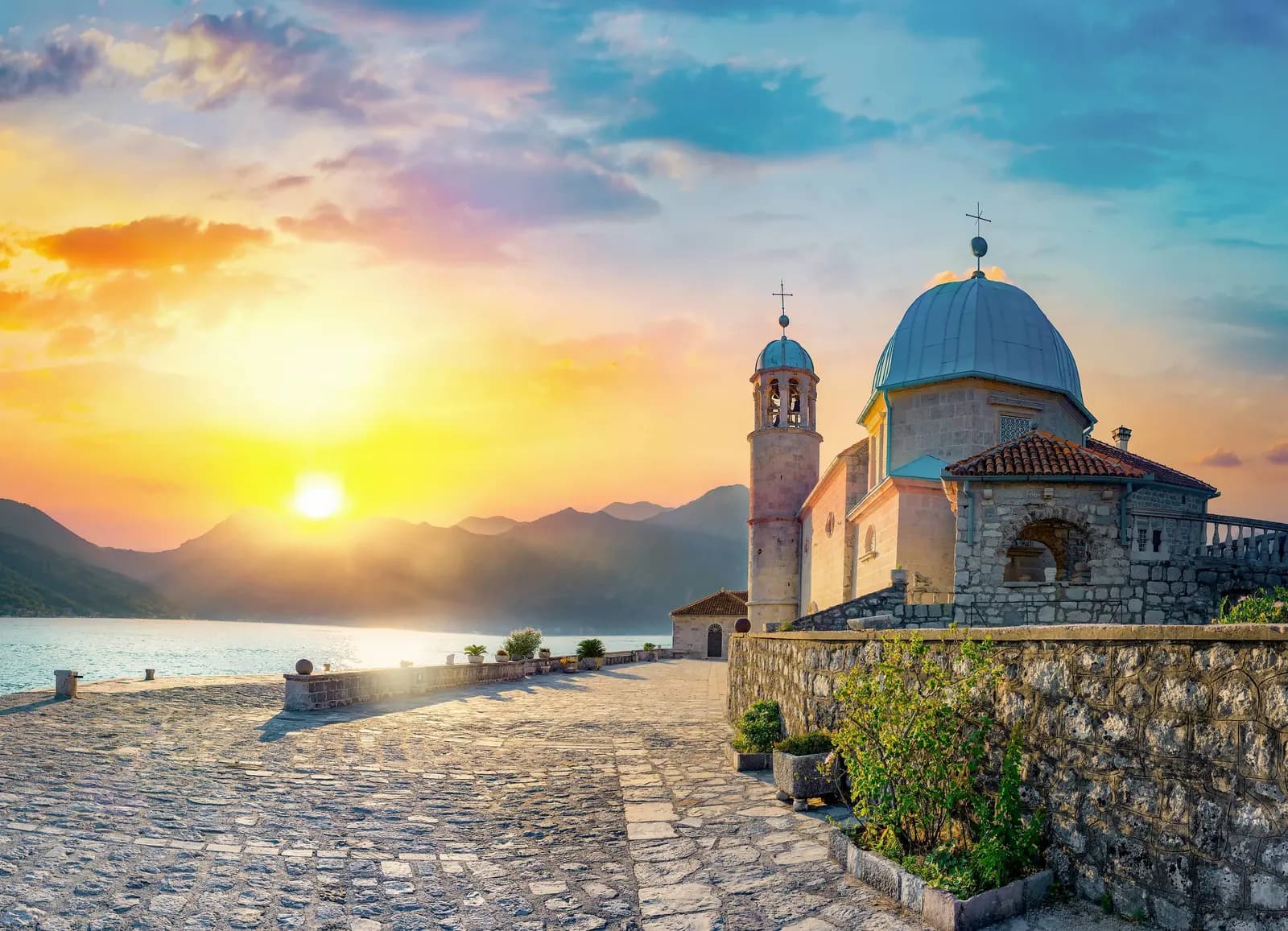
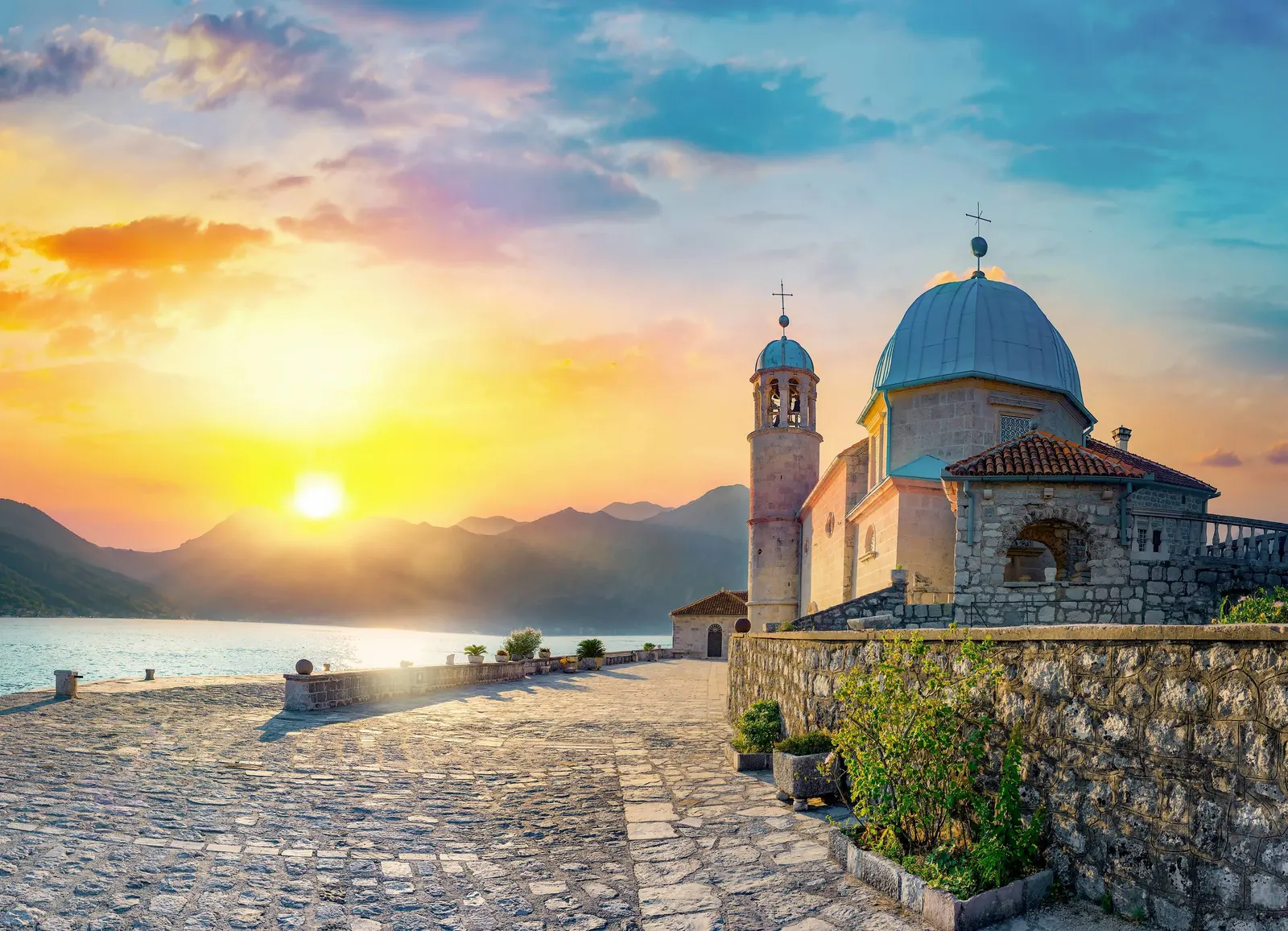
Separate the island visit. If seeing the church interior matters, plan it at a confirmed ordinary visitor time rather than assuming the procession provides access. Weather and marine operations can change, and the sunset photograph above is not evidence of calm conditions on your date.
Frequently asked questions
When is Fašinada?
The traditional date is July 22 at dusk. The 2026 edition was held on that date. Confirm the exact current-year gathering time and programme with Tourism Organisation Kotor.
Can tourists join the boats?
Do not assume so. Official descriptions present the convoy as a Perast community and religious tradition. No reviewed primary source publishes visitor places for sale. Watch from shore unless the responsible organizer explicitly authorizes participation.
Is Fašinada on UNESCO’s intangible heritage list?
No reviewed official source says that. Montenegro protects Fašinada as national intangible cultural heritage. The government identifies the Boka Navy, a different tradition, as Montenegro’s UNESCO-listed intangible element.
Why do the boats carry stones?
The stones symbolically renew and reinforce the human-made island associated with the traditional 1452 icon-discovery story. Their casting around Our Lady of the Rocks is the ritual’s central action.
Are the boats decorated with apple or poplar branches?
Official sources differ. The national English listing says apple; Radio Kotor’s after-event 2026 report says poplar. This article uses “green branches” generally and “poplar” only for the documented 2026 edition.
Is the Fašinada Cup the same event?
No. The Cup is a separately organized sailing regatta. In 2026 it ran on July 21–22 with multiple racing classes; the Fašinada ritual remained the connected-boat stone procession at dusk on July 22.
Bottom line
Fašinada is strongest when described precisely. The icon discovery is a tradition; protected status is a legal-cultural fact; the 2026 procession is a dated, reported occurrence; and the sailing Cup is a separate sport event. Watch from Perast with patience and respect, leave the working convoy to its community bearers, and verify the logistics for the year you actually attend.