Petar Zambelić was a Luštica-born mariner who became Pedro Zambelic in Chilean records. He worked as a shipowner and channel pilot in the demanding maritime economy of Magallanes. In 1894 he piloted the Chilean patrol vessel Cóndor; command remained a separate naval role.
Safe pilotage through the channels around the Strait of Magellan, Tierra del Fuego and Cape Horn depended on accumulated local knowledge, judgment and repeated exposure to difficult waters. His life connected a small Boka hamlet with Punta Arenas, regional freight routes and Chile’s southern archipelagos. Visitors can follow that history on Luštica while respecting the privacy of the family hamlet.
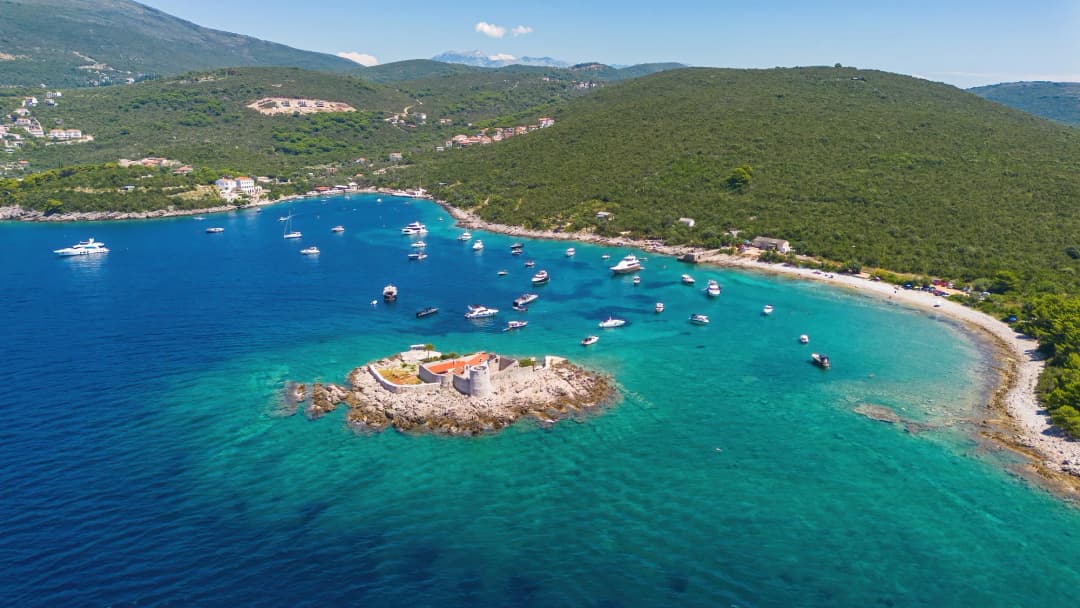
Petar Zambelić’s life and maritime career
The Croatian Encyclopedia places Zambelić's birth in the hamlet of Zambelići on the Luštica peninsula in 1849 and his death in 1903. Chilean historian Mateo Martinic identifies him as a mariner from Boka Kotorska in Dalmatia, then part of the Austrian imperial world, who reached Magallanes around 1871–1872 after travelling through Buenos Aires. A second Croatian institutional summary instead gives departure in 1869 and arrival in Chile in 1873. Those dates should be read as a range, not forced into a false single-day itinerary.
In 1875, Martinic records Pedro Zambelic marrying French immigrant María Virginia Clerc on 20 March. After he was widowed, he married Luisa Zúñiga in 1884.
By 1880 he co-owned the cutter Rayo with merchant José Menéndez and took part in fur-seal hunting. Martinic also records service to the Italian cruisers Caracciolo in 1882 and Flavio Gioia in 1884. He gained official standing as a knowledgeable pilot of the regional channels and later owned the schooners Porvenir and Juanito, carrying freight between Punta Arenas and smaller ports and coves from 1895.
| Date | Milestone |
|---|---|
| 1849 | Luštica birth |
| c. 1871–72 | Magallanes |
| 1875 / 1884 | marriages |
| 1880 | Rayo |
| 1894 | Cóndor pilot |
| from 1895 | freight trade |
| 1903 | Murray Channel |
Source: studiacroatica.org, enciklopedija.hr
Pilotage aboard the Cóndor
Martinic records Zambelić as pilot of the patrol vessel Cóndor in 1894 during a long jurisdictional voyage through the western archipelago and toward Cape Horn. A pilot supplies route knowledge and navigational judgment; command belongs to the vessel's naval officer. Both roles can be essential, but they are not interchangeable.
A technical encyclopedia gives 1890 and describes him as an official guide and channel expert, while Martinic dates the Cóndor patrol to 1894. The two dates refer to accounts with different levels of detail and should not be combined into a single promotion sequence. By the 1890s, Zambelić was recognized for his knowledge of the southern channels.
His importance is easier to understand when pilotage is treated as skilled work instead of a lesser version of command. Southern Chile is not one straight passage. It is a system of straits, channels, islands, exposed approaches and anchorages, with weather, tide and imperfect nineteenth-century charts compounding the risk. A captain arriving from another ocean could still need someone whose knowledge was built there.
| Role | Responsibilities |
|---|---|
| COMMAND | authority over vessel; crew and mission decisions; naval accountability |
| PILOTAGE | local channel knowledge; route and hazard advice; navigation under command |
Source: studiacroatica.org
Petar, Pedro, Zambelić, Zambelic and Samblich
Luštica usage preserves Petar Zambelić. Chilean records commonly use Pedro Zambelic, while a Croatian technical reference also lists Pedro Samblich. Search all three spellings when working across catalogues. Accents may disappear because of the language, printer or database.
What the sources say
Nationality requires equal care. Modern Croatian encyclopedias identify him as Croatian; a Montenegro route presents him as a great mariner from Boka; Chilean history places him among early Croatian or Slavic migrants; and local storytelling sometimes calls him Chilean because his mature career and family were in Chile. In the 1878 census, Martinic explains, early settlers from this Adriatic background appeared as “Austrian” because officials classified subjects of the empire.
None of those labels alone captures the whole life. “Luštica-born mariner in Magallanes” is precise without denying later Croatian, Montenegrin, Boka or Chilean memory. The same caution helps with the Montenegrin emigration archive: present-day identity should not be projected backwards as if borders and census categories never changed.
The difficult economy behind the maritime legend
The Rayo partnership belonged to the fur-seal trade. That fact should not be turned into an adventure vignette. Hunting marine mammals was an extractive business that connected skins, merchants, small craft and remote coasts while imposing severe costs on animal populations. It also placed crews in dangerous water. Historical importance is not moral endorsement.
Martinic's wider immigration history and a history of José Menéndez place Zambelić within commerce, transport and resource exploitation as Punta Arenas expanded. Another regional chronicle describes experienced navigators and small shipowners supporting cabotage around the Beagle channels and Cape Horn. His career belonged to this wider network of commerce, transport, resource extraction and regional navigation.
No single cause explains every departure from Luštica or the wider Bay of Kotor. Zambelić left while sailing work still structured his career, and his life shows maritime skill travelling with a migrant. Readers can compare a later community history in General Madariaga without treating Argentina and Chile as one migration story.
Petar Zambelić at a glance
| Date | Event | Place or context |
|---|---|---|
| 1849 | Born in Zambelići | Luštica peninsula |
| c. 1871–72 | Arrived in Magallanes via Buenos Aires | Southern Chile |
| 1875 | Married María Virginia Clerc | Punta Arenas |
| 1880 | Co-owned the cutter Rayo | Regional maritime trade |
| 1884 | Married Luisa Zúñiga after widowhood | Magallanes |
| 1894 | Piloted the patrol vessel Cóndor | Western archipelago and Cape Horn waters |
| 1903 | Died in an accident | Murray Channel off Wulaia |
| 1952 | Memorial plaque installed | Family house in Zambelići |
Death in Murray Channel
Zambelić died in a maritime accident in Murray Channel, off Wulaia, in 1903. Later accounts differ about the activity immediately before the accident, so the precise circumstances remain uncertain.
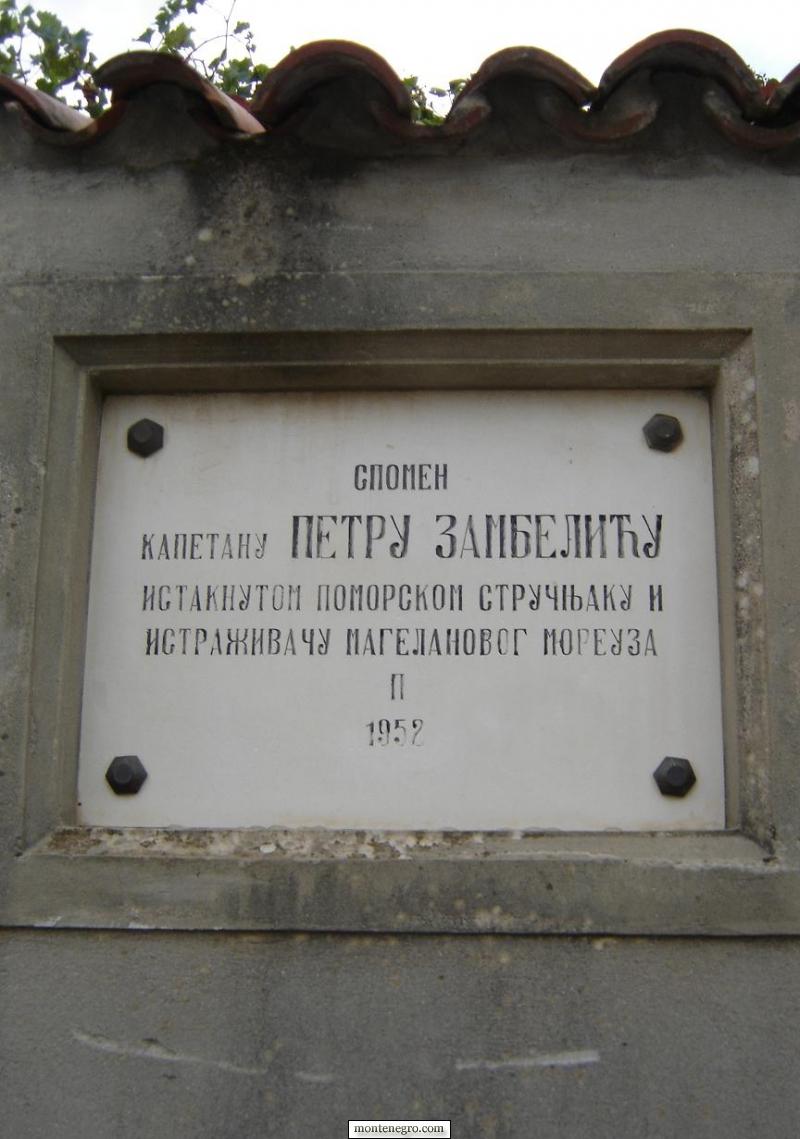
Finding Zambelići without intruding
What the sources say
Herceg Novi's municipal settlement decision places Zambelići, Mirište and Žanjice as hamlets within Radovanići. It names the principal local road Put luštičkih kapetana—the Road of Luštica Captains—with branches toward Rose and toward Mirište and Žanjice. The National Tourism Organisation's panoramic route marks Petar Zambelić as stop 11.
Use the official route for orientation, not as an invitation to walk into a courtyard. The memorial is associated with a family house, with no published opening hours, tickets or guaranteed guided entry. Remain on public roads, obey signs, avoid blocking the narrow lane, and ask permission before photographing people, doors or private space. If the plaque cannot be seen without entering property, turn back.
Mobile coverage and mapping precision can vary among small hamlets. Download the route map before leaving the main road and allow more time than the distance suggests. Large vehicles are a poor fit for narrow sections. The nearby Žlijebi responsible-visit guide applies the same principle: living stone settlements are not open-air film sets.
| Step | Action |
|---|---|
| Download | official route |
| Use public | road only |
| Check signs | and parking |
| View from | public space |
| Private? | Do not enter |
Source: montenegro.travel, hercegnovi.me
Practical visit plan: combine the history with Žanjice carefully
Žanjice is the easiest public place to understand the southern Luštica setting. The National Tourism Organisation describes it as a pebble beach reachable by land or seasonal excursion boat from Herceg Novi. Published frequency and return times are indicative, not a timetable: confirm the same day's last return directly with the operator, especially outside peak summer.
Driving gives more flexibility for the panoramic road but introduces parking and narrow-road pressure. A boat gives the geography of the bay entrance but does not take visitors to the upland plaque. Treat the beach and memorial as separate plans unless you have independently confirmed transport.
The Blue Cave guide is useful if combining Žanjice with a licensed excursion. In 2026, Montenegro's government reported that motor-powered vessels were prohibited from entering the cave area during strengthened controls; conditions and enforcement can change, so use a legal operator and follow maritime instructions. For a land-based day, the Bjelila guide provides a quieter Luštica comparison, while Herceg Novi accommodation areas help with a practical base.
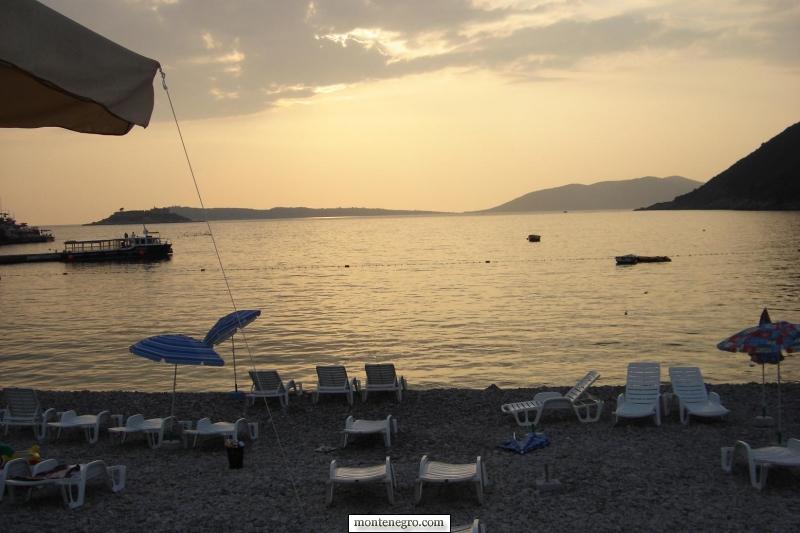
A one-day decision table
| Priority | Best structure | Verify first | Do not assume |
|---|---|---|---|
| Zambelić history | Official panoramic route by small car | Road conditions, daylight, public access | The house is open |
| Žanjice beach | Land access or licensed seasonal boat | Parking or exact return sailing | Published frequency is live |
| Bay geography | Licensed boat from Herceg Novi | Weather, operator, lifejackets, route | Every cave is enterable |
| Photography | Public viewpoints and beach | Property boundaries and consent | A plaque permits courtyard entry |
| Migration context | Read Chilean record before the route | Name variants and source dates | One nationality label settles identity |
Frequently asked questions
Was Petar Zambelić Chilean?
He was born in Zambelići on Luštica and built his mature maritime career and family life in Chile. He is remembered through Croatian, Montenegrin, Boka and Chilean historical contexts rather than one exclusive modern identity.
Did he command the Chilean vessel Cóndor?
Martinic records him serving as pilot during a 1894 patrol. Pilotage was specialist navigational work, not command of the naval vessel.
When did he reach Magallanes?
Martinic gives approximately 1871–1872 via Buenos Aires, while Croatian summaries give variants extending to 1873. His arrival belongs to the early 1870s, but the exact year differs by account.
Who was his wife?
There were two recorded marriages: María Virginia Clerc in 1875 and, after widowhood, Luisa Zúñiga in 1884.
Can visitors enter his birthplace?
The house has no published museum status or opening hours. View only what is visible from public space, follow signs and never enter private property without permission.
Is the plaque from 1952?
A local heritage account dates its installation to 1952. The plaque remains associated with a private family house and does not create public access rights.
Why Zambelić’s life matters
Zambelić's life connects a small Luštica hamlet to Buenos Aires, Punta Arenas, international vessels, freight schooners and one of the world's most demanding channel systems. It also reflects the entanglement of migration, empire, commerce, environmental extraction and later national memory.
His story joins Petar and Pedro, Luštica and Magallanes, and the roles of pilot, shipowner and mariner. If you visit, let the plaque prompt curiosity rather than trespass.