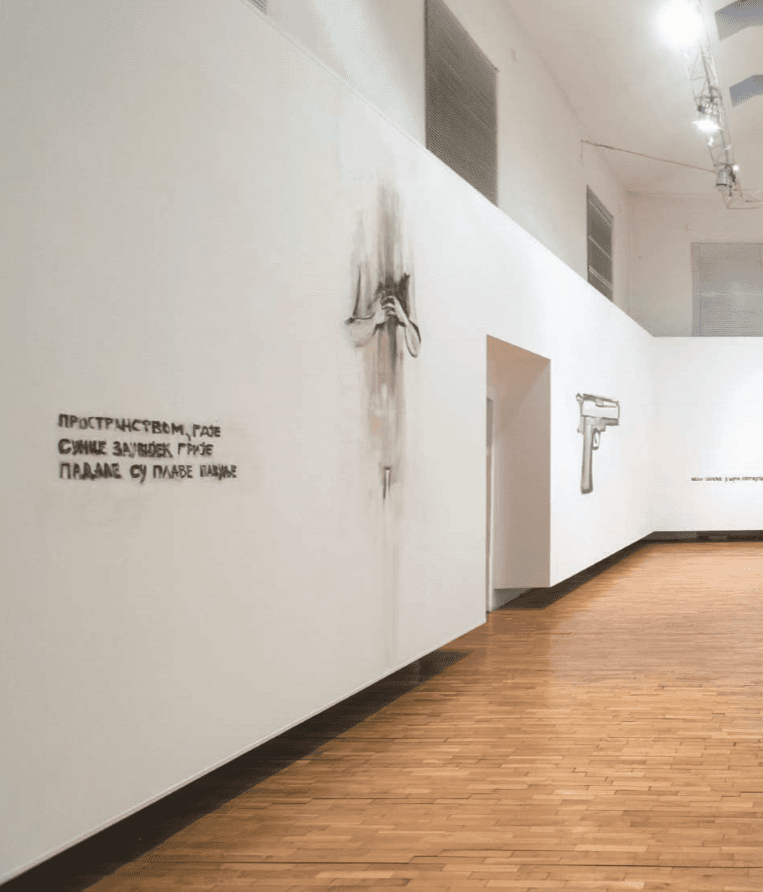
Petar Lubarda and Milo Milunović are useful starting points for modern Montenegrin painting, not a complete canon. Their careers connect Cetinje, the Bay of Kotor, Belgrade, Paris and wider exhibition networks. They also expose a problem in older art writing: biography, national identity, style and institutional history are often compressed into one heroic story.
Their key dates, works and institutions form a practical route through Cetinje and Podgorica. Collection ownership does not guarantee current display, and neither painter’s work fits a single stylistic label across every decade.
Why national-character myths fail
Montenegrin modern art developed through study, travel, patronage, war, teaching, museums and criticism—not biological destiny. Neither talent nor modernism needs an ethnic gene to explain it. National identity is part of the history, but it cannot substitute for biography, institutions and close attention to individual works.
A better account follows institutions and choices. Artists from Montenegro studied in Cetinje, Shkodër, Monza, Florence, Belgrade and Paris; joined armies or endured displacement; exhibited across Yugoslavia and Europe; taught students; founded schools; and placed works in public collections. Geography mattered, but through landscape, memory, material, access and networks—not destiny.
The category “Montenegrin painter” is itself contextual. Lubarda and Milunović were born in Montenegro and hold central places in its museum narrative, while also belonging to Serbian, Yugoslav and European art histories. A museum label may legitimately foreground one frame; a careful visitor should notice rather than erase the others.
| Place | Role |
|---|---|
| Cetinje | School + museum |
| Belgrade | Study + academy |
| Paris | Study + exhibitions |
| Florence | Milunović training |
| Prčanj | Fresco commission |
| Monza / Shkodër | Wider exhibitions |
Source: sanu.ac.rs, narodnimuzej.me
Petar Lubarda: biography before legend
The Serbian Academy of Sciences and Arts records Petar Lubarda as born in Ljubotinj on 27 July 1907 and deceased in Belgrade on 13 February 1974. He lived and worked mainly in Belgrade and spent 1938–1940 in Paris. His career belonged to a wider European exhibition culture: SANU lists the Paris World Exhibition Grand Prix in 1937 and first prize at The Hague in 1938, not 1940.
Lubarda's Montenegrin landscapes are not simple topographical records. In works reproduced and interpreted by the National Museum, rock, night, animal bodies, battle and colour can move between recognizable motif and charged field. The museum's discussion of Night in Montenegro places him among the artists who strongly shaped Yugoslav visual art in the second half of the twentieth century. That institutional judgment is more useful than declaring every canvas “expressionist.”
Look first at structure. Does the composition offer a horizon or deny it? Is stone modelled as volume, broken into planes, or transformed into colour pressure? Do black areas behave as shadow, void or active shape? When a title names a battle or place, compare what the title supplies with what the painted surface actually shows.
| Step | Question to ask |
|---|---|
| 1. Title | What is named? |
| 2. Space | Horizon or field? |
| 3. Colour | Surface or force? |
| 4. Charge | History, fear, energy? |
Source: narodnimuzej.me
Titles, dates, catalogue entries and institutional biographies help connect a painting to Lubarda’s life without turning trauma into atmosphere. Begin with the specific work and its documented context before applying a broad biographical interpretation.
Compare works from different dates before assigning Lubarda one style or a single turning point. Look at how the horizon, colour field, named subject and scale change, then relate those choices to the exhibition label and catalogue. For a broader discussion of how outside narratives frame Montenegro, see the guide to foreign press narratives about Montenegro.
Milo Milunović: Mediterranean subjects without a single style box
Milo Milunović was born in Cetinje on 6 August 1897 and died in Belgrade on 11 February 1967. The National Museum traces early schooling through Cetinje, Monza and Shkodër and painting study in Florence before the First World War. It describes later Paris experience, while SANU records him as a founder and professor of the Belgrade Academy of Fine Arts from 1937.
Simple period labels can make Milunović’s paintings fit a syllabus more neatly than the works allow. He worked across oil, tempera, watercolour, drawing, posters, fresco and mosaic. His coastal landscapes, interiors and still lifes can use measured composition and restrained tonal relationships without remaining stylistically fixed.
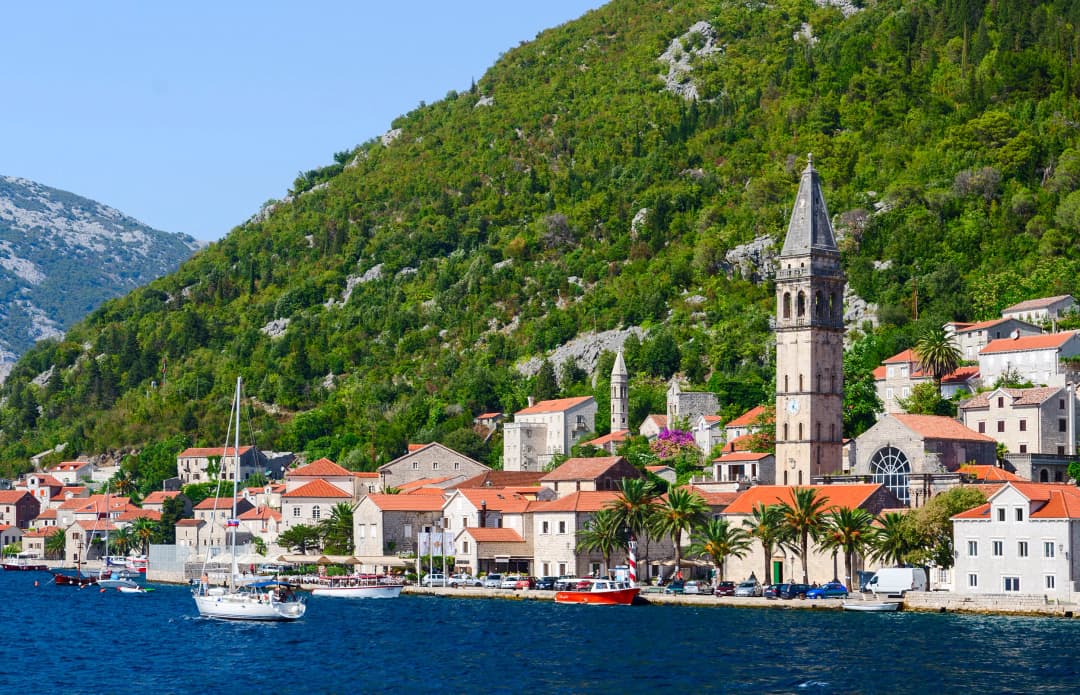
The National Museum's biographical account says he made frescoes for the parish church at Prčanj in 1923 and 1924 at the invitation of Don Niko Luković. That confirms a commission; it does not mean the church functions as an always-open Milunović gallery. Ask locally about access, services and photography, and use on-site interpretation before attaching a name to a wall painting.
For a still life, study the interval between objects as closely as the objects. For a coast scene, ask whether the sea opens space or closes it into a band. Compare the treatment of fishing gear, fruit, ceramics, bodies and stone across works. A crab may be a recognizable subject, a compositional anchor and a colour event at the same time.
| Element | Stage |
|---|---|
| Subject | Input |
| Composition | Input |
| Material | Input |
| Light | Input |
| The work | Result |
Source: narodnimuzej.me, sanu.ac.rs
The Cetinje art school: two dates, one institutional turning point
Cetinje's cultural-development programme says Montenegro’s first art school was founded in 1946. SANU lists Lubarda as founder and lecturer from 1947 to 1950. The founding year and an individual teacher’s service dates describe different parts of the institution’s history.
| Year | Event |
|---|---|
| 1946 | Institution founded |
| 1947 | Lubarda service starts |
| 1950 | Recorded service ends |
Source: ucg.ac.me, sanu.ac.rs
This distinction matters because schools are not created by a single symbolic date alone. Premises, enrolment, staff, curriculum, administration and later moves can each produce a different anniversary. The school helped establish professional art education in Montenegro and later continued in Herceg Novi; the current University of Montenegro Faculty of Fine Arts is a separate institution founded in Cetinje on 18 May 1988.
The Faculty's current profile lists painting, sculpture, graphic design, and conservation and restoration programmes in the former Obod complex. Do not describe it as the unchanged 1946 school. It participates in a longer Cetinje art-education history while having its own legal founding and present curriculum. Readers interested in Herceg Novi's broader early tourism-era setting can use the Hotel Plaža history for a wider view of Herceg Novi in the early tourism era.
Where to see the painters in Cetinje
The National Museum's dedicated Art Museum visitor page is the first stop. The museum occupies Vladin Dom and says its holdings exceed 4,000 objects. Its permanent display draws from Montenegrin, Yugoslav and foreign art, the Vukmanović collection, icons and fresco copies. The museum specifically identifies memorial rooms for Lubarda, Milunović, Branko Filipović Filo and Miodrag Dado Đurić.
The dedicated visitor page lists 09:00–17:00 daily from 11 April to 15 November and 09:00–15:00 Monday–Friday from 16 November to 10 April. It lists €5 adult admission and €2.50 for pupils and students. A separate museum notice closed Cetinje units for one day in May 2026 during the Independence Day programme, so regular hours can still be overridden. Recheck the dedicated page and closure notices before visiting.
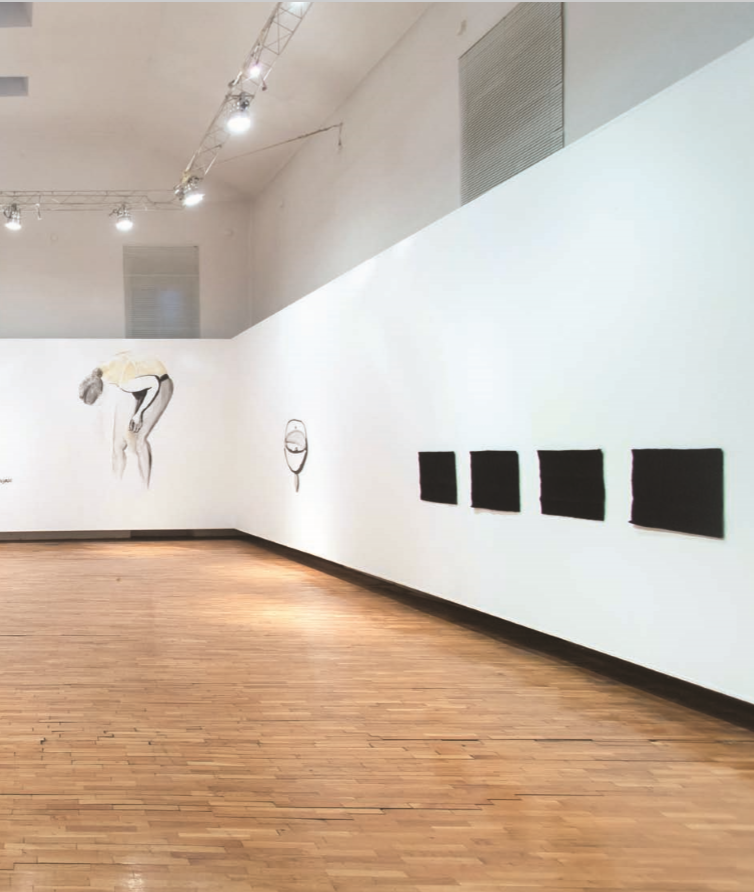
“Permanent display” does not guarantee that every expected painting is hanging. Loans, conservation, rotations and installation work alter what can be seen. Ask at the desk whether both memorial rooms are open and which phases are represented. Photograph object labels for private study if photography is permitted; do not rely on memory for title, date or medium.
The Montenegrin Art Gallery “Miodrag Dado Đurić” and Atelier Dado extend the day toward later and contemporary practice. Cetinje’s 2015 Picasso exhibition belongs to the city’s exhibition history. Consult today’s programme for the artists, venue, dates and opening arrangements available during your visit.
Podgorica and the contemporary continuation
The Museum of Contemporary Art of Montenegro operates exhibition spaces at Dvorac Petrovića, Perjanički dom and Galerija MSUCG in Podgorica. Its current contact page lists Tuesday–Sunday opening from 10:30 to 18:30. Confirm which building holds the exhibition you want; a museum name can describe an institution spread across several spaces.
Podgorica is not a substitute for Cetinje's memorial rooms. It answers a different question: what happened after the canonical modernists, and how are Montenegrin, Yugoslav, non-aligned and international collections re-read now? Pairing the cities produces a more honest arc than treating Lubarda and Milunović as the end of national painting.
The companion article on Montenegrin artists broadens the names, while the Bijelo Polje cultural walk counters the idea that Montenegro's cultural history belongs only to Cetinje and the coast. Travellers planning both cities can use the seven-day itinerary for geographic sequencing, then replace generic timings with museum hours.
Practical museum decision table
| Question | Best first stop | Evidence to request | Failure mode |
|---|---|---|---|
| How did Lubarda and Milunović change across phases? | Art Museum, Cetinje | Open memorial rooms, labels, current checklist or guide | Assuming every famous work is on view |
| How does later Montenegrin practice develop? | Art Gallery “Miodrag Dado Đurić” plus current programme | Exhibition dates, curator text, participating artists | Using an expired event page |
| What is happening in contemporary art? | MSUCG, Podgorica | Exact venue and current exhibition | Going to the right institution but wrong building |
| How did art education become institutional? | Cetinje museum context plus Faculty profile | 1946 institution history, 1947–50 service record, 1988 faculty founding | Merging separate schools into one continuous body |
| Where are Prčanj frescoes? | Parish church inquiry in Prčanj | Access permission and on-site identification | Treating a commission record as visitor access |
Allow at least 60–90 minutes for the Art Museum if the memorial rooms are the priority. Add time for labels and comparison rather than maximizing room count. If an important room is closed, ask whether a catalogue, digital guide or related work is available elsewhere; do not photograph through barriers or press staff for conservation access.
Bring a small notebook or use offline notes on your phone. Recording the artist, title, date, medium and room makes comparisons across Cetinje and Podgorica far easier once the visit is over.
A first-time visitor can begin with one work by each painter. Record title, date, medium and collection. Spend five quiet minutes with each before reading a long biography. Then compare one formal choice—edge, colour, scale, horizon, object spacing—not which artist is “more Montenegrin.”
| Step | What to do |
|---|---|
| Live venue | Hours + alert |
| Confirm room | Or exhibition |
| Record label | Title / date / medium |
| Look first | Surface + structure |
| Compare | Context + form |
Source: en.narodnimuzej.me, msucg.me
How to handle reproductions, labels and rights
A painting’s fame or appearance in a catalogue does not automatically make a digital photograph free to reuse. Museum object rights, photographer rights, publication rights and visitor photography rules are separate. Check the institution’s terms before reproducing an image.
When sharing your own museum photograph, include the artist, title, date, medium, holding institution and any credit requested on the label. Do not crop out the credit and then attach an invented interpretation as fact. If photography is prohibited, write the details down and link to the institution's authorized object page.
Exhibition captions record the interpretation available at a particular time. A later catalogue may revise a date, title or provenance, so note when you saw the label and retain the institution’s object reference where possible.
Frequently asked questions
Which two painters anchor this route?
Petar Lubarda (1907–1974) and Milo Milunović (1897–1967), two central figures in the National Museum's account of modern Montenegrin art. They are an entry point, not the only important painters.
Did Lubarda win at The Hague in 1940?
SANU records first prize at the International Exhibition in The Hague in 1938. It separately records the Paris World Exhibition Grand Prix in 1937.
Was the Cetinje art school founded in 1946 or 1947?
Cetinje's cultural programme dates the institution to 1946, while SANU lists Lubarda's founder and lecturer service from 1947 to 1950. Those statements describe related but different facts.
Can I always see Lubarda and Milunović at the Art Museum?
The museum describes dedicated memorial rooms, but individual works and access can change. Confirm the rooms and current display before a special journey.
What are the current Art Museum hours and price?
The dedicated visitor page lists 09:00–17:00 daily from 11 April to 15 November, 09:00–15:00 weekdays from 16 November to 10 April, €5 for adults and €2.50 for pupils and students. Check that page and closure notices before visiting.
Where should I go for contemporary art?
Check both Cetinje's Montenegrin Art Gallery “Miodrag Dado Đurić” and the Museum of Contemporary Art of Montenegro in Podgorica. Verify the exact exhibition and building. The broader why-visit guide can frame a trip, but it cannot replace a live programme.
Are Milunović's Prčanj frescoes open to visitors?
The commission is documented, but access is a separate question. Contact the parish or local cultural institution, respect services and confirm photography rules.
How should I compare the painters?
Choose works from known dates, record medium and scale, then compare one visible problem such as horizon, colour mass, object spacing or treatment of stone. Avoid reducing the answer to temperament or nationality.