.webp&w=2048&q=75)
A dolphin-watching trip in Montenegro should begin with an unusual promise: nobody can promise dolphins. Wild animals choose where they travel, feed and rest. The responsible product is therefore not a chase with a guaranteed close-up, but a carefully managed day at sea in which a sighting is possible and the coastline, field observation and marine research still make the journey worthwhile if no fin appears.
This distinction corrects Montenegro.com’s original 2017 announcement. That page promoted a voyage with the then Montenegro Dolphin Project, but mixed a four-day sailing description with a later reference to an eight-hour tour. It also named a particular yacht and invited readers to meet dolphins “up close.” Those details are historical, not a current offer. This guide preserves the project’s research story while replacing sales language with questions a traveller can use today.
.webp&w=1080&q=75)
What changed since the original tour
Montenegro Dolphin Research says it began in September 2016 as a project of the Marine Mammals Research Association. Its institutional history records expansion along the Montenegrin coast in 2017 and independence as a local non-governmental organisation in 2021. The organisation reports using land, boat and kayak surveys, including photo-identification of individual animals from natural markings on dorsal fins.
That continuity matters, but it does not make the 2017 itinerary current. Boats, teams, departure points and commercial arrangements change. The old yacht name should not be treated as a booking instruction, and the old contact sentence should not be read as confirmation that Montenegro.com operates the trip. Travellers should consult a current provider directly, receive written terms and verify what role—if any—a research organisation has in the departure.
For general boat planning, start with our sailing and yachting guide. It covers the practical difference between an inner-bay cruise and an exposed Adriatic passage. A wildlife trip needs the same seamanship, plus a stricter rule: the animal’s welfare takes priority over completing an advertised encounter.
What the research can—and cannot—tell a visitor
The 2024 ACCOBAMS report for the Central Mediterranean describes photo-identification and land-based research in southern Montenegro, together with opportunistic information on sightings and strandings. Montenegro Dolphin Research says its programme has completed hundreds of land surveys and more than a hundred boat surveys since 2016. These statements show sustained research effort. They do not create a daily sighting forecast or prove that one cove is a dependable dolphin “hotspot.”
Common bottlenose dolphins are the species most visitors associate with coastal Adriatic encounters. The International Whaling Commission notes that coastal bottlenose populations overlap with fishing, vessel traffic, agriculture and industry, and can be affected by intensive watching pressure. Offshore Adriatic waters can also hold other cetaceans, but a traveller should distrust a short tour marketed as a checklist of species.
| Evidence | What it supports | What it does not support |
|---|---|---|
| Repeated land survey | Presence, timing and effort from a fixed observation point | A guaranteed encounter on your date |
| Photo-identification | Recognition of individuals when usable dorsal-fin images exist | A complete count of every dolphin in Montenegrin waters |
| Boat survey | Structured observation along a recorded route | Permission for a tourism vessel to pursue animals |
| Citizen sighting | A useful lead when time, position and evidence are recorded | A verified species record without expert review |
| Tour sighting rate | Operator history only if method and sample are disclosed | A promise that wildlife will appear |
The welfare-first encounter
The International Whaling Commission’s central principle is simple: manage the effect of watching and allow whales or dolphins, as far as possible, to determine the nature and duration of contact. That means no head-on interception, encirclement, separation of a group or repeated acceleration to regain position. Mothers and calves, resting animals and groups already attended by other vessels deserve extra space.
ACCOBAMS guidance for Mediterranean commercial watching similarly uses zones of vigilance, controlled speed, limited observation time and a no-approach sector. Exact legal distances and permit rules must be confirmed locally; copying a distance from another country is not a substitute for Montenegrin regulation or a competent skipper’s judgment. If animals approach voluntarily, the helm should remain predictable. Passengers should not demand turns, splashes or a bow-riding photograph.
| Stage | Practice |
|---|---|
| Approach | Observe at distance; reduce speed |
| Positioning | Parallel, predictable movement |
| Interaction | Animals choose contact |
| Note | Schematic only—not a statement of local legal distance |
Source: accobams.org
Seven questions to ask before paying
- Are sightings guaranteed? The only credible answer is no. Ask what happens if no cetaceans appear.
- Who is responsible for navigation? Request the skipper’s credentials, vessel registration and passenger capacity.
- What code governs an encounter? A serious operator can explain speed, approach angle, time limit and behaviour around calves.
- Is this tourism or research? If research is claimed, ask which organisation, what data are collected and how passenger fees support it.
- Is swimming or feeding promoted? Treat either as a warning. Wild dolphins should not be fed, touched or used as a swim attraction.
- What cancels the trip? Wind, sea state, visibility and mechanical condition must overrule the schedule.
- What is included? Get departure point, duration, safety equipment, refreshments, park fees and refund terms in writing.
A polished website and a dolphin photograph are not answers. Look for a safety briefing, an honest no-sighting policy and education that begins before wildlife is found. Be cautious when “scientific” is used as decoration but no protocol, partner or result can be named.
Practical booking decision
Shortlist two operators and compare the same facts: actual vessel, maximum passengers, departure harbour, time exposed to open sea, encounter code, cancellation threshold and refund terms. Prefer the smaller group only when the craft and safety plan are appropriate; capacity alone does not prove quality. Do not pay a non-refundable transfer until the operator confirms how late weather cancellation can occur.
For a one-day window, choose the departure that leaves a useful land-based alternative nearby. With two or more days, place the wildlife trip early so weather may allow rescheduling. Confirm again the evening before and at the quay. Walk away if the vessel differs materially from the booking, lifejackets do not fit, passenger numbers exceed the stated limit or the skipper dismisses reasonable questions.
Read Montenegro’s coast as three different environments
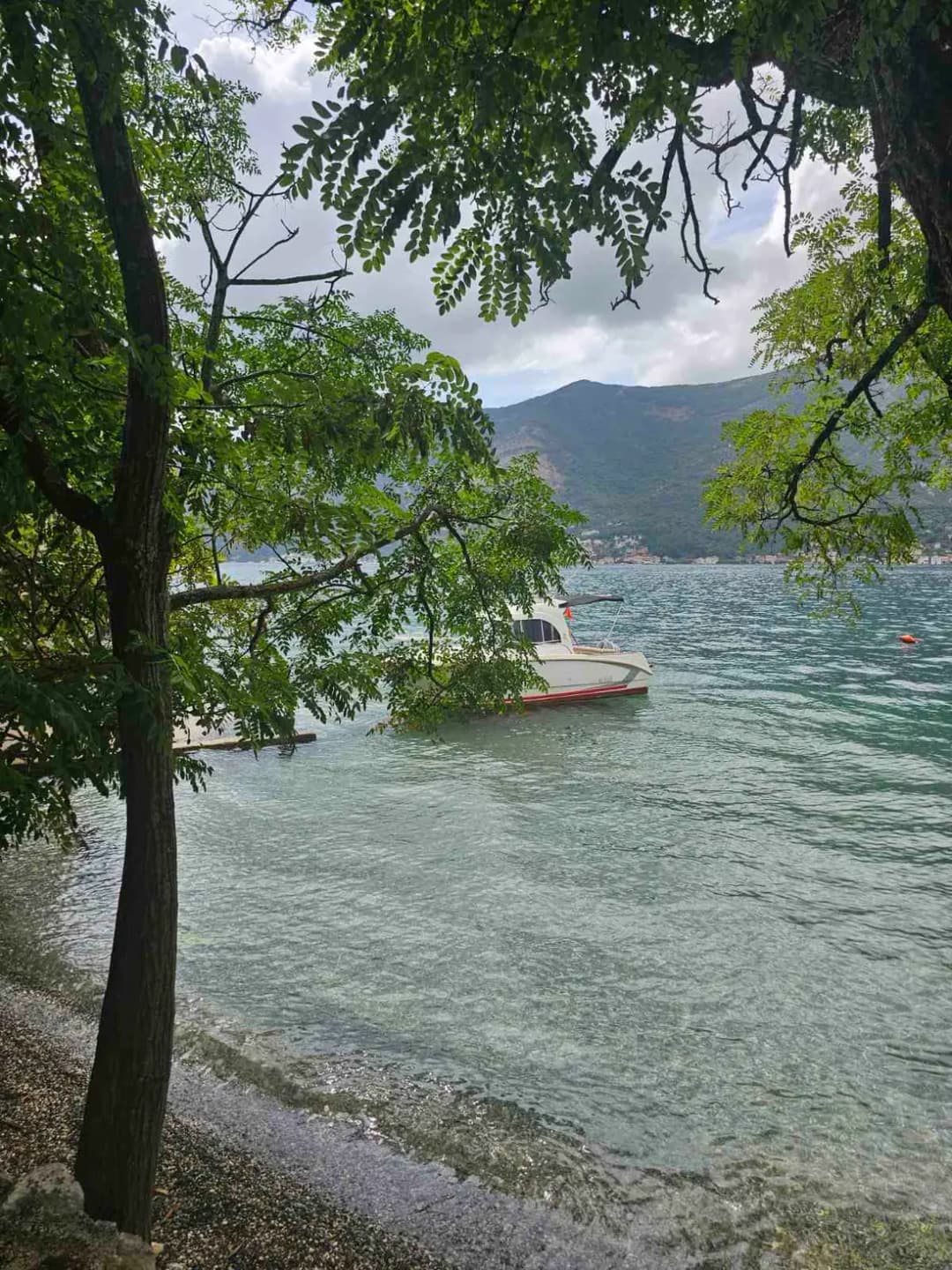
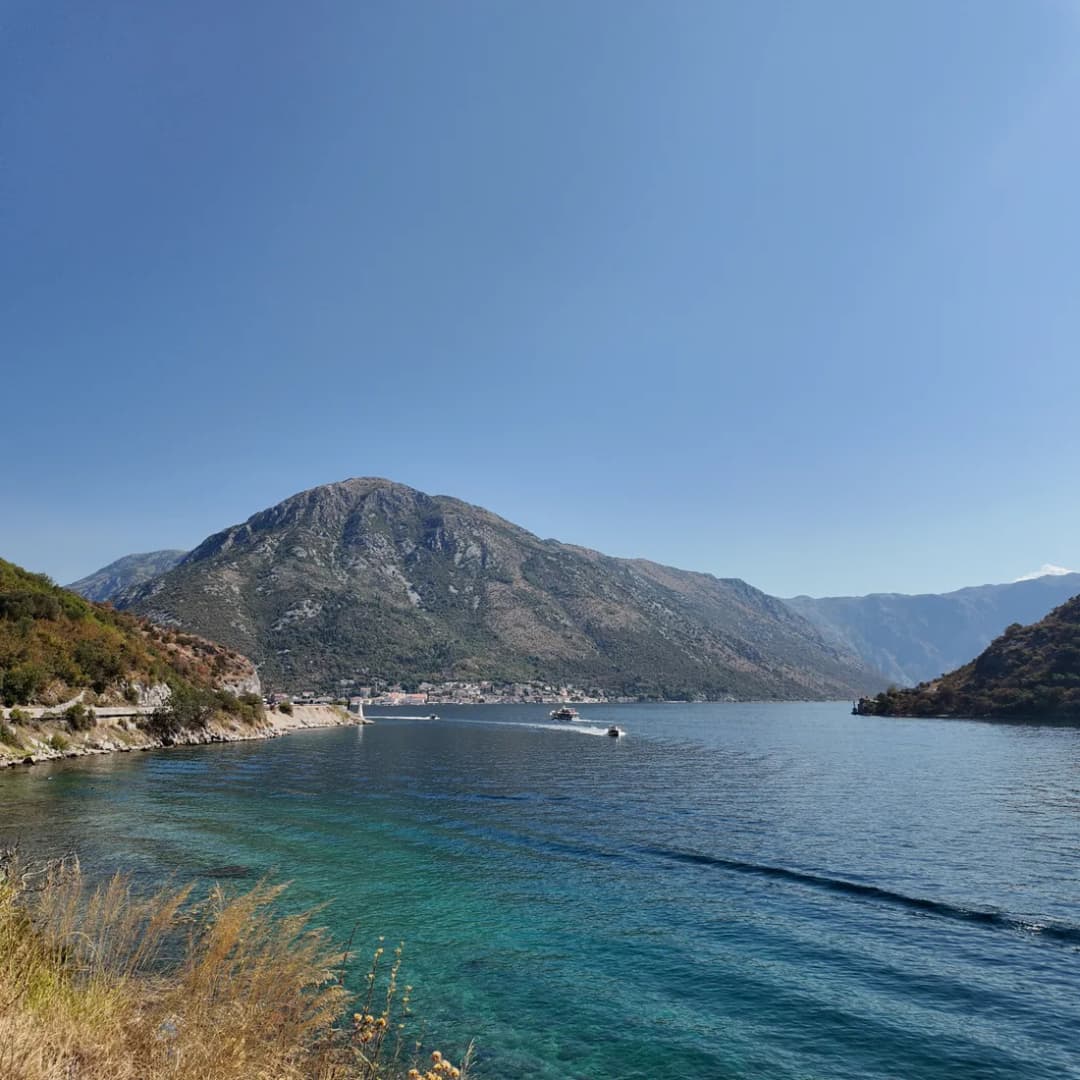
Boka Kotorska is enclosed, mountainous and busy. It offers extraordinary sailing context but also ferries, cruise traffic, marinas and concentrated small craft. Our Risan, Perast and Kotor route is a better framework for understanding settlements than treating the bay only as a launch ramp.
The open central coast around Platamuni and Katič introduces greater exposure. Montenegro’s government lists Platamuni, Katič and Stari Ulcinj among its marine protected areas. Katič protects more than a scenic island view: official material highlights seagrass and other marine habitats. Protected status is not permission to improvise a wildlife route; it is a reason to ask about zoning and anchoring.
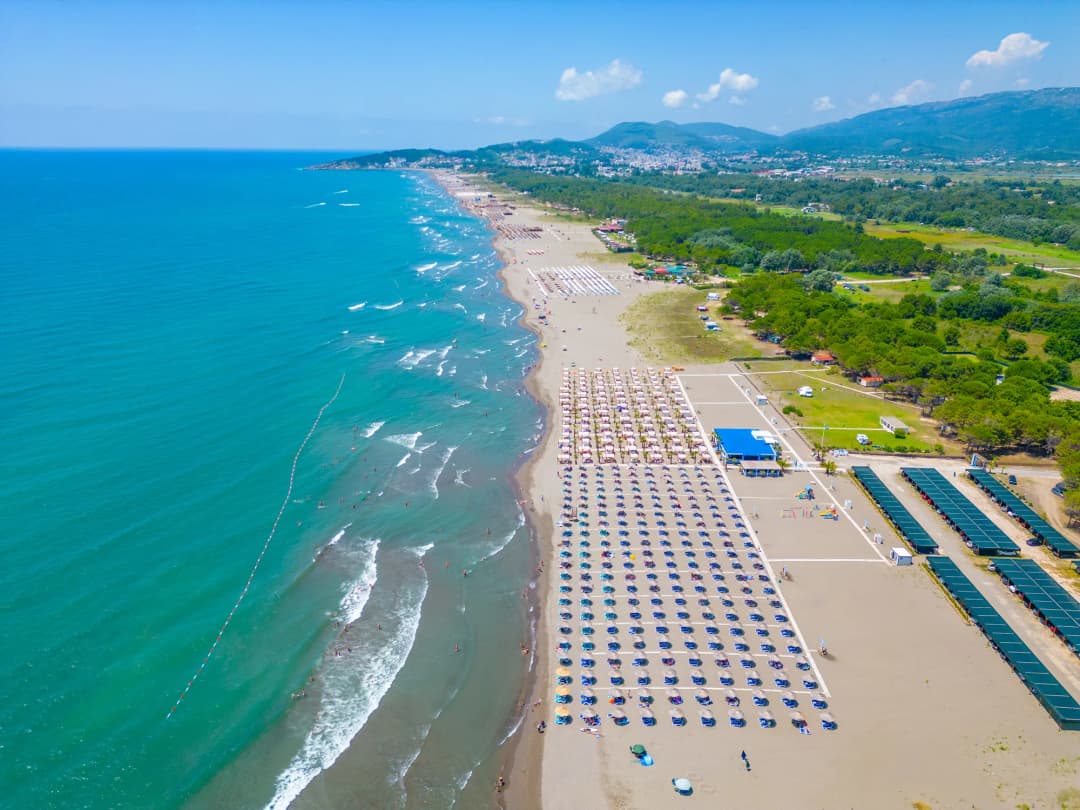
The southern coast toward Ulcinj combines open sea, long beaches, lagoons and migratory-bird habitat. A cetacean voyage and a wetland visit are separate experiences. Pairing them can create a strong multi-day nature itinerary, but an eight-hour boat should not casually promise a stop at every ecosystem. See the Ulcinj Salina field guide and our Velika Plaža guide for land-based planning.
Weather, equipment and the no-sighting day
Confirm the marine forecast on the day, then listen to the skipper’s assessment at the vessel. A calm quay does not describe conditions beyond a headland. Bring sun protection, a wind layer, non-slip footwear and water. Wear the supplied buoyancy equipment when instructed, keep one hand available when moving and place electronics in a dry bag. Seasickness medication needs advance advice from a pharmacist or clinician; taking it after symptoms begin may be too late.
On a no-sighting day, a high-quality guide can still explain survey effort, water depth, seabirds, fishing activity, marine protected areas and the difference between observing and searching. The operator should record effort honestly rather than racing farther offshore to rescue the itinerary. This is where a research-minded trip distinguishes itself from spectacle.

If sea conditions are poor, substitute a shore-based day rather than pressuring a captain. Tivat’s wetland offers a different form of patient wildlife observation; our Tivat Solila field guide explains how to visit without disturbing birds. Travellers still seeking activity can compare lower-risk options in the Montenegro adventure guide, choosing only what conditions support.
How passengers can contribute useful observations
Do not turn citizen science into crowd pursuit. If a recognised programme requests reports, record time, approximate position, direction of travel, group size and behaviour without changing the vessel’s course to improve the record. A dorsal-fin photograph can help photo-identification only when it is sharp, appropriately oriented and collected without disturbance. Keep the original file and metadata; do not identify a species confidently from a distant splash.
Report an injured, entangled, stranded or dead animal through the current authority or research organisation’s published channel. Do not enter the water, push a live animal back, remove gear or gather around it. Location and photographs taken from a safe distance may be more useful than improvised intervention.
Frequently asked questions
Are dolphins common in Montenegro?
Bottlenose dolphins are documented in Montenegrin and wider Adriatic waters, and structured research continues. “Present” does not mean visible every day or from every departure point.
What is the best month?
There is no responsible universal guarantee. Sea conditions, research effort, prey and animal movement all vary. Ask for an operator’s transparent seasonal record and choose a date you would enjoy as a sailing trip without a sighting.
Can children join?
That depends on the vessel, duration, forecast, lifejacket sizes and operator policy. Give the operator each child’s age and swimming confidence, and avoid a long exposed trip if the safety plan is vague.
Can I swim with wild dolphins?
This guide does not recommend it. Entering the water, touching or feeding changes a low-impact observation into an intrusive encounter and may conflict with applicable rules.