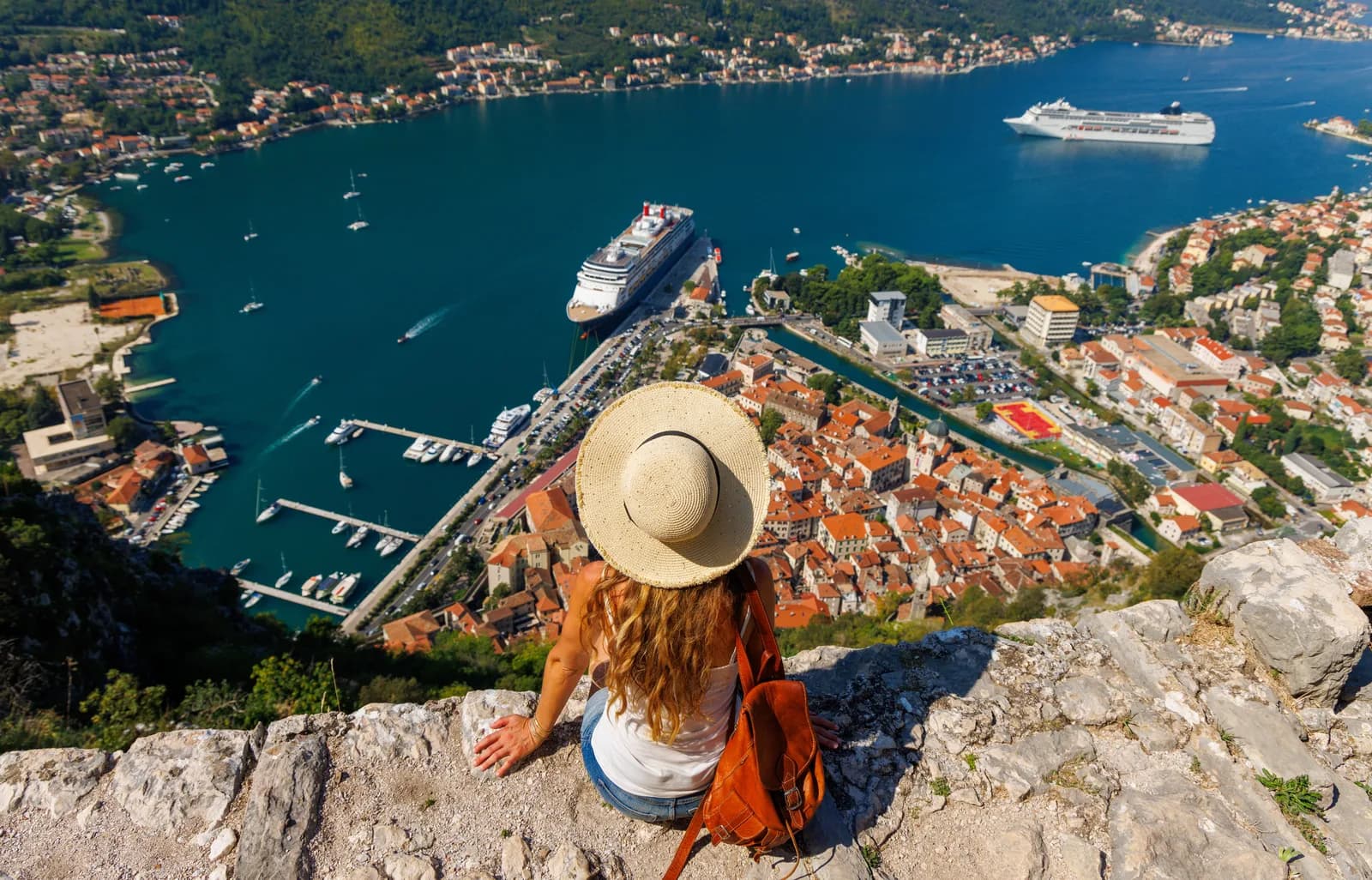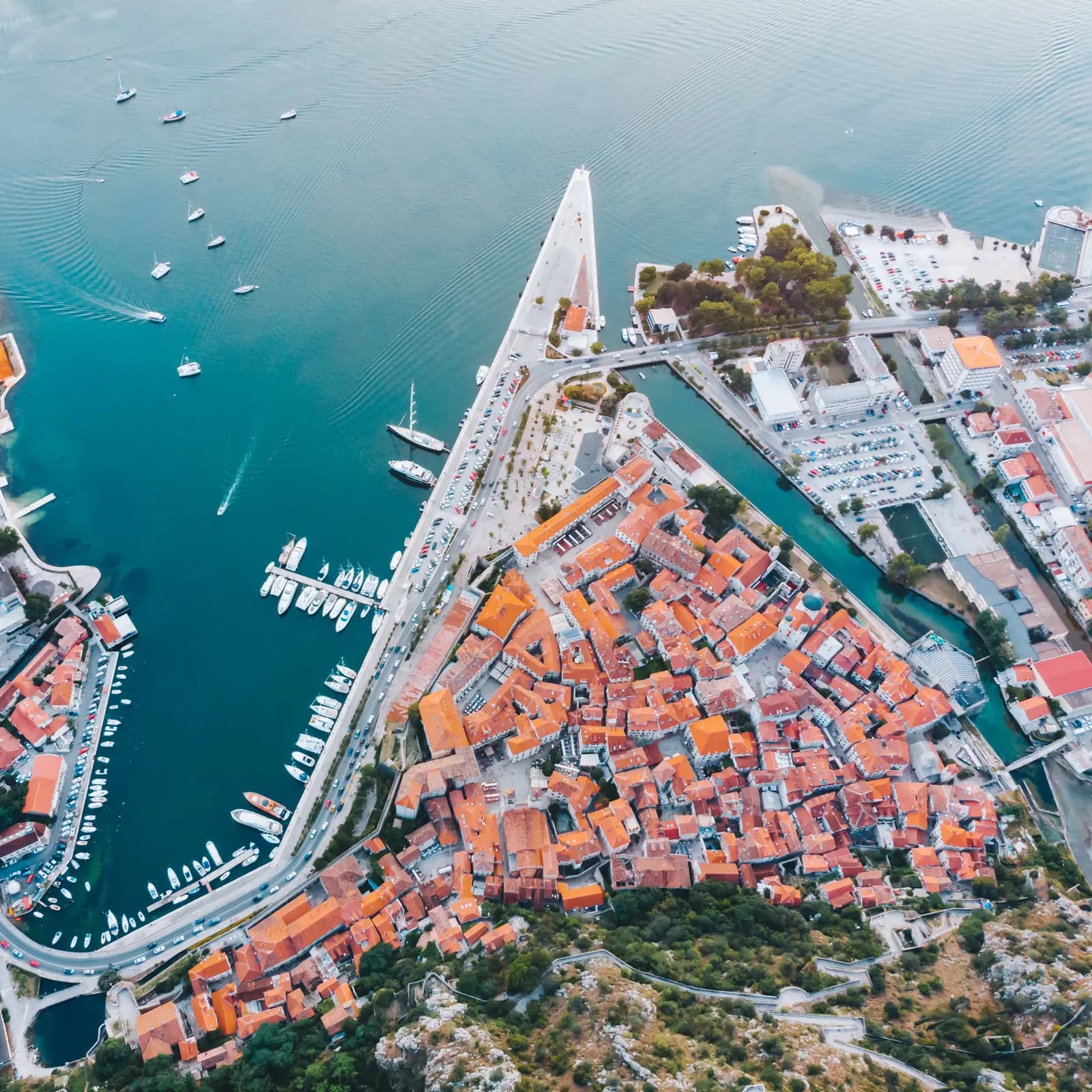
Kotor rewards selection more than speed. The walled town contains gates, squares, churches, palaces and a maritime museum within a compact footprint, while the fortifications climb sharply to St John Fortress above it. Treating all of that as one casual walk produces the classic mistake: too much time on stairs, too little time understanding the city.
A better plan has three layers. First, make a mostly level circuit inside the walls. Second, choose one interior that explains Kotor—usually Saint Tryphon Cathedral or the Maritime Museum. Third, add the fortress only if weather, official access, daylight and physical capacity align. Check current hours, maintenance and crowd conditions before committing to the climb.
| Element | What it covers |
|---|---|
| Property extent | 14,600 ha property |
| Inner bays | Bay landscape within the property |
| Settlements | Settlements inside the property |
| Monuments | Monuments across the property |
| Cultural landscape | Cultural landscape as a whole |
| Kotor Old Town | Central component, not the whole property |
Source: whc.unesco.org
Start with the right UNESCO story
Kotor entered the World Heritage List in 1979 for a relationship between fortified towns, maritime culture and the steep inner-bay landscape. UNESCO gives the property an area of 14,600 hectares. The Old Town is one of its clearest concentrations of architecture, but calling the walls alone “the UNESCO site” erases Perast, Risan, Dobrota, Prčanj and the landscape that connects them. Use the broader Bay of Kotor guide when planning beyond the gates.
The timing of inscription also matters. The April 1979 earthquake seriously damaged Romanesque churches, town walls and historic urban fabric. Kotor was placed on the World Heritage List and the List of World Heritage in Danger in the same year. Professional restoration mitigated that earthquake threat, and the property left the Danger List in 2003. This history explains why apparent “oldness” may include careful reconstruction and why conservation is not a finished event.
In its 2025 decision on Kotor, the World Heritage Committee requested a halt to further project approvals until protection frameworks were harmonised, asked for sustainable-tourism management and called for alternatives to cruise ships docking in the bay. UNESCO status is therefore not a decorative badge. It is an active management obligation under pressure. The account of two decades of international Montenegro coverage helps explain how strong destination exposure developed alongside that pressure.
The essential Old Town loop
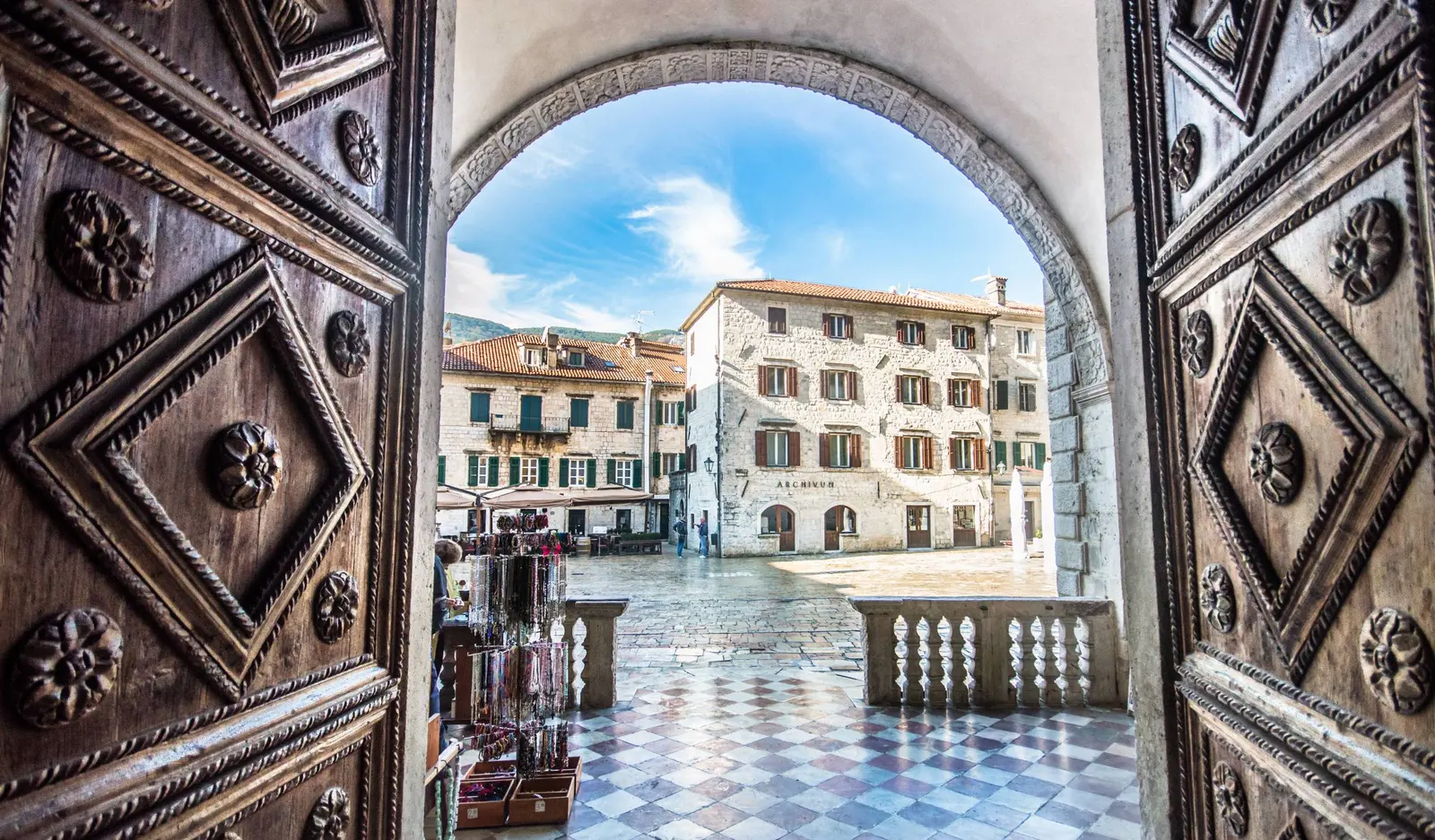
Enter through the Sea Gate and pause before chasing individual monuments. The present gate dates from 1555, according to the Municipality of Kotor. It opens into Arms Square, where the Clock Tower began in 1602 and acquired its later form after the 1667 earthquake. The square is an orientation point: one branch runs toward the religious ensemble around Saint Luke and Saint Nicholas, another toward Saint Tryphon Cathedral, and the central lanes connect the palaces and Maritime Museum.
A useful first circuit is Sea Gate → Arms Square → Saint Luke Square → North Gate and the Škurda edge → Maritime Museum → Saint Tryphon Square → Gurdić or South Gate → return along the waterfront. It is deliberately not the shortest possible line. It shows how civic, religious, maritime and defensive functions overlap without requiring the fortress climb.
Kotor has three principal gates, but they are not interchangeable museum labels. The Sea Gate connects the waterfront to the main square; the North Gate crosses the Škurda side; the southern entrance is a sequence beside the Gurdić spring. The full Kotor Old Town guide gives each gate and square more depth. Here, their value is navigational: use them to make a loop rather than repeatedly returning to the same crowded lane.
| Stop | Note |
|---|---|
| Sea Gate | Arms Square |
| St Luke | North Gate |
| Maritime | Museum |
| St Tryphon | Cathedral |
| Gurdić | South Gate |
| Surface | Mostly level does not mean smooth: expect stone paving, thresholds and occasional steps |
Source: kotor.me, portofkotor.com
Choose one interior that explains the city
Saint Tryphon Cathedral: architecture changed by earthquakes
The cathedral was consecrated in 1166, but its façade and interior should not be read as a frozen Romanesque object. Municipal heritage documentation records substantial changes after earthquakes, including replacement of the original towers and later stylistic layers. Inside are surviving fresco fragments, a fourteenth-century ciborium, metalwork and a treasury. The key lesson is continuity through damage, repair and worship.
Because this is an active Catholic cathedral, religious services take priority over sightseeing. Confirm the current visitor entrance, treasury access, fee, photography rules and dress expectations at the door. A façade photograph is not equivalent to seeing the interior collection, and an online schedule should not override a service or temporary closure.
Saint Luke: a small building with a complex religious history
The official Serbian Orthodox Church page dates Saint Luke to 1195 and identifies Byzantine and Romanesque features. Its history includes Catholic use, later Orthodox use and a retained Catholic altar for a long period. Its religious history changed over time and should not be reduced to a slogan about two faiths occupying the building in the same way forever.
The church remains an active worship space. Enter quietly when permitted, avoid blocking services and ask before photographing people or devotional objects. Its modest scale means even a small group can overwhelm it. The church’s own account provides its architectural and religious history.
Maritime Museum: the strongest secular interior
The Maritime Museum occupies the Baroque Grgurina Palace. The official Port of Kotor brochure traces its collection to material gathered by the Boka Navy fraternity, opened to the public in an early form in 1900 and later expanded. Maps, ship models, portraits, weapons and household objects connect Kotor’s architecture to navigation, trade and maritime households. This is the best choice when rain, heat or limited mobility makes the fortress unattractive.
The Municipality’s cultural-institutions directory publishes the museum’s official address, telephone and website. Confirm the day’s opening, last entry, temporary galleries and lift or stair access directly.
| Interior | Draw | Also | Check first |
|---|---|---|---|
| St Tryphon | Cathedral art | Earthquake layers | Verify treasury access |
| St Luke | 1195 fabric | Living worship | Services take priority |
| Maritime | Ships + maps | Trade + households | Verify hours + stairs |
Source: kotor.me, spckotor.com, portofkotor.com
St John Fortress: a separate, conditional attraction
The Municipality describes a defensive system built in stages from the ninth to eighteenth centuries, approximately 4.5 kilometres long and reaching 20 metres in height in places. The walls climb to St John or San Giovanni Fortress at about 260 metres above sea level. Those figures describe the whole fortification complex—not a promise that visitors walk 4.5 kilometres or that every segment is open.
A February 2025 municipal notice named two controlled entrances: Parilo behind the Church of Blessed Ozana and Škaljarska Square. It set a €15 individual fee and seasonal staffed hours for 2025. Those terms were dated to 2025; check the current official notice, ticket point, last admission and weather on the day.
The strongest current warning is more important than any shortcut. In May 2026 the Municipality said two artillery openings used as irregular entries had been temporarily blocked after injuries and structural concerns. It specifically described uncontrolled access using improvised ladders, ropes and similar aids. Do not follow a map pin or social-media “free route” through the walls. Use only a controlled entrance and obey closures.
In August 2026 the Municipality also announced cleaning, vegetation removal and repointing on parts of the sea and Škurda walls. Maintenance is normal for a living monument, but it may change the exact path. Follow current signs, barriers and staff instructions.
| Check | What it means |
|---|---|
| Official entrance | Controlled point |
| Opening + fee | Today, not old post |
| Weather + light | Heat, rain, wind |
| Body + shoes | Steep uneven steps |
| Water + return | Turn back early |
| Never | NO irregular openings • NO ladders • NO ropes • NO barrier bypass |
Source: kotor.me
What fits your time and body
| Constraint | Best core | Optional addition | Skip first |
|---|---|---|---|
| About 2 hours | Gate-and-square loop | One church interior | Fortress summit |
| Half day | Old Town loop + one interior | Lower official wall segment if open | Rushed bay excursion |
| Full day, fit, cool weather | Old Town + museum/cathedral | Official fortress climb | Multiple paid interiors |
| Heat, rain or limited mobility | Short level loop with rests | Maritime Museum after access check | Fortress |
| Heritage specialist | Cathedral + museum + urban fabric | Walls for system context | Checklist photography |
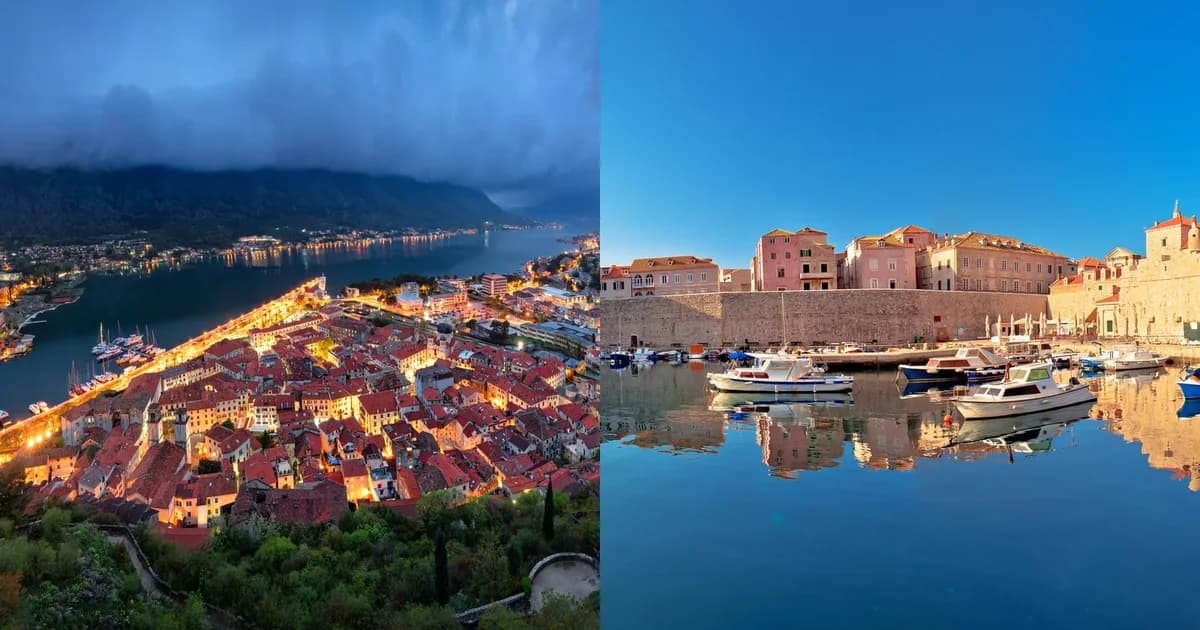
The fortress is not the test of whether you “did Kotor.” A ground-level visit can be more coherent: gates explain defense, the squares explain urban life, the cathedral explains continuity through earthquakes, and the museum explains the sea economy that paid for much of the built fabric. For a destination comparison rather than a monument list, read Kotor versus Dubrovnik.
| Year | Action |
|---|---|
| 1979 | Inscribed + in danger |
| 2003 | Danger threat mitigated |
| 2025 | Urgent planning requests |
| 2026 | Wall safety + maintenance |
| Reading | Restoration success and present-day pressure are both true |
Source: whc.unesco.org, kotor.me
Markets, cats and events: see a living town honestly
Kotor is inhabited, worked in and worshipped in. That is a heritage value, not background theatre. UNESCO warns that traditional practices and ways of life are being eroded while urban and tourism pressure grows. Keep doorways clear, do not photograph residents through windows, lower voices in residential lanes and avoid turning laundry, cats or worshippers into props.
The Boka Navy is a particularly important example of living heritage. UNESCO inscribed its cultural heritage on the Representative List of Intangible Cultural Heritage in 2021. The inscription concerns a community practice of maritime memory, identity, ritual and festive representation; it does not mean that a kolo dance is staged every day for visitors. Use the official event programme rather than expecting a spontaneous performance.
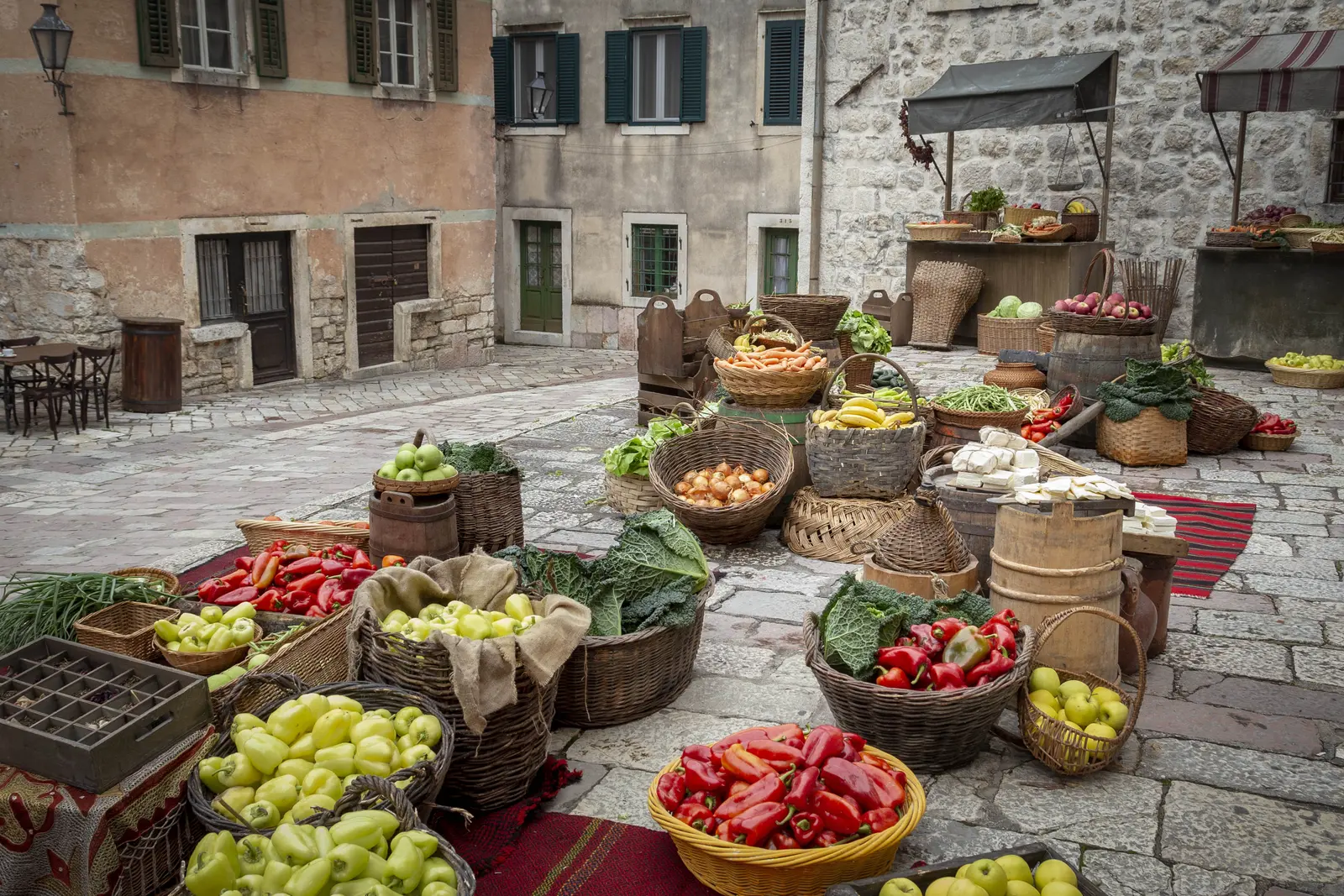
Likewise, an image of produce does not verify today’s market schedule or inventory. Ask vendors before close-up photographs, read displayed prices and choose only what is actually offered. If staying overnight, remember that accommodation registration and tourist tax are administrative questions separate from attraction tickets; the 2026 tourist-tax guide explains the distinction.
Practical visit sequences
Two hours: enter at Sea Gate, orient on Arms Square, walk to Saint Luke and the North Gate, cross to the Maritime Museum square, continue to Saint Tryphon and leave by Gurdić before returning along the outside waterfront. Choose a brief church interior only if it is open and not in service. Do not start the fortress because a view photo makes it look close.
Half a day: complete the same loop and give 45–90 minutes to either the Maritime Museum or cathedral and treasury, after checking current access. Add a quiet residential square without treating it as “hidden.” If an official lower-wall section is open and conditions are comfortable, consider it as an optional view—not a compulsory summit attempt.
Full day: begin with the official fortress entrance only after all five checks pass, then recover before the Old Town circuit and one interior. Reversing that order may place the climb in peak heat. Do not bolt on a distant excursion simply to fill the day. If you have another day, a bay settlement such as Rose on Luštica gives a different maritime scale. The Kotor day-trip guide covers separate inland and bay itineraries.
| Time | Plan |
|---|---|
| 2 hours | Gates + squares, brief church check |
| Half day | Level loop + one interior |
| Full day | Conditional fortress + loop + interior |
Source: kotor.me
Frequently asked questions
What are the three essential Kotor attractions?
For a first visit, choose the Old Town gate-and-square loop, one interpretive interior—Saint Tryphon Cathedral or the Maritime Museum—and the fortification system seen from below. Add the summit only when official access and conditions make it responsible.
Is Kotor Old Town the entire UNESCO World Heritage Site?
No. UNESCO’s Natural and Culturo-Historical Region of Kotor covers 14,600 hectares of the inner-bay landscape and settlements. The Old Town is central, but it is not the whole property.
How much does St John Fortress cost in 2026?
The February 2025 municipal notice set an individual fee of €15 for that season. Confirm the current fee, hours and last admission at an official entrance.
Can I use the free ladder or wall-hole route?
No. A May 2026 municipal notice says irregular openings were used with ladders, ropes and improvised aids, and describes injury and structural risks. Use only controlled entrances and respect barriers.
Is the Old Town wheelchair accessible?
It is largely pedestrian and much of the core loop is relatively level, but stone paving, thresholds, steps and historic interiors create barriers. The fortress is steep. Ask each institution about the exact entrance, route, toilet and upper-floor access before visiting.
How do I avoid cruise crowds?
There is no honest universal hour. Check the current Port of Kotor and tourism-organisation information, start early when practical, keep a flexible interior choice and use the North and Gurdić sides rather than staying only on Arms Square. Crowd conditions can change within one day.