Tivat wears its history more quietly than Kotor or Perast, but two adjacent sites in the centre of town hold six centuries of it between them: a fortified medieval summer palace, and a park grown from the cargo holds of warships. Seen together — and they are a five-minute stroll apart — they tell the whole story of this side of the bay: first a pleasure ground for Kotor’s nobility, then a naval company town, now a resort learning to curate both inheritances.
A summer palace with a defensive tower
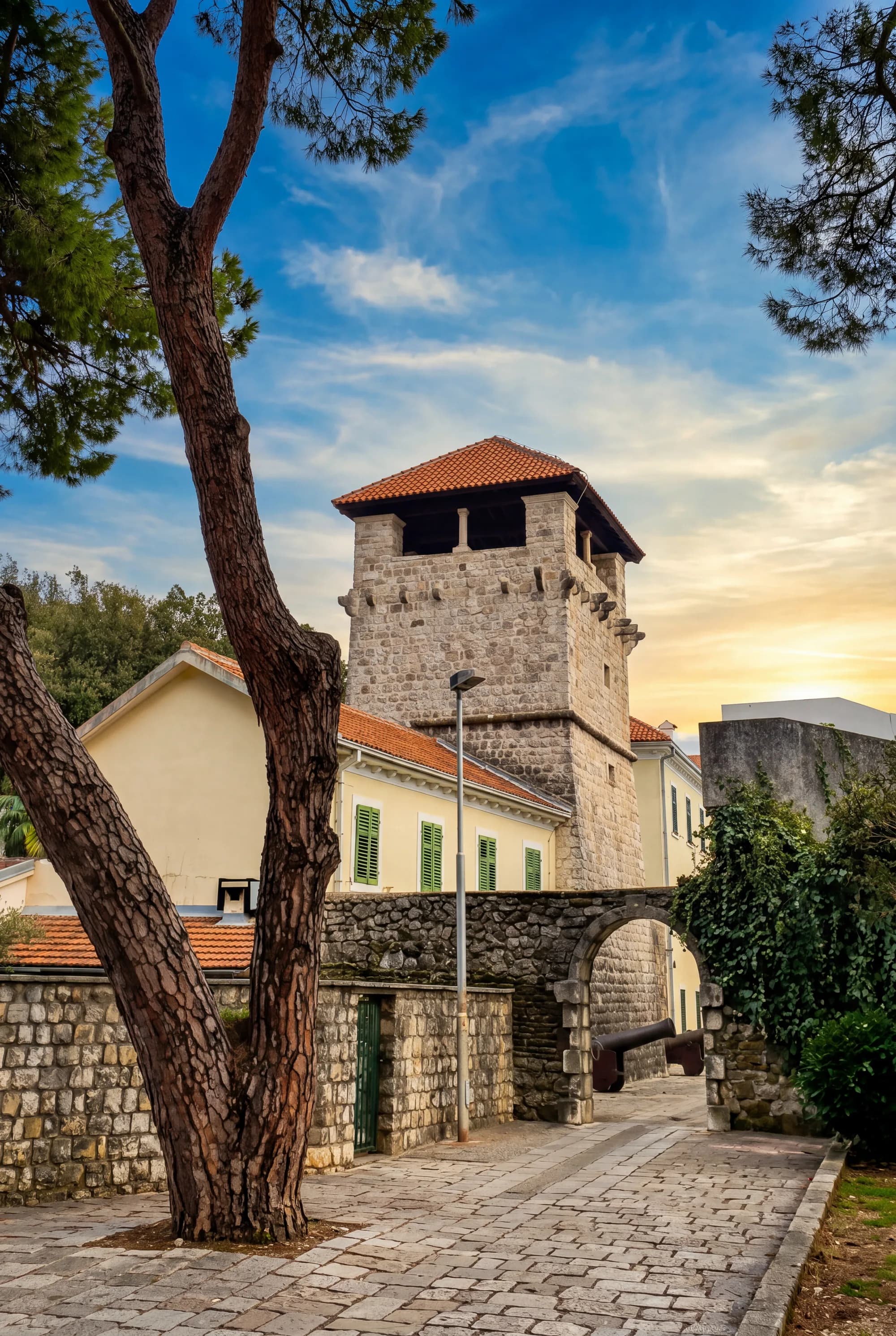
In the Middle Ages, the sunny, well-watered plain of Tivat was where Kotor’s aristocracy went to breathe. The great families — hemmed in behind their city walls across the Vrmac ridge — built summer estates here among vineyards and orchards, and the most monumental and best preserved of them is the Buća-Luković complex, dating from the fourteenth century. Its double-barrelled name records two eras of ownership: the Buća family, one of Kotor’s most powerful houses — merchants, financiers and diplomats who served medieval courts across the region — held it from the fourteenth century until the nineteenth, when it passed to the Luković family.
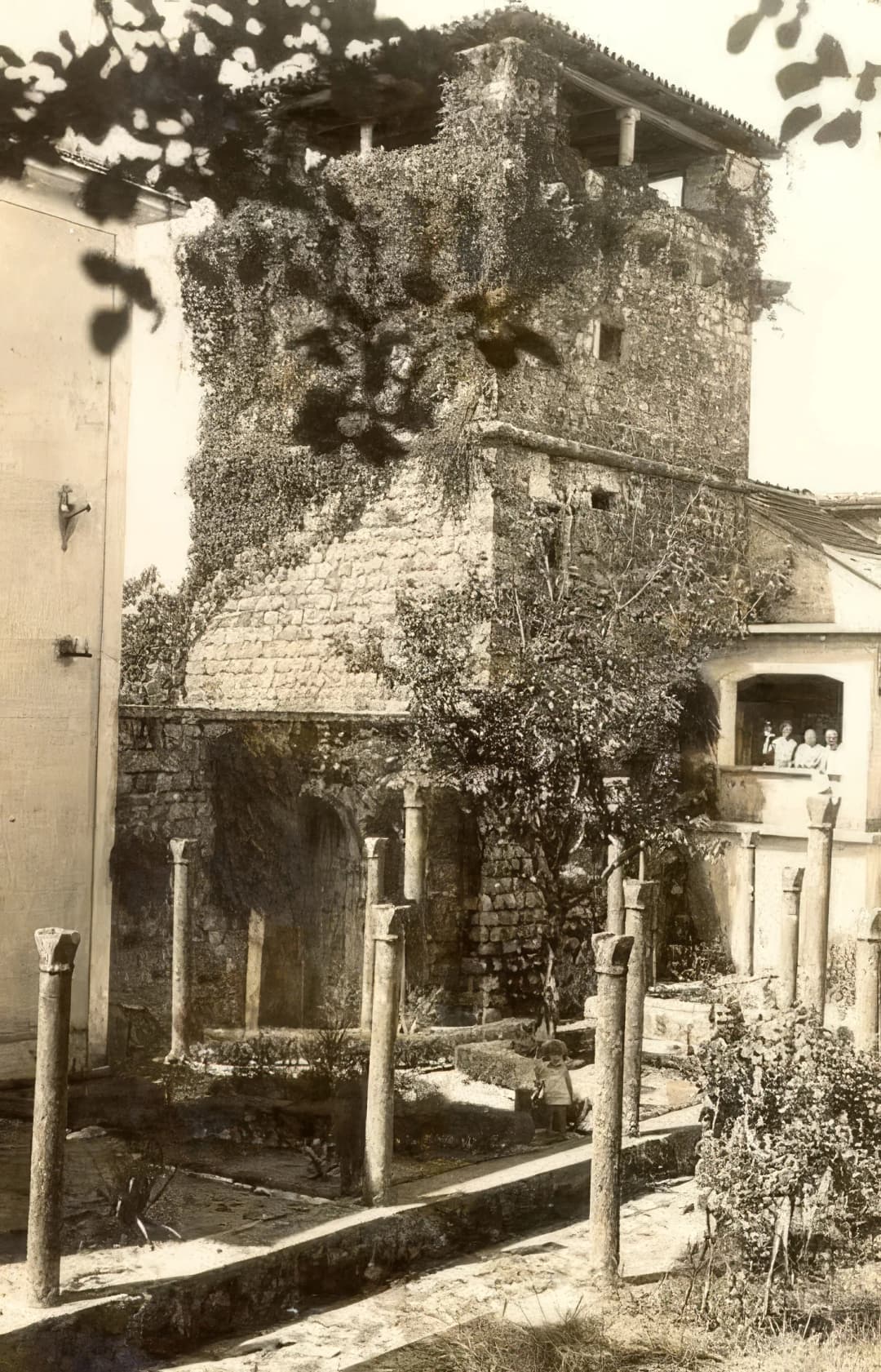
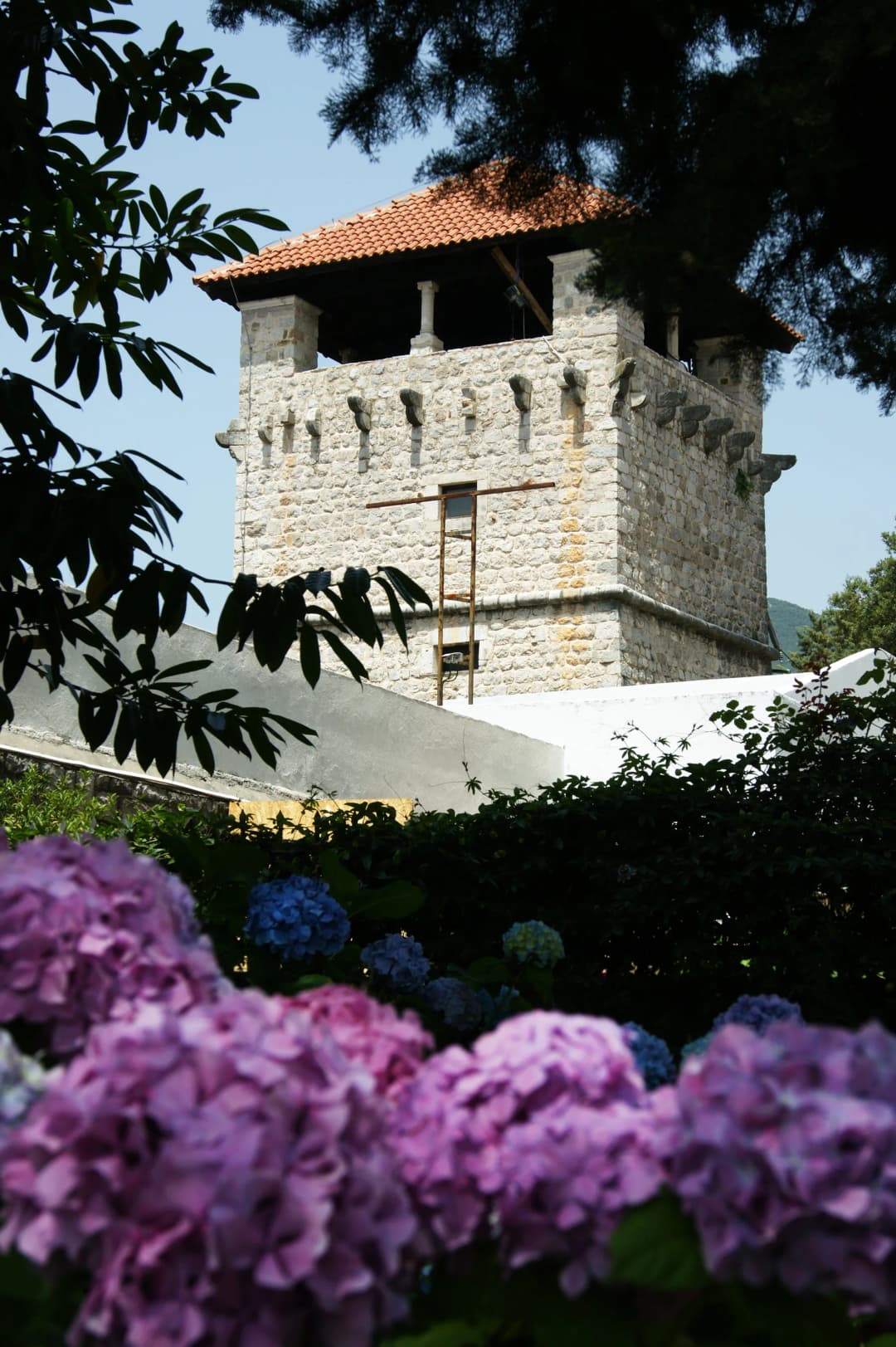
What makes the complex so telling is its architecture. This is a holiday villa crossed with a fortress: alongside the residential building and a small chapel stands a defensive tower, because a summer estate on an open shore in those centuries needed to repel raiders as well as host banquets. The ensemble grew in stages, and you can read the phases in the stonework — Gothic details giving way to Renaissance ones as fear gradually gave way to comfort. It is the same story told by Tre Sorelle in Prčanj and the fortified estates of the whole bay: wealth on this coast always slept with one eye open.
The palace has found the best possible modern use. Restored, it now belongs to Tivat’s Cultural Centre, serving as a gallery and, in the warm months, an open-air summer stage: concerts, theatre and exhibitions in the courtyard where the Buća once entertained. Few medieval monuments in Montenegro are this alive.
The admiral’s garden
Directly beside the old estates lies the other half of the story: Veliki gradski park, the Great City Park — at 5.9 hectares the largest park in Montenegro, and botanically the richest green space on the southern Adriatic. Its origin is one of the best anecdotes on the bay.
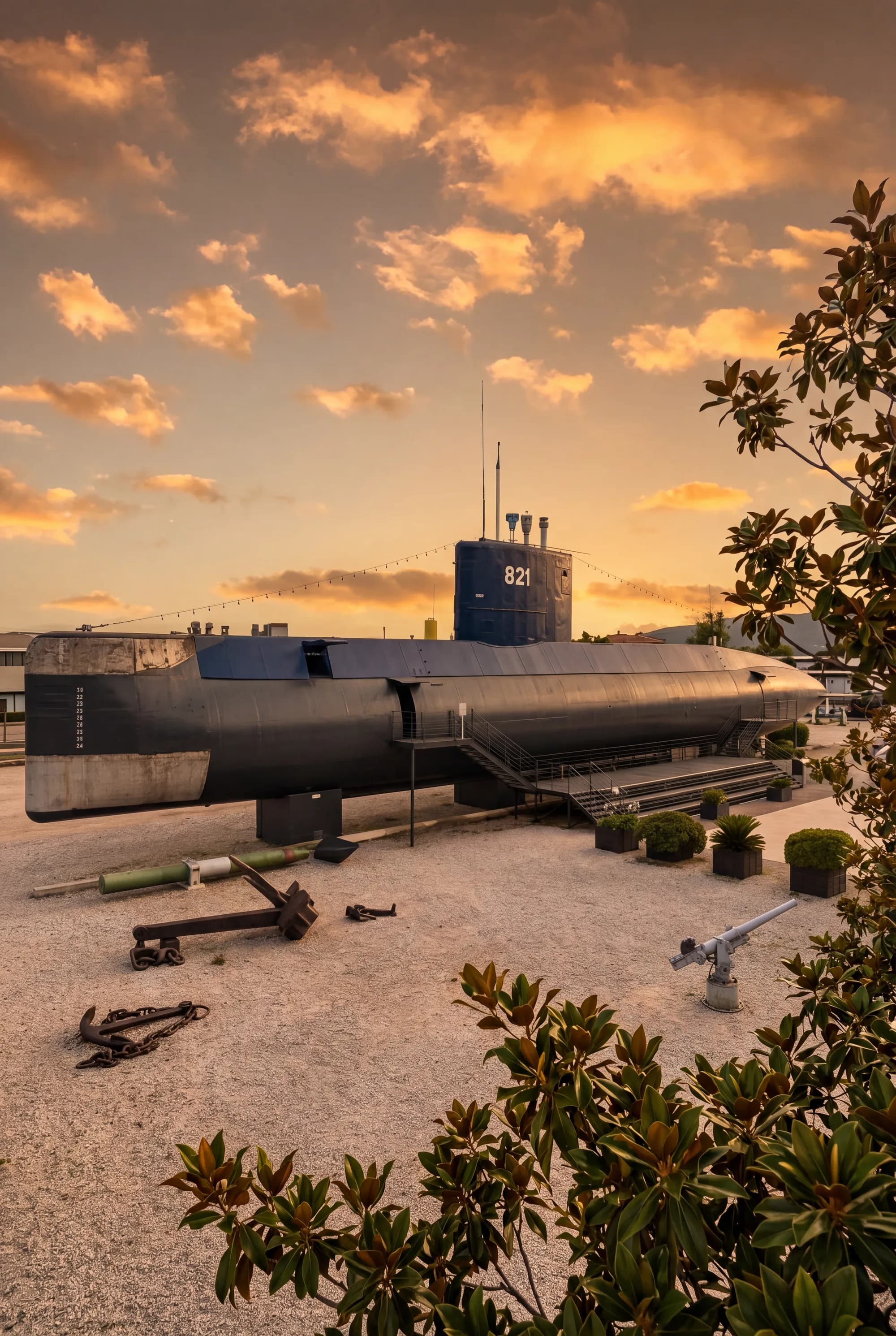
In 1889, Austria-Hungary founded its naval Arsenal at Tivat, the shipyard-and-base complex that would define the town for the next century (its site is today’s Porto Montenegro). The man behind it, Admiral Maximilian Daublebsky von Sterneck, decided in 1892 that his industrial creation needed civilized surroundings — and issued an order remarkable for a fleet commander: captains of Austro-Hungarian warships were to bring back plant specimens from their voyages for the new park at Tivat. The empire’s navy ranged from the Mediterranean to East Asia and South America, and its officers obeyed. Eucalyptus, palms, magnolias, cedars, araucarias and other exotics arrived in naval holds and were planted out on land that had belonged to the noble summer estates — including property of the Buća-Luković, Radalli and Verona families — with warship commanders among those overseeing the work.
The result, more than 130 years on, is a shaded botanical archive of a vanished empire’s sea lanes: around 140 plant species, many of them now towering veterans, in effect a garden planted by the same fleet the Arsenal existed to serve. After decades of neglect in the late twentieth century, the park’s value was formally recognized — since January 2015 it has been protected as a natural monument, and restoration work has been returning its paths and plantings to form.
Reading the two together
- The palace is aristocratic Tivat: Kotor money at leisure, behind a defensive tower.
- The park is imperial Tivat: the navy beautifying its company town with the botany of five continents.
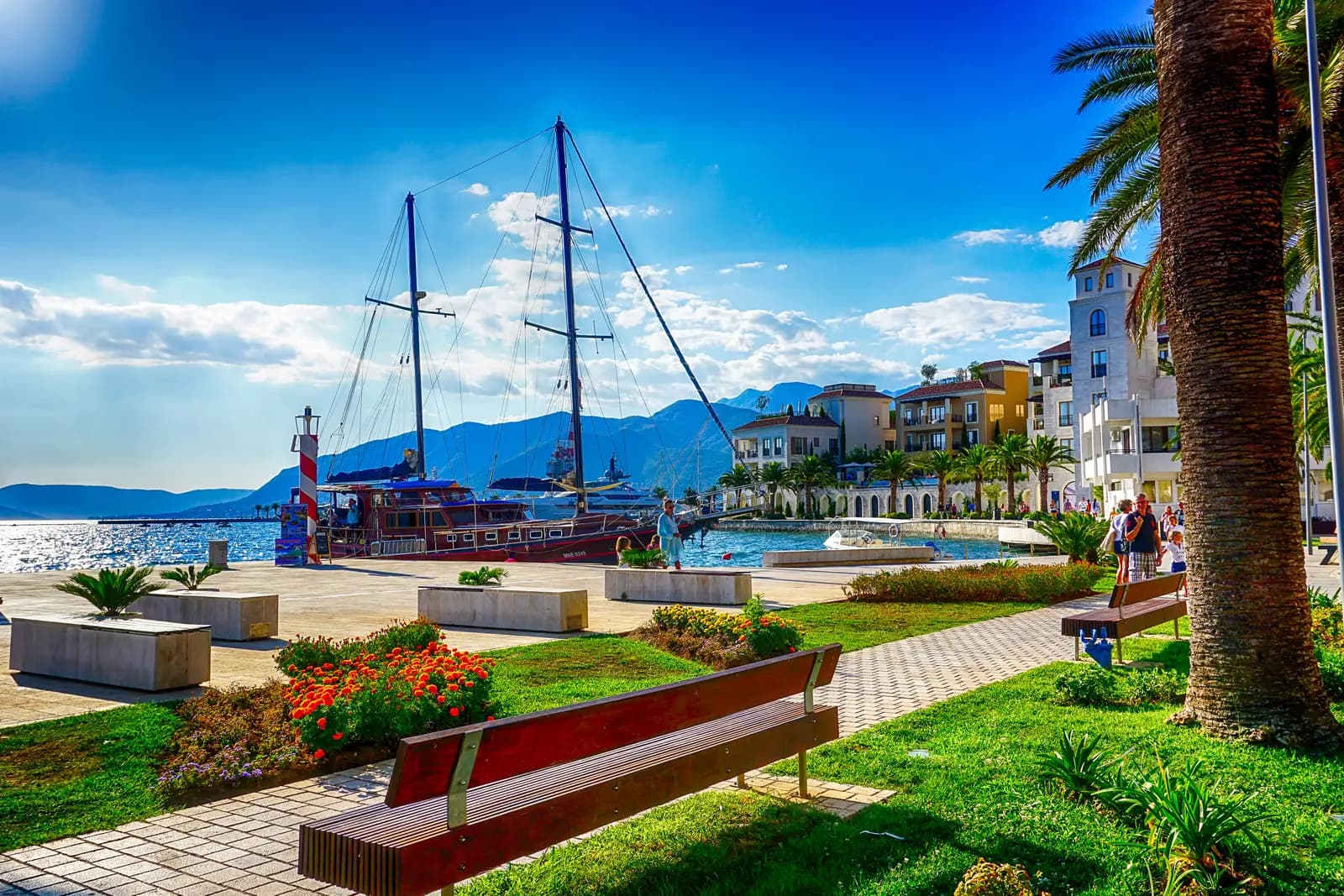
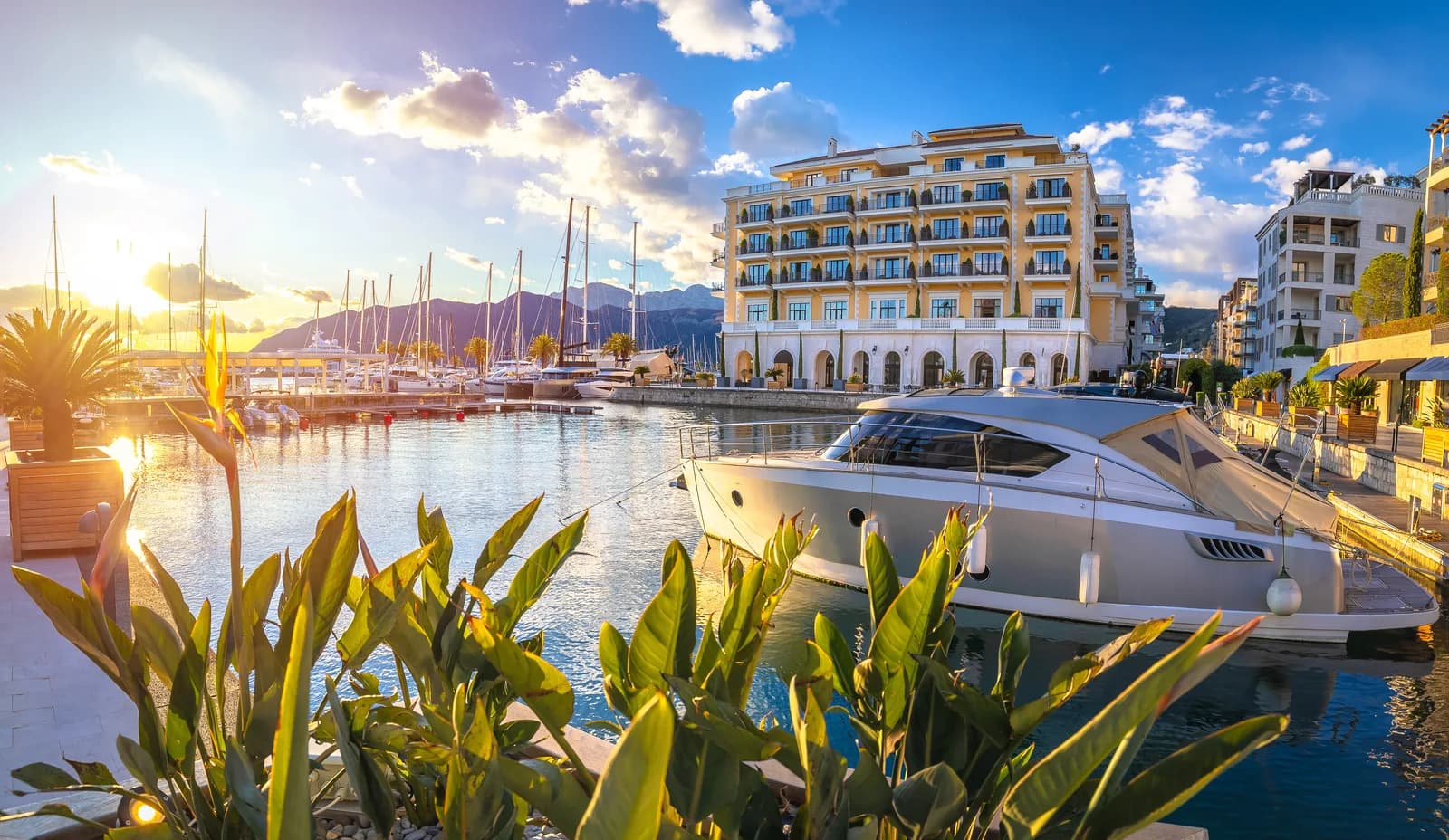
- Between them they bracket the Arsenal era that began in 1889 — and today’s marina resort is simply the third act on the same ground.
Visiting
Both sites sit in the centre of Tivat, a few steps inland from the seafront, and the natural way to take them in is on foot along the Pine promenade walk, which passes the park and the palace between the old waterfront and Porto Montenegro. The park is open, free, and at its best in the early morning or late afternoon, when the light drops low through the big exotics; spring is the scented season. The Buća palace courtyard and gallery are free to wander when open, and if you are in Tivat on a summer evening, check the Cultural Centre’s programme — hearing a concert in the courtyard of a 14th-century fortified villa is Tivat’s best cultural ticket, usually for a few euros or nothing at all.