Bottom line: P-821 Heroj is a preserved Yugoslav diesel-electric submarine displayed beside Porto Montenegro’s Maritime Heritage Collection in Tivat. The strongest record supports an August 1967 launch, formal fleet entry on 10 September 1968, almost 23 years of active service and a public museum opening in July 2013. You can plan to see the exterior, but confirm interior access, hours and the current ticket directly: the official tourism page lists +382 32 661 000 and [email protected], not a current timetable or price.
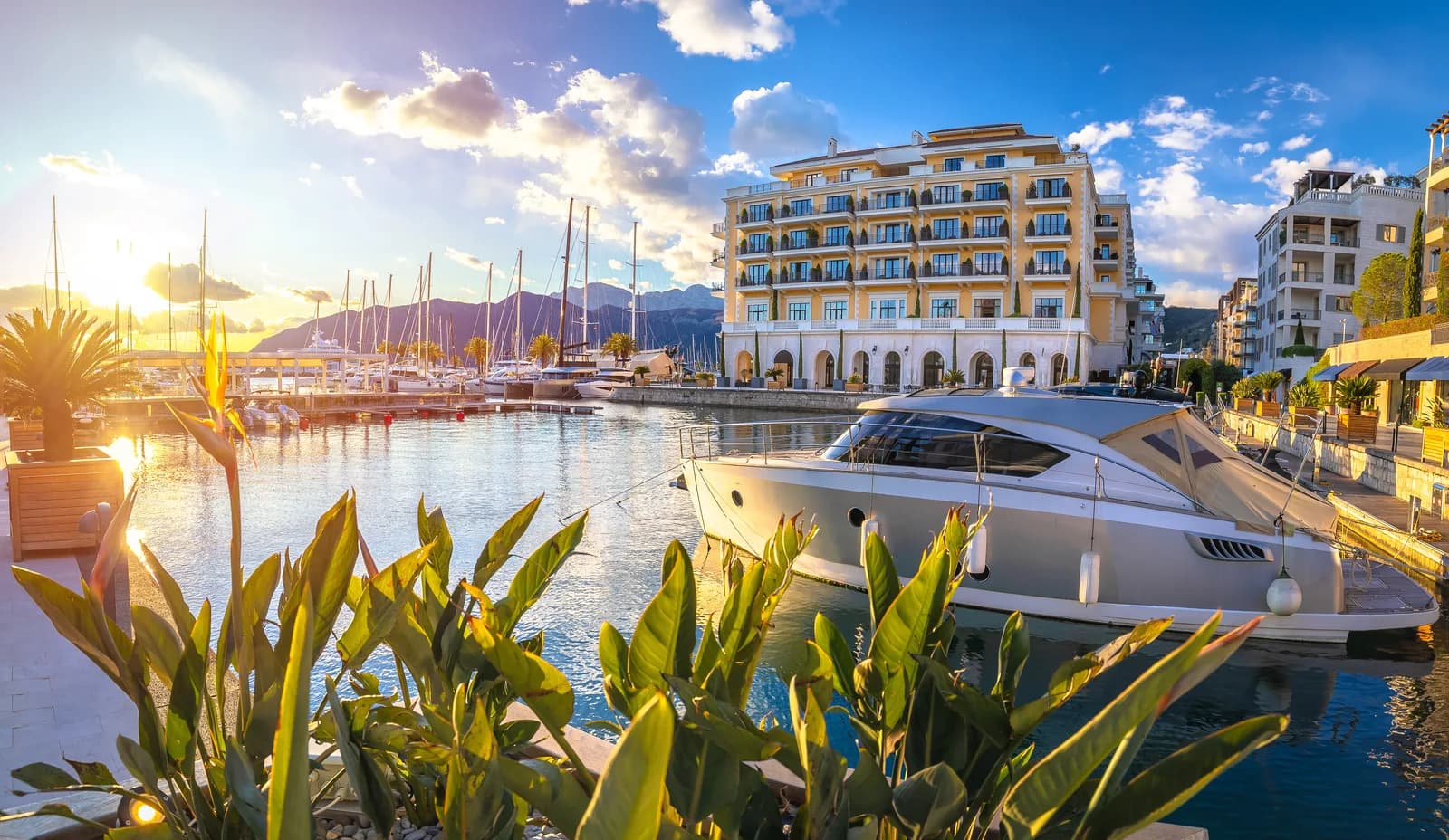
The exhibit matters because it joins two histories usually separated in travel writing: Yugoslavia’s effort to design a modern submarine domestically, and Tivat’s century as a naval repair town before the former Arsenal became a luxury marina. The contrast with superyachts is striking; the verified engineering and labour history is better.
| Question | Supported record | Limit |
|---|---|---|
| What is it? | Lead boat of the Heroj class; diesel-electric submarine | “Attack submarine” is not needed to understand the exhibit |
| When launched? | August 1967, Split | Accessible sources disagree on the exact day |
| When commissioned? | Fleet-list entry: 10 September 1968 | A museum directory instead gives 1969 |
| Active service? | Almost 23 years; withdrawn ashore in Tivat in 1991 | Do not confuse later overhaul status with active service |
| Museum opening? | July 2013 after multi-month reconstruction | No exact restorer count retained |
| Can I enter? | Designed as a walk-through museum exhibit | Confirm same-day access, hours and fare |
| Date | Milestone |
|---|---|
| AUG 1967 | launched |
| 10 SEP 1968 | fleet entry |
| 1991 | brought ashore |
| JUL 2013 | museum opening |
| Note | Exact launch day omitted: accessible references conflict. |
Source: vijesti.me, opstinativat.me
Why Heroj was an engineering milestone
Post-war Yugoslavia had built submarines influenced by earlier Italian designs. Heroj represented a more ambitious step: a new domestic project developed through the Naval Technical Institute in Split, the Shipbuilding Institute in Zagreb and Brodoprojekt in Rijeka, then constructed at Split’s Shipyard of Special Objects. Tivat Municipality’s 2013 opening notice described it carefully as the first submarine independently designed and built “in these regions.” That geographic qualification is worth preserving.
The detailed history published by maritime journalist Siniša Luković identifies Žarko-Feđa Alujević as leader of the design team. It describes a circular pressure hull, single propeller, bow torpedo tubes, electro-hydraulic remote steering and a combination of domestic and imported components. That makes “built by Yugoslavia” a statement about system integration and industrial capacity—not a claim that every motor, sonar or material originated inside the country.
Construction took place in a closed hall with controlled access. “High confidentiality” is supported; the inherited phrase “complete secrecy” was too absolute. A prototype also has to be tested, corrected and retested. The published account records hull pressure tests, a deep-water structural test and demanding sea trials before the fleet accepted the boat in 1968.
| Stage | Who |
|---|---|
| CONCEPT | technical institutes |
| DRAWINGS | Brodoprojekt |
| BUILD | Split BSO |
| SYSTEMS | mixed supply |
| Caveat | Domestic design ≠ every component made domestically |
| Achievement | Coordinated design, construction, testing and integration |
Source: vijesti.me, gradnja.me
Service totals: impressive, but keep the attribution
Luković’s history gives the often-repeated service totals: 726 sailing days, 910 dives and 46,659 nautical miles over almost 23 years in active service. These figures are plausible and specific, but this review did not inspect Heroj’s original logbook. They should be read as published historical totals, not independently re-counted measurements.
The same account says Heroj was at Tivat’s Arsenal for a major overhaul when Yugoslavia broke apart; the work was never completed. This resolves a common timeline confusion. The boat’s active career ended when it came ashore in 1991, while its physical and administrative afterlife continued. A later date for formal disposal or stopped maintenance does not add years of operational patrols.
What the pressure hull reveals
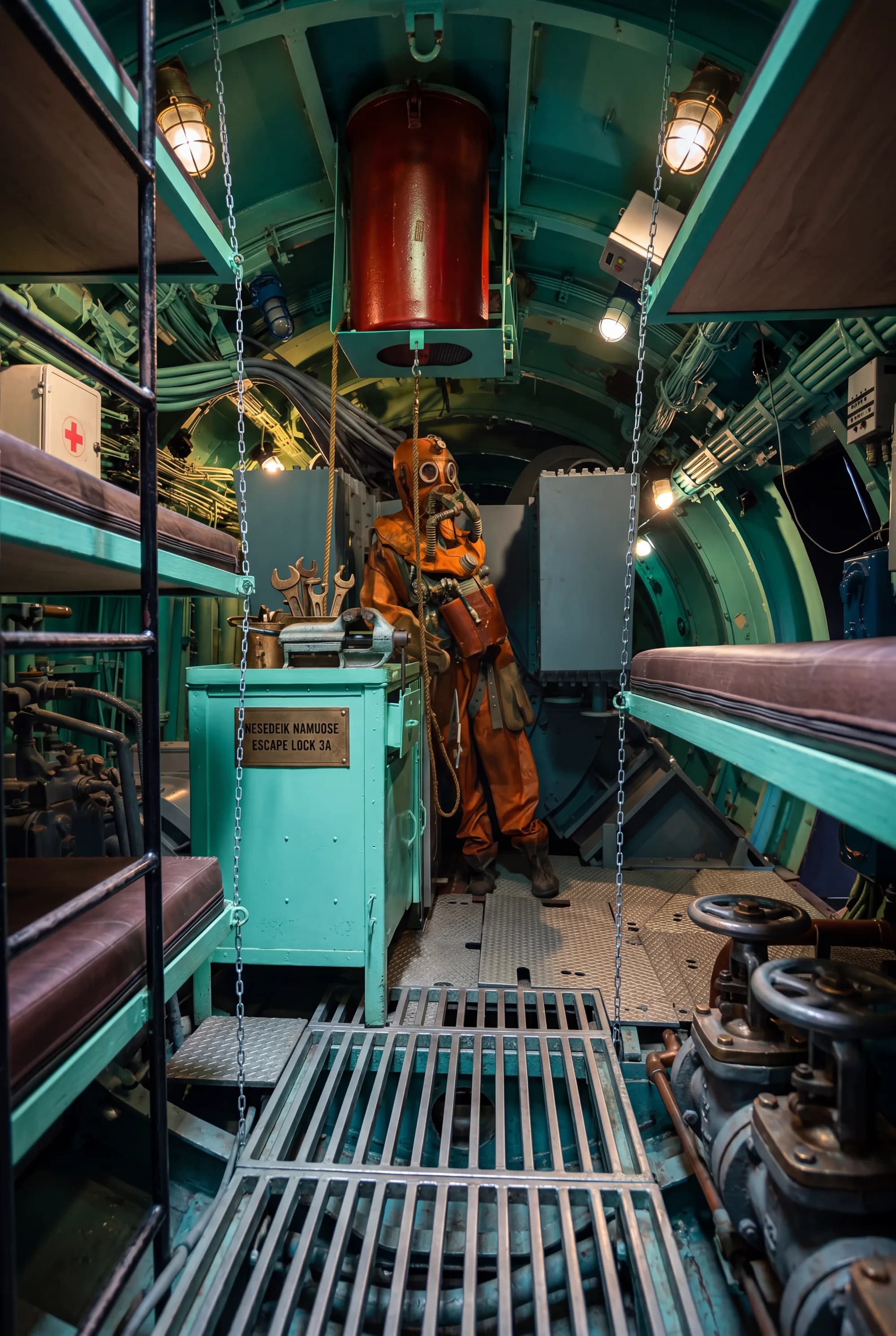
The official Tivat culture brochure says an opening was cut through the 28 mm pressure hull for visitors. Inside, it identifies the captain’s cabin, 533 mm torpedo tubes, radio station, electric machinery and other densely packed systems. It also gives a complement of 28 crew. The engineering history describes 19 welded hull sections, 72 frames and two watertight bulkheads dividing the pressure hull into three compartments.
Those numbers explain the visitor experience more effectively than calling the interior “cramped.” People, batteries, motors, weapons, controls, air systems and stores all competed for the same cylindrical volume. Bunks and workstations were part of an operating system. The museum route lets a visitor read that compression, but it is an adaptation: a side opening and visitor path were not part of the submarine’s service arrangement.
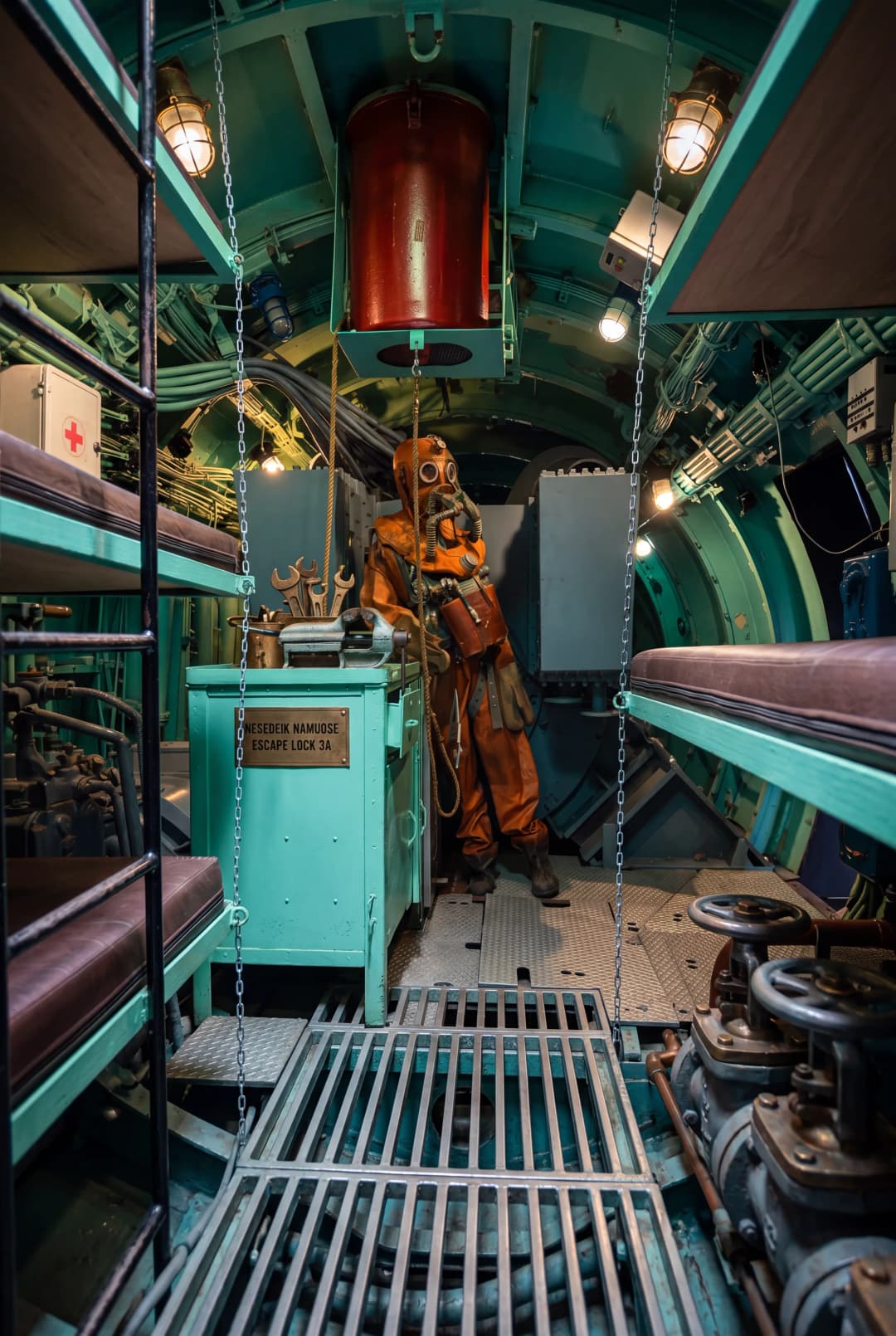
| Compartment | Function |
|---|---|
| BOW | torpedo space |
| CENTRE | control + living |
| STERN | machinery |
| Note | Diagram is interpretive, not a scale builder’s plan • reported complement: 28 |
Source: tivat.travel, vijesti.me
Why this submarine belongs in Tivat
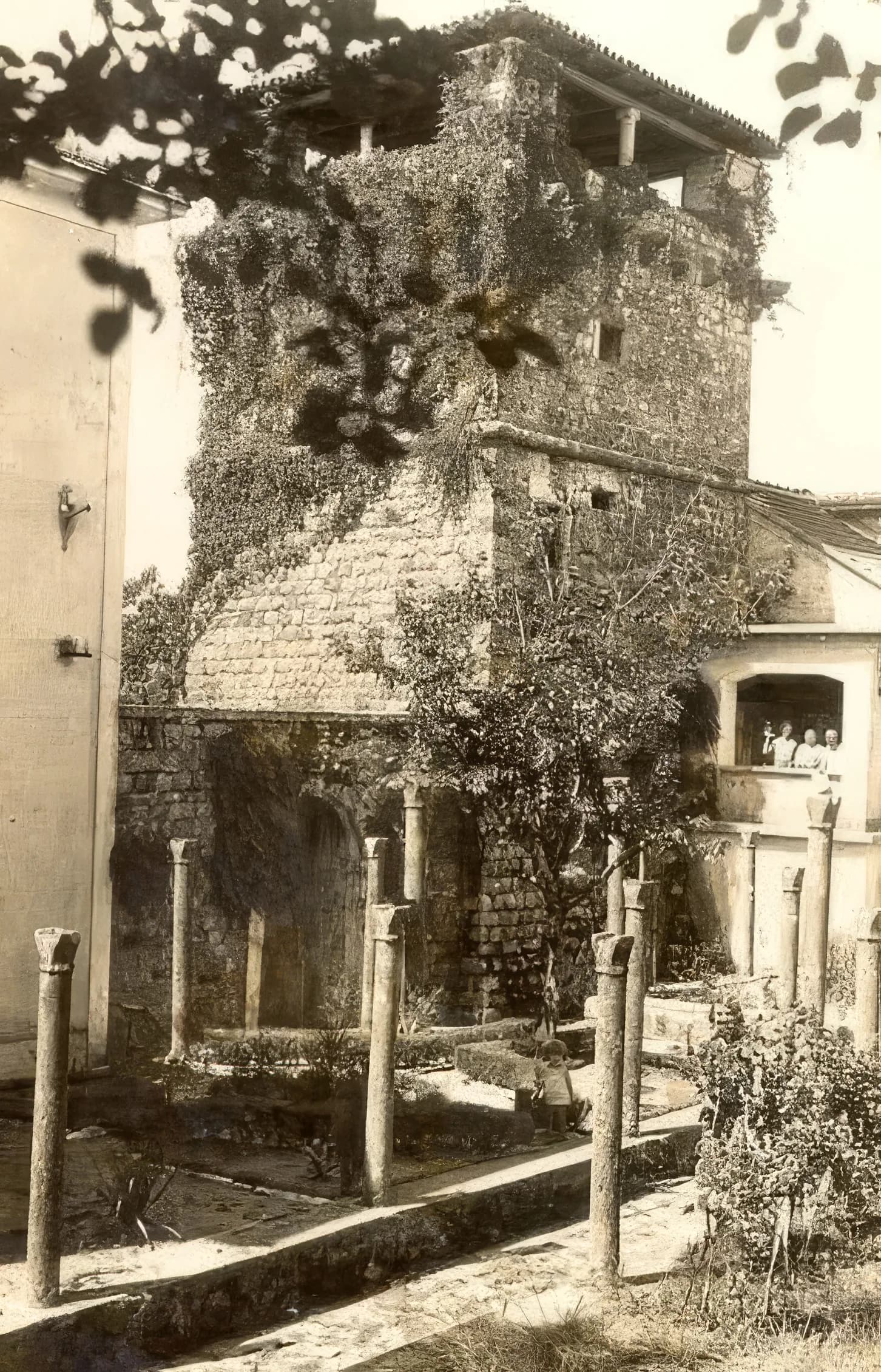
Heroj is not a trophy placed in an unrelated resort. Tivat’s tourism history traces the naval site to 1888–1889: Austria-Hungary began acquiring land and building a shipyard, and the municipality transferred land between Seljanovo and Pakovo for an Arsenal. Workshops, slipways and repair capacity followed. For more than a century, this industrial base trained and employed shipbuilders, locksmiths and technicians.
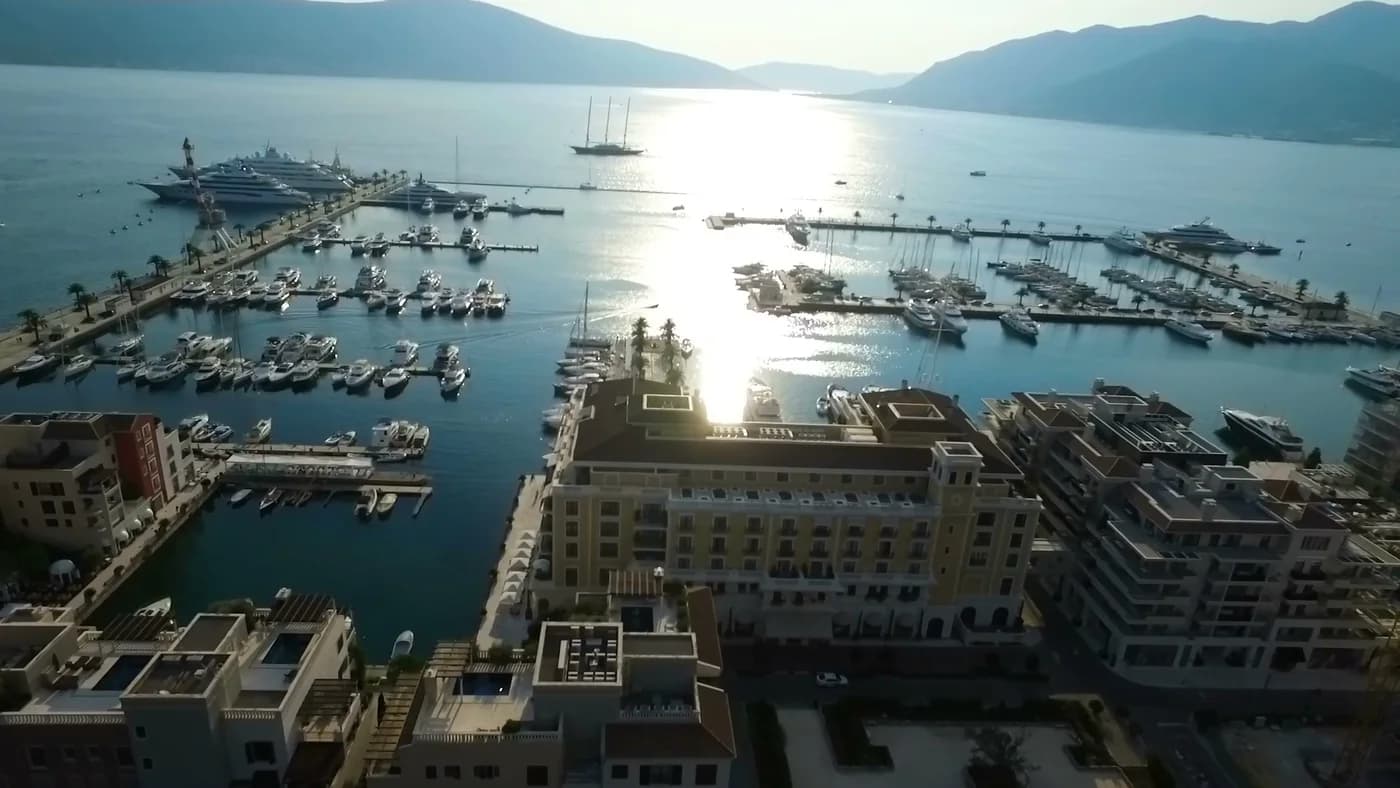
The Arsenal repaired and supplied submarines through later political periods. Heroj itself was undergoing major overhaul there in 1991. When the shipyard era ended and Porto Montenegro developed on the site, much of the industrial landscape disappeared. The Maritime Heritage Collection, surviving cranes, rails and the preserved submarines keep fragments legible. For the larger urban story, read our Tivat before-and-after guide and the practical Tivat city guide.
| Period | Waterfront use |
|---|---|
| 1888–1918 | naval base + Arsenal |
| YUGOSLAV ERA | repair yard + submarines |
| TODAY | marina + heritage display |
| Note | Preservation is selective: Heroj helps make the industrial layer visible. |
Source: tivat.travel
The 2013 restoration: what is documented
Tivat Municipality’s opening notice says the July 2013 public debut followed a multi-month reconstruction financed by Porto Montenegro, approved by Montenegro’s Ministry of Defence and initiated by Tivat’s NVO Podmorničar. Former submariners were central to the preservation effort. Vijesti reported that equipment was returned and the boat adapted for visitors on surviving Arsenal synchro-lift rails.
The inherited article made that story neater than the evidence: “four months” and “thirteen former submariners.” The municipal account does not support those exact figures, while secondary accounts vary. The durable facts are institutional cooperation, veteran expertise, multi-month work and the 2013 opening. Heroj is accompanied by the much smaller P-912 Una, which helps visitors see that Yugoslav submarine design did not follow one scale or purpose.
The conversion also asks an interpretive question. Heroj was a weapons platform operated by people in a tense political system; it was also a demanding product of shipyard labour and applied science. A responsible museum visit can hold both truths. Technology is not politically neutral, and industrial achievement does not require nostalgia for military confrontation.
Practical visit planning without stale promises
What the sources say
The Maritime Heritage Collection is in Porto Montenegro, within walking distance of central Tivat. The current Tivat Tourism culture page lists the collection and P-821 Heroj, plus phone +382 32 661 000 and email [email protected]. It does not show the museum’s hours or current ticket price. Historic web posts and travel pages do, but schedules and fares change; contact the museum on the day you plan to enter.
- Confirm interior access. Ask specifically whether P-821 Heroj is open, not only whether the collection building is open.
- Confirm the ticket and last entry. Do not rely on an older “few euros” statement.
- Describe mobility needs. The route passes through a modified pressure hull and compact machinery spaces. Ask about steps, clear width, seating and whether an alternative interpretation is available.
- Allow time for both vessels and the collection. The context makes Heroj more intelligible than a fast exterior photograph.
- Respect barriers. Do not operate valves, climb on the hull or touch equipment unless museum staff explicitly permits it.
| Check | Question |
|---|---|
| SUBMARINE | open inside? |
| TICKET | price today? |
| LAST ENTRY | not closing time |
| ACCESS | steps + width? |
| Contact | +382 32 661 000 • [email protected] |
| Note | Contact listed by Tivat Tourism Organisation; verify before travel. |
Source: tivat.travel
Build a wider Tivat route
Pair the museum with the public waterfront and surviving industrial details described in our Porto Montenegro guide. The juxtaposition is strongest when you understand both the former yard and present marina. For a related transformation across Boka, compare the Bijela shipyard story; for another former military site converted to luxury tourism, read the Portonovi history.
If access is your priority, choose a base after checking walking distances, terrain and transport rather than assuming every “Tivat” property is central. Our where-to-stay guide separates the main areas. The submarine’s exterior and marina promenade can still form part of a visit if the interior is closed, but viewing from outside is not equivalent to a museum tour.
Frequently asked questions
Is P-821 Heroj open to visitors?
It is presented by Tivat Tourism as a submarine museum at the Maritime Heritage Collection, and the exhibit was adapted for interior visits. Confirm same-day submarine access by phone or email because the current official listing does not publish hours.
How old is the submarine?
Heroj was launched in Split in August 1967 and formally entered the Yugoslav Navy fleet list on 10 September 1968. It came ashore in Tivat in 1991 and opened as a museum exhibit in July 2013.
How large was the crew?
Tivat Tourism’s culture brochure gives a complement of 28. The number helps explain why sleeping, control and machinery space feels so compressed.
Are the 726 days and 910 dives official?
They are specific totals published in a detailed historical account, together with 46,659 nautical miles. This review did not inspect the original logbook, so the figures remain attributed rather than independently audited.
Is the interior wheelchair accessible?
Do not assume it is. The route enters a modified 28 mm pressure hull and passes through compact submarine spaces. Contact the museum with exact mobility needs and ask what alternative interpretation is available.
Was Heroj built in Tivat?
No. It was designed through institutions in Zagreb, Split and Rijeka and built at the Shipyard of Special Objects in Split. Tivat’s Arsenal serviced submarines, held Heroj during an unfinished overhaul and later became the boat’s museum home.