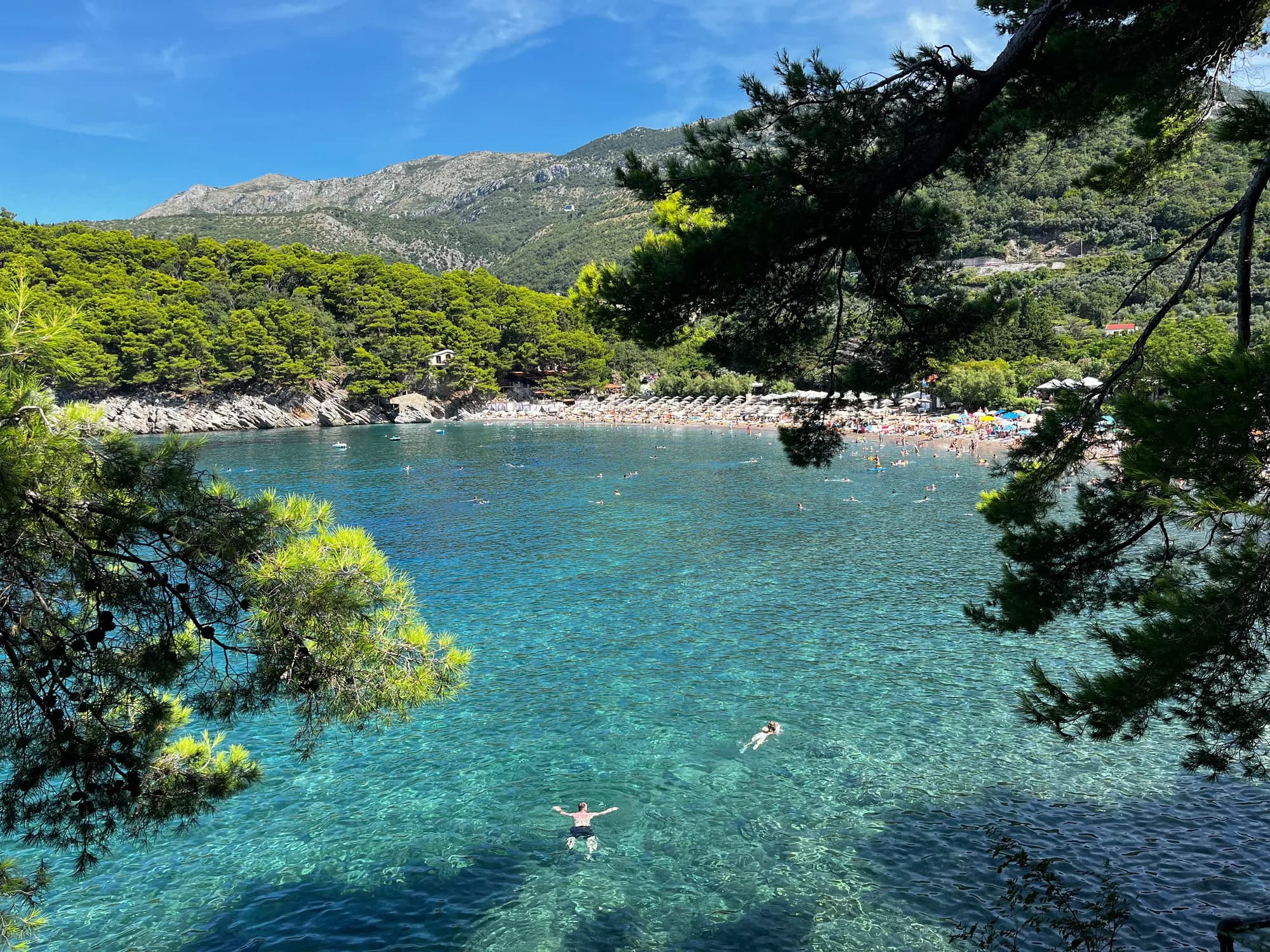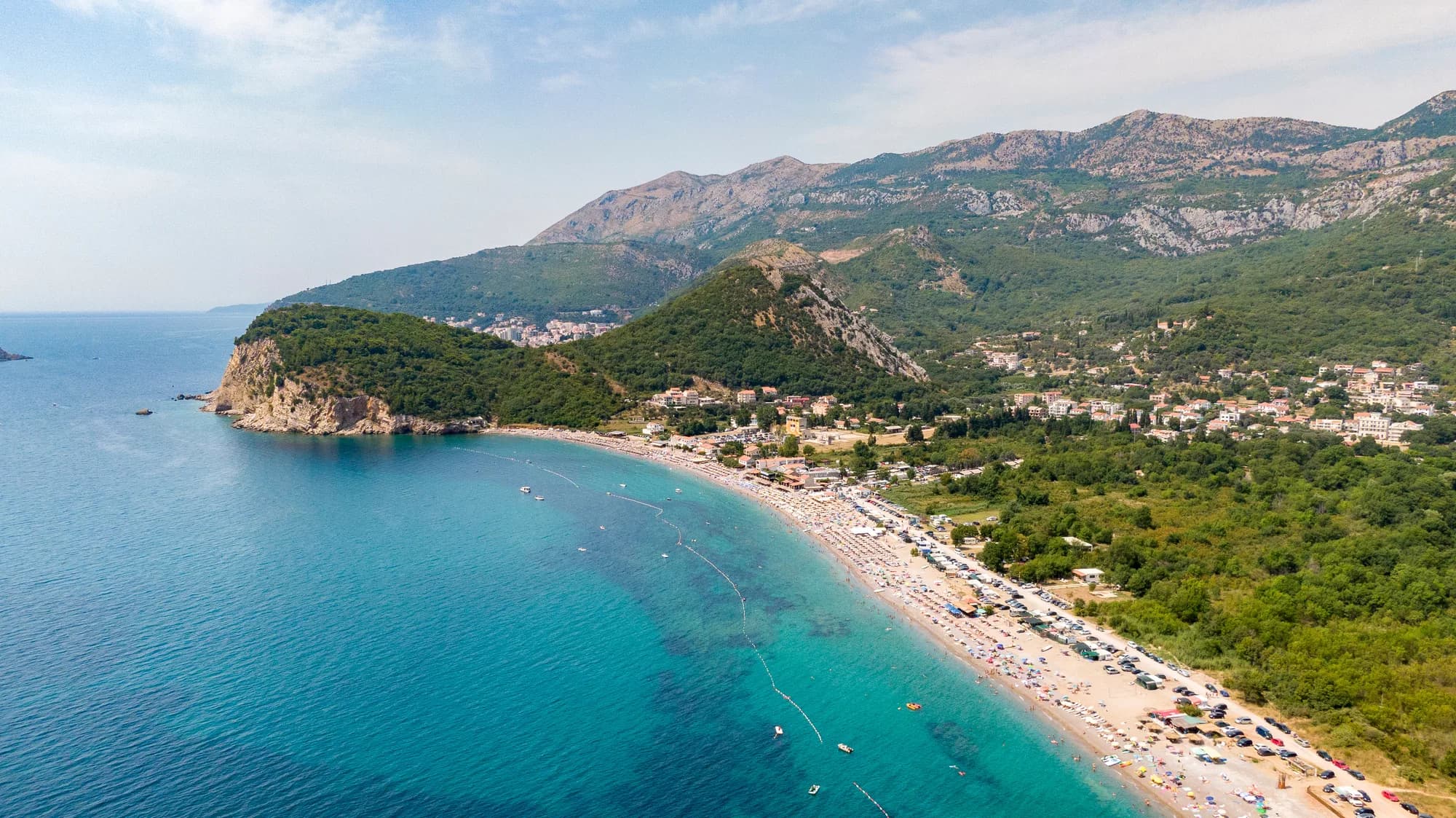
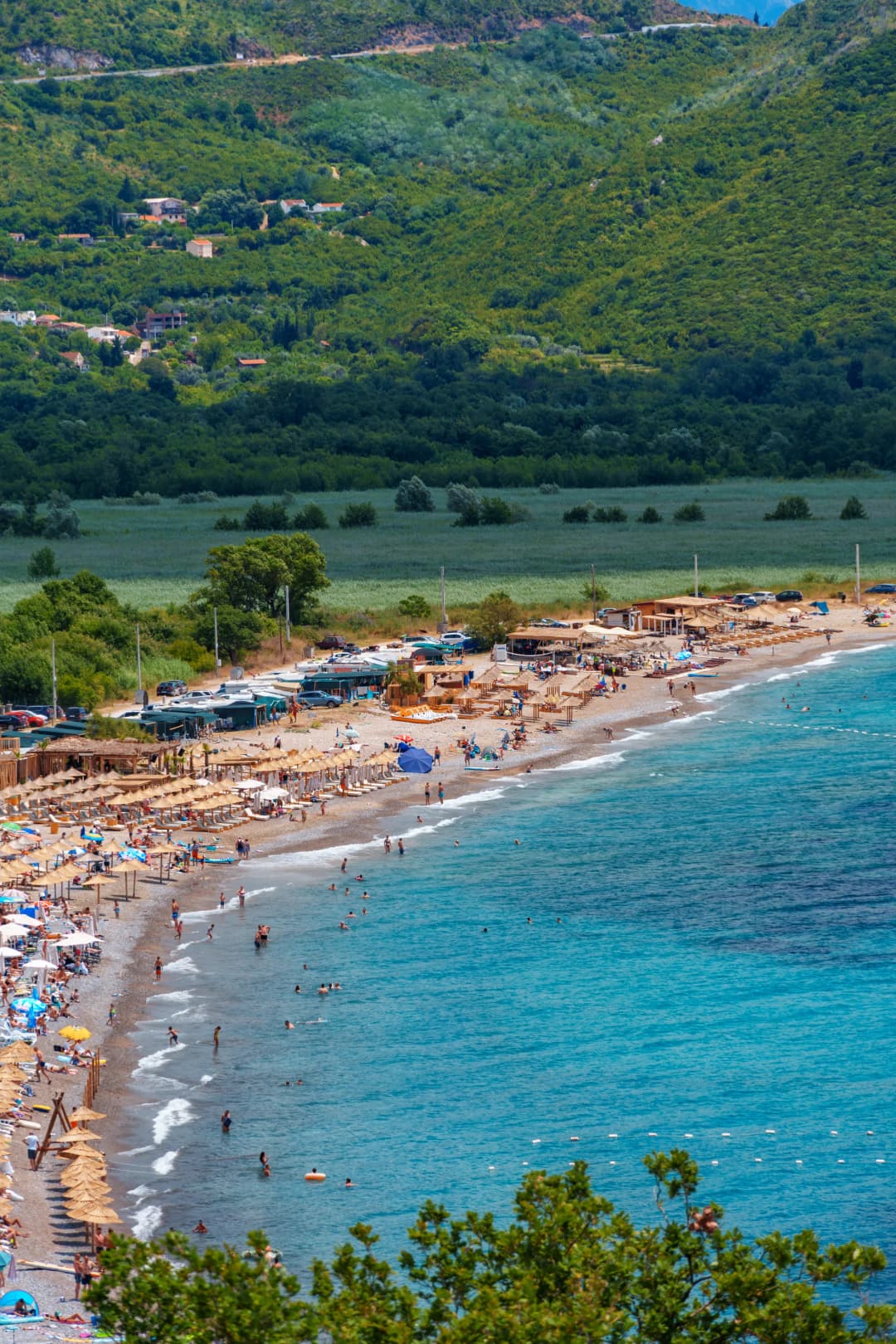
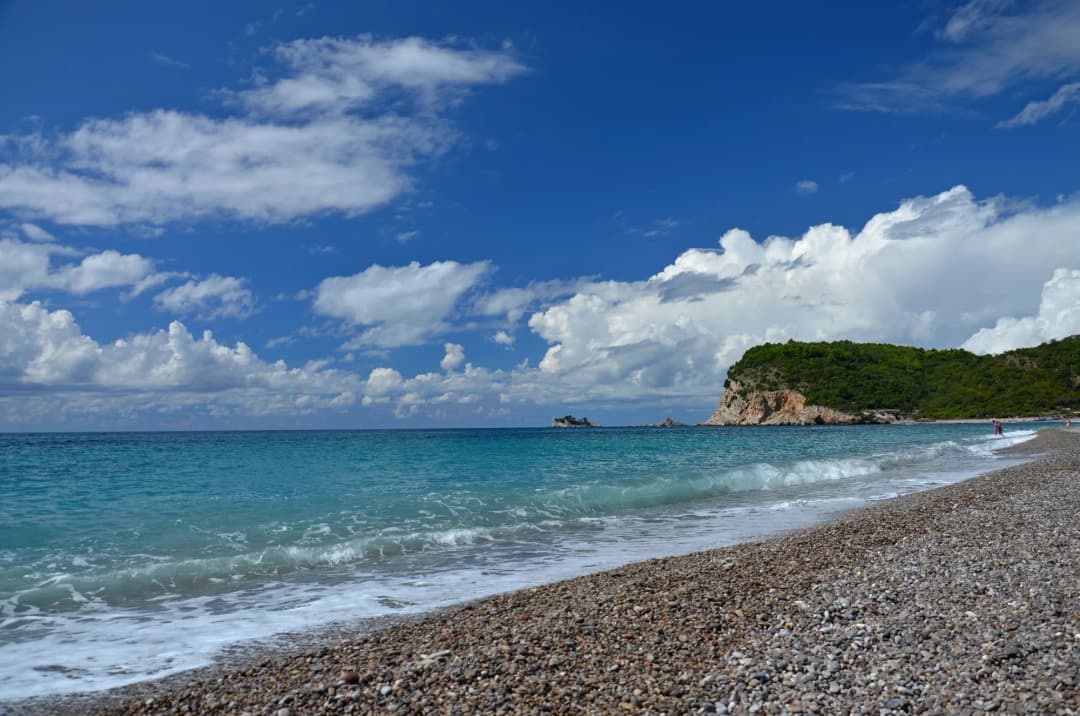
Just south of Petrovac, over a low headland, the coast does something it almost never does in Montenegro: it stops being built up. Buljarica is a broad, open bay fronted by around two kilometres of largely undeveloped beach, and behind that beach lies something rarer still — a coastal wetland of roughly 300 hectares, one of the last wild places of its kind on the eastern Adriatic.
A wetland behind the sand
Screened from the sea by the long pebble-and-sand beach, the Buljarica basin is a mosaic of reedbeds, seasonal lakes and old vegetation, including remnants of ancient Mediterranean oak. In winter, when much of the low ground floods, it becomes a shallow watery landscape; in the drier months it is a patchwork of reed and marsh. That seasonal rhythm is exactly what makes it valuable, because it turns Buljarica into a refuge and larder for birds at the moments they most need one.
On the Adriatic flyway
Montenegro sits on a major migration corridor down the eastern Adriatic, and wetlands along that route serve as the service stations of the sky — places where migrating birds rest and feed on journeys that can span continents. Buljarica is one of them. It has been recognised as an internationally Important Bird Area, and it also meets several of the criteria of the Ramsar Convention as a rare and representative Adriatic wetland and a key migration site.
The bird list is genuinely rich. In the flooded winter months Buljarica shelters feeding and resting flocks of the pygmy cormorant, along with grey, great white and little herons and other waterbirds. Across the seasons the wider area records species that make birdwatchers travel a long way — rock partridge, blue rock thrush, olive-tree warbler, Levant sparrowhawk and falcons among them. For birds crossing from Africa in spring, a wetland like this can be a crucial early landfall on the European side of the sea, the first safe place to drop, drink and refuel after a long crossing.
An ancient forest at the water's edge
Buljarica is not only reed and open water. The basin holds remnants of old Mediterranean oak woodland, the kind of lowland forest that has almost entirely vanished from a built-up coast, and that mix of habitats — forest, marsh, seasonal lake, reedbed and beach, all packed into a few hundred hectares — is exactly what gives the site its range of wildlife. A place that offers cover, fresh water, insects and open feeding ground in a single compact spot can support species that would find nothing on a stretch of resort shoreline. It is that density and variety, as much as any single rare bird, that earns Buljarica its international standing. The wetland's ability to flood and drain with the seasons also makes it valuable for amphibians and reptiles, not just birds, adding another layer to what would be lost if it were drained. Standing at the edge of the reeds with the sea a few hundred metres away, you can see the whole logic of the place at once: sheltered fresh water and cover on one side, the open Adriatic and the migration highway on the other, and the beach as the seam between them. It is a rare surviving example of how the Montenegrin coast looked before the hotels arrived.
Why it matters — and what threatens it
Places like Buljarica are increasingly scarce because the same qualities that make them precious to wildlife — flat, open coastal land right behind a beautiful beach — make them valuable to developers. A wild wetland fronting two kilometres of unbuilt Adriatic shore is, in real-estate terms, an anomaly waiting to be resolved, and Buljarica has long lived under the pressure of proposed resort and tourism schemes. It is one of the last long stretches of the Montenegrin coast that has not been given over to hotels and apartments, which makes it simultaneously a conservationist's priority and a developer's prize. Every hectare drained or built over is habitat that migrating birds cannot replace, on a coast where alternatives are vanishing.
That tension is the real story of Buljarica: a nationally and internationally significant natural site sitting in exactly the spot the tourism economy most wants to use. For a visitor, the value is obvious and immediate — a rare stretch of coast where you can stand between a quiet wild beach and a living marsh, and understand at a glance why it is worth keeping.
You can reach the wetland edge along the coast south of town via the Roman Road walk's Buljarica stage.
Visiting
Buljarica is a short drive or walk over the hill from Petrovac, and the long beach is quiet and undeveloped compared with the town — bring your own shade, water and supplies. For birds, come in the migration seasons or in the flooded winter months, keep to the tracks at the marsh edge, and bring binoculars. Above all, tread lightly: this is a fragile, contested landscape whose whole worth lies in staying wild.