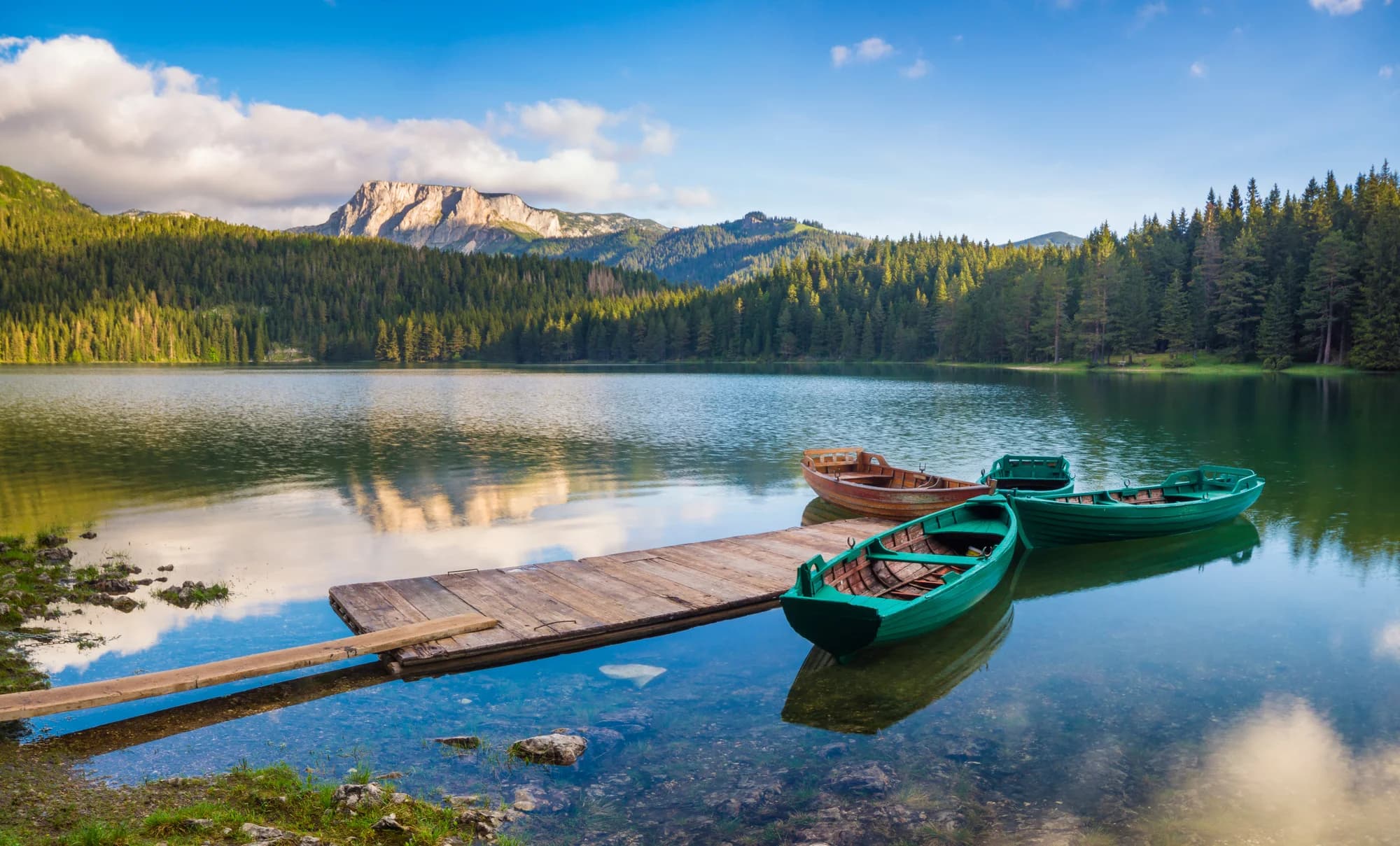
For a country you can drive across in a few hours, Montenegro packs in an astonishing range of wild landscapes, and five of them are protected as national parks. Between them you get Europe's deepest river canyon, one of the last primeval forests on the continent, a sacred mountain crowned by a poet-prince's tomb, the largest lake in the Balkans, and a range so jagged the locals named it the "Accursed Mountains."
This guide is your map to all five. Each park gets its own section with what makes it special, the gateway town you'll base yourself in, and links to the in-depth guides where you can plan the details. Whether you have a single free day or a full week, there's a park within reach.
If you're trying to fit several parks into one trip, skim the practical section at the end first, then dive into the individual guides.
1. Durmitor National Park
Durmitor is the headline act: a UNESCO World Heritage Site of glacial lakes, limestone peaks, and the canyon that defines it all. The Tara River Canyon is the deepest in Europe and the second deepest in the world, plunging roughly 1,300 metres below the rim. You'll see it from the Đurđevića Tara bridge, an elegant 1940s span that now doubles as the launch point for a zip-line across the gorge.
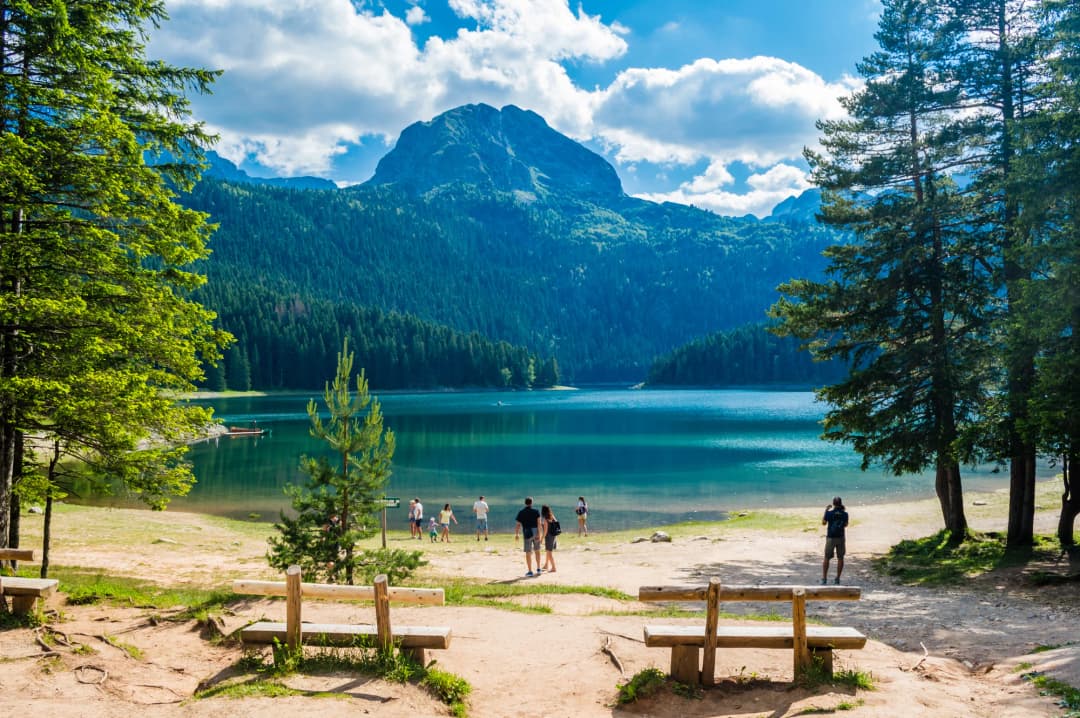
At the heart of the park sits Black Lake (Crno jezero), an easy and beautiful loop walk just outside town, ringed by black pines and reflecting the massif. Above it rises Bobotov Kuk, the highest peak in the park at roughly 2,523 metres, a serious full-day climb for fit hikers. In summer Durmitor is about hiking, swimming in cold mountain lakes, and white-water rafting the Tara; in winter it becomes Montenegro's main ski area.
Durmitor is also home to roughly eighteen glacial lakes, the so-called "mountain eyes," scattered across the high plateau and reachable on day hikes of varying difficulty. The landscape shifts constantly: dense pine forest near the lakes, open alpine meadows higher up, and bare grey rock at the summits. Wildflowers blanket the slopes in early summer, and it's not unusual to share a trail with shepherds moving their flocks to high pasture.
Your base is Žabljak, the highest town in the Balkans at around 1,450 metres and the gateway to everything. It's a small, functional place rather than a pretty one, but it has guesthouses, rental shops and tour operators, and it puts every trailhead within easy reach. Read the full Durmitor travel guide and the focused Žabljak and Durmitor guide, then see where to stay in Žabljak.
2. Biogradska Gora National Park
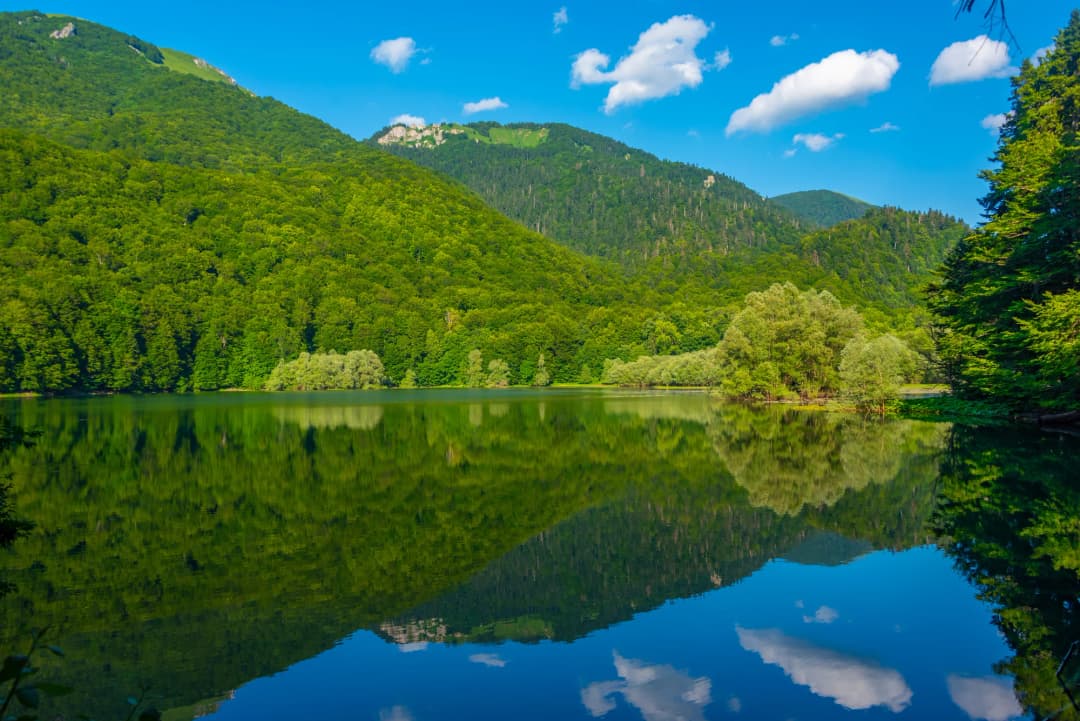
Biogradska Gora protects something genuinely rare: one of the last primeval, old-growth forests left in Europe. Some of the trees here have stood for centuries, untouched, in a virgin woodland that was reportedly set aside as a gift to Montenegro's prince back in 1878, long before "national park" was a phrase anyone used.
The jewel at the centre is Biograd Lake (Biogradsko jezero), a glacial lake circled by a gentle, well-marked trail that's perfect even for families. Rent a rowboat, walk the loop under towering beech and fir, and you'll understand why people come here as much for the silence as the scenery. It's smaller and far less crowded than Durmitor, which is exactly its appeal.
Biogradska Gora is also wonderfully varied for its size, climbing from the lake basin up through mountain pasture to the peaks of the Bjelasica range. Marked trails branch off the lake loop for those who want a longer day, and the park is a stronghold for wildlife, with deer, wild boar and birds of prey all present. It pairs beautifully with a rafting or mountain trip further north.
The gateway is the mountain resort town of Kolašin, a short drive away and a destination in its own right for skiing and fresh air. Plan with the Biogradsko Jezero guide and find a base in Kolašin.
3. Lovćen National Park
Lovćen is the mountain that looms over the Bay of Kotor, and to Montenegrins it's close to sacred. The country even takes its name, "Crna Gora" or Black Mountain, from this dark, brooding range. At its summit sits the Njegoš Mausoleum, the tomb of poet, philosopher and prince-bishop Petar II Petrović-Njegoš, reached by climbing a long staircase to a viewing platform with one of the great panoramas in the Balkans.
Getting up here is half the experience. The old serpentine road from Kotor switchbacks dizzily up the mountainside, each hairpin opening a wider view over the fjord-like bay far below. On a clear day you can see across much of Montenegro and out to the Adriatic.
Lovćen sits between two of the country's most rewarding towns. Read the Lovćen travel guide, then pair it with the old royal capital of Cetinje on one side and the medieval port of Kotor on the other.
4. Lake Skadar National Park
Lake Skadar is the largest lake in the Balkans, a vast, shimmering wetland that Montenegro shares with Albania. It's a birdwatcher's paradise: home to one of Europe's last colonies of the rare Dalmatian pelican, plus herons, egrets and well over 250 other species. Glide out on a small boat through channels of water lilies and you'll see why it's protected.
Beyond the birds, the lake is dotted with island monasteries half-hidden among the reeds, sleepy fishing villages, and the surrounding hills produce some of Montenegro's best wine, especially the indigenous red grape Vranac. A boat trip, a tasting, and a slow lunch in a lakeside konoba make for one of the country's most relaxing days.
The main gateway is the little village of Virpazar, where most boat trips depart. Use the Lake Skadar and Virpazar guide and base yourself in Virpazar.
5. Prokletije National Park
Prokletije is the wild one. These are the "Accursed Mountains", the most rugged and least-visited corner of the country, where serrated limestone peaks rise straight from deep glacial valleys near the borders with Albania and Kosovo. If Durmitor is Montenegro's famous mountain face, Prokletije is its untamed back country.
This is serious hiking territory. The celebrated Peaks of the Balkans trail, a long-distance route looping through three countries, passes through here, and the area is laced with paths leading to remote lakes, high passes and shepherds' summer pastures. You won't find crowds, polished infrastructure or queues, just genuine wilderness and warm mountain hospitality.
What you'll find instead is some of the most dramatic mountain scenery in southern Europe: turquoise glacial lakes hidden in cirques, dense beech and conifer forest, and peaks topping 2,500 metres that hold snow late into summer. The region is also rich in folklore and hospitality; small guesthouses and mountain huts welcome the trickle of hikers who make it this far, and a home-cooked meal here comes with stories.
The twin gateway towns are Plav and nearby Gusinje, set beside glacial Lake Plav at the foot of the range. Because the park is remote and facilities are sparse, it's wise to hire a local guide for longer routes and to check conditions before you set out. Start planning from Plav, and go prepared, with proper boots, layers and a map.
Fees, Seasons & Getting There
Entrance fees. The parks charge only modest entry fees, typically a few euros per person where they're collected at all (Durmitor and Biogradska Gora have staffed entrances; the others are more loosely managed). As of 2026 these remain low, and many trails and viewpoints are free to access. Activities like rafting, the Tara zip-line, boat trips and guided hikes are paid separately. Montenegro uses the euro (€), so bring some cash, as card payment isn't guaranteed at mountain kiosks.
Best seasons. The mountain parks, Durmitor, Biogradska Gora, Lovćen and Prokletije, are at their best from late spring through early autumn (roughly May to October), when trails are clear of snow. High passes in Durmitor and Prokletije may hold snow into June. Lake Skadar is wonderful almost year-round, with spring and autumn ideal for birdlife and milder temperatures. Durmitor flips to a ski destination in winter, while the high mountain roads to Lovćen and Prokletije can be tricky or closed in deep snow. For a fuller breakdown, see the best time to visit guide and the off-season guide.
How to reach them. A rental car is by far the easiest way to link the parks, since public transport into the mountains is limited. Lovćen and Lake Skadar are both easy day trips from the coast; Durmitor and Biogradska Gora sit in the north and reward an overnight stay; Prokletije is the most remote and deserves a couple of days. For routes, drive times and transport options, read getting around Montenegro, and for arriving in the country see getting to Montenegro.
Looking for more to do alongside the parks? Browse the wider list of things to do in Montenegro, and if you want to weave several parks into a single trip, the 7-day itinerary shows how it all fits together.
Quick Comparison
| Park | Gateway | Known for | Best season |
|---|---|---|---|
| Durmitor | Žabljak | Tara Canyon, Black Lake, peaks, rafting | Jun–Sep (ski in winter) |
| Biogradska Gora | Kolašin | Primeval forest, Biograd Lake | May–Oct |
| Lovćen | Cetinje / Kotor | Njegoš Mausoleum, bay views | May–Oct |
| Lake Skadar | Virpazar | Birdlife, boat trips, wine villages | Spring & autumn |
| Prokletije | Plav / Gusinje | Wild peaks, long-distance hiking | Jun–Sep |
Five parks, five completely different moods, and all within a country smaller than many single national parks elsewhere. Pick one as the anchor of your trip or string several together, then browse places to stay near your chosen gateway and start planning. You can also see all our destinations for more ideas.