Montenegro’s Blue Cave now has a clear 2026 boundary: a motor-powered vessel may take you along the Luštica coast, but it may not enter the cave area. Montenegro’s Ministry of Maritime Affairs announced the restriction on 25 May 2026, saying cave entry is possible only with vessels that are not motor-powered. That changes what a “Blue Cave speedboat tour” can honestly promise, and it changes the classic boat excursion from Herceg Novi to Mirište, the Žanjic monastery islet, Fort Arza and the cave itself.
The destination remains extraordinary: sunlight, seawater and pale rock can turn the chamber turquoise. Yet the useful question is no longer simply “Which boat goes inside?” It is “What exactly happens at the cave threshold, under the current rule and today’s sea conditions?” This guide separates the coastal ride, the stops along the way, lawful cave access, the swimming decision and the nearby coves so you can book with evidence instead of assumptions. Swimming remains subject to current legality, operator supervision, sea conditions and official instructions.
| Decision | Current evidence | What to ask |
|---|---|---|
| Motorboat entry | Prohibited | Where does the motor vessel stop? |
| Non-motor entry | Permitted in principle by the announced rule | Is a lawful craft supplied, and who operates it? |
| Swimming | Not guaranteed by the rule | Is it offered and supervised today? |
| Colour | Changes with light and water | What is the weather fallback? |
| Marine emergency | 129 | Does the crew carry working communications? |
| General emergency | 112 | Can you state the boat and location? |
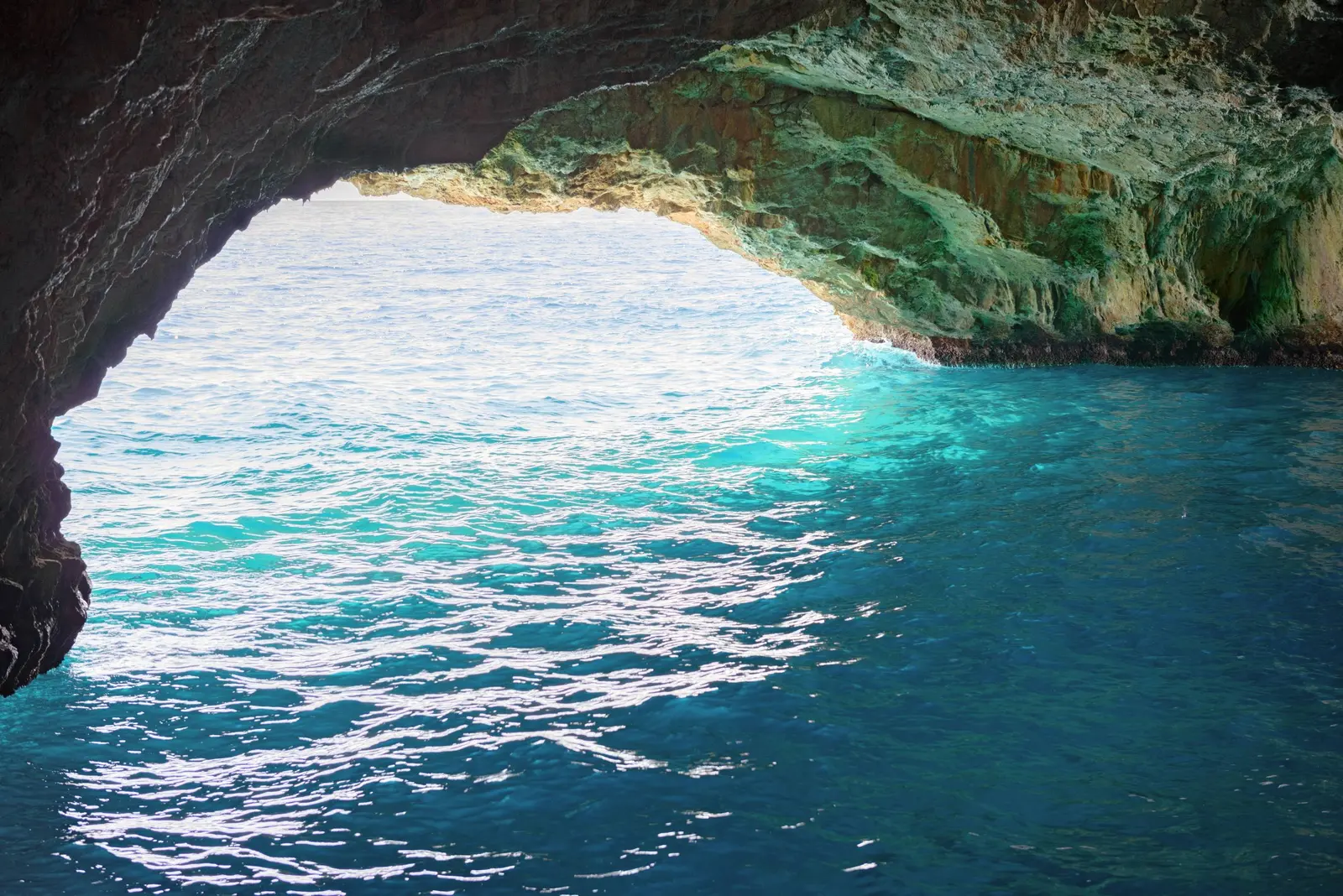
The 2026 Blue Cave entry rule
In its 25 May 2026 announcement, the Ministry says a new navigation-safety rule prohibits motor-powered vessels from entering the Blue Cave area, and that cave entry is possible only with vessels that are not motor-powered. It links the measure to recurring risks: several speedboats entering together, vessels approaching swimmers too closely, and skippers entering during adverse weather and then struggling to leave safely.
This is active enforcement, not a future aspiration. A government report dated 17 June says authorities sanctioned 12 vessels around the Blue Cave during intensified maritime controls. A 14 June ministry report likewise says 12 vessels were sanctioned during a Blue Cave operation, and describes monitoring through inspectors, drones, VTMIS and AIS; a later joint control covered Rose, Žanjice, the Blue Cave and the Kumbor Strait. The reports do not identify every offence, so they cannot be used to accuse a particular business. They do show why an undated sales page or old video of engines running inside is not reliable 2026 guidance. An operator promising to drive a motorboat into the cave is offering an outdated itinerary, and any description written before May 2026 may be obsolete.
| Zone | What applies |
|---|---|
| Coastal ride | Motor vessel can approach the site |
| Cave area | No motor-powered vessel entry |
| Lawful access | Non-motor craft + safe procedure |
| June 2026 enforcement | 12 vessels sanctioned around the cave |
Source: gov.me
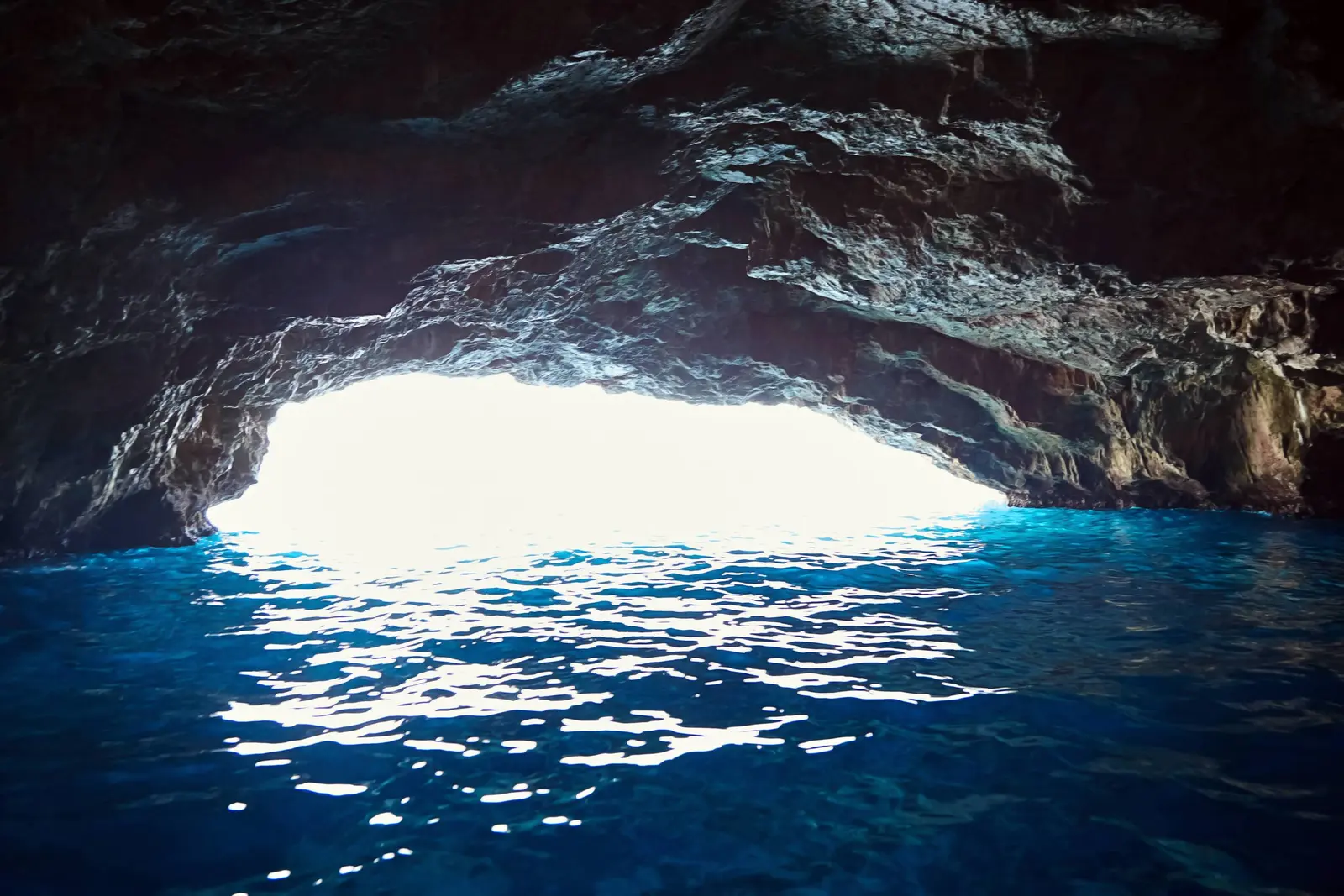
What a compliant tour offer should explain
A useful listing identifies the licensed business, departure harbour, vessel, passenger limit, duration, included equipment and cancellation terms. For the Blue Cave it must add one more thing: the threshold procedure. A motorboat can sell a coastal excursion to the site, but “we enter the cave” now needs a separate, lawful explanation.
Ask whether the motor vessel remains outside; whether a non-motor craft is carried, transferred or operated by another provider; who controls that craft; how passengers board; and what happens if swell makes the transfer unsafe. Do not infer that “non-motor entry is permitted” means a kayak, tender or swim-through is automatically available to every passenger. The Ministry announcement defines a vessel restriction, not a consumer itinerary. “Blue Cave tour” can mean an outside view, a swim from outside, or a supervised non-motor transfer—never infer which one, and ask for the itinerary in writing.
| Question | Why it matters in 2026 | Evidence to request |
|---|---|---|
| Where does the motorboat stop? | Motor-powered entry into the Blue Cave area is prohibited. | A clear explanation of the stopping point and current rule. |
| Is non-motor cave access offered? | Entry requires a non-motor craft; not every operator will provide one. | Craft type, transfer method, capacity and supervision. |
| Are Mirište, Žanjice and the monastery separate stops? | They are different places and “panoramic view” may not mean landing. | Written itinerary and approximate stop sequence. |
| What happens in swell or wind? | The cave lies on Luštica’s exposed outer coast. | Cancellation, rerouting and refund policy before payment. |
| Who receives lifejackets? | Open-water transfer and swimming add risk. | Correct sizes for every passenger, including children. |
| Can limited-mobility travellers board? | Small quays, ladders and vessel steps vary. | Actual boarding method, not a generic “accessible” label. |
Compare the answer with the practical route details in our Mirište and Blue Cave boat guide. For a broader operator and departure-point comparison, use the separate Blue Cave tour-planning guide. Neither companion page should override a current official instruction or the crew’s same-day safety decision.
| Check | Question to answer |
|---|---|
| 1 · Operator | Licensed business? |
| 2 · Vessel | Which boat and capacity? |
| 3 · Threshold | Where does motor stop? |
| 4 · Entry | Which non-motor method? |
| 5 · Conditions | Who calls no-go? |
| 6 · Fallback | Refund or coast-only route? |
| No precise threshold answer | Treat “cave tour” as coast-only |
Source: gov.me
Where the Blue Cave is—and why it looks blue
The National Tourism Organisation places the sea cave on the Luštica peninsula near Herceg Novi. It is on the peninsula’s open-Adriatic side, beyond the sheltered inner bay. That exposure is why a calm harbour does not prove a calm cave entrance.
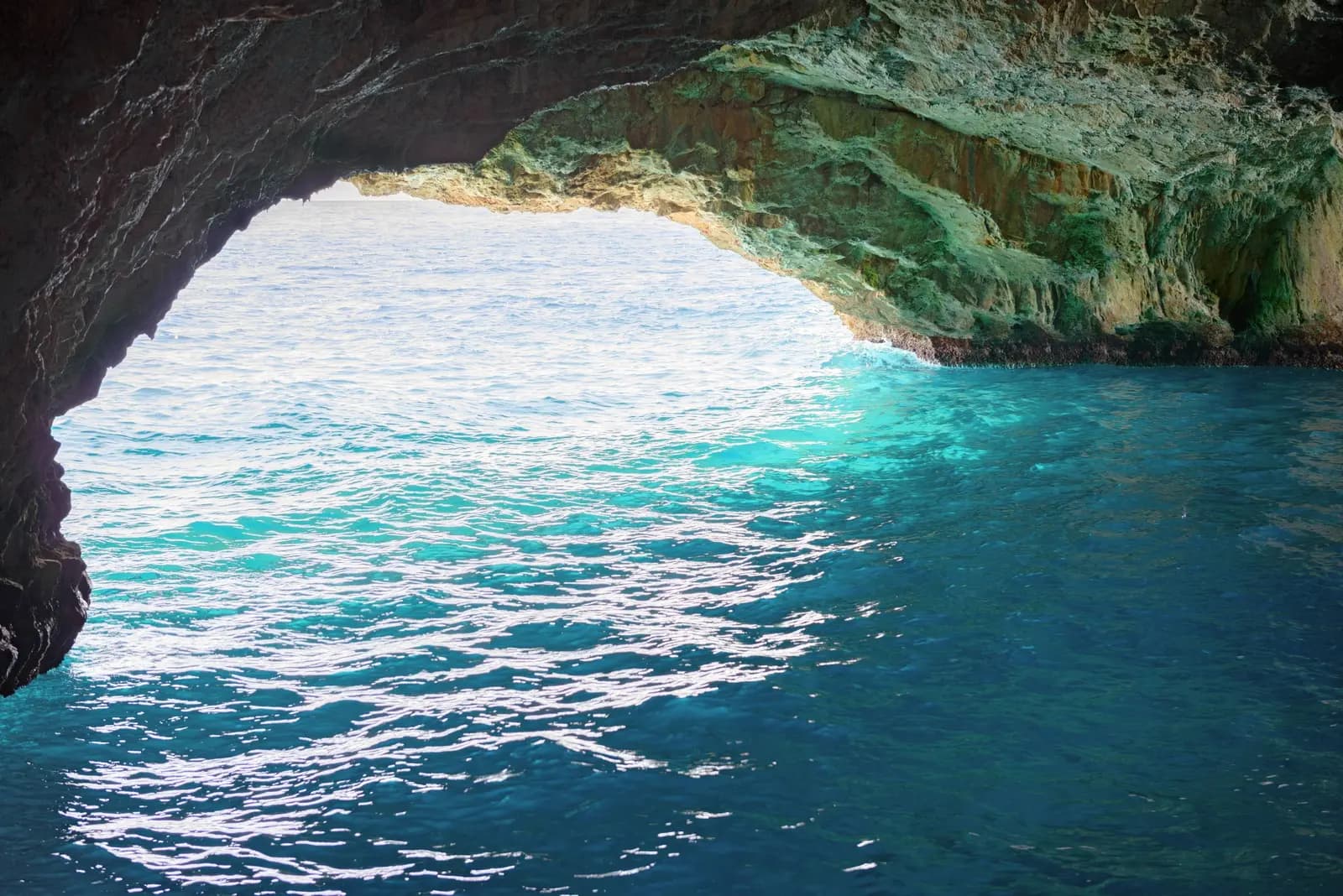
The colour is real but variable. NOAA explains the general physics: water absorbs more of the red part of visible light, leaving more blue wavelengths for our eyes, while suspended particles and sediment can shift the perceived colour. At the cave, incoming sun, illuminated water and reflected light from rock combine within a shaded chamber. Cloud, sun angle, surface chop, turbidity and the viewer’s position all change the result. Montenegro’s tourism sources describe the same effect as sunlight refracting and reflecting through the water onto the rock.
This corrects two common stories. The water is not blue merely because it mirrors a blue sky, and no precise “magic hour” is guaranteed. Bright high sun may strengthen underwater illumination, and older local guidance favours clear conditions, especially before noon—but that is a lighting tendency, not a promise, and an early calm departure may provide a safer, less congested experience. Let the skipper’s sea-state decision outrank a photography target.
| Stage | What happens |
|---|---|
| Sun | Angle + cloud |
| Water | Red absorbed, blue persists |
| Rock | Light reflected |
| Chamber | Turquoise glow |
| Changed by | Chop · particles · viewpoint · crowding |
| Guarantee | No operator can guarantee an exact shade |
Source: oceanservice.noaa.gov, montenegro.travel
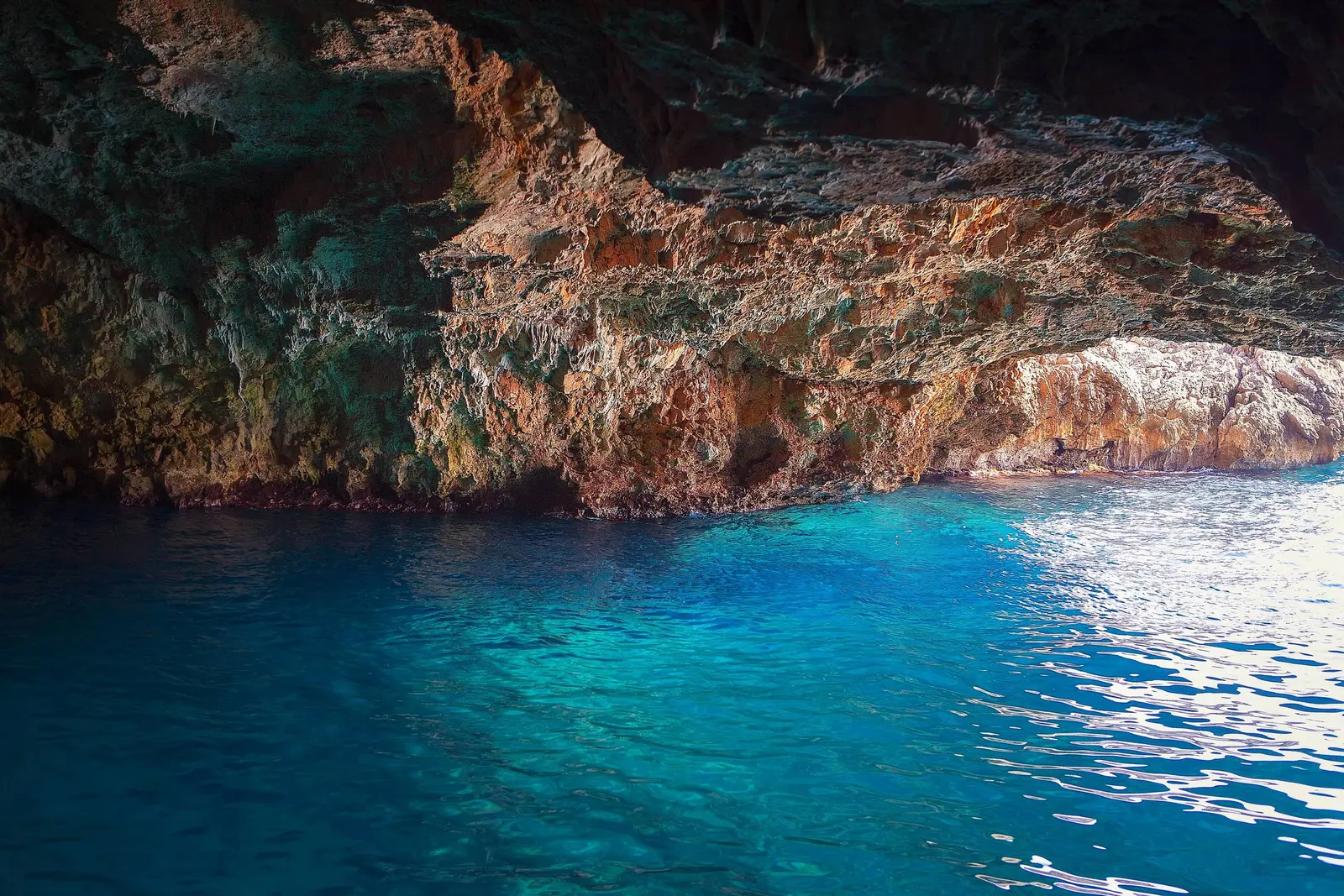
The route in one view
The classic excursion still makes geographic sense. Excursions may leave from central Škver or other piers along the Herceg Novi riviera. The historic Hotel Plaža stands in Zelenika, east of the city centre; its Hotel Plaža history explains the area’s early tourism role. A typical route crosses the inner bay toward Luštica, passes Rose, reaches the Mirište–Žanjice area and the small monastery islet, rounds the Arza headland, and continues along the open-sea side of the peninsula to the Blue Cave. Confirm the exact departure pier.
Montenegro’s official Luštica panoramic-road guide describes seasonal boats from Herceg Novi’s Škver harbour to Mirište, Žanjice and the Blue Cave, while Rose has traditionally had a year-round connection. It is a route description, not a live timetable. Departure points, frequency, vessel type and cave-access arrangements must be checked for the actual travel date.
| Stop | Note |
|---|---|
| Herceg Novi or Zelenika | Start |
| Rose | Peninsula stop |
| Žanjice + Mirište | Verify landings |
| Vavedenje + Fort Arza | View or landing |
| Blue Cave zone | Motorboat stops outside; non-motor entry only if arranged + safe |
Source: montenegro.travel, hercegnovi.me, gov.me
Rose, Žanjice and Mirište are not the same place
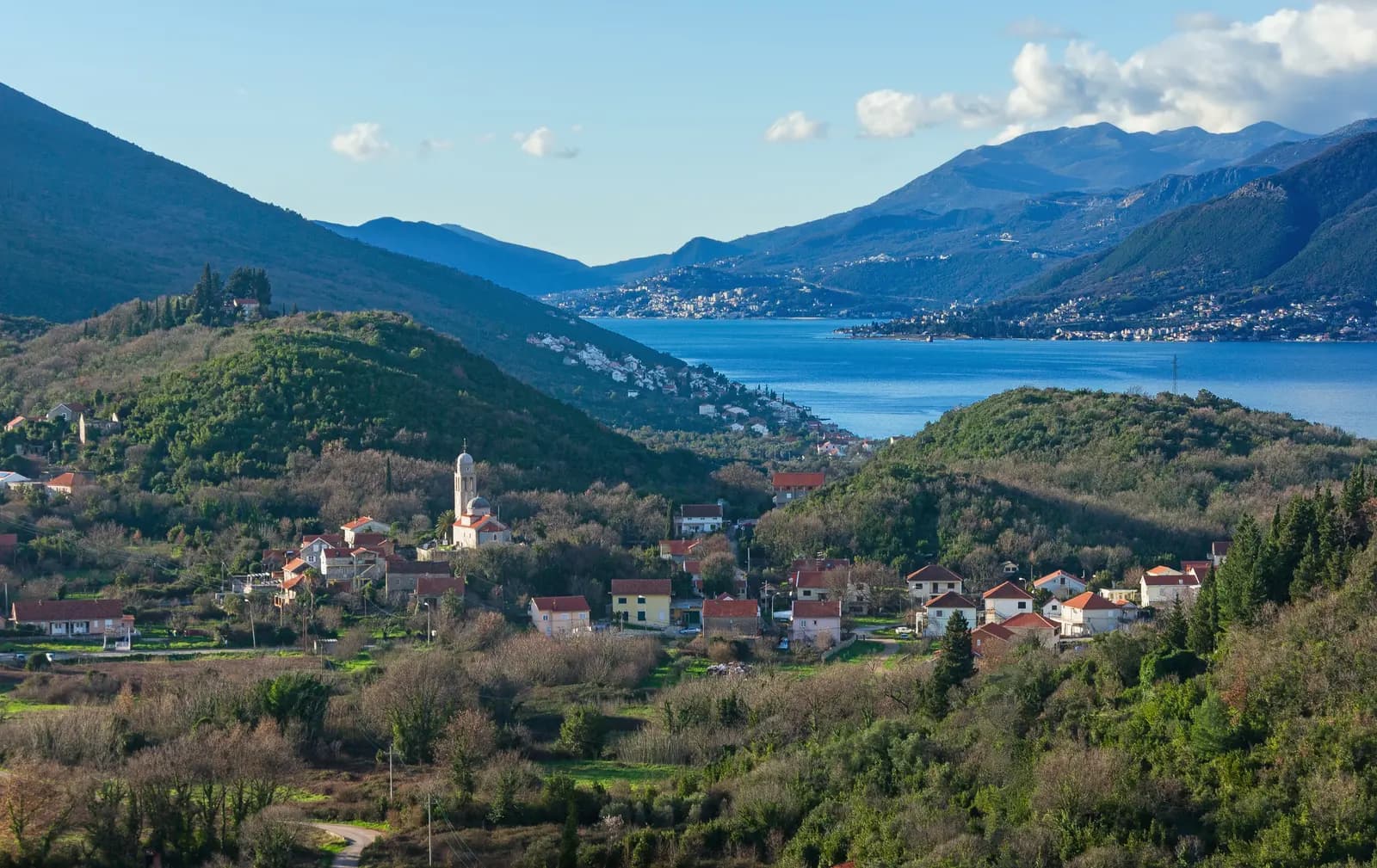
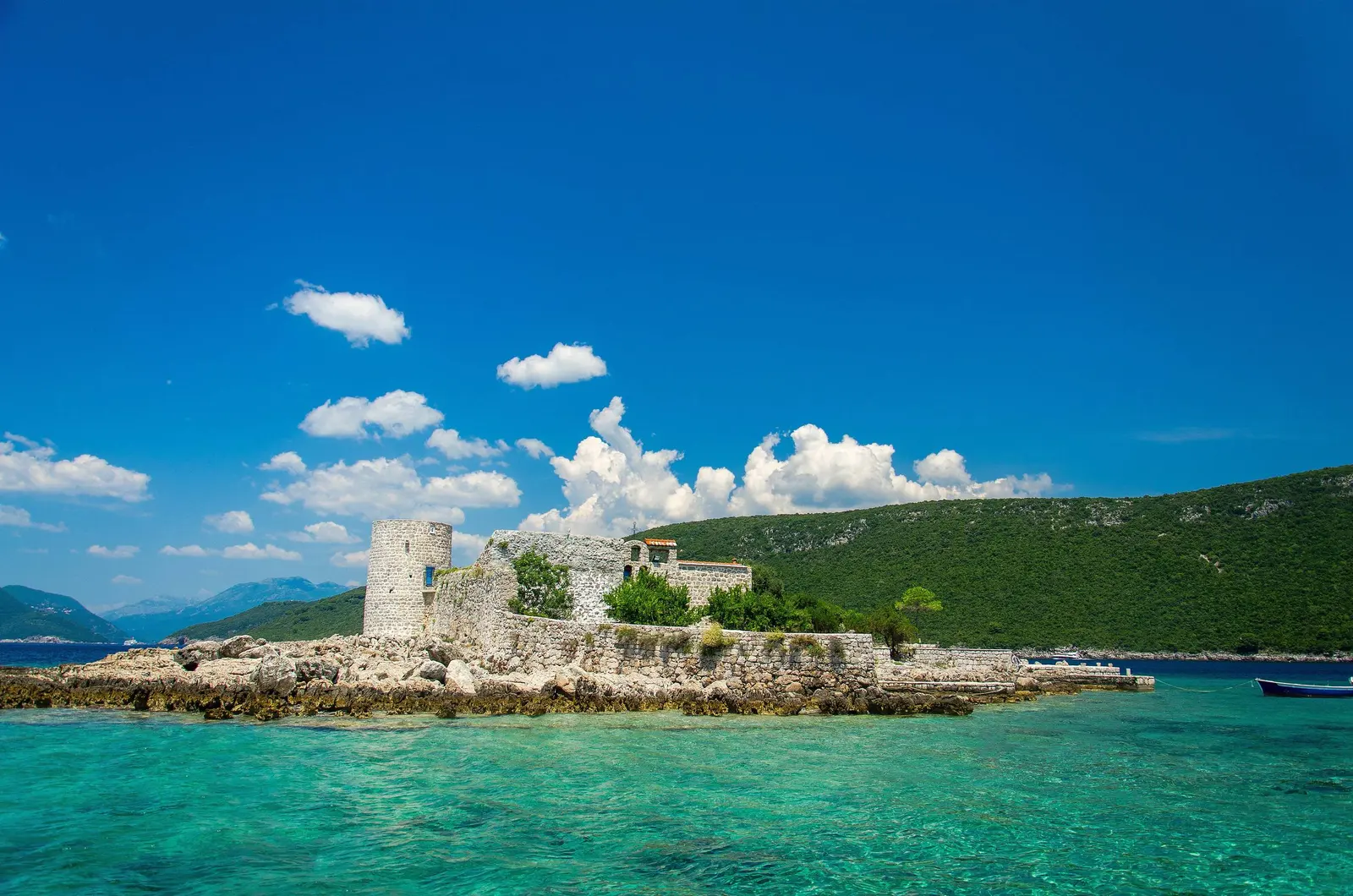
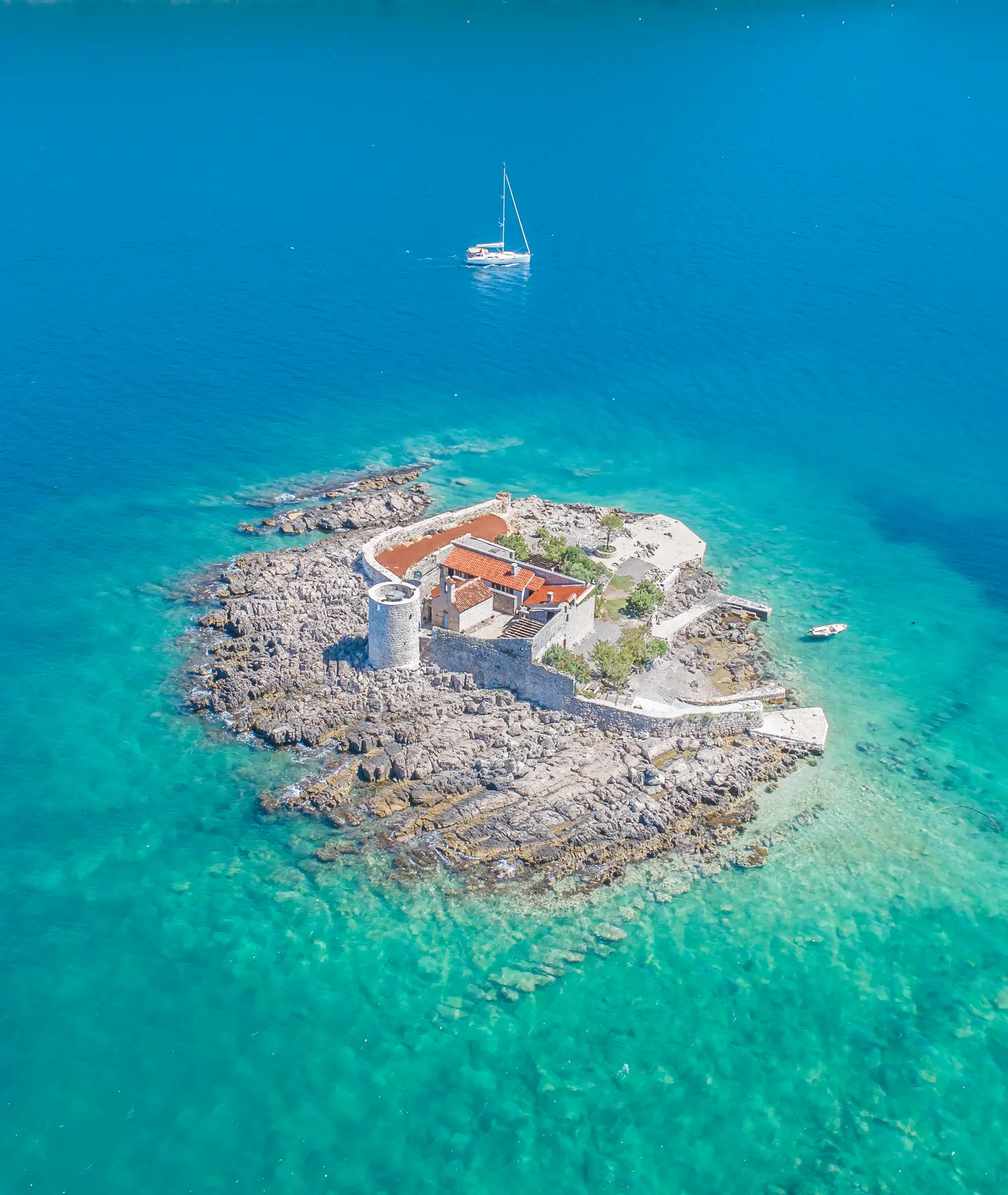
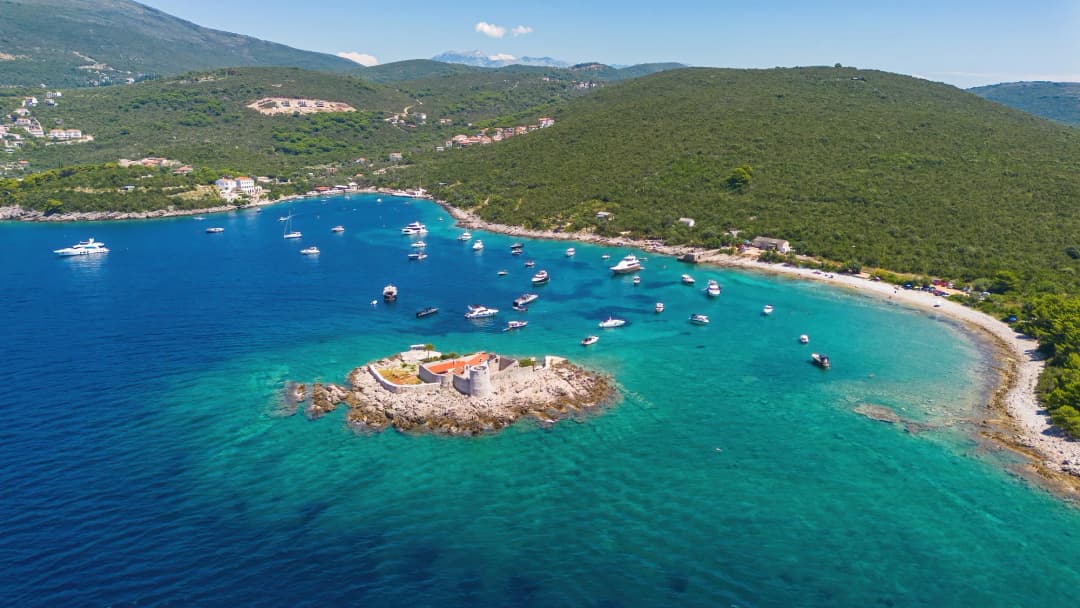
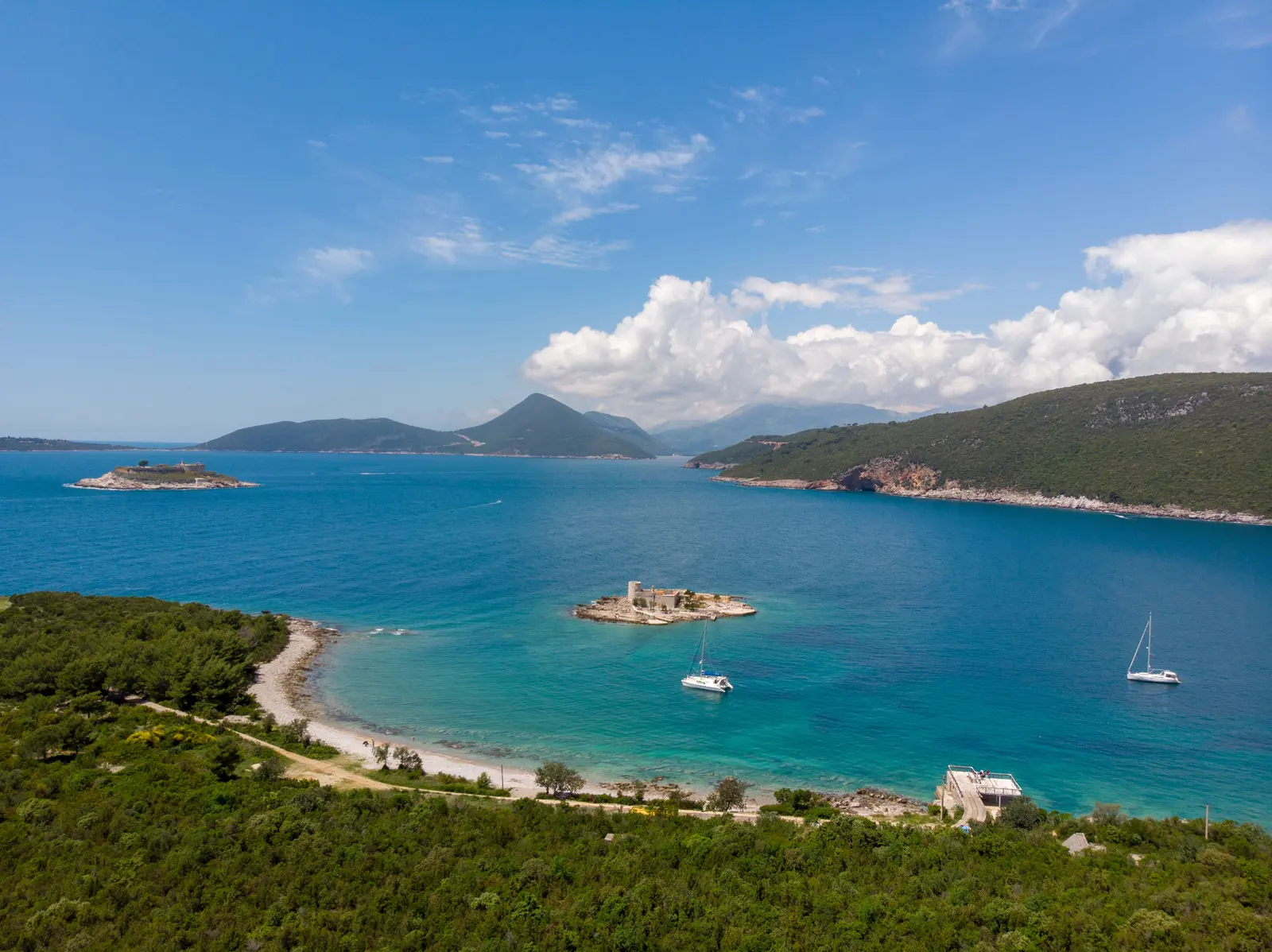
These names are often compressed into one tour description. Rose is farther north, inside the bay. Žanjice is the larger pebble-beach cove south of Rose. Mirište is the neighbouring cove between Žanjice and Cape Arza. The Municipality of Herceg Novi places Žanjice about 2.7 nautical miles south of the town and describes Mirište between Žanjice and the Arza headland. Offshore lies the small Žanjic islet, also called Mala Gospa, with the monastery church of the Presentation of the Virgin.
The distinction matters when booking. “Žanjice beach stop,” “Mirište landing,” “monastery islet,” and “Blue Cave approach” are four different promises. Ask the operator which are included, whether passengers go ashore, how long each stop lasts, and what replaces motorboat entry into the cave. For a wider land-and-sea context, use the Luštica Peninsula guide and the practical Blue Cave planning guide.
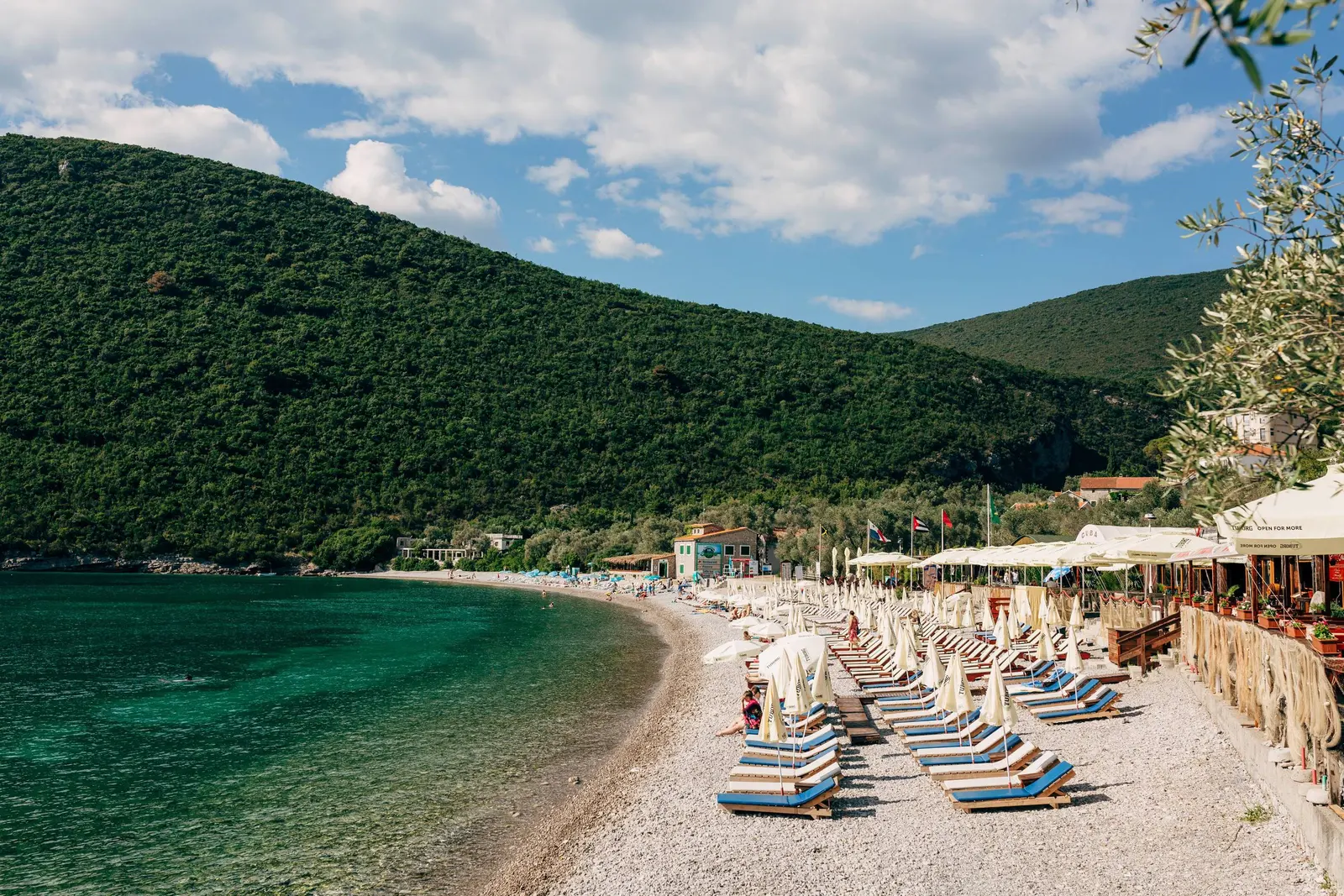
What can be said about the island monastery
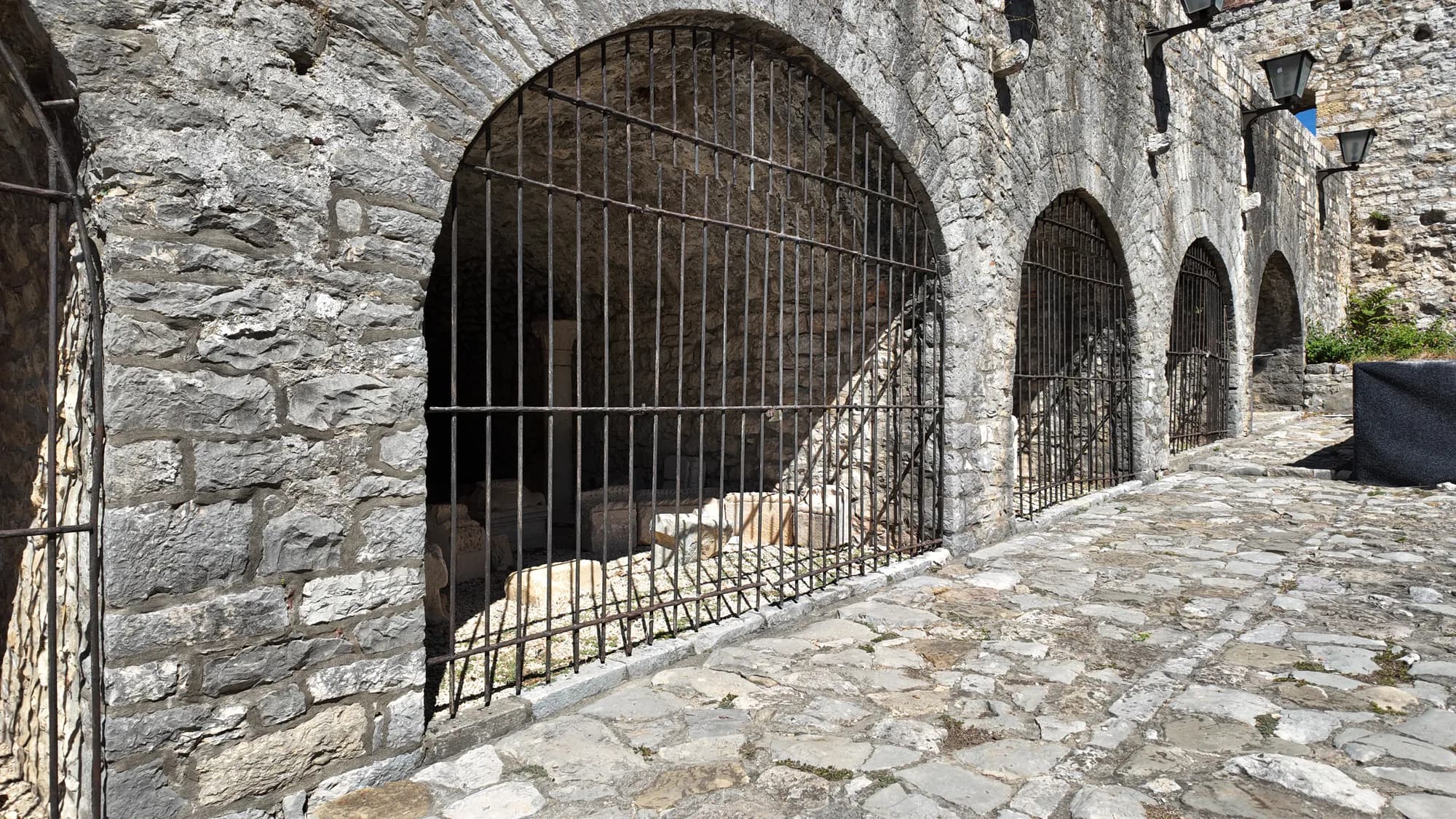
Different dates describe different parts of the monastery’s history. Herceg Novi’s official 2018 cultural-heritage study says tradition places the Church of St Vavedenje in the eleventh or twelfth century, while historical sources first mention the complex in 1508. The municipality’s church inventory dates the complex more broadly to the fifteenth–sixteenth centuries. Those statements are not interchangeable: tradition, first written mention and surviving construction are different kinds of evidence.
The same study records the church at coordinates 42°23′37″N, 18°34′19″E and says it has held protected immovable-cultural-property status since 25 November 1957. The fortified ensemble combines a small church, residential elements and enclosing walls on a low rocky islet. Its setting helps explain why a devotional site can look, from the water, like a miniature coastal stronghold.
No current official schedule establishes daily opening hours or guaranteed access to the interior. Treat the monastery as a possible landing rather than an assured stop, and confirm arrangements with the operator before departure. If landing is permitted, dress and behave respectfully at this religious and heritage site, ask before photographing interiors, and do not expect facilities or posted opening hours.
Arza and the guarded mouth of the bay
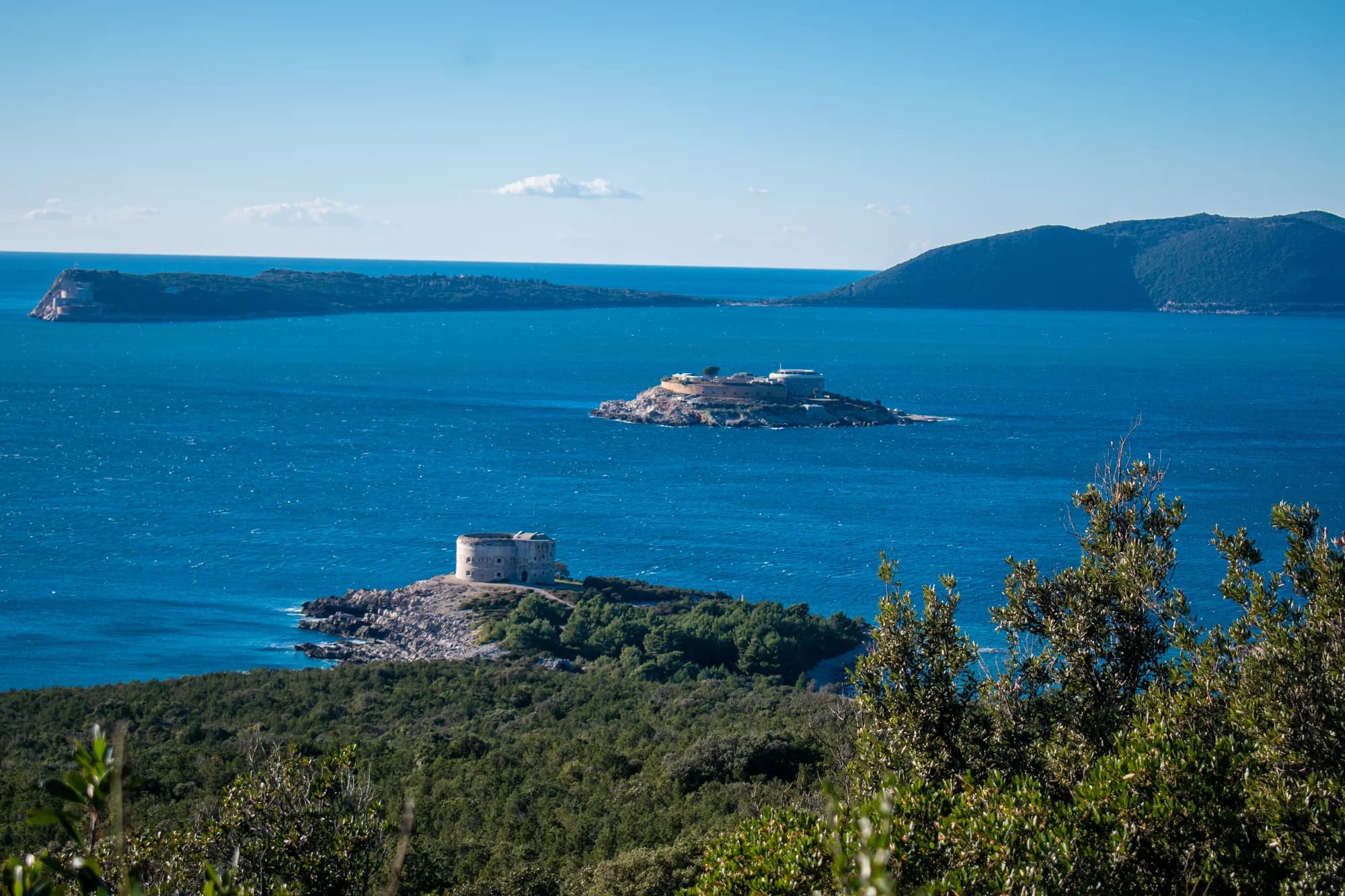
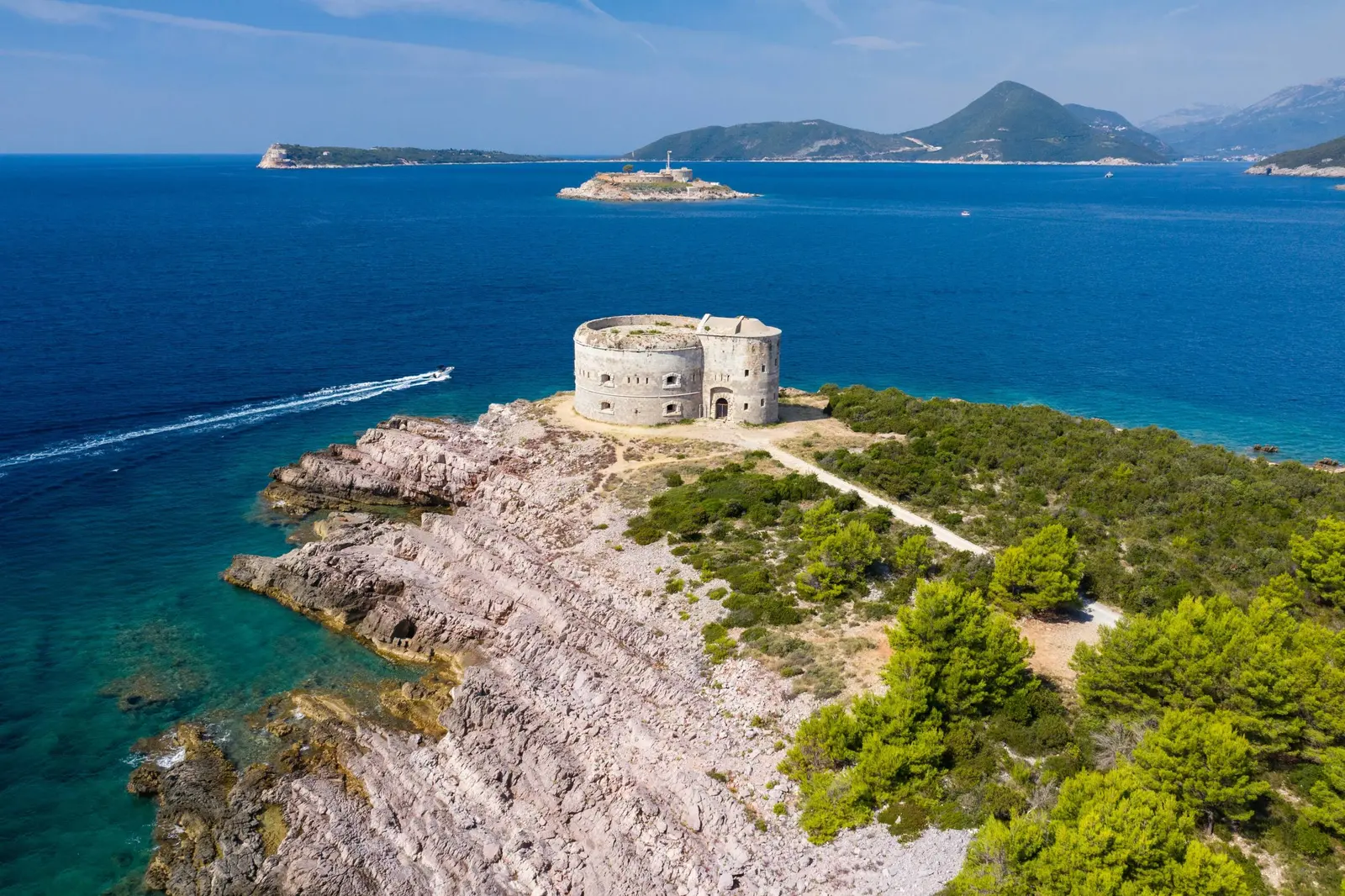
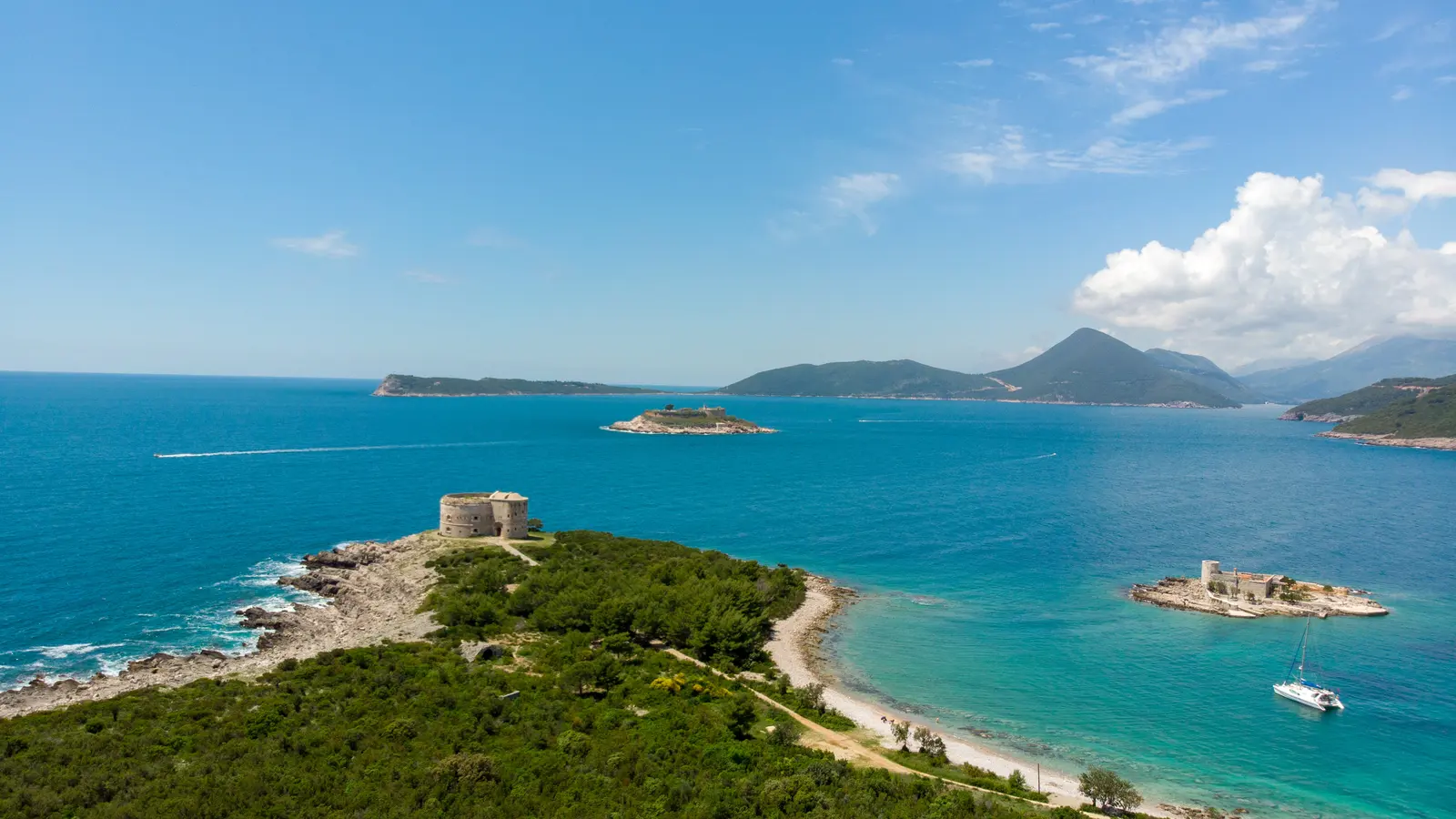
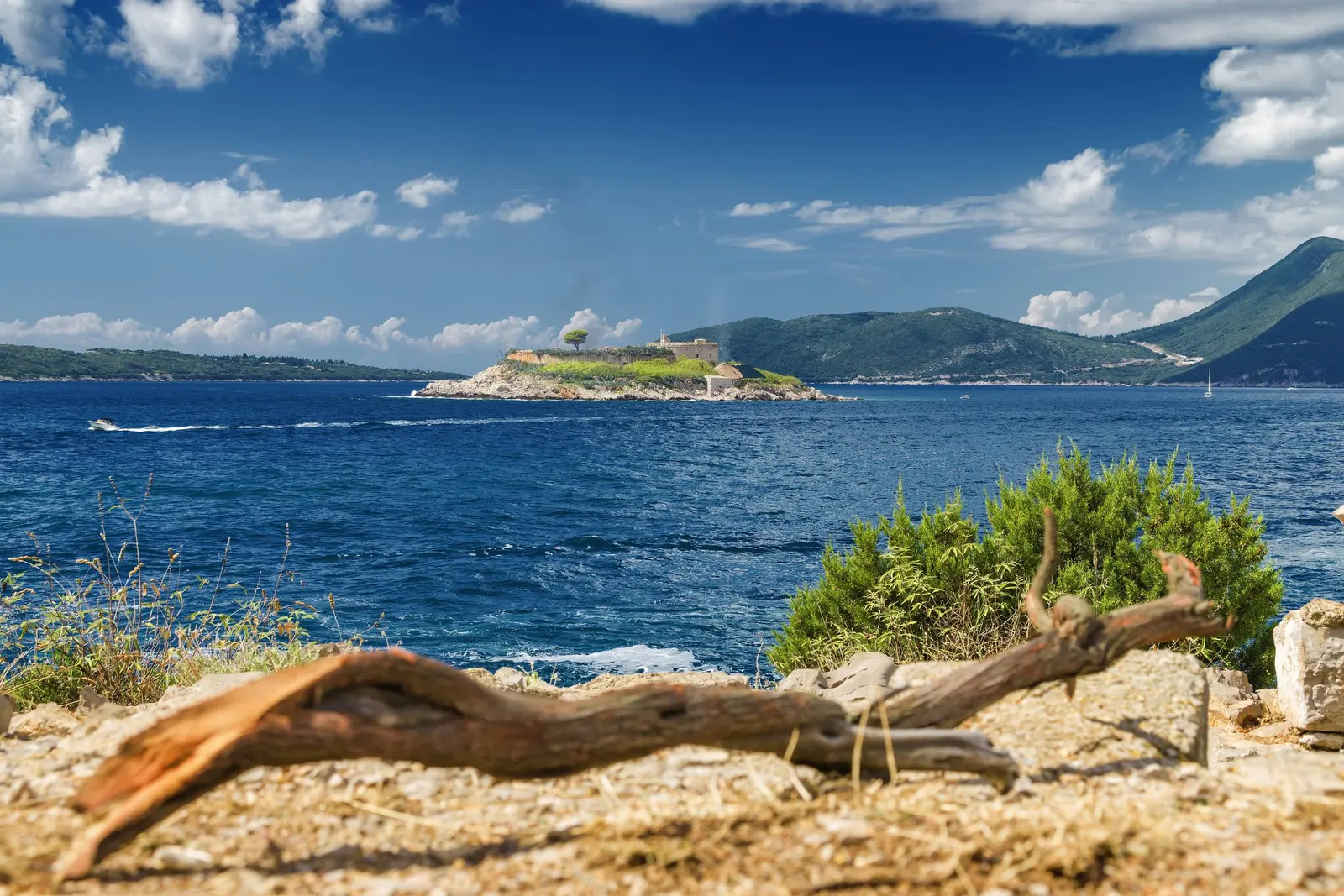
From Mirište the route passes Cape Arza, where a round stone fort faces the entrance to the Bay of Kotor. Across the water, the fortified landscape continues toward Lastavica/Mamula and Prevlaka. Montenegro’s cross-border FortNet brochure describes Mirište and Žanjice as viewpoints toward Arza, Mamula and Prevlaka—the first defensive line of the bay—and also describes coves reachable from land and sea.
The boat view is the useful part here. A passing excursion does not imply public entry into every fort, nor does a distant structure prove its current operating status. Ask separately if a tour advertises a landing. Do not treat forts as casual climbing structures or islands as automatically open; shore photographs show geography, not ownership or visitor rights. Ask the operator which stops involve disembarkation and which are view-only, and follow posted restrictions. Readers interested in the bay’s maritime story can continue with Herceg Novi’s classic-boat regatta archive and the documented life of Luštica captain Petar Zambelić.
Sea conditions decide the day
The cave sits on an exposed coast. Wind direction, swell, rebound from rock, visibility and boat traffic matter more than a generic “sunny” icon. A forecast for Herceg Novi’s waterfront can miss conditions outside the bay, and a calm inner-bay departure does not predict conditions beyond Cape Arza. Ask which marine forecast the operator uses and when the final go/no-go call is made.
Montenegro’s Maritime Operations Center gathers and broadcasts meteorological and navigational information and operates coastal traffic and rescue communications. Passengers do not need to become navigators, but they should recognize a professional answer: the crew checks marine conditions, carries working communications, briefs passengers and is prepared to cancel cave access while still offering a lawful coast-only route.
Never pressure a skipper to approach because another boat did. Different vessels handle differently, and conditions can change between departures. Accept a skipper’s cancellation or reroute when conditions deteriorate. If the threshold is rough, remaining outside is not a failed tour; it is the safety system working.
| Check | What to read |
|---|---|
| Marine forecast | Not just city weather |
| Entrance sea | Wind · swell · rebound |
| Visibility + traffic | People and craft in view |
| Transfer | Vessel-specific and stable |
| Any red light | Stay outside |
Source: gov.me
Boarding and transfers
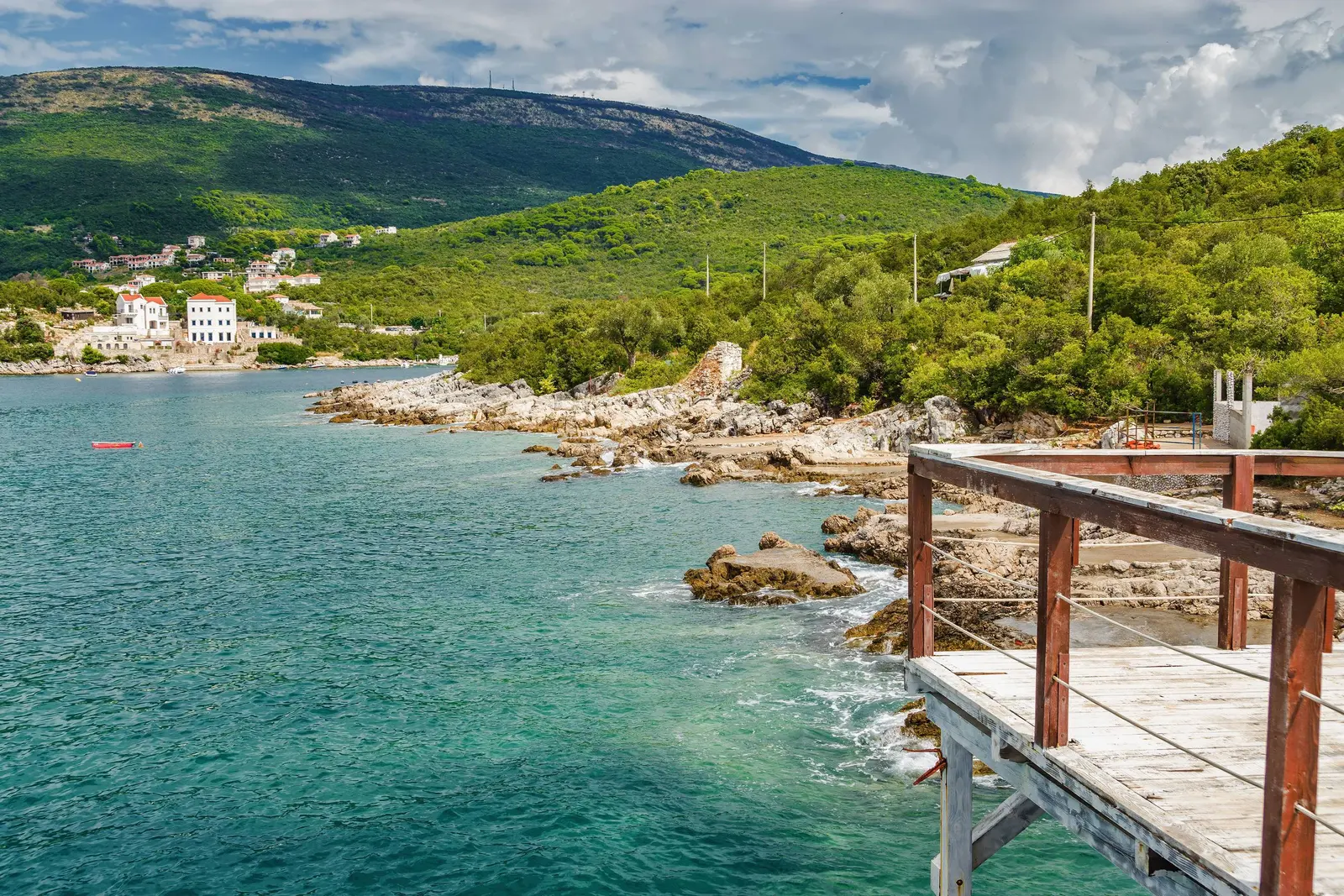
Small coastal piers, beach landings and transfers between craft require more care than boarding a large ferry. Ask the crew to explain the sequence before anyone moves. Keep both hands free, pass bags separately and wait until the skipper says the boat is secure. Shoes should grip wet decking; loose cameras and phones belong in a zipped, water-resistant pouch. If the plan involves a ladder, swimming or a non-motor transfer near the cave, confirm that every passenger can reboard without being lifted or pulled unexpectedly. Travellers with limited mobility should request a description or photograph of the actual boat and access point before paying—an actual boarding method, not a generic “accessible” label. The final decision remains with the skipper.
Swimming is a separate decision
Older tourism material invites visitors to swim, and the Ministry’s 2026 explanation explicitly centres swimmer safety. Neither fact guarantees swimming on your departure. Permission, supervision, traffic, water movement, temperature, boarding arrangements and each passenger’s ability all matter.
Before entering the water, ask where the engine is stopped, how the area is watched, whether a flotation aid is required, how you reboard, and what signal ends the swim. A confident pool swimmer can still be vulnerable to swell, cold shock, rock impact and a moving boat. Do not enter if you are uncertain about the transfer, current, visibility, ladder or your ability to return to the craft. Children, weak swimmers and anyone with mobility, respiratory or cardiac concerns need a conservative, person-specific decision, with properly sized flotation and direct supervision.
Do not jump until the crew explicitly directs it. Do not swim toward an unverified cave opening, climb wet rock, block a craft’s route or rely on a phone as a waterproof rescue device. Clear-looking water is not a water-quality certificate, and the colour effect says nothing about depth beneath you.
| Factor | Requirement |
|---|---|
| Crew | Explicit approval and supervision |
| Water | Safe movement and traffic |
| Person | Ability + health + flotation |
| Exit | Ladder or craft ready now |
| One “no” | Enjoy the cave from the boat |
| Colour | Not a safety test |
Source: gov.me
What the Luštica coast adds to the trip
The cave is one point in a much larger maritime landscape. The National Tourism Organisation’s Luštica heritage brochure identifies Mirište and Žanjice as viewpoints toward the first defensive line at the bay entrance: Arza, Mamula and Prevlaka. It also describes coves reachable from land and sea. Separately, Montenegro’s coastal spatial plan designates the shore from Blue Cave to Cape Veslo as an underwater-activities zone. A planning designation is context, not permission for any individual activity. Together, these sources explain why many excursions combine the cave approach with beaches, islands and forts.
Žanjice and Mirište make sensible land fallbacks when sea conditions cancel the cave. Rose offers a small harbour and historic waterfront; use our evidence-led Rose guide before assuming access, parking or opening hours. Dobreč is another boat-oriented cove, covered separately in the Dobreč guide.
Practical 2026 booking and departure plan
A shorter approach from Luštica can reduce time in transit; a departure from Herceg Novi or elsewhere in the bay can add a longer coastal narrative. No universal journey time survives differences in harbour, vessel, route, speed limits, passenger collection, traffic and sea state. Compare exact written offers rather than recycled “ten-minute” or “half-day” labels.
- Choose the departure by logistics, not nostalgia. Škver is central for many visitors; Zelenika connects the route to the historic Hotel Plaža story. Check the exact pier and return point.
- Ask for the itinerary in writing. “Blue Cave tour” can mean an outside view, a swim from outside, or a supervised non-motor transfer. Never infer which one.
- Check weather on the day. The outer Luštica coast can differ sharply from the protected inner bay. Accept a skipper’s cancellation or reroute when conditions deteriorate.
- Prepare for sun and spray. Carry water, sun protection, a dry layer and secure footwear. Use a waterproof pouch for documents and electronics.
- Treat swimming as optional. Do not enter if you are uncertain about the transfer, current, visibility, ladder or your ability to return to the craft. Children and weak swimmers need properly sized flotation and direct supervision.
- Respect the monastery. If landing is permitted, dress and behave respectfully at this religious and heritage site, ask before photographing interiors and do not expect facilities or posted opening hours.
- Save the sea-rescue number. Montenegro’s Maritime Operations Center lists 129 for maritime emergencies. Report an accident, injury or missing person without delay.
If you are staying on the peninsula, the Luštica destination guide helps connect the cave day with villages and land routes. For a quieter base near the bay entrance, compare the Njivice guide. Central Herceg Novi is convenient for Škver departures, while the riviera suits travellers combining beaches and road access; compare areas in the Herceg Novi accommodation guide, then verify the operator’s exact pier. Leave enough flexibility to move the boat day when the marine forecast is poor.
| Version | Plan |
|---|---|
| Green | Coastal ride · lawful cave procedure · optional safe swim |
| Amber | Coast-only route · view cave outside · Mirište or Žanjice |
| Red | No exposed-water trip · Rose + peninsula land day · rebook if terms allow |
| Why | A fallback protects the day without pressuring the skipper |
Source: montenegro.travel
Emergency preparation
Save 129 for Montenegro’s maritime-safety service and 112 for the national emergency system. The Maritime Operations Center also publishes VHF channels for professional marine communication. In an emergency, follow the crew, report the boat name, passenger problem and best known location, and conserve battery. Mobile coverage may fail near rock or offshore. Report an accident, injury or missing person without delay.
Emergency numbers are not substitutes for prevention. Choose an operator that briefs passengers, carries correctly sized safety equipment, has a stable boarding method and states a weather policy. Tell the crew about non-swimmers and relevant medical or mobility needs before departure, not at the cave.
Frequently asked questions
Can speedboats enter the Blue Cave in 2026?
No. The Ministry of Maritime Affairs says motor-powered vessels are prohibited from entering the cave area. A speedboat may approach along the coast, but the operator must explain any separate lawful non-motor entry procedure. Any operator’s description written before May 2026 may be obsolete.
Does that mean the Blue Cave is closed?
No. The official announcement says entry is possible with non-motor vessels. Whether a specific excursion offers a compliant transfer—and whether conditions make it safe—must be confirmed for that trip.
Can I swim into the cave?
Do not assume so. The rule addresses vessel propulsion; it does not guarantee swimming permission, supervision or safe water on a particular trip. Enter only when the operator explicitly allows it and all person, sea, traffic and reboarding checks pass.
What time is the cave bluest?
There is no guaranteed hour. Higher sun can strengthen underwater illumination, and older local guidance favours clear conditions, especially before noon—but cloud, chop, swell, season, suspended particles, viewpoint and crowding alter the effect. Safer sea conditions outrank colour.
Is the Blue Cave reachable on foot?
Official tourism material treats it as a boat-access natural landmark. Luštica has land routes and coastal viewpoints, but do not improvise a cliff descent to the cave.
Is the monastery eleventh-, fourteenth- or fifteenth-century?
The evidence supports no single simple answer. Tradition places the church in the eleventh or twelfth century, the first cited historical mention is 1508, and the municipal inventory dates the complex to the fifteenth–sixteenth centuries.
Can I visit the monastery interior?
Do not assume so. The protected complex is on a small islet and current public sources do not provide dependable daily opening hours. Confirm landing and access directly before departure.
What if the operator cancels cave entry?
Use the agreed fallback: a coast-only circuit, Mirište or Žanjice, or a land day around Rose and Luštica. Read refund and rescheduling terms before payment.
Where should I stay for the trip?
Central Herceg Novi is convenient for Škver departures; the riviera suits travellers combining beaches and road access. Compare areas in the Herceg Novi accommodation guide, then verify the operator’s exact pier.
Which emergency number should I use?
Use 129 for maritime safety and 112 for Montenegro’s general emergency system. Follow crew instructions first and provide the boat name and location as precisely as possible.