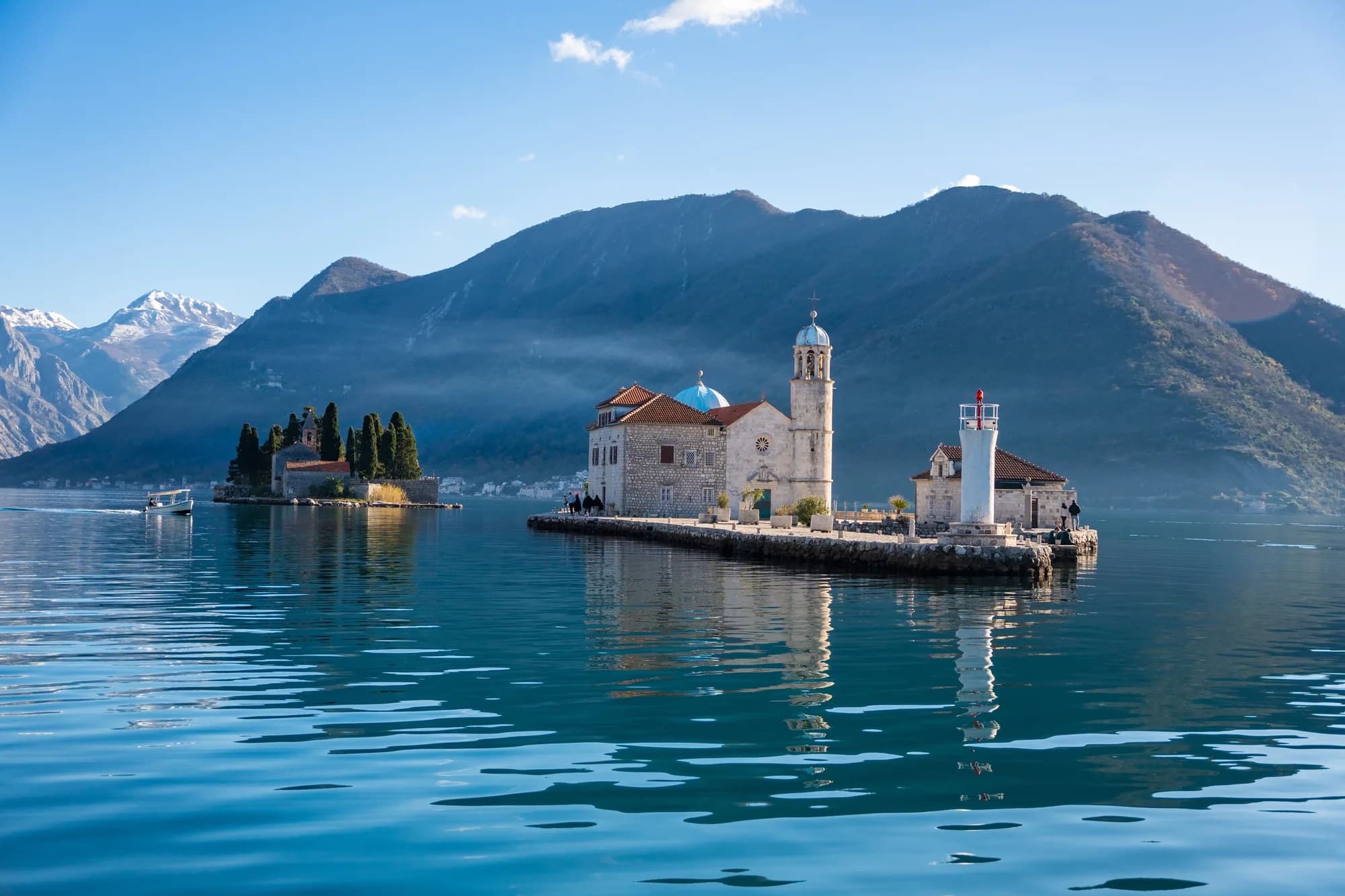
The 90-odd kilometres between Dubrovnik and Kotor cover some of the most photographed coastline in Europe — but between the two cities sits an international border that can turn a two-hour drive into a five-hour ordeal in the wrong week of August. Whether you go by bus, private transfer, rental car or organised tour, the single decision that shapes your whole day is what time you cross. Here is every way to make the trip in 2026, with honest costs, timings and the border strategy that actually works.
By bus: the budget option
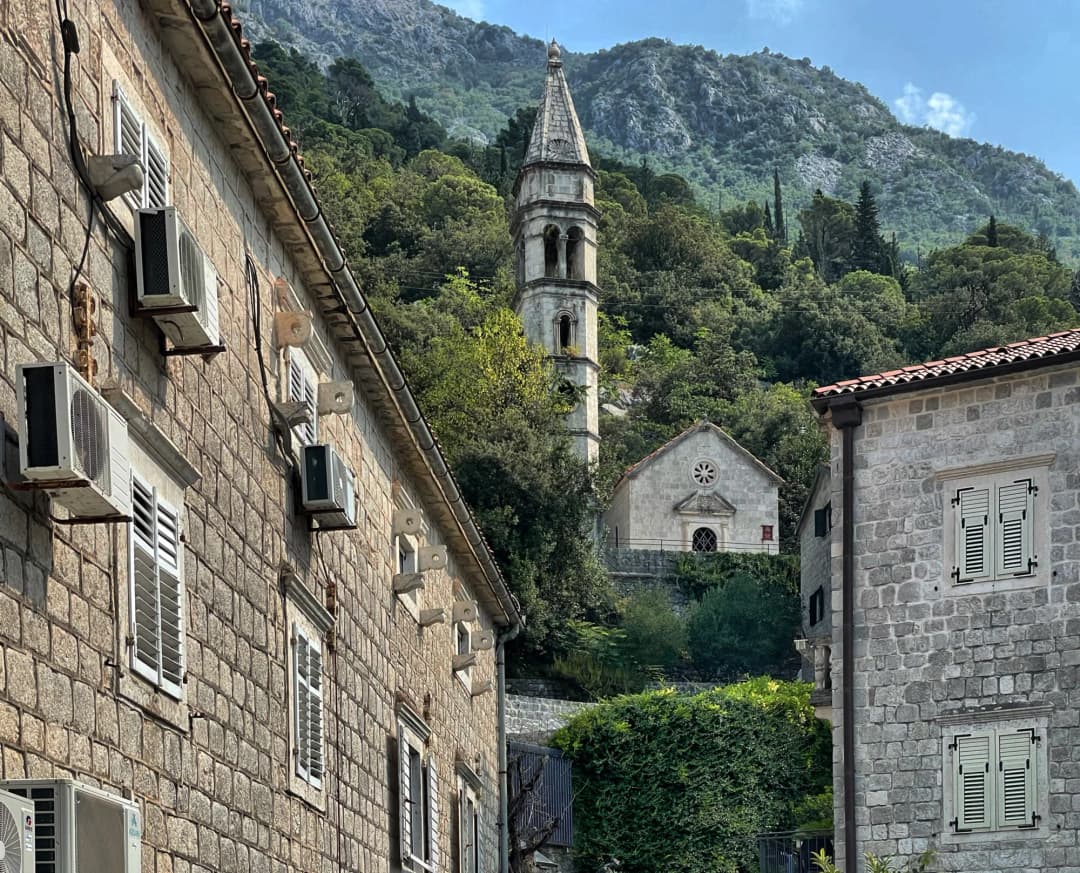
The bus is the cheapest and simplest way down. FlixBus and regional carriers such as Jadran Ekspres run roughly 5 daily connections, with the first departure around 07:15 and the last near 20:30. The scheduled journey is about 1 hour 50 minutes, though that assumes a clean run through the border. Fares are demand-based and usually land in the €13–€30 one-way range if you book a few days ahead.
The catch: when the coach reaches the frontier, everyone files off with their passports and the bus waits for the slowest processing lane. In peak season that alone can add an hour or more. Book the earliest departure you can stomach, keep your passport in your pocket, and travel light — you carry one cabin bag plus one hold bag within FlixBus limits at no extra charge.
By private transfer: door to door, no queue anxiety
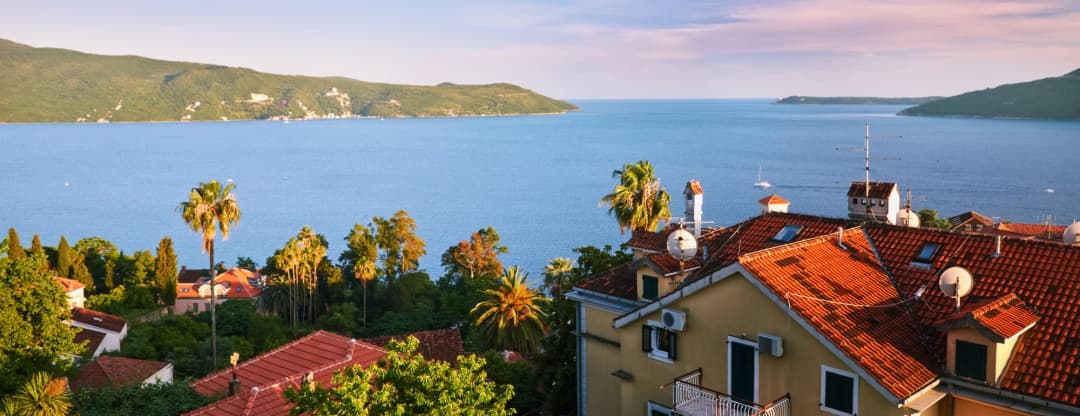
A private car or minivan is the most comfortable way to travel, especially for two to four people. Expect to pay roughly €60–€120 per vehicle depending on car size and season — a price that undercuts four separate transfer-inclusive tour tickets while giving you door-to-door service and the freedom to stop for photos above the Bay of Kotor. A good driver knows the border rhythm and will time the run to dodge the worst of the queue, and many will fold in a short stop in Perast or at a panoramic viewpoint for a modest extra fee.
By rental car: freedom, with paperwork
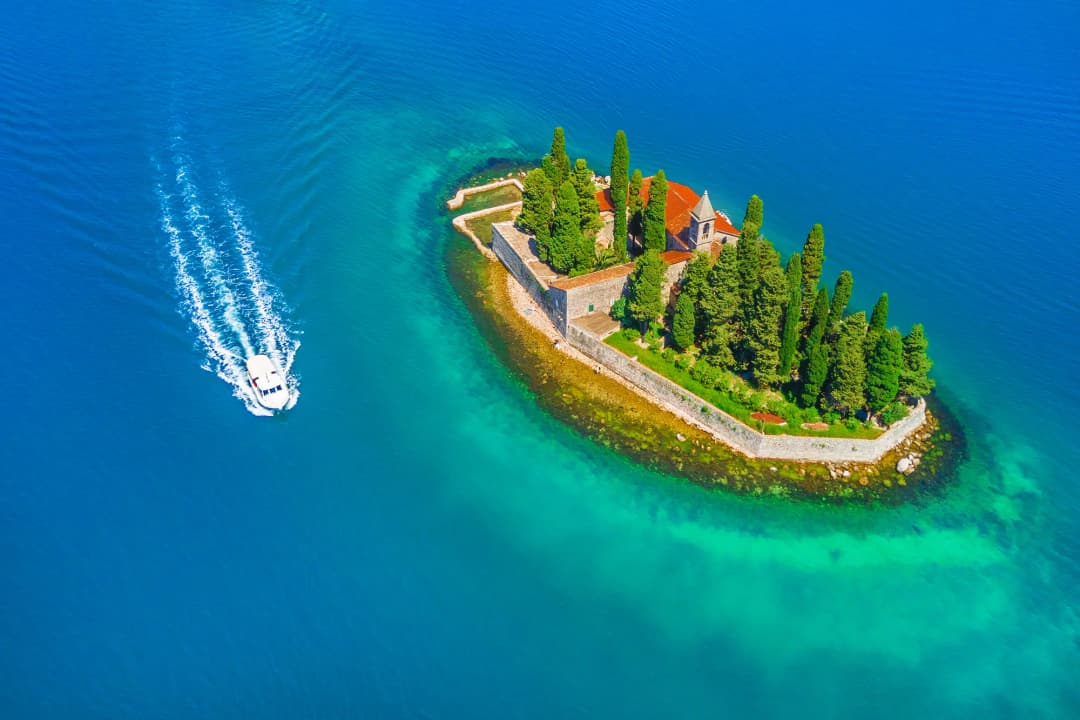
Driving at your own pace is glorious on this coast, but the border adds admin — just not the kind most travellers expect.
You almost certainly do not need a green card. Montenegro applies the Multilateral Guarantee Agreement, which means that for vehicles registered in the EU, the EEA, the United Kingdom and Switzerland the number plate itself is accepted as proof of compulsory insurance. A Croatian rental car carries EU plates, so a green card is not a condition of entry. It remains mandatory only for vehicles registered outside that group.
What you do need is the rental company's cross-border permit. That is a separate matter from insurance, and it is the thing that actually sends people back from the border. Not every firm allows its cars to leave Croatia, and those that do charge a surcharge — commonly €15–30 per day, or a flat €70–100 per rental. The "no Montenegro or Bosnia" clause is often buried in the small print and travellers only discover it at pick-up. Confirm in writing that Montenegro is covered before you book, and ask for the cross-border permit confirmation to be handed over with the rest of the documents.
EES is no longer a footnote. Since 10 April 2026 the EU's Entry/Exit System has been in full operation at every external Schengen border, replacing the passport stamp with biometric registration — fingerprints and a facial scan — for non-EU travellers. Karasovići is an external Schengen border, so the system catches you both on the way into Montenegro and on the way back.
The first months of operation were harder than anyone expected: airports and airlines reported queues of up to three hours at peak, and some southern European hubs longer still. IATA asked for a postponement; the EU refused in early July and pressed on as planned. On the coastal route the first registration takes a few minutes per traveller, but multiply that by a full coach ahead of you and the arithmetic changes quickly. For July and August, plan the crossing as something that can swallow three hours, not as a formality.
There is one piece of relief: the EU has released a mobile app, "Travel to Europe", which lets non-EU travellers register their passport details and a facial photo in advance, within 72 hours of reaching the border. Use is voluntary, and availability and features vary from country to country — check before you travel whether it is supported at Croatian crossings.
By organised day tour: let someone else drive
If you would rather not deal with logistics at all, a guided day trip from Dubrovnik typically runs €40–€70 per person and usually bundles the drive down, a few hours in Kotor's Old Town and often a stop in Perast or at a bay viewpoint. It is the least flexible option — you move on the group's clock — but the border paperwork, parking and route-finding all become someone else's problem.
The border: the one thing that can wreck your day
Almost all coastal traffic funnels through the Karasovići crossing, and in July and August the queue there can reach 1–3 hours, worst between roughly 09:00 and 16:00 as cruise excursions and road-trippers all hit it at once. In shoulder season the same crossing is usually a 15–45 minute wait. Before you set off, you can check the queue in real time on the Croatian auto club's live camera at the crossing (HAK camera at Karasovići).
There is also Vitaljina on the Prevlaka peninsula, a smaller crossing that locals use regularly to sidestep the tailback on the main route. It is not always faster and its opening hours are more limited, but when Karasovići seizes up the difference can be an hour or more. Check the hours before you rely on it, and bear in mind that the approach is narrower and slower.
The fix is simple: leave early. Aim to depart Dubrovnik before 07:30 so you clear the border before the wave builds and reach Kotor by around 09:30–10:00. The other clean window is after about 16:00, once the day-trip coaches have turned for home. Whatever you do, avoid arriving at the border mid-morning in high summer. Keep passports handy — and if you're driving a rental, the cross-border permit confirmation — and top up on water before you join the line.
What about ETIAS?
You don't need it — not for Montenegro, and not anywhere at the moment. ETIAS has not gone live. It was expected in the last quarter of 2026, but the eu-LISA agency abandoned that deadline over technical problems and the slow rollout of EES; a new estimate is due in September. When it does arrive it will cost €20, last three years and apply to 30 European countries — Montenegro not among them, since it is not an EU member. Our guide to Montenegro's entry requirements covers all of that in more detail.
⚠️ No website issues ETIAS authorisations today. Anyone offering to sell you one right now is a scammer. Official information is published at travel-europe.europa.eu/etias.
Important for certain passports: from 1 November 2026
On 23 July 2026 the Government of Montenegro adopted an amendment to its visa regulation. From 1 November 2026, citizens of Belarus, China, Russia, Saudi Arabia and Turkey will need a visa to enter Montenegro. It is an alignment with EU visa policy — one of the benchmarks for closing Chapter 24 in the accession negotiations.
In practice: if you hold one of those passports and are planning a day trip from Dubrovnik after 1 November, you need the visa in advance. The application no longer has to go through a diplomatic mission — under an arrangement with VFS Global, applications can be lodged at VFS centres, and the Ministry of Foreign Affairs has announced an e-visa.
If you hold any other passport, this change does not affect you.
What to see when you arrive in Kotor
Kotor rewards the effort. The walled Old Town is a maze of medieval squares, and the fortress climb above it delivers the classic view over the fjord-like bay — go early before the heat and the cruise crowds. Just up the coast, tiny Perast and its two islets make the perfect half-hour detour, and if you have more time the beaches and nightlife of Budva or the seaside calm of Herceg Novi are both within easy reach. First time in the country? Our Montenegro first-time visitor guide covers the essentials.
Do you even need to fly into Dubrovnik?
It is worth asking before you book the flight. Through 2026 Montenegro's airports have had their biggest network expansion yet: Wizz Air opened a base in Podgorica, British Airways launched Tivat–London Heathrow, Iberia added Madrid–Tivat, and new links to Amsterdam appeared.
The arithmetic is still simple. If the Dubrovnik flight is significantly cheaper, the difference can justify the drive — but subtract the cross-border rental surcharge and the real risk of three hours at the border in peak season. If you are flying in July or August and the Bay of Kotor is your target, Tivat is 15 minutes from Kotor and there is no border between you and your destination. If you are travelling out of season, or the price gap is large, Dubrovnik still makes sense.
Day trip or one-way?
As a day trip, this works — but only if you respect the border clock, which means an early start and an eye on the return queue. You will realistically get four to five hours in Kotor and back to Dubrovnik by evening. Honestly, though, Kotor deserves an overnight. Staying even one night lets you climb the fortress at dawn, watch the bay empty of day-trippers, and reach Perast or Budva without racing a coach timetable. If you can, go one-way, sleep in the bay, and let the border be a problem you only solve once.
Ready to plan the whole route? Map your days with our trip planner, and when you decide Kotor is worth more than an afternoon, browse places to stay across the bay.
Contacts, tickets and useful links
Everything below was verified in August 2026. Fares and timetables change with the season, and the ferry line has changed operator before — confirm directly with the operator before you travel.
Bus stations
- Dubrovnik bus station (Autobusni kolodvor, run by Libertas Dubrovnik) — Obale pape Ivana Pavla II 44A, 20000 Dubrovnik, next to the Gruž ferry port. Tel. +385 60 305 070, [email protected]. Counters open daily 06:30–22:00, with short breaks at 09:00–09:30 and 16:00–16:30. Online tickets should be bought at least two hours before departure. autobusni-kolodvor-dubrovnik.com
- Kotor bus station (Autobuska stanica Kotor) — Put Prvoborca bb, 85330 Kotor, a five-minute walk from the Old Town's Sea Gate. Management tel. +382 32 325 126, information +382 32 322 978, [email protected]. Departures and arrivals
Buying a bus ticket
The Dubrovnik–Kotor leg is served by FlixBus and by regional carriers including Blue Line, Jadran Ekspres Kotor, Croatia Bus / Globtour, Božur and Royal Travel. No single site lists every departure, so it is worth checking two before you book.
- FlixBus — Dubrovnik to Kotor
- Busbud — fares and carriers on the route
- CheckMyBus — compares all operators
- Omio — buses, and onward connections
- BusTicket4.me — a Montenegrin booking portal (Cassiopeia d.o.o., Podgorica), useful for the return leg and domestic connections
The ferry across the bay, if you drive
Driving from the border you can either follow the shore all the way round through Risan and Perast, or cut across the Verige strait on the Kamenari–Lepetane ferry and approach Kotor via Tivat. The crossing takes about five minutes and saves roughly 30 km.
- A standard car costs €5; foot passengers and cyclists travel free.
- In summer boats leave every 15–20 minutes, day and night; in winter the night service thins out.
- Queues of 45–60 minutes are normal in July and August, worst around 07:00–09:00 and 16:00–18:00.
- Tickets and the current timetable: trajekt.me
If the ferry queue is long, the drive around the bay through Risan and Perast is more scenic anyway and often no slower.
The border: live conditions and official information
The crossing is Karasovići on the Croatian side and Debeli Brijeg on the Montenegrin side, on the E65.
- Croatian Auto Club (HAK) — live border cameras and traffic reports; the Karasovići camera shows the queue before you commit to it.
- Croatian Ministry of the Interior — official notices on border traffic.
- Croatian police information line for entry into Croatia: +385 1 3788 905 (weekdays 08:00–16:00).
- EU Entry/Exit System (EES) and ETIAS — the official pages, not the many look-alike sites that charge a fee.
Breakdowns and emergencies
- Emergency number, both countries: 112
- Croatia — roadside assistance (HAK): 1987 from within Croatia, +385 1 4693 700 from abroad. Details
- Montenegro — roadside assistance (AMSCG): 19807. Auto-moto savez Crne Gore, which also publishes road conditions and closures.
- Rental cars need a green card and written permission to cross into Montenegro — arrange it with the rental desk when you book, not on the morning you leave.
Tourist information in Kotor
- Tourism Organisation of Kotor — main info point on the Square of Arms, just inside the Old Town's main gate. Tel. +382 32 325 950. Open daily, roughly 08:00–18:00, longer in high season. kotor.travel
- They hold current opening hours for the town walls, the maritime museum and the churches, and can point you to the boat operators for Our Lady of the Rocks.