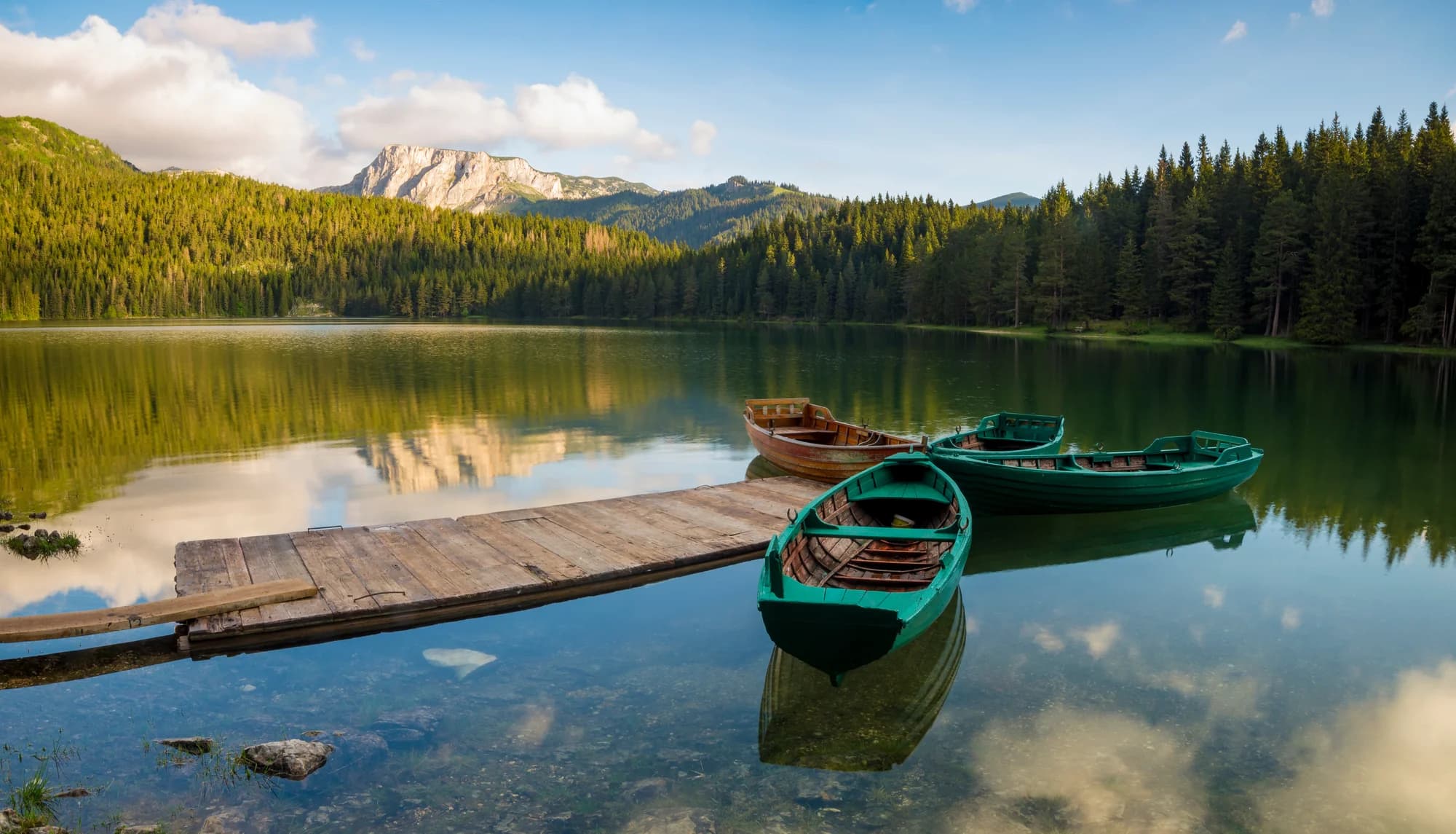
Montenegro packs an outsized range of climates into a small country: a warm Mediterranean coastline where the sea stays swimmable into October, and an alpine north where snow lingers past May. Knowing what each month brings — air and sea temperatures, rainfall, and mountain snow — is the difference between a perfect beach week and a washed-out one. This month-by-month guide breaks down the whole year so you can match your trip to whatever you came for, whether that's swimming, hiking, skiing, or simply dodging the crowds.
Winter (December – February): mild coast, deep mountain snow
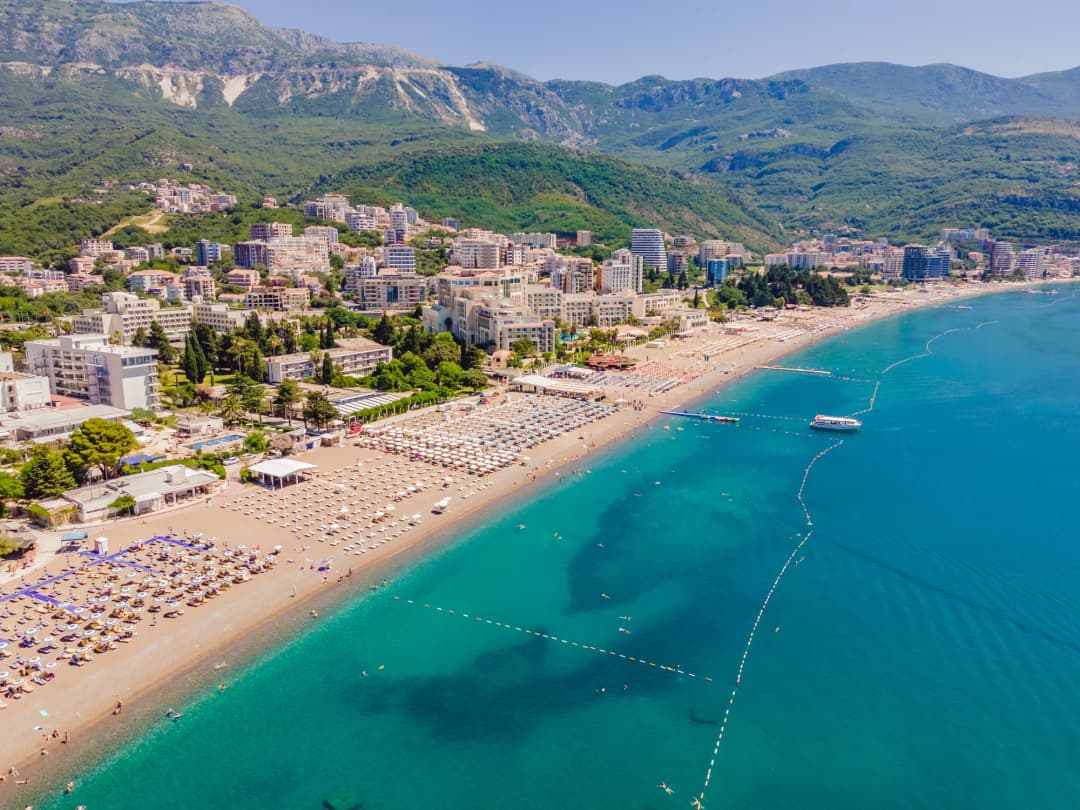
Winter splits Montenegro in two. On the coast the climate stays mild and Mediterranean: in Budva the coldest month, January, averages around 9.4°C, and inland Kotor sits a touch cooler near 7.5°C. The sea holds at roughly 14°C from January through March — too cold for most swimmers, but the seafront towns stay walkable and calm.
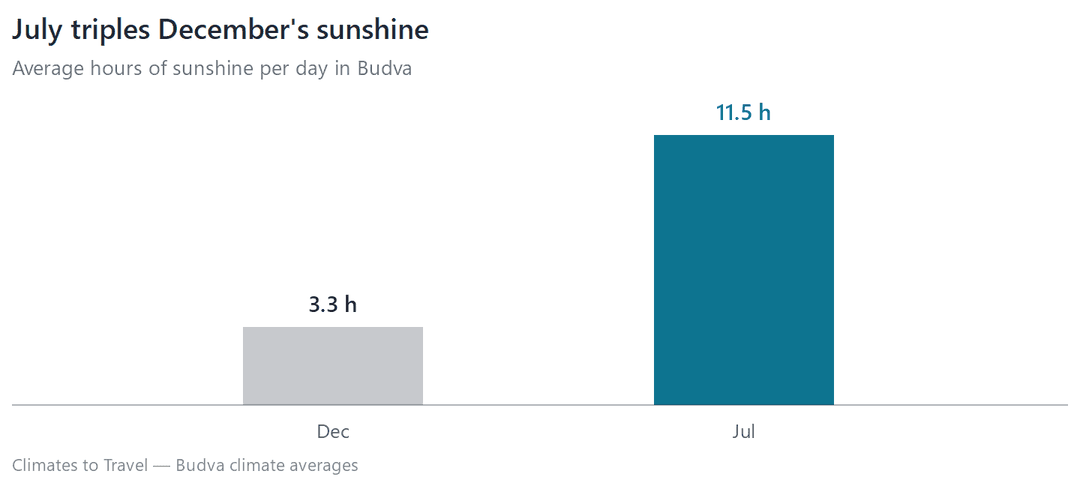
The catch is rain. The coast gets a genuinely wet winter — the Orjen karst directly behind the Bay of Kotor holds the European rainfall record, and the mountain village of Crkvice above it averages around 4,600 mm of precipitation a year, roughly five times London's total; December is dark, averaging just 3.3 hours of sunshine a day. Pack layers and a good rain jacket rather than shorts.
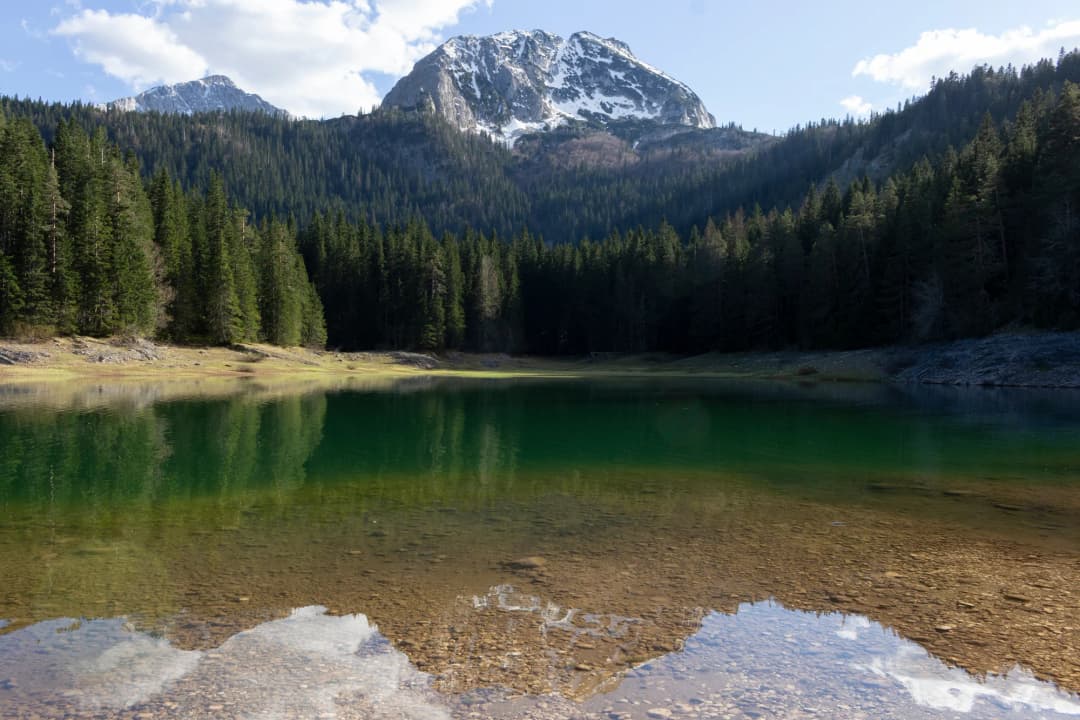
Head north and it is a different world. Žabljak, the highest town in the Balkans at 1,456 m and the gateway to Durmitor National Park, has a harsh alpine winter where cold snaps can drop to −20°C or below. Snow depth in town typically reaches around 1.5 m, and the best powder falls in January and February. The Savin Kuk ski center above Žabljak is the main draw, with higher runs holding a skiable cover for up to 150 days a year. If skiing is your goal, this is the window.
Spring (March – May): the shoulder-season sweet spot
Spring is when Montenegro comes back to life, and late spring is arguably the best all-round time to visit. March is still cool and damp on the coast, with the sea lingering near 14°C. By April the towns warm up, wildflowers appear, and the summer crowds have not yet arrived. Prices are lower and the historic centres of Kotor and Budva feel unhurried.
May is the standout month. Coastal daytime temperatures climb into the low-to-mid 20s°C, the rain eases off, and hiking trails around the bay and lower mountains open up in ideal conditions — warm enough to be comfortable, cool enough to climb. The sea is still on the cool side (mid to high teens), so serious swimming waits a little longer, but sunbathing and coastal walks are excellent.
In the north, spring means a long tail of skiing. The Durmitor ski season is one of the longest in the region, running from roughly November into May, and in some years snow patches survive into June at altitude. Lower Durmitor trails, by contrast, only become reliably snow-free for hiking from late spring onward — plan mountain hikes for June at the earliest.
Summer (June – August): peak beach season
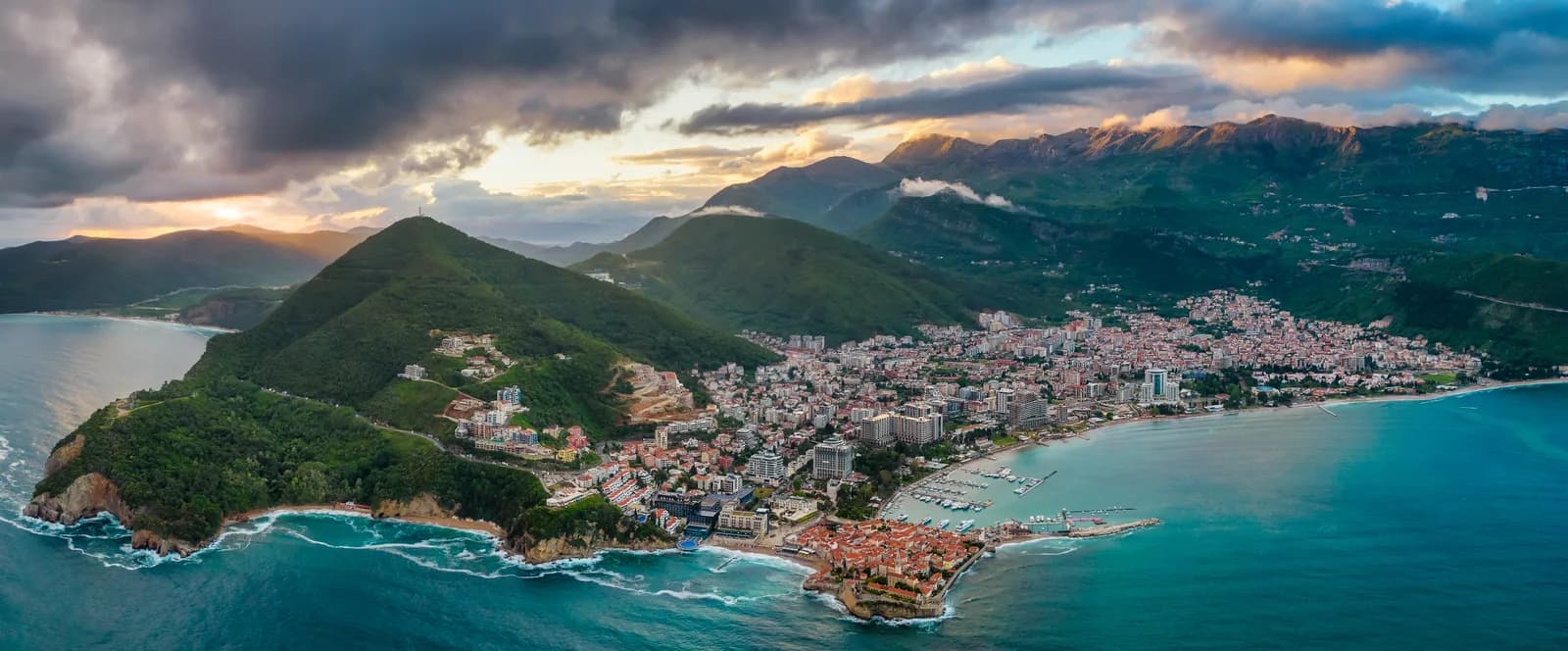
Summer is hot, sunny, and reliably dry on the coast — prime beach weather and, unsurprisingly, peak season for crowds and prices. July is both the driest and sunniest month of the year in Budva, averaging around 51 mm of rain and up to 11.5 hours of sunshine a day. Daytime highs on the coast regularly reach around 30°C.
August is the warmest month overall. Budva averages about 25.7°C, and the sea peaks now: roughly 25°C along the open Budva beaches and even warmer inside the sheltered Bay of Kotor, where water can reach 25–26°C. This is the time for swimming, island-hopping, and long days on the sand — just expect the beaches and old towns to be at their busiest.
June is the gentler edge of summer: warm and largely dry, with the sea already comfortable for swimming (low 20s°C) and slightly thinner crowds than the July–August peak. It is also when the high-mountain hiking season in Durmitor finally opens, with alpine days that are pleasantly cool compared to the sweltering coast — making June a rare month when you can genuinely do both beach and mountains well.
Autumn (September – November): warm sea, then the wet turn
September is the other great shoulder month, and many regulars consider it the best of all. The summer heat softens, the coast stays warm and sunny, and — crucially — the sea is still holding much of its August warmth, sitting comfortably in the low-to-mid 20s°C well into the month. Crowds thin out noticeably once the school holidays end, so you get near-summer swimming with far more breathing room. It is an ideal time for combining beach days with sightseeing in Kotor and Budva.
The warm September sea is simple physics rather than luck: water absorbs and releases heat far more slowly than air, so the Adriatic reaches its annual peak in early-to-mid August — weeks after the longest days — and then cools only gradually. That thermal lag is why the sea off Budva is typically as warm in late September as it is in late June, even as the beach bars begin packing away their loungers.
October remains pleasant and mild, with the sea slowly cooling but often still swimmable early in the month, and it is a lovely time for coastal hiking as temperatures drop back into the comfortable low 20s°C. It is also when autumn rains begin to build.
Two named winds run this coast, and learning them explains most of the forecast. The bura is a cold, dry northeasterly that spills off the karst ridges in sudden gusts, most often in winter, and typically scours the sky clear behind it. Its opposite number, the jugo — the Adriatic's sirocco — is a warm, humid southeasterly that stacks up cloud for days at a time; when the jugo settles in during autumn, it delivers the drenching rains that make November the coast's wettest month.
November is the turning point. It is the wettest month of the year on the coast, with Budva averaging as much as 300+ mm of rain across roughly two weeks of the month. Temperatures are still mild, but this is a month for atmospheric old-town wandering under an umbrella rather than beach time. In the north, the first snows arrive and the ski season begins to spin up again, closing the annual loop.
| Month | Day / night | Sea | Rain days |
|---|---|---|---|
| January | 12° / 5° | 14° | 11 |
| February | 13° / 5° | 13° | 10 |
| March | 15° / 7° | 14° | 10 |
| April | 18° / 10° | 15° | 10 |
| May | 22° / 14° | 18° | 8 |
| June | 27° / 18° | 22° | 5 |
| July | 30° / 20° | 24° | 3 |
| August | 30° / 20° | 25° | 3 |
| September | 27° / 17° | 23° | 6 |
| October | 22° / 13° | 20° | 9 |
| November | 17° / 9° | 18° | 12 |
| December | 13° / 6° | 15° | 12 |
Best time for… a quick summary
- Beaches and swimming: July and August for the warmest sea (up to ~25°C) and guaranteed sun; June and September for warm water with fewer crowds.
- Hiking: May for the coast and lower trails; June through September for high Durmitor routes once the snow clears.
- Skiing: January and February for the best powder at Savin Kuk, within a long December–May Durmitor season.
- Fewer crowds and better value: April, early June, and October.
- Shoulder-season sweet spots: May (warming, dry, green) and September (warm sea, calmer towns) — the two best all-round months to visit.
Whatever month you choose, Montenegro rewards a little planning: pair the warm coast with the alpine north and you can chase two seasons at once. Map out your route and match it to the weather with our trip planner, or dig deeper into timing with our guide to the best time to visit Montenegro in 2026.