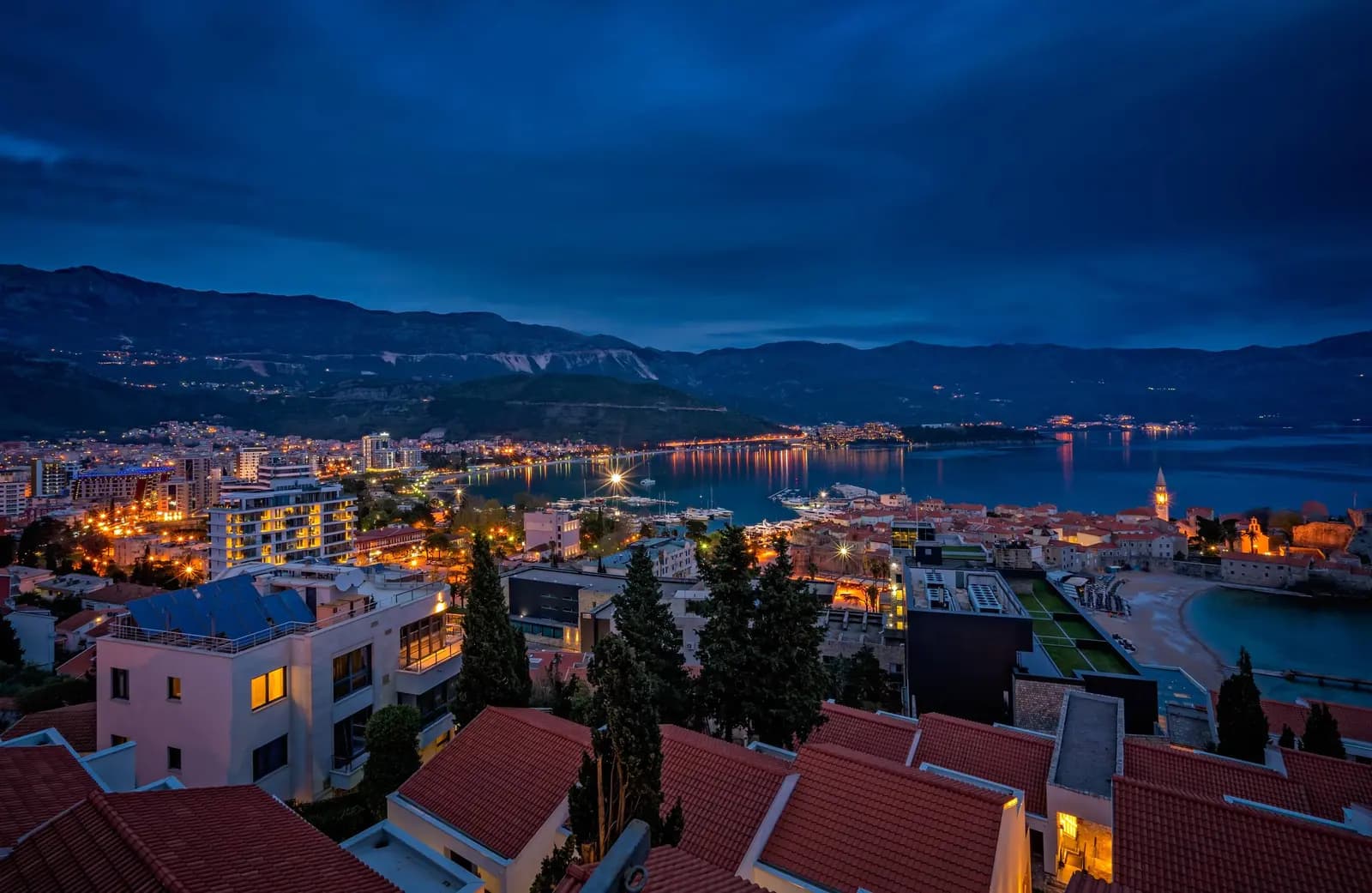
Budva, in addition to many cultural and historical sights, is also very famous for its extremely fun nightlife. For roughly ten weeks a year the town runs on a second clock: dinner around nine, the promenade filling up at eleven, and the last terraces still serving when the fishing boats head out.
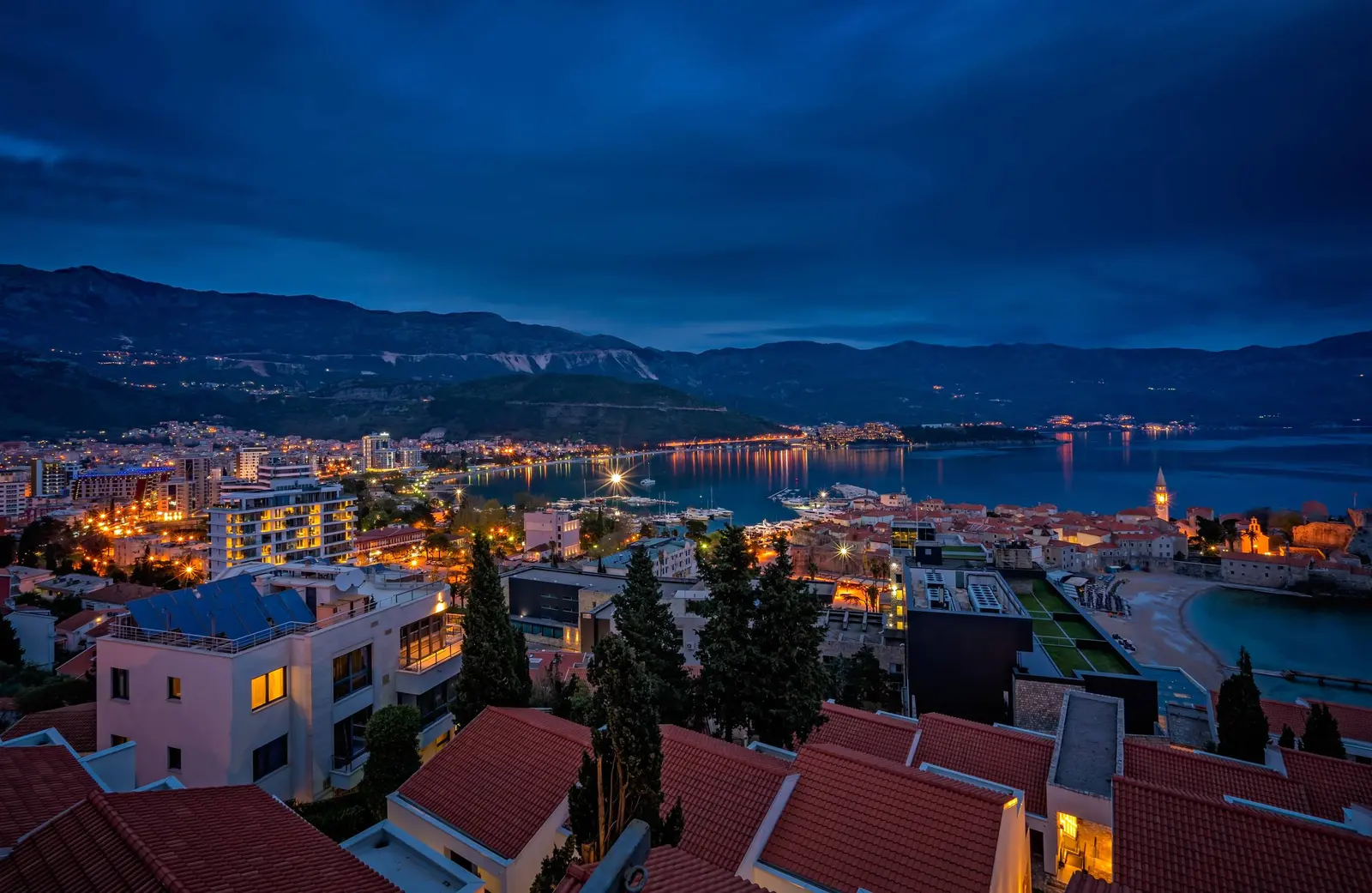
Why Budva ended up as the coast's late-night capital
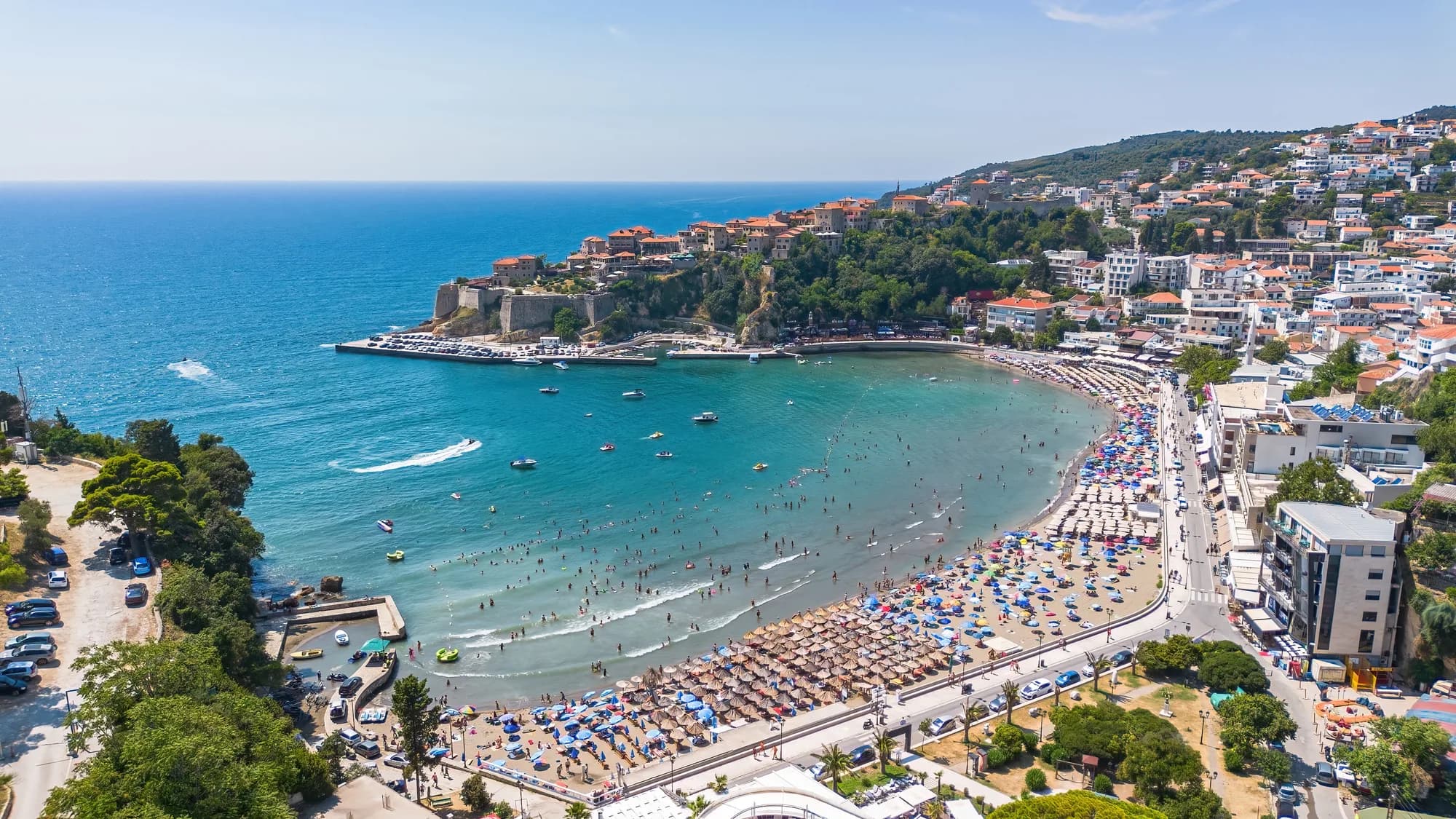
Two things made it happen: geography and density. Budva sits on a small headland in the middle of the Montenegrin coast, with a walled medieval town at one end and several kilometres of beach curving away to the north. Almost everything is within a fifteen-minute walk, so a night out here needs neither a car nor a plan.
Around that compact core sits the largest concentration of hotels, apartments and campsites in the country. In August it fills with visitors from Serbia, Bosnia and Herzegovina, Russia, Ukraine, Germany and much of the wider region, along with Montenegrins from the inland towns who treat the Budva riviera as their own summer. Tivat airport is about twenty kilometres away and Podgorica roughly sixty-five, which keeps arrivals short and late.
The waterfront, where the evening actually starts
The city abounds with beautiful terraces and coffee bars, which are full of tourists in the summer evenings. The rhythm is Mediterranean rather than frantic. People eat late, then move outside for coffee, rakija or a long cocktail and stay put for hours. The promenade behind Slovenska plaža is the main artery, and the stretch between the beach and the Old Town walls is where the crowd thickens after midnight.
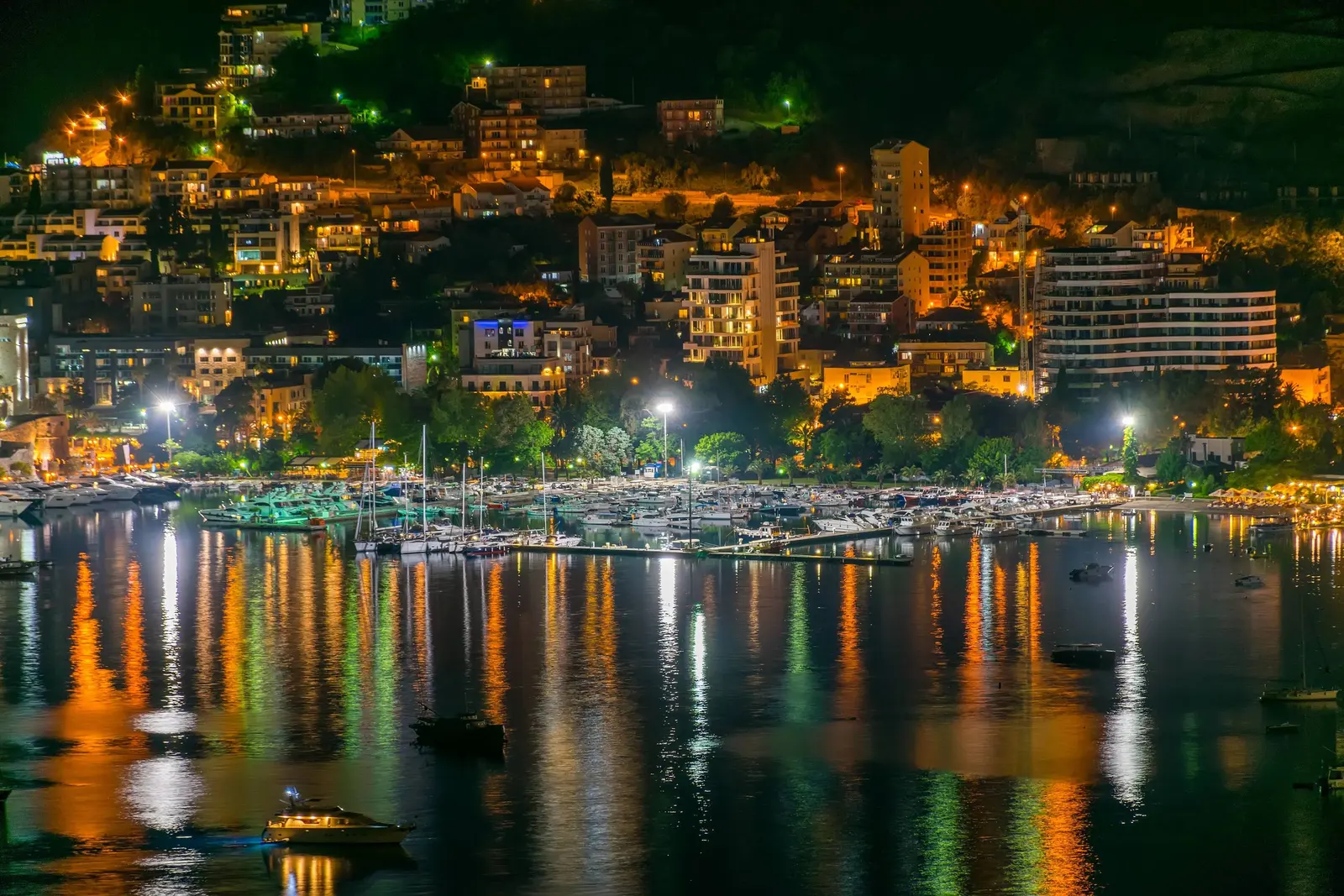
At different locations, along the entire Budva waterfront, you can enjoy different music - from rock, dance and techno, through Cuban music and the latest world hits, to local music from Montenegro, Serbia or Croatia. Walking the strip end to end is the standard way to choose a spot: here you hear a place before you see it.
Inside the Old Town walls
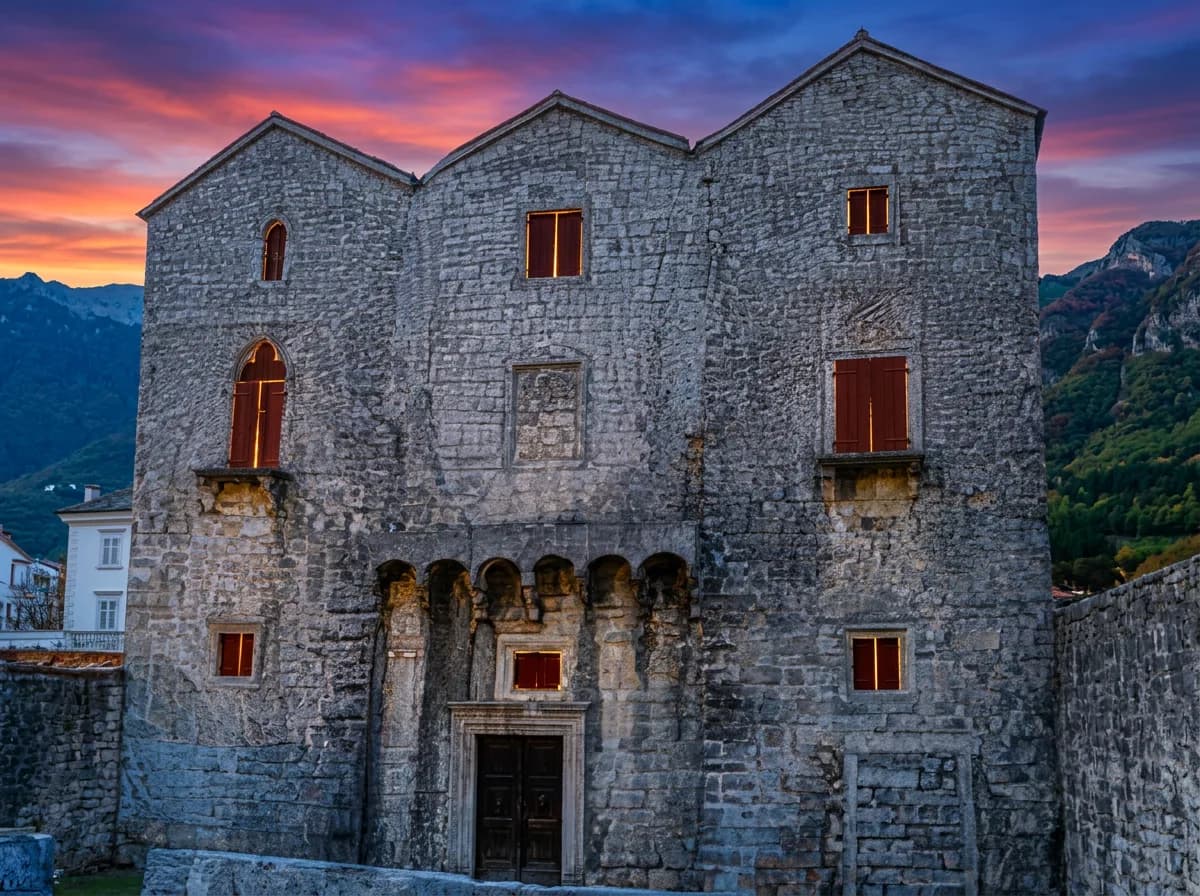
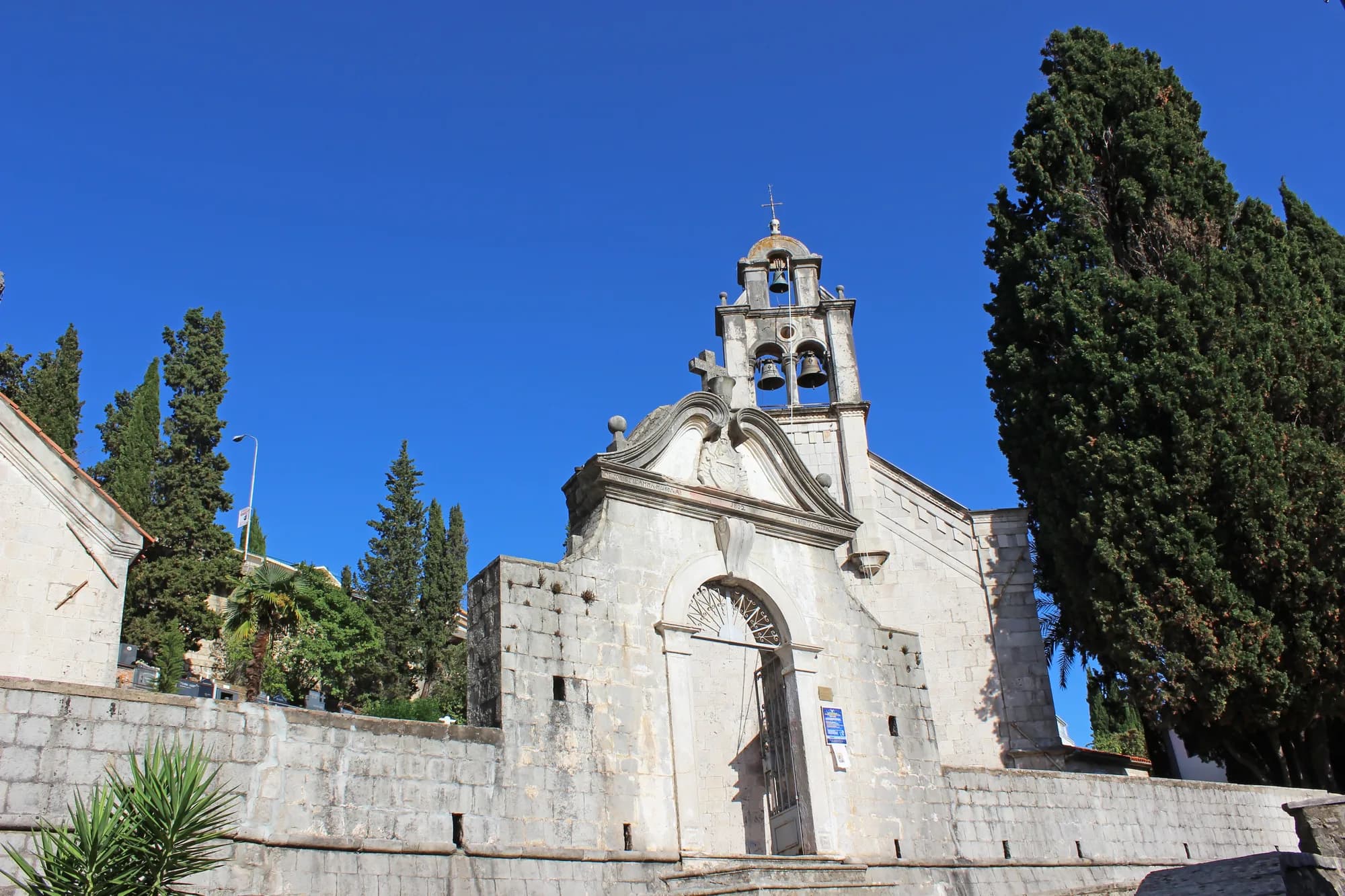
Budva's Stari Grad plays in a different register. The lanes are narrow, the stone holds the day's heat, and the bars tucked into the squares around the churches of Sveti Ivan and Santa Maria in Punta are built for conversation rather than volume. Much of what you walk through was carefully rebuilt after the 1979 earthquake, which damaged a great deal of the coast. Climb to the citadel terrace at dusk, before the doors open elsewhere, for the view over the rooftops to the island of Sveti Nikola.
Open air, big stages and the island
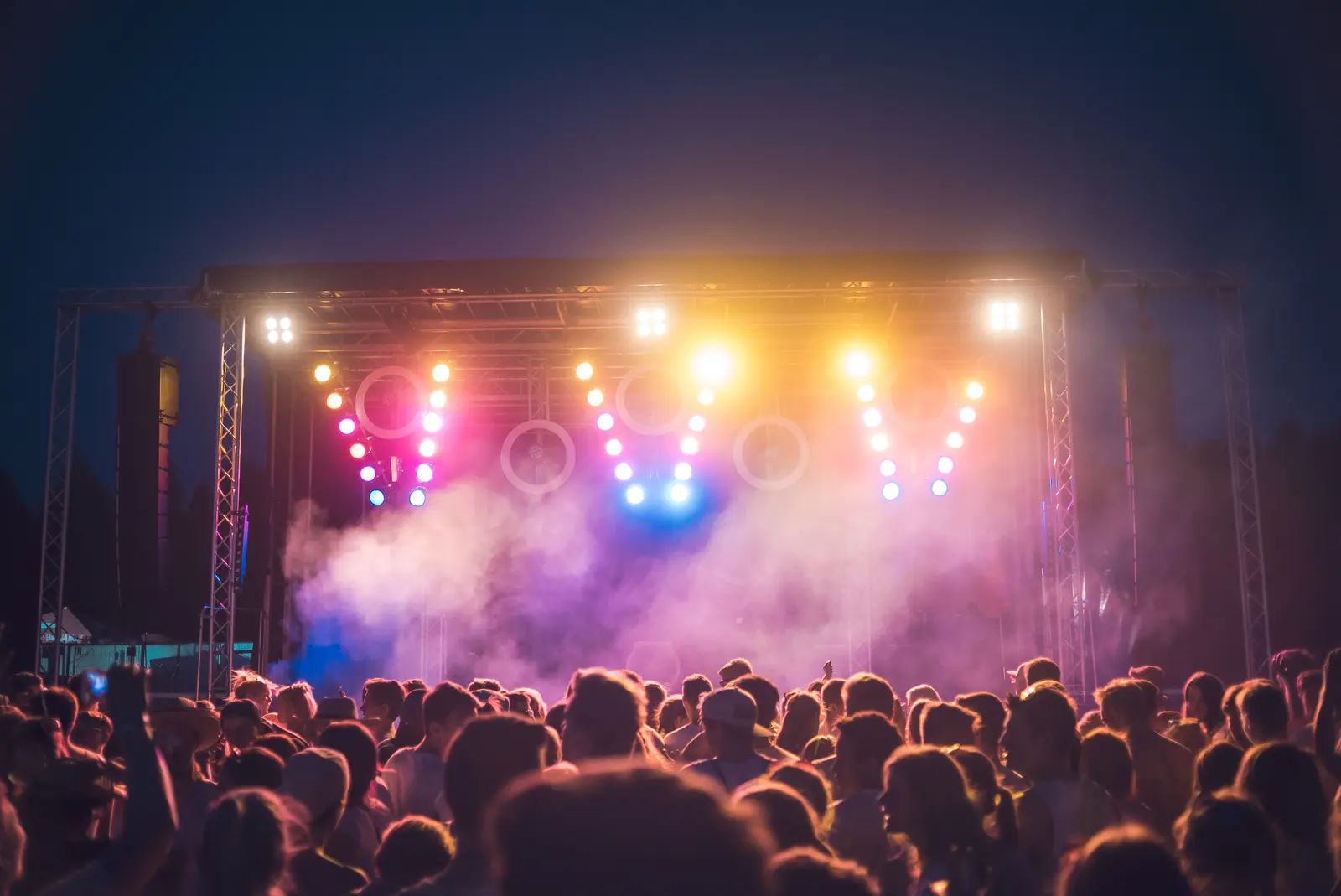
Budva's summer has always leaned on open-air venues. Jaz, the wide beach and meadow just west of town, has hosted stadium-scale concerts - the Rolling Stones played there in 2007 and Madonna in 2008 - and it still works as the region's festival ground. Above the town, the hillside venues swap indoor rooms for terraces and sea air, which is why the coast's biggest nights happen outdoors and end at sunrise rather than at closing time. Sveti Nikola, the island a short taxi-boat ride offshore that locals call Hawaii, is the daytime counterpart: swim, eat, sleep it off, repeat.
Practical notes for a night out
- Season: the town wakes properly in late June and winds down in the first half of September. Late July and August are the peak; June and early September give you the same terraces at half the volume.
- Getting around: the centre, the beach and the Old Town are walkable. Taxis are the sensible way back to Bečići, Rafailovići or Pržno, and they wait near the marina and the bus station.
- Where to sleep: a room directly above the promenade is convenient and loud. If you want to sleep before three, book a street or two back, or stay in nearby Bečići, Rafailovići, Pržno or Sveti Stefan and treat Budva as a night out rather than a base.
- Quieter evenings: the same riviera runs south to Petrovac and the villages of the Paštrovići coast, where the terraces stay open without the bass.
More on the town, its beaches and its history in our Budva city guide. If you are flying in, the Montenegro airport guide covers Tivat and Podgorica transfers.