Who buys property in Montenegro? The most defensible answer is narrower than the sales narrative. Official data show that non-resident money is important and that, in 2023, real-estate investment came to the greatest extent from citizens of Serbia, followed by Russia, Germany and Türkiye, with a significant contribution from Ukraine. They do not show that a named nationality bought a certain share of homes in 2026, nor do they reveal each buyer's motive.
This guide separates what Montenegro's institutions actually measure from what agents infer. It then turns the evidence into a practical route through price comparisons, ownership limits, residence rules, taxes and title checks. It is general information, not legal, tax or investment advice; use an independent Montenegro lawyer and tax adviser for a particular property and buyer.
| Question | Best official evidence | Limit |
|---|---|---|
| Which nationalities featured most? | Central Bank 2023 real-estate investment narrative: Serbia, then Russia, Germany and Türkiye; Ukraine significant | Investment value, not deed count or a 2026 ranking |
| Is foreign capital still material? | Real estate was 51.10% of total FDI inflow in 2024; €308.86m in January–August 2025 | FDI flow, not buyer headcount or resale volume |
| What are current prices? | MONSTAT Q2 2026 first-sale new-dwelling averages | Excludes existing homes, land and business property |
| Does ownership produce residence? | Property can be a basis for temporary residence, subject to statutory conditions | Not automatic; not citizenship; this residence time does not count toward permanent residence |
| Country | CBCG ordering |
|---|---|
| Serbia | greatest extent |
| Russia | followed by |
| Germany | followed by |
| Türkiye | followed by |
| Ukraine* | significant share |
| Not a transaction ranking | No buyer counts, location split, purpose or 2026 nationality shares |
| Note | "Followed by" reproduces CBCG's ordering; the report passage does not provide percentages for these countries |
Source: cbcg.me
Who is buying? The honest 2026 answer
The Central Bank of Montenegro's 2023 Annual Report records €463 million of real-estate FDI, 54% of total FDI inflow. It says the investment came to the greatest extent from citizens of Serbia, followed by Russia, Germany and Türkiye; citizens of Ukraine also had a significant share.
That is the strongest reviewed official nationality evidence, but it answers “whose money?” for 2023—not “how many people signed deeds?” in 2026. A large purchase and several small purchases do not have equal weight in an investment-value series. Companies can also invest, while a buyer's passport says nothing reliable about whether the home is for relocation, holidays, rent or long-term capital preservation.
No reviewed official source supports the recurring claim that foreigners were two-thirds of all 2024 buyers. Nor does it establish neat Gulf, Scandinavian or British “personas” assigned to particular towns. Those claims have therefore been removed. A buyer researching the wider capital story can use our separately sourced guide to tourism and investment projects, but project spending is not a proxy for homebuyer nationality.
Foreign money remains large—but the windows differ
Later Central Bank publications show continued material real-estate inflows. The 2024 Annual Report says the category declined by 1.72% from 2023 yet still represented 51.10% of total FDI inflow. The October 2025 bulletin records €308.86 million for January–August 2025, up 8.40% year on year. Its March 2026 bulletin then records €26.88 million in January 2026—55.76% of that month's total FDI, but 10.56% below January 2025.
These periods cannot be placed on one growth line. One is a year, one eight months, and one a single month. January's fall also warns against turning a partial snapshot into a market forecast. The proper inference is modest: non-resident real-estate money remained a major component of recorded FDI, while the flow could move in either direction.
| Window | Figure | Change / basis |
|---|---|---|
| Full year 2024 | 51.10% | of total FDI inflow · real-estate value |
| Jan–Aug 2025 | €308.86m | +8.40% year on year · eight-month flow |
| January 2026 | €26.88m | −10.56% year on year · one-month flow |
| Caveat | Different windows measure capital flows | Not deeds, buyer counts, rental returns or future appreciation |
Source: cbcg.me
What Q2 2026 prices really measure
What the sources say
MONSTAT's Q2 2026 release reports an average of €2,557 per square metre for first-sale new residential dwellings nationwide. The coastal-region average was €2,838, Podgorica €2,510, the northern region €2,145 and the central region €2,131.
The caveat is as important as the figures. This series covers newly built dwellings sold for the first time. It excludes existing homes, land and business premises, and MONSTAT says it should not be read as a general supply-and-demand price index. A Perast stone house, a finished marina residence and a northern renovation are not valued by multiplying their floor area by the regional average.
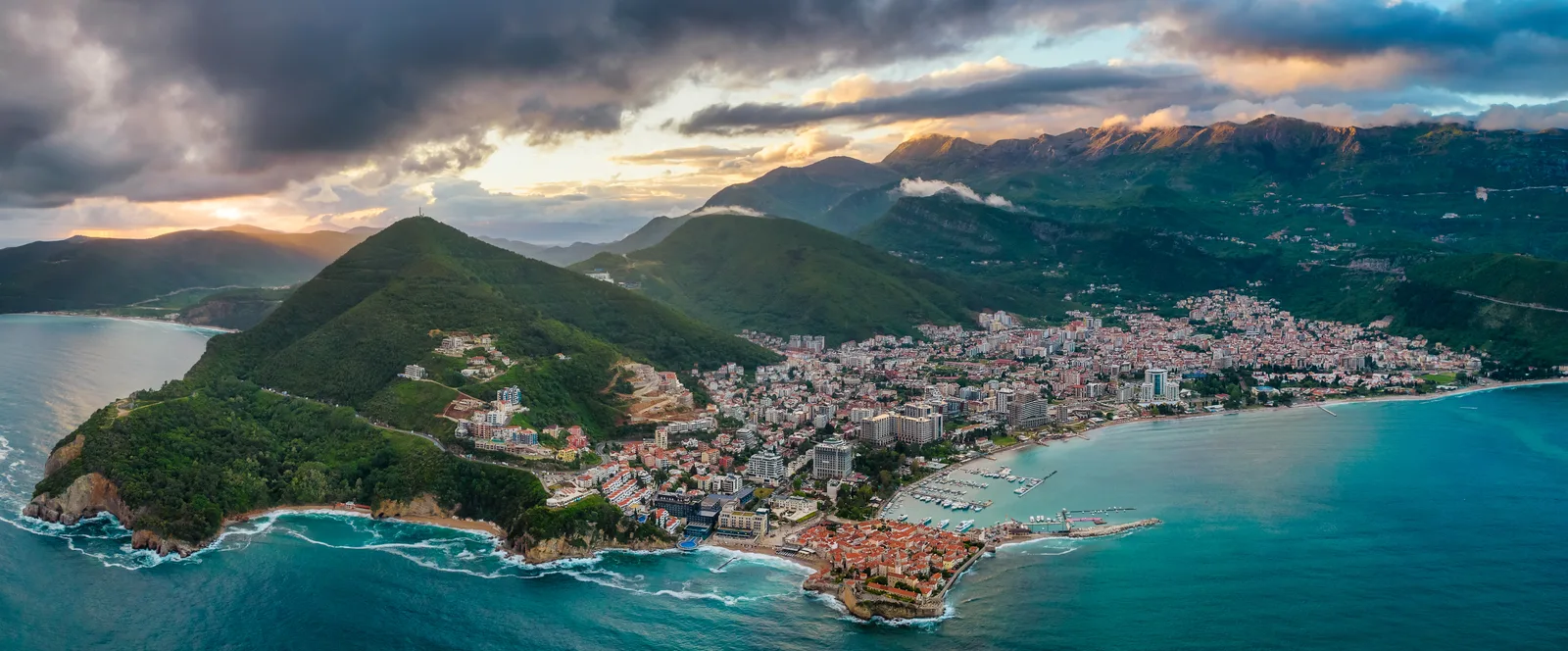
Geography still matters, but compare like with like: completed versus off-plan, registered versus unregistered area, private parking versus none, managed resort versus ordinary condominium, and usable year-round access versus a steep seasonal lane. For lifestyle context, compare the country with Croatia through our Montenegro–Croatia guide; do not import a Croatian appreciation percentage into a Montenegro valuation.
Can a foreigner buy property in Montenegro?
The Montenegro Investment Agency's current tourism-sector guide says foreign individuals can generally acquire real estate under the Law on Ownership Rights, subject to restrictions. Agricultural land is one key restricted category, with a stated exception for land below 5,000 square metres used as residential property; the agency also describes acquisition through a Montenegro company. EU nationals receive national treatment under the Stabilisation and Association Agreement.
That summary is a starting point, not clearance for a parcel. Classification, parcel size, structures on the land and the buyer's legal form can change the analysis. Before paying a reservation deposit, have independent counsel identify exactly what the cadastral sheet says is being sold and confirm that the buyer is legally eligible to acquire it. Do not let “foreigners can buy” erase the exceptions.
Property and residence are separate decisions
Montenegro's government lists ownership of real estate as one possible basis for temporary residence. The applicant must still satisfy conditions involving means of support, accommodation, health insurance, a valid travel document, criminal-record and security checks. The government says applications are made in person and that qualifying permits are issued for one year. Ownership does not itself create citizenship.
Rules changed in 2026, and the difference between proposal and law matters. A November 2025 government announcement proposed a €200,000 minimum, but that is not the enacted figure. The current consolidated Article 56 requires qualifying applicants to provide a local authority's real-estate transfer-tax assessment whose taxable base is at least €150,000. It exempts EU citizens and their family members, plus citizens of Iceland, Liechtenstein, Norway and Switzerland, from this value-evidence requirement. The Official Gazette records the amending law in issue 3/2026, published 9 January and effective 17 January 2026. The government's general English explainer still omits these details, so have counsel confirm the current consolidated text and Ministry of Interior practice before using a purchase in a residence plan.
There is a second, easily missed limit: the government's permanent-residence explainer says time spent under temporary residence based on owned real estate does not count toward the normal five-year permanent-residence period. Buying a home, qualifying for renewable temporary residence and progressing to permanent residence are therefore three different propositions.
| Step | What it involves |
|---|---|
| 1 · Property | Verify title + eligibility |
| 2 · Application | €150k assessed base* |
| 3 · Decision | One-year temporary permit |
| Limits | Not automatic · not citizenship · not a guaranteed renewal |
| Permanent-residence clock | Government guidance excludes time spent on property-based temporary residence |
| *Exemptions | EU, family member, Iceland, Liechtenstein, Norway, Switzerland |
Source: gov.me, sluzbenilist.me, invero.me
Budget taxes before comparing offers
For transactions within the real-estate transfer-tax regime, the Tax Administration's rates effective from 1 January 2024 are progressive:
| Taxable value band | Statutory calculation | Illustrative note |
|---|---|---|
| Up to €150,000 | 3% of taxable value | Confirm the assessed tax base; do not assume asking price controls |
| Above €150,000.01 to €500,000 | €4,500 + 5% of value above €150,000.01 | A €300,000 taxable resale value would produce €12,000 under the formula |
| Above €500,000.01 | €22,000 + 6% of value above €500,000.01 | Obtain transaction-specific tax advice before signing |
Amendments published in Official Gazette 33/2026 on 10 March 2026 also removed transfers of construction land subject to VAT from the transfer-tax law's scope. The Tax Administration published its explanatory summary on 22 June. That makes the VAT-versus-transfer-tax classification especially important for a new build or development parcel. Do not add both taxes mechanically. Ask a Montenegro tax adviser to identify the seller, asset, tax base and applicable regime in writing.
Ownership brings recurring cost as well. The Tax Administration says annual property tax is generally 0.25% to 1.00% of market value. Municipal decisions and property characteristics affect the result, while insurance, common-area charges, maintenance, utilities and management sit outside that tax range. A household comparing ownership with repeated holidays can start with our Montenegro trip-cost guide, then replace every travel estimate with property-specific written quotes.
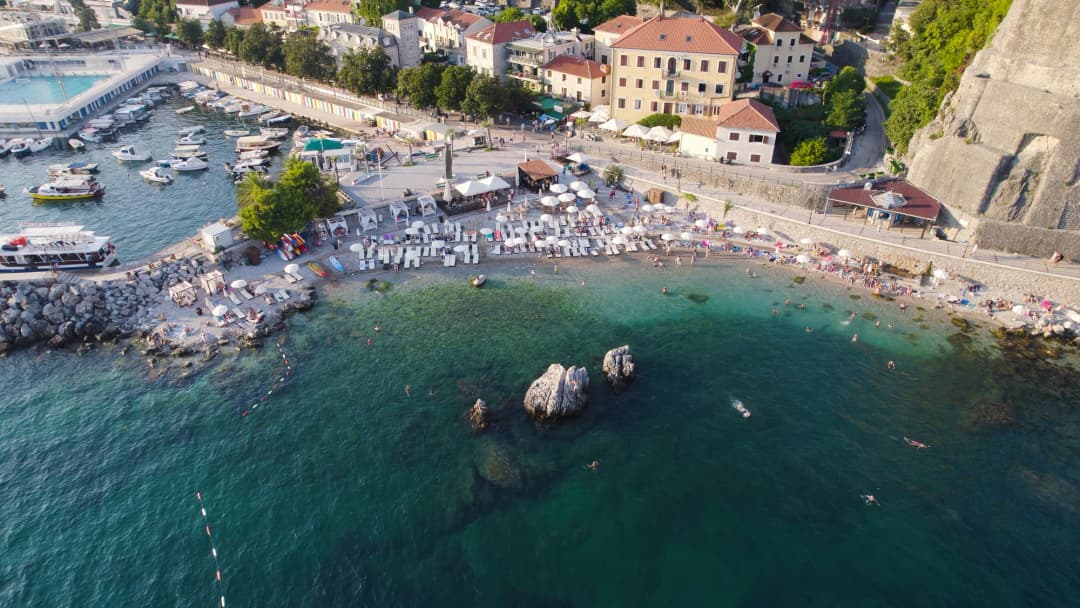
A title-first due-diligence workflow
Start with the exact cadastral municipality, parcel, building and unit—not a listing description. Montenegro's Real Estate Administration says its new 2026 service can issue legally valid electronic property and possession sheets online. Ask independent counsel to obtain a current official sheet and reconcile it with the seller's identity, contract, floor plan and what physically exists.
The sheet is evidence, not the whole investigation. Counsel should explain ownership shares, mortgages, liens, restrictions, litigation notices and any mismatch in registered area or use. Separately verify planning and building status, occupancy or use permission where applicable, legalisation exposure, access rights, utilities and common-property obligations. A surveyor or engineer may be needed where boundaries, structure or condition are uncertain.
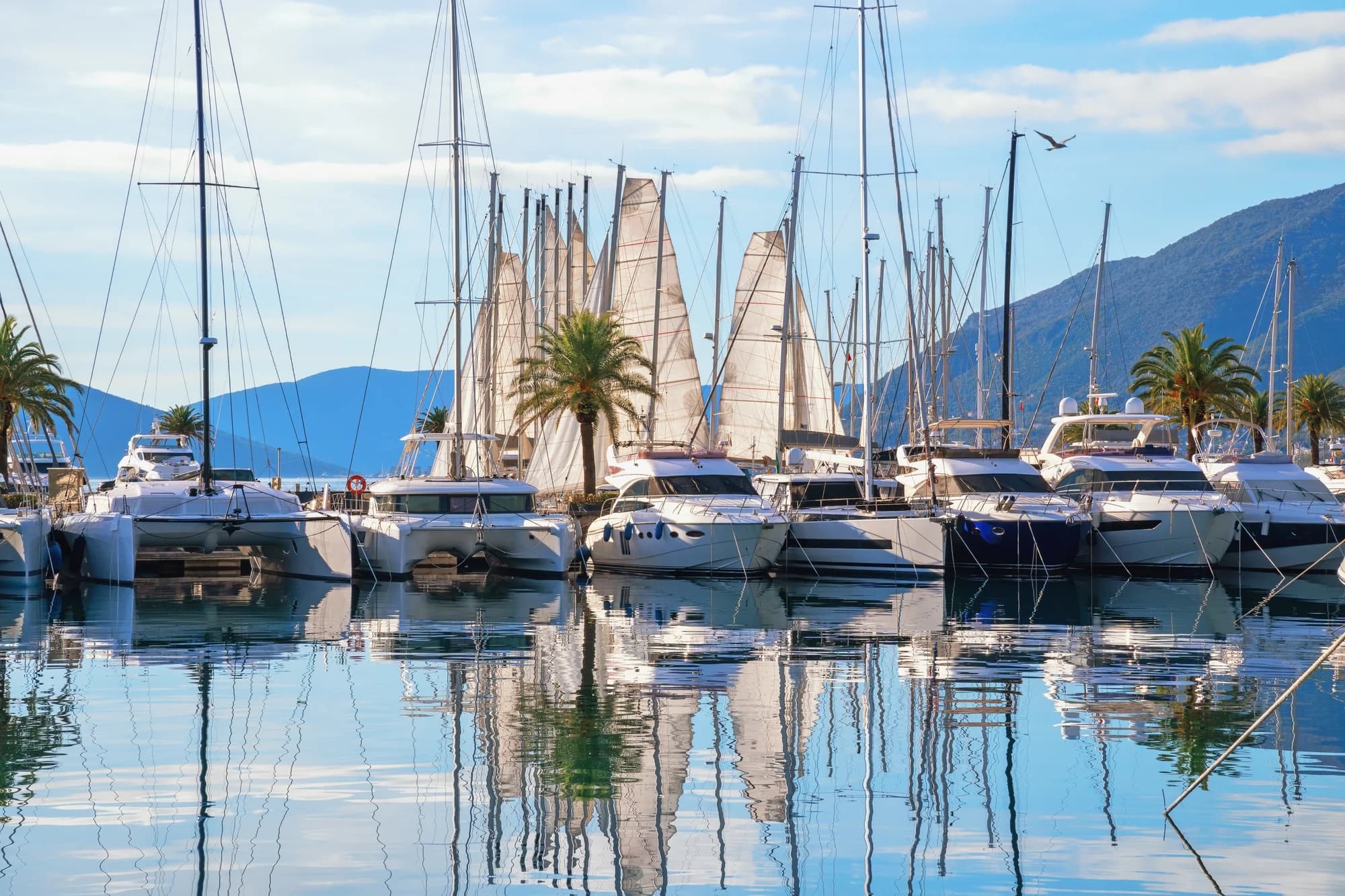
Use a notary for the notarial role, but keep your own lawyer independent from the seller, developer and broker. Route money only through documented contractual and banking steps after identity, sanctions, source-of-funds and payment instructions have been checked. A marina postcode or luxury brand—whether in Tivat or at the Portonovi development—does not replace property-level diligence.
| Gate | Check |
|---|---|
| 1 | Identify exact cadastral municipality, parcel, building and unit |
| 2 | Obtain current official property sheet; verify owner, shares and burdens |
| 3 | Reconcile register, plans, permits, physical area, access and condition |
| 4 | Confirm buyer eligibility, contract protections, tax and funding route |
| 5 | Sign, pay and register only through verified instructions |
Source: gov.me
EU accession is a scenario, not a guaranteed premium
Montenegro is an EU candidate, not a member. On 14 July 2026, the European Commission said 18 of 33 negotiating chapters had been provisionally closed and stressed that provisional agreements remain subject to the overall accession outcome. The government's ambition for membership should not be converted into a guaranteed 2028 date, a guaranteed price rise or an assumed change in ownership rules.
Model at least three cases: accession later than hoped, progress without a rapid price effect, and local property performance driven mainly by condition, access and supply. Do not repeat unsupported forecasts of 40–60% five-year growth or a 30–50% “Croatia premium.” Our EU progress explainer follows the political milestones; it is not a property forecast.
Practical buyer decision checklist
Before choosing a town, define the job of the property. A primary home needs winter access, healthcare, schools or work links. A holiday home needs realistic travel frequency, secure shutdown and maintenance. A rental asset needs lawful use, conservative occupancy, management costs and tax analysis. A speculative purchase needs a loss scenario and enough liquidity to hold through delays. If year-round access matters more than a coastal label, use the practical constraints in our north Montenegro guide as a starting checklist, then investigate the exact settlement.
- Set the all-in ceiling. Include tax, legal and notary work, registration, furnishing, defects, common charges and a contingency.
- Separate residence from investment. Confirm immigration eligibility independently; never make the property's value depend on an assumed permit outcome.
- Compare matched properties. Use the MONSTAT new-build average only as context, then compare tenure, status, condition, access and micro-location.
- Demand documents before urgency. “Another buyer is waiting” is not an answer to a title, permit or tax question.
- Stress-test income. Reduce rent and occupancy, increase maintenance and vacancy, and remove expected appreciation. If the purchase stops working, the plan was a forecast.
Frequently asked questions
What nationality buys the most property in Montenegro?
The latest reviewed official nationality statement is for 2023 real-estate investment value: Serbia to the greatest extent, followed by Russia, Germany and Türkiye, with Ukraine significant. It is not a 2026 count of deeds or individual buyers.
Do foreigners account for two-thirds of buyers?
No reviewed official source establishes that claim for 2024. Central Bank FDI data confirm substantial non-resident investment, but FDI value cannot be converted into the proportion of all property transactions.
Can any foreigner buy any property?
No. Foreign ownership is generally possible but statutory restrictions apply, notably around certain land. Eligibility depends on the asset and buyer. Independent counsel should verify the cadastral classification and current law before any deposit.
Does paying €150,000 for a property guarantee temporary residence?
No. For applicants subject to the 2026 value rule, Article 56 uses the taxable base in the local authority's real-estate transfer-tax assessment—not the contract price—and requires at least €150,000. The value-evidence requirement has nationality and family-member exemptions, other residence conditions still apply, and approval is not automatic.
Does property-based temporary residence lead to permanent residence after five years?
Government guidance says time spent under temporary residence based on owned real estate does not count toward the normal five-year permanent-residence requirement.
Will EU membership raise prices?
No price increase or accession date is guaranteed. Negotiations are active, but chapter closures are provisional until an overall agreement. Value a property on evidence that exists today and treat accession as an uncertain scenario.
What should I check first?
Identify the exact cadastral unit and obtain a current official property sheet through independent counsel. Verify ownership, burdens, area, legal and planning status, access, condition, buyer eligibility, tax and payment steps before committing funds.