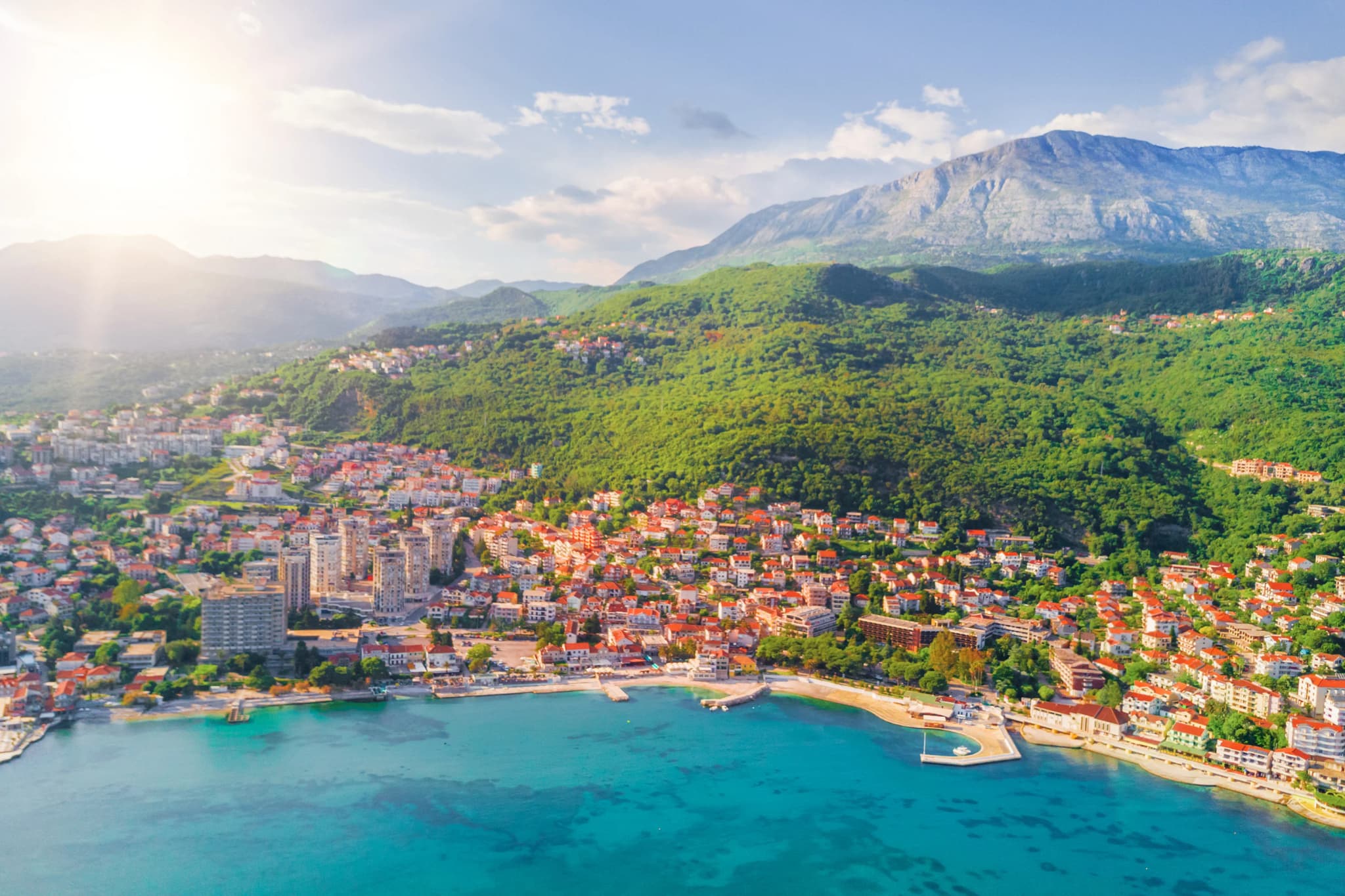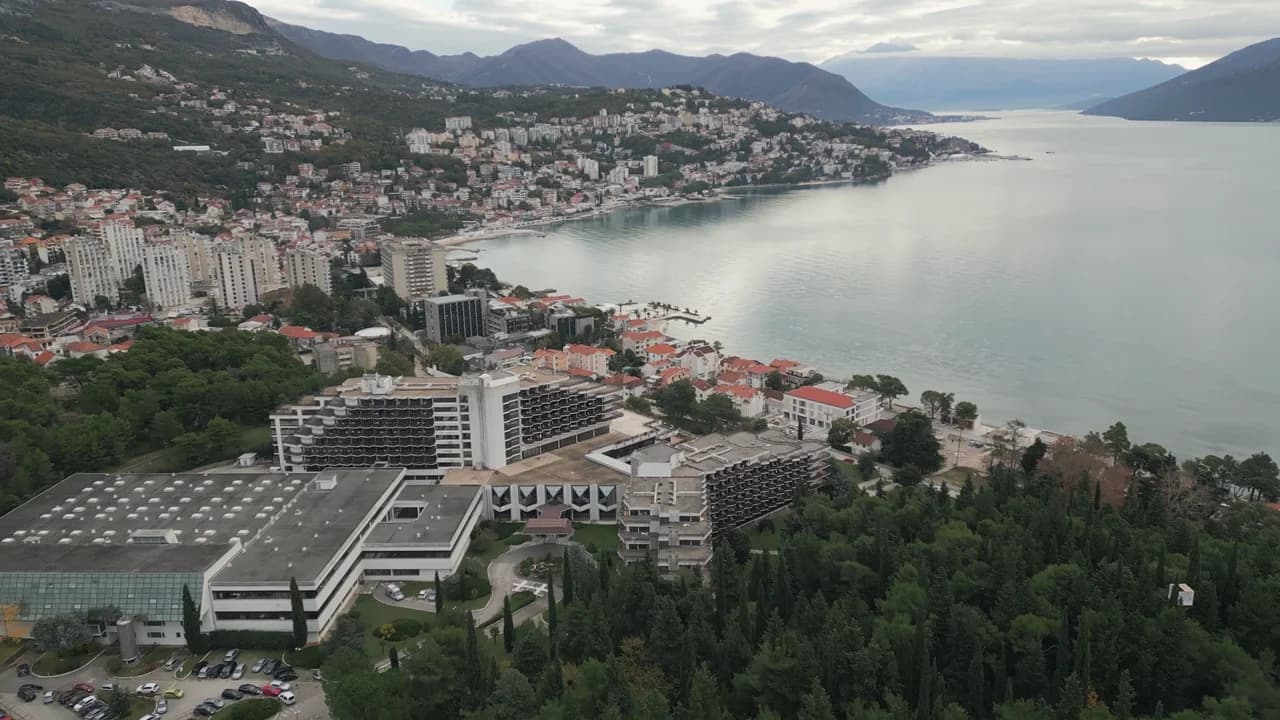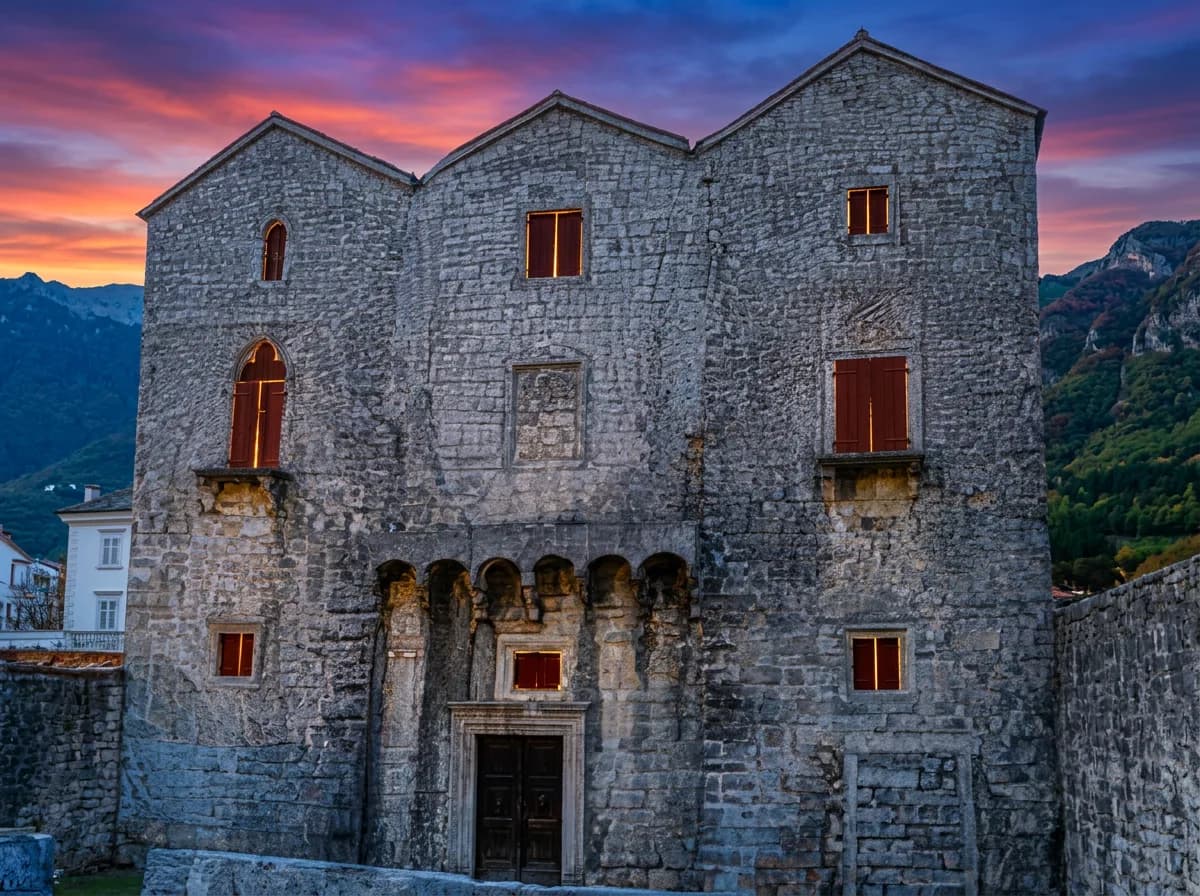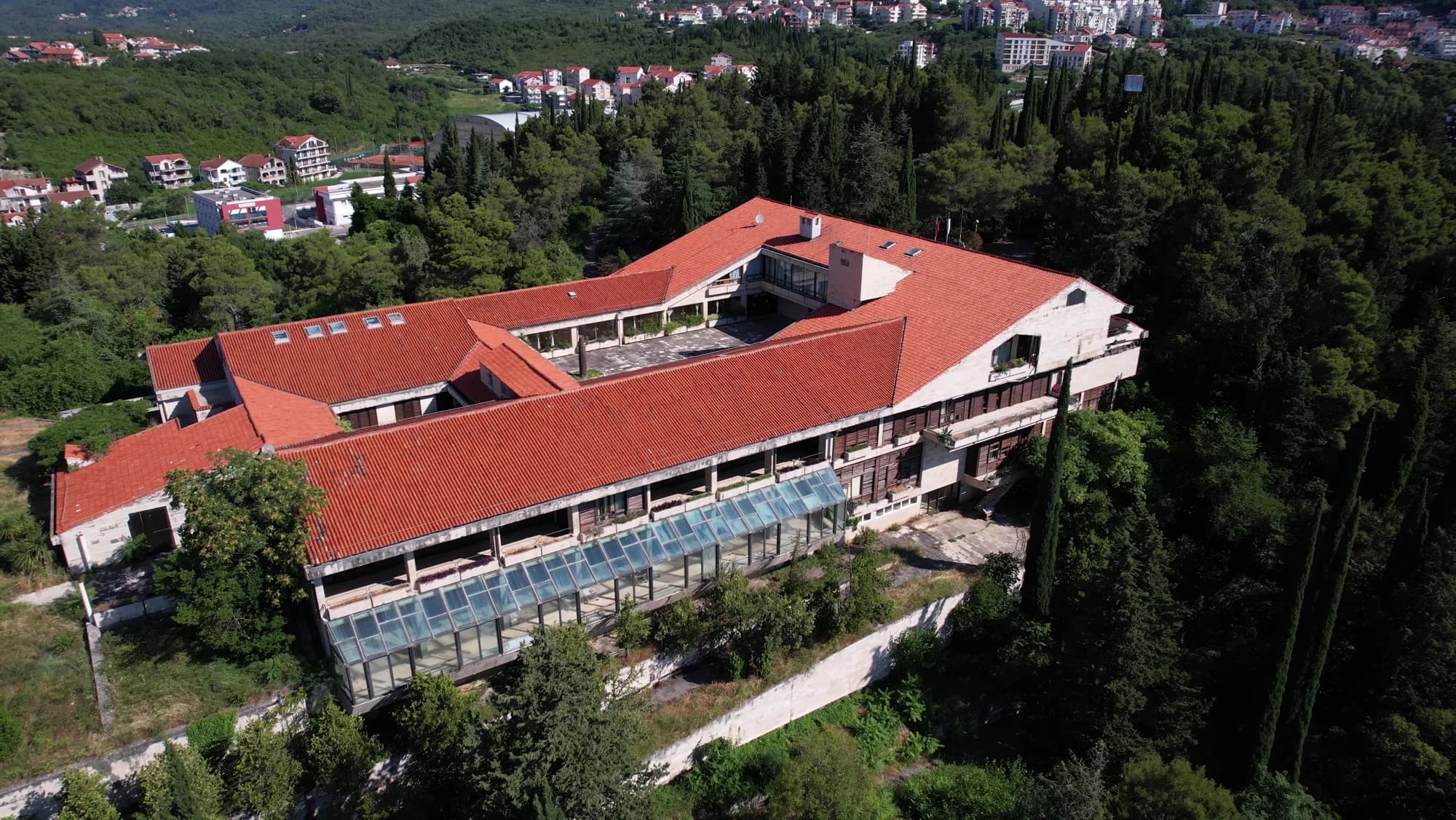
On a pine-covered rise at the very mouth of the Bay of Kotor stands one of the most intriguing buildings on the Montenegrin coast: Vila Galeb, the seaside residence built in 1976 for Yugoslav president Josip Broz Tito. Part state villa, part private clinic and part Cold War fortress, it was never simply a holiday home — Tito came to Igalo to treat his health, and the house he built reflects it, complete with its own therapy pool and a nuclear shelter buried beneath the floor. Today it survives almost untouched, a 1970s time capsule open to anyone curious enough to ring the bell at the spa next door.
A villa built for healing, not luxury
Tito first came to Igalo in 1975, seeking relief from rheumatism at the Institut "Dr Simo Milošević" — the thalassotherapy and rehabilitation institute, founded in 1949, that had already made the town famous across the Balkans. Igalo's healing reputation rests on its peloid, the mineral-rich marine mud known locally as igaljsko blato, drawn from the seabed of the bay and applied warm as wraps and baths. The treatments worked well enough that the president decided to build a permanent retreat on the spot.
What he built was less a palace than a private sanatorium. The villa was connected directly to the Institute's treatments, with its own therapy block and an indoor pool said to have a movable floor — roughly 25 by 8 metres — so it could be filled with fresh, mineral or sea water as the doctors required. The presidential apartment was famously described as spacious but "not especially luxurious." Tito stayed officially four times between 1977 and 1979, each visit lasting a month or two — and crucially, not only in summer. His first stay began on 25 January 1977, underlining that this was a year-round therapy retreat rather than a beach house.
Built in six months
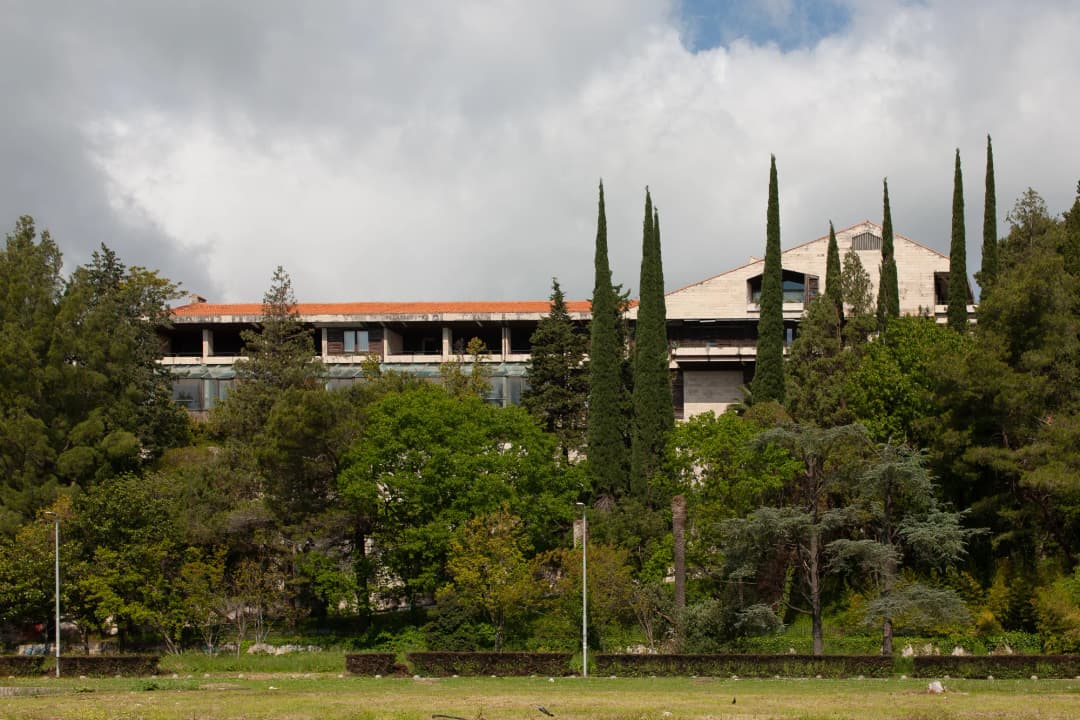
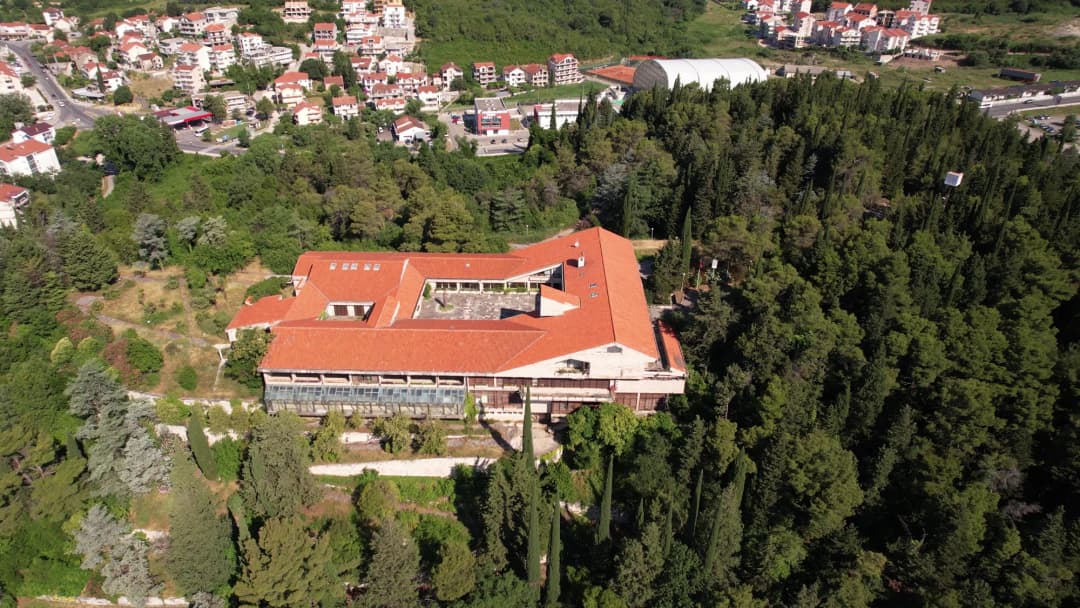
Designed by Herceg Novi architect Milorad Petijević, the villa went up in roughly six months — a remarkable pace for a four-storey, 5,500 m² building set in a 75,000 m² park of pine and palm. The style is unmistakable 1970s Yugoslav modernism: low, horizontal, turned toward the sea.
Inside, the layout reads like a state in miniature. The presidential apartment was split into a blue section for Tito and a pink section for his wife Jovanka. There was a congress hall furnished with 51 armchairs taken from the Federal Executive Council, a fireplace lounge (Tito's favourite room), a dining room with custom furniture, a library, a billiard room and a private cinema where the president screened Western films. The single most opulent detail is Tito's bathroom, clad in rare blue Brazilian marble — the often-repeated story being that a cubic metre of the stone yielded only two usable slabs.
The atomic shelter and the sentinel fish
The villa's signature feature lies on its lowest level: a fully equipped underground atomic shelter, built to hold around 36 people with its own continuous oxygen supply. It is the part of the tour visitors remember most, a concrete reminder that this was the height of the Cold War and that the man it was built for was a head of state with enemies on both sides of the Iron Curtain.
The shelter is also the source of the villa's best-loved story. According to the guides, about a week before Tito's arrival a pollution-sensitive exotic fish was placed in an aquarium wired into the water system. If the water quality dropped, the fish would die — and its death would automatically shut off the villa's water supply and trigger an alarm. Whether the engineering worked exactly as described or not, the "sentinel fish" has become the tale every visitor leaves telling.

Prince Charles, and the guests who weren't
As a state residence, Vila Galeb received its share of distinguished visitors. The best-documented is Prince Charles — now King Charles III — who visited in 1978. Other names linked to the villa, reported but less firmly documented, include West German chancellor Helmut Schmidt, Sri Lankan prime minister Sirimavo Bandaranaike and Soviet cosmonaut Alexei Leonov.
A word of caution about the grander legends: many of the "guests of Galeb" stories actually belong to Tito's yacht, also named Galeb, on which dozens of world leaders sailed. Queen Elizabeth II, sometimes mentioned, did visit Yugoslavia — but in Belgrade in 1972, four years before the villa existed. Treat the longer royal guest lists with a pinch of salt.
The ceasefire that collapsed in a day
The villa's most consequential moment came after Tito's death, during the wars that tore Yugoslavia apart. On 17 September 1991, European Community mediator Lord Carrington brought Serbian president Slobodan Milošević, Croatian president Franjo Tuđman and Yugoslav defence minister General Veljko Kadijević together at Igalo — by regional accounts, in Vila Galeb's fireplace hall — where they signed a full ceasefire. The two presidents reportedly glared at each other and refused to exchange a word. The truce was meaningless almost immediately: Zagreb was shelled the very next day.
It is worth separating this from a different, more notorious meeting it is often confused with. The secret Milošević–Tuđman talks at which the two allegedly discussed carving up Bosnia took place six months earlier and 600 km away, at the Karađorđevo hunting lodge in March 1991 — not in Igalo. The Vila Galeb summit was a failed peace conference, not a back-room deal.
A 1970s time capsule
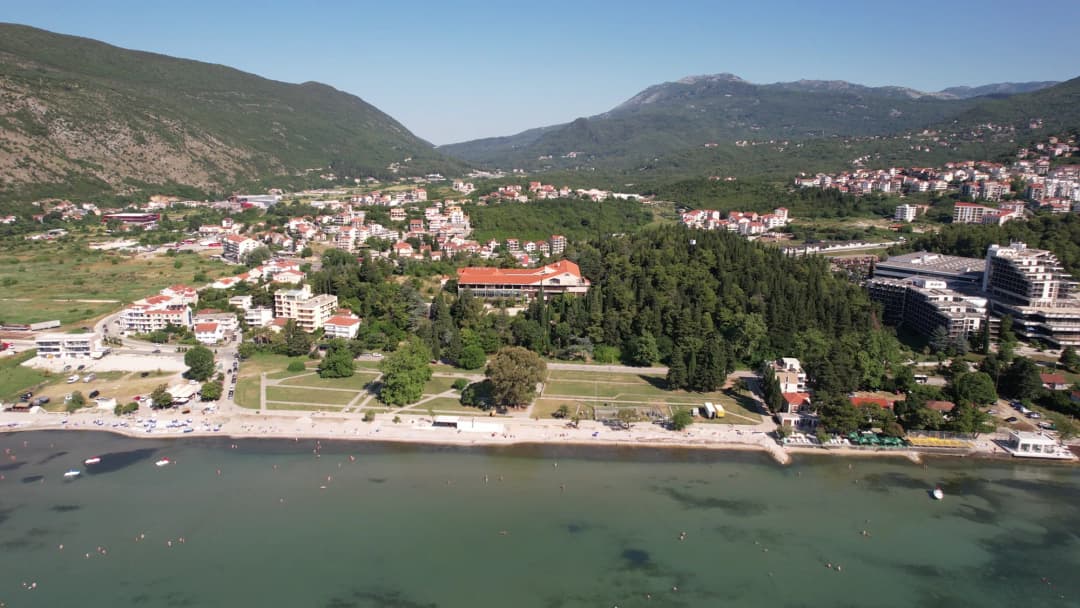
What makes Vila Galeb special today is not restoration but the lack of it. The interiors survive largely as they were left — the armchairs, the cinema, the marble bathroom, the billiard table, even Tito's books (Meša Selimović, Mihailo Lalić, Skender Kulenović) still on the shelves. It is one of the most complete surviving interiors of any Tito residence.
That intact, faintly cinematic atmosphere has drawn film and fashion crews back to the villa. Scenes for the hit 2021 Serbian biopic Toma were shot here, and the villa's pool — where singer Lepa Brena once posed for an iconic photograph — was recently revisited by Vogue Adria.
After Tito
Tito never used the villa in his final months. His health collapsed in late 1979 — his last stay coincided with the catastrophic Montenegro earthquake of April that year — and in January 1980 he was admitted to hospital in Ljubljana, where he died on 4 May 1980. The villa passed to the Institut "Dr Simo Milošević" and spent years quietly deteriorating before reopening to the public on 2 June 2014. It remains owned by the Institute, today a company in which the Montenegrin state is the majority shareholder; periodic attempts to privatise it have so far come to nothing.
Visiting Vila Galeb today
The villa can be visited on a guided tour run by the Institute, and it is one of the most rewarding hours you can spend in Igalo.
- When: tours typically run on Monday, Wednesday and Friday, usually around 18:00, with additional times in peak season. Days and times vary seasonally, so it is worth confirming at the Institute reception.
- Tickets: around €10 per person, paid in cash, bought at the Institute reception just before the tour. (Older guidebooks still quote €3 — that price is long out of date.)
- Languages: tours are given in Montenegrin/Serbian, English and Russian.
- What you see: the state reception rooms, congress hall and cinema, the fireplace lounge, the billiard room, the therapy wing with its pool, Tito's and Jovanka's bedrooms, the blue-marble bathroom and the underground atomic shelter. The presidential apartment is the most exclusive part and is sometimes shown only by separate arrangement with about 24 hours' notice.
Vila Galeb is a short walk from the seafront and the Institute's own spa, so it pairs naturally with a mud treatment, a stroll along the Pet Danica promenade or a half-day in the Old Town of nearby Herceg Novi.
Plan your visit
Vila Galeb is the standout sight in Igalo, but it is one of many reasons to base yourself here. Read our full Igalo travel guide for the town's beaches, spa and history, explore the wider Herceg Novi area, and browse places to stay in Igalo within easy reach of the villa and the Institute.