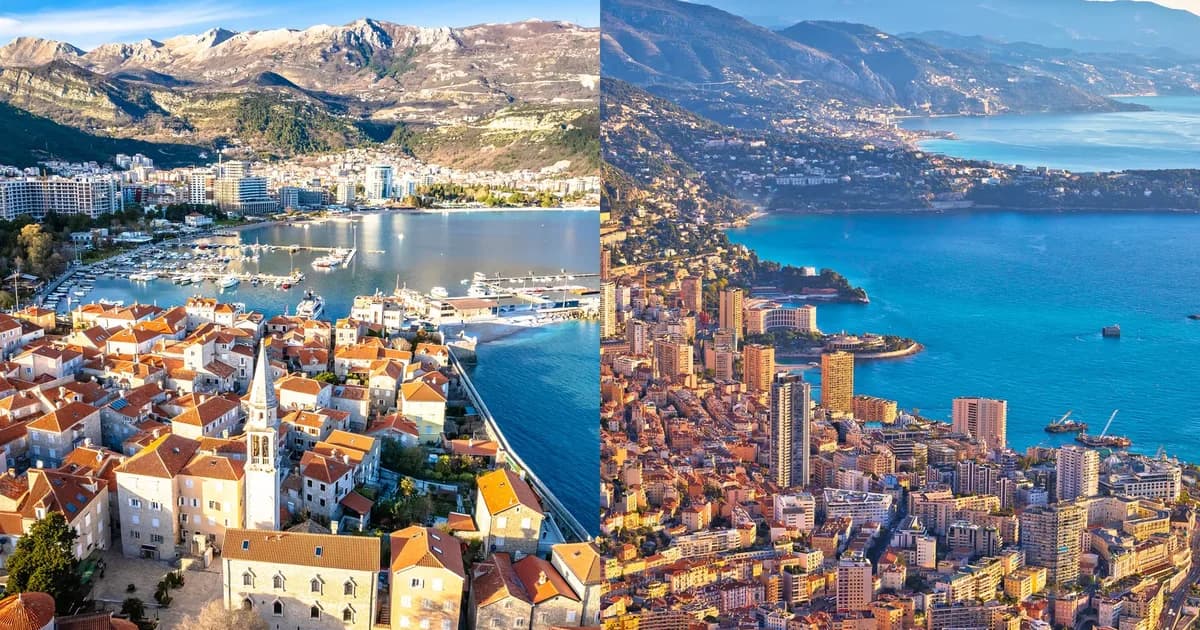
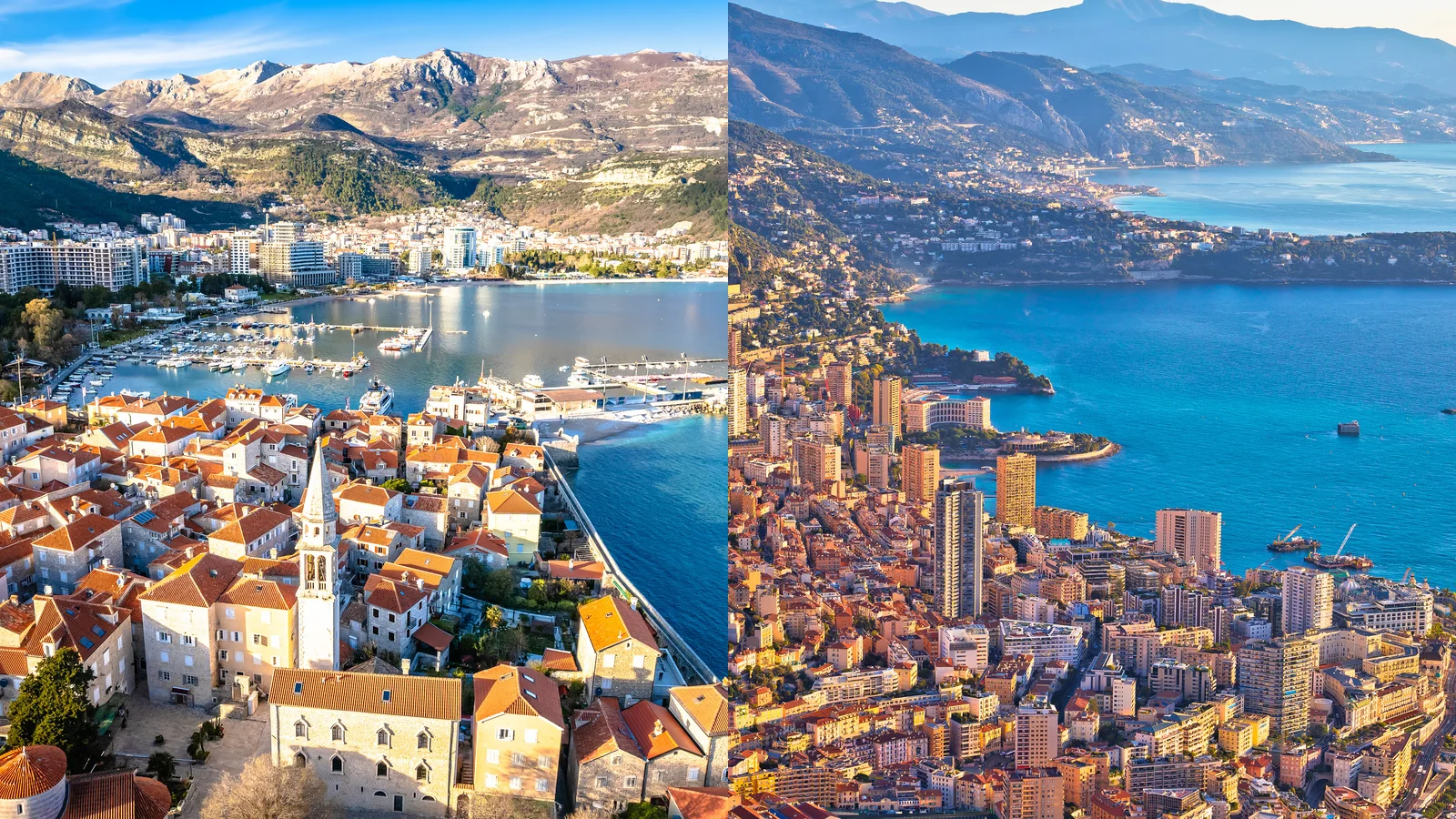
Budva is sometimes nicknamed both the "Monaco of the Balkans" and the "Montenegrin Miami" — a compact glamour coast of beach clubs, casinos, a marina and a wall of hotels behind a tiny walled old town. Monaco is the original: a sovereign 2 km² micro-state where property changes hands at roughly €57,000 a square metre and the F1 cars run past the casino. This Budva vs Monaco comparison looks honestly at where the resemblance holds and where it breaks — and at the roughly twentyfold property-price gap that is the whole reason to read on. Short verdict: if you want the Riviera feeling without the Riviera bill, Budva wins on value by a landslide; if you specifically want billionaire-grade prestige, only Monaco is Monaco.
At a Glance
| Budva (Montenegro) | Monaco | |
|---|---|---|
| Best for | Value glamour, beaches, summer nightlife | Ultra-luxury prestige, grand-prix energy |
| Vibe | "Montenegrin Miami" — buzzy, accessible | Polished sovereign micro-state, exclusive |
| Average cost level | €€ (low to mid) | €€€€€ (among the world's highest) |
| Beaches | ~35 km riviera, ~12–21 km of beaches | One engineered beach (Larvotto) |
| Old town / culture | Venetian walled Stari Grad | Le Rocher (old town) + Prince's Palace |
| Nightlife | Top Hill, beach clubs, casinos | Monte-Carlo Casino, exclusive clubs |
| Property price | Low single-digit thousands €/m² | ~€57,000/m² (ultra-prime €60,000–130,000) |
| Getting there | Tivat airport ~20 km | Nice airport + helicopter/train |
| Crowds | Heavy in July–August, calm shoulder | Year-round affluent, peak at Grand Prix |
Budva in Brief
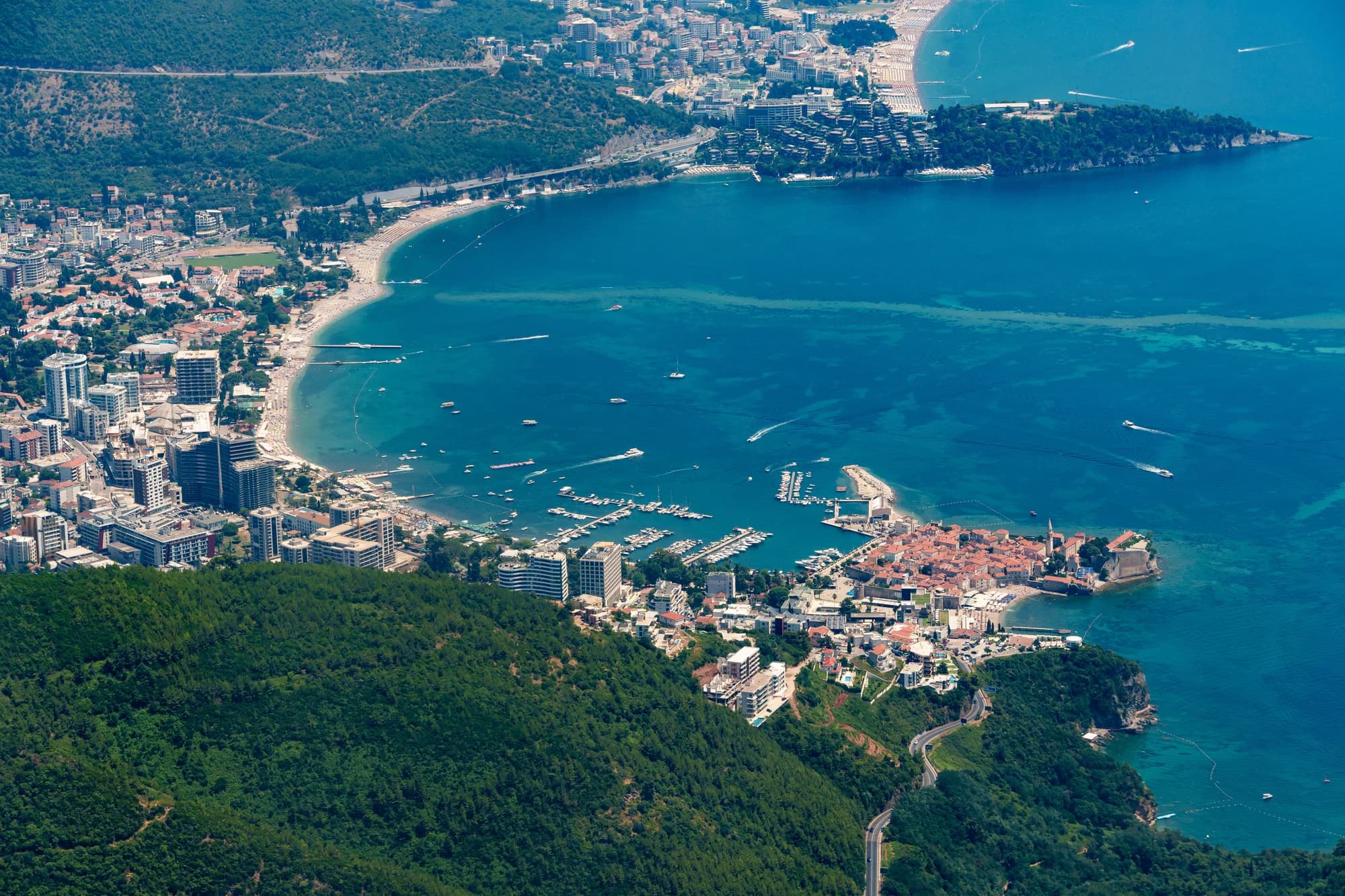
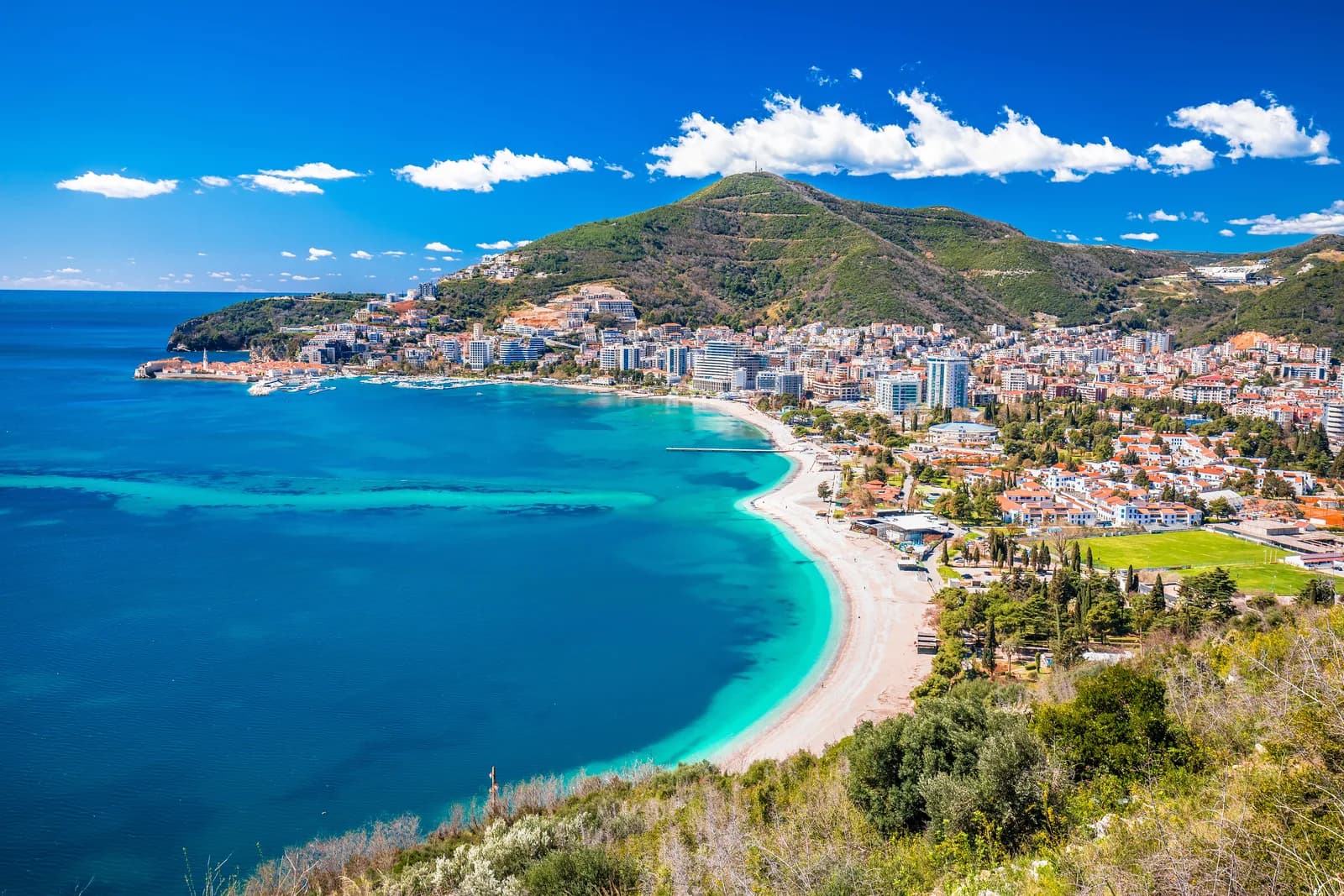
Budva is the beating heart of the Montenegrin coast — a 2,500-year-old town wrapped around a walled Venetian old quarter (Stari Grad) that juts into the Adriatic, with a modern resort city of hotels, promenades and apartment towers fanning out behind it. The municipality covers roughly 122 km² and its riviera runs for about 35 km, with roughly 12–21 km of beaches, from the sandy Mogren coves tucked under the old-town cliffs to the long sweep of Slovenska Plaža and the long pebble beach of Jaz a short drive west.
In high summer Budva genuinely earns its nicknames. The marina fills with yachts, the beach clubs thump until dawn, and the hilltop Top Hill club opens for the peak season (roughly mid-July to late August). There is a casino, a buzzing café-lined promenade, and a young, international party crowd. Yet coffee, a casual meal and a holiday apartment still cost far less than anything comparable in Western Europe. That collision of glamour and affordability is exactly why the "Monaco of the Balkans" tag stuck. For the full picture, see our Budva complete guide.
Monaco in Brief
Monaco is a sovereign principality of just 2.08 km² — the second-smallest country on earth after Vatican City — wedged between the French Riviera and the sea. Nearly 39,000 people live there at a density of roughly 19,000 per km², the highest of any state in the world. It has been a playground of the wealthy since the Monte-Carlo Casino opened in the 1860s and a Paris rail link followed, and it remains synonymous with prestige: the Formula 1 Monaco Grand Prix threads through the streets each June, superyachts pack Port Hercule, and the Prince's Palace still crowns the old-town rock, Le Rocher.
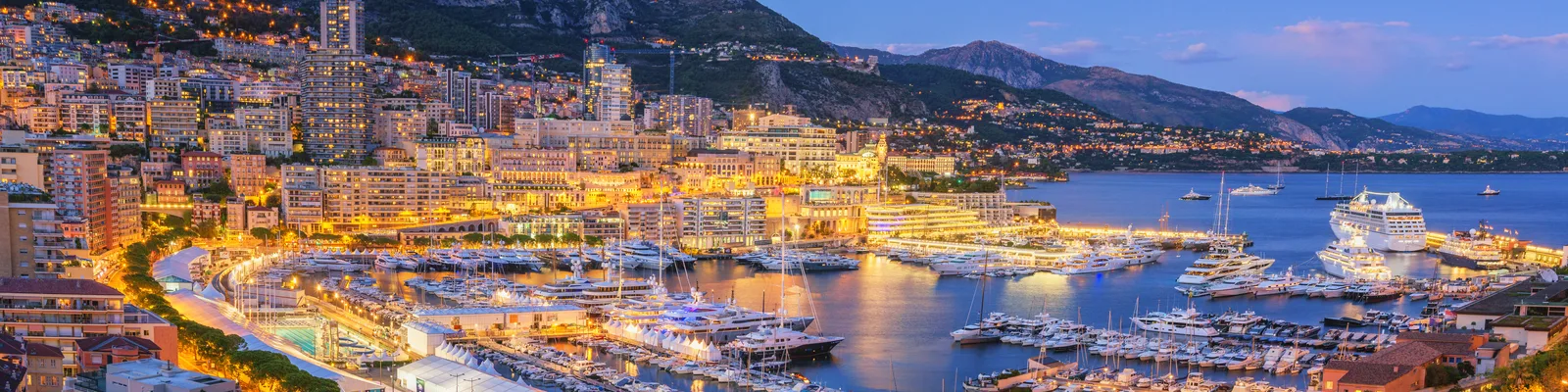
What Monaco does not have is space or beaches. Its single beach, Larvotto, is an engineered strip reclaimed from the Mediterranean, and recent land-reclamation districts such as Mareterra have pushed ultra-prime prices as high as €120,000 per square metre. Monaco is dense, vertical, immaculate and astonishingly expensive — a high-rise skyline of glass towers stacked up a hillside, with the casino, the opera and the yacht harbour at its feet. It is the template every "Monaco of somewhere" is measured against.
Cost and Value
This is where the comparison stops being subtle. Monaco is one of the most expensive places on the planet to buy, stay or dine. Residential property averages around €57,000 per square metre, with prime waterfront and the new Mareterra district running €60,000–130,000/m², according to Petrini Real Estate's analysis of IMSEE data. Hotel rates, restaurant bills and even a casino-side espresso scale accordingly.
Budva sits at the opposite end. New and resale apartments trade in the low single-digit thousands of euros per square metre, meaning the entry price for a sea-view home can be roughly twenty times lower than a comparable Monaco address. Day-to-day costs follow: a mid-range dinner for two, a beach-club lounger and drinks cost a manageable sum, and a quality holiday apartment a small fraction of a Riviera hotel room. You are not buying the same product — Monaco's prestige is real and Budva's is aspirational — but for the experience of glamour by the sea, the value gap is enormous.
Winner: Budva, decisively — the gap is the entire point.
Beaches and Swimming
Monaco's coastline is short and almost entirely built up. Its one swimmable beach, Larvotto, is a reclaimed, carefully landscaped strip — pleasant, central, but singular. If beaches are your priority, Monaco was never the destination.
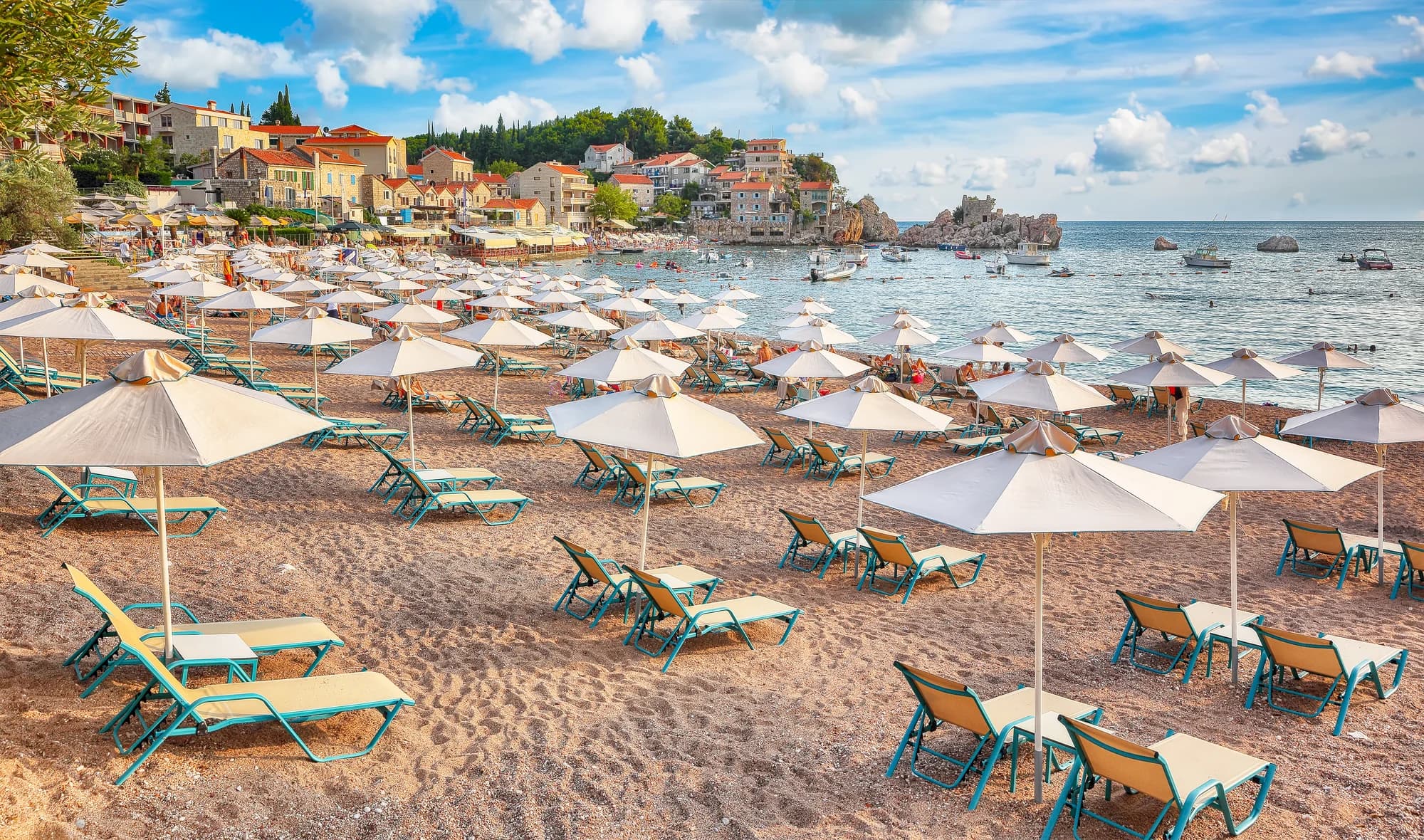
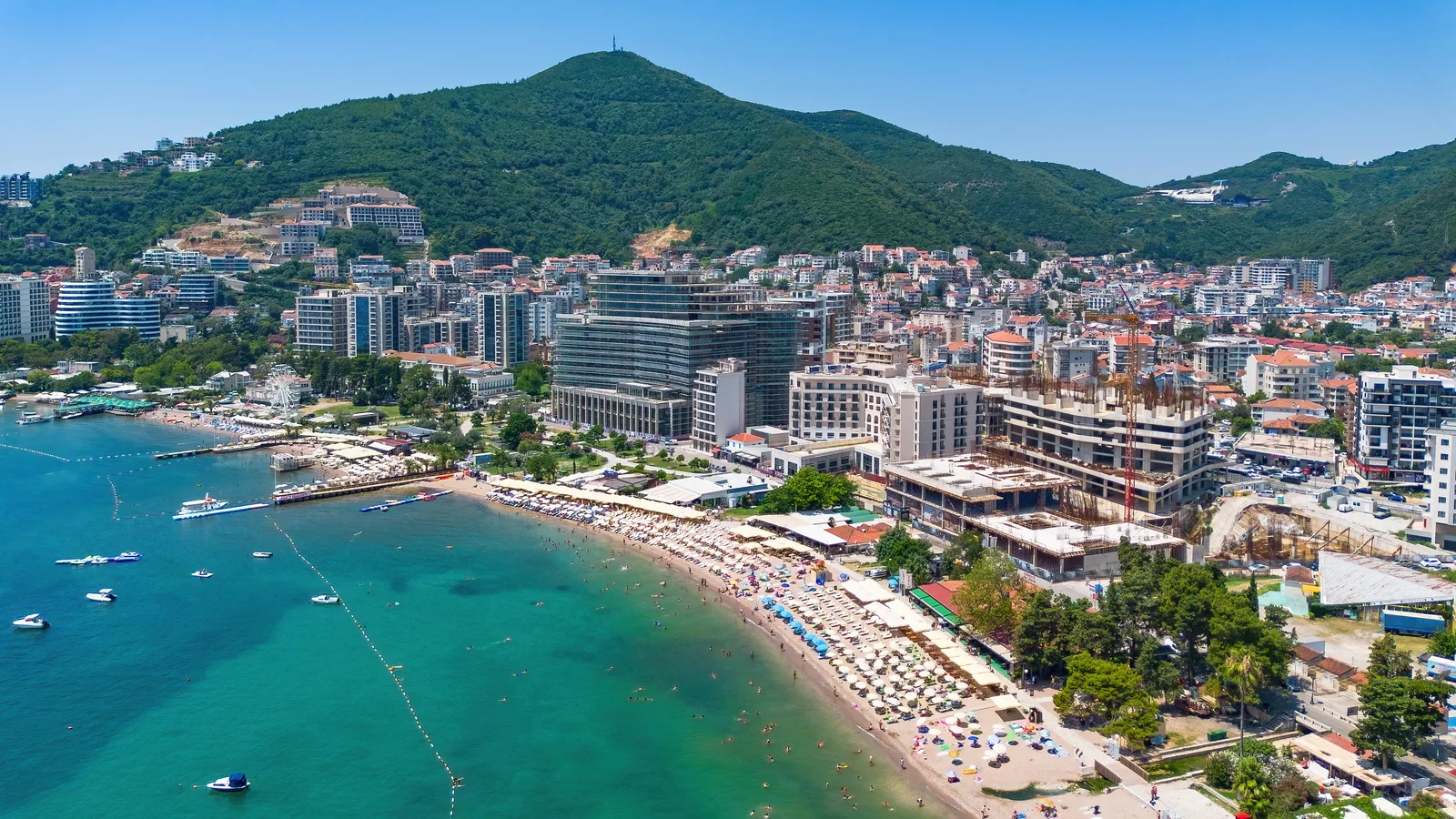
Budva is built for swimming. The riviera runs for about 35 km, with roughly 12–21 km of beaches: the twin Mogren coves (about 350 m of sand, linked by a tunnel through the rock) right under the old town; the long, organised Slovenska Plaža; the long pebble beach of Jaz a few minutes west; and the offshore island of Sveti Nikola, nicknamed "Hawaii," reachable by water taxi. The water is clean, warm through summer, and the choice ranges from party-loud to quiet cove. Take care at Mogren: the path and beaches are unsafe when a southerly wind brings big waves, so don't use the path or swim when waves are high, the beach is closed or the gate is locked — a man drowned at Mogren II on 27 July 2026 while the beaches were closed and the gate locked.
Winner: Budva — it isn't close.
Old Town and Culture
Both places anchor their identity on a small historic core on a rocky point. Monaco's Le Rocher is the old town atop the headland, home to the Prince's Palace, the cathedral and the Oceanographic Museum — handsome, tidy and steeped in Grimaldi history.
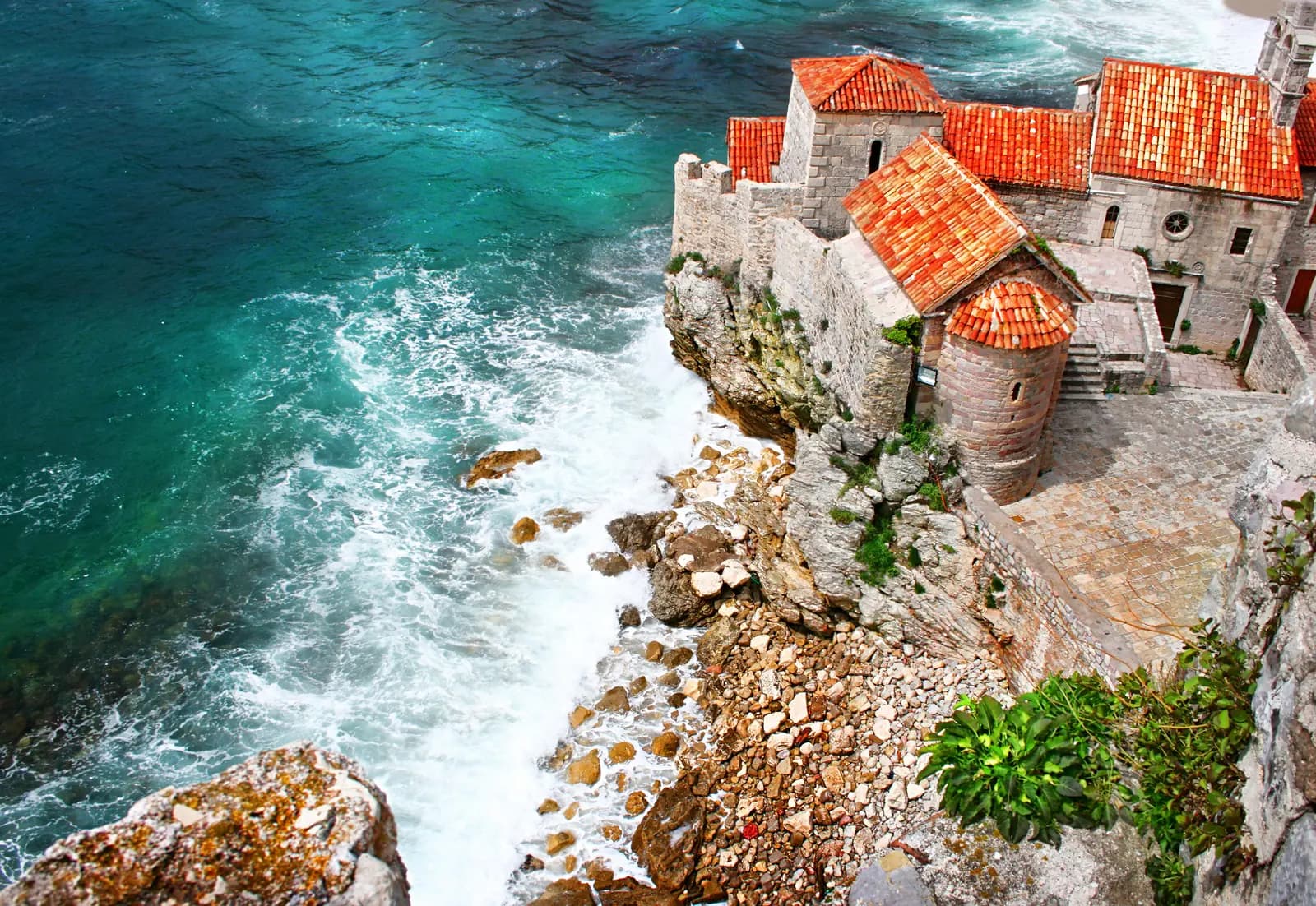
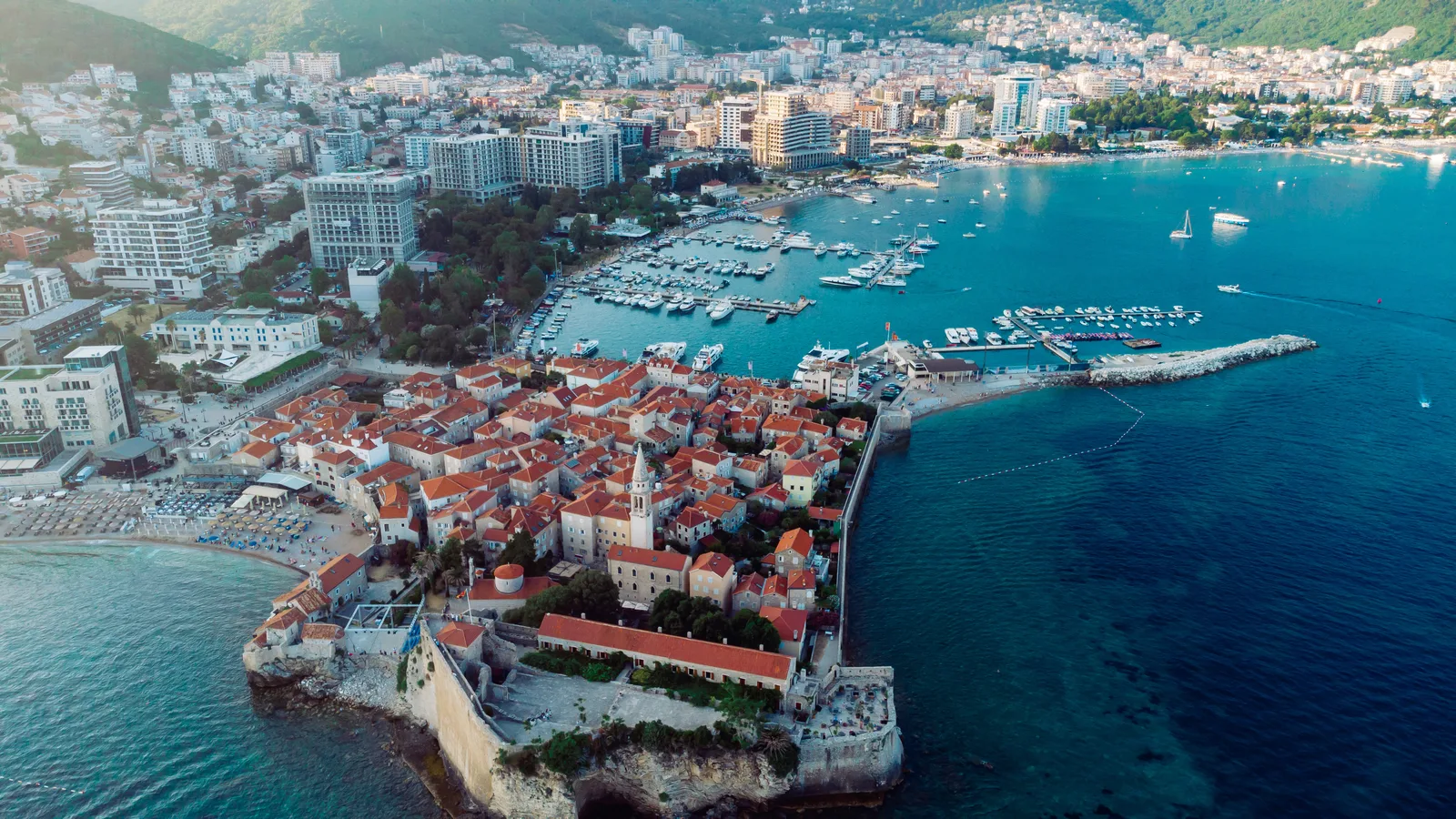
Budva's Stari Grad is a Venetian walled old town of marble lanes, four churches, a citadel and ramparts you can walk for sea views, with continuous settlement traced back some 2,500 years to Greek and Roman roots. It is smaller and more lived-in than a national capital's quarter, but for atmosphere — washing lines, stone alleys, a sea-splashed citadel — it more than holds its own. Culturally, Monaco offers more in the way of grand institutions; Budva offers more in the way of everyday Mediterranean charm.
Winner: Tie — Monaco for grand heritage, Budva for walkable old-town romance.
Nightlife, Casinos and Dining
Here the two genuinely rhyme. Both built their reputations partly on casinos and a moneyed after-dark scene. Monaco has the legendary Monte-Carlo Casino, black-tie clubs and Michelin dining where the bill matches the address.
Budva's version is more democratic and just as energetic. The hilltop Top Hill open-air club is one of the largest in the region and pulls international DJs in peak season (roughly mid-July to late August); the beach clubs run day-to-night parties; and there are accessible casinos in the larger hotels. Dining spans grilled-fish konobas to slick waterfront restaurants — at prices that let you do it nightly rather than once. The crowd skews younger and more come-as-you-are than Monaco's.
Winner: Budva for accessible, high-energy summer nightlife; Monaco for top-tier prestige.
The Skyline and the Scene
Part of why Budva reads as a "Monaco" is the silhouette: a dense wall of mid- and high-rise hotels and apartments stacked behind the beach and marina, lights reflecting on the water at night, a small historic core at the edge. Monaco perfected that vertical, hillside-stacked skyline out of sheer necessity — nearly 39,000 people on 2 km² means building up.
The difference is scale and polish. Monaco's towers are glass-and-steel luxury packed into a tiny sovereign footprint; Budva's skyline is looser, lower and still filling in, spread across a far larger municipality. The scene — yachts, promenade strolls, sunset cocktails with a backlit skyline — translates well. The price of admission does not.
Winner: Monaco for sheer engineered spectacle; Budva for the same scene with property prices roughly twenty times lower.
Getting There and Around
Monaco has no commercial airport of its own; most visitors fly into Nice Côte d'Azur and continue by train, road or — famously — a seven-minute helicopter hop. Once there, the principality is walkable, vertical and threaded with public lifts and escalators.
Budva is served by Montenegro's two airports, with Tivat (TIV) the closest at around 20 km (roughly 30–40 minutes by road), and Podgorica (TGD) about 65 km away; Dubrovnik (DBV) in Croatia is also within reach for the wider bay. Tivat in particular remains under-used relative to the coast it serves. Within Budva, the old town and main beaches are walkable, with local taxi firms (Bolt lists only Podgorica in Montenegro) and buses linking the riviera. For the practical essentials of arriving in Montenegro, see our Montenegro country FAQ.
Winner: Tie — Monaco for slick onward connections, Budva for cheap, simple airport access.
The Verdict
Choose Budva if you're on a budget and want genuine Riviera glamour — beach clubs, a walled old town, a marina and nightlife — without spending a Monaco-sized fortune. The value gap is transformative.
Choose Monaco if you're chasing prestige above all: black-tie casino nights, Grand Prix weekends, and an address that signals you've arrived. Nothing replicates that, and Budva doesn't pretend to.
Couples will find Budva more romantic and relaxed and far easier on the wallet; Monaco suits a once-in-a-lifetime splurge.
Families are better served by Budva's many beaches, gentler prices and space — Monaco's single engineered beach and sky-high costs are a tough fit for a family week.
Where to Stay
For most travellers, Budva delivers the Monaco feeling at a price that makes a real holiday possible — and a holiday apartment beats a hotel room for space, kitchen and value. Browse holiday rentals in Budva to find sea-view apartments near the old town and beaches, or read the full Budva complete guide and our roundup of the best beaches in Montenegro to plan the trip.
Frequently Asked Questions
Is Budva cheaper than Monaco?
Dramatically. Property in Budva trades in the low single-digit thousands of euros per square metre, versus roughly €57,000/m² average in Monaco (and €60,000–130,000/m² for ultra-prime). Day-to-day costs — dining, drinks, accommodation — follow the same pattern, so Budva typically costs a small fraction of Monaco for a comparable seaside-glamour experience.
Why is Budva called the "Monaco of the Balkans"?
Because it packs a similar mix into a compact coast: a marina, casinos, beach-club nightlife, a small historic old town and a dense skyline of hotels and apartments rising behind the beach. The vibe rhymes even though the scale and prices are far lower — hence also the "Montenegrin Miami" nickname.
Does Budva have better beaches than Monaco?
By a wide margin. Budva's riviera offers about 35 km of riviera with roughly 12–21 km of beaches, from Mogren and Slovenska Plaža to Jaz and the "Hawaii" island of Sveti Nikola. Monaco has a single, engineered beach at Larvotto.
How far apart are Budva and Monaco?
Both sit on the northern shore of the Mediterranean, about 940 km apart in a straight line. There is no practical day trip between them; they are separate Riviera destinations on the Adriatic and the Côte d'Azur respectively.
Is Budva good for nightlife like Monaco?
Yes, and arguably more accessible. The hilltop Top Hill club, beach clubs and hotel casinos give Budva a high-energy summer scene that draws an international crowd — without Monaco's black-tie exclusivity or prices.
When is the best time to visit Budva?
June and September are ideal — warm, sunny and far less crowded than the July–August peak, when prices climb and beaches fill. May and October are pleasant and quieter still.