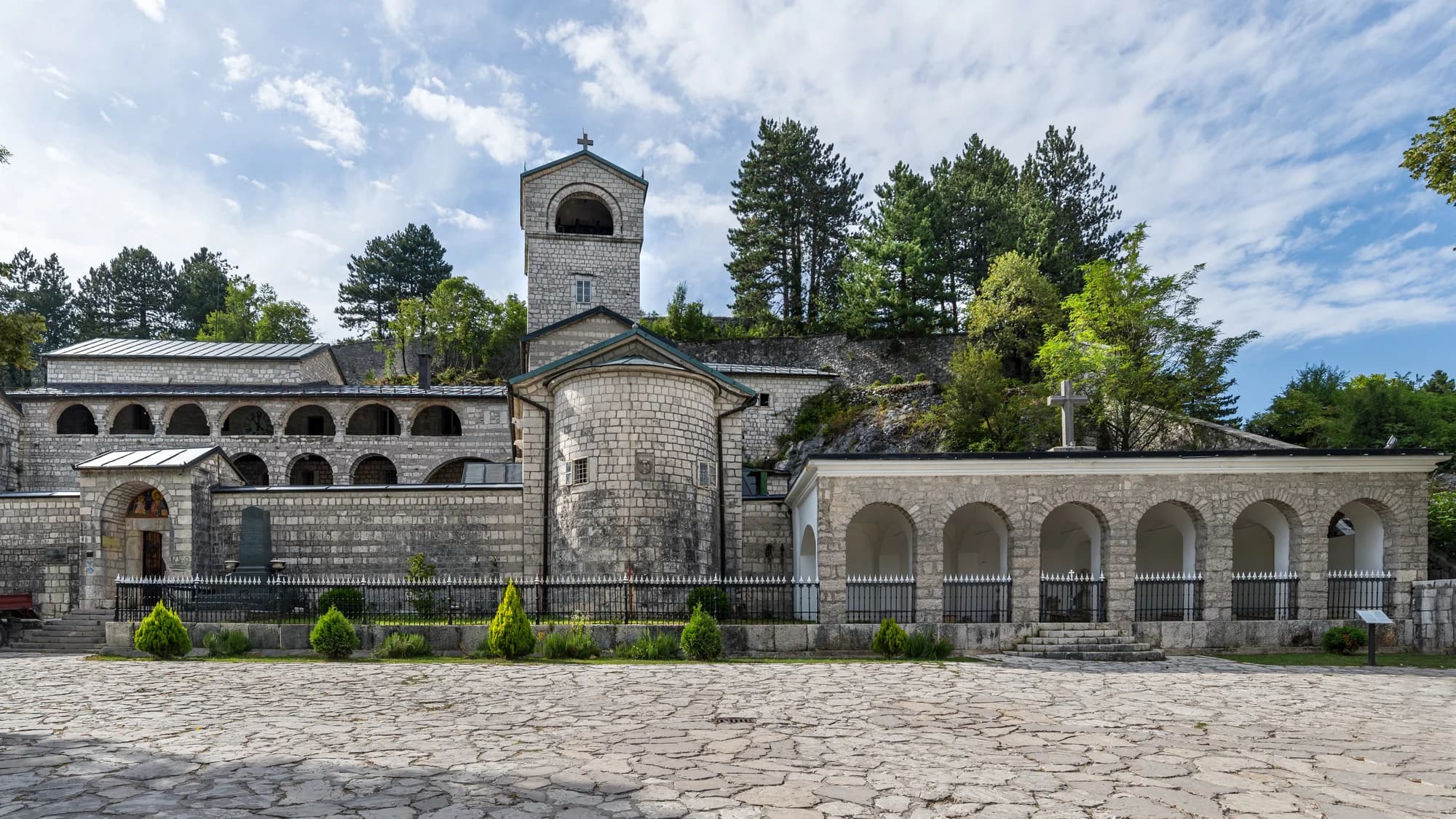
For six months in 2015, a compact gallery in Montenegro's old royal capital carried an unusually large cultural promise: drawings, prints and ceramics by Pablo Picasso, loaned from OSTEN in Skopje. The event was real. The surviving public record is thinner than the reputation attached to it.
This reconstruction separates what contemporary reporting establishes from what later retellings have blurred. It fixes the missing year, corrects the old biography, explains why two different collection totals appear in the record, and makes one crucial distinction for future visitors: the Picasso exhibition closed in 2015. Cetinje's gallery remains active, but its current program must be checked separately.
The 2015 exhibition: what the record proves
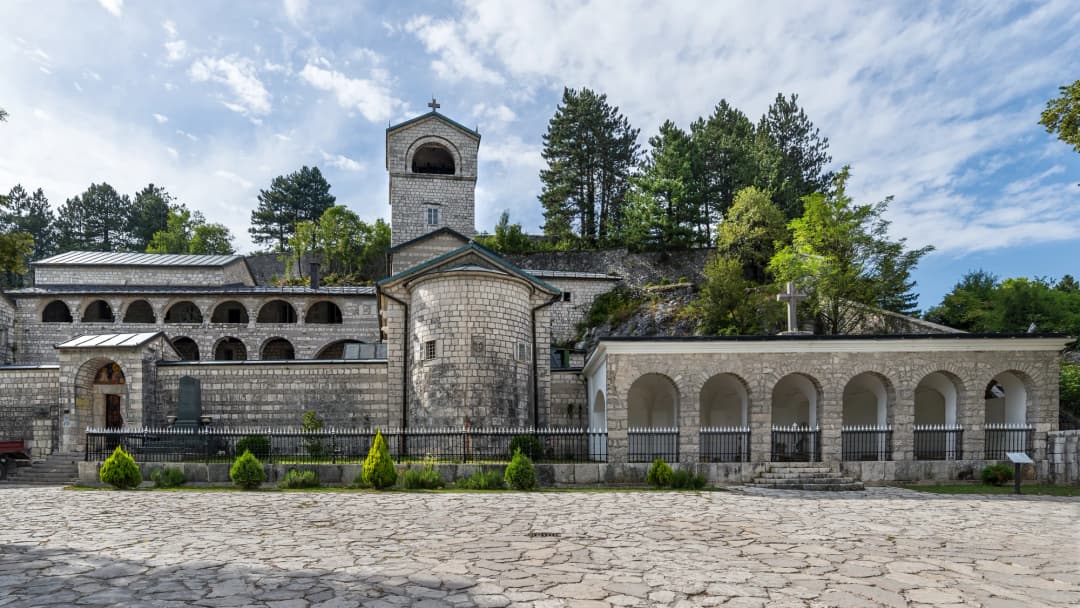
A dated announcement published on 22 April 2015 said the show would open on 30 April at the Montenegrin Art Gallery “Miodrag Dado Đurić.” Mirjana Dabović Pejović, then identified as director of the Art Museum, said visitors would be able to see works from different periods for the following six months, from prints and drawings to ceramics, supplied by OSTEN in Skopje. A review published on 13 May confirms that the National Museum of Montenegro organized the exhibition and that it had opened at the end of April.
| Question | Best surviving evidence | Finding | Limit |
|---|---|---|---|
| When? | 22 April announcement; 13 May review | Opened 30 April 2015 for a planned six months | A closing-day report was not found |
| Who organized it? | Contemporary review | National Museum of Montenegro, with OSTEN | Full project credits are not public |
| Where? | Museum and press records | CGU “Miodrag Dado Đurić,” Balšića Pazar | Not the separate Atelje DADO on Dvorski trg |
| What media? | Announcement and review | Drawings, prints and ceramics | No complete public object checklist located |
| How many? | OSTEN page; 2015 review | 66 and 75 describe different published scopes | Neither is a verified installation count |
The original Montenegro.com item gave 30 April and 30 October but omitted the year. The contemporary announcement supplies it: 2015. That converts an apparently current event listing into what it actually is—a cultural archive. Readers planning a trip should not interpret the page as an invitation to a Picasso show now.
Sixty-six, seventy-five—or neither?
The numbers need care. OSTEN's current collection page says 66 Picasso works owned by the institution were presented in a book associated with its World Cultural Heritage Award. It describes drawings, graphic works, ceramics and sketches across different periods. The 2015 Cetinje review, by contrast, called OSTEN's holdings a collection of 75 works, including art on paper, ceramics, books and posters on which Picasso intervened.
Those figures do not necessarily contradict each other. A collection can grow, be recatalogued, or be counted differently when books, posters, suites and individual sheets are involved. More importantly, neither source says that all 66 or all 75 objects were installed in Cetinje. The review says that part of the collection was presented. Without the exhibition checklist, the displayed total is unknown.
What visitors were being asked to look at
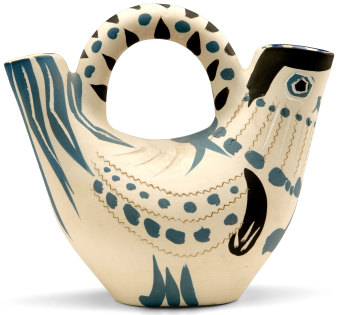
The strongest descriptions agree on three media: drawings, prints and ceramics. That matters because a visitor expecting famous paintings would have encountered a different Picasso—one working through line, repeatable print processes and three-dimensional domestic forms. The 2015 critic's account identified a set of 13 signed lithographic sheets from a larger portfolio and roughly 20 ceramic works, but it did not publish a complete room-by-room inventory. Those figures are useful clues, not a final checklist.
A drawing is a unique work on paper unless evidence shows otherwise. A print is made from a matrix and can exist in an edition; signature, numbering, printer, paper and publication history help establish what an individual sheet is. A ceramic can be unique, an artist's proof or an authorized edition produced with a pottery workshop. “Original Picasso” is therefore too blunt a description. Medium, date, edition and provenance matter.
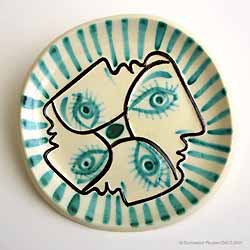
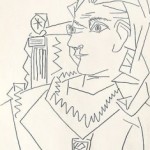
The archive images preserved with the old article do not include labels. They can illustrate the media under discussion, but they cannot responsibly supply missing titles, dates or edition numbers. A serious exhibition record would pair every image with the catalogue entry and credit line.
Picasso beyond the familiar paintings
Picasso's ceramics were not a decorative footnote. Museo Picasso Málaga dates his sustained engagement with pottery to 1946, when he entered the world of the Madoura workshop in Vallauris. He worked with traditional Mediterranean forms, glazing techniques and firing, turning plates, jugs and other vessels into faces, animals and sculptural objects. The museum estimates that the collaboration produced thousands of ceramic works over roughly two decades.
His printmaking was equally broad. The Málaga museum describes direct work on plates, stone and linoleum, not the mechanical reproduction of paintings. Etching, lithography and linocut let Picasso test line, pressure, sequence, color and variation. For a regional museum without access to a canonical canvas, a carefully documented group of works on paper and ceramics could still present central parts of his practice.
That is the most defensible way to understand the Cetinje show. It was not a reduced substitute for a painting retrospective. It offered media in which Picasso experimented for decades. What the public record cannot show is how the curators sequenced those experiments or which precise works carried the argument.
Correcting the old biography
The legacy copy says Picasso moved to Paris in 1904 and lived there for the rest of his life. The first half is broadly right; the second is not. A Musée Picasso-Paris chronology records his installation in Paris in 1904, his move to southern France after the Second World War and his death in Mougins in 1973. France became his principal base, but Paris was not his only home.
The old article also reduces Cubism to looking at an object from several angles and rebuilding it in the mind. Multiple viewpoints are one recognizable feature, but the history is larger. MoMA describes Cubism as a visual language developed jointly by Picasso and Georges Braque: subjects were broken into geometric components and flat, interlocking planes, challenging the expectation that an image should imitate lifelike appearance. The Metropolitan Museum separates an increasingly abstract Analytic Cubism from the later use of collage and signs in Synthetic Cubism.
Nor should Picasso's career be read as a tidy ladder of “blue, pink, African, Cubist and neoclassical” phases. MoMA emphasizes that he returned to older strategies, combined sources and resisted a simple story of linear progress. Period labels help orientation, but the drawings, prints and ceramics in an exhibition can cross those labels or reopen earlier problems in a new medium.
Why Cetinje was a credible host
The choice of Cetinje was not a novelty stunt. Montenegro's former capital concentrates the National Museum, art academies, libraries and historic state buildings within a walkable center. The Cetinje royal-capital guide maps that wider museum landscape; our Cetinje overview helps place it between Lovćen, Podgorica and the coast.
The National Museum says the Montenegrin Art Gallery “Miodrag Dado Đurić” opened in 2012 in an adapted former Trgopromet building at Balšića Pazar. Its mission includes exhibitions of major Montenegrin artists, younger contemporary practitioners and international guests arranged with partner institutions. A regional loan from OSTEN fit that remit.
The 2015 review called it the third major cooperation between the National Museum and OSTEN, following a selection from OSTEN's drawing museum and a Victor Vasarely exhibition. That history matters more than celebrity branding: repeated institutional exchange made the Picasso project possible.
Two Dado-named galleries are not one venue
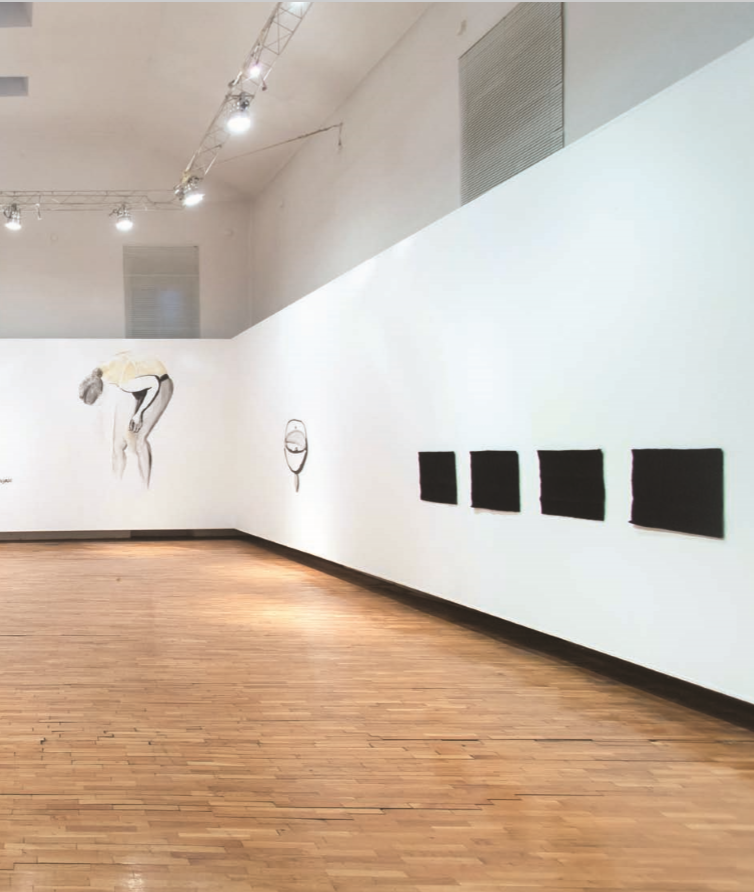
Cetinje has two National Museum spaces whose names can be confused. The 2015 Picasso exhibition was held at the Montenegrin Art Gallery “Miodrag Dado Đurić” at Balšića Pazar. Atelje DADO is a separate contemporary-art gallery in Dado's former studio on Dvorski trg. Our archive article about Atelje DADO concerns that second space.
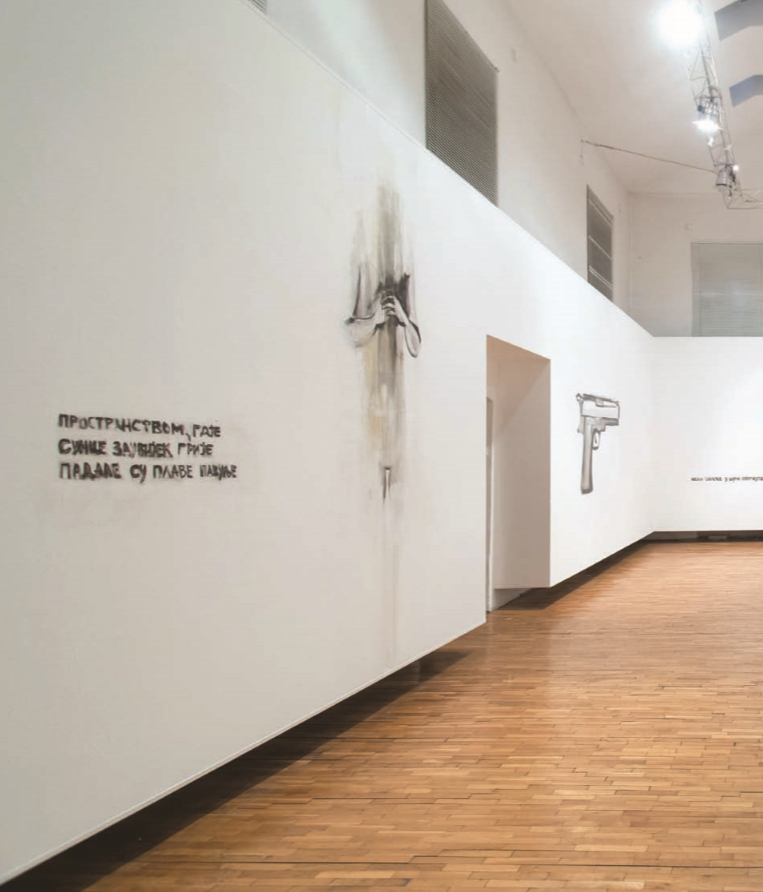
The distinction is not pedantic. A visitor following an old post could arrive at the wrong door, while a researcher could accidentally attach photographs from one institution to an exhibition in the other. The gallery names, addresses and dates belong in every future caption and event record.
Practical information for visiting today
The Picasso exhibition is closed. For the current CGU “Miodrag Dado Đurić” program, use the National Museum's own listings or contact the museum before traveling. The official Montenegrin visitor page lists Balšića Pazar bb and seasonal Tuesday–Saturday hours: 09:00–17:00 from 15 April to 15 November, 10:00–16:00 from 16 November to 31 December, and closure from 1 January to 14 April. The museum's English page gives a simpler 10:00–17:00 schedule and free entry. Because those official pages disagree, verify the date, opening time and admission directly rather than choosing the more convenient version.
Allow more than a single gallery stop. The National Museum's Art Museum, King Nikola's Museum, Biljarda and other institutions sit within the historic core, though each has its own access conditions. The Cetinje destination page gives a compact orientation, while this broader Montenegro perspective helps connect the inland capital with the country's coastal and mountain identities.
If contemporary art is the priority, check both CGU and Atelje DADO programs. For a broader collection context, our guide to Montenegro's artistic and archaeological treasures explains why Cetinje functions as a national museum district rather than a single-attraction stop.
What a complete archive would still need
A publication-grade record should include the curatorial statement, complete checklist, lender credit, object titles, dates, media, dimensions, edition information, opening and closing dates, installation photographs and image rights. It should identify which figure—66, 75 or another number—describes the objects installed. It should also preserve the accompanying publication noted by the 2015 reviewer.
Those gaps do not make the exhibition doubtful. They change the kind of claim that can be made. The event, venue, organizer, lender, opening date, planned duration and broad media are well supported. The exact object count and room sequence are not. A trustworthy archive lets those two sentences coexist.
Frequently asked questions
Is the Picasso exhibition still open in Cetinje?
No. It opened on 30 April 2015 for a planned six-month run. This page is a retrospective reconstruction, not a current event listing.
How many Picasso works were shown?
The public record does not establish the exact installation count. OSTEN currently describes a 66-work publication, while a contemporary review described a 75-work collection and said only part was presented. Neither total should be converted into the number on the walls.
Were the works paintings?
Contemporary accounts emphasize drawings, prints and ceramics. The review also referred more broadly to OSTEN holdings that included other materials, but no complete Cetinje checklist was found.
Did Picasso live in Paris for the rest of his life?
No. He settled in Paris in 1904, then moved to southern France after the Second World War and died in Mougins in 1973.
Which Dado gallery hosted the exhibition?
The venue was the Montenegrin Art Gallery “Miodrag Dado Đurić” at Balšića Pazar. It should not be confused with Atelje DADO, a separate National Museum gallery on Dvorski trg.
Sources and methodology
The event chronology was built from the dated 2015 announcement and contemporary review, then checked against the National Museum's current venue pages. The lender and collection scope were checked against OSTEN's own collection description. Picasso's biography, Cubism, printmaking and ceramics were checked against Musée Picasso-Paris, MoMA, the Metropolitan Museum of Art and Museo Picasso Málaga.
Collection totals were not averaged or silently reconciled. The article preserves the 66- and 75-work figures with their separate contexts and leaves the installed total unknown. Legacy artwork images were visually reviewed but lack full catalogue metadata; two 2018 interiors are explicitly identified as the separate Atelje DADO. All archive and artwork reproduction rights remain subject to independent editorial approval before publication.