Faith across eras
Orthodox Savina, Catholic churches and the traces of Ottoman Islamic rule belong to the same fortified landscape. Successive rulers changed institutions faster than they erased sacred memory.
Crna Gora nekad i sad · Ulaz u Boku Kotorsku
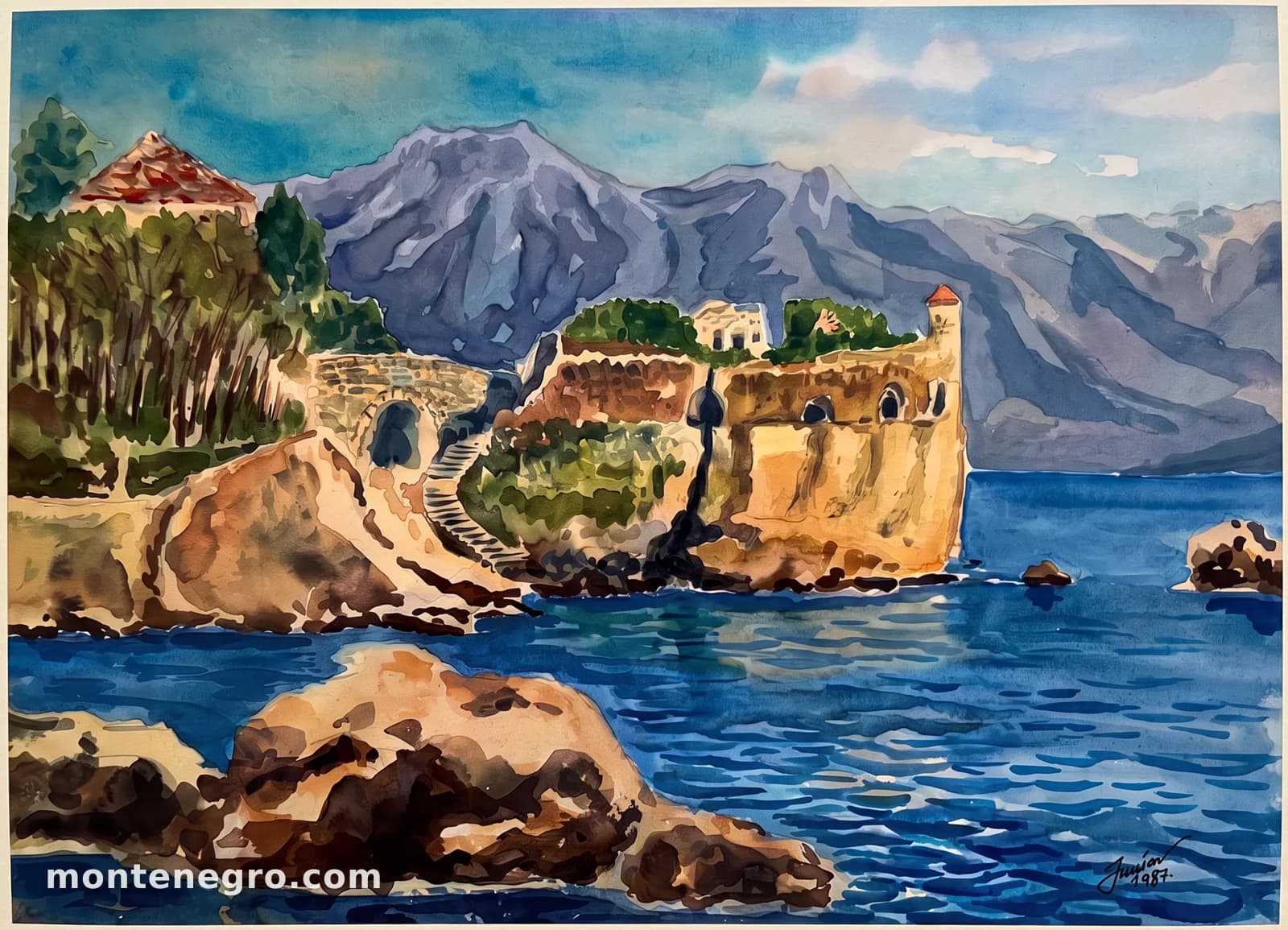
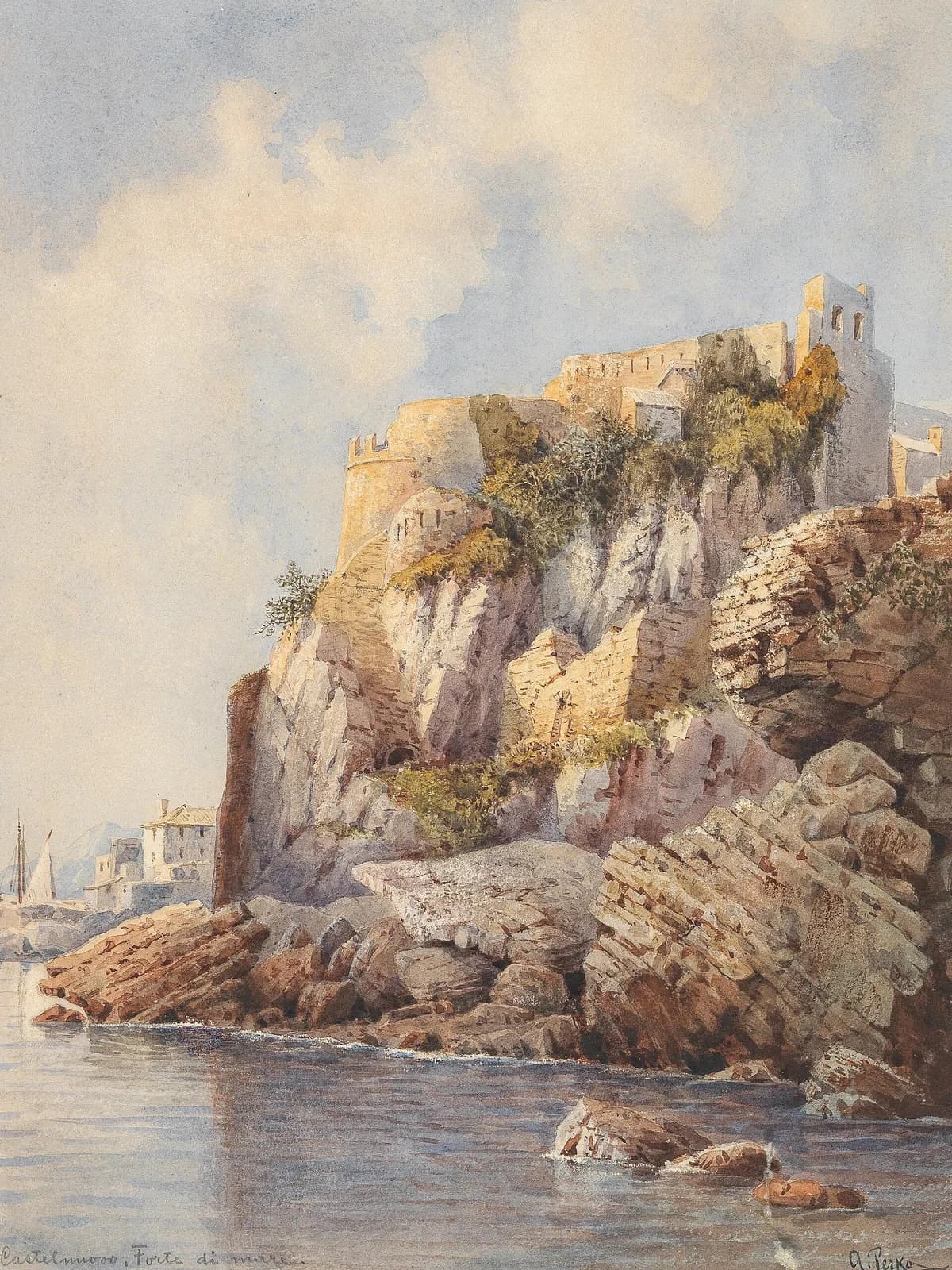
Imena i carstva su se mijenjali, a utvrđeni stepenasti grad nastavljao je da se prilagođava. Akvarel Antona Perka i savremeni pogled na Forte Mare čine to nataloženo vrijeme čitljivim.
Istorijski nazivi: Castelnuovo
Dublje u temu
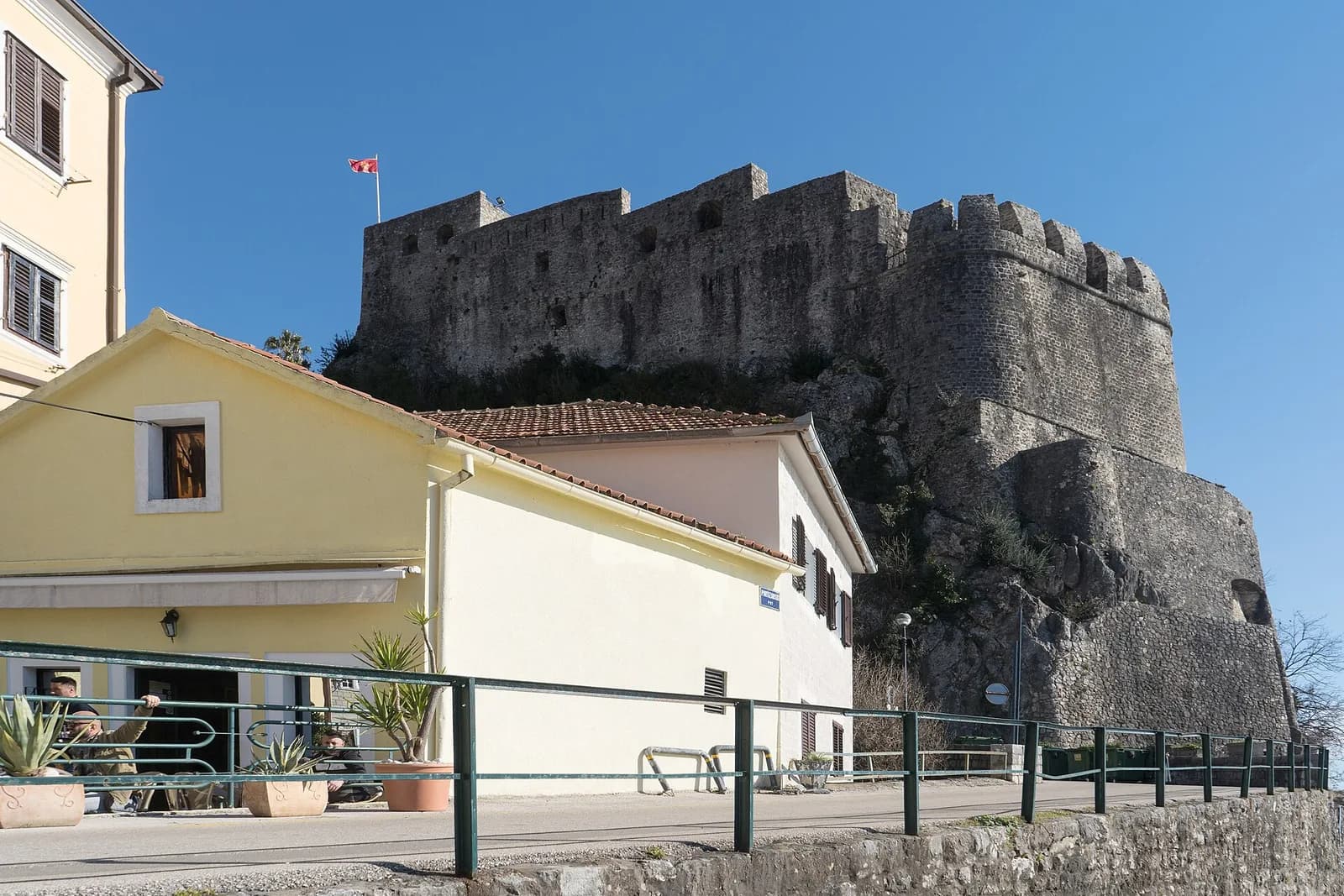 Forte MareA salt-trade watchtower that eight sovereignties rebuilt on top of each other — and that has now spent seventy-four summers as a cinema.
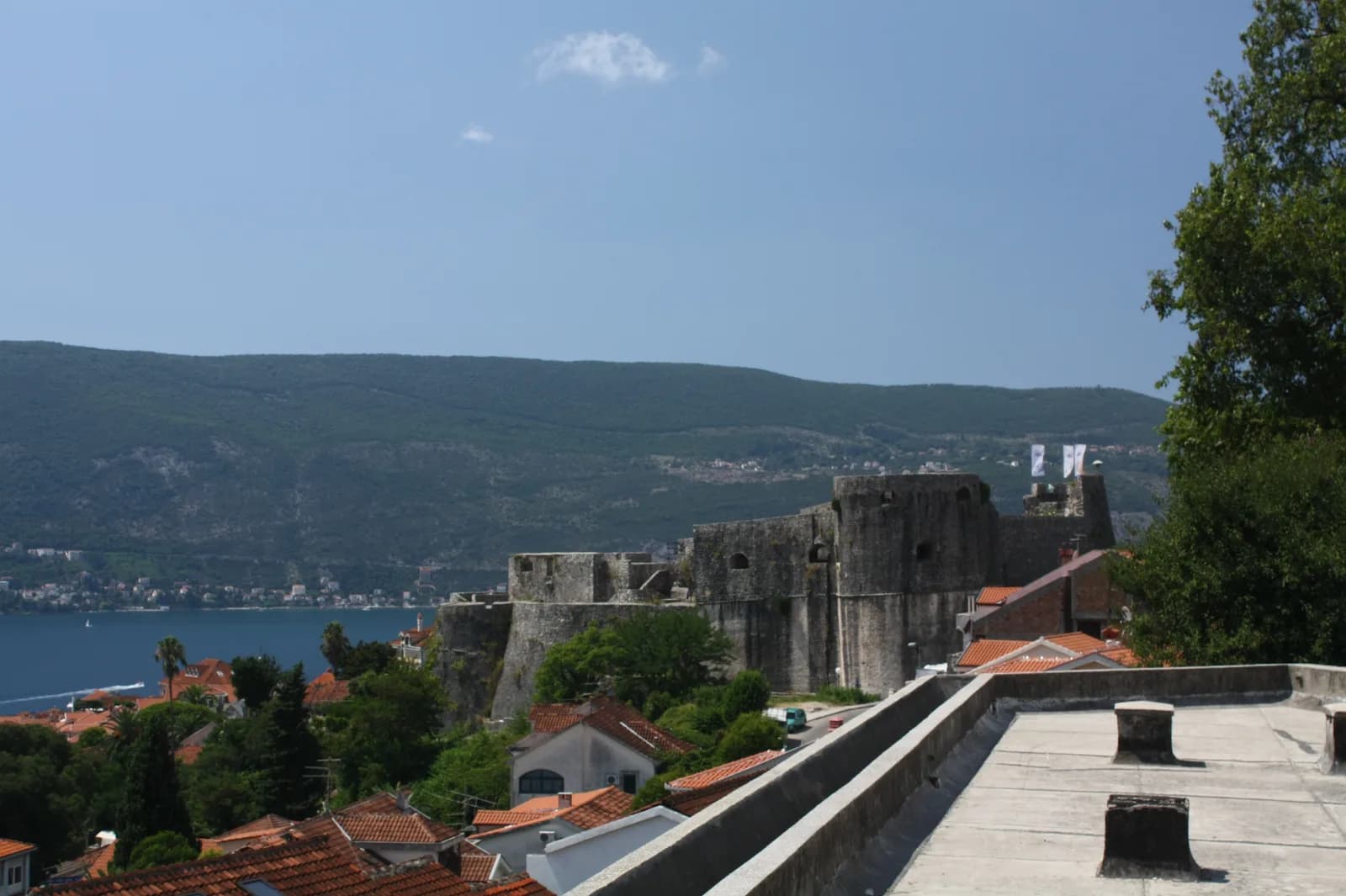 Kanli KulaA prison whose inmates dated it for us — they scratched ships into the walls — and which now seats a thousand people watching films.
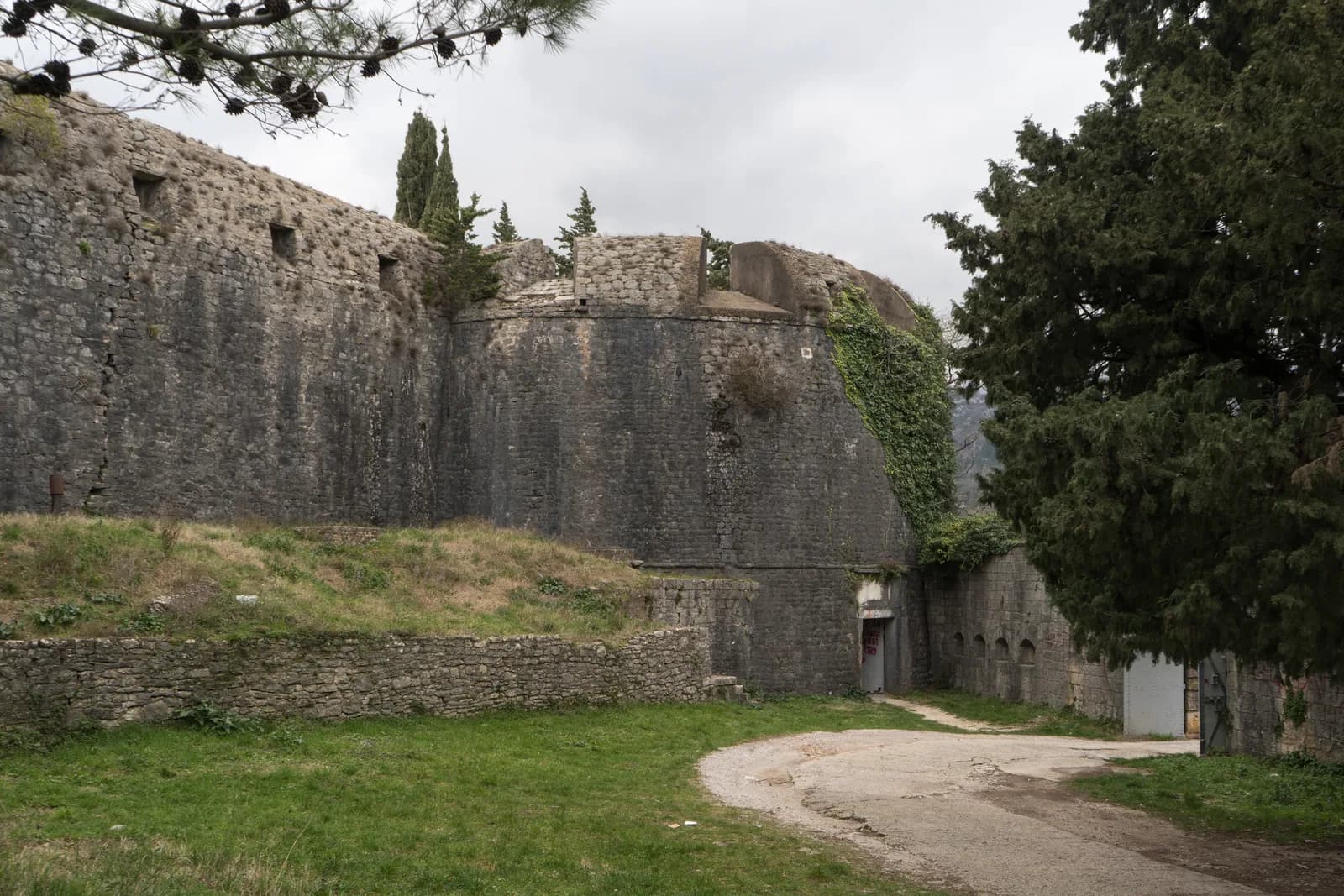 ŠpanjolaThe Spanish began it in a year they did not survive. The Ottomans finished it, and it still carries the name of the side that lost.
 CitadelaIt closed the southern end of the defences for centuries, nobody is sure when it was built, and in ninety seconds in 1979 it went into the sea.
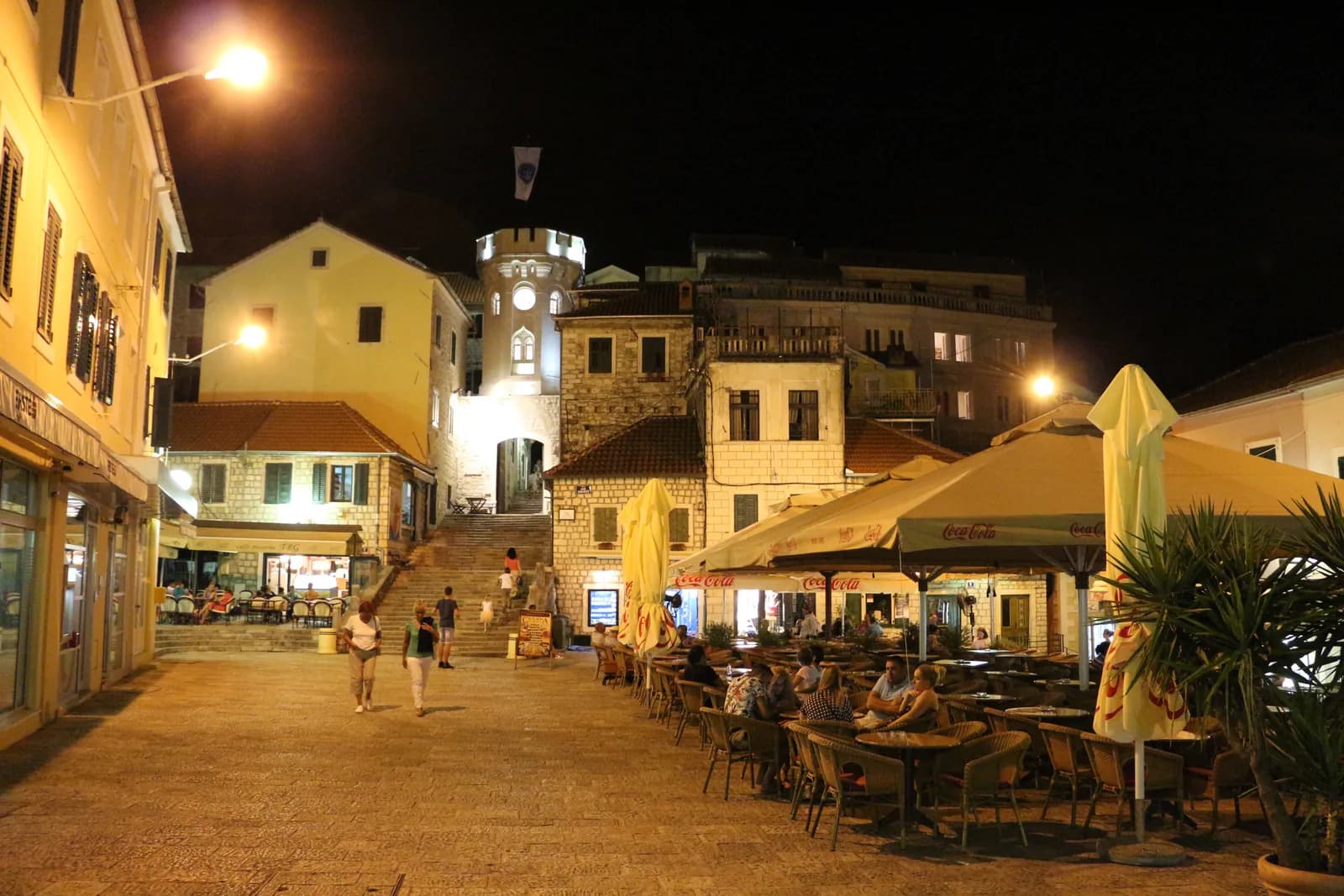 Sahat kulaSixteen metres of Ottoman gatehouse with a Russian bell, a Black Madonna and two dates that cannot both be right.
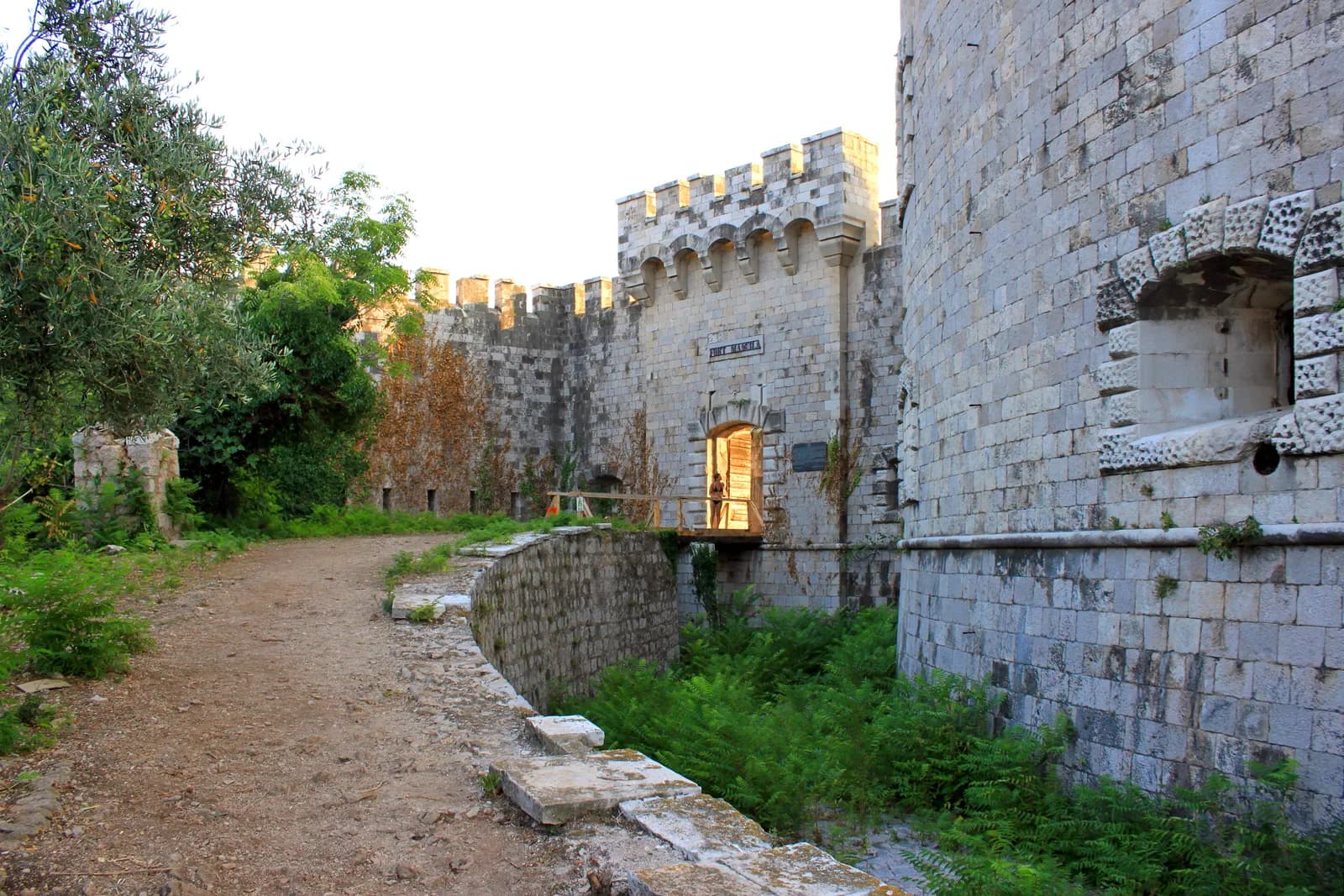 MamulaAn island that is almost entirely fortress, where 2,332 people were imprisoned and 130 died, and where you can now book a room.
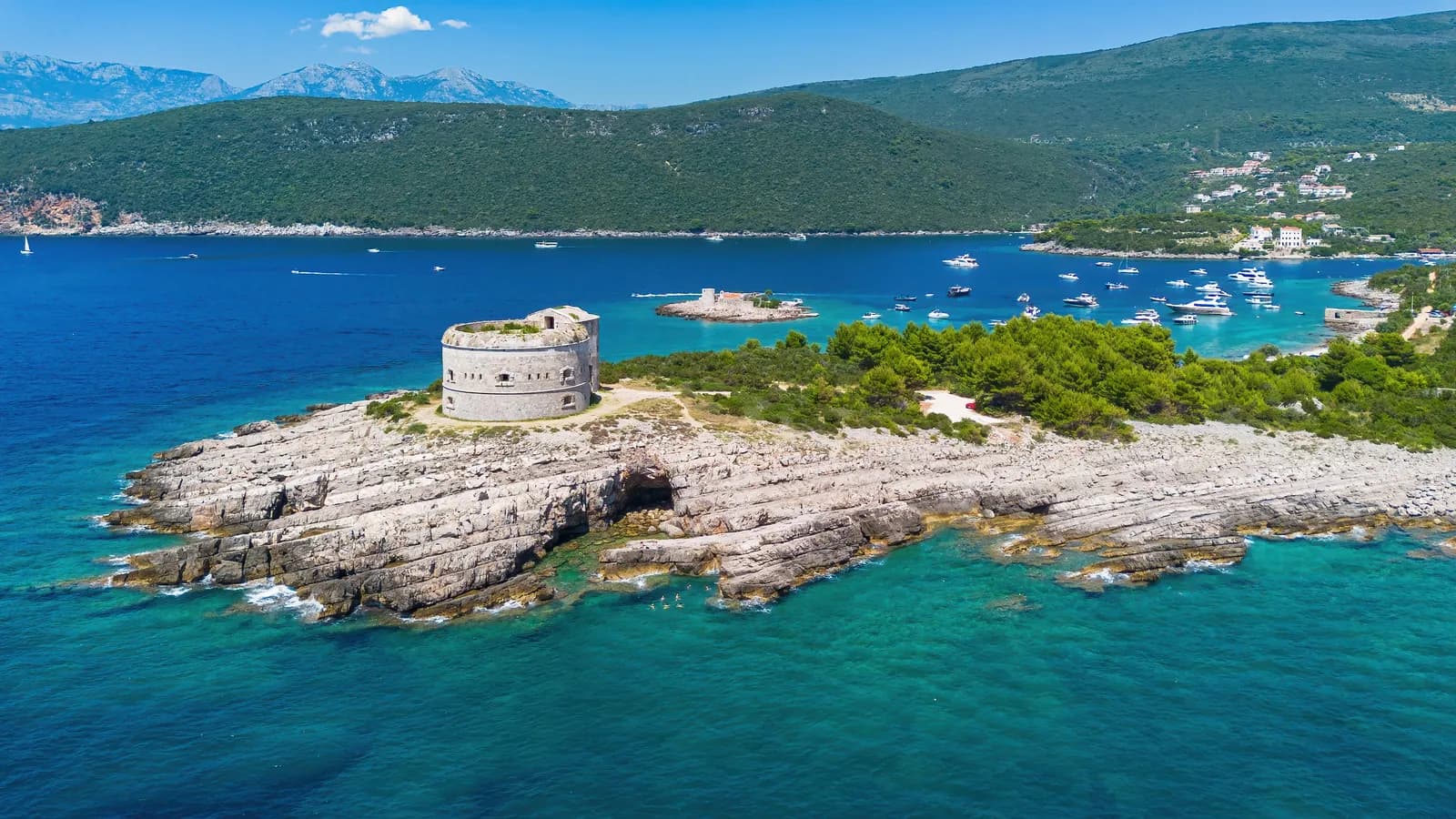 ArzaThe third gun of a three-gun gate, garrisoned by ninety-two men, sold in 2009, and the only fortress in Montenegro you cannot get into.
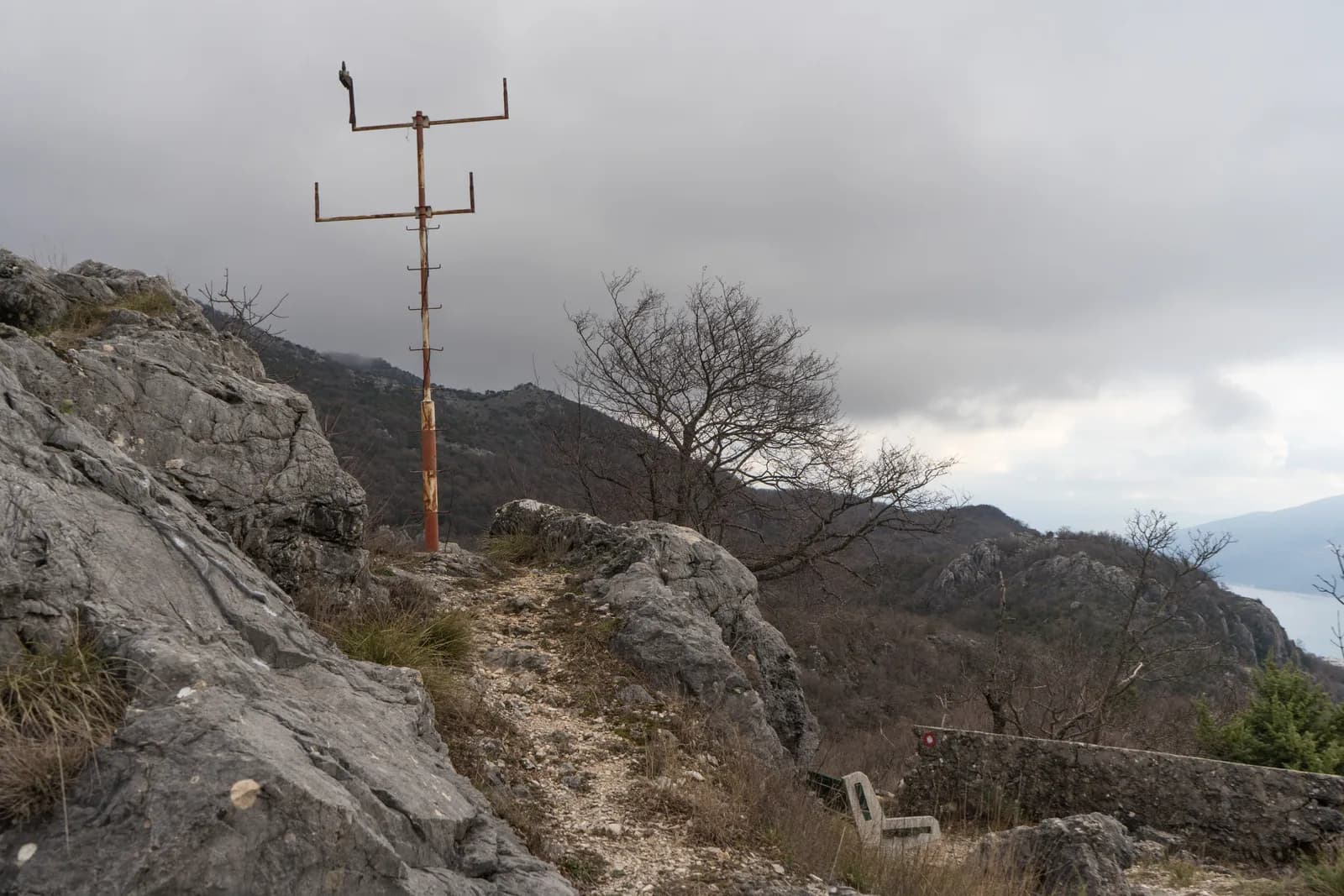 Tajno brdoSecret Hill: a battlefield, an Austro-Hungarian gun position, a tunnel system, an execution ground and a Cold War bunker — all on the same 490 metres.
Names and empires changed; the fortified stair-city kept adapting. Anton Perko’s watercolor and a modern Forte Mare view make that accumulation readable.
6 eras · source-linked
Selected chapter · 5 of 6
Compare the fortress profile, not exact pixels.
Move through the city’s rule
Orthodox Savina, Catholic churches and the traces of Ottoman Islamic rule belong to the same fortified landscape. Successive rulers changed institutions faster than they erased sacred memory.
Tvrtko’s foundation accumulated Ottoman, Spanish, Venetian and Habsburg walls and towers. The stair city, Forte Mare, Kanli Kula and Španjola still expose that sequence.
Compare the fortress profile, not exact pixels.
Istorijska hronologija
1382.
Bosanski kralj Tvrtko I podigao je grad kao utvrđenu luku, što pamte imena Novi i Castrum Novum.
Već sama zamisao osnivanja podrazumijeva i grad i tvrđavu.
1482.
Osmanskim osvajanjem počela su dva vijeka u kojima su se utvrđenja, vodovodni sistemi i vjerski život više puta mijenjali.
Kanli kula pripada tom naslojenom odbrambenom pejzažu.
1538–1539.
Snage pod habzburškom komandom zauzele su grad, ali su ga osmanske trupe povratile naredne godine, nakon čuvene opsade.
Jedna jedina godina stvorila je trajno sjećanje na „špansku tvrđavu”.
1687.
Mletačke snage zauzele su Castelnuovo i uključile ga u svoj jadranski odbrambeni i trgovački prostor.
Italijansko ime u kasnijim zapisima svjedoči o tom dugom trajanju.
do 1905.
Akvarel bilježi Forte Mare u vrijeme kad se grad pod austrougarskom upravom spuštao ka radnoj obali.
Uporedite obris tvrđave, a ne piksele.
Danas
Javni život Herceg Novog razliva se između tvrđava, strmih uličica, suptropskog rastinja i nekadašnje pruge pretvorene u šetalište.
Zahtjevna topografija jeste projektantski jezik ovoga grada.
Then: Dokumentovani crtež sa širim kontekstom
Now: Savremeni pogled na grad ili pejzaž iz 2024.
Then: Tvrtko I osniva „novi grad”
Now: Utvrđeni grad postaje odredište vrtova i stepenica
Then: Pročitajte teren, puteve i naslijeđene znamenitosti
Now: Uočite novu gustinu, infrastrukturu i namjenu
Dates and interpretations are tied to the archive and research sources below. Image limitations are disclosed in the comparison.