Faith across eras
Orthodox Savina, Catholic churches and the traces of Ottoman Islamic rule belong to the same fortified landscape. Successive rulers changed institutions faster than they erased sacred memory.
Le Monténégro hier et aujourd'hui · Entrée des bouches de Kotor
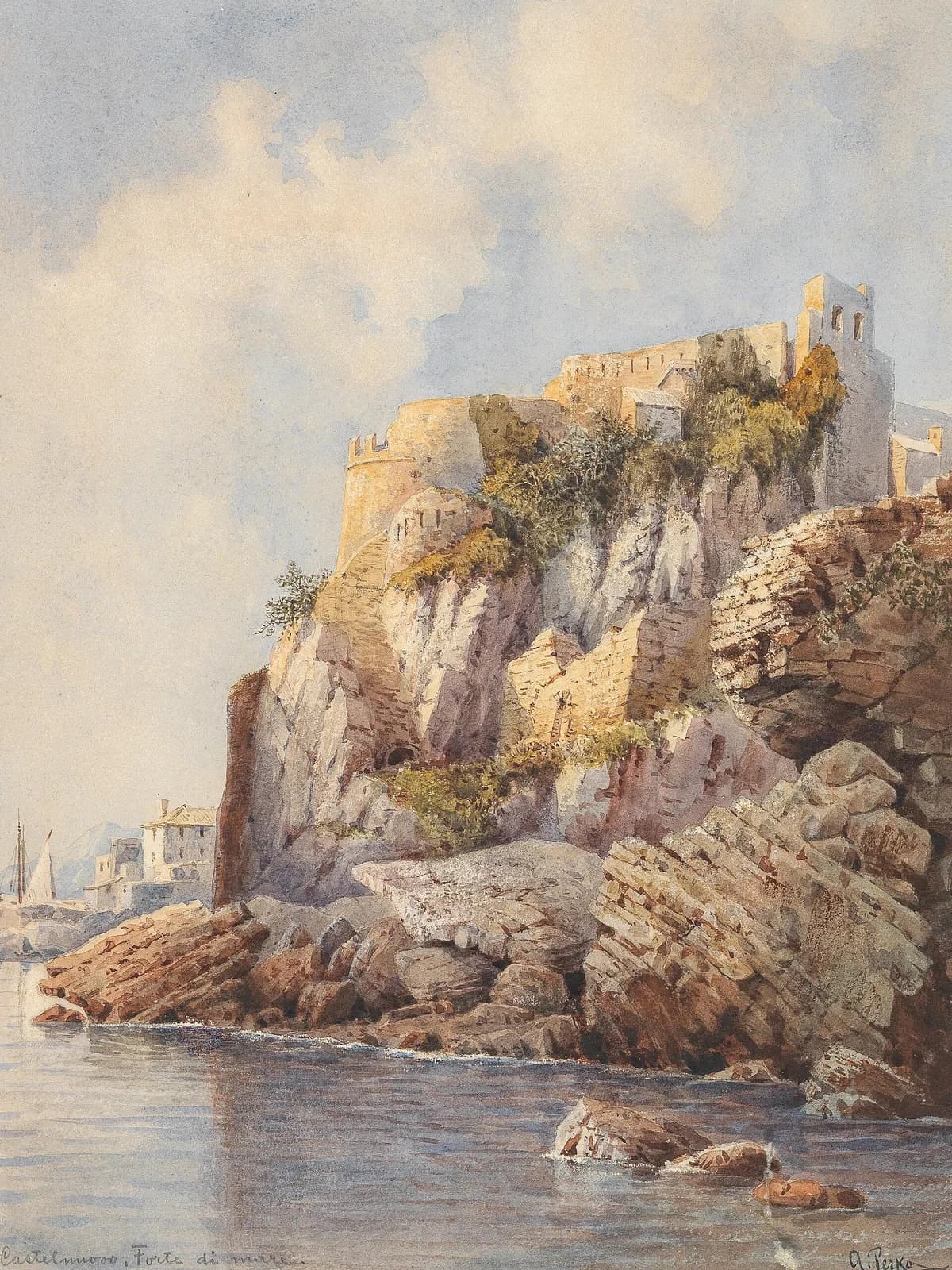
Les noms et les empires ont changé ; la ville-escalier fortifiée, elle, n'a cessé de s'adapter. L'aquarelle d'Anton Perko et une vue actuelle du Forte Mare rendent cette accumulation lisible.
Noms historiques : Castelnuovo
Aller plus loin
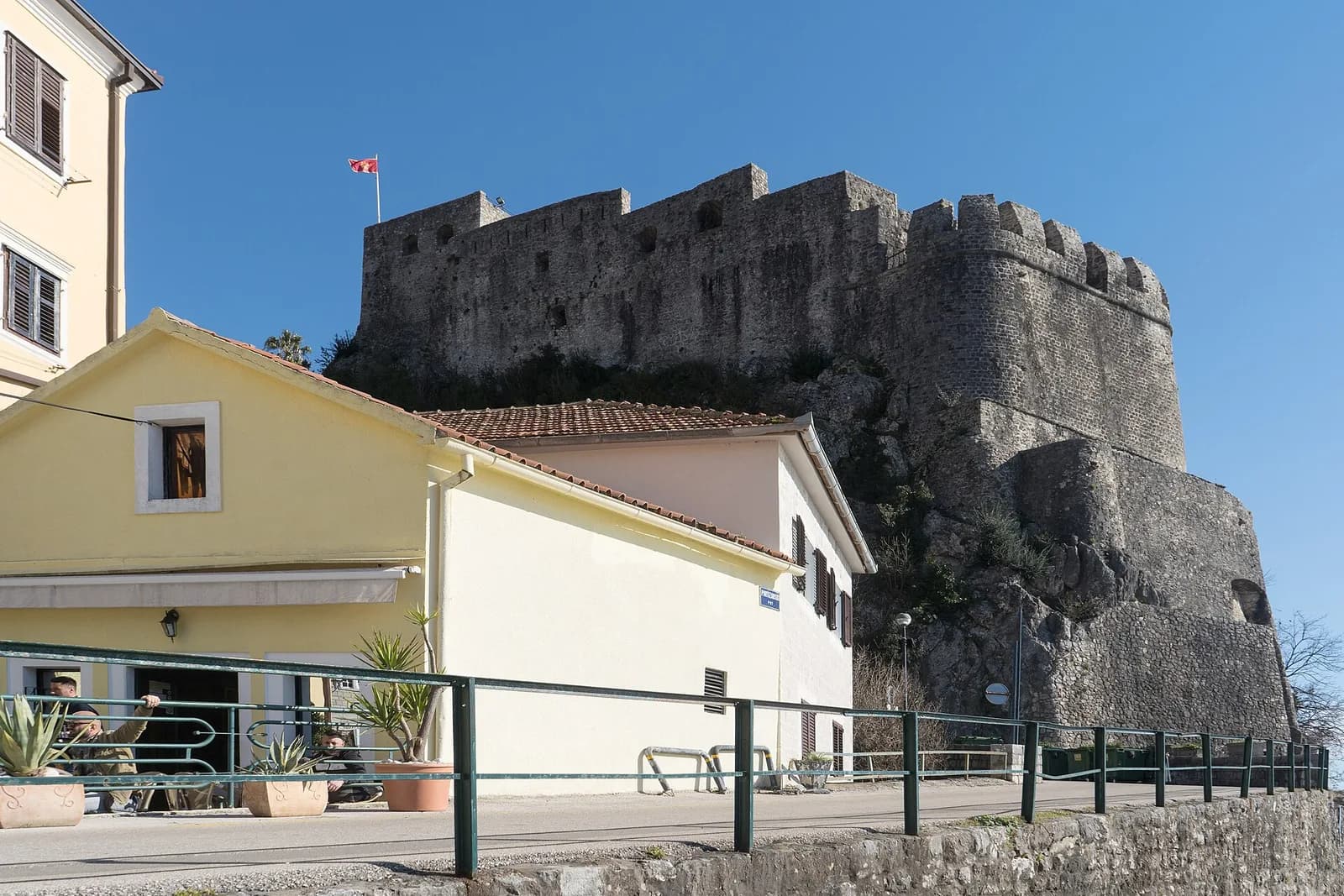 Forte MareA salt-trade watchtower that eight sovereignties rebuilt on top of each other — and that has now spent seventy-four summers as a cinema.
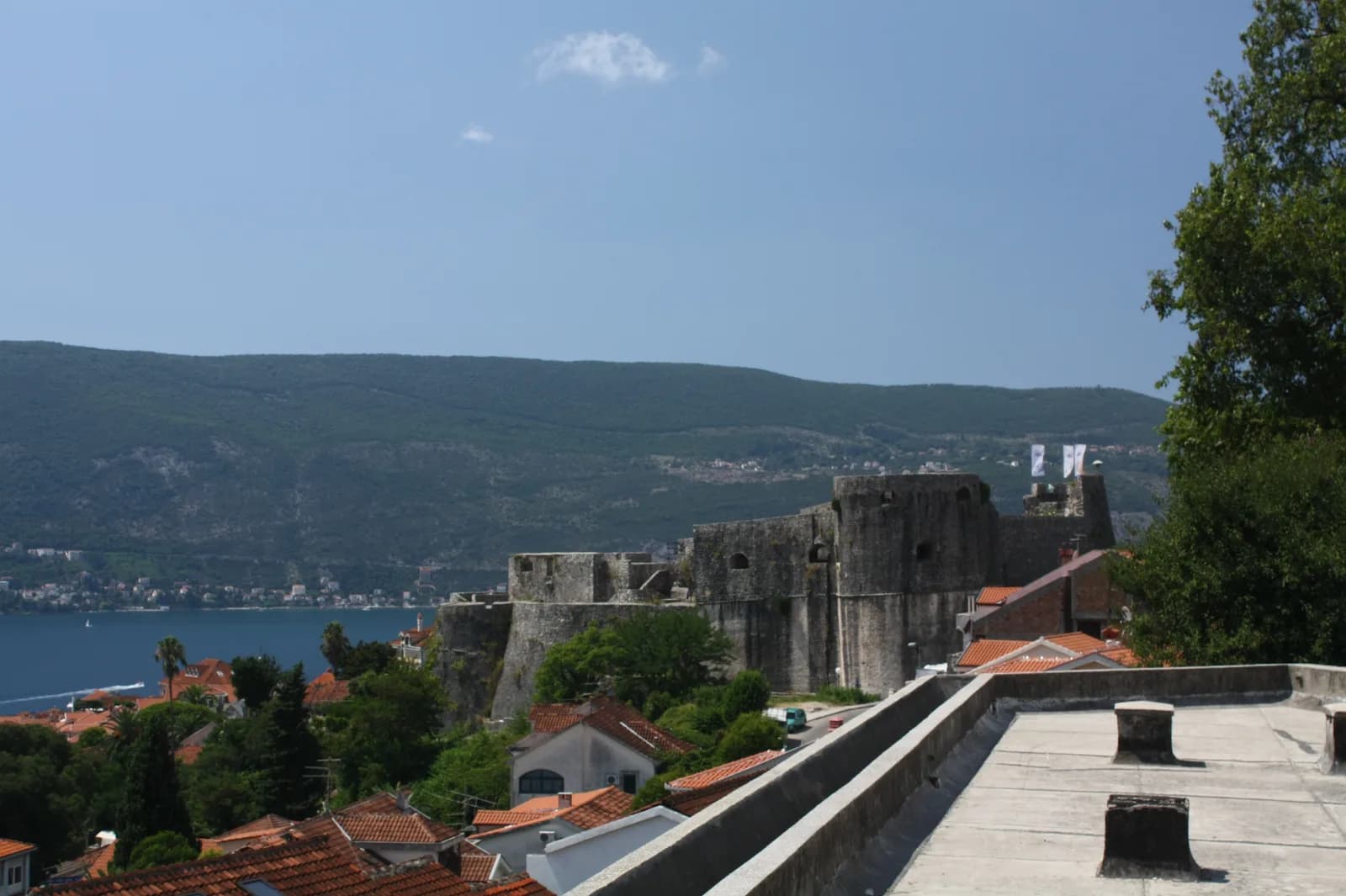 Kanli KulaA prison whose inmates dated it for us — they scratched ships into the walls — and which now seats a thousand people watching films.
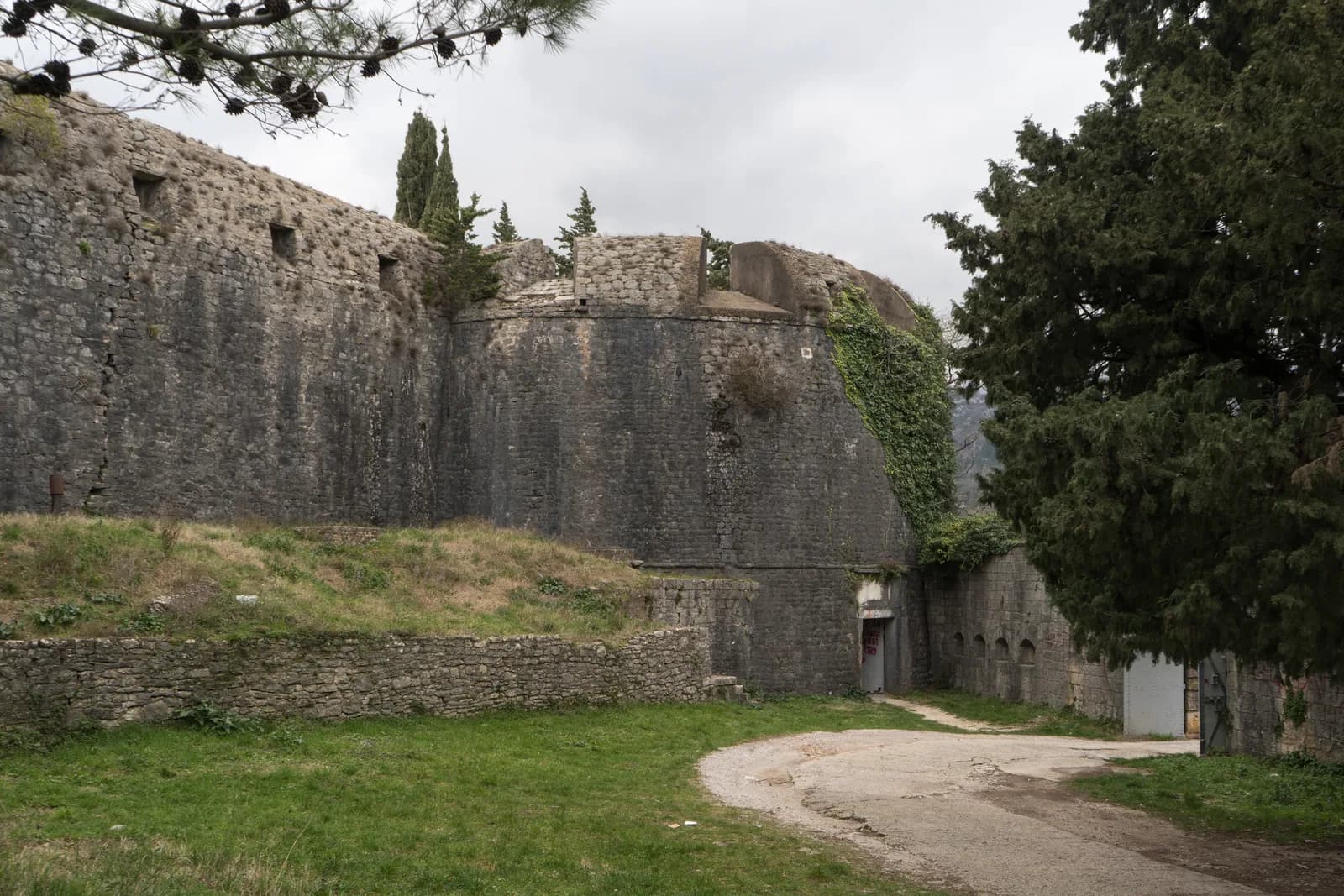 ŠpanjolaThe Spanish began it in a year they did not survive. The Ottomans finished it, and it still carries the name of the side that lost.
 CitadelaIt closed the southern end of the defences for centuries, nobody is sure when it was built, and in ninety seconds in 1979 it went into the sea.
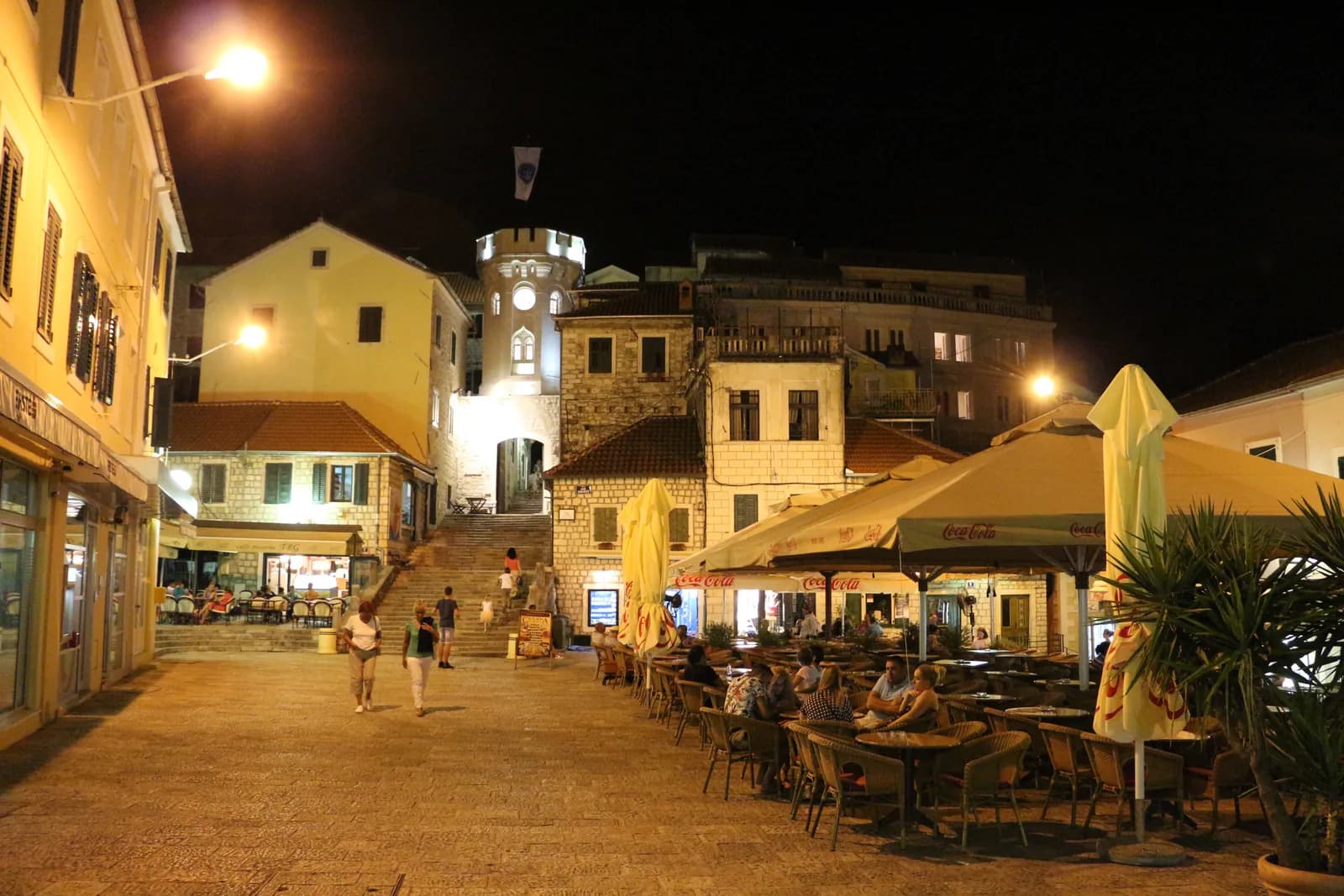 Sahat kulaSixteen metres of Ottoman gatehouse with a Russian bell, a Black Madonna and two dates that cannot both be right.
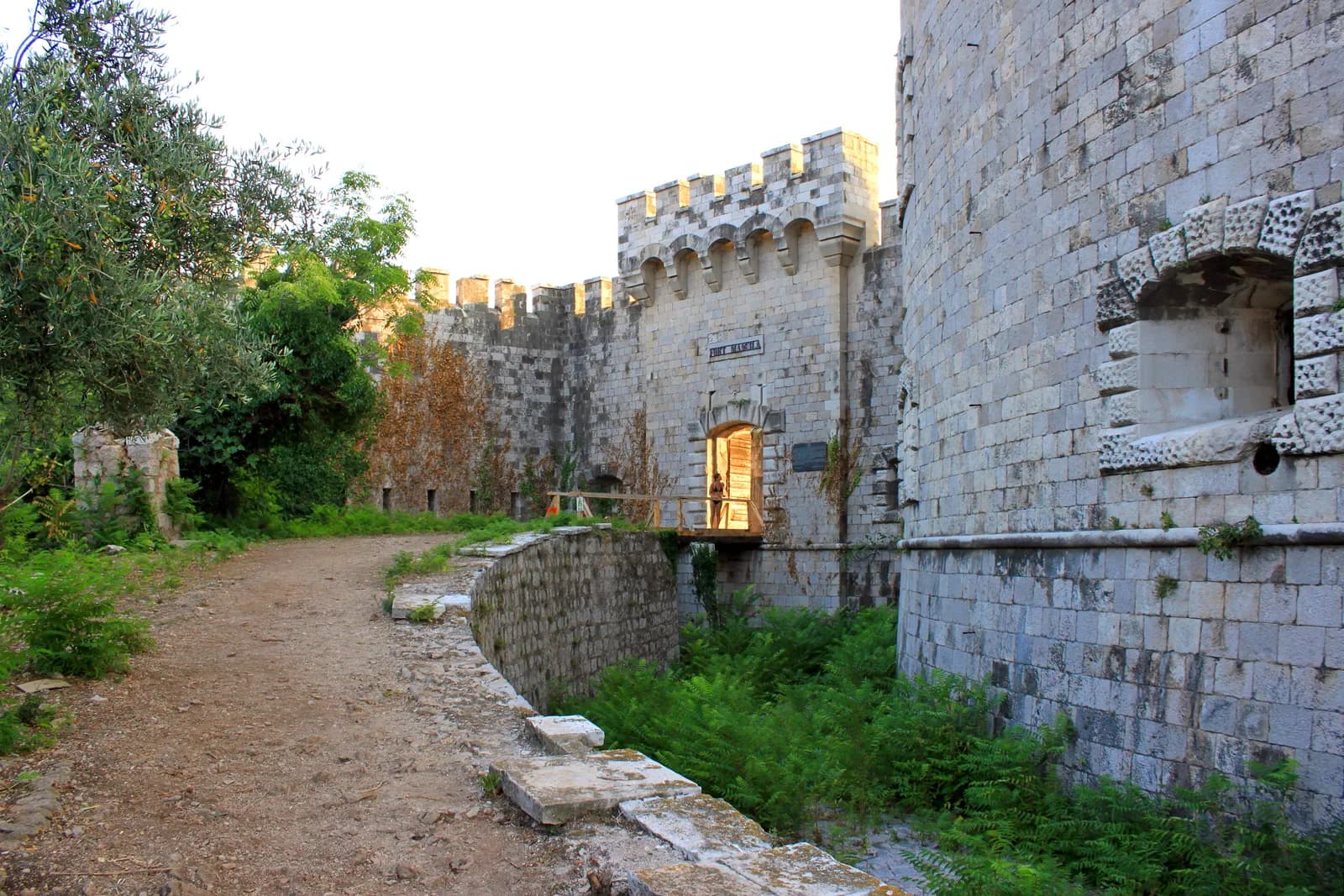 MamulaAn island that is almost entirely fortress, where 2,332 people were imprisoned and 130 died, and where you can now book a room.
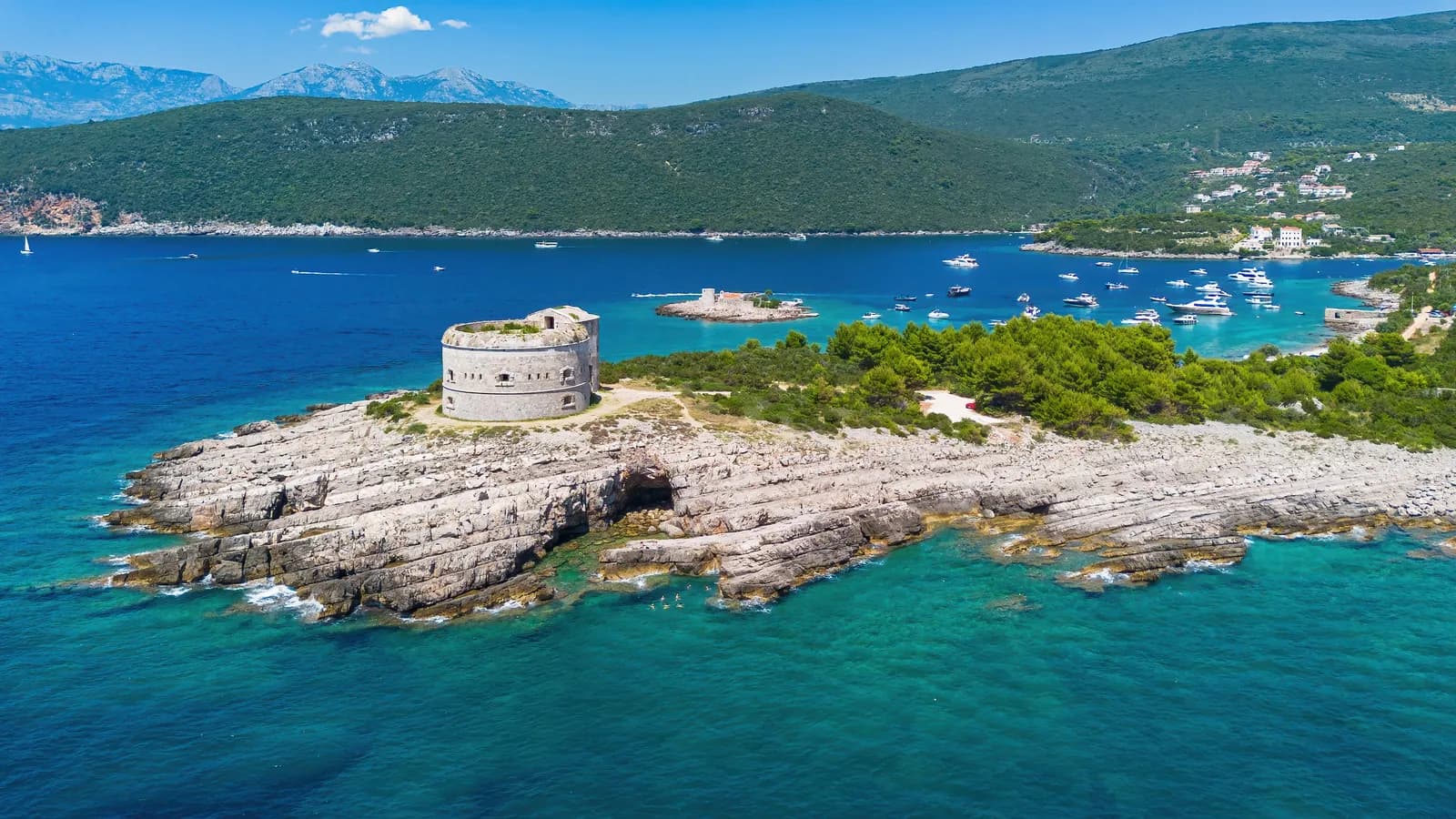 ArzaThe third gun of a three-gun gate, garrisoned by ninety-two men, sold in 2009, and the only fortress in Montenegro you cannot get into.
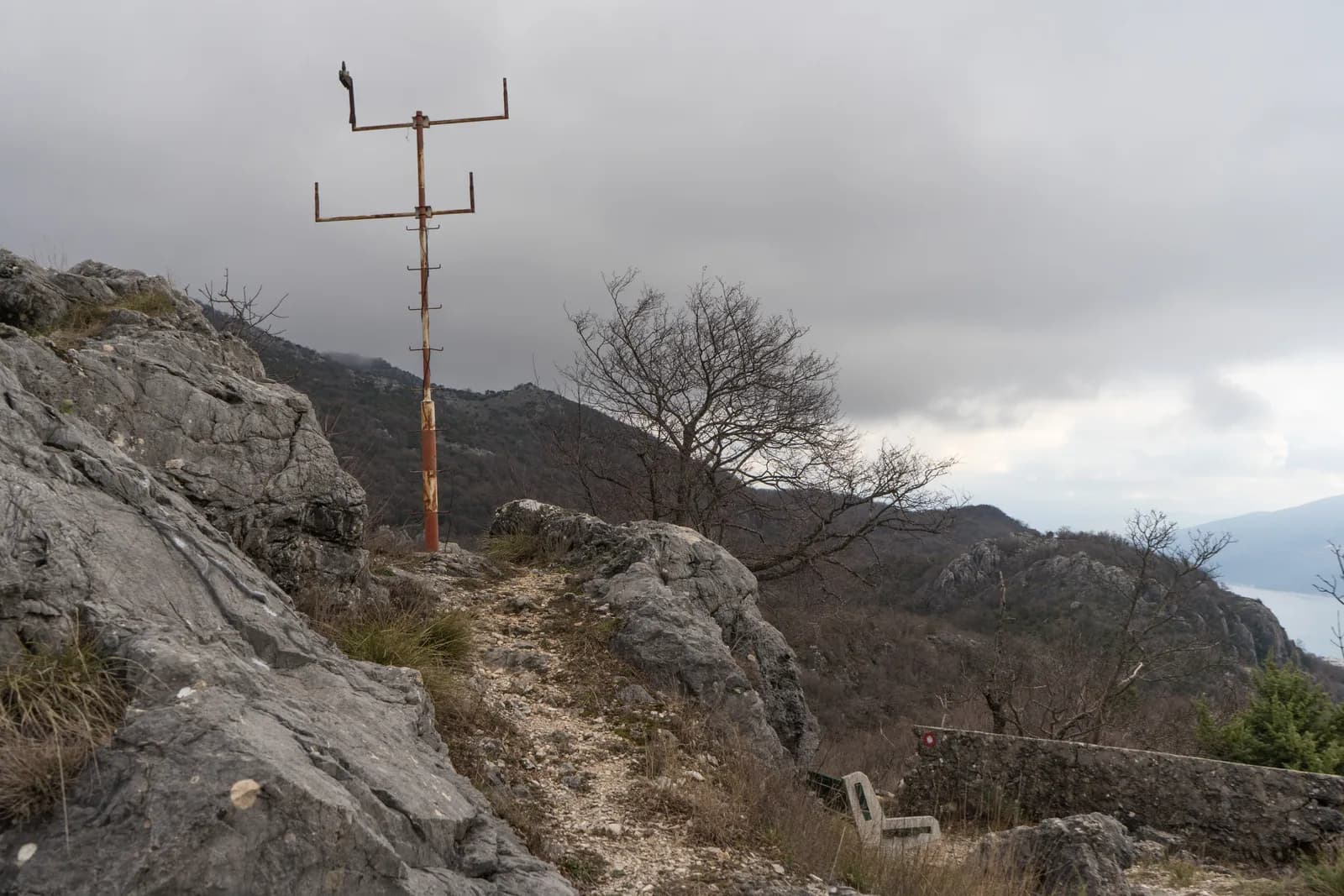 Tajno brdoSecret Hill: a battlefield, an Austro-Hungarian gun position, a tunnel system, an execution ground and a Cold War bunker — all on the same 490 metres.
Names and empires changed; the fortified stair-city kept adapting. Anton Perko’s watercolor and a modern Forte Mare view make that accumulation readable.
6 eras · source-linked
Selected chapter · 5 of 6
Compare the fortress profile, not exact pixels.
Move through the city’s rule
Orthodox Savina, Catholic churches and the traces of Ottoman Islamic rule belong to the same fortified landscape. Successive rulers changed institutions faster than they erased sacred memory.
Tvrtko’s foundation accumulated Ottoman, Spanish, Venetian and Habsburg walls and towers. The stair city, Forte Mare, Kanli Kula and Španjola still expose that sequence.
Compare the fortress profile, not exact pixels.
Chronologie historique
1382
Le roi de Bosnie Tvrtko Ier fit de la localité un port fortifié, dont les noms Novi et Castrum Novum gardent le souvenir.
L'idée fondatrice est d'emblée à la fois ville et forteresse.
1482
La conquête ottomane ouvrit deux siècles au cours desquels fortifications, réseaux d'eau et vie religieuse furent maintes fois remaniés.
Kanli Kula appartient à ce paysage défensif stratifié.
1538–1539
Une armée conduite par les Habsbourg s'empara de la ville, mais les troupes ottomanes la reprirent l'année suivante au terme d'un siège resté célèbre.
Une seule année a suffi à fixer durablement la mémoire d'une « forteresse espagnole ».
1687
Les forces vénitiennes prirent Castelnuovo et l'intégrèrent à leur système défensif et commercial adriatique.
Le nom italien qui figure dans les documents ultérieurs témoigne de cette longue postérité.
avant 1905
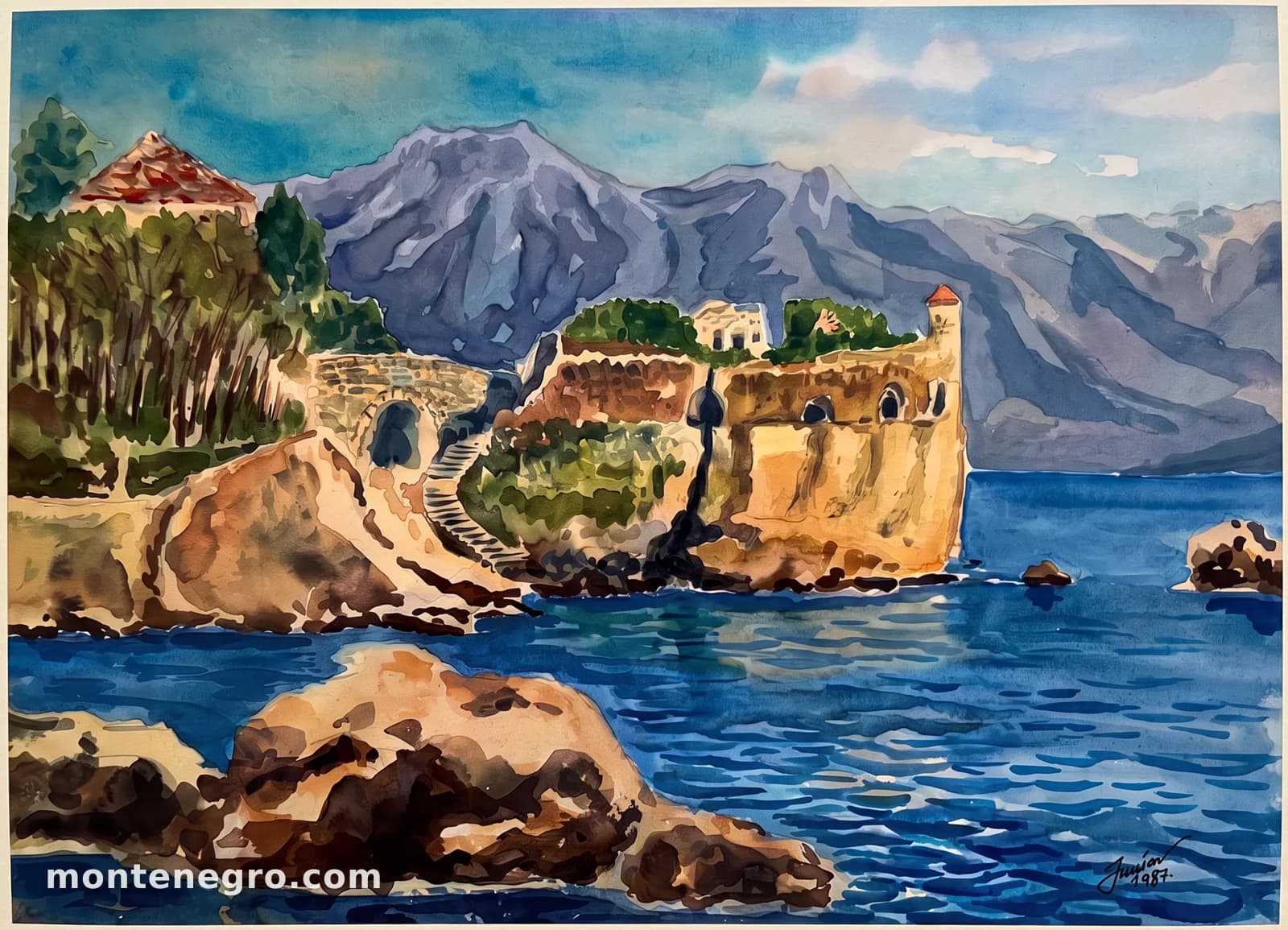
L'aquarelle fixe le Forte Mare à l'heure où la ville descendait vers un rivage en activité, sous administration austro-hongroise.
Comparez la silhouette de la forteresse, non le détail des pixels.
Aujourd'hui
La vie publique de Herceg Novi se déploie entre les forts, les ruelles en pente, les plantations subtropicales et l'ancienne promenade ferroviaire.
La topographie difficile constitue le langage même de la ville.
Then: Un dessin documenté offrant un contexte plus large
Now: Une vue urbaine ou paysagère actuelle, prise en 2024
Then: Tvrtko Ier fonde une « forteresse neuve »
Now: D'une ville-forteresse à une destination de jardins et d'escaliers
Then: Lire le terrain, les voies et les repères hérités
Now: Repérer les nouvelles densités, les infrastructures et les usages
Dates and interpretations are tied to the archive and research sources below. Image limitations are disclosed in the comparison.