Faith across eras
Orthodox Savina, Catholic churches and the traces of Ottoman Islamic rule belong to the same fortified landscape. Successive rulers changed institutions faster than they erased sacred memory.
Montenegro einst und jetzt · Einfahrt in die Bucht von Kotor
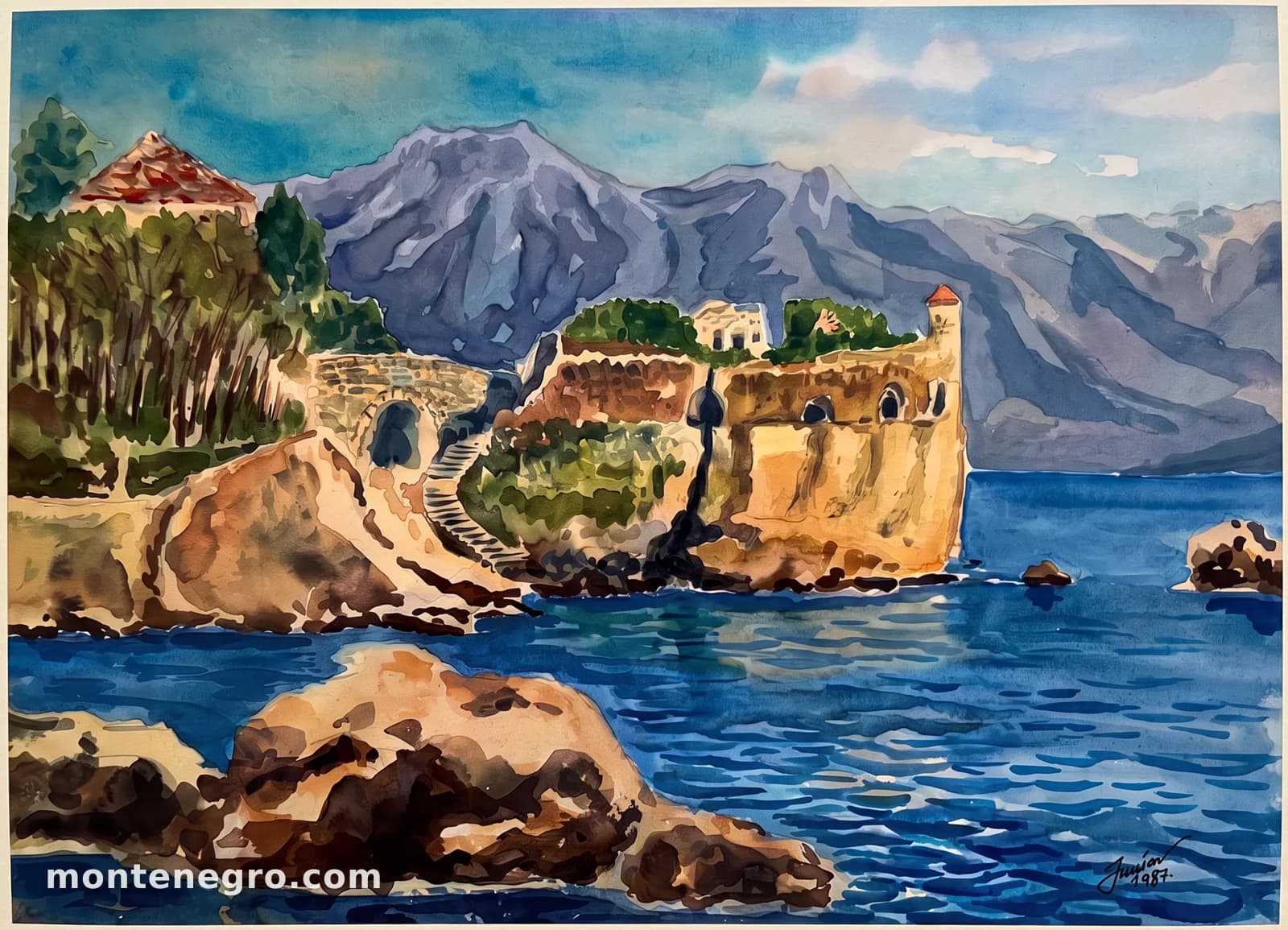
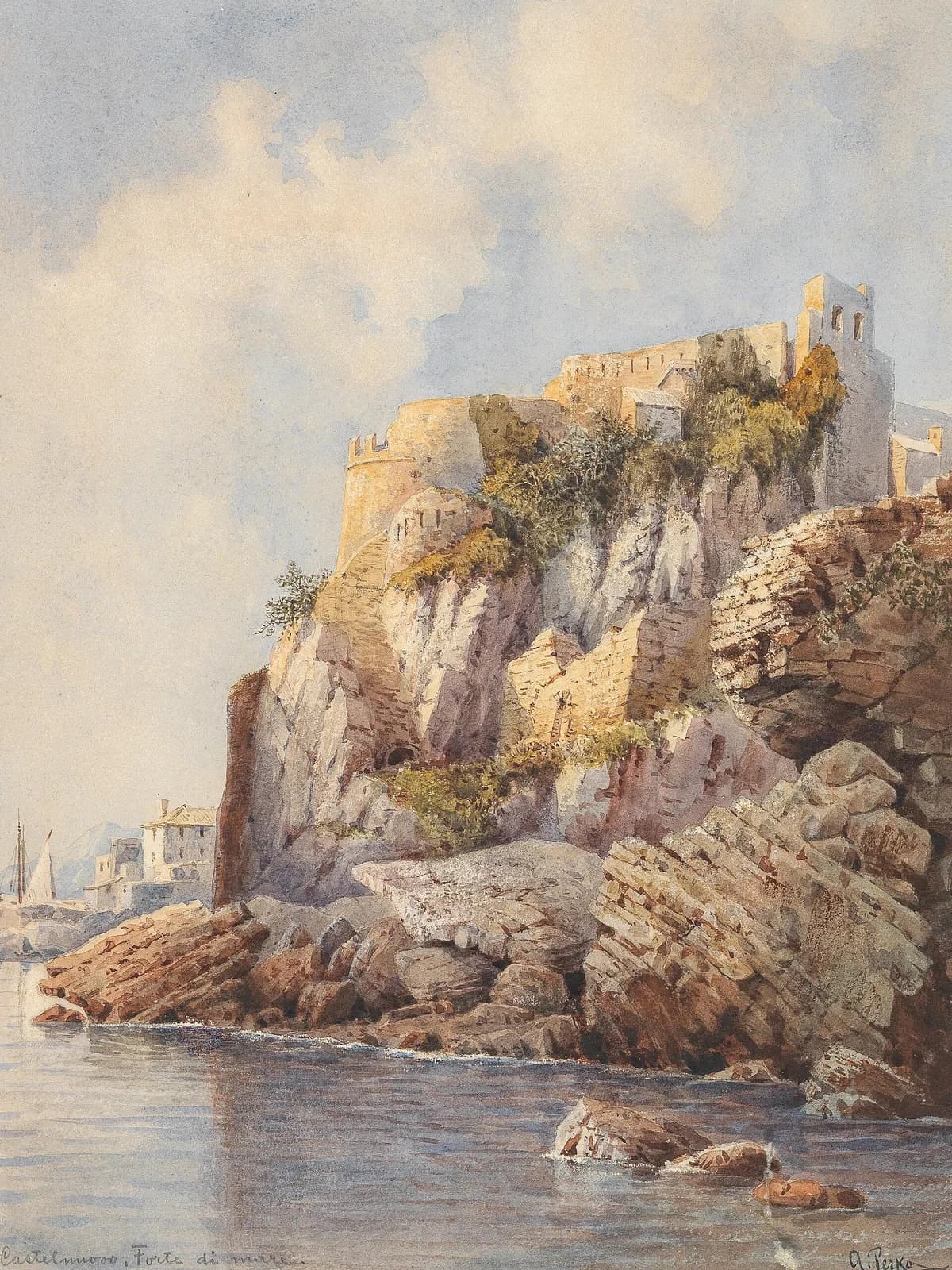
Namen und Reiche wechselten; die befestigte Treppenstadt passte sich immer weiter an. Anton Perkos Aquarell und ein heutiger Blick auf Forte Mare machen diese Schichtung lesbar.
Historische Namen: Castelnuovo
Tiefer eintauchen
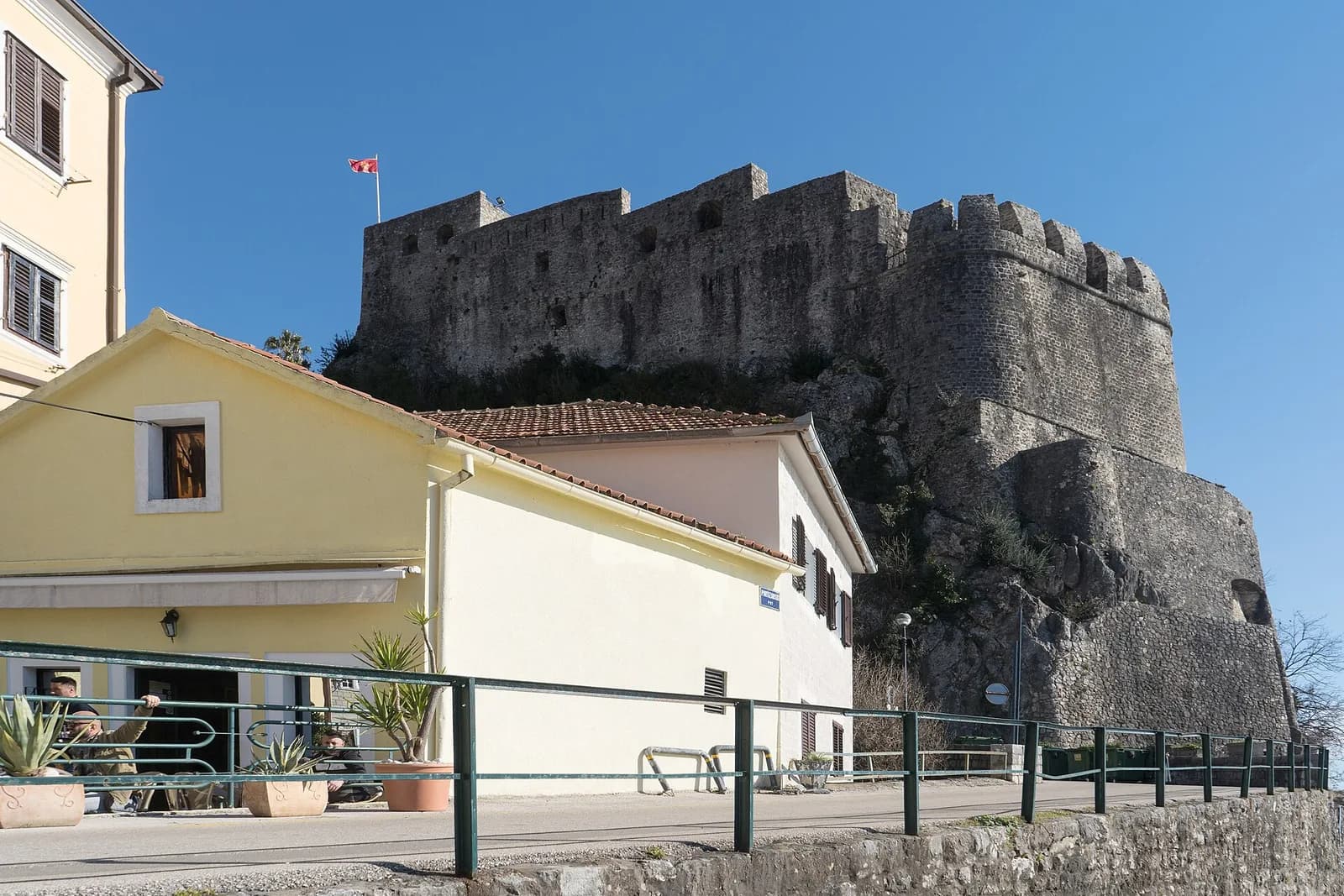 Forte MareA salt-trade watchtower that eight sovereignties rebuilt on top of each other — and that has now spent seventy-four summers as a cinema.
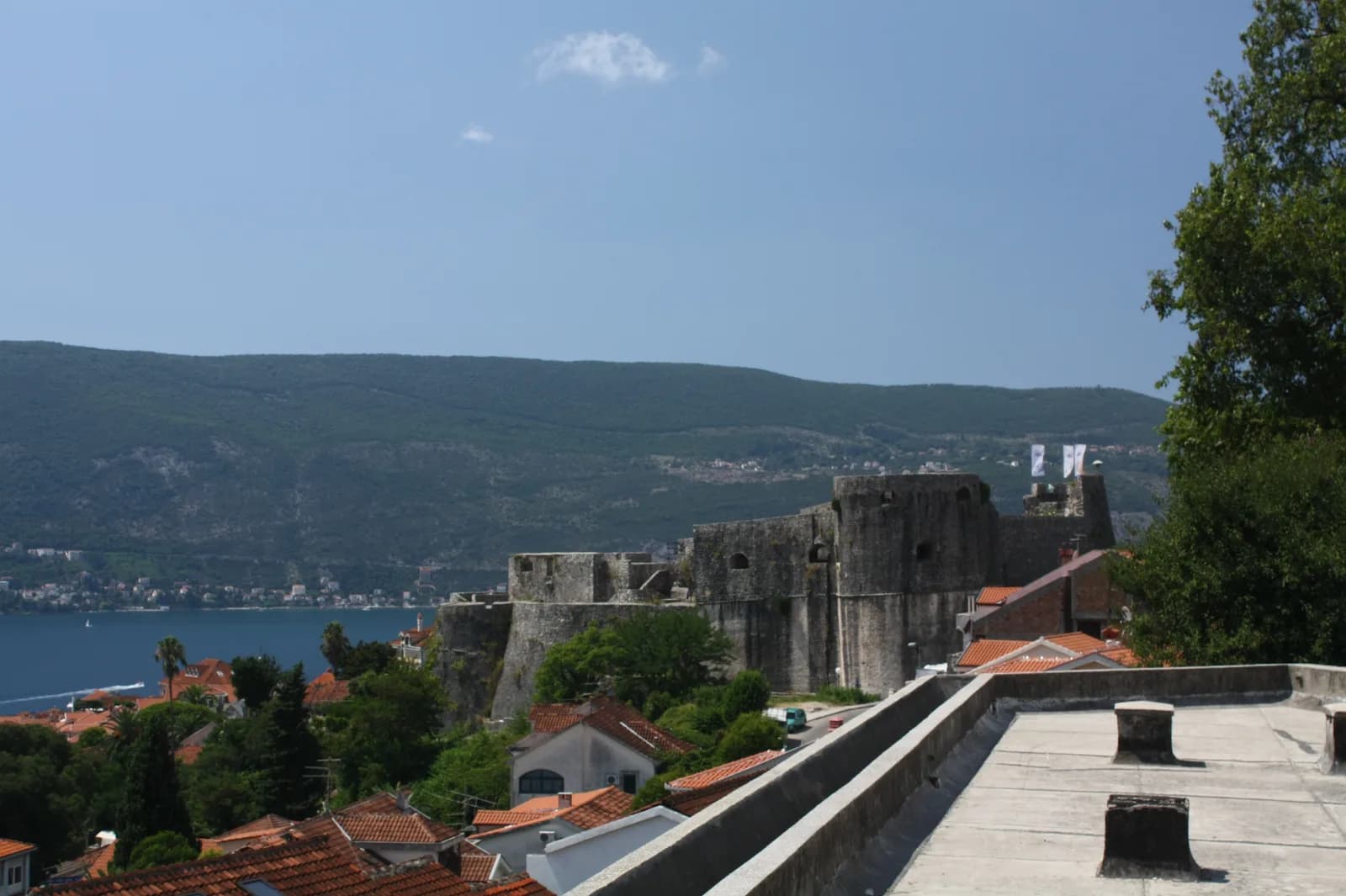 Kanli KulaA prison whose inmates dated it for us — they scratched ships into the walls — and which now seats a thousand people watching films.
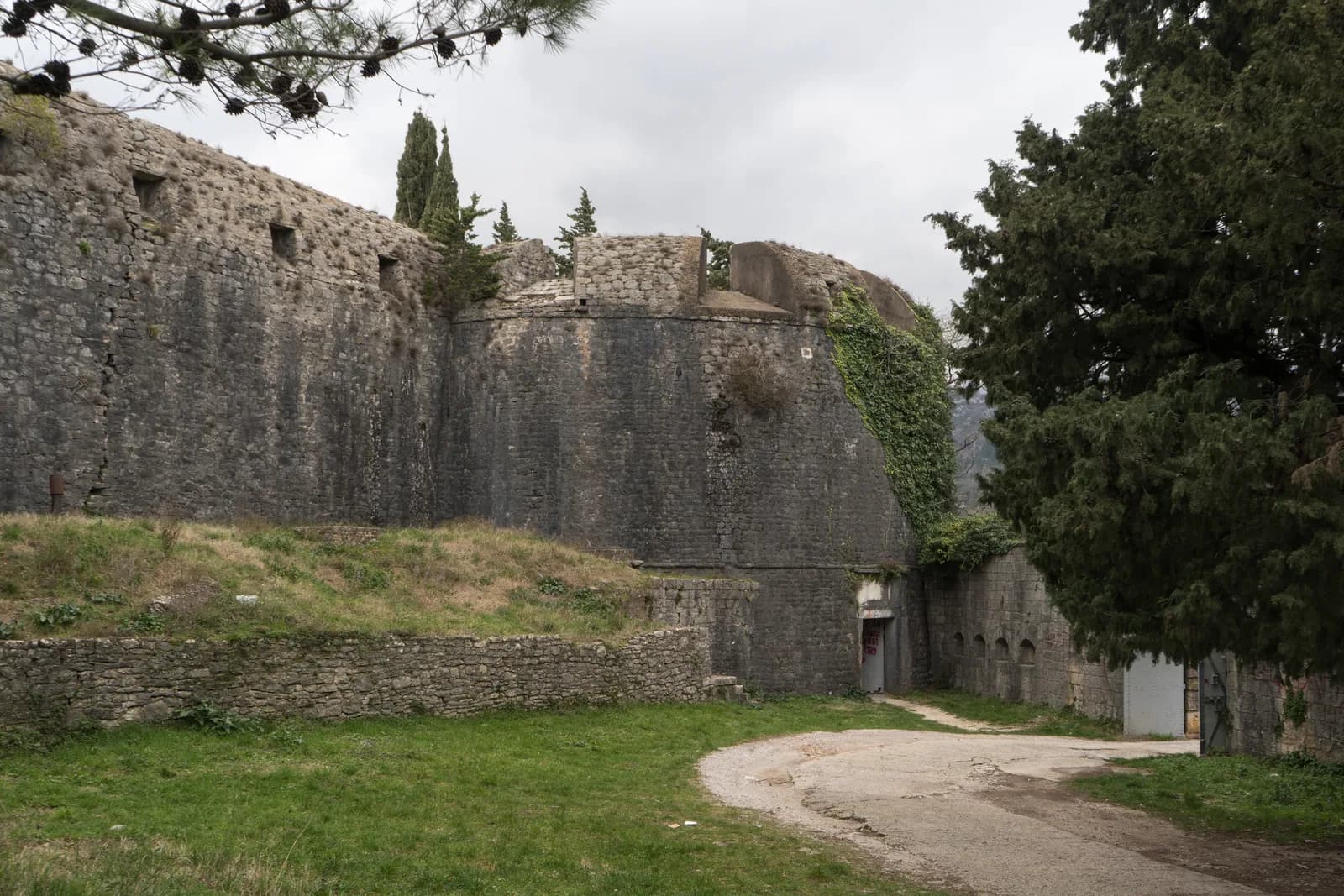 ŠpanjolaThe Spanish began it in a year they did not survive. The Ottomans finished it, and it still carries the name of the side that lost.
 CitadelaIt closed the southern end of the defences for centuries, nobody is sure when it was built, and in ninety seconds in 1979 it went into the sea.
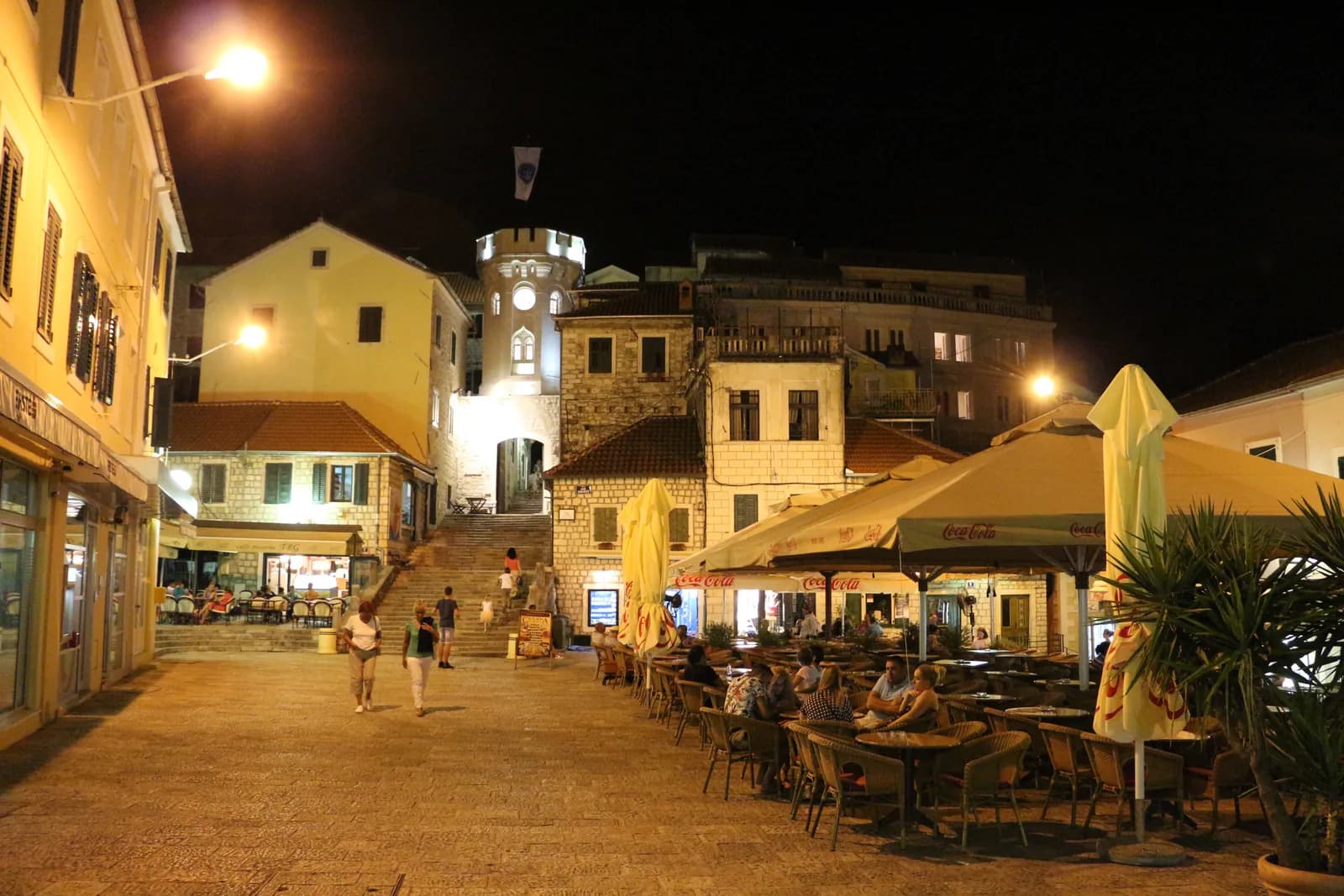 Sahat kulaSixteen metres of Ottoman gatehouse with a Russian bell, a Black Madonna and two dates that cannot both be right.
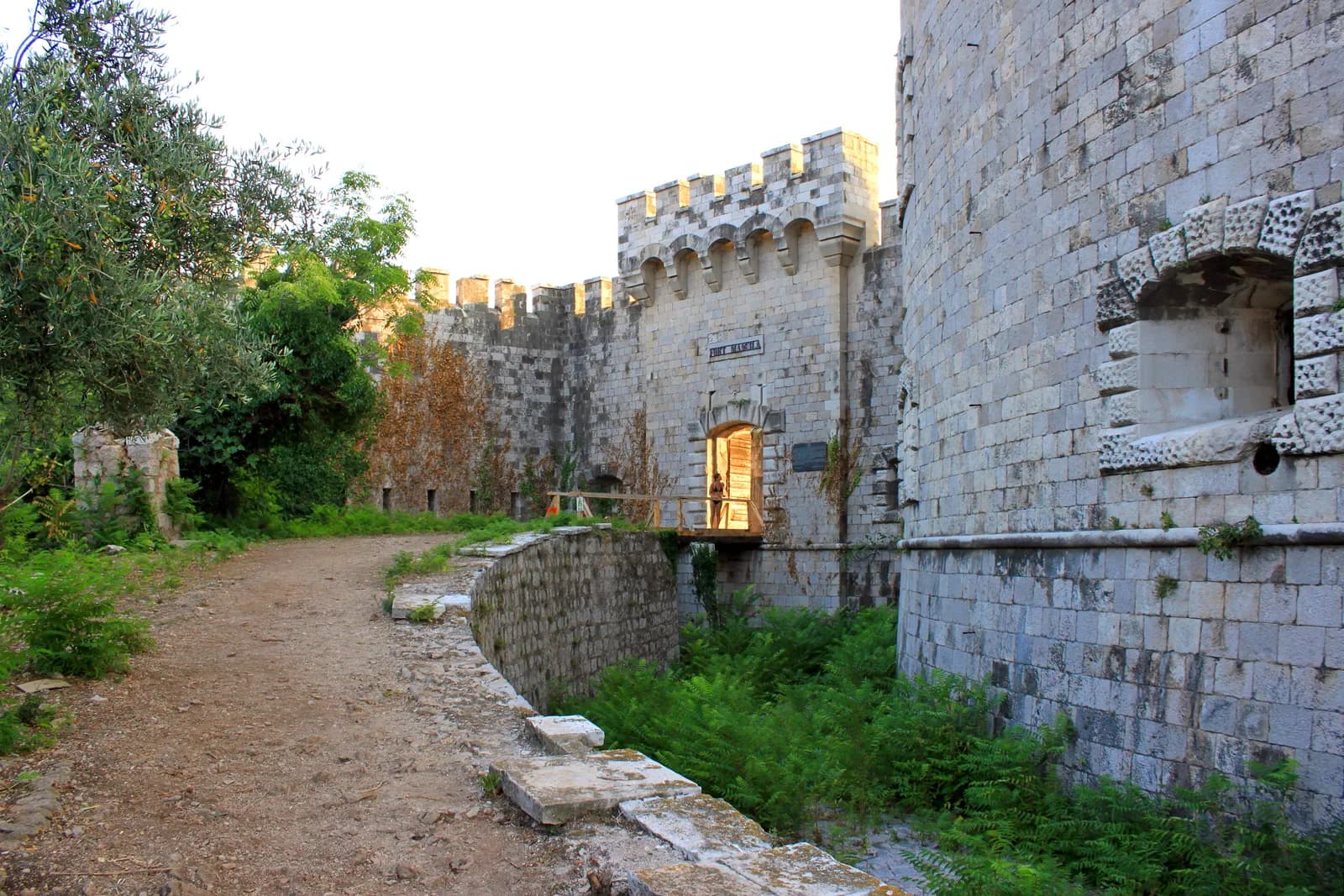 MamulaAn island that is almost entirely fortress, where 2,332 people were imprisoned and 130 died, and where you can now book a room.
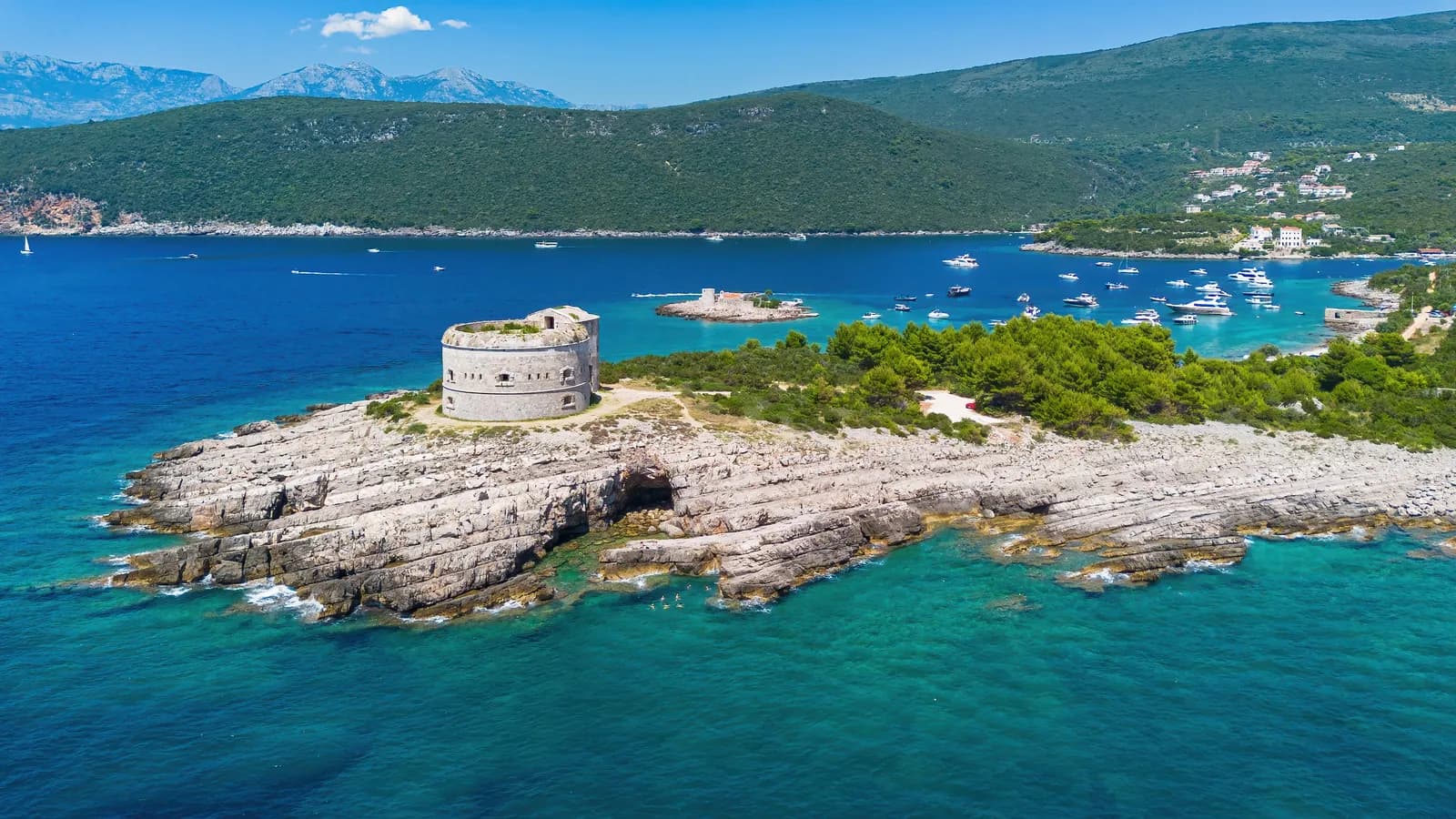 ArzaThe third gun of a three-gun gate, garrisoned by ninety-two men, sold in 2009, and the only fortress in Montenegro you cannot get into.
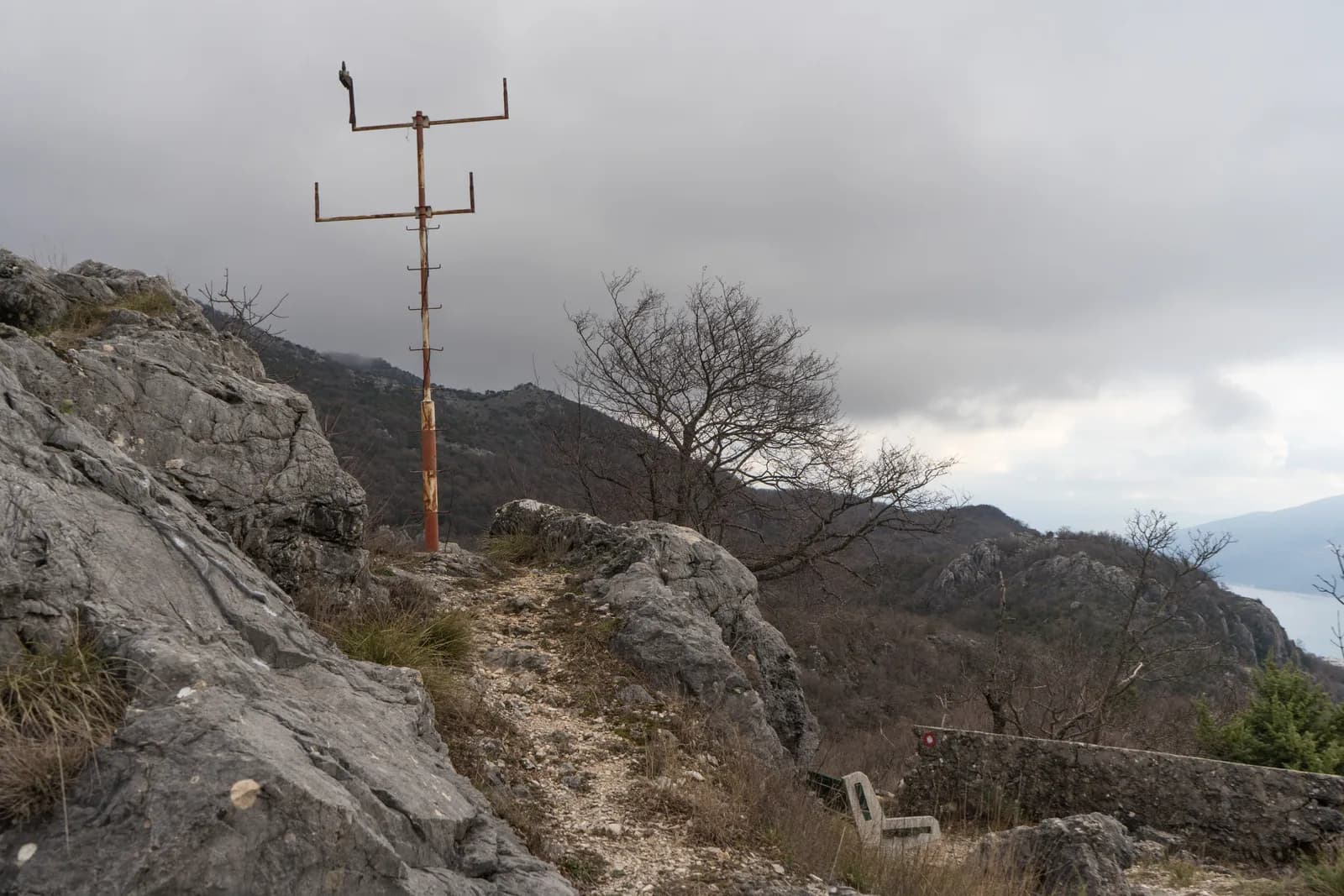 Tajno brdoSecret Hill: a battlefield, an Austro-Hungarian gun position, a tunnel system, an execution ground and a Cold War bunker — all on the same 490 metres.
Names and empires changed; the fortified stair-city kept adapting. Anton Perko’s watercolor and a modern Forte Mare view make that accumulation readable.
6 eras · source-linked
Selected chapter · 5 of 6
Compare the fortress profile, not exact pixels.
Move through the city’s rule
Orthodox Savina, Catholic churches and the traces of Ottoman Islamic rule belong to the same fortified landscape. Successive rulers changed institutions faster than they erased sacred memory.
Tvrtko’s foundation accumulated Ottoman, Spanish, Venetian and Habsburg walls and towers. The stair city, Forte Mare, Kanli Kula and Španjola still expose that sequence.
Compare the fortress profile, not exact pixels.
Historische Chronologie
1382
Der bosnische König Tvrtko I. gründete die Stadt als befestigten Hafen – ein Ursprung, der in den Namen Novi und Castrum Novum fortlebt.
Schon die Gründungsidee ist Stadt und Festung zugleich.
1482
Mit der osmanischen Eroberung begannen zwei Jahrhunderte, in denen sich Befestigungen, Wasserversorgung und religiöses Leben mehrfach wandelten.
Kanli Kula gehört zu dieser vielschichtigen Verteidigungslandschaft.
1538–1539
Ein habsburgisch geführtes Heer nahm die Stadt ein, doch osmanische Truppen eroberten sie im Jahr darauf nach einer berühmten Belagerung zurück.
Ein einziges Jahr schuf die bleibende Erinnerung an die „spanische Festung“.
1687
Venezianische Truppen nahmen Castelnuovo ein und banden es in ihr adriatisches Verteidigungs- und Handelsgefüge ein.
Der italienische Name in späteren Dokumenten zeugt von diesem langen Nachleben.
bis 1905
Das Aquarell hält Forte Mare fest, während die Stadt unter österreichisch-ungarischer Herrschaft zu einem geschäftigen Ufer hinabstieg.
Vergleichen Sie die Silhouette der Festung, nicht einzelne Bildpunkte.
Heute
Das öffentliche Leben von Herceg Novi verteilt sich auf Festungen, steile Gassen, subtropische Bepflanzung und die einstige Bahntrasse, heute Promenade.
Die schwierige Topografie ist die Entwurfssprache der Stadt.
Then: Eine dokumentierte Zeichnung mit weiterem Kontext
Now: Eine heutige Stadt- oder Landschaftsansicht von 2024
Then: Tvrtko I. gründet eine „neue Festung“
Now: Aus der Festungsstadt wird ein Ziel der Gärten und Treppen
Then: Gelände, Wege und überlieferte Wahrzeichen lesen
Now: Auf neue Dichte, Infrastruktur und Nutzung achten
Dates and interpretations are tied to the archive and research sources below. Image limitations are disclosed in the comparison.