Faith across eras
Orthodox Savina, Catholic churches and the traces of Ottoman Islamic rule belong to the same fortified landscape. Successive rulers changed institutions faster than they erased sacred memory.
Montenegro antes y ahora · Entrada a la bahía de Kotor
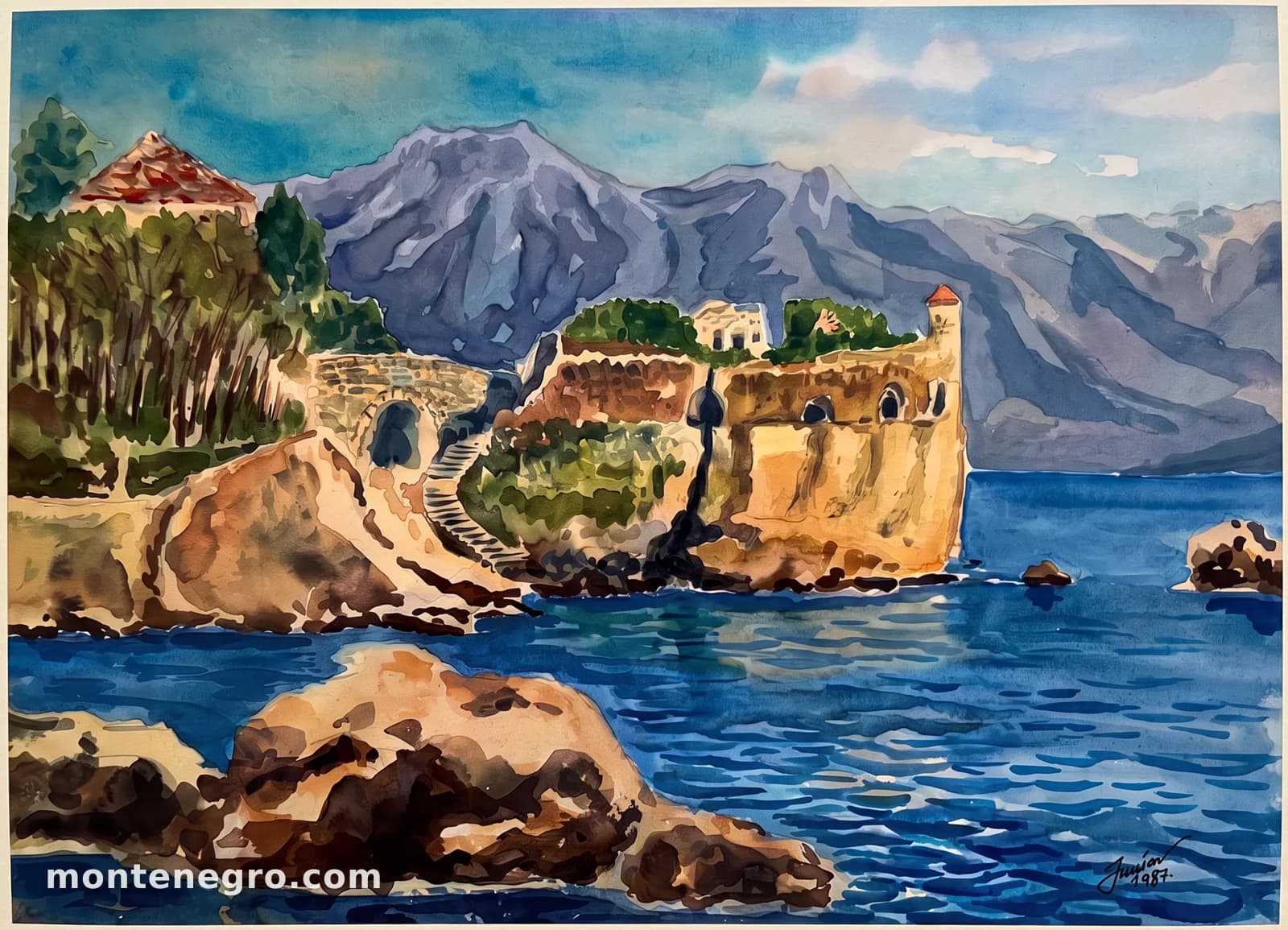
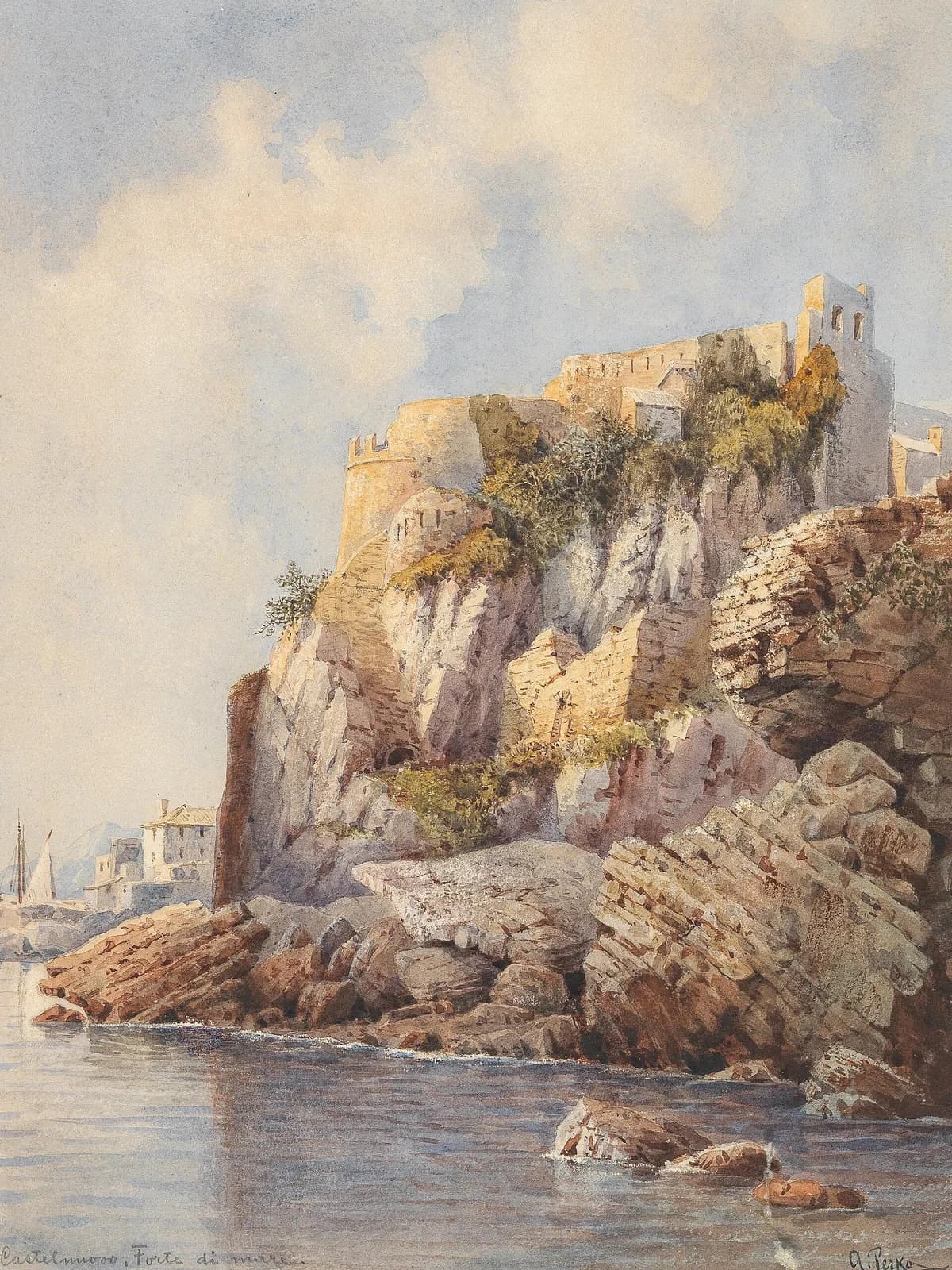
Cambiaron los nombres y los imperios; la ciudad-escalera fortificada siguió adaptándose. La acuarela de Anton Perko y una vista actual de Forte Mare permiten leer esa acumulación.
Nombres históricos: Castelnuovo
Profundizar
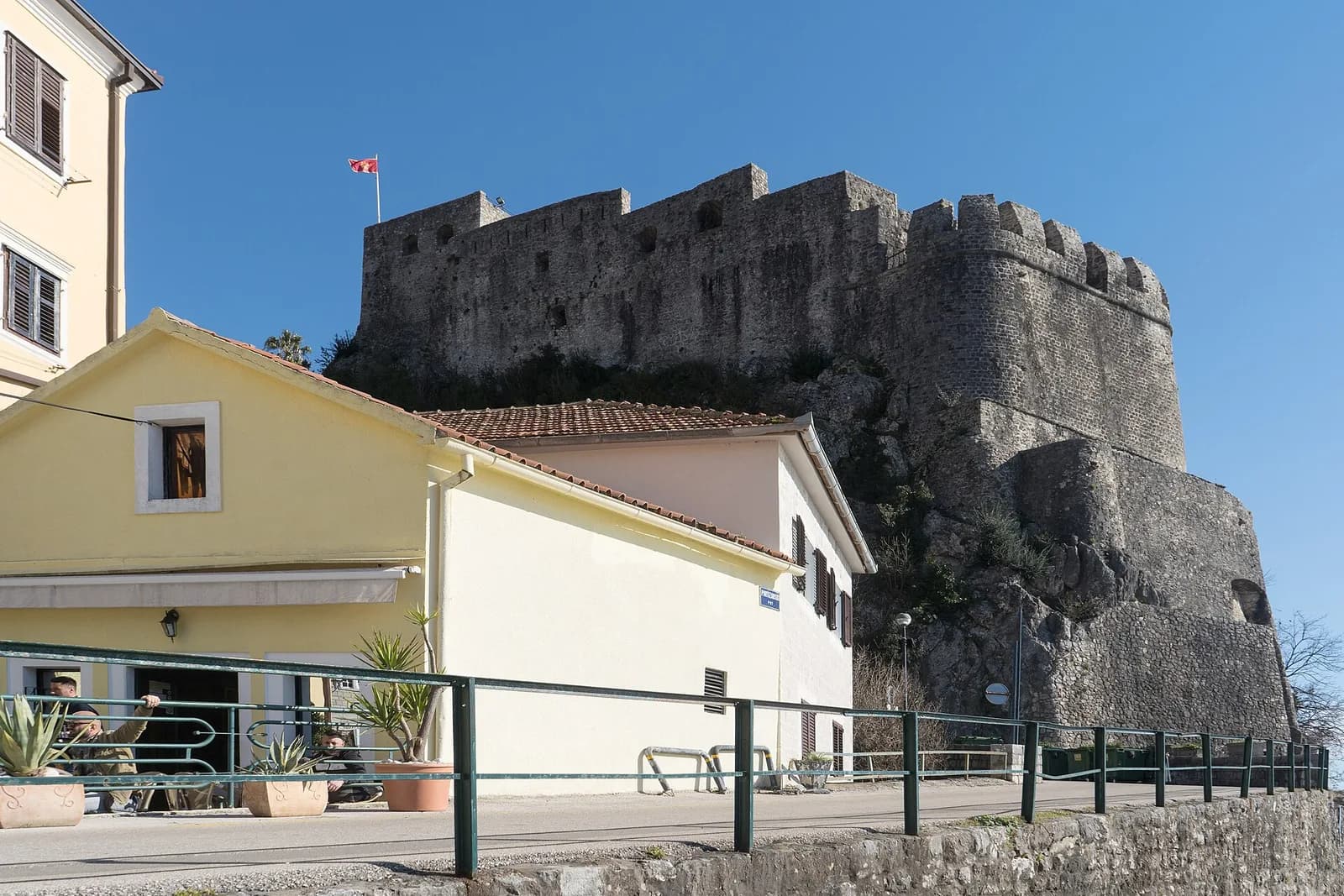 Forte MareA salt-trade watchtower that eight sovereignties rebuilt on top of each other — and that has now spent seventy-four summers as a cinema.
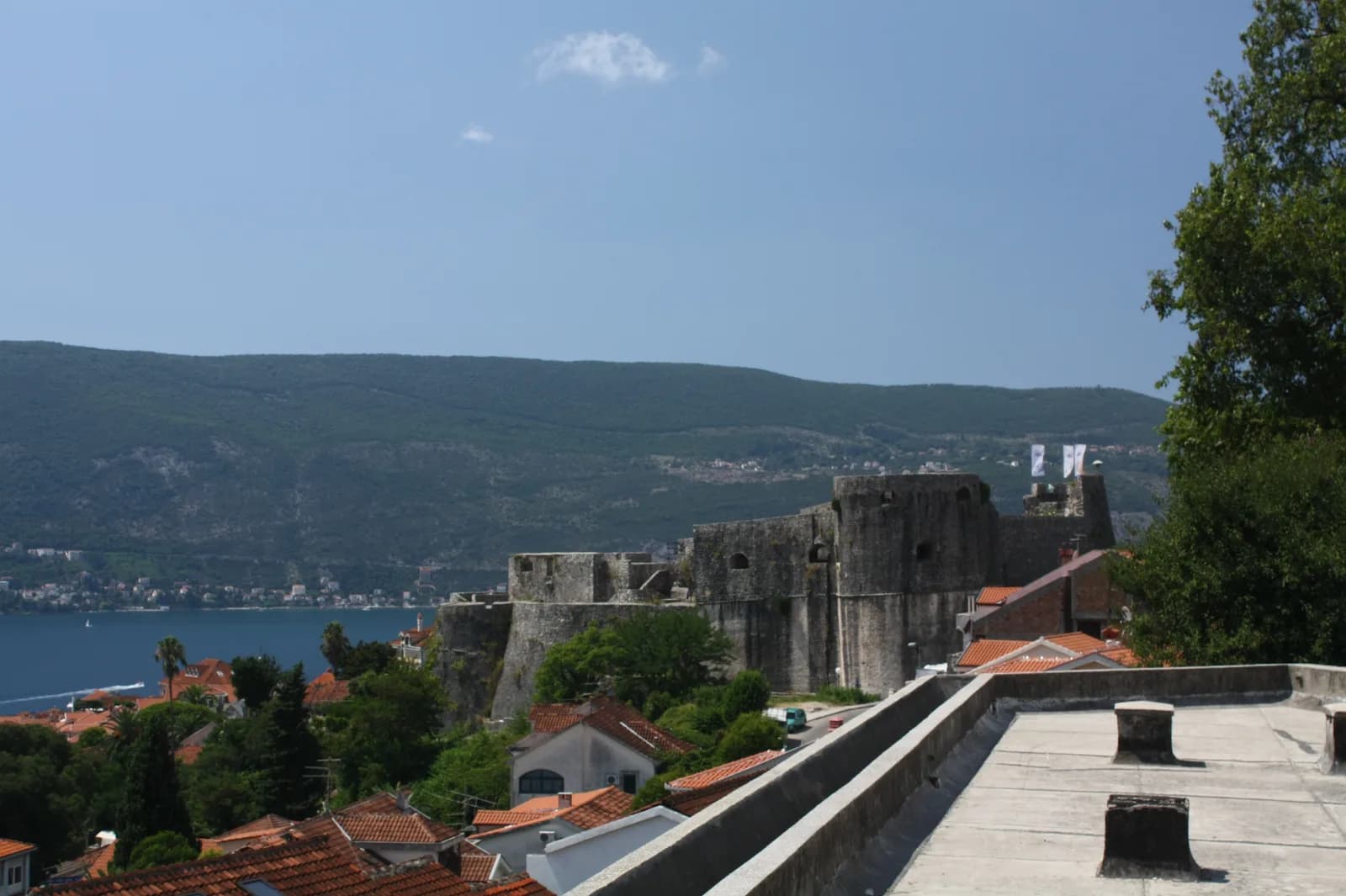 Kanli KulaA prison whose inmates dated it for us — they scratched ships into the walls — and which now seats a thousand people watching films.
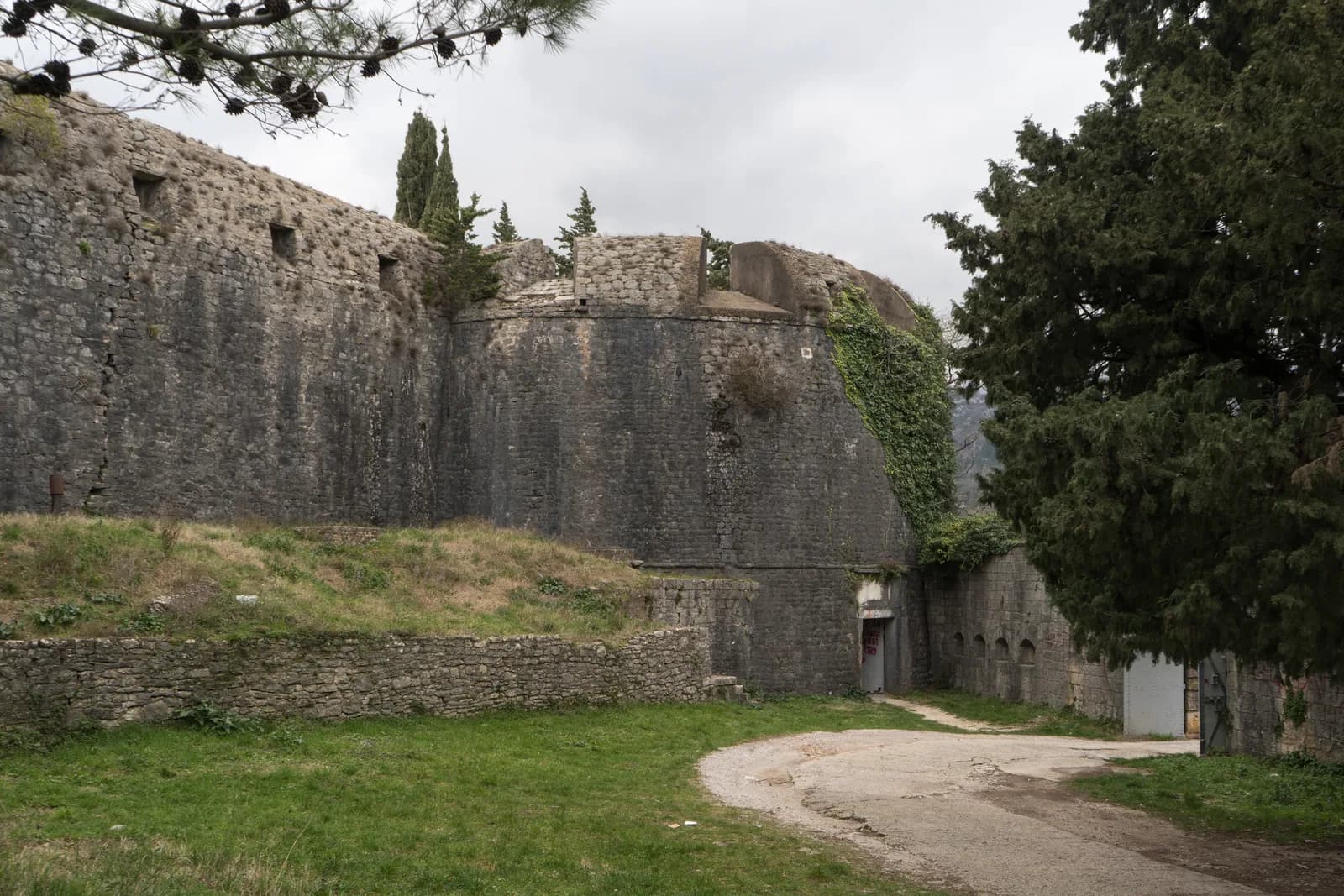 ŠpanjolaThe Spanish began it in a year they did not survive. The Ottomans finished it, and it still carries the name of the side that lost.
 CitadelaIt closed the southern end of the defences for centuries, nobody is sure when it was built, and in ninety seconds in 1979 it went into the sea.
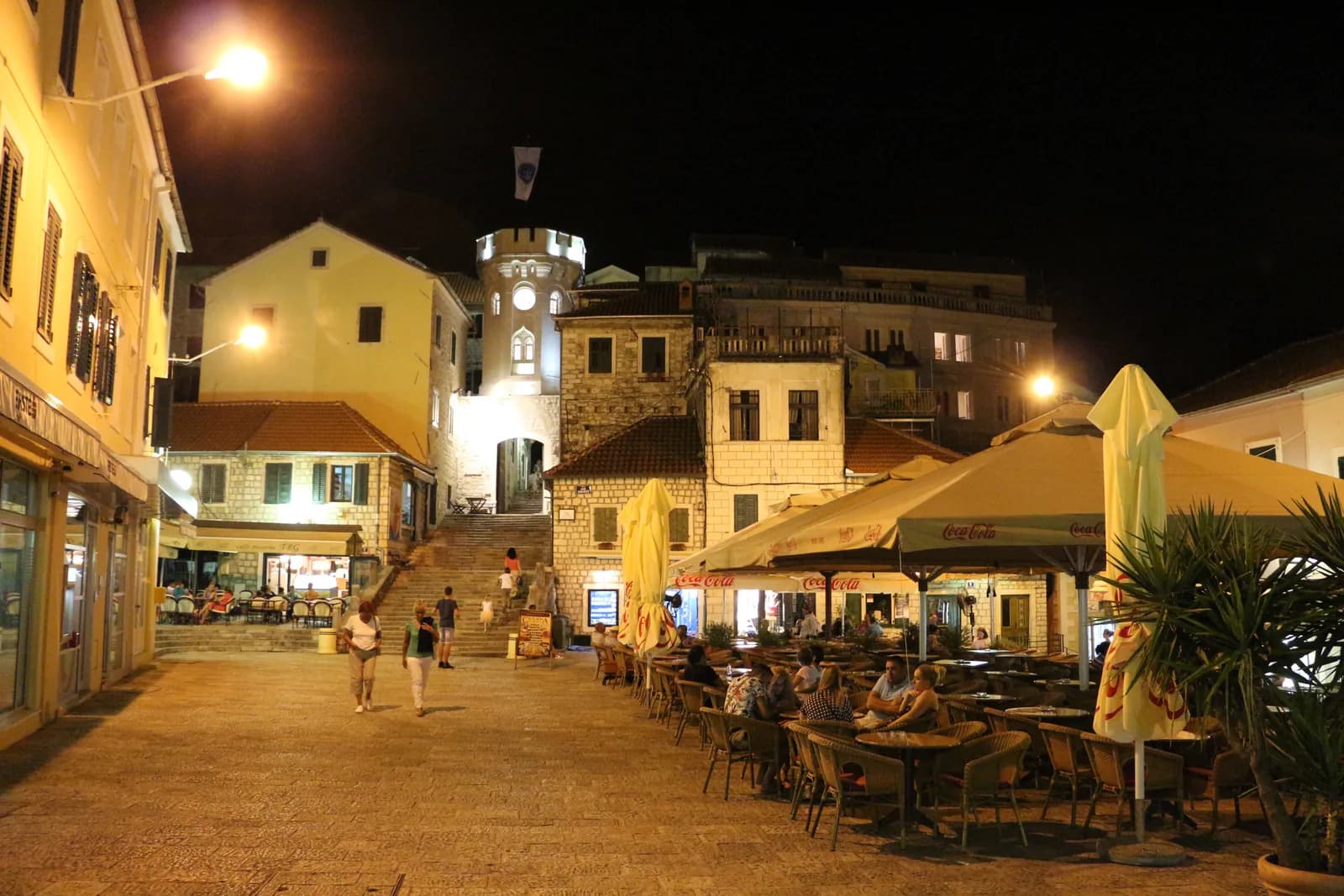 Sahat kulaSixteen metres of Ottoman gatehouse with a Russian bell, a Black Madonna and two dates that cannot both be right.
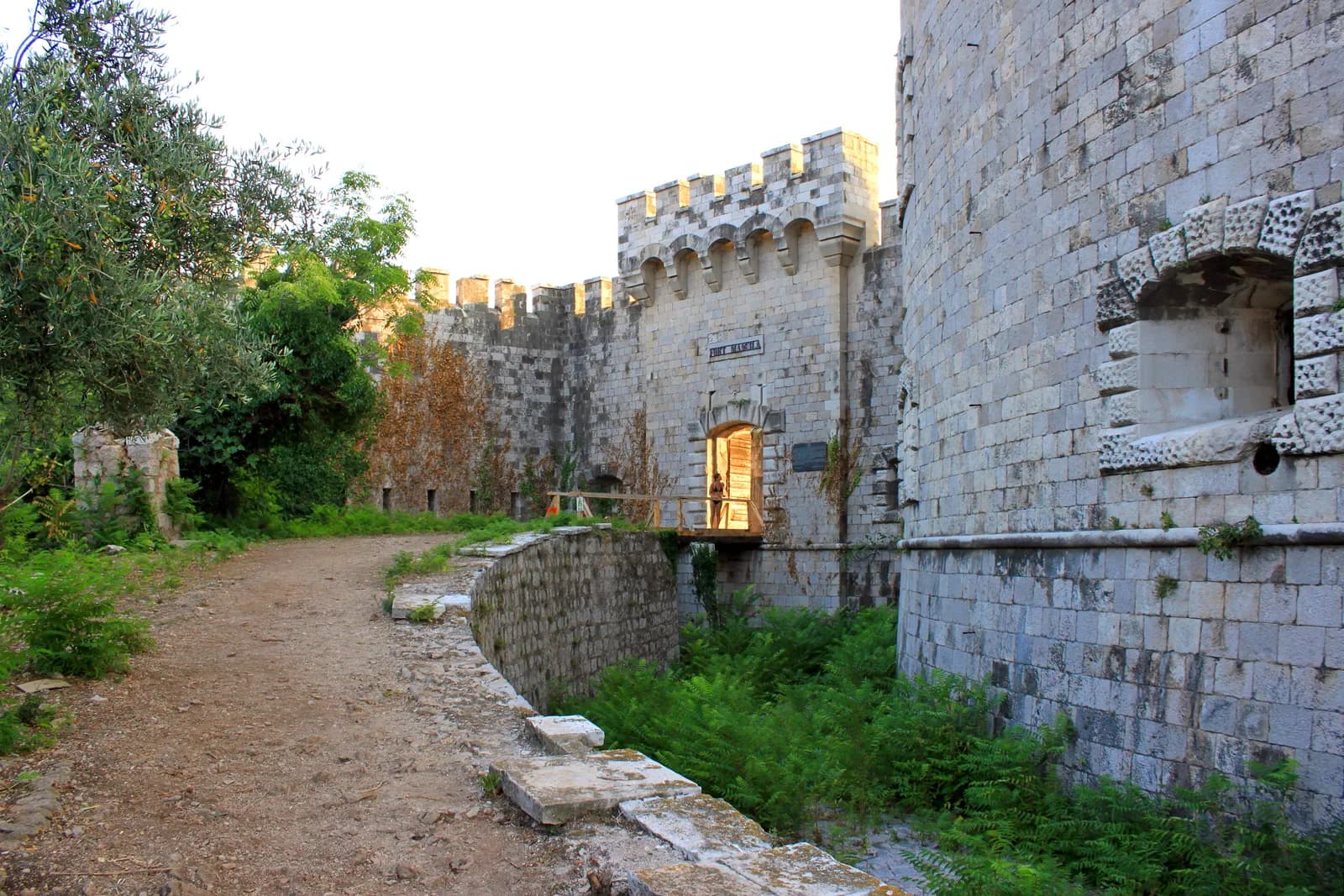 MamulaAn island that is almost entirely fortress, where 2,332 people were imprisoned and 130 died, and where you can now book a room.
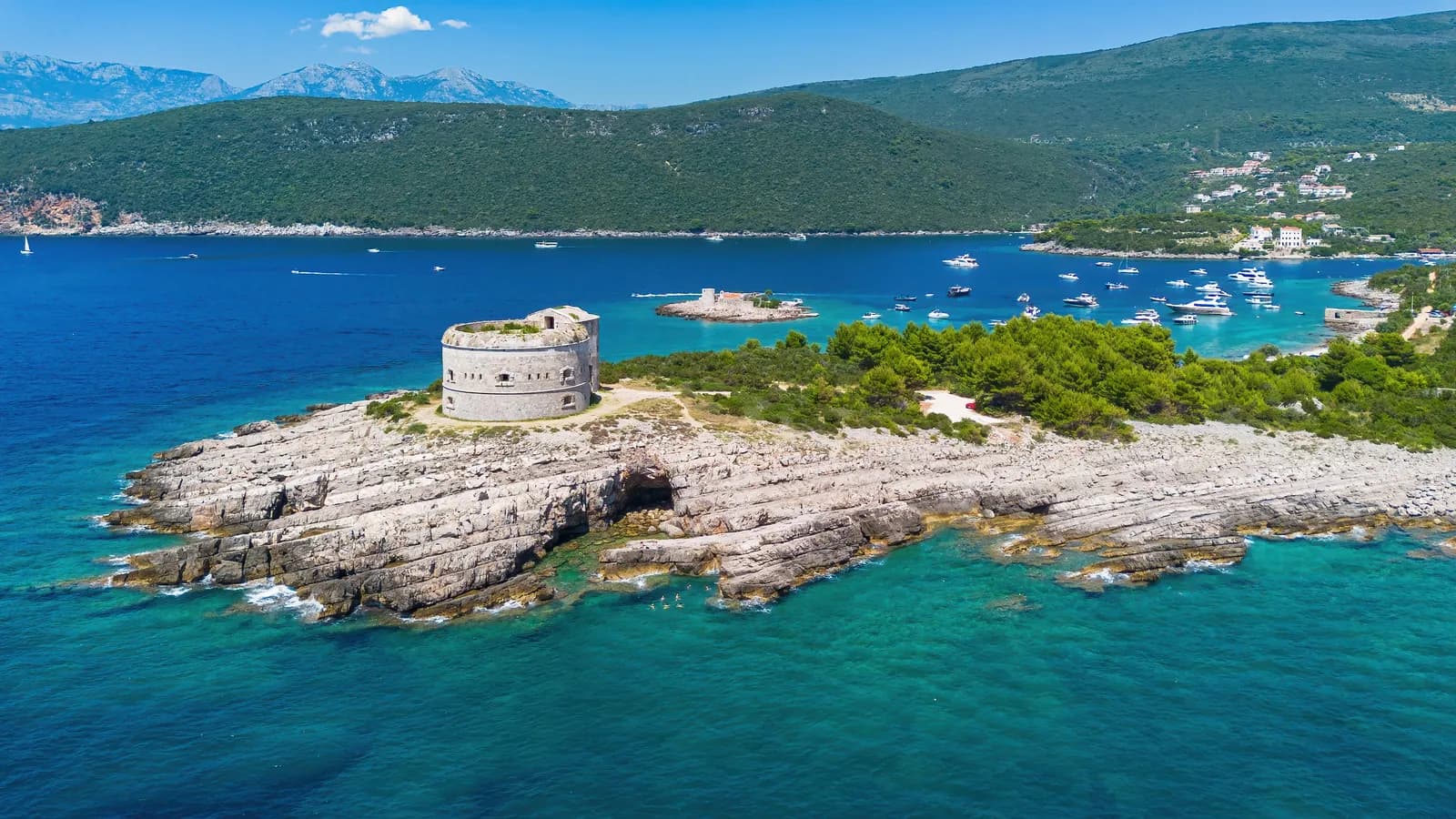 ArzaThe third gun of a three-gun gate, garrisoned by ninety-two men, sold in 2009, and the only fortress in Montenegro you cannot get into.
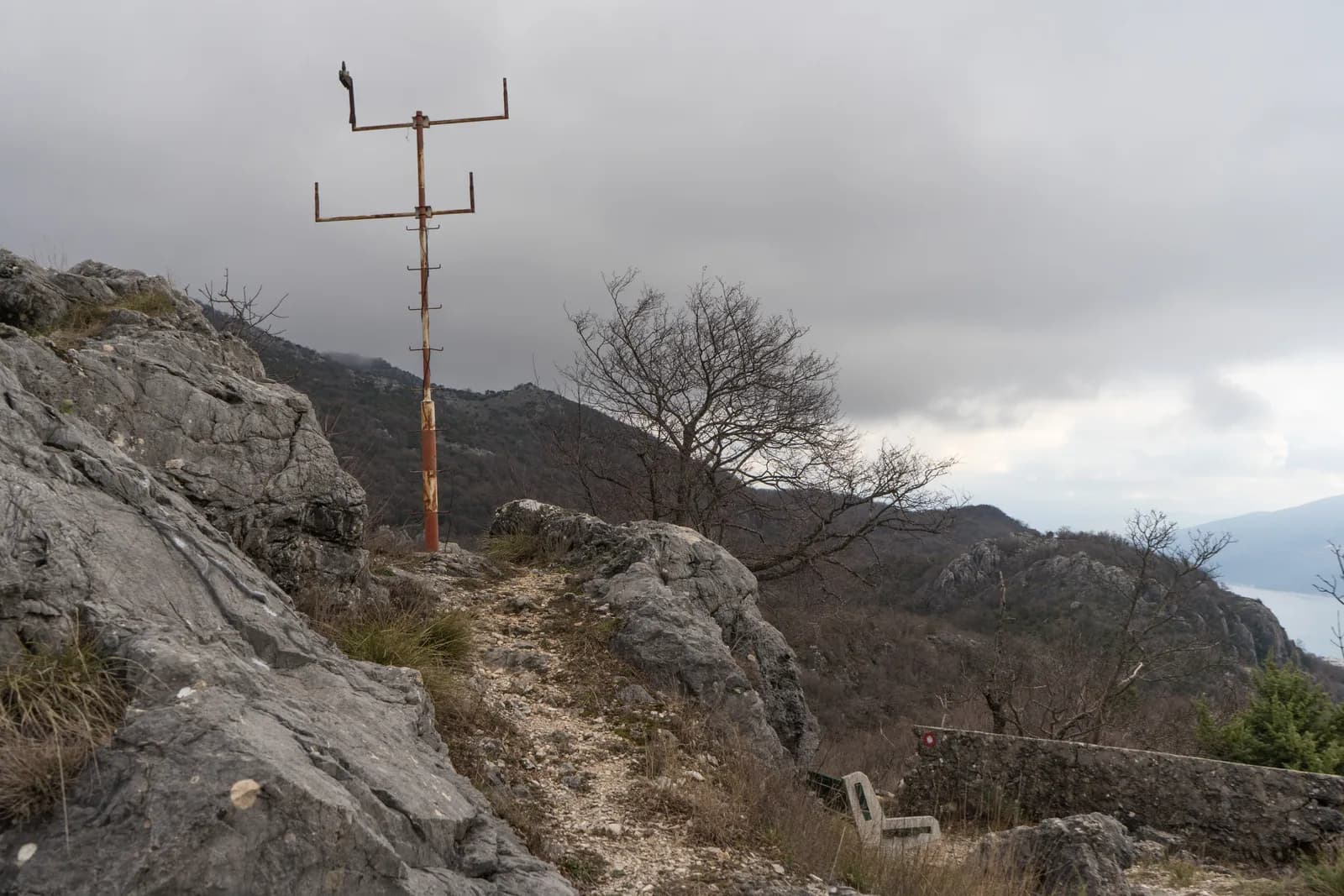 Tajno brdoSecret Hill: a battlefield, an Austro-Hungarian gun position, a tunnel system, an execution ground and a Cold War bunker — all on the same 490 metres.
Names and empires changed; the fortified stair-city kept adapting. Anton Perko’s watercolor and a modern Forte Mare view make that accumulation readable.
6 eras · source-linked
Selected chapter · 5 of 6
Compare the fortress profile, not exact pixels.
Move through the city’s rule
Orthodox Savina, Catholic churches and the traces of Ottoman Islamic rule belong to the same fortified landscape. Successive rulers changed institutions faster than they erased sacred memory.
Tvrtko’s foundation accumulated Ottoman, Spanish, Venetian and Habsburg walls and towers. The stair city, Forte Mare, Kanli Kula and Španjola still expose that sequence.
Compare the fortress profile, not exact pixels.
Cronología histórica
1382
El rey bosnio Tvrtko I fundó la villa como puerto fortificado, memoria que conservan los nombres Novi y Castrum Novum.
La idea fundacional es ya, a la vez, ciudad y fortaleza.
1482
La conquista otomana abrió dos siglos en los que fortificaciones, sistemas hidráulicos y vida religiosa cambiaron una y otra vez.
Kanli Kula pertenece a ese paisaje defensivo de capas superpuestas.
1538–1539
Una fuerza al mando de los Habsburgo tomó la villa, pero las tropas otomanas la recuperaron al año siguiente tras un célebre asedio.
Un solo año bastó para dejar la memoria duradera de una «fortaleza española».
1687
Las fuerzas venecianas tomaron Castelnuovo y la integraron en su mundo defensivo y comercial del Adriático.
El nombre italiano en registros posteriores refleja esa larga pervivencia.
hacia 1905
La acuarela registra Forte Mare cuando la villa descendía hacia una orilla de trabajo bajo el gobierno austrohúngaro.
Compare el perfil de la fortaleza, no los píxeles exactos.
Hoy
La vida pública de Herceg Novi se despliega entre fortalezas, callejuelas empinadas, vegetación subtropical y el antiguo paseo del ferrocarril.
La topografía difícil es el lenguaje de diseño de la ciudad.
Then: Un dibujo documentado con contexto más amplio
Now: Una vista urbana o paisajística actual, de 2024
Then: Tvrtko I funda una «fortaleza nueva»
Now: De ciudad-fortaleza a destino de jardines y escalinatas
Then: Leer el terreno, las rutas y los hitos heredados
Now: Fijarse en la nueva densidad, las infraestructuras y los usos
Dates and interpretations are tied to the archive and research sources below. Image limitations are disclosed in the comparison.