Faith across eras
Orthodox Savina, Catholic churches and the traces of Ottoman Islamic rule belong to the same fortified landscape. Successive rulers changed institutions faster than they erased sacred memory.
Il Montenegro ieri e oggi · Ingresso delle Bocche di Cattaro
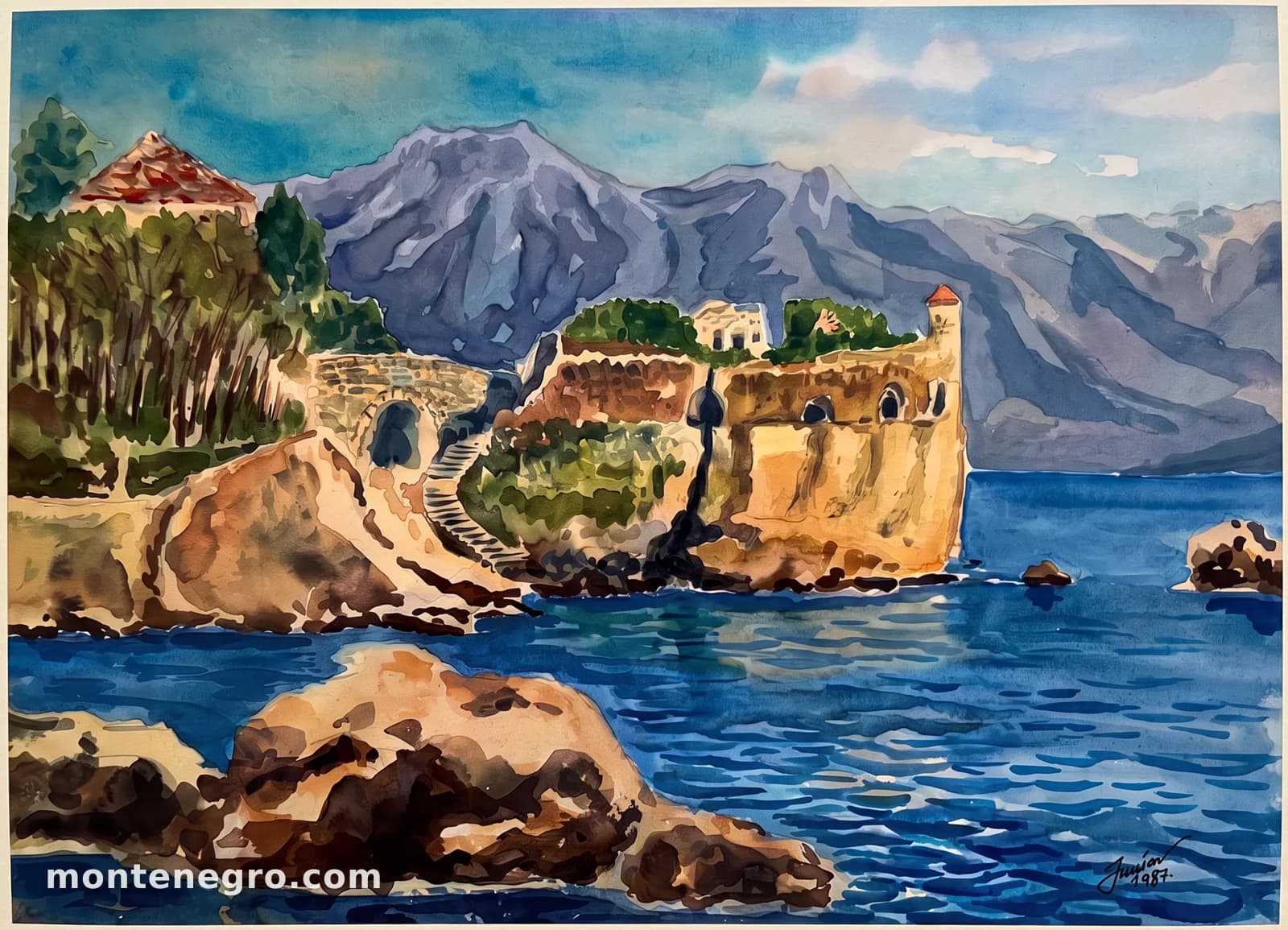
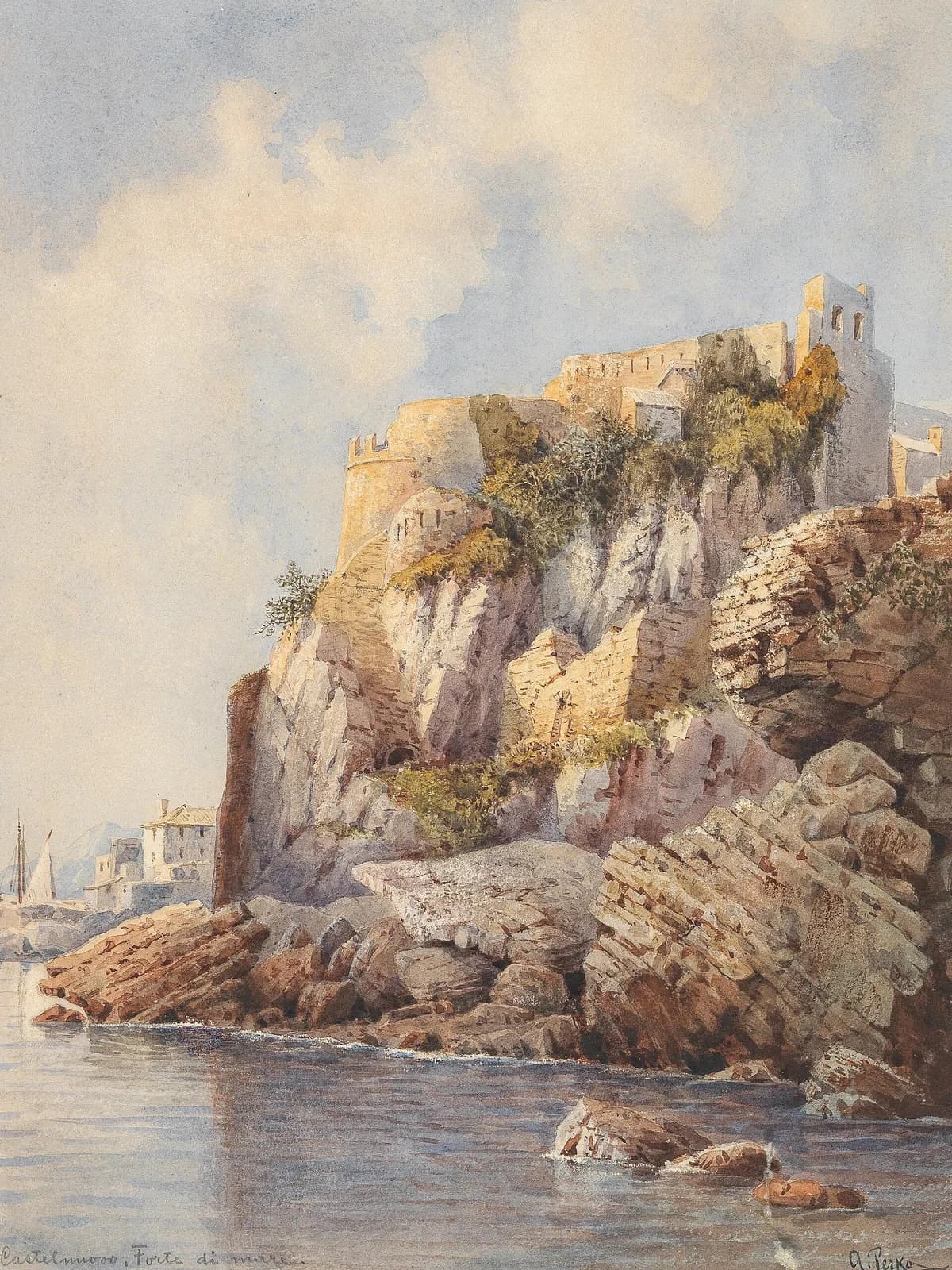
Cambiarono i nomi e cambiarono gli imperi; la città fortificata a gradoni continuò ad adattarsi. L'acquerello di Anton Perko e una veduta odierna di Forte Mare rendono leggibile questa stratificazione.
Nomi storici: Castelnuovo
Approfondisci
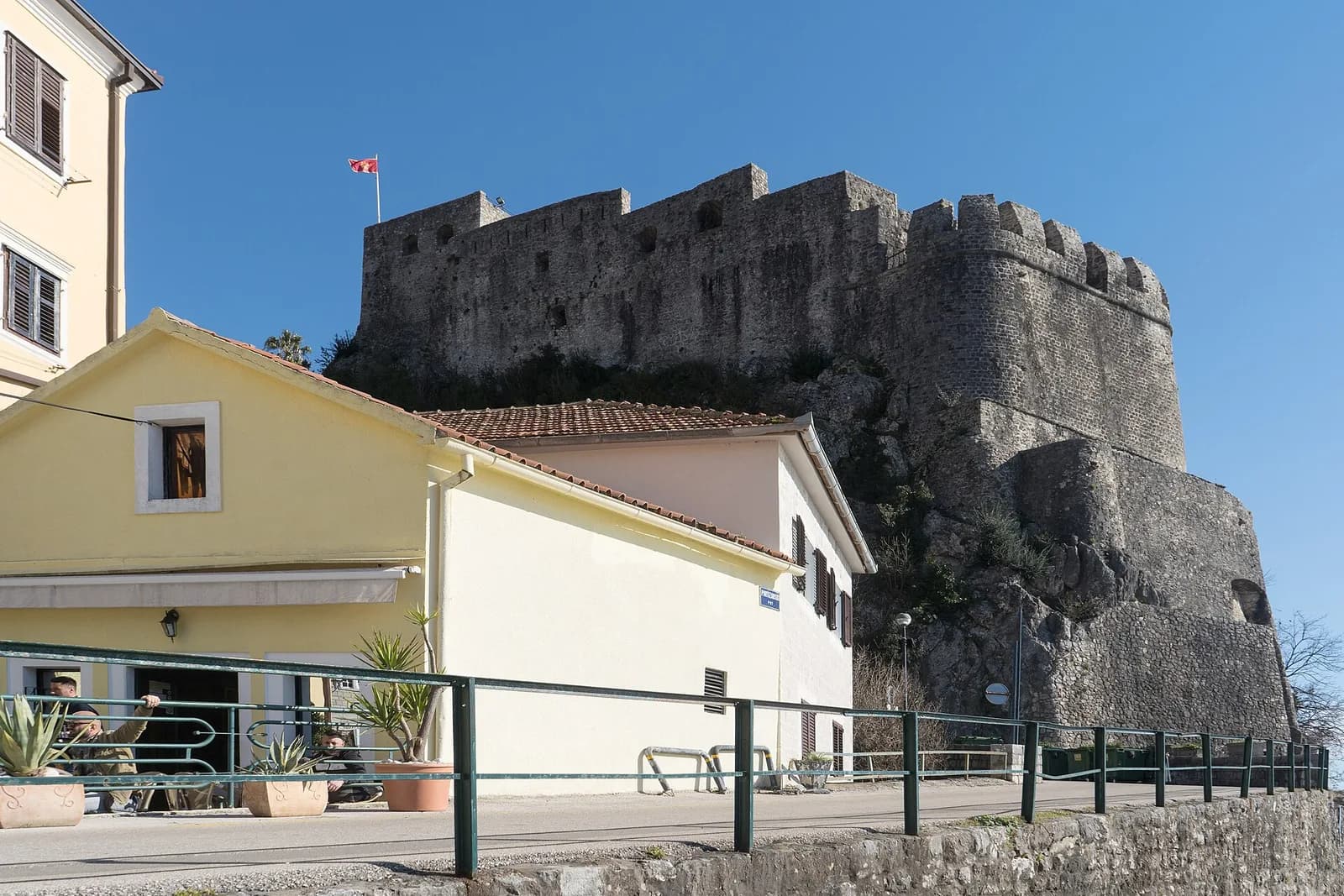 Forte MareA salt-trade watchtower that eight sovereignties rebuilt on top of each other — and that has now spent seventy-four summers as a cinema.
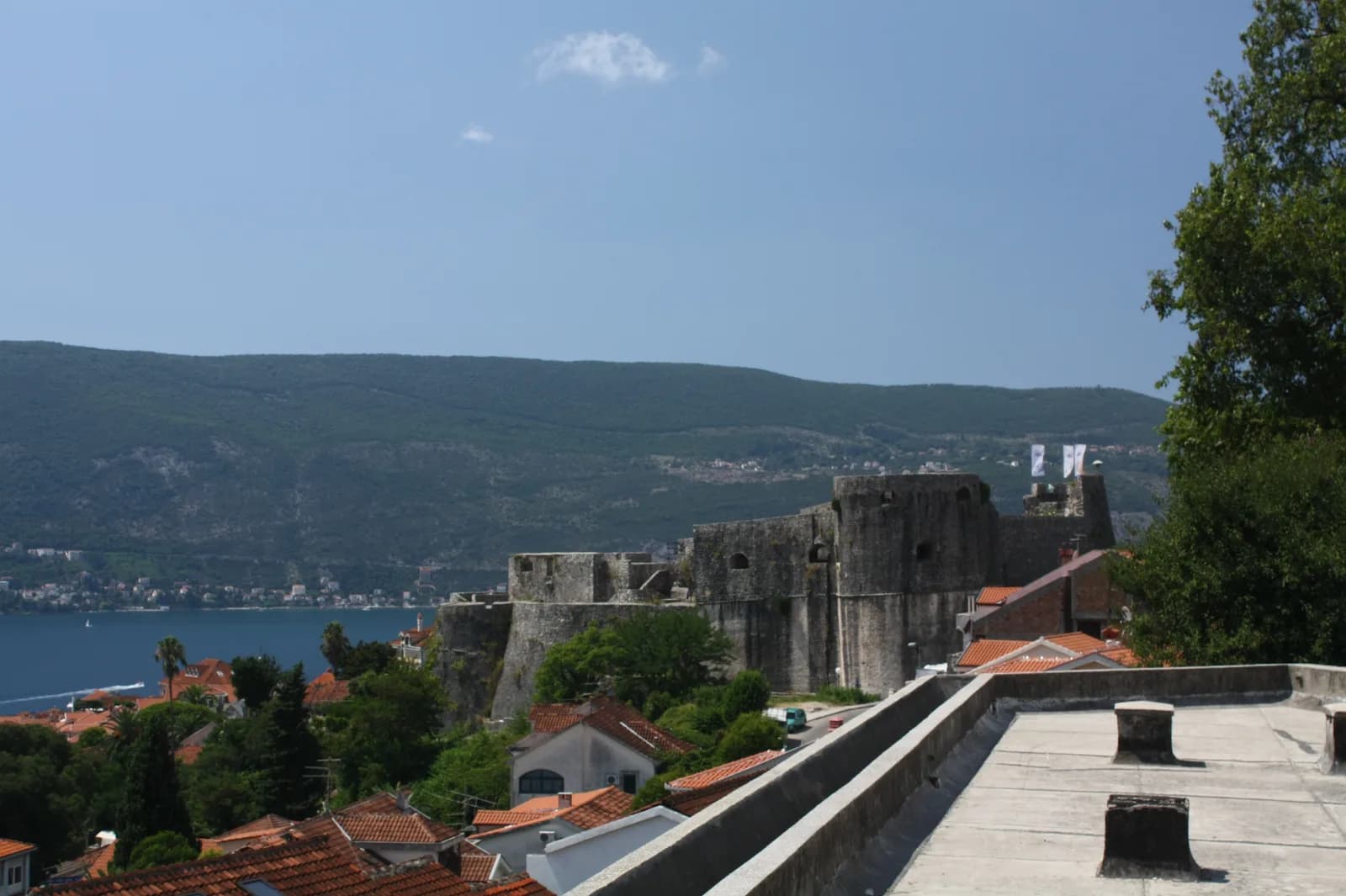 Kanli KulaA prison whose inmates dated it for us — they scratched ships into the walls — and which now seats a thousand people watching films.
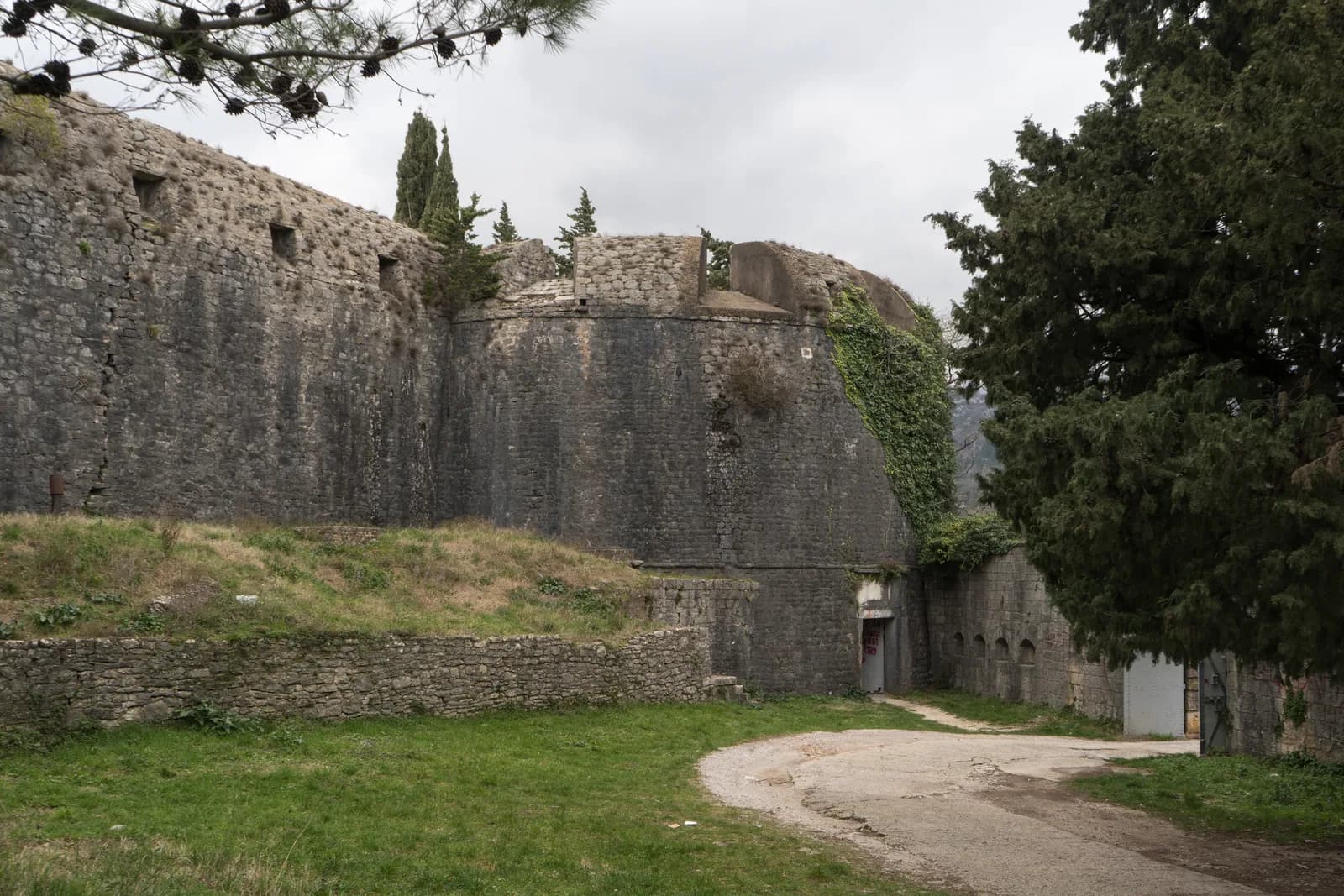 ŠpanjolaThe Spanish began it in a year they did not survive. The Ottomans finished it, and it still carries the name of the side that lost.
 CitadelaIt closed the southern end of the defences for centuries, nobody is sure when it was built, and in ninety seconds in 1979 it went into the sea.
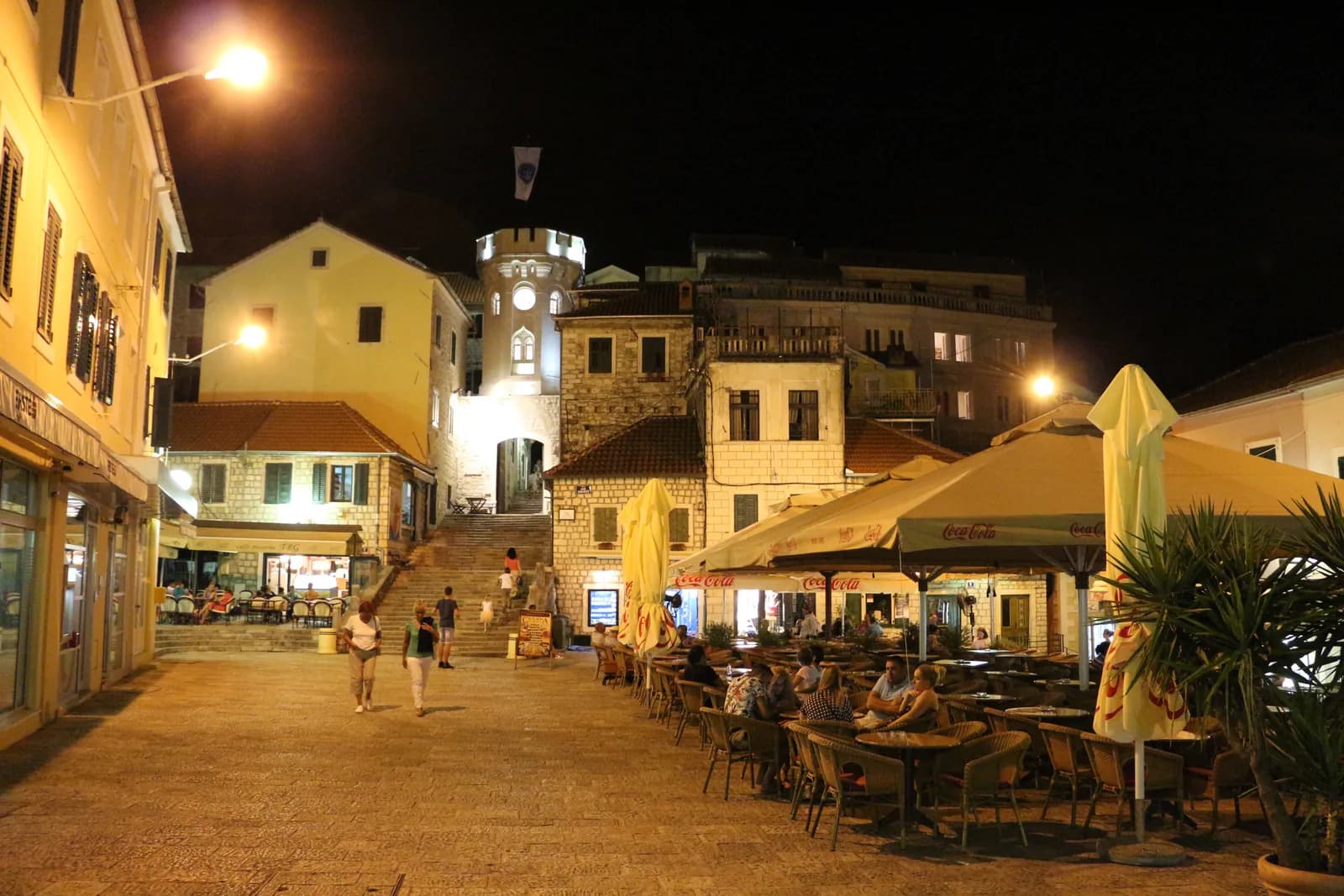 Sahat kulaSixteen metres of Ottoman gatehouse with a Russian bell, a Black Madonna and two dates that cannot both be right.
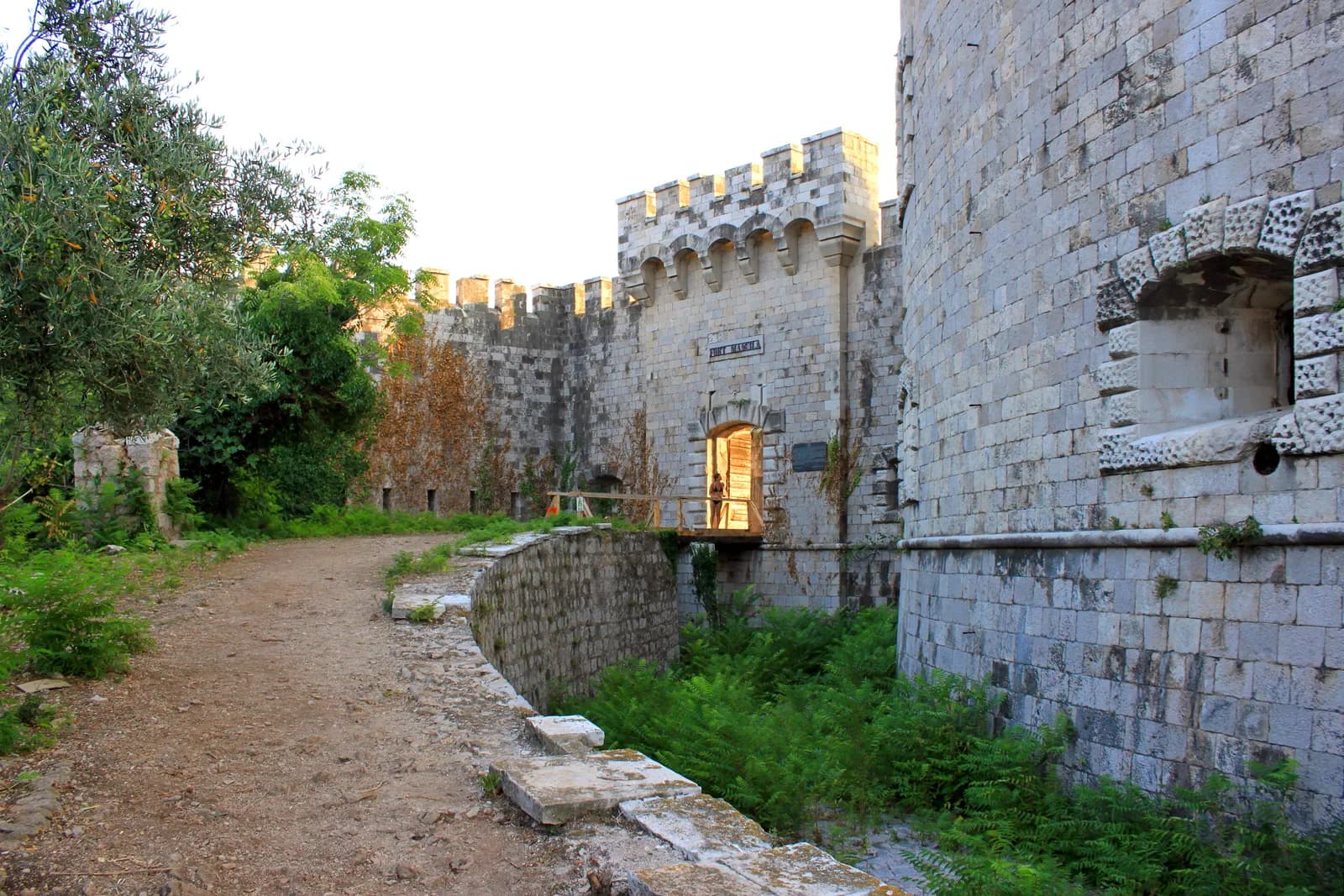 MamulaAn island that is almost entirely fortress, where 2,332 people were imprisoned and 130 died, and where you can now book a room.
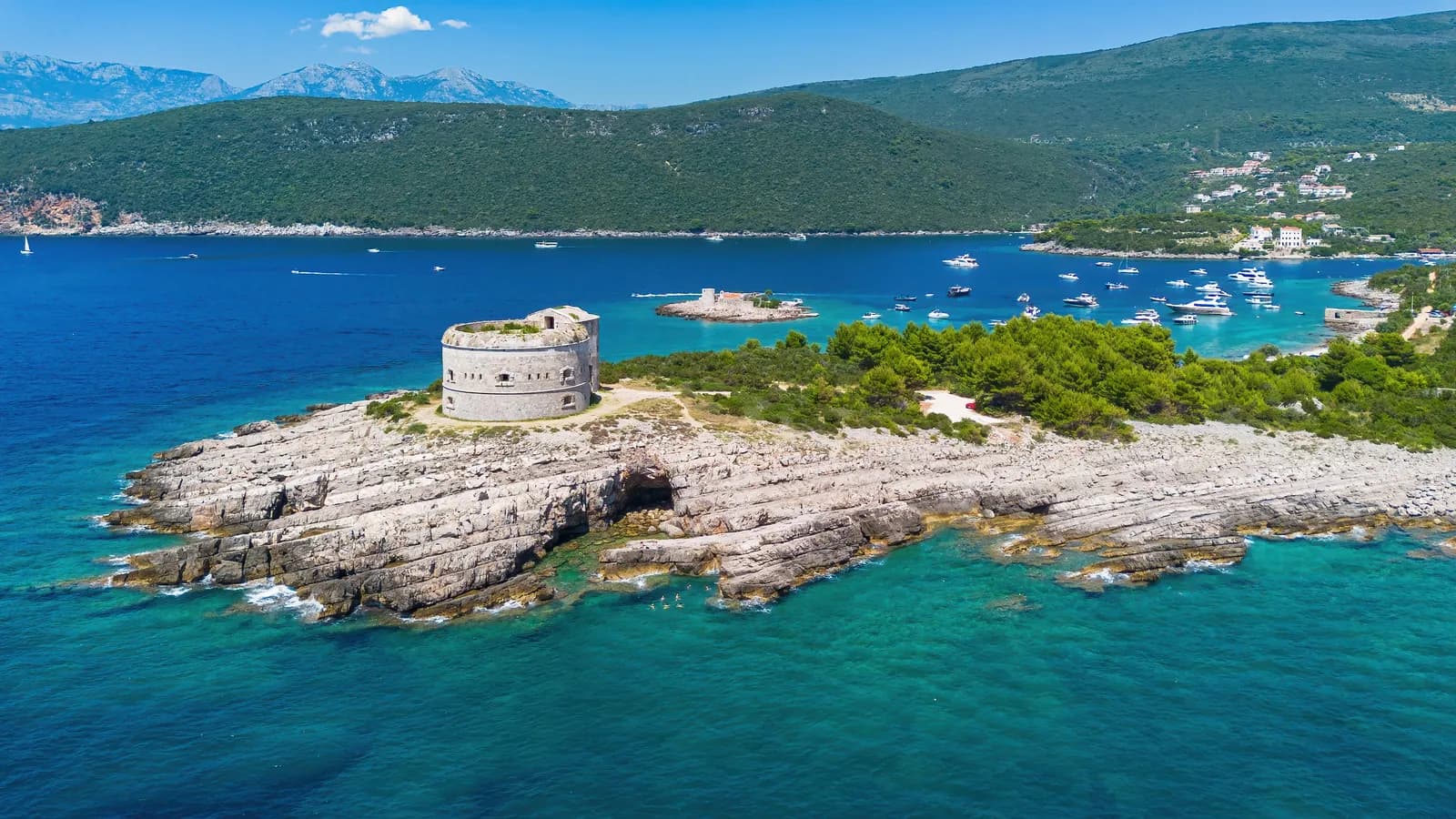 ArzaThe third gun of a three-gun gate, garrisoned by ninety-two men, sold in 2009, and the only fortress in Montenegro you cannot get into.
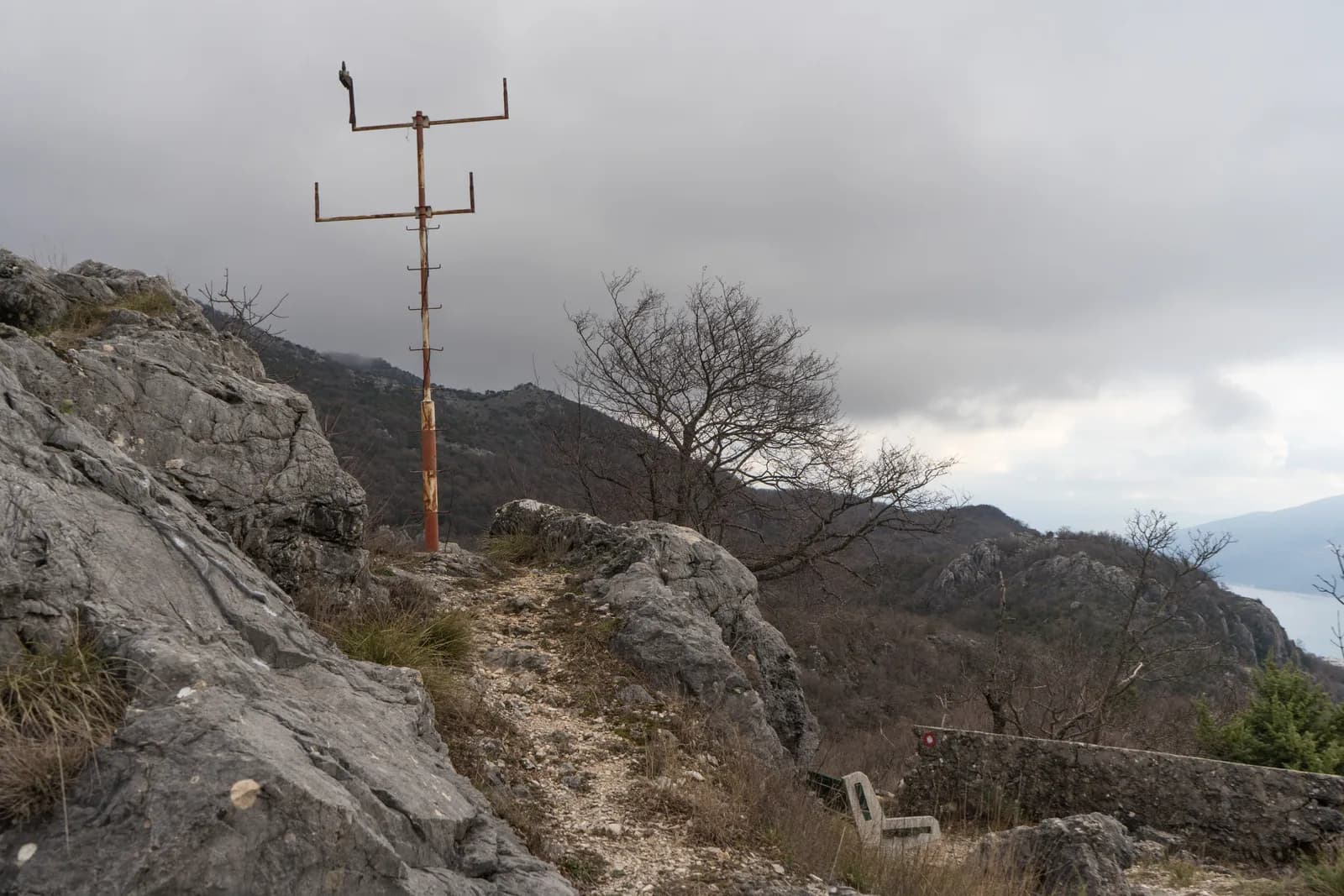 Tajno brdoSecret Hill: a battlefield, an Austro-Hungarian gun position, a tunnel system, an execution ground and a Cold War bunker — all on the same 490 metres.
Names and empires changed; the fortified stair-city kept adapting. Anton Perko’s watercolor and a modern Forte Mare view make that accumulation readable.
6 eras · source-linked
Selected chapter · 5 of 6
Compare the fortress profile, not exact pixels.
Move through the city’s rule
Orthodox Savina, Catholic churches and the traces of Ottoman Islamic rule belong to the same fortified landscape. Successive rulers changed institutions faster than they erased sacred memory.
Tvrtko’s foundation accumulated Ottoman, Spanish, Venetian and Habsburg walls and towers. The stair city, Forte Mare, Kanli Kula and Španjola still expose that sequence.
Compare the fortress profile, not exact pixels.
Cronologia storica
1382
Il re bosniaco Tvrtko I fondò la città come porto fortificato: ne resta memoria nei nomi Novi e Castrum Novum.
L'idea fondativa è già insieme città e fortezza.
1482
Con la conquista ottomana si aprirono due secoli in cui fortificazioni, sistemi idrici e vita religiosa mutarono ripetutamente.
Kanli Kula appartiene a questo paesaggio difensivo stratificato.
1538–1539
Un contingente guidato dagli Asburgo conquistò la città, ma le truppe ottomane la ripresero l'anno successivo dopo un celebre assedio.
Un solo anno ha generato una duratura memoria di "fortezza spagnola".
1687
Le forze veneziane presero Castelnuovo e la integrarono nel proprio sistema difensivo e commerciale adriatico.
Il nome italiano nei documenti successivi riflette questa lunga eredità.
entro il 1905
L'acquerello ritrae Forte Mare mentre la città digradava verso una riva operosa sotto il dominio austro-ungarico.
Confrontate il profilo della fortezza, non i pixel esatti.
Oggi
La vita pubblica di Herceg Novi si distribuisce tra le fortezze, i vicoli ripidi, le piantumazioni subtropicali e la passeggiata ricavata dall'ex ferrovia.
La topografia difficile è il linguaggio progettuale della città.
Then: Un disegno documentato, con un contesto più ampio
Now: Una veduta urbana o paesaggistica odierna, del 2024
Then: Tvrtko I fonda una "nuova fortezza"
Now: Da città-fortezza a meta di giardini e scalinate
Then: Leggere il terreno, le vie e i monumenti ereditati
Now: Osservare le nuove densità, le infrastrutture e gli usi
Dates and interpretations are tied to the archive and research sources below. Image limitations are disclosed in the comparison.