Faith across eras
Orthodox Savina, Catholic churches and the traces of Ottoman Islamic rule belong to the same fortified landscape. Successive rulers changed institutions faster than they erased sacred memory.
Montenegro før og nå · Innseilingen til Kotorbukta
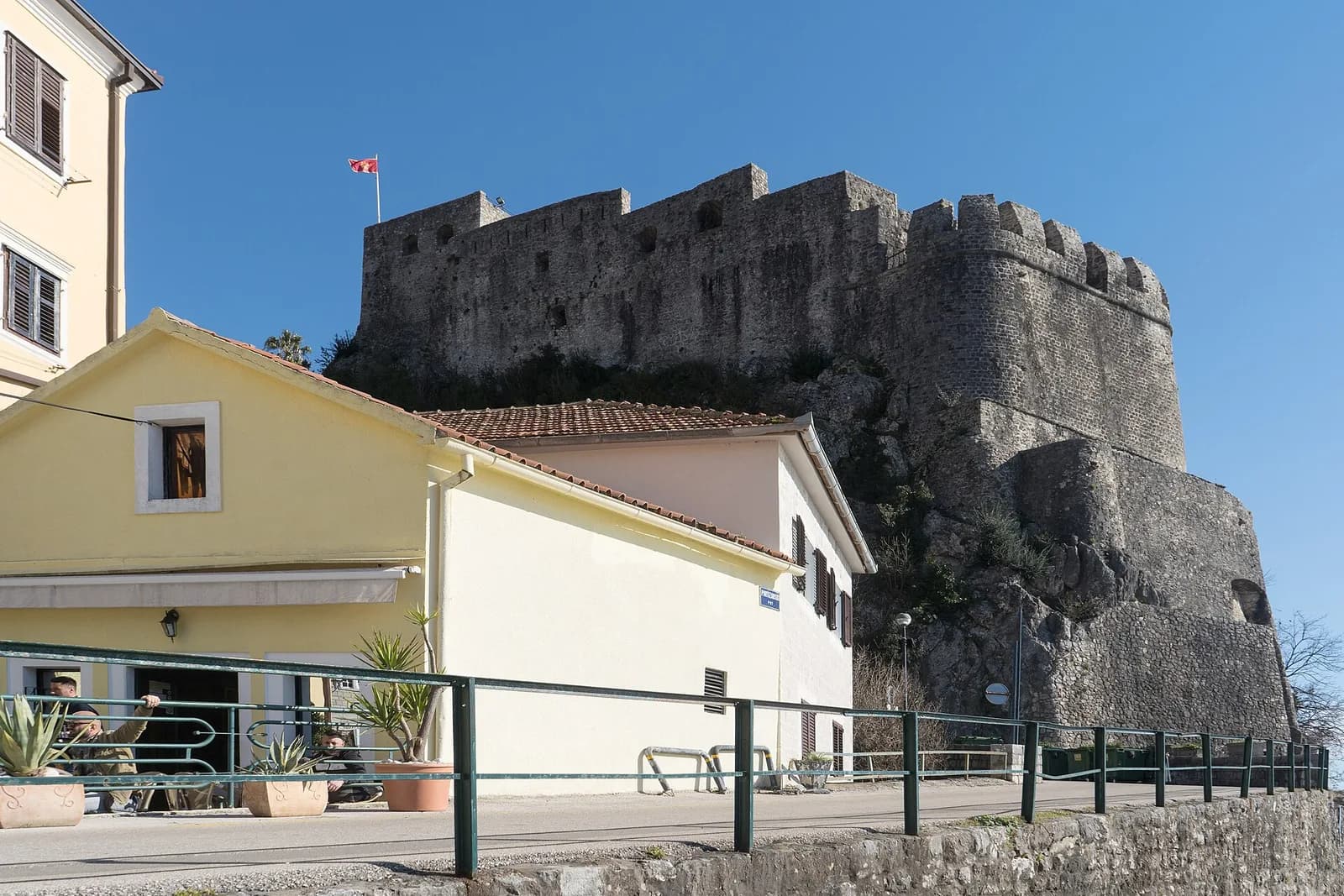
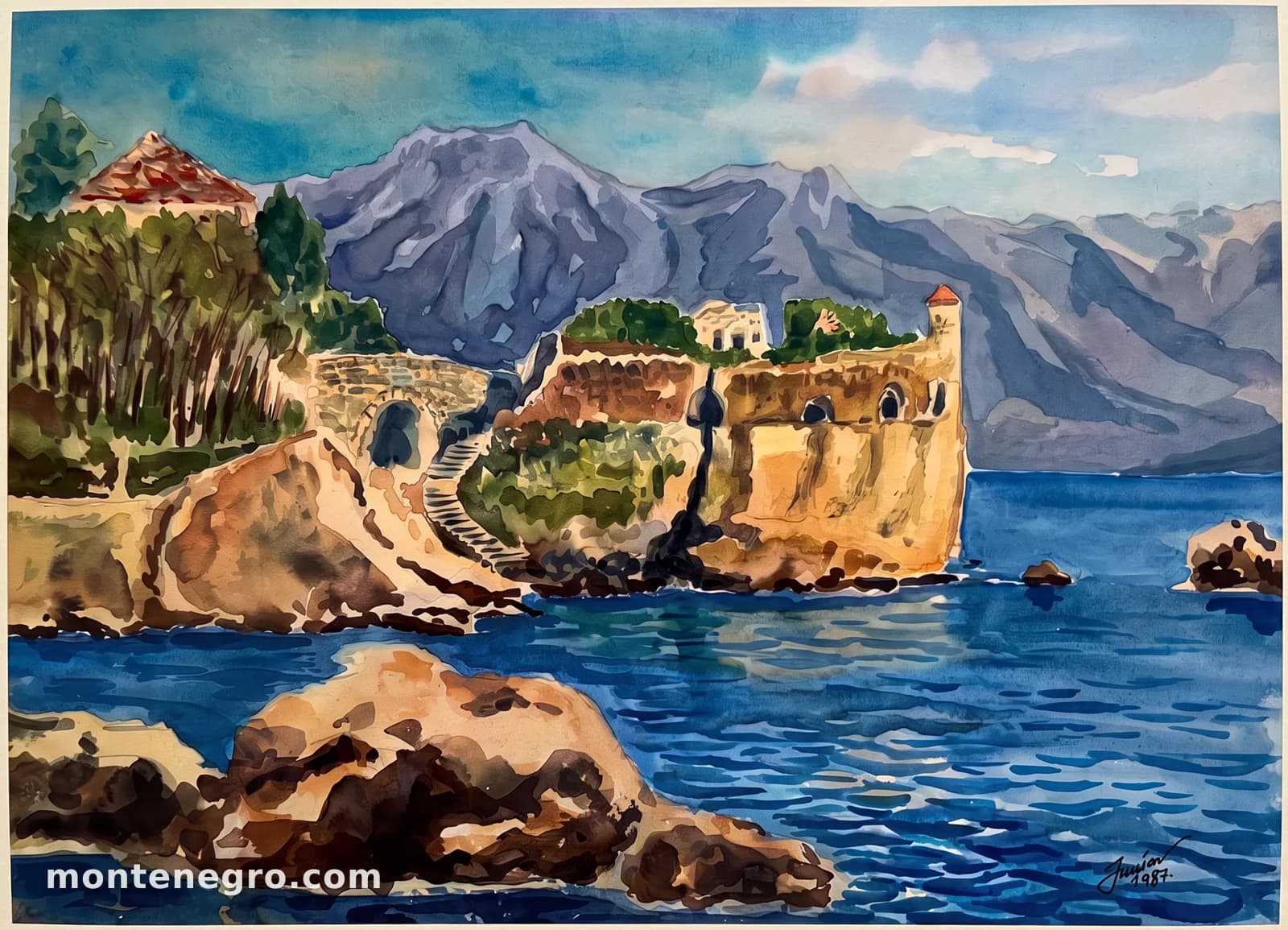
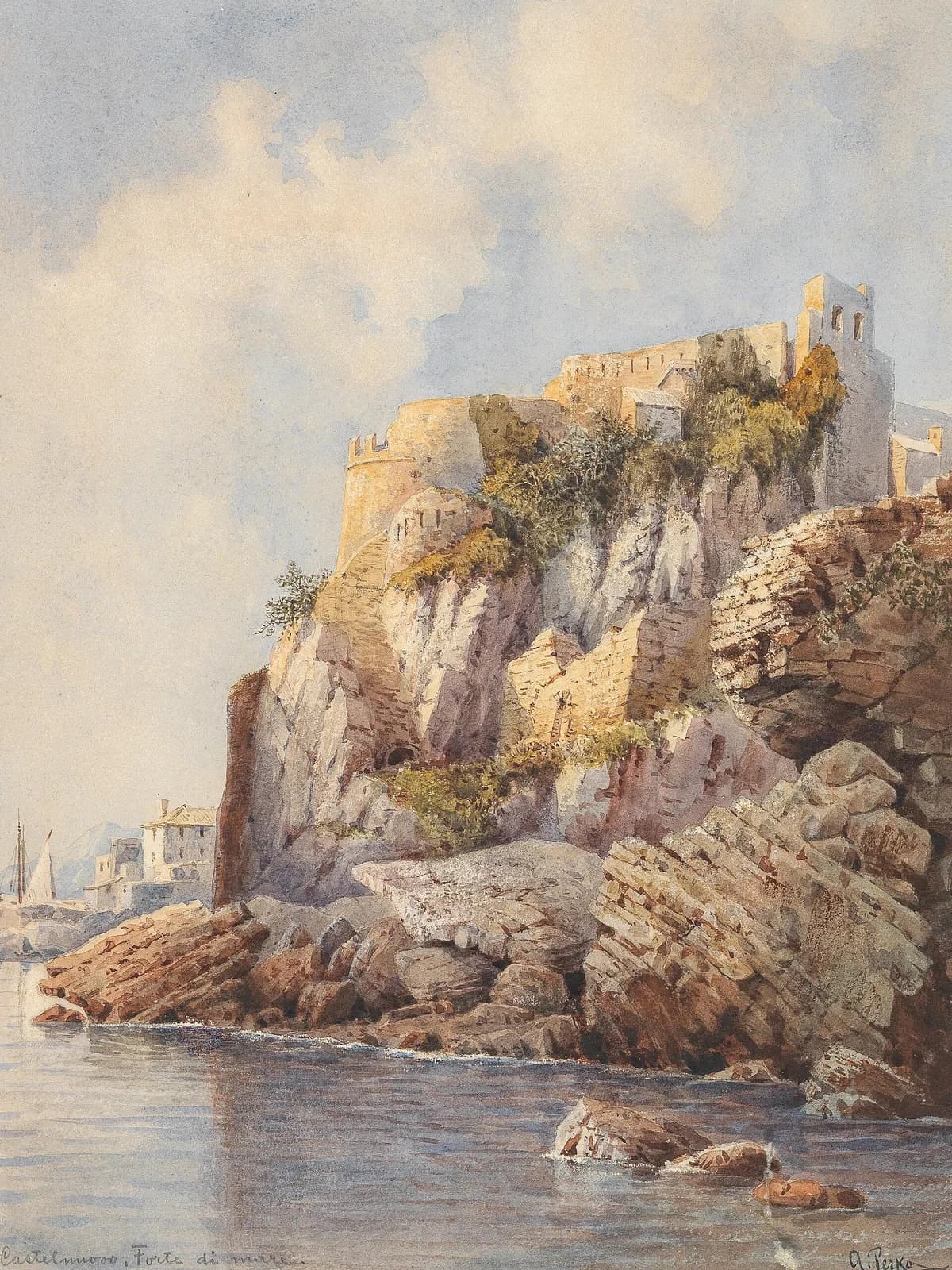
Navnene og imperiene skiftet; den befestede trappebyen fortsatte å tilpasse seg. Anton Perkos akvarell og et moderne bilde av Forte Mare gjør denne oppsamlingen lesbar.
Historiske navn: Castelnuovo
Gå dypere
 Forte MareA salt-trade watchtower that eight sovereignties rebuilt on top of each other — and that has now spent seventy-four summers as a cinema.
 Kanli KulaA prison whose inmates dated it for us — they scratched ships into the walls — and which now seats a thousand people watching films.
 ŠpanjolaThe Spanish began it in a year they did not survive. The Ottomans finished it, and it still carries the name of the side that lost.
 CitadelaIt closed the southern end of the defences for centuries, nobody is sure when it was built, and in ninety seconds in 1979 it went into the sea.
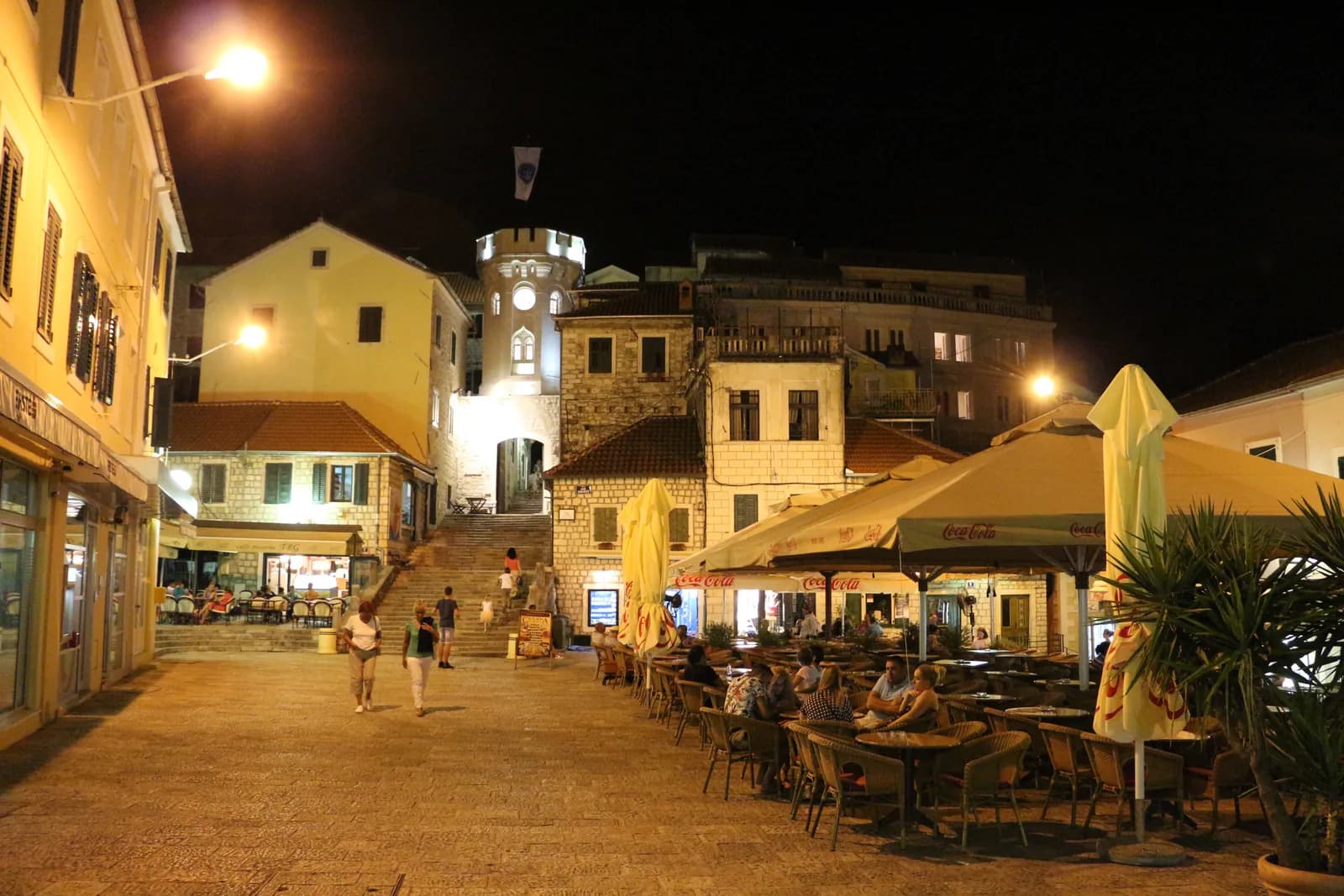 Sahat kulaSixteen metres of Ottoman gatehouse with a Russian bell, a Black Madonna and two dates that cannot both be right.
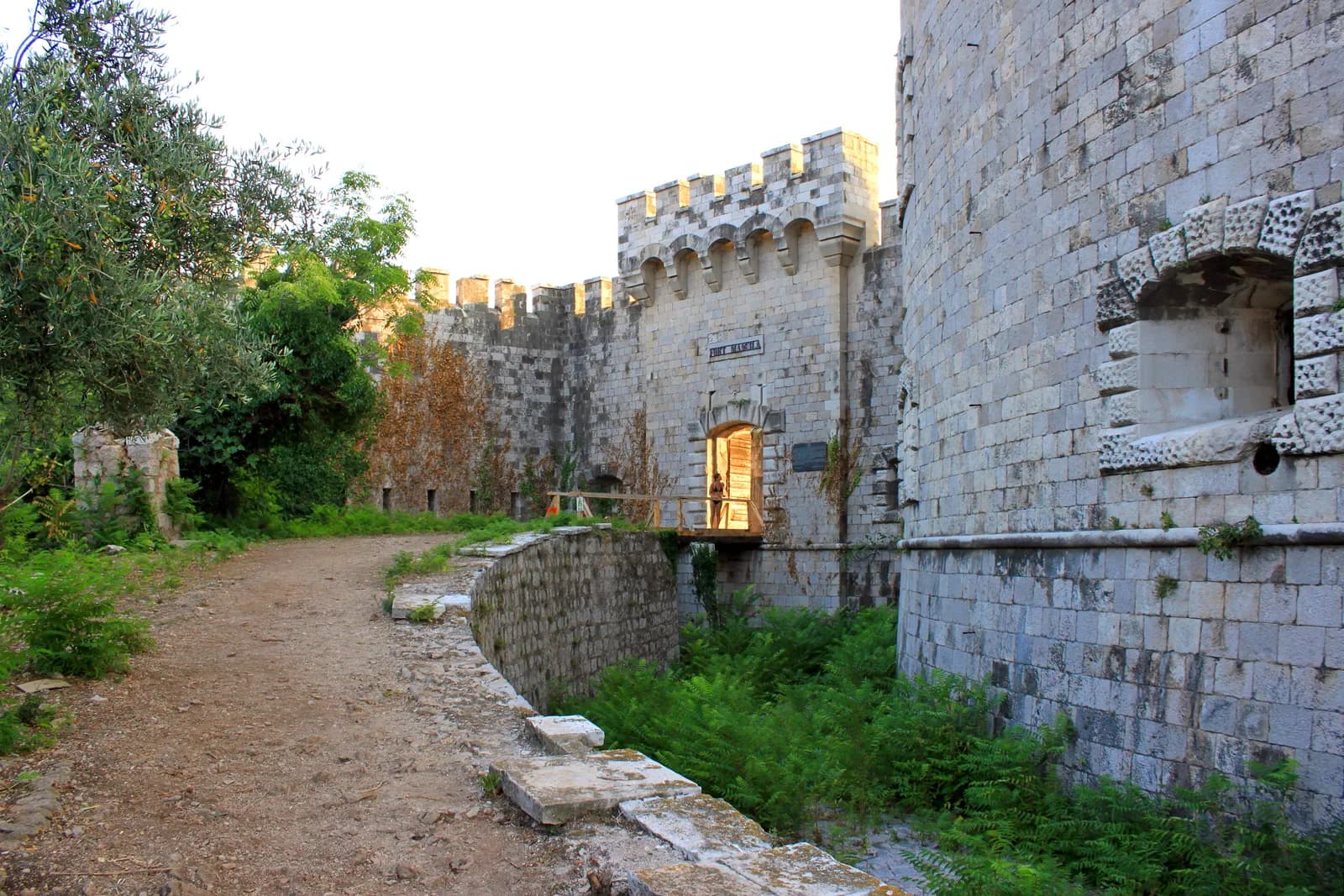 MamulaAn island that is almost entirely fortress, where 2,332 people were imprisoned and 130 died, and where you can now book a room.
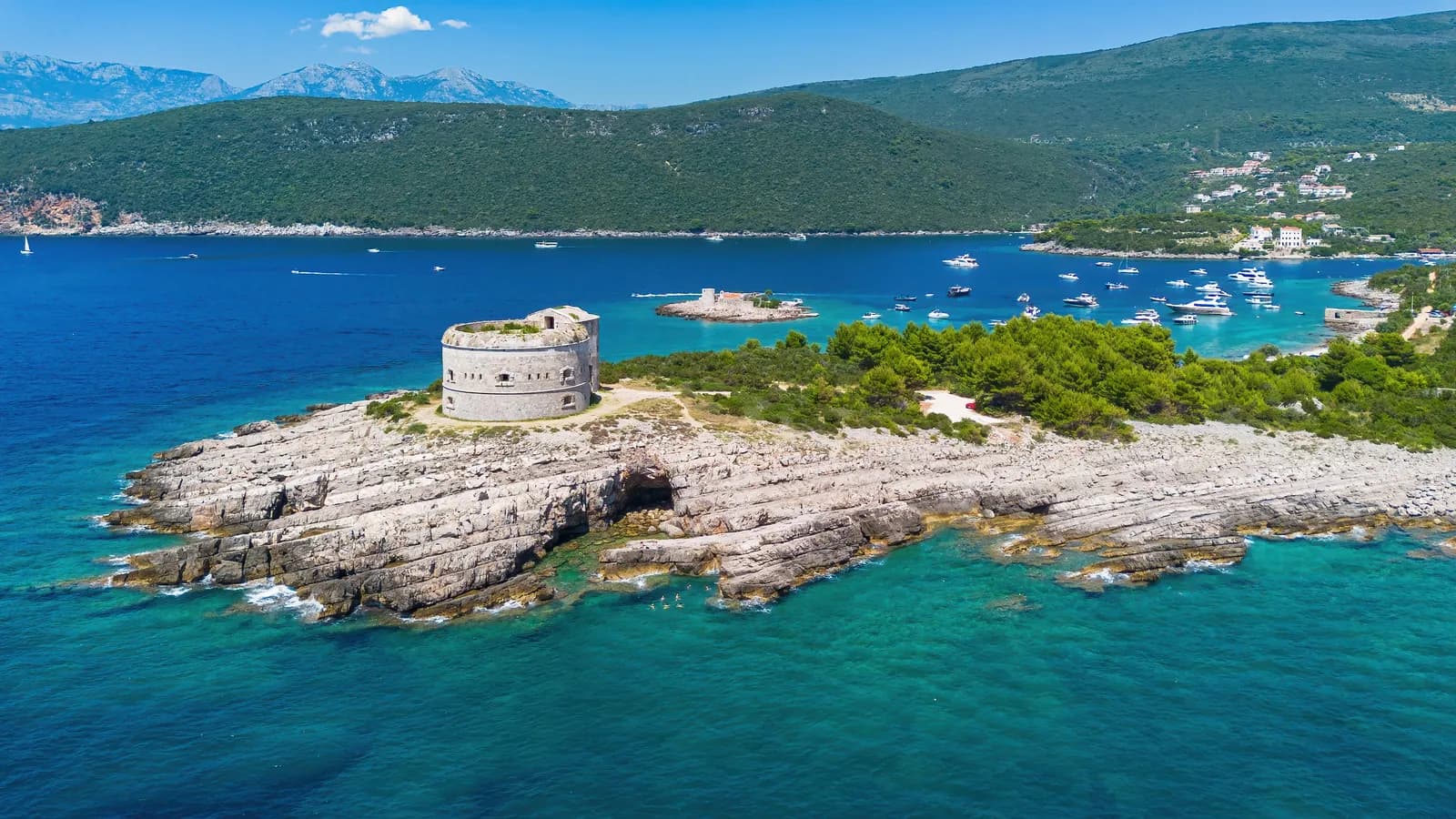 ArzaThe third gun of a three-gun gate, garrisoned by ninety-two men, sold in 2009, and the only fortress in Montenegro you cannot get into.
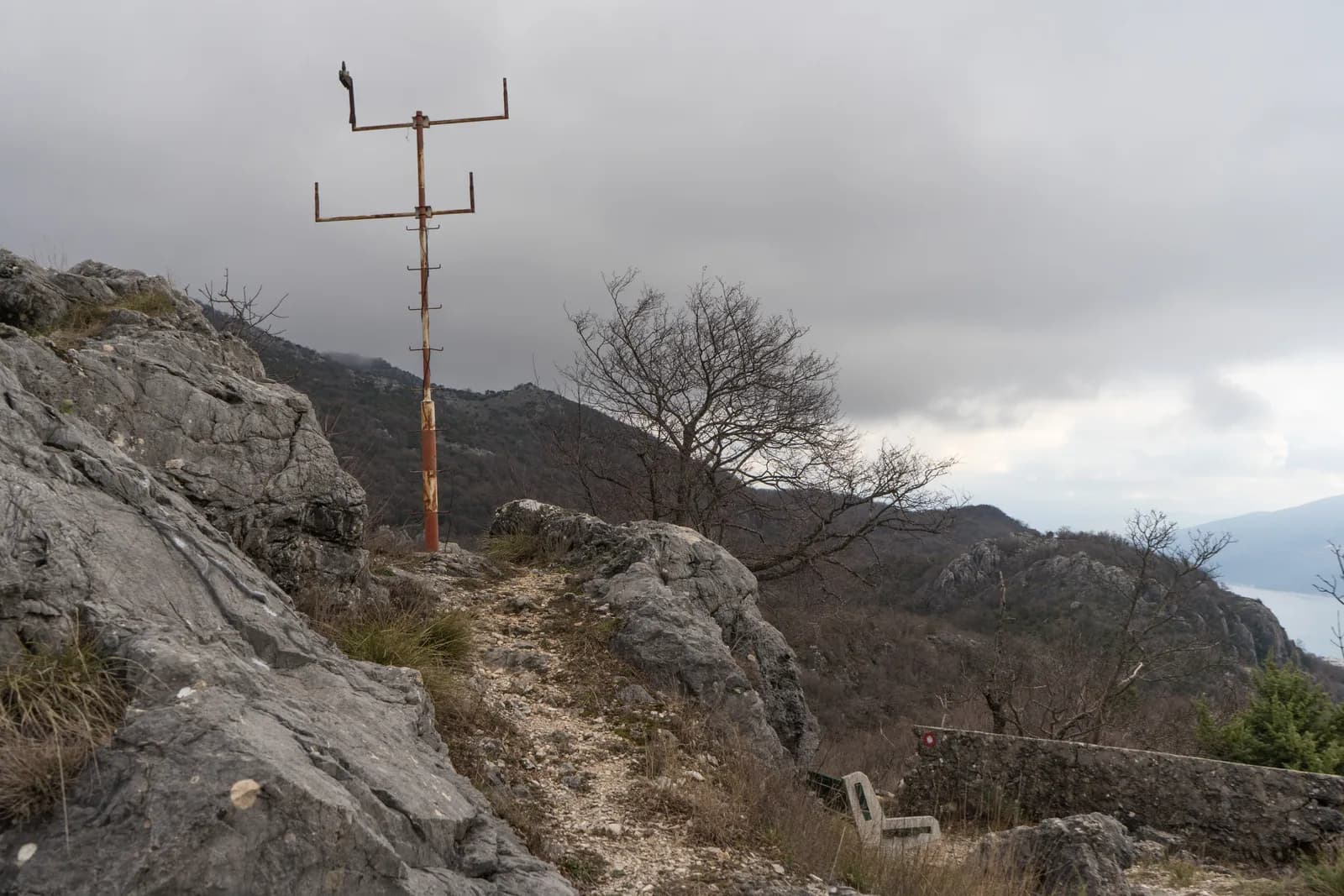 Tajno brdoSecret Hill: a battlefield, an Austro-Hungarian gun position, a tunnel system, an execution ground and a Cold War bunker — all on the same 490 metres.
Names and empires changed; the fortified stair-city kept adapting. Anton Perko’s watercolor and a modern Forte Mare view make that accumulation readable.
6 eras · source-linked
Selected chapter · 5 of 6
Compare the fortress profile, not exact pixels.
Move through the city’s rule
Orthodox Savina, Catholic churches and the traces of Ottoman Islamic rule belong to the same fortified landscape. Successive rulers changed institutions faster than they erased sacred memory.
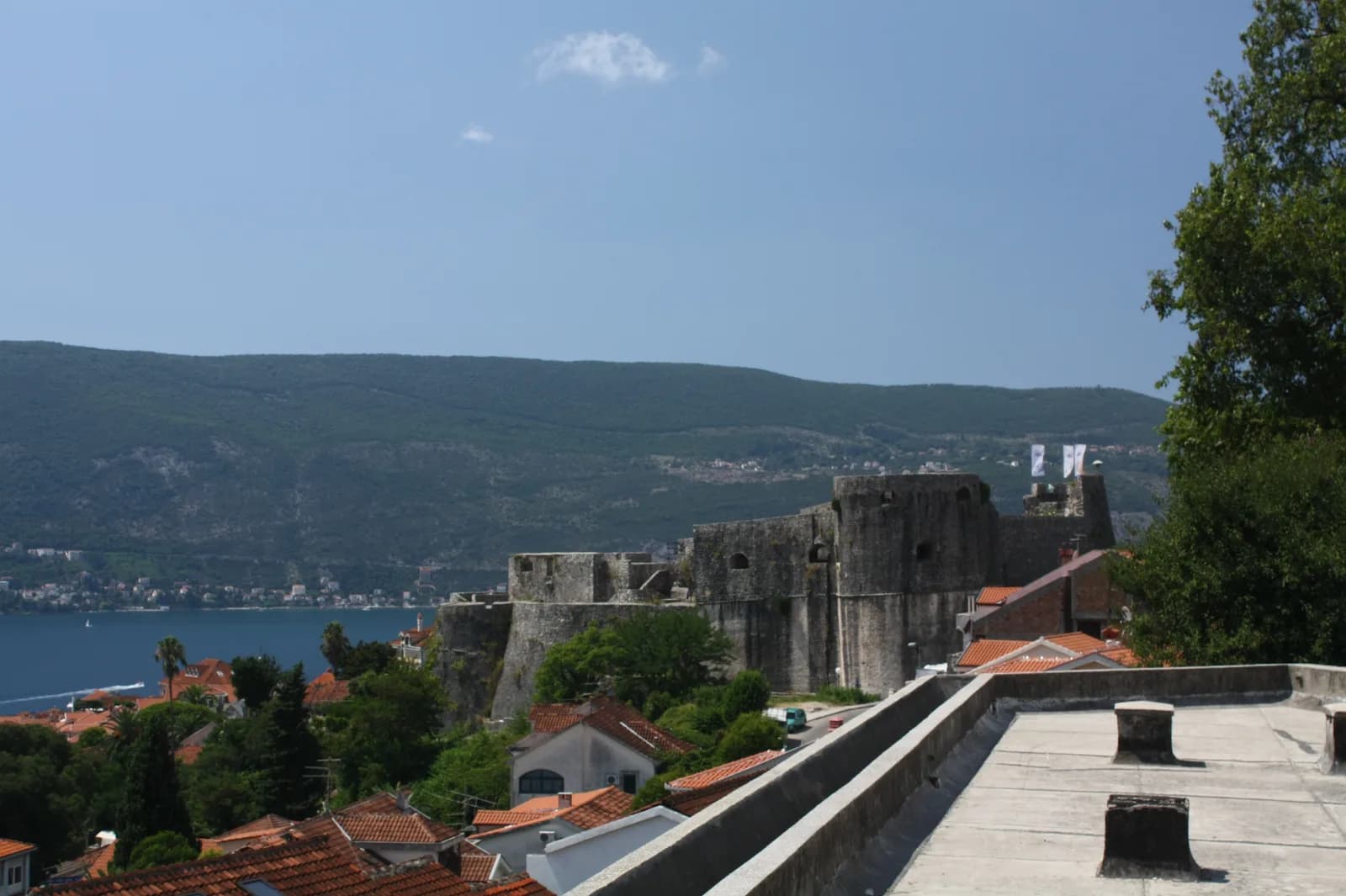
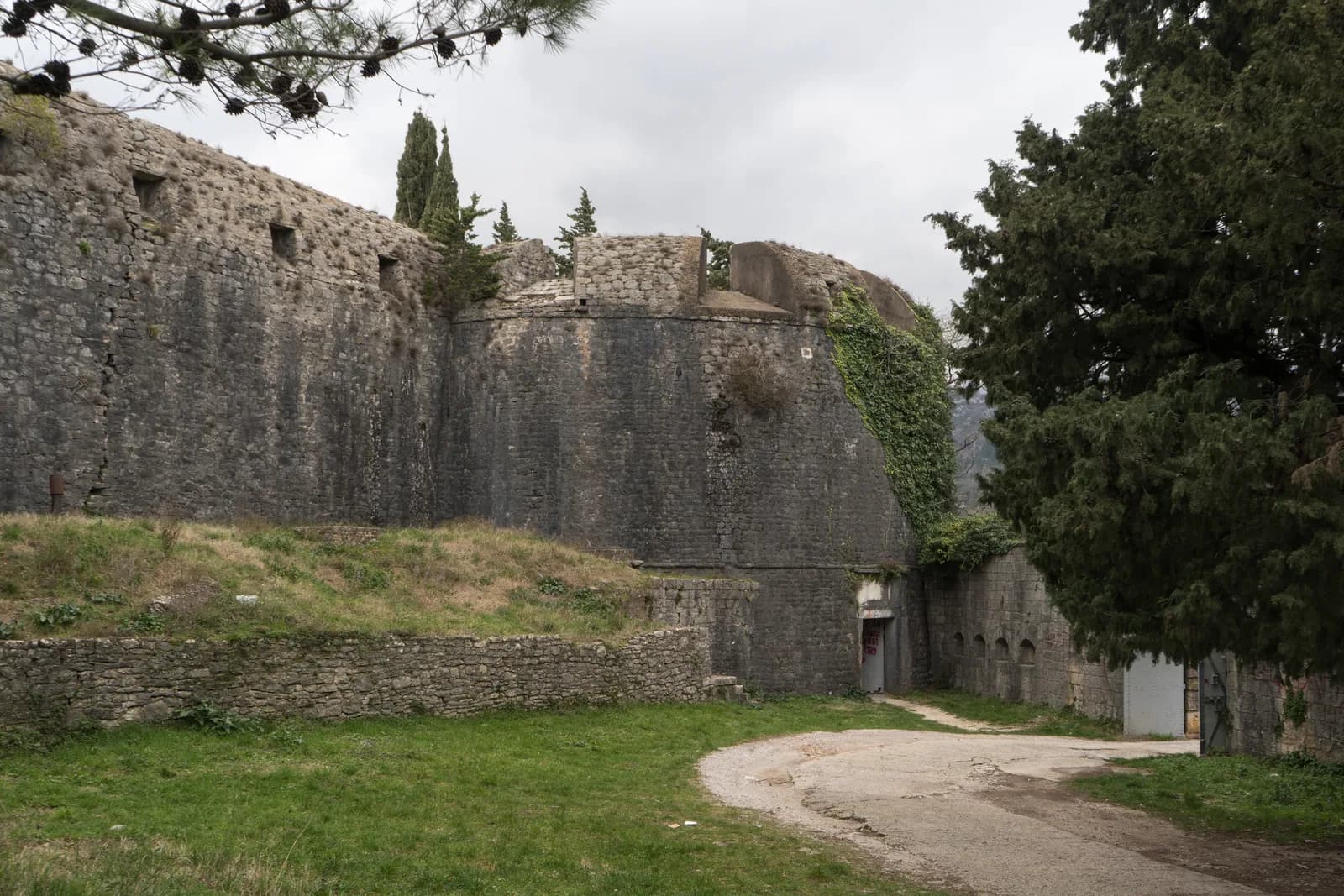
Tvrtko’s foundation accumulated Ottoman, Spanish, Venetian and Habsburg walls and towers. The stair city, Forte Mare, Kanli Kula and Španjola still expose that sequence.
Compare the fortress profile, not exact pixels.
Historisk tidslinje
1382
Den bosniske kongen Tvrtko I anla byen som en befestet havn – et opphav navnene Novi og Castrum Novum fortsatt bærer.
Grunnideen er fra første stund både by og festning.
1482
Den osmanske erobringen innledet to århundrer der befestninger, vannforsyning og religiøst liv gang på gang ble endret.
Kanli Kula hører hjemme i dette lagdelte forsvarslandskapet.
1538–1539
En styrke under habsburgsk ledelse tok byen, men osmanske tropper gjenerobret den året etter, etter en beleiring som ble stående i minnet.
Ett år ga opphav til et varig minne om en «spansk festning».
1687
Venetianske styrker tok Castelnuovo og innlemmet byen i sitt adriatiske forsvars- og handelssystem.
Det italienske navnet i senere kilder speiler dette lange etterlivet.
før 1905
Akvarellen fester Forte Mare til lerretet i en tid da byen strakte seg ned mot en travel strandlinje under østerriksk-ungarsk styre.
Sammenlign festningens silhuett, ikke enkeltdetaljer.
I dag
Livet i Herceg Novi utfolder seg mellom festninger, bratte smug, subtropisk vegetasjon og den gamle jernbanepromenaden.
Den vanskelige topografien er byens formspråk.
Then: En dokumentert tegning med videre kontekst
Now: Et moderne by- eller landskapsbilde fra 2024
Then: Tvrtko I grunnlegger en «ny festning»
Now: Festningsbyen blir et reisemål av hager og trapper
Then: Les terreng, ferdselsårer og nedarvede landemerker
Now: Legg merke til ny tetthet, infrastruktur og bruk
Dates and interpretations are tied to the archive and research sources below. Image limitations are disclosed in the comparison.