For Toppdag
10 av de seksten stedene i atlaset, i atlasets egen rekkefølge — de utvalgte først, så etter høyde.
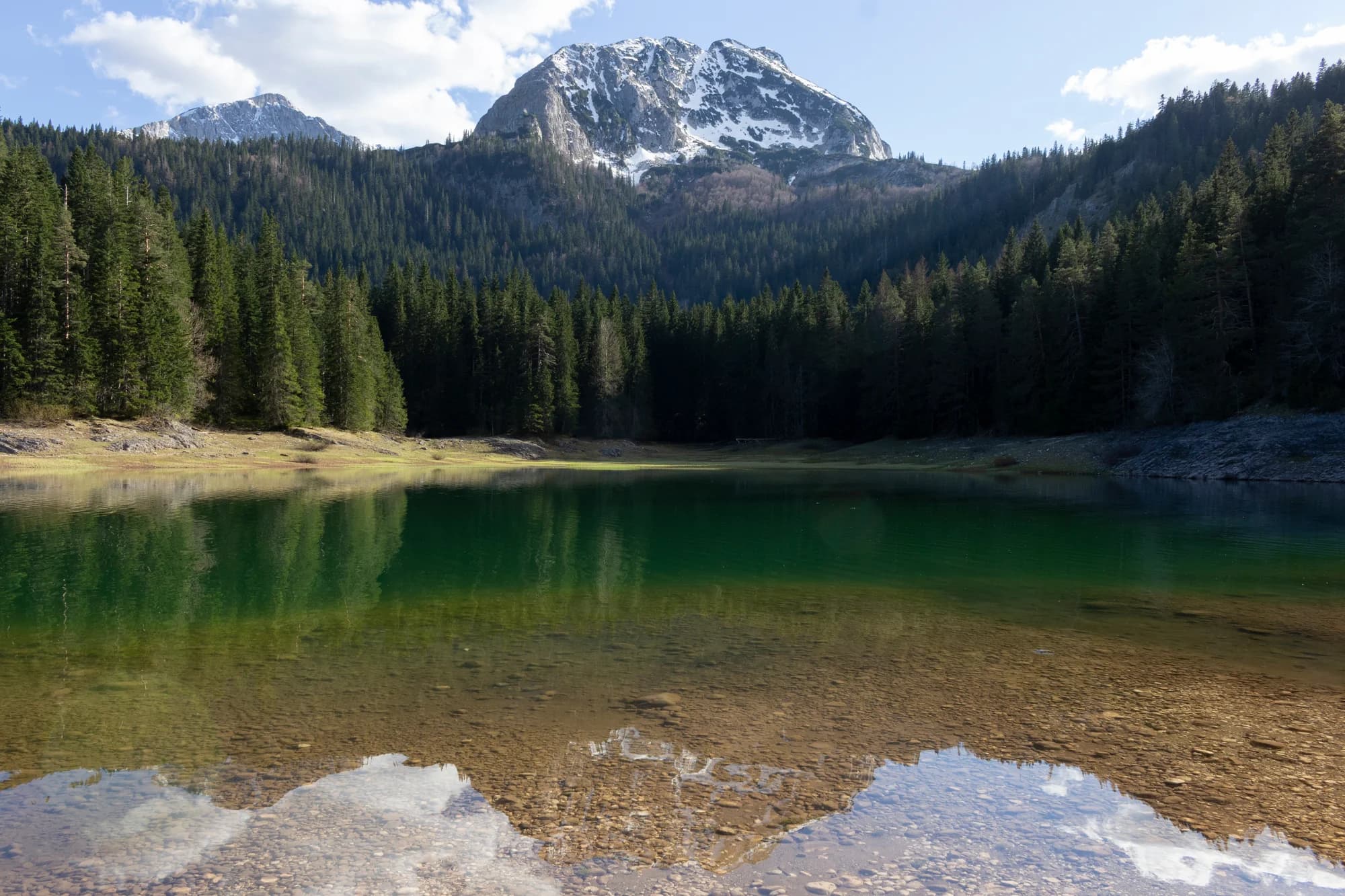
Nr. 1 · Nasjonalpark · 2 523 m
Durmitor
Snø på 69 % av januardagene
The massif that made Montenegro a mountain country: forty-eight summits over 2,000 m around a plateau of glacial lakes, inscribed by UNESCO in 1980.
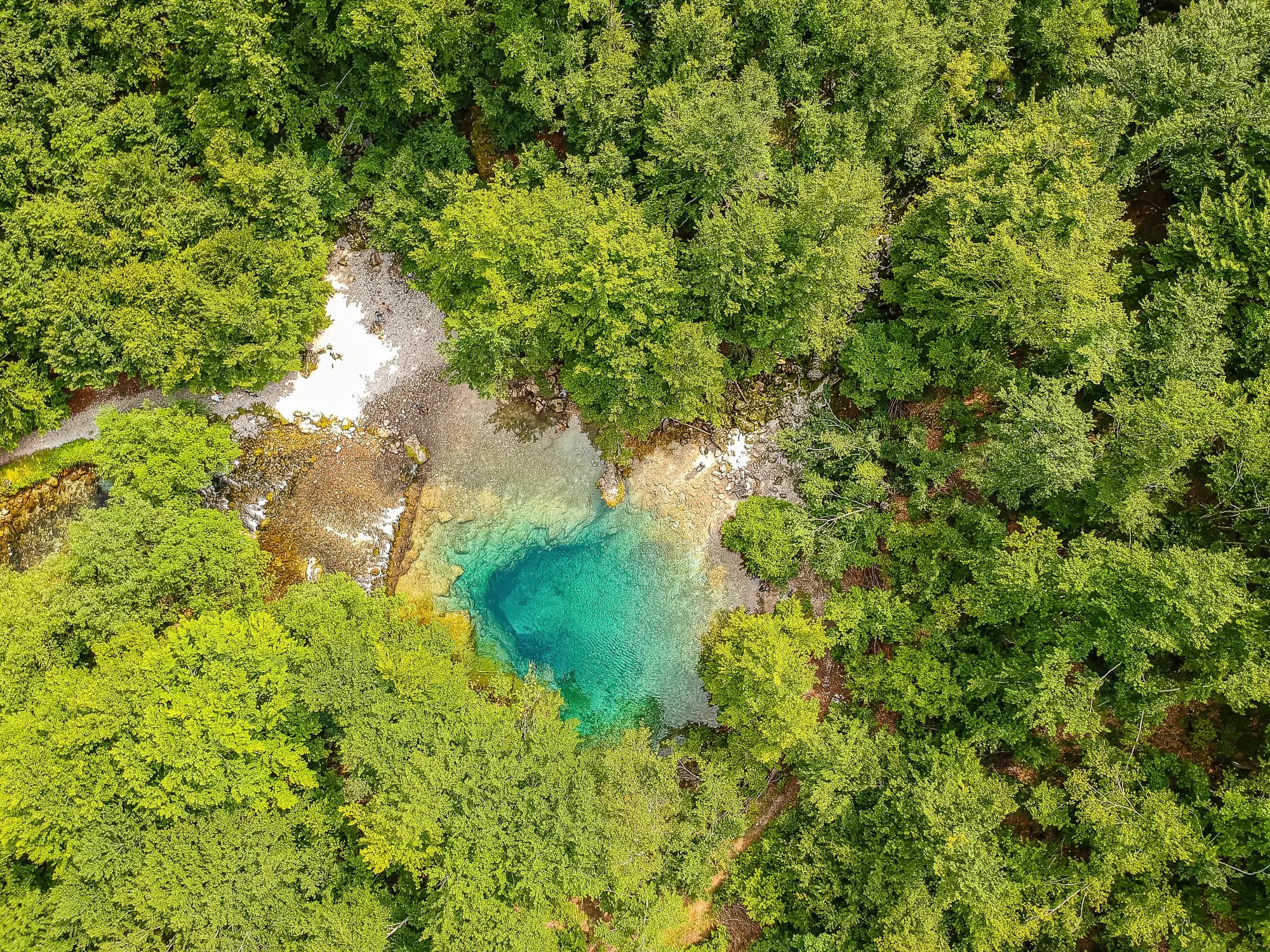
Nr. 2 · Nasjonalpark · 2 535 m
Prokletije
Snø på 71 % av januardagene
The most alpine ground in the country and the least visited: limestone walls above the Grebaje and Ropojana valleys, and Montenegro’s highest summit, Zla Kolata at 2,535 m, on the Albanian border.
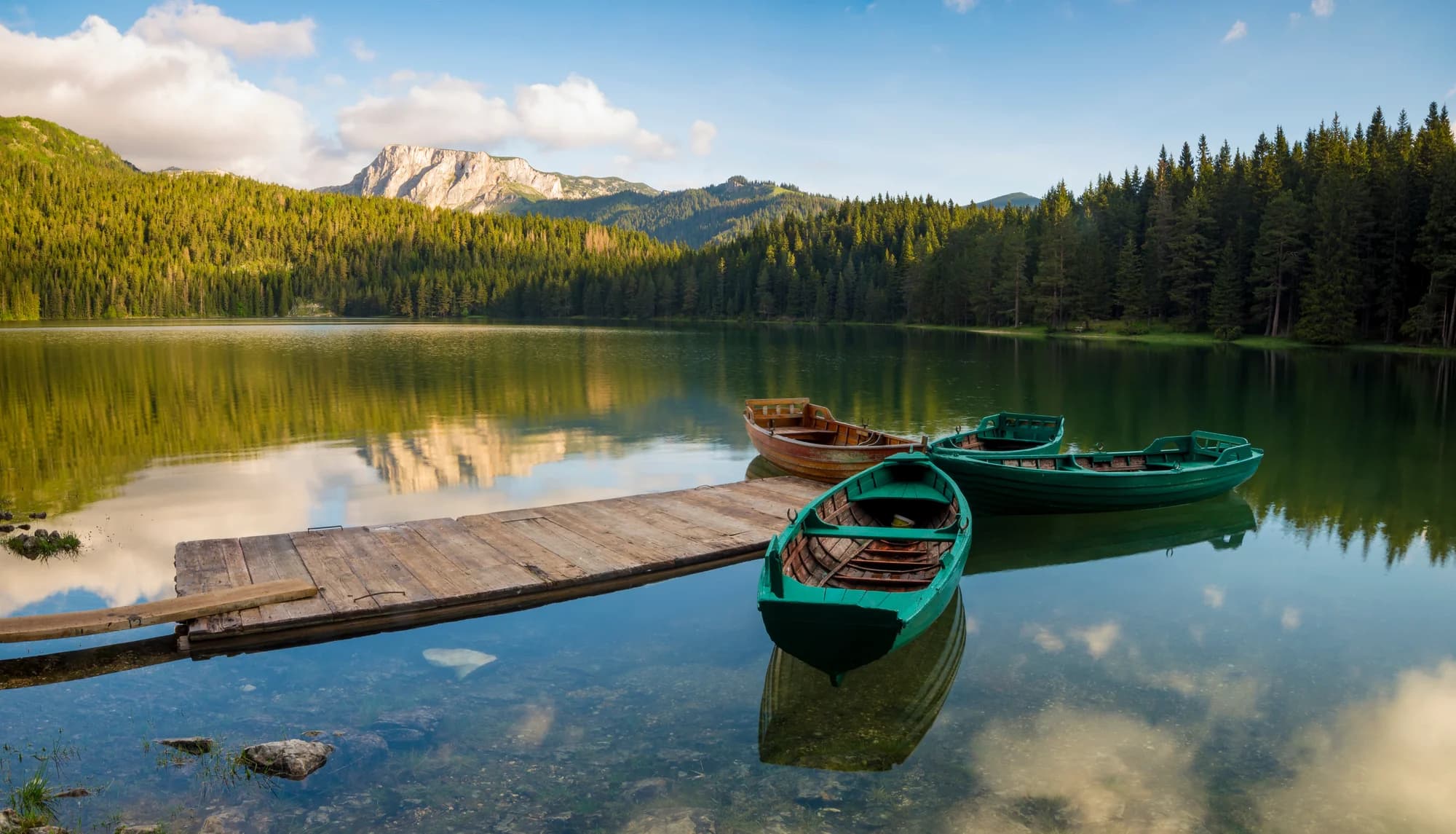
Nr. 6 · Topp · 2 523 m
Bobotov Kuk
Snø på 69 % av januardagene
Durmitor’s best-known summit and the one most people mean when they say they climbed a mountain in Montenegro.
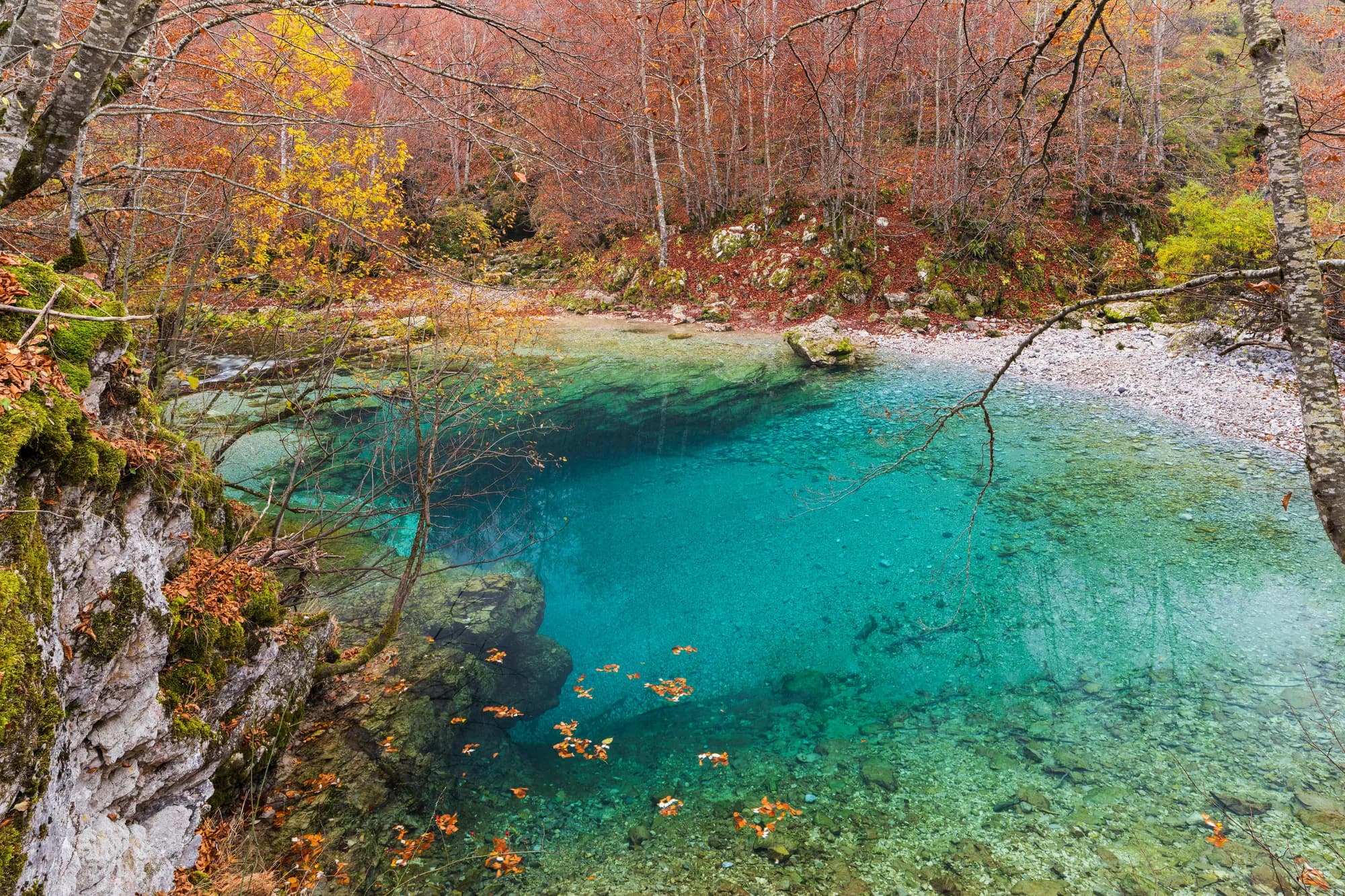 I nærheten, ikke toppen
Nr. 7 · Topp · 2 535 m
Zla Kolata
Snø på 74 % av januardagene
The highest point in Montenegro, at 2,535 m, on the ridge that forms the Albanian border above the Ropojana valley.
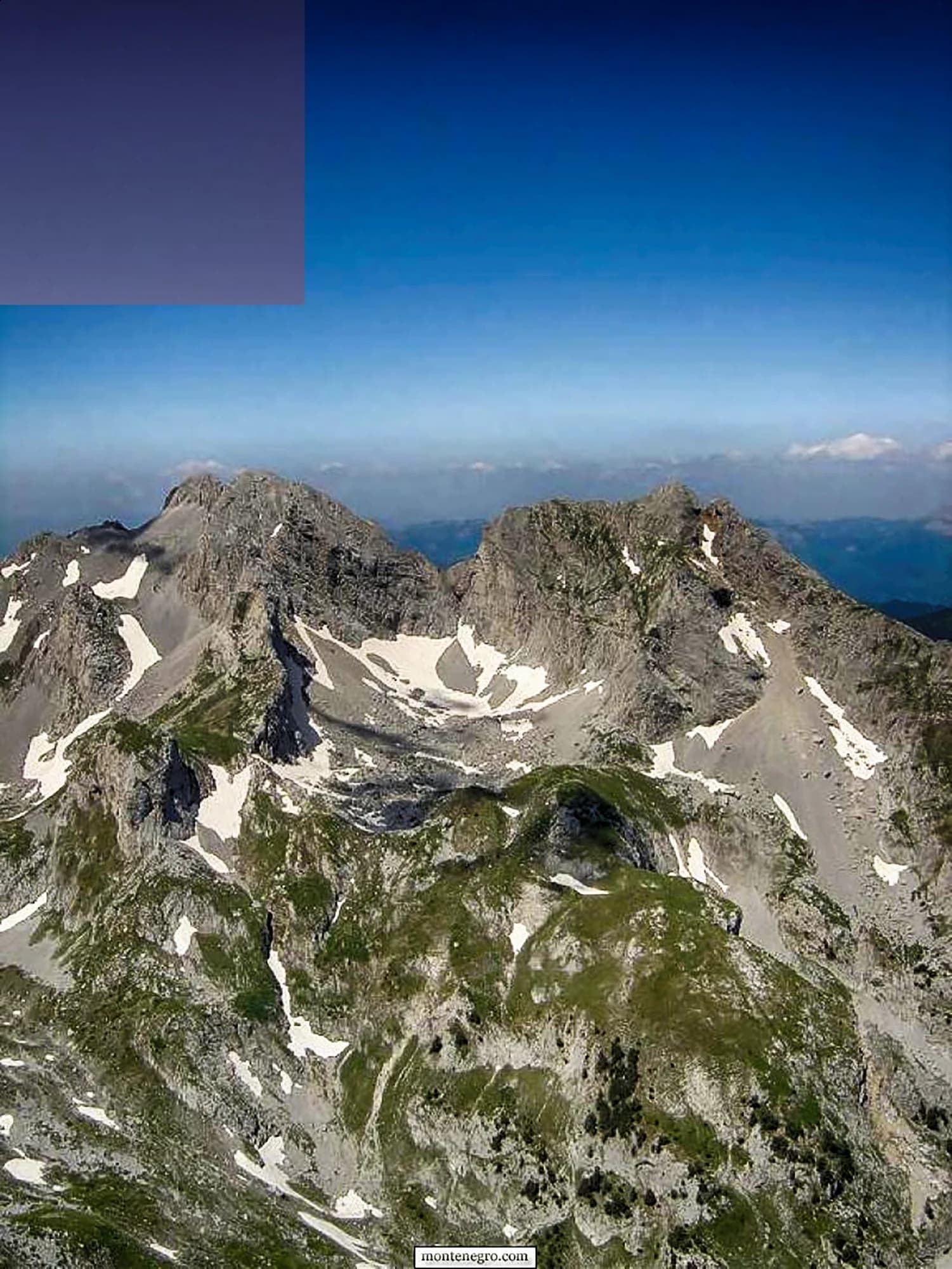
Nr. 8 · Topp · 2 487 m
Kom Kučki
Snø på 65 % av januardagene
The Komovi are three summits that stand almost alone above the meadows between Andrijevica and Kolašin, and Kom Kučki is the highest of them at 2,487 m.
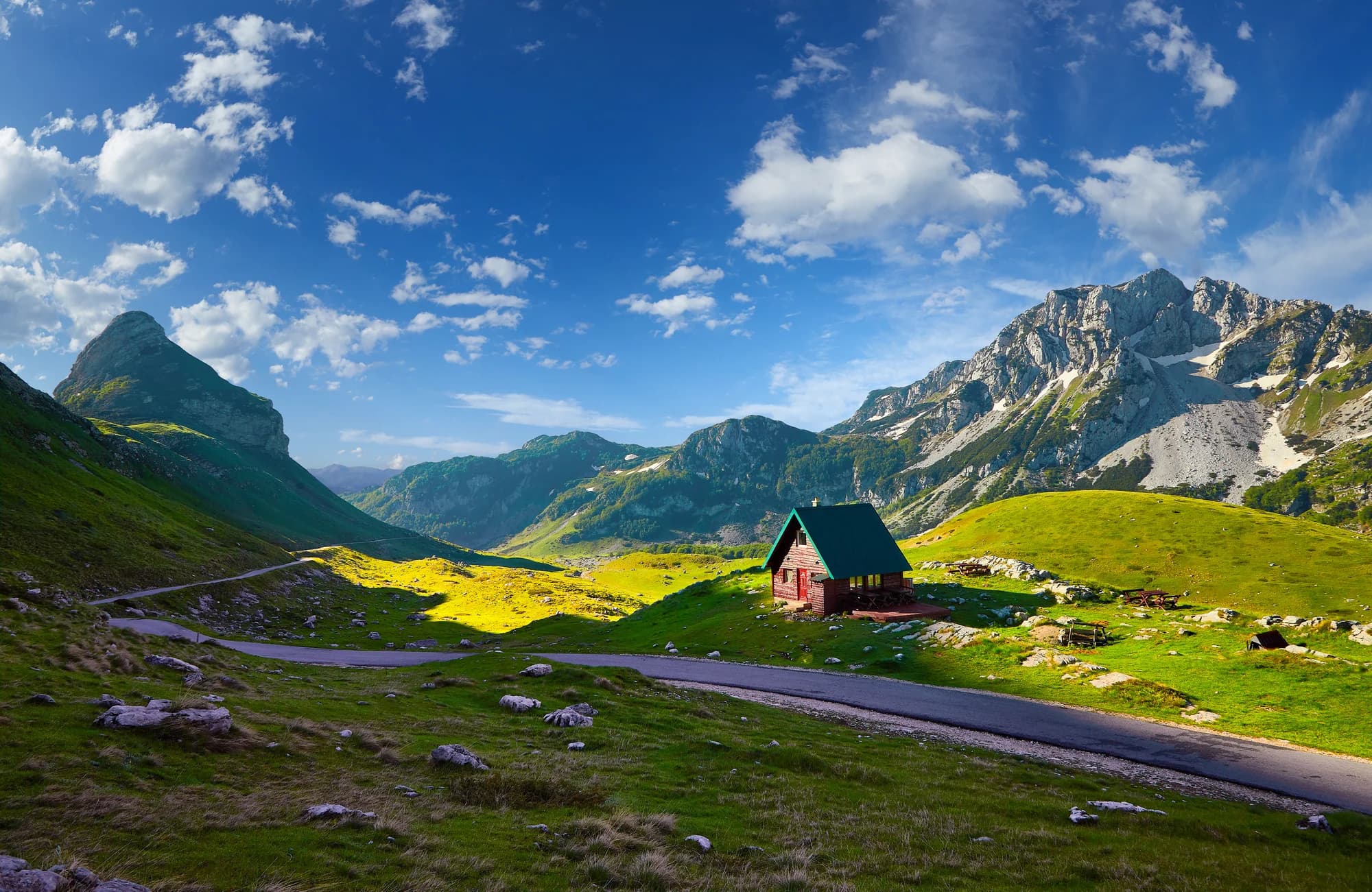
Nr. 9 · Topp · 2 313 m
Savin Kuk
Snø på 72 % av januardagene
Žabljak’s ski mountain and a straightforward summer summit: the chairlifts take the first 700 m of ascent in winter, and in summer the walk up from Black Lake is the standard half-day from the town.
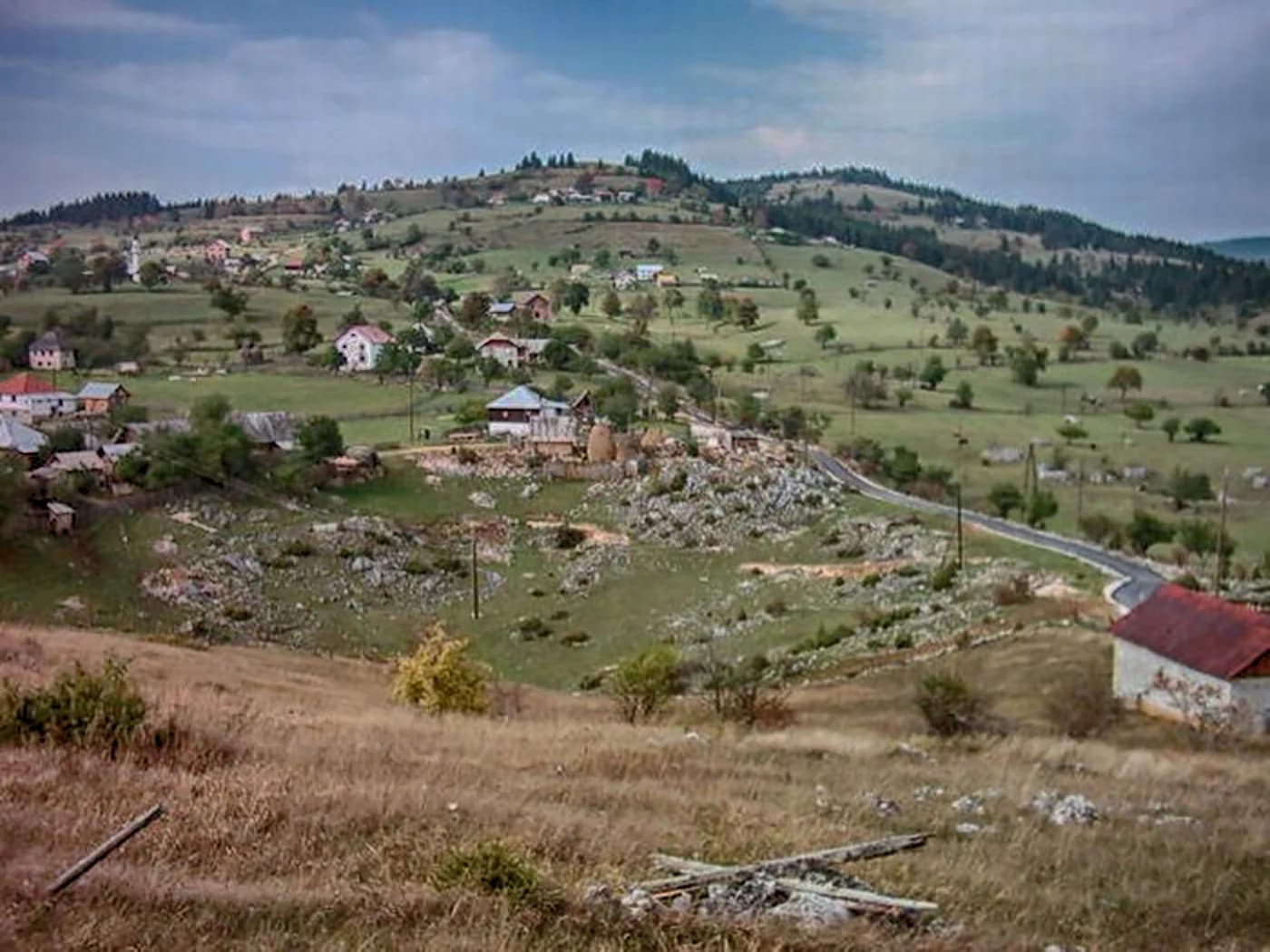
Nr. 10 · Topp · 2 403 m
Hajla
Snø på 67 % av januardagene
The mountain above Rožaje, on the Kosovo border, with a long grassy ridge and a sharp drop on its northern side.
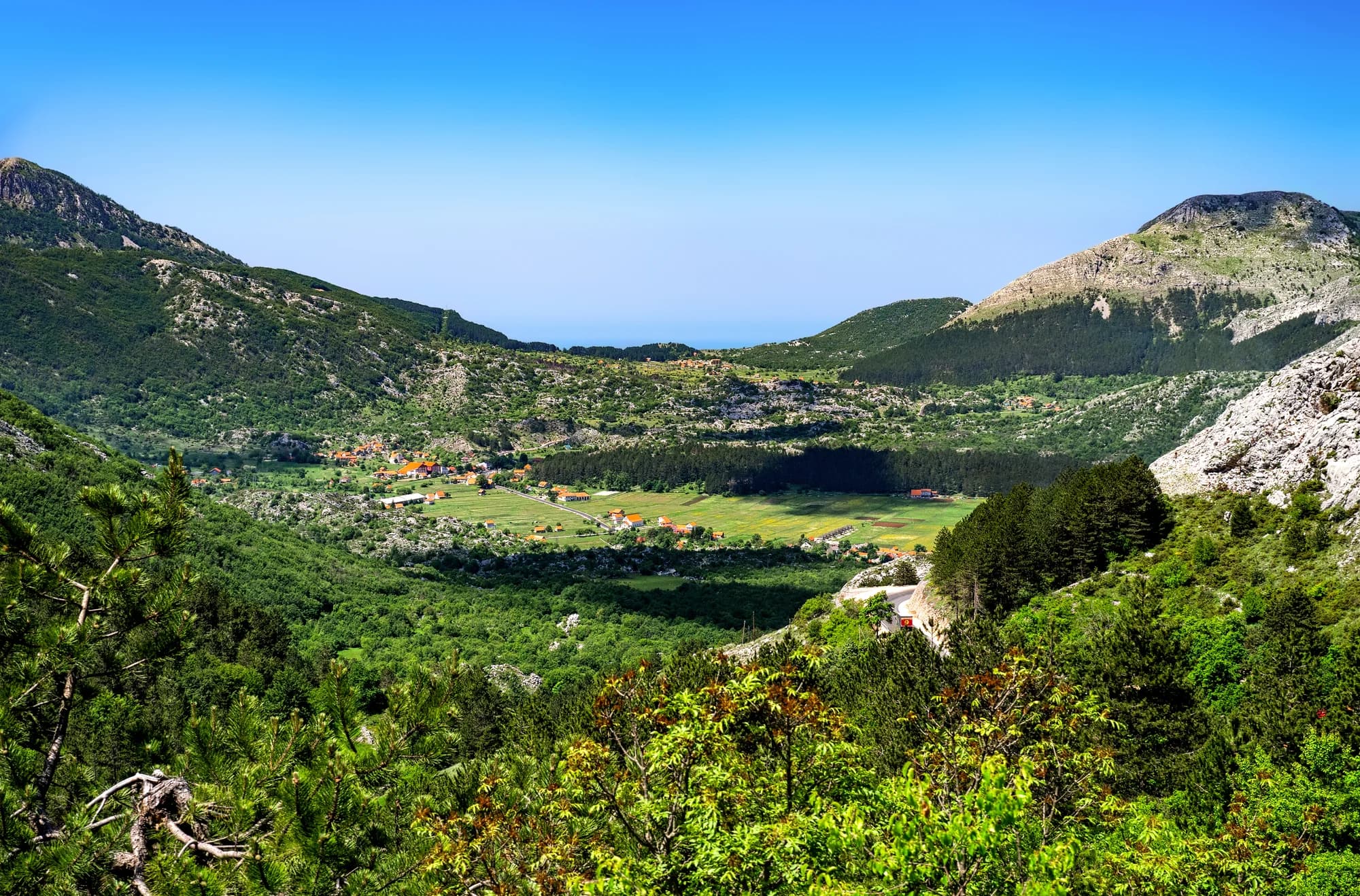
Topp · 1 894 m
Zubački Kabao
The highest point of Orjen, the massif directly behind Herceg Novi, and one of the strangest places in the country: a bare limestone desert of sinkholes and karst at 1,900 m, an hour above a subtropical coast..
 I nærheten, ikke toppen
Topp · 1 748 m
Štirovnik
The true summit of Lovćen, a hundred metres above the mausoleum that everyone drives to and almost nobody walks.
Topp · 1 594 m
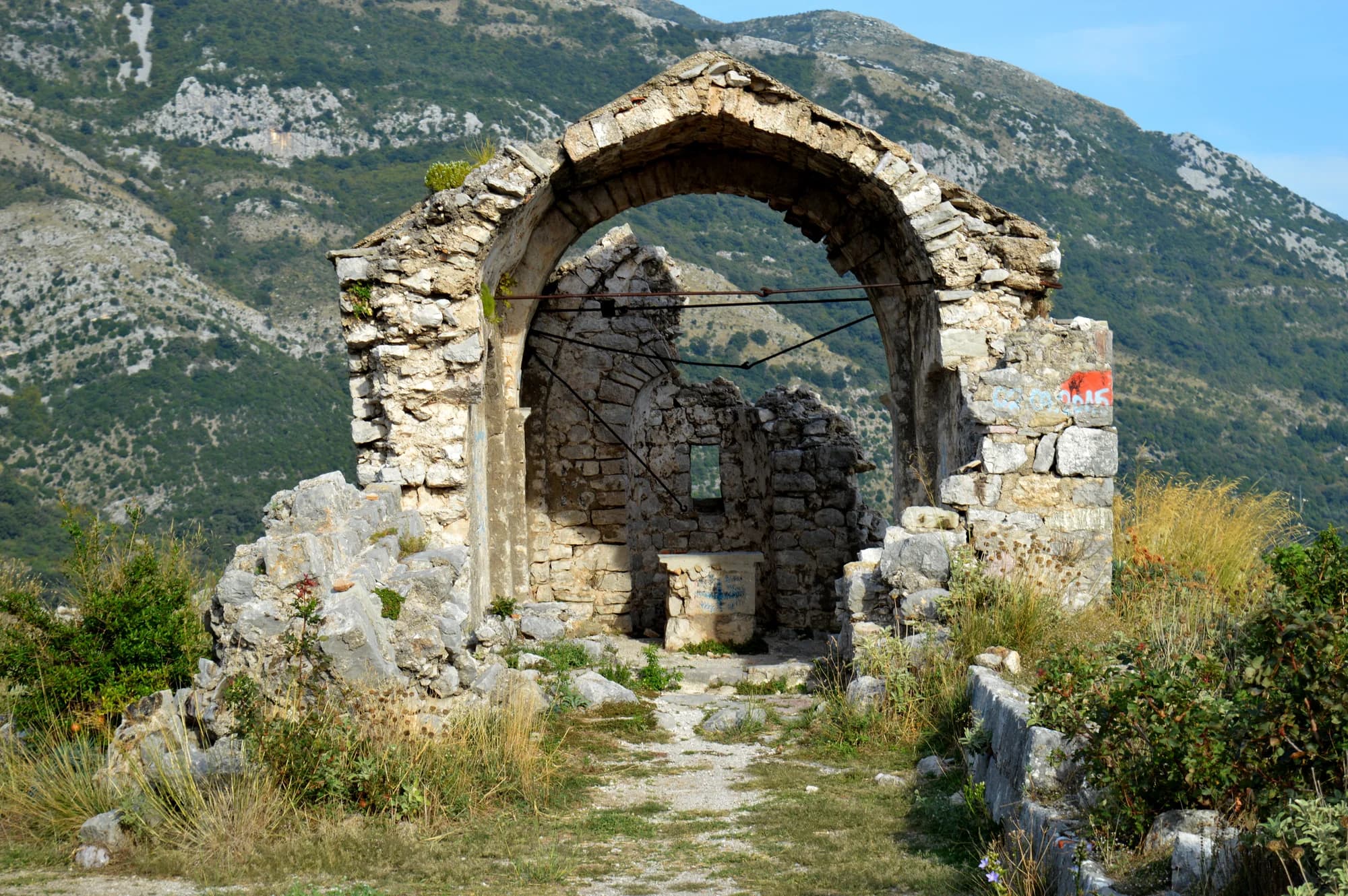
Rumija
The ridge that separates Lake Skadar from the Adriatic, which means the summit has the sea on one side and the lake on the other — the single best view in the south of the country.