Kurtaxe & Anmeldung mit der weißen Karte in Montenegro (2026): Was jeder Besucher wissen muss
Jeder Besucher Montenegros zahlt eine kleine Kurtaxe pro Nacht (die Aufenthaltstaxe) und muss innerhalb von 24 Stunden nach der Ankunft bei den Behörden angemeldet werden — ein Schritt, den Einheimische das Abholen der „weißen Karte“ nennen. Es ist eine der am häufigsten missverstandenen Regeln des Landes, und wer sie falsch handhabt, riskiert bei der Ausreise ein Bußgeld an der Grenze. Dieser Leitfaden erklärt genau, wie hoch die montenegrinische Kurtaxe 2026 ist, wer Sie anmeldet, wer befreit ist, wie Kinder berechnet werden und was passiert, wenn niemand Ihre Unterlagen einreicht.
Inhaltsverzeichnis
- Die zwei Dinge, die jeder Besucher erledigen muss
- Was ist die weiße Karte?
- Die Kurtaxe: Wie hoch 2026
- Wer Sie anmeldet: Hotel oder Privatunterkunft
- Wie Kinder berechnet werden
- Wer befreit ist
- Bußgelder bei fehlender Anmeldung
- Eine Schritt-für-Schritt-Checkliste für Reisende
- Ein Hinweis für Gastgeber und Eigentümer
- Häufig gestellte Fragen
- Quellen
Die zwei Dinge, die jeder Besucher erledigen muss
Es gibt eigentlich nur zwei Pflichten, und sie hängen zusammen:
- Innerhalb von 24 Stunden nach der Ankunft angemeldet sein. Das montenegrinische Recht verlangt, dass jeder ausländische Besucher der örtlichen Polizei bzw. Tourismusbehörde gemeldet wird. Das ist die „weiße Karte“ (bijeli karton) — der Nachweis, dass der Staat weiß, wo Sie übernachten.
- Die Kurtaxe (Aufenthaltstaxe) zahlen, rund 1 € pro Erwachsenem und Nacht, eingezogen von Ihrer Unterkunft und an dieselbe Anmeldung gekoppelt.
Wenn Sie in einem Hotel, einem lizenzierten apartman, einem Hostel oder einer registrierten Ferienunterkunft übernachten, geschieht beides automatisch und Sie merken kaum etwas davon. Die Gefahrenzone sind informelle Übernachtungen — in der Wohnung eines Freundes, in einer nicht registrierten Privatunterkunft oder auf einer langen Rundreise, bei der Sie jede Nacht das Bett wechseln. In diesen Fällen liegt die Verantwortung bei Ihnen.
Was ist die weiße Karte?
Die „weiße Karte“ ist der Spitzname der Reisenden für die Anmeldebestätigung (prijava boravka, manchmal als potvrda ausgestellt), die belegt, dass Sie ordnungsgemäß als vorübergehender Besucher gemeldet wurden. Früher war es ein kleiner weißer Zettel; heute ist es ebenso oft ein Ausdruck oder ein digitaler Eintrag, den Ihre Unterkunft im nationalen Gästemeldesystem erfasst.
Sie müssen sie in der Regel nicht in der Stadt mit sich herumtragen. Klug ist aber:
- Bewahren Sie eine Kopie auf (ein Foto auf dem Handy genügt) – für jede Unterkunft.
- Bitten Sie Ihren Gastgeber oder die Rezeption, Ihre Anmeldung zu bestätigen — besonders in Privatunterkünften.
- Heben Sie die Belege auf, wenn Ihre Reise mehrere Unterkünfte umfasst — an der Grenze können Beamte Sie bitten, jede Nacht nachzuweisen.
Warum die weiße Karte weit über einen einzelnen Urlaub hinaus zählt: Die Anmeldehistorie wird auch zur Unterstützung von Anträgen auf Aufenthalts- und Digital-Nomad-Genehmigungen herangezogen. Lücken in Ihrem Meldeverlauf können solche Anträge später erschweren, deshalb sollten auch Langzeitbesucher ihre Unterlagen ordentlich führen.
Die Kurtaxe: Wie hoch 2026
Die Aufenthaltstaxe wird von jeder Gemeinde festgelegt, der genaue Betrag schwankt also leicht nach Ort und Saison — er ist aber klein und vorhersehbar. Hier die übersichtliche Fassung für 2026:
| Wer | Kurtaxe pro Nacht (2026) |
|---|---|
| Erwachsene (ab 18) | 1,00 € in den wichtigsten Ferienorten (gesetzliche Spanne 0,10–1,00 €) |
| Minderjährige von 12 bis 18 | ~0,50 € (etwa die Hälfte des Erwachsenensatzes) |
| Kinder unter 12 | Meist befreit (0,00 €) |
| Hotel/lizenzierte Unterkunft | Taxe wird automatisch auf die Rechnung gesetzt |
| Private Ferienunterkunft | Taxe wird vom Gastgeber im Rahmen der Anmeldung eingezogen |
Ein paar Dinge, die man wissen sollte:
- Der Betrag gilt pro Person und Nacht, nicht pro Zimmer oder Buchung. Zwei Erwachsene, die vier Nächte bleiben, zahlen insgesamt rund 8 €.
- Er ist getrennt von Mehrwertsteuer und Zimmerpreis. Manche Angebote rechnen ihn in den Preis ein, andere weisen ihn beim Check-in als kleinen Posten aus. So oder so sind es ein paar Euro und kein versteckter Aufschlag, vor dem man sich fürchten müsste.
- Die Sätze können in manchen Küstengemeinden je nach Saison variieren, stets innerhalb der gesetzlichen Spanne von 0,10–1,00 €. Die Unterschiede bewegen sich im Cent-Bereich, nicht in Euro.
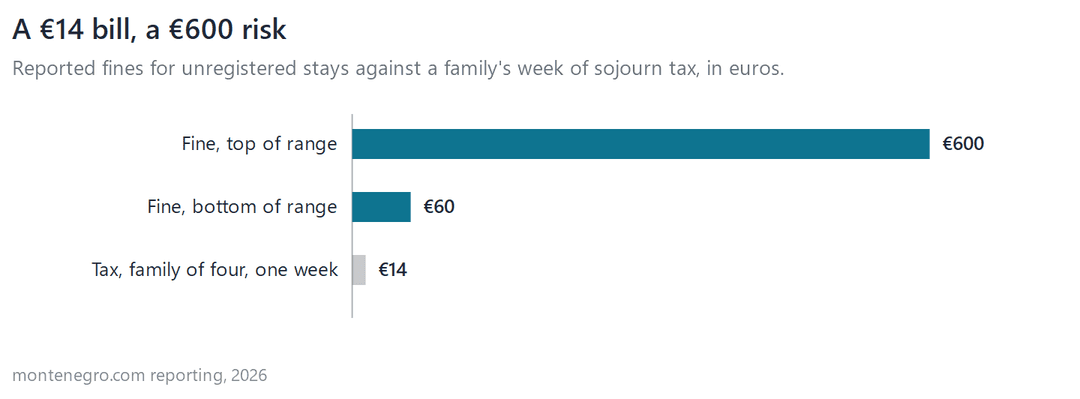
Kurz gesagt: Rechnen Sie mit etwa 1 € pro Erwachsenem und Nacht, dann liegen Sie nah dran. Für eine Familie mit zwei Erwachsenen und zwei kleinen Kindern in einer Urlaubswoche beträgt die gesamte Kurtaxe typischerweise rund 14 €.

Wer Sie anmeldet: Hotel oder Privatunterkunft
Das ist die wichtigste Unterscheidung überhaupt, denn sie entscheidet, ob Sie überhaupt etwas tun müssen.
Aufenthalt im Hotel oder in einer lizenzierten Unterkunft
Sie tun nichts. Hotels, Resorts, Hostels und lizenzierte Apartments sind gesetzlich verpflichtet, jeden Gast anzumelden und die Aufenthaltstaxe einzuziehen. In dem Moment, in dem Sie beim Check-in Ihren Pass übergeben, trägt das Haus Ihren Aufenthalt ins System ein. Die Taxe erscheint auf Ihrer Rechnung, und Sie sind für die Dauer dieser Buchung abgedeckt.
Aufenthalt in einer Privatunterkunft oder bei Freunden
Hier tappen Reisende in die Falle. Eine lizenzierte Ferienunterkunft — die Art, die Sie über einen seriösen Marktplatz buchen — meldet Sie genauso an wie ein Hotel, weil der Gastgeber gesetzlich dazu verpflichtet ist. Der Gastgeber übermittelt Ihre Daten, zahlt die Taxe, und alles ist in Ordnung.
Wenn Sie aber in einer nicht registrierten Privatwohnung, einer informellen Untermiete oder bei Freunden oder Verwandten übernachten, reicht niemand automatisch Ihre Unterlagen ein. In diesem Fall müssen Sie (oder Ihr Gastgeber) Ihren Aufenthalt innerhalb von 24 Stunden anmelden — bei einem örtlichen Touristeninformationszentrum oder einer Polizeistation. Bringen Sie Ihren Pass mit. Es dauert wenige Minuten, und die Taxe wird vor Ort bezahlt.
Die praktische Erkenntnis: Buchen Sie eine ordnungsgemäß lizenzierte Unterkunft, dann ist die Anmeldung die Aufgabe von jemand anderem. Bleiben Sie außerhalb des Systems, wird sie zu Ihrer.
Wenn Sie eine geprüfte Ferienunterkunft über montenegro.com buchen, übernimmt Ihr Gastgeber Anmeldung und Aufenthaltstaxe als Teil Ihres Aufenthalts — Sie müssen nichts einreichen. Sie können Apartments in Kotor oder Ferienunterkünfte in Budva ansehen und wissen, dass der Papierkram zur weißen Karte in der Buchung enthalten ist.
Wie Kinder berechnet werden
Die Regeln sind familienfreundlich:
- Kinder unter 12 sind von der Aufenthaltstaxe in der Regel vollständig befreit.
- Minderjährige von 12 bis 18 zahlen typischerweise etwa die Hälfte des Erwachsenensatzes (~0,50 € pro Nacht).
- Erwachsene (ab 18) zahlen den vollen Satz (~1 € pro Nacht).
Kinder müssen trotzdem angemeldet werden, auch wenn sie keine Taxe zahlen — Anmeldung und Besteuerung sind zwei verschiedene Dinge. Ein Hotel oder eine lizenzierte Unterkunft erledigt das für die ganze Familie in einem Zug, sodass Eltern selten daran denken müssen. Reisen Sie immer mit dem Pass jedes Kindes, denn die Anmeldung ist an Ausweisdokumente gebunden.
Wer befreit ist
Einige Personengruppen zahlen keine Aufenthaltstaxe (auch wenn manche dennoch angemeldet werden müssen):
- Kinder unter 12, wie oben beschrieben.
- Immobilieneigentümer, die in ihrem eigenen Haus in Montenegro wohnen, und in der Praxis ihre engsten Familienangehörigen, sind in der Regel von der Kurtaxe befreit — in ihrer eigenen Immobilie sind sie keine „Touristen“.
- Die nationalen Vorschriften nehmen weitere Gruppen aus: Menschen mit schweren Behinderungen, Besucher, die zur Kur- oder Klimabehandlung überwiesen wurden, örtlich angemeldete Saisonarbeitskräfte, Teilnehmer an Schulausflügen sowie alle, die mehr als 30 aufeinanderfolgende Tage bleiben — deren Aufenthalt fällt ganz aus der Aufenthaltstaxe heraus.
Die Befreiung für Eigentümer und Familie ist für viele Immobilienkäufer bei montenegro.com die entscheidende: Sobald Sie hier ein Haus besitzen, unterliegen Ihre eigenen Aufenthalte — und in der Regel auch die Ihrer engen Familie — nicht der Besuchertaxe, wobei Sie dennoch nachweisen können sollten, dass Sie der eingetragene Eigentümer sind. Im Zweifel kann Ihnen Ihr örtlicher Anwalt oder Hausverwalter bestätigen, wie Ihre Gemeinde Aufenthalte von Familienangehörigen behandelt.
Bußgelder bei fehlender Anmeldung
Deshalb verdient das Thema einen ganzen Artikel. Montenegro setzt die Anmeldepflicht tatsächlich durch, und am häufigsten wird man bei der Ausreise aus dem Land erwischt.
- Bei der Ausreise kann ein Grenzbeamter den Nachweis verlangen, dass Ihr Aufenthalt angemeldet war. Wenn Sie Ihre Nächte nicht belegen können — besonders wenn Sie informell untergekommen sind —, kann ein Bußgeld verhängt werden; das britische Außenministerium warnt, dass nicht angemeldeten Besuchern „ein Bußgeld, eine Festnahme oder ein Gerichtstermin drohen kann“.
- Die berichteten Strafen für fehlende Anmeldung liegen in der Regel im Bereich von etwa 60 € bis 600 €, je nach Umständen und Ermessen des Beamten. Es handelt sich um ein Verwaltungsbußgeld, nicht um eine Straftat, aber es ist ein unangenehmes und vermeidbares Ende eines Urlaubs.
- Das Risiko ist für Gäste von Hotels und lizenzierten Unterkünften nahezu null, weil diese Aufenthalte für Sie angemeldet werden. Real ist es für Menschen, die inoffiziell übernachtet haben.
Die Lösung ist einfach: Übernachten Sie in lizenzierten Unterkünften, bewahren Sie Ihre Anmeldebelege auf, und wenn Sie jemals informell übernachten, melden Sie sich innerhalb von 24 Stunden an. Dann werden Sie nie wieder an das Bußgeld denken müssen.
Eine Schritt-für-Schritt-Checkliste für Reisende
- Buchen Sie eine lizenzierte Unterkunft. Hotels und geprüfte Ferienunterkünfte melden Sie automatisch an.
- Übergeben Sie beim Check-in Ihren Pass — damit wird Ihre Anmeldung ausgelöst.
- Lassen Sie sich Ihre Anmeldung bestätigen, besonders in einer Privatunterkunft. Ein kurzes „Bin ich für die Kurtaxe angemeldet?“ genügt.
- Bewahren Sie eine Kopie jeder Anmeldung/jedes Belegs auf (ein Handyfoto reicht).
- Wenn Sie informell übernachten, gehen Sie innerhalb von 24 Stunden mit Ihrem Pass zu einem Touristeninformationszentrum oder einer Polizeistation und melden Sie sich selbst an.
- Bei der Ausreise sollten Sie Ihre Belege griffbereit haben, falls danach gefragt wird.
Wenn Sie das befolgen, ist das ganze System eine Nebensache — ein Euro pro Nacht und ein Stück Papier.
Wohin fließt der Euro pro Nacht eigentlich? An die Gemeinde, in der Sie übernachtet haben. Budva allein nahm zwischen Januar und Mitte August 2024 rund 2,58 Millionen € an Aufenthaltstaxe ein — Geld, das für Strände, Beschilderung und die touristische Infrastruktur bestimmt ist, die Besucher nutzen, ohne es zu bemerken. Der Satz bleibt zudem womöglich nicht für immer bei einem Euro: Das montenegrinische Tourismusministerium hat an Änderungen gearbeitet, um die Taxe anzuheben und der nationalen Tourismusorganisation einen größeren Anteil daran zu geben. Prüfen Sie daher vor Ihrer Reise den aktuellen Satz bei der Regierung von Montenegro (gov.me).
Ein Hinweis für Gastgeber und Eigentümer
Wenn Sie eine Immobilie in Montenegro besitzen und an Gäste vermieten, liegen Anmeldung und Aufenthaltstaxe als Gastgeber in Ihrer rechtlichen Verantwortung. Die Fristen sind für Sie enger als für Ihre Gäste: Gastgeber müssen jede Ankunft innerhalb von 12 Stunden und jede Abreise innerhalb von 24 Stunden melden und die eingezogene Taxe anschließend in einem fortlaufenden 15-Tage-Zyklus an die Gemeinde abführen — und ein Gastgeber, der die Taxe nicht einzieht, haftet persönlich für den nicht eingezogenen Betrag. Wer dem nicht nachkommt, setzt sich selbst — nicht nur seinen Gast — Strafen aus.
Das ist einer der Gründe, warum viele Eigentümer über einen verwalteten Marktplatz inserieren. Gastgeber bei montenegro.com übernehmen die Gästeanmeldung und die Kurtaxe automatisch im Rahmen jeder Buchung, sodass weder der Eigentümer noch der Reisende sich durch Gemeindeämter kämpfen muss. Wenn Sie erwägen, ein Apartment an der Küste zu kaufen und zu vermieten, beziehen Sie diese Pflichten in Ihre Planung ein — oder wählen Sie eine Plattform, die das für Sie erledigt.
Planen Sie Ihre Reise? Entdecken Sie geprüfte Ferienunterkünfte in ganz Montenegro, bei denen Anmeldung und Kurtaxe für Sie erledigt werden — so müssen Sie nur noch entscheiden, welchen Strand Sie zuerst besuchen.
Häufig gestellte Fragen
Wer ist von der Kurtaxe in Montenegro befreit?
Kinder unter 12 sind in der Regel vollständig befreit. Immobilieneigentümer, die in ihrem eigenen Haus wohnen — und in der Praxis ihre engsten Familienangehörigen —, sind ebenfalls befreit, ebenso einige Sondergruppen wie Personen in medizinischer Behandlung. Alle anderen (Erwachsene sowie Minderjährige von 12–18 zu einem ermäßigten Satz) zahlen die Aufenthaltstaxe pro Nacht.
Was genau ist die „weiße Karte“?
So nennen Reisende Ihre Anmeldebestätigung (prijava boravka / potvrda) — den offiziellen Nachweis, dass Ihr Aufenthalt innerhalb von 24 Stunden nach der Ankunft den Behörden gemeldet wurde. Hotels und lizenzierte Unterkünfte stellen sie für Sie aus oder erfassen sie für Sie. Bewahren Sie für jede Unterkunft eine Kopie auf.
Wie hoch ist das Bußgeld, wenn ich nicht angemeldet bin?
Die Strafen für fehlende Anmeldung liegen Berichten zufolge typischerweise im Bereich von etwa 60–600 € und werden meist an der Grenze bei der Ausreise verhängt. Gäste von Hotels und lizenzierten Ferienunterkünften werden automatisch angemeldet und tragen praktisch kein Risiko; gefährlich ist es, informell zu übernachten, ohne sich anzumelden.
Wie hoch ist die Kurtaxe pro Nacht im Jahr 2026?
Etwa 1 € pro Erwachsenem und Nacht (die gesetzliche Spanne beträgt 0,10–1,00 €, und die wichtigsten Ferienortgemeinden verlangen die vollen 1,00 €). Minderjährige von 12–18 zahlen etwa die Hälfte, Kinder unter 12 sind meist befreit. Die Taxe wird pro Person und Nacht berechnet und von Ihrer Unterkunft eingezogen.
Wie werden Kinder berechnet?
Kinder unter 12 zahlen in der Regel nichts. Jugendliche von 12–18 zahlen etwa die Hälfte des Erwachsenensatzes (~0,50 €/Nacht). Kinder müssen auch dann angemeldet werden, wenn keine Taxe fällig ist, reisen Sie also mit dem Pass jedes Kindes.
Muss ich mich selbst anmelden, wenn ich eine Ferienunterkunft buche?
Nein — eine lizenzierte Ferienunterkunft meldet Sie, wie ein Hotel, automatisch an und zieht die Taxe ein. Selbst anmelden müssen Sie sich nur, wenn Sie in einer nicht lizenzierten Unterkunft übernachten, etwa in der Wohnung eines Freundes oder einer informellen Untermiete.
Quellen
- Regierung von Montenegro — Ministerium für Tourismus und offizielle kommunale Tourismusorganisationen — https://www.gov.me/en
- Nationale Tourismusorganisation Montenegros (Aufenthaltstaxe & Anmeldung) — https://www.montenegro.travel
- Britisches Außenministerium (Foreign, Commonwealth & Development Office) — Reisehinweise für Montenegro (Einreise & Anmeldung) — https://www.gov.uk/foreign-travel-advice/montenegro
- U.S. Department of State — Reiseinformationen zu Montenegro — https://travel.state.gov/content/travel/en/international-travel/International-Travel-Country-Information-Pages/Montenegro.html
- Nationale Tourismusorganisation Montenegros — Besucherinformationsportal — https://www.montenegro.travel/en
Siehe auch: Die Prijava und vier weitere Überraschungen der Hochsaison
Wer ist von der Kurtaxe in Montenegro befreit?
Kinder unter 12 sind in der Regel vollständig befreit. Immobilieneigentümer, die in ihrem eigenen Haus wohnen — und in der Praxis ihre engsten Familienangehörigen —, sind ebenfalls befreit, ebenso einige Sondergruppen wie Personen in medizinischer Behandlung. Alle anderen (Erwachsene sowie Minderjährige von 12–18 zu einem ermäßigten Satz) zahlen die Aufenthaltstaxe pro Nacht.
Was genau ist die „weiße Karte“?
So nennen Reisende Ihre Anmeldebestätigung (prijava boravka / potvrda) — den offiziellen Nachweis, dass Ihr Aufenthalt innerhalb von 24 Stunden nach der Ankunft den Behörden gemeldet wurde. Hotels und lizenzierte Unterkünfte stellen sie für Sie aus oder erfassen sie für Sie. Bewahren Sie für jede Unterkunft eine Kopie auf.
Wie hoch ist das Bußgeld, wenn ich nicht angemeldet bin?
Die Strafen für fehlende Anmeldung liegen Berichten zufolge typischerweise im Bereich von etwa 60–600 € und werden meist an der Grenze bei der Ausreise verhängt. Gäste von Hotels und lizenzierten Ferienunterkünften werden automatisch angemeldet und tragen praktisch kein Risiko; gefährlich ist es, informell zu übernachten, ohne sich anzumelden.
Wie hoch ist die Kurtaxe pro Nacht im Jahr 2026?
Etwa 1 € pro Erwachsenem und Nacht (die gesetzliche Spanne beträgt 0,10–1,00 €, und die wichtigsten Ferienortgemeinden verlangen die vollen 1,00 €). Minderjährige von 12–18 zahlen etwa die Hälfte, Kinder unter 12 sind meist befreit. Die Taxe wird pro Person und Nacht berechnet und von Ihrer Unterkunft eingezogen.
Wie werden Kinder berechnet?
Kinder unter 12 zahlen in der Regel nichts. Jugendliche von 12–18 zahlen etwa die Hälfte des Erwachsenensatzes (~0,50 €/Nacht). Kinder müssen auch dann angemeldet werden, wenn keine Taxe fällig ist, reisen Sie also mit dem Pass jedes Kindes.
Muss ich mich selbst anmelden, wenn ich eine Ferienunterkunft buche?
Nein — eine lizenzierte Ferienunterkunft meldet Sie, wie ein Hotel, automatisch an und zieht die Taxe ein. Selbst anmelden müssen Sie sich nur, wenn Sie in einer nicht lizenzierten Unterkunft übernachten, etwa in der Wohnung eines Freundes oder einer informellen Untermiete.