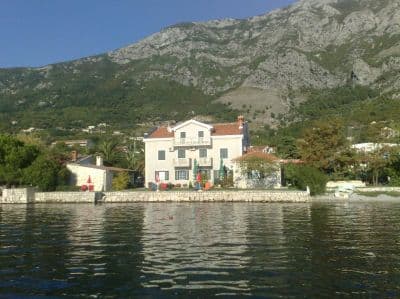
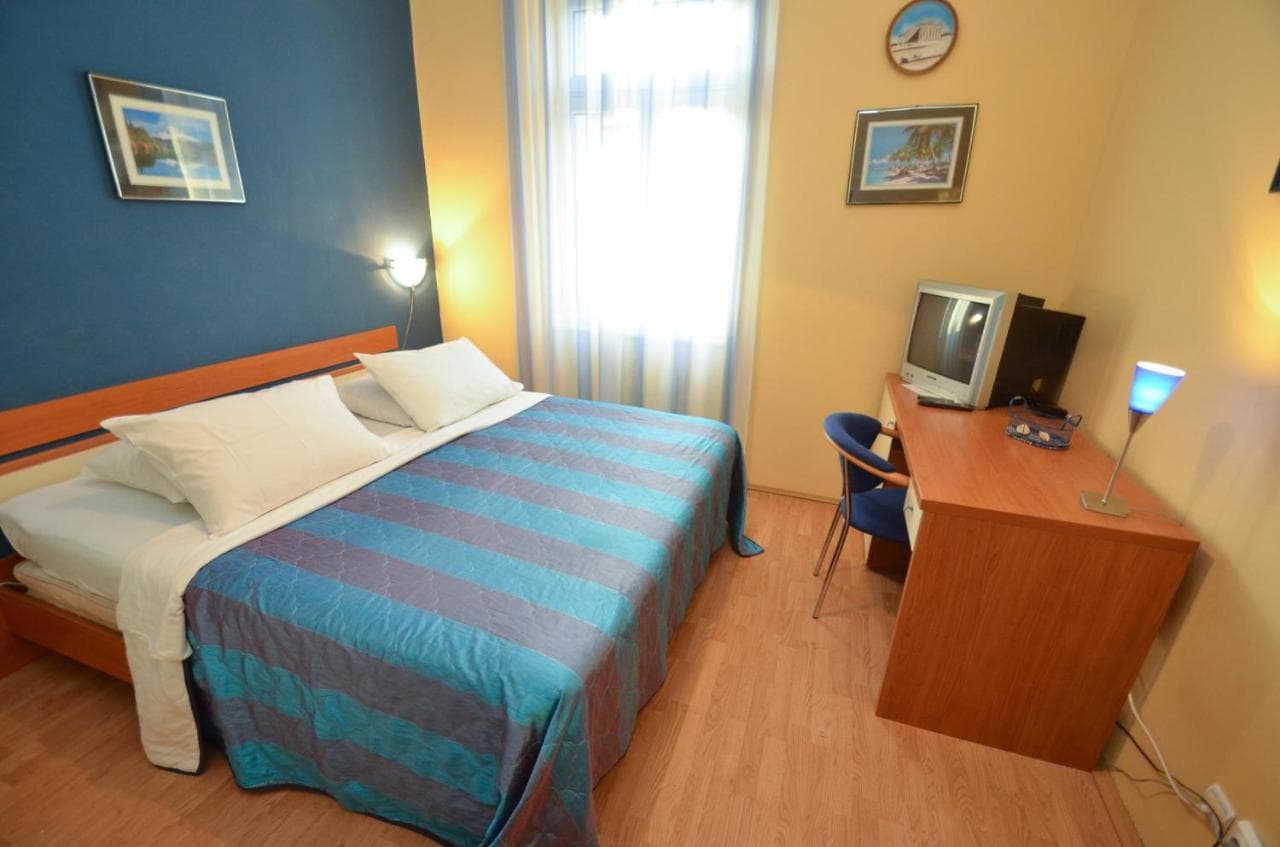
The oldest town in the Bay of Kotor. Distinguished by archaeological sites, the longest palm groves on the coast, and by oleander, an endemic plant. Teuta, the last Illyrian queen, once held court in Risan.
Risan is the oldest town in the Bay of Kotor (Montenegro). It is situated deep within the Gulf, almost equidistant from Kotor and Herceg Novi (roughly 20 km). The town whose photographs we see today, and where we love to go on holiday – is, to say the least, the Third Risan. The first two have over time sunk into the sea due to numerous earthquakes.
Once the entire Bay of Kotor was called Sinus Rhizonicus (Risan Gulf), which best testifies to the former significance of this urban and local civilizational center.
Along the Risan waterfront stretch unmistakably the longest palm groves on the entire coast! During a stroll we are constantly beneath the crowns of mature palms, Phoenix canariensis, by which we know we are in a chosen Mediterranean place. Nowhere are Canary date palms so abundant in so small a space. Yet it is oleander, not palm, that is the plant which originally grew with Risan: botanists tell us that Oleander nerium grew precisely here, and that it is indeed endemic! Even a cursory glance from a car on the Adriatic highway can observe how on the vertical Risan hillsides (Montenegro), from limestone resembling stone cauliflower – the endemic rises and blooms: pink oleander. In Risan there are red ones, white ones and yellow ones, and all these colors derive from that original, pink. Oleander is a floral ornament; it beautifies every seasonal photograph because it is everywhere. It blooms from late spring to early fall. If, attracted by its beauty, you begin to pick it, soon a local will tell you: "Better not. It's poisonous." Like any extreme beauty...
Originally a Greek colony, Risan in the 3rd century BCE becomes a fortified Illyrian town. The Illyrian tribe of the Ardiaei, inclined to piracy, here builds its swift pirate ships – liburnians – and mints coins. At that time, in Rhizinium (described by Polybius and Livy), 10,000 inhabitants lived, nearly 5 times more than today. During the Roman invasion, the Illyrian queen Teuta took refuge here, and after her death the Roman Empire ruled the Bay.
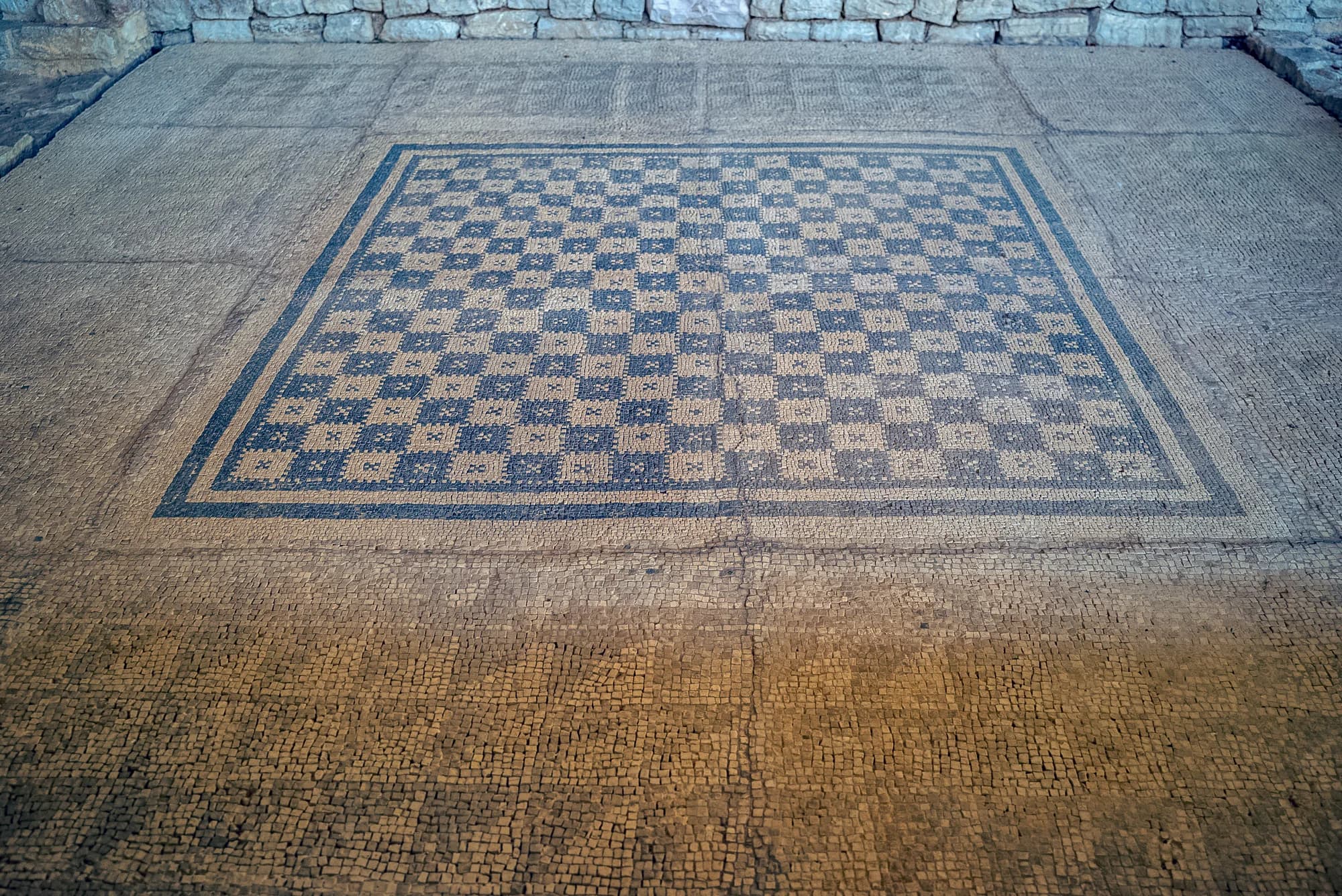
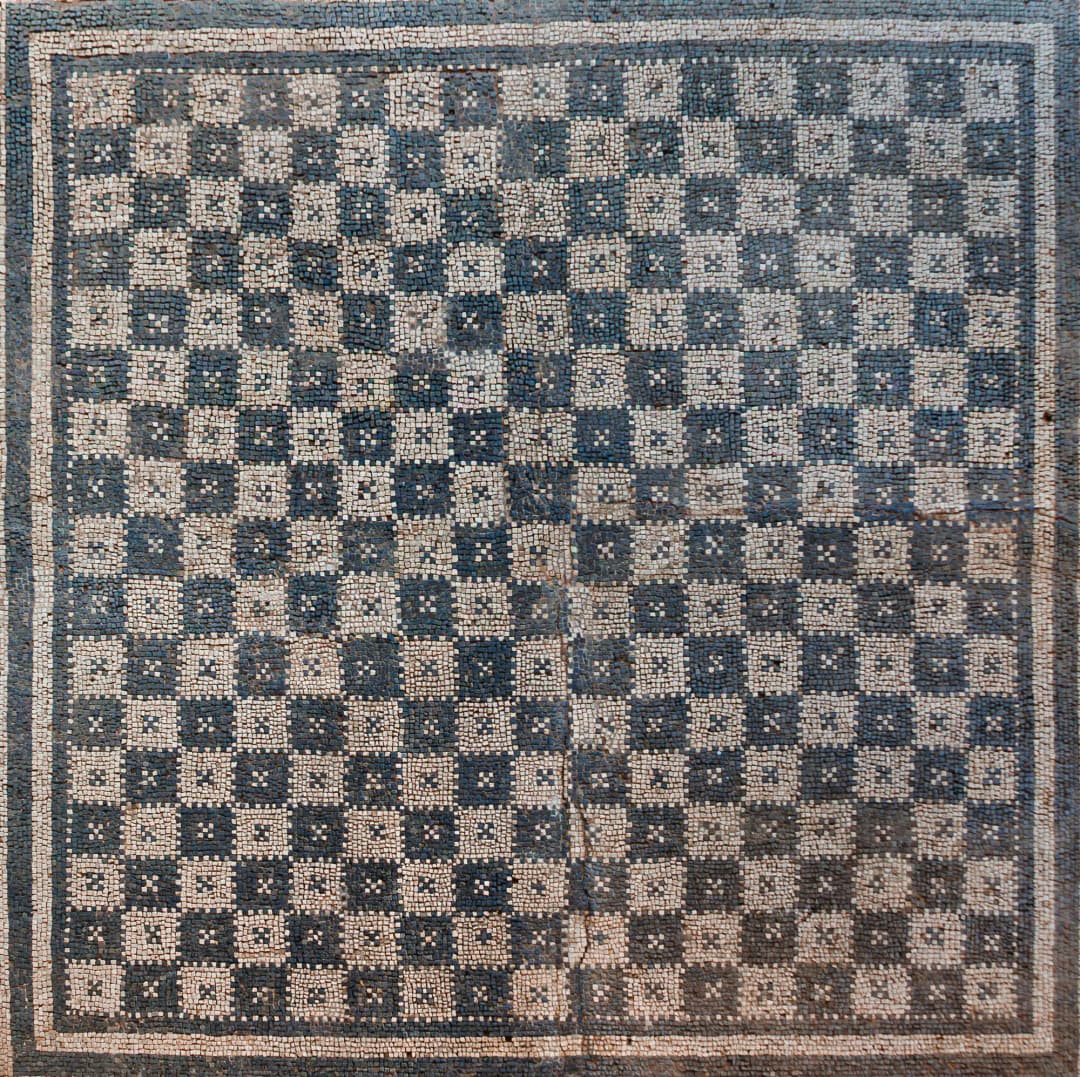
From the Roman period come the famous Risan mosaics from the 2nd century CE, of which the most renowned and best preserved is the floor mosaic of Hypnos, the god of sleep – the only such figure on the eastern shores of the Adriatic. A covered complex with floor mosaics from former Roman villas is located about 100 meters from the shore and serves as the venue for numerous summer cultural events. The most prolific archaeological site lies nearby, at Carina, across from the beach of the same name, one of the first to bear the epithet of beach quality and the Blue Flag designation.
Further through history – the Romans were succeeded by the Saracens in 865. In the 10th century, Risan belongs to Travunja, in the 14th and 15th centuries to Bosnian kings, and from 1539 to the Turks, then to the Venetians from 1687, until the fall of the Republic.
The Orthodox Slavic people participated in uprisings in the 19th century, and in 1941-1945. Risan has given forth several exceptional names: Capt. Lazar Đurković helped the Greeks in their liberation from the Turks; Marko Ivelić was a Russian general and diplomat; Vuk Vrčević helped Vuk Karadžić in collecting folk works; Capt. Vlado Ivelić was one of the last Bay of Kotor captains who sailed on sailing ships; Vaso Ćuković was a benefactor and philanthropist (the well-known Risan Hospital for Traumatology, Neurology and Neurosurgery is named after him)...
The old urban core is called Gabela, and extends around a street of the same name paved with cobblestones in an oriental manner. Along Gabela, one observes rows of palaces built in the period of the 17th–19th centuries. Among all of them, the Ivelić palace stands out for its beauty, though unrestored.
Sunday is a festive day in Risan. Then the Square, located just about ten meters from the Port and Waterfront, comes alive – with the colorful throng of people, accents (foreign and local) and offerings. Everything that God and nature have given, everything is for sale: colors, tastes, scents, mountain cheese and dairy products, dried meat, organic vegetables of all kinds and shapes, wine and rakija... Throughout the year. At the Risan market on Sunday, for good reason, the entire Bay gathers... The old-timers experience Risan's Sunday as their very own outing!
About a hundred meters from the fragrant Square, in the town park, almost hidden by lush greenery, stands the Orthodox church of St. Peter and Paul from the 18th century.
Half an hour's walk towards Perast, or a few minutes' drive, stands the Banja monastery, built in the 18th century on the foundations of an older one from the 13th century. It possesses a rich collection of icons of the Rafailović-Dimitrijević icon-painting school, whose painters originated from Risan.
Just 15 minutes' walk towards Herceg Novi is a large cave of the Sopot spring, right beside the Adriatic highway. During the summer, there is hardly a moment when there are no parked cars and curious visitors at the widened area across from Sopot. Only rarely do people enter this deep cave. Mostly everyone simply takes photographs. From the cave flows cold air even when water does not flow. And sometimes this happens as a curiosity: that in the middle of August – fresh sweet water flows as a waterfall as if in the middle of winter! The phenomenon occurs rarely, and only when heavy rains fall in the mountain hinterland. The waterfall flows in winter from a height of 30 m.
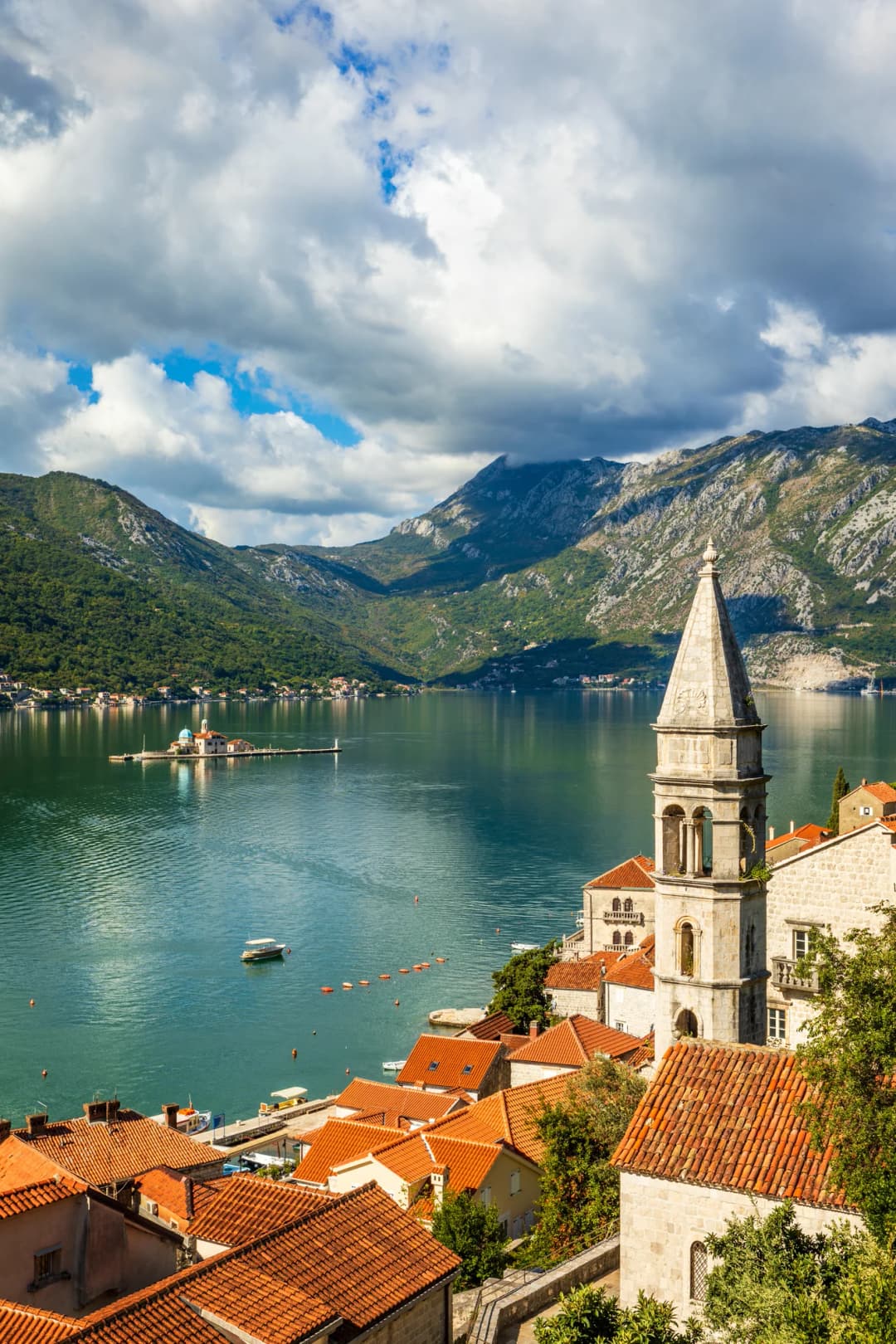
From Risan one can easily reach the nearby Perast, and its artificial island of Our Lady of the Rocks. To Kotor and Herceg Novi. And to the nearby Lipci – 5 minutes' drive, then on foot uphill, to the only Bay cave drawings from the Neolithic period. Above Risan stretches, at an altitude of 1000 m, the mountain plateau of Krivošije. A challenge for hikers and mountaineers.