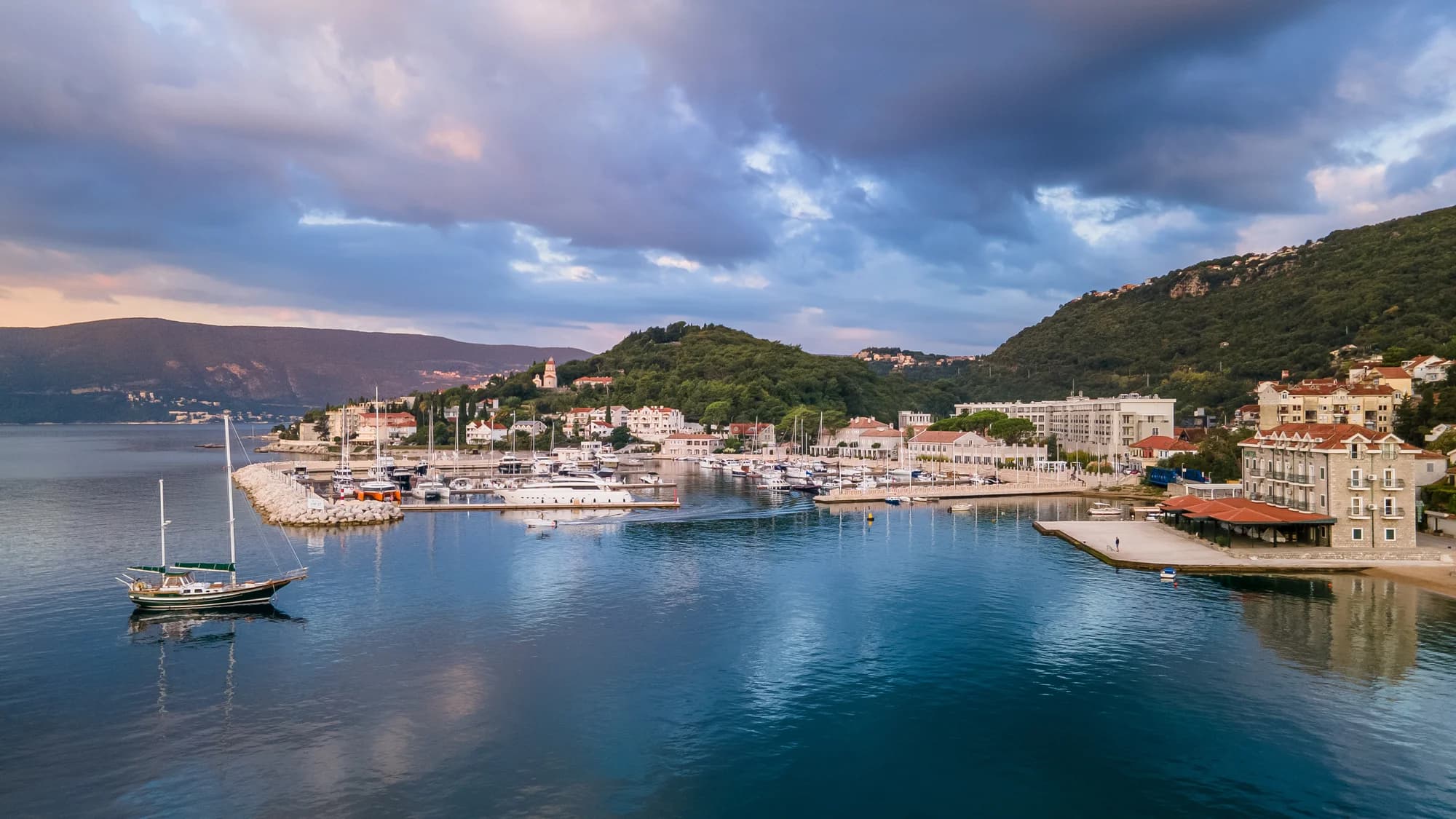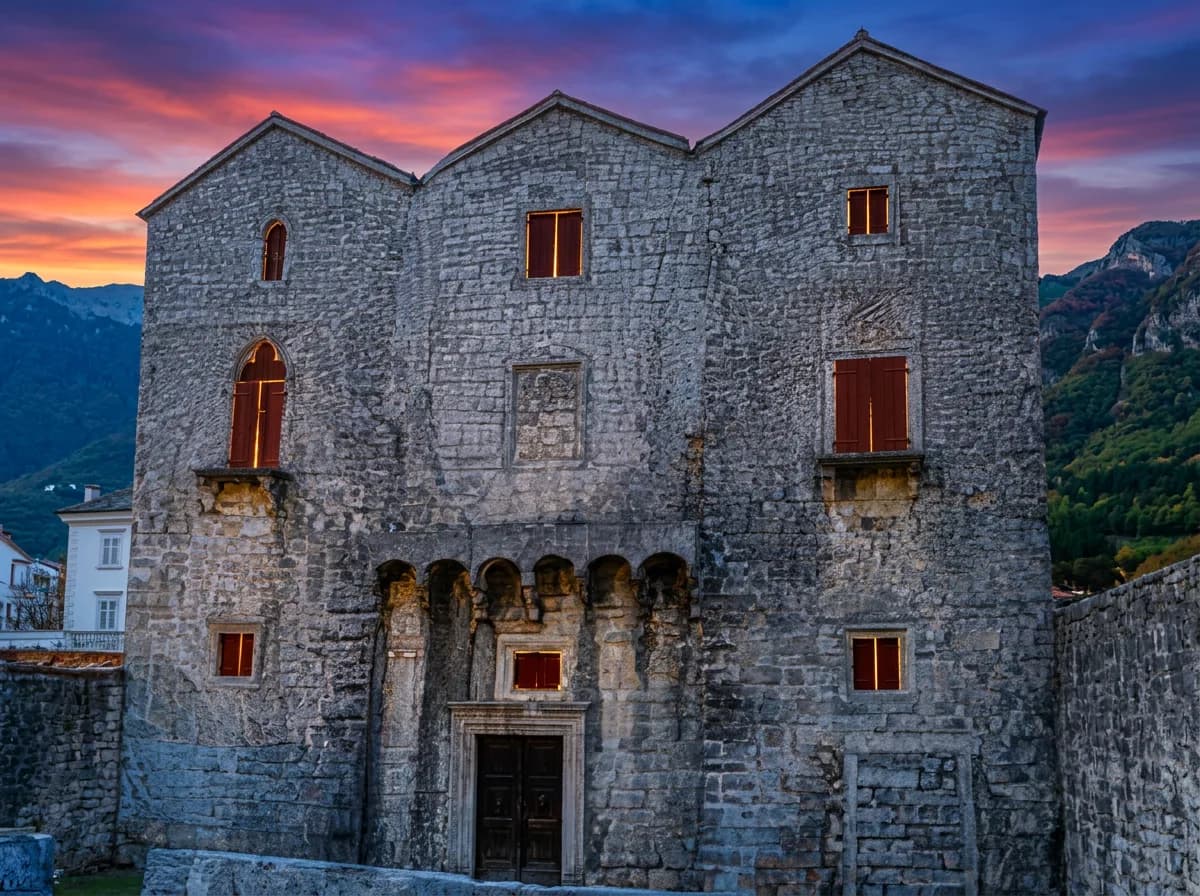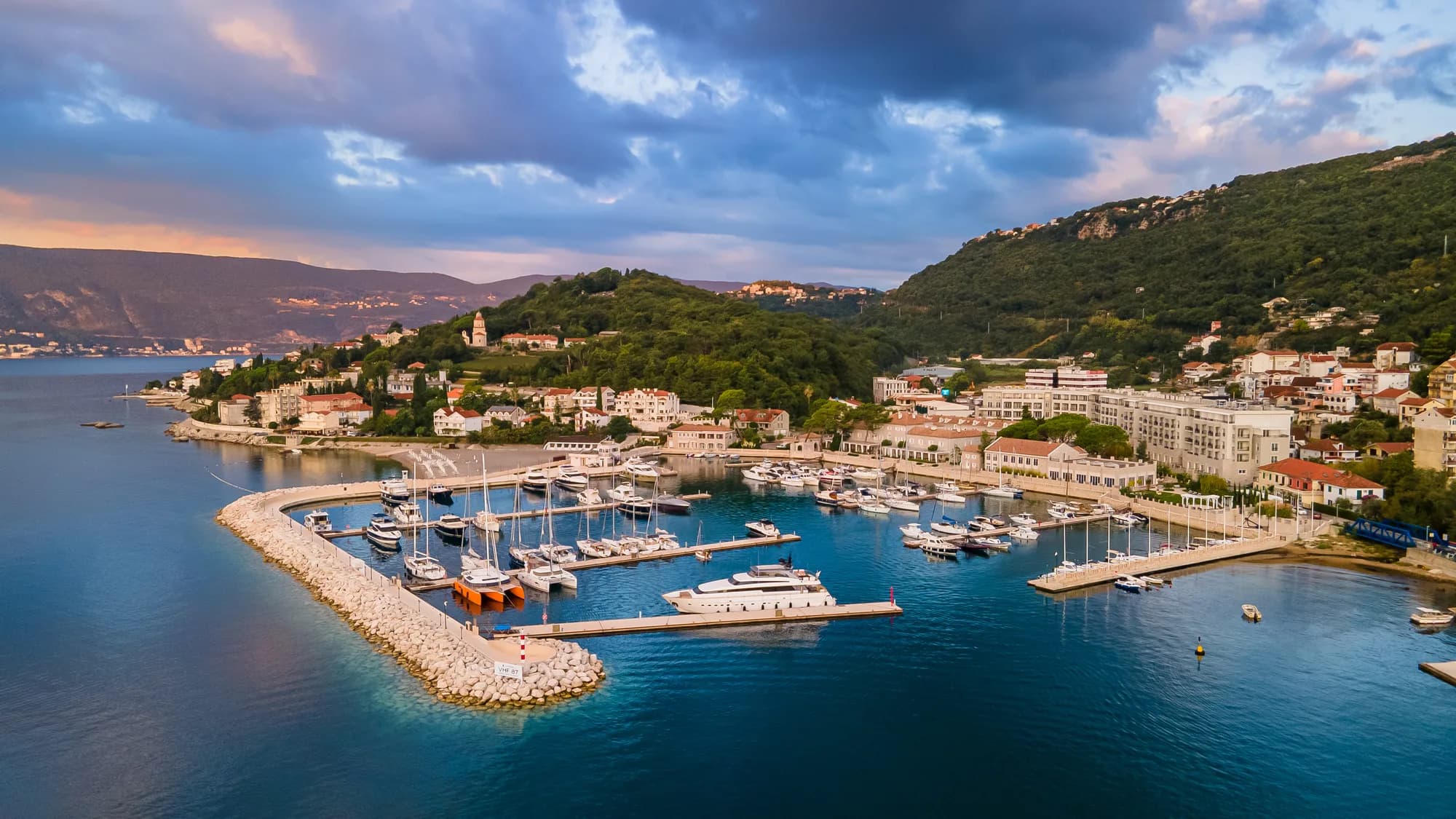
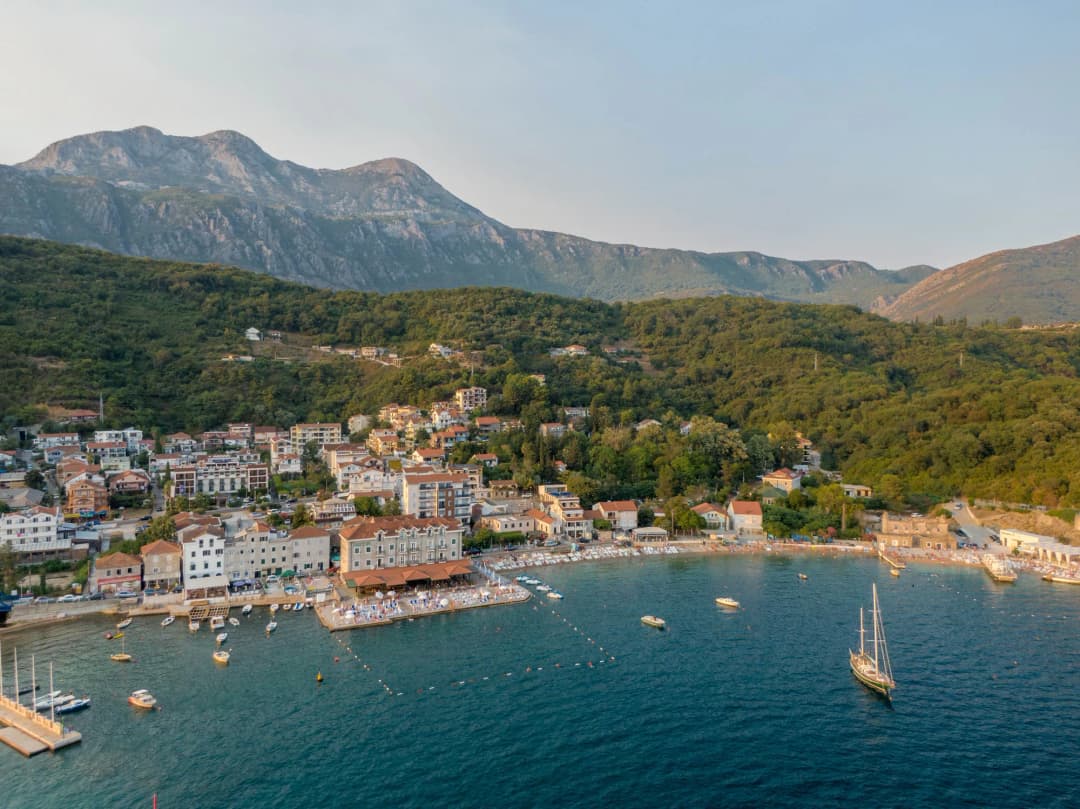
On the beach at Meljine, a few kilometres east of Herceg Novi's old town, stands a long, low walled compound whose stones have watched over the entrance to the Bay of Kotor for almost three hundred years. Today it hums with the life of a marina and hotel, but this was once one of the most feared and most necessary institutions of the old Adriatic: the Lazaret, the quarantine station where ships, sailors, merchants and their cargoes waited — sometimes for well over a month — to prove they were not carrying the plague.
Quarantine: an Adriatic invention
Quarantine was born on this sea. Ragusa — today's Dubrovnik — introduced the first documented isolation period for arriving ships in 1377, and Venice soon built dedicated island stations it called lazzaretti, a name derived from the biblical Lazarus. The waiting period settled at forty days — quaranta giorni in Venetian — and gave the practice its name. For a maritime republic, a lazaret was not an optional luxury: no port could trade with the Levant, where plague smouldered constantly, unless it could receive suspect ships without letting the disease ashore. Every serious harbour on the eastern Adriatic eventually had one, and the ruins and survivors of these stations — in Dubrovnik, Split, and here at Meljine — are the border posts of a war against an invisible enemy that lasted centuries.
Venice comes to the bay
When Venice took Herceg Novi from the Ottomans in 1687, it intended to make the town a working port of its maritime empire — and that meant building the sanitary machinery of one. The first quarantine station was organised in 1700 just below the town, near the monastery of Saint Anthony, but the site on Herceg Novi's steep, unstable slope proved poorly chosen, and within a generation the decision was made to move. Between 1729 and 1732 a purpose-built complex rose on the flat shore at Meljine: a walled rectangle open to the sea, with an internal courtyard, ranges of storerooms and lodgings, and its own chapel. Ships arriving from suspect ports anchored off the walls; passengers and crews were lodged in isolation, goods were unloaded into the stores to be aired, sunned and fumigated, and only when the term had passed without sickness did the authorities issue clearance to trade. The Lazaret was customs house, border control and public-health service in one — the single gate through which the outer world entered the bay.
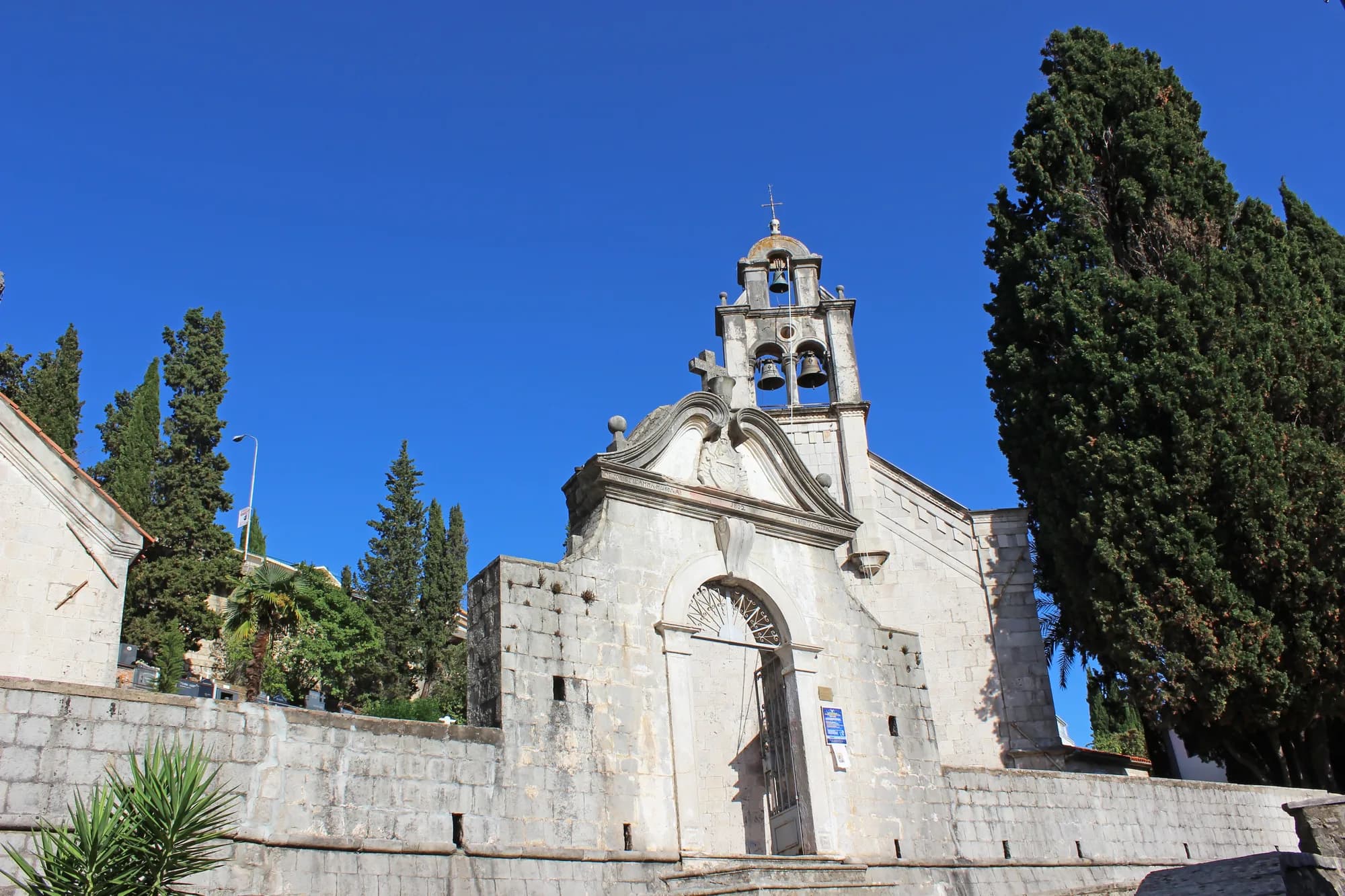
The chapel that faces the main courtyard is dedicated, fittingly, to Saint Roch, the medieval saint invoked across Catholic Europe as protector against plague. The present chapel building dates from the Austrian era — built in 1830 and renovated in 1882, as the inscription over its door records — but its dedication carries the original meaning of the place: here, even prayer was aimed at epidemic disease.
From quarantine to hospital
The nineteenth century slowly made classical quarantine obsolete, but the Lazaret never lost its connection with medicine and the sea. Under Austro-Hungarian rule the complex was absorbed into the empire's naval infrastructure, and a second group of buildings grew up to serve a military camp beside the old walls. In the twentieth century Meljine became synonymous with its military hospital — the naval hospital that served generations of sailors and civilians alike stands immediately beside the old quarantine compound, so that the site's medical vocation continued essentially unbroken from the age of sail into living memory. Locals still say “Meljine” to mean the hospital as readily as the village.
What remains
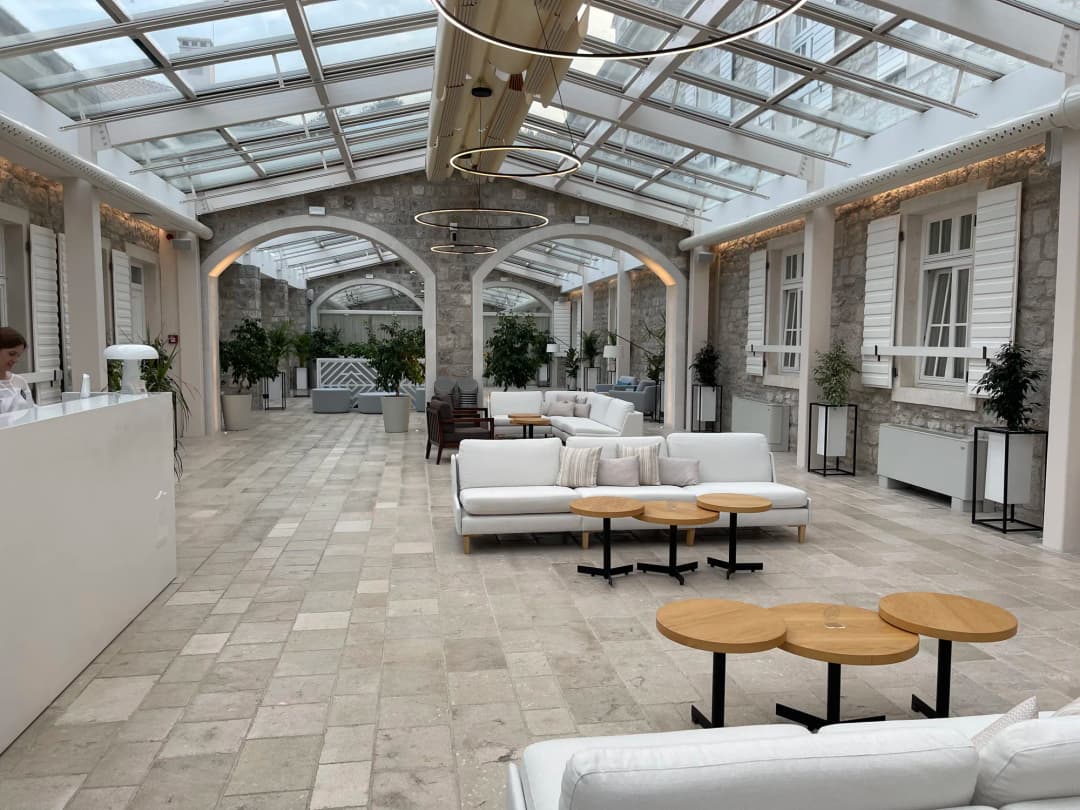
The Lazaret survived where many of its Adriatic siblings crumbled, and in the 2010s it underwent a painstaking restoration as the centrepiece of the Lazure Marina & Hotel. The eighteenth-century ranges now hold rooms, restaurants and halls; the central courtyard has been roofed in glass and serves as the main foyer; and the chapel of Saint Roch has been restored — during the works in 2015, fragments of a Venetian-era fresco came to light, and the artist Nino Radoš created new work for the chapel inspired by them. It is a rare thing on this coast: a major historic complex saved by reuse rather than lost to it, where you can drink a coffee inside walls built to keep the plague at sea.
Visiting
The Lazaret stands directly on the Pet Danica promenade at its eastern end — from Herceg Novi's old town it is a flat, sea-level walk of around forty minutes, passing the beaches of Škver and Topla on the way. The grounds, marina quay and cafés are open to walkers at no charge; the chapel and courtyard can generally be seen unless an event is under way. Come towards evening, when the walls turn honey-coloured and the masts of the marina stand against Orjen's ridgeline — and spare a thought, over your drink, for the merchants who once spent forty days staring at the same view, waiting to be declared clean.