Extending Your Holiday South: From Montenegro into Albania
Aktualisiert Ursprünglich veröffentlicht 16 Min. Lesezeitvon Montenegro.com Editorial Team
The Sukobin crossing sits 25 minutes past Ulcinj, prices fall by about a third, and Albania counted 12.5 million visitors. Riviera, Berat, Gjirokastër.
The Adriatic does not end at Montenegro's southern border. It narrows toward the Strait of Otranto and hands the coast to the Ionian, whose water runs clearer and a degree warmer. Twenty-five minutes past Ulcinj, at the Sukobin crossing, the road bends toward Shkodër and a country that counted 12.5 million foreign visitors last year — nearly double its 2019 total, according to Albania's statistics institute — yet still keeps long reaches of shore where the only architecture is a thatched umbrella. Most travelers on the Montenegrin coast never make the turn. For anyone with a week in Kotor or Budva and a spare day or three, the same limestone coastline continues south, prices fall by roughly a third, and the road passes through towns — Shkodër, Berat, Gjirokastër — layered deeper in Ottoman and Cold War history than anything north of the border.
This guide covers how to stretch a Montenegro holiday into Albania: what changes at the border, what the first day looks like, how far the Riviera really is, what the inland detours offer and when the trip works best.
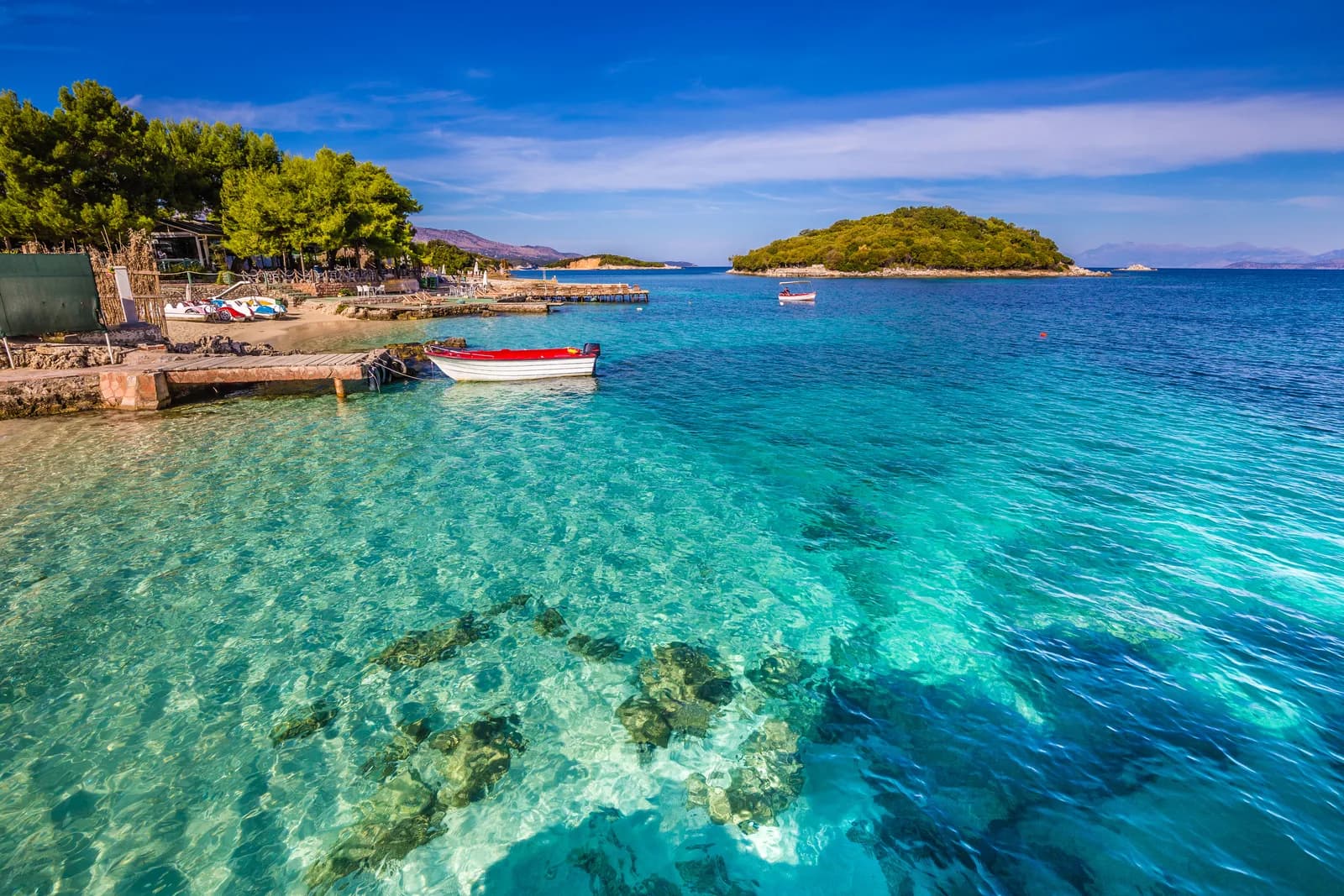
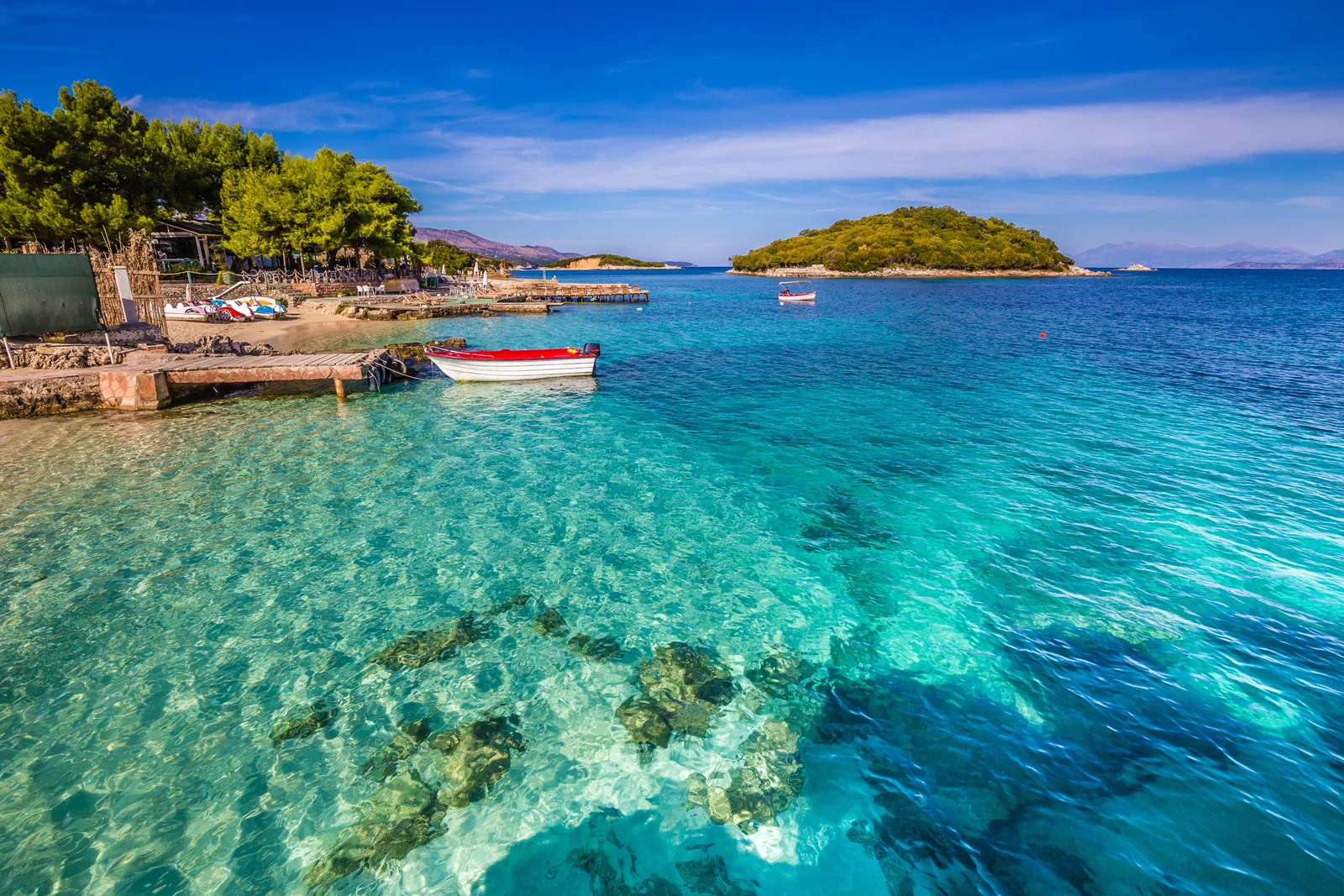
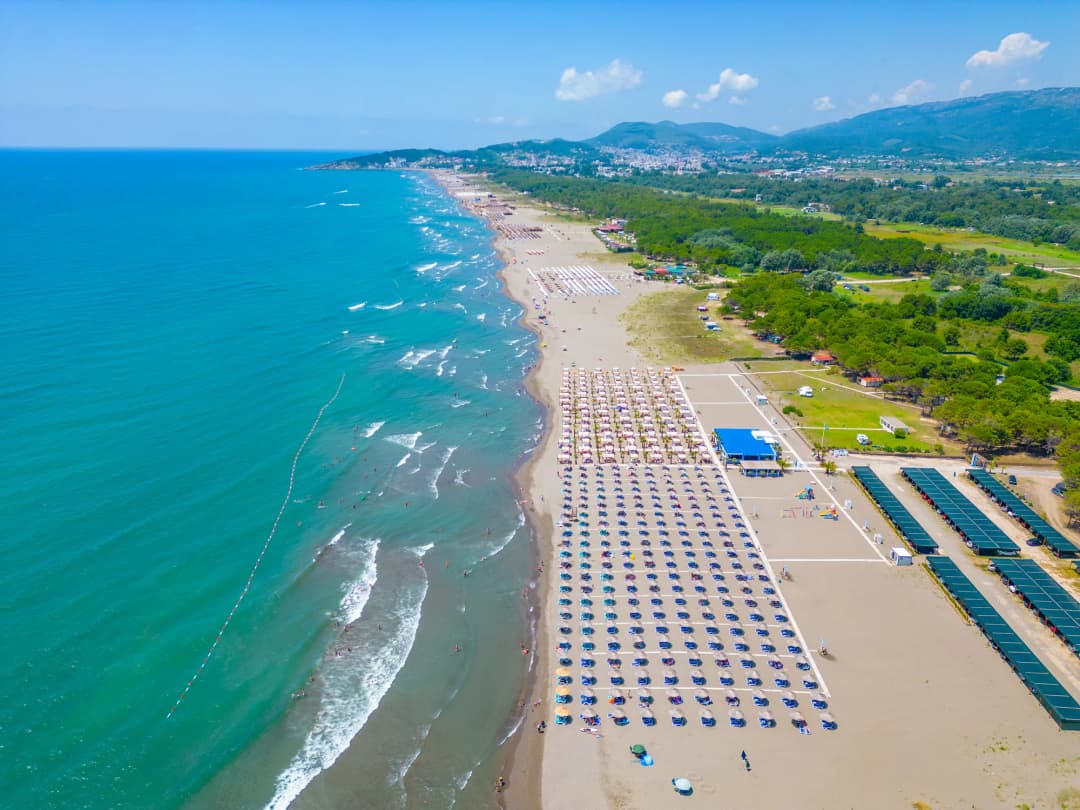
Ksamil, at the southern end of the Albanian Riviera. The shallows hold this color into October.
The Case for Going South
Montenegro concentrates its rewards: a UNESCO-listed bay, walled towns, mountains and beaches inside short drives, with the euro in your pocket and the region's most developed tourist infrastructure outside Croatia. What it does not have is much room left in August, or long sandy beaches beyond Ulcinj, or prices that still feel like a discovery. Albania supplies all three.
From the road
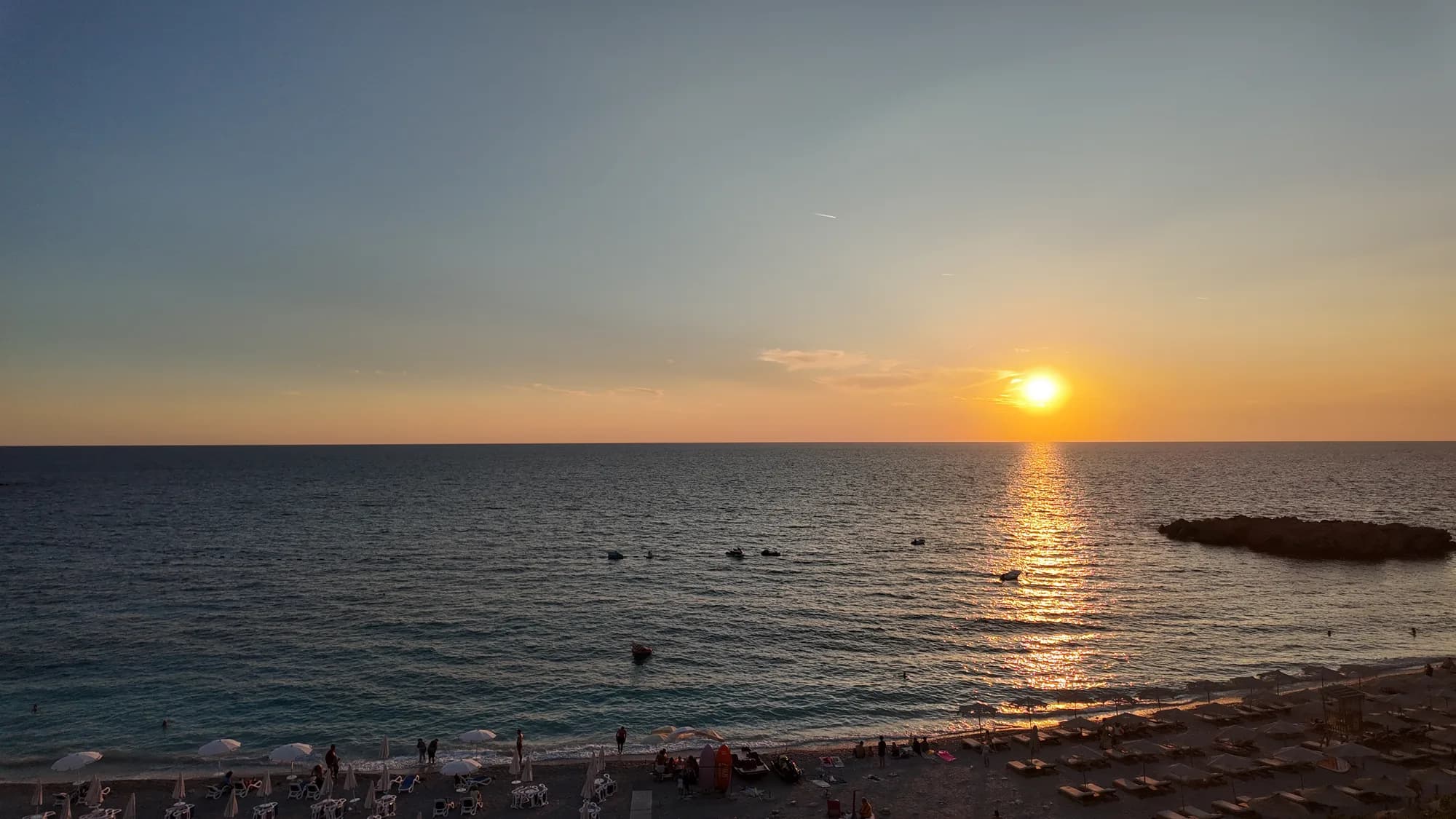
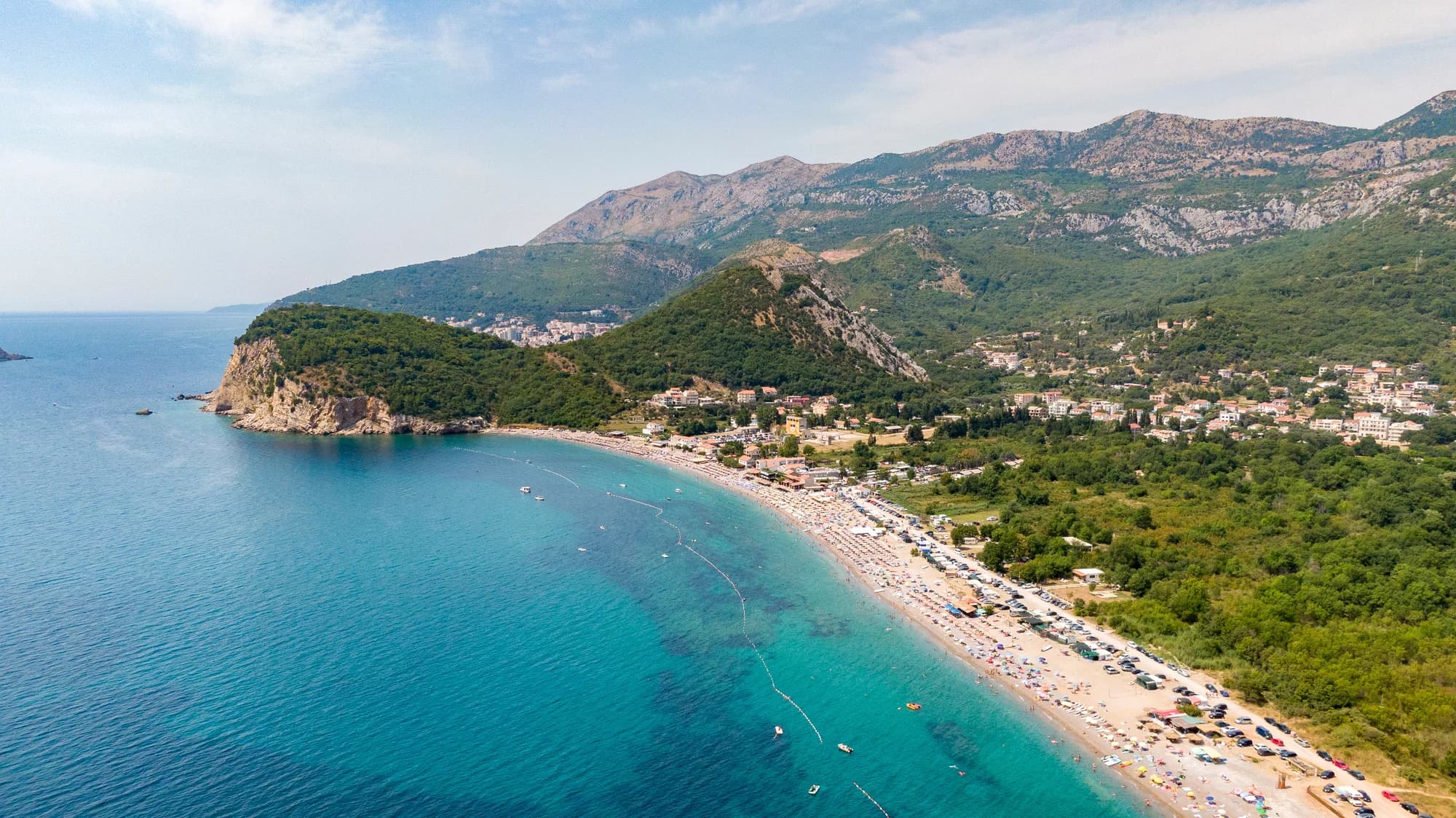
We drove the first Montenegrin stretch of this route — Petrovac, Buljarica, Sutomore — on our August 2026 shoot, and the frames back up the crowding point: beaches umbrella-to-umbrella in full daylight, swimmers still in the water in the last low light, promenades busy into the evening. The sea sat flat calm the whole way down, with a freighter on the horizon toward Bar.
The character of the trip shifts at the border. Where the Budva Riviera is organized — sunbed rows, beach bars, a promenade — the Albanian coast still has stretches where the only structure in sight is a thatched umbrella. Where Kotor's old town has been polished for cruise passengers, Shkodër's bazaar quarter is still mostly shopping for locals. The roads are rougher in places and the logistics ask a little more of you; that is part of what keeps the crowds thinner and a mid-range day on the Albanian Riviera at roughly €60 to €90 per person against €80 to €120 or more on the Montenegrin coast.
The honest caveat is distance. Shkodër is a comfortable day trip from southern Montenegro. The Riviera — the Ksamil of the photographs — is not: it sits four and a half to six hours' drive from the border, and it deserves at least one overnight. Plan the extension by how much time you actually have, not by the map's optimism.
What Changes at the Border
Two crossings serve the trip: Sukobin–Muriqan, 25 minutes from Ulcinj on the coastal road to Shkodër, and Božaj–Hani i Hotit on the Podgorica road. Both run around the clock; waits are typically 15 to 45 minutes, longest around midday in July and August. Crossing early in the morning or after dinner is the practiced move.
Paperwork is simple but specific. Drivers need the vehicle registration and a Green Card that lists Albania — worth confirming with your insurer before the trip, since not every Montenegrin policy includes it by default. Rental drivers additionally need written cross-border authorization from the rental company, usually €30 to €50. Passports are required; EU, UK, US and most regional visitors enter visa-free.
On the Montenegrin coast
Across the border
Currency
Euro
Albanian lek, about 98 to the euro
Mid-range daily budget
€80–120+ per person
€60–90 per person
Cards
Widely accepted
Cities and hotels yes; carry cash elsewhere
Mobile roaming
—
Montenegrin SIMs roam free (Western Balkans zone); EU plans do not include Albania
Driving
Short distances, mountain bends
Main corridors good, side roads variable, assertive overtaking
Sea in September
23–25°C Adriatic
23–25°C, Ionian-clear in the south
Two small things save the most confusion. First, the lek: prices are occasionally quoted in "old lek," a pre-1965 denomination with an extra zero that older Albanians still use — a 500-lek coffee becomes "five thousand." Second, ATM fees run €3 to €7 per withdrawal, so withdraw larger sums less often, or bring euros to exchange.
The First Stop Across the Border
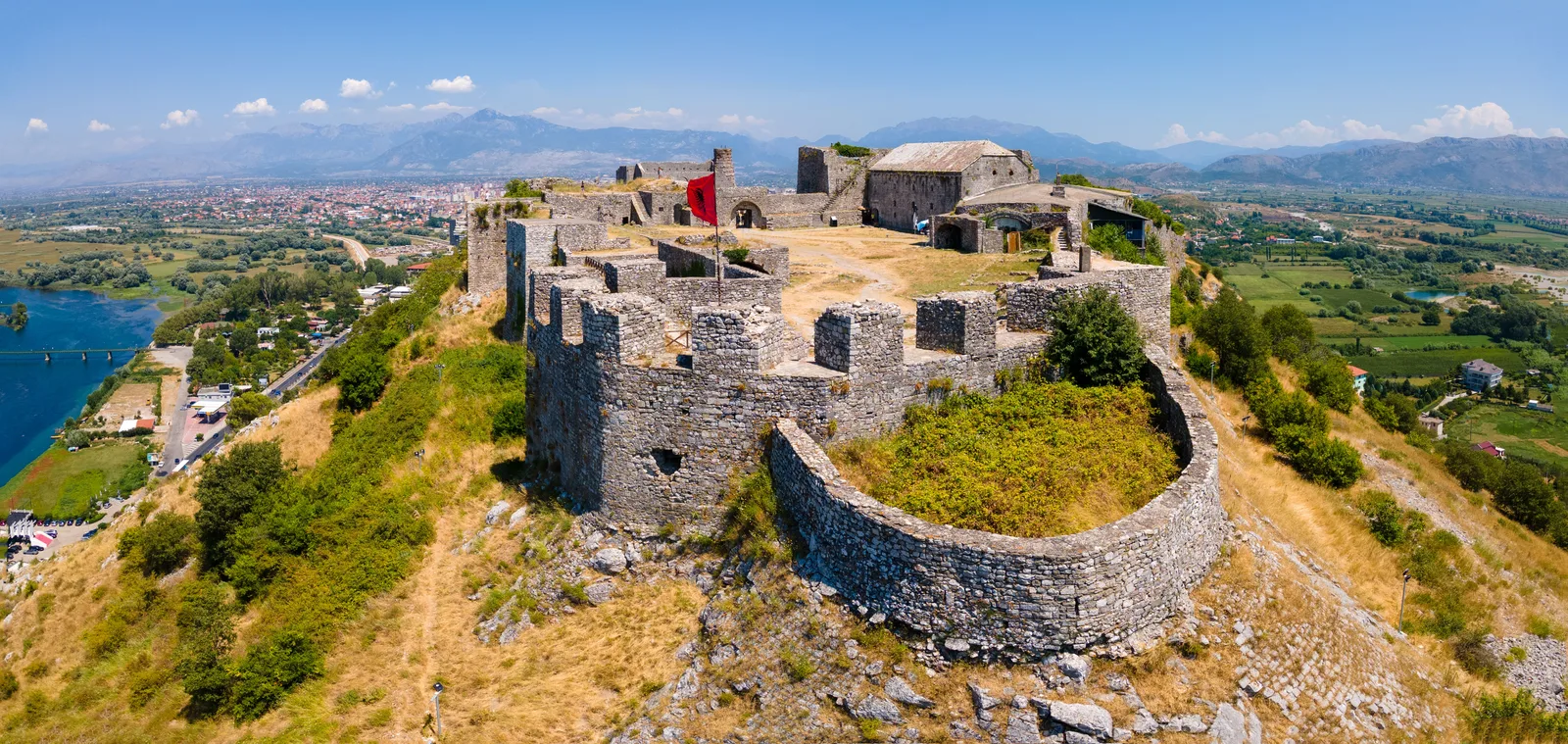
The gentlest introduction is a day loop from Ulcinj. Forty minutes from the Sukobin crossing, Shkodër spreads below Rozafa Castle, whose walls look down on the meeting of two rivers and the lake that Montenegro calls Skadarsko and Albania calls Shkodra — the largest lake in Southern Europe, its reed beds a refuge for Dalmatian pelicans, Europe's largest freshwater bird. Beyond it the Accursed Mountains stack along the horizon, the wild southern end of the Dinaric Alps whose Albanian name, Bjeshkët e Nemuna, carries the same warning. The castle terraces are the single best orientation to northern Albania there is.
Rozafa Castle above Shkodër, where the Buna and Drin rivers meet — about 40 minutes from Ulcinj.
The town below repays a slow afternoon. Within a few blocks stand the Ebu Bekër Mosque, the Orthodox cathedral and the Catholic cathedral — the compressed geography of a country that wears its faiths lightly, of which more below. On the drive back, the long sands at Velipojë — often close to empty outside August, near where the Buna river finishes its short run from the lake to the sea — make an easy swim stop, and the 18th-century Mes Bridge is a 15-minute detour for anyone with light left.
Down the Riviera
South of Vlorë, where the Karaburun peninsula marks the formal boundary between Adriatic and Ionian, the coast climbs over the Llogara Pass and becomes the Albanian Riviera — the stretch that has carried the country's tourism boom. A tunnel has bypassed the pass since 2024 and cut the drive considerably; the old road over the top remains open and is worth taking at least once, switchbacking through black-pine forest to a view that falls a thousand meters to a coastline running toward Corfu. The clarity below is geology as much as luck: short karst streams drain this limestone country carrying almost no sediment, and the sea stays glass.
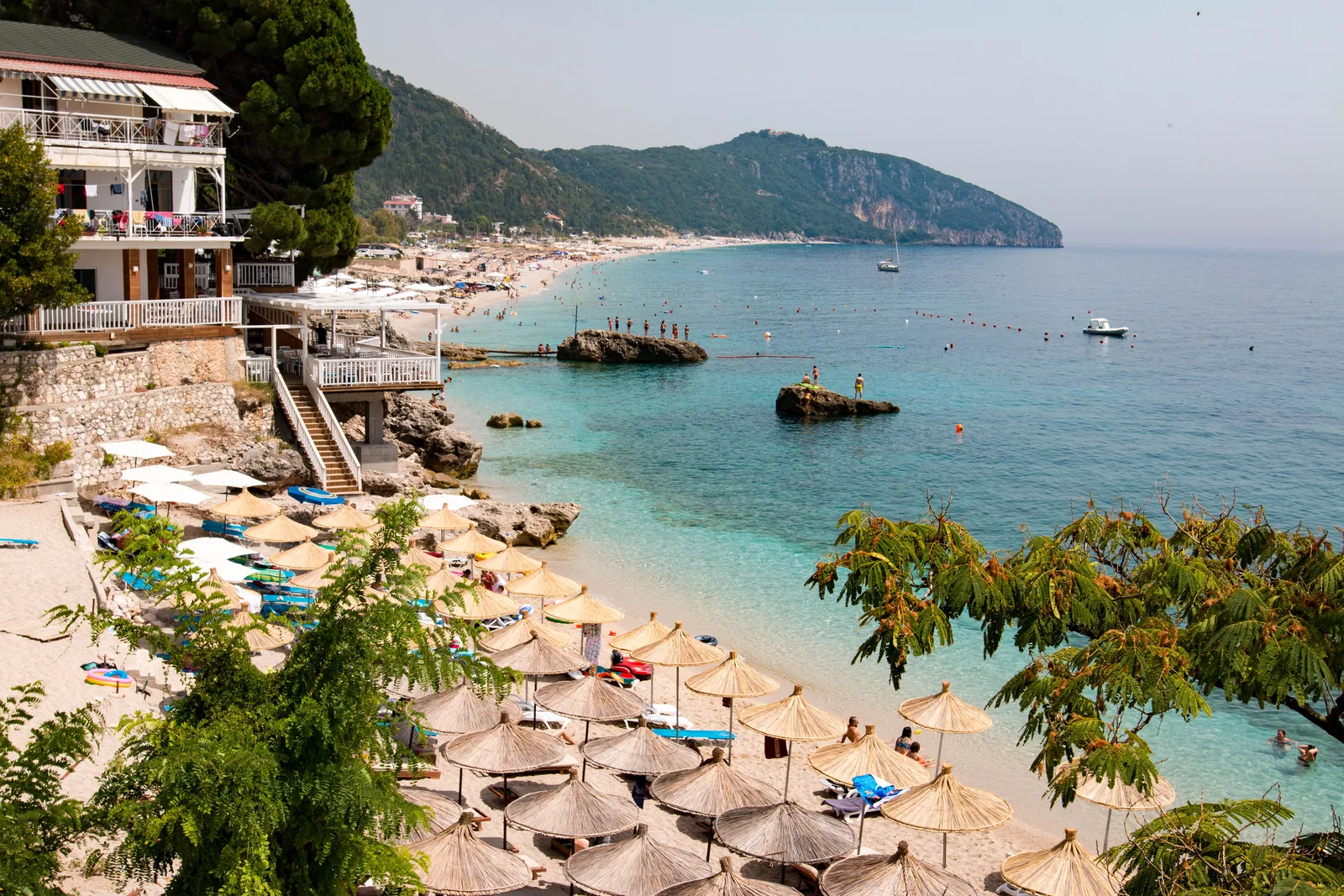
The beaches come in sequence: Dhërmi, with its beach clubs and long pebble-and-sand shore; Gjipe, reached on foot where a canyon meets the sea; Himarë, the working town of the coast; and at the southern end Ksamil, whose offshore islets and pale shallows have become Albania's postcard. These are longer and sandier beaches than the coves north of the border, and outside peak weeks they are quieter — though Ksamil in August now draws crowds of its own, and construction is moving fast along parts of the shore. Travelers who know Budva's rhythm will find the Riviera looser: fewer services, more improvisation, lower bills.
Dhërmi, below the Llogara Pass. September empties the umbrellas.
At the Riviera's southern tip, half an hour from Ksamil, the UNESCO-listed ruins of Butrint hold Greek, Roman, Byzantine and Venetian layers under a canopy of laurel at the edge of a tidal lagoon — the classical counterpart to Kotor's medieval walls, and a reminder that this coast has been worth arguing over for 2,500 years.
2,500 years
of contested history layered at Butrint — Greek, Roman, Byzantine and Venetian at the edge of a tidal lagoon
Inland Detours
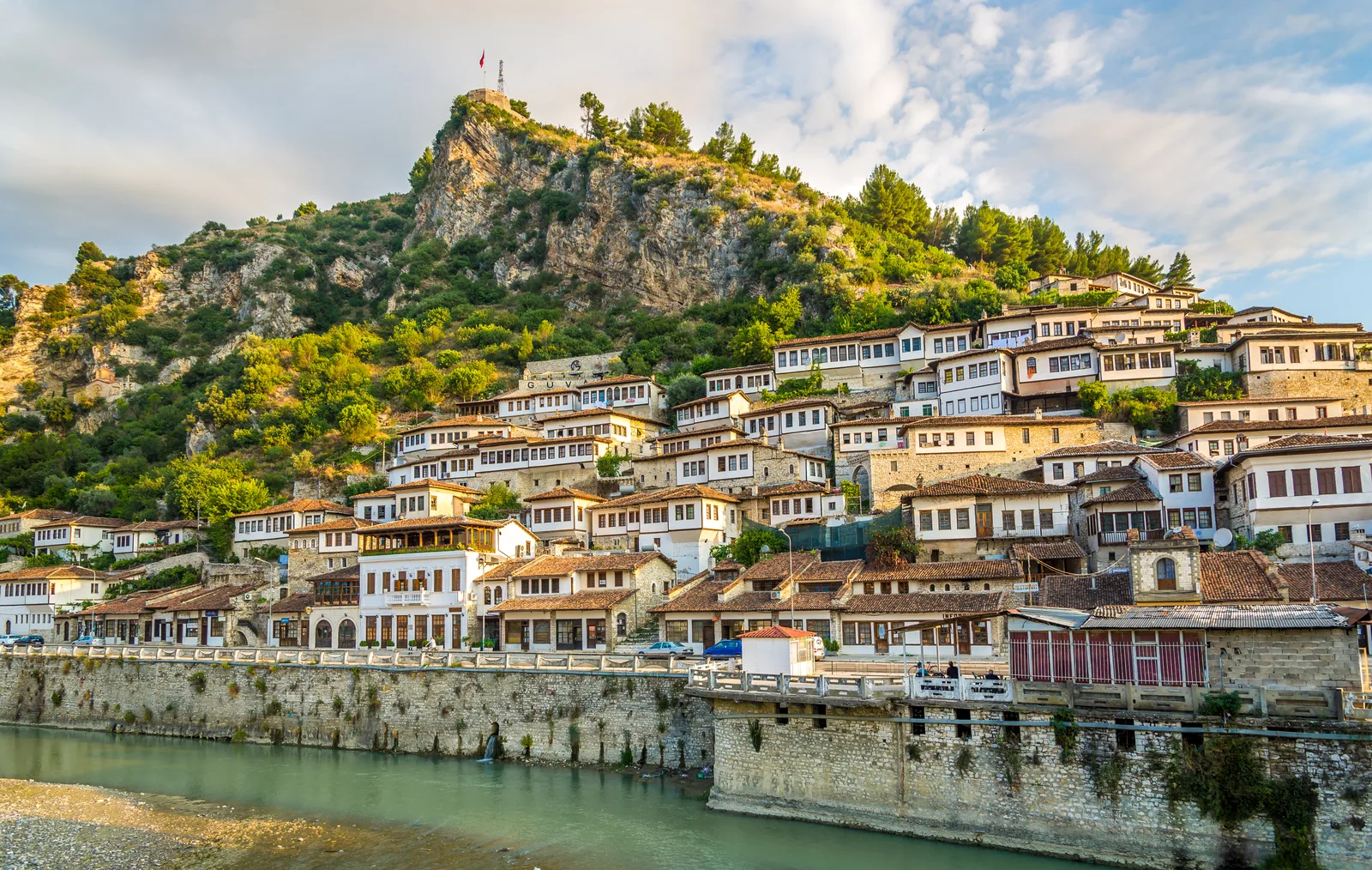
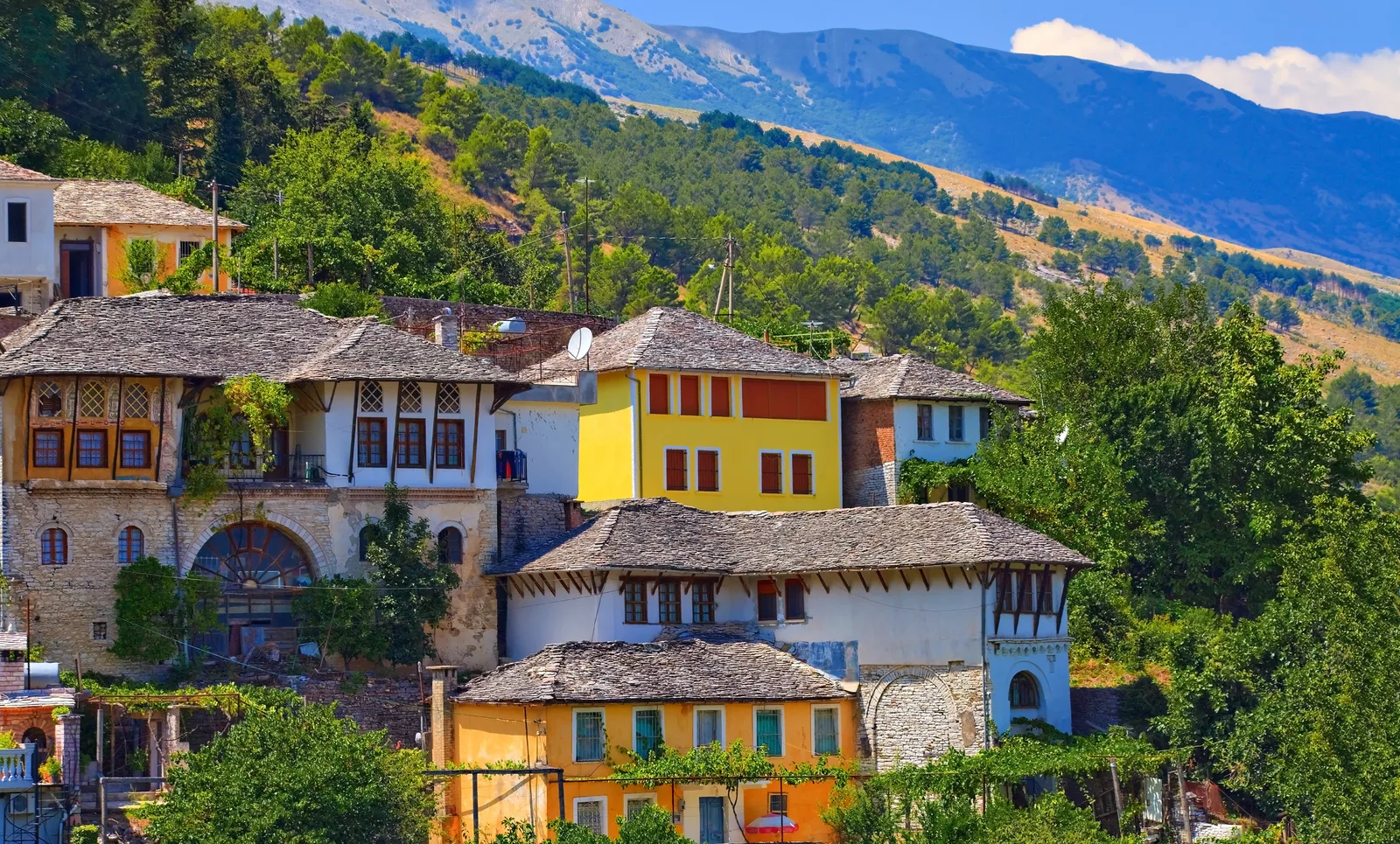
Albania's interior holds the country's two most photogenic towns, both UNESCO-listed. Berat, the "town of a thousand windows," stacks its white Ottoman houses up a hillside above the Osum river; Gjirokastër, further south, is its stone-roofed sibling, built steep beneath a castle and largely intact from its Ottoman heyday. Either fits naturally into the drive between the border and the Riviera for travelers willing to trade coastal hours for them.
Berat, the "town of a thousand windows," UNESCO-listed since 2008.Gjirokastër's stone roofs. With Berat, it is one of the best-preserved Ottoman towns in the Balkans.
Tirana is the wild card. The capital is loud, young and improving at speed; its communist past is now its most visited layer, from the Bunk'Art museums built into Enver Hoxha's nuclear bunkers to the repurposed Pyramid. The regime that sealed this country for four decades left roughly 170,000 concrete bunkers scattered from the beaches to the passes. Spotting them from the car becomes the road trip's quiet game. Evenings in the Blloku district, once reserved for party officials, show how completely the country has moved on.
170,000
concrete bunkers the Hoxha regime scattered across Albania, from the beaches to the mountain passes
When to Make the Trip
The extension works from May to October, but the calendar shapes it. In July and August the border queues lengthen around midday, Ksamil fills, and both coasts run at peak prices. September is the month the trip is built for: the sea holds 23°C to 25°C, rooms drop well below peak rates on both sides of the border, and the Riviera's beaches empty back down to their photographs.
October divides the two coasts. Montenegro's coastal towns stay open deep into fall — restaurants, rentals and attractions keep their doors open, and hosts grow flexible on longer stays. Much of the Albanian beach coast, by contrast, winds down from mid-October: beach bars close, seasonal restaurants stack their chairs and coastal transport thins. An October extension points more naturally inland, toward Shkodër, Berat, Gjirokastër and Tirana, which run year-round.
Perast, Bay of Kotor — original photo by the montenegro.com team, August 2026. The bay makes a natural first half of a two-country itinerary.
Frequently Asked Questions
Can I visit Albania as a day trip from Montenegro?
Yes. From Ulcinj or Bar, Shkodër — Rozafa Castle, the old bazaar, the lakefront — is a comfortable day loop through the Sukobin crossing, 25 minutes from Ulcinj. The Albanian Riviera is not day-trip territory: it lies four and a half hours or more south of the border and deserves an overnight.
What documents do I need to drive into Albania?
A passport, the vehicle registration and Green Card insurance that lists Albania — check your policy, as not all Montenegrin Green Cards include it. Rental drivers also need written cross-border authorization from the rental company, typically €30 to €50. Waits at Sukobin and Hani i Hotit run 15 to 45 minutes, longest at midday in summer.
How far is the Albanian Riviera from Montenegro?
Four and a half to six hours' drive from the border, depending on route and stops. Shkodër is 40 minutes in; Tirana about two and a half hours; Dhërmi and Himarë around five; Ksamil and Butrint closer to six. The 2024 tunnel under the Llogara Pass shortened the coastal approach.
Is Albania safe for tourists in 2026?
Yes. Albania is safe by European standards, with low violent crime and no travel-advisory warnings beyond the usual advice on petty theft and road safety. Driving style and variable side roads are the practical hazards; the country's old reputation is long outdated.
What currency does Albania use, and can I pay in euros?
The Albanian lek, around 98 to the euro. Cards work in cities, hotels and larger restaurants; carry cash elsewhere. Euros are often accepted informally at tourist businesses, but the rate is poor — paying in lek is cheaper. Watch for prices quoted in "old lek," which carry an extra zero.
When does the Albanian coast close for the season?
From mid-October, most beach bars, seasonal restaurants and coastal transport links wind down until spring. September is the sweet spot — warm sea, thin crowds, open doors. In October, point the extension inland instead: Shkodër, Berat, Gjirokastër and Tirana run year-round.
A Short History of the Road South
The two sides of the border share their oldest layer and little after it. Both were Illyrian, then Roman, then Byzantine. The fork came in the sixth and seventh centuries, when Slavic migrations settled the lands that became Montenegro while Albanian speakers held out in the mountains — which is why crossing at Sukobin moves you between two unrelated languages, and why Albanian survives as the only living branch of its own Indo-European family.
From there the stories diverge. Montenegro's runs through the medieval state of Duklja, four Venetian centuries on the coast — the reason Kotor's palaces look the way they do — and a mountain theocracy of prince-bishops that the Ottomans never fully subdued. Albania's runs through Gjergj Kastrioti, the commander Europe knew as Skanderbeg, whose 25-year defense of Krujë made him the national hero; the double-headed eagle on the flag over Rozafa is his family crest. Five Ottoman centuries followed, bringing a gradual, largely pragmatic conversion to Islam and deep roots for the Bektashi Sufi order. Then came the strangest chapter: Enver Hoxha's regime sealed the country from 1944 to 1991 and banned religion outright — the world's first constitutionally atheist state.
The road south is also a timeline
#
Place
Moment
1
Butrint
Greek colony, 6th century BC
2
Shkodër
Illyrian capital, falls to Rome 168 BC
3
Bar
Duklja defeats Byzantium, 1042
4
Kotor
Venetian, 1420–1797
5
Krujë
Skanderbeg holds, 1443–68
6
Cetinje
Prince-bishops from 1697
7
Vlorë
Independence declared, 1912
8
Tirana
Hoxha era 1944–91; Bektashi seat since 1929
Route
Montenegro → Albania
Lake Skadar, Ulcinj, Budva, Berat, Gjirokastër, Ksamil
Landmark moments in chronological order, plotted where they happened. Schematic geography; the teal line traces the driving route described in this guide.
The milestones, side by side:
Year
Montenegro
Albania
1042
Duklja defeats Byzantium near Bar — the first state tradition
—
1443
—
Skanderbeg begins his 25-year resistance at Krujë
1420–1797
Venice holds Kotor; the coast turns Mediterranean
Ottoman rule consolidates after 1479
1878
The Congress of Berlin recognizes independence
The League of Prizren launches the national awakening
1910–1912
Nikola I proclaims the Kingdom of Montenegro
Independence declared at Vlorë
1918–1939
Folded into Yugoslavia at the contested Podgorica Assembly
King Zog's monarchy, ended by Italian occupation
1944–1991
A socialist republic within Tito's Yugoslavia
Hoxha's sealed state; religion banned outright in 1967
1997
—
Pyramid-scheme collapse and armed unrest; recovery follows
2006–2009
Independence restored by referendum with 55.5%
NATO membership, 2009
2017–2026
NATO in 2017; the EU's most advanced candidate, targeting 2028
All EU chapters open, the first closed in July 2026
The religious landscape along the route is gentler than that history suggests. Montenegro's 2023 census counted 71% Orthodox, 20% Muslim and 3% Catholic — and no ethnic majority at all, with the Albanian minority concentrated exactly where this road runs, around Ulcinj and Tuzi. Albania's census found no religious majority either: 45.9% Sunni Muslim, 8.4% Catholic, 7.2% Orthodox and 4.8% Bektashi, with more people declaring no denomination at all than either Catholics or Orthodox — the statistical echo of the atheism decree, and of an older instinct the writer Pashko Vasa put into words in the 1870s: "the faith of Albanians is Albanianism." Tirana has hosted the world headquarters of the Bektashi order since 1929, and since 2024 Albania has been preparing a Vatican-style sovereign microstate for it inside the capital. On the ground, all of this adds up to the region's most relaxed religious atmosphere: mosques and cathedrals sharing streets, no dress codes beyond active places of worship, raki offered everywhere, and besa — the old code of hospitality — still a word people use without irony.
···
Aktualisiert · Ursprünglich veröffentlicht
Montenegro Reise-Newsletter
Erhalten Sie wöchentlich Geschichten, Reiseführer und Insider-Tipps über Montenegro direkt in Ihren Posteingang.