Per Escursione in giornata
8 dei sedici luoghi dell'atlante, nell'ordine dell'atlante: prima quelli in evidenza, poi per quota.
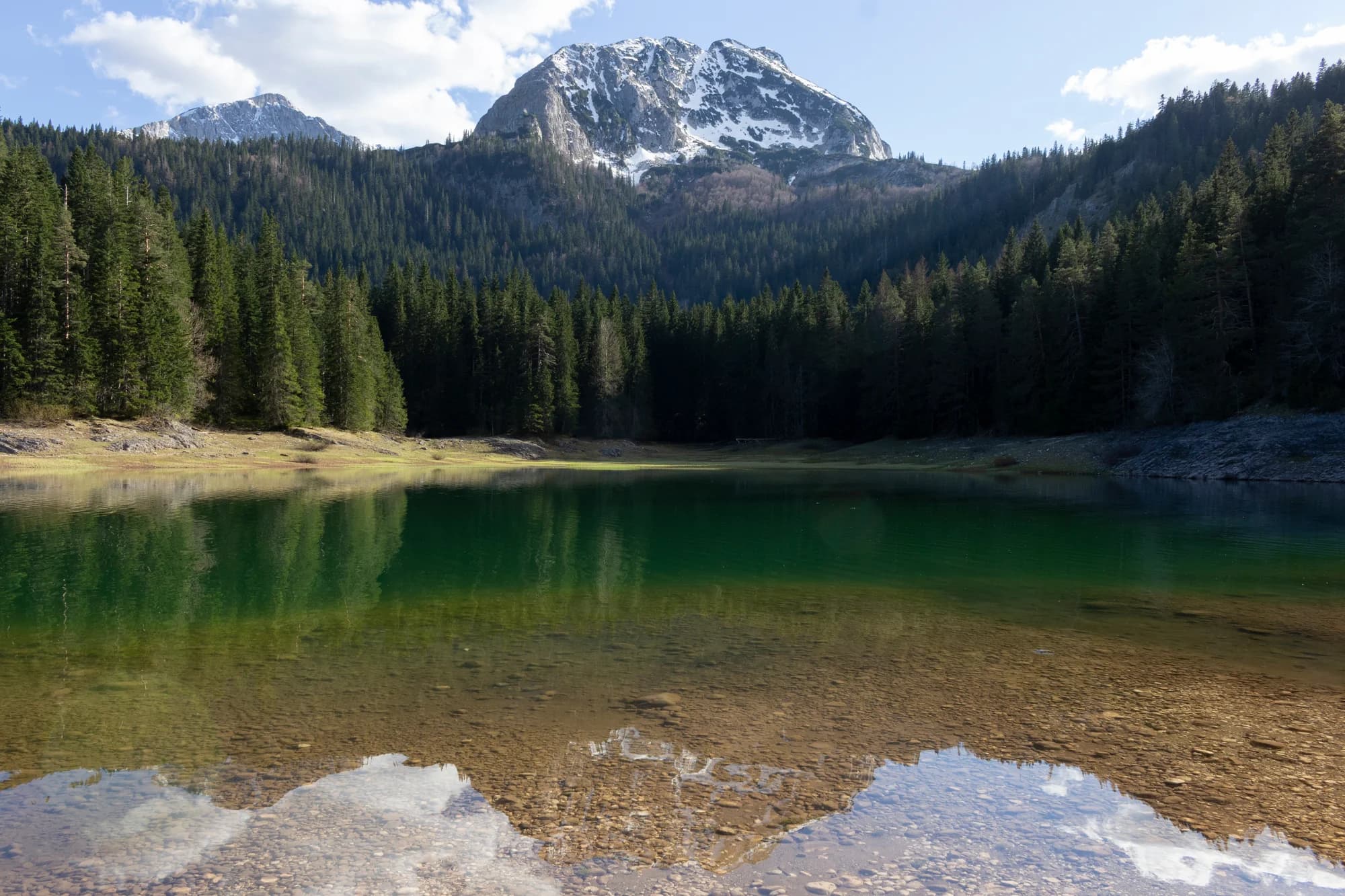
N. 1 · Parco nazionale · 2523 m
Durmitor
Neve nel 69% dei giorni di gennaio
The massif that made Montenegro a mountain country: forty-eight summits over 2,000 m around a plateau of glacial lakes, inscribed by UNESCO in 1980.
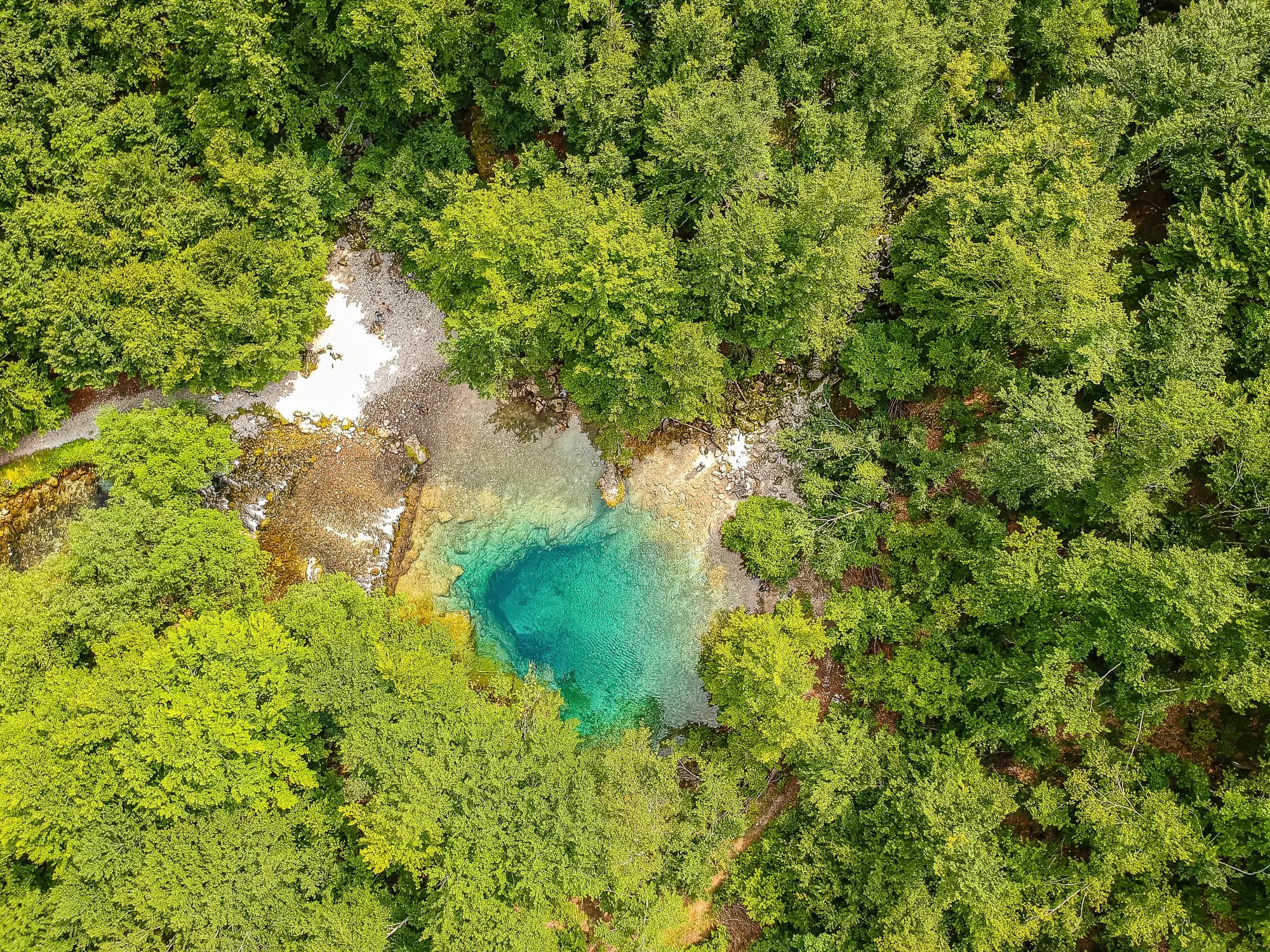
N. 2 · Parco nazionale · 2535 m
Prokletije
Neve nel 71% dei giorni di gennaio
The most alpine ground in the country and the least visited: limestone walls above the Grebaje and Ropojana valleys, and Montenegro’s highest summit, Zla Kolata at 2,535 m, on the Albanian border.
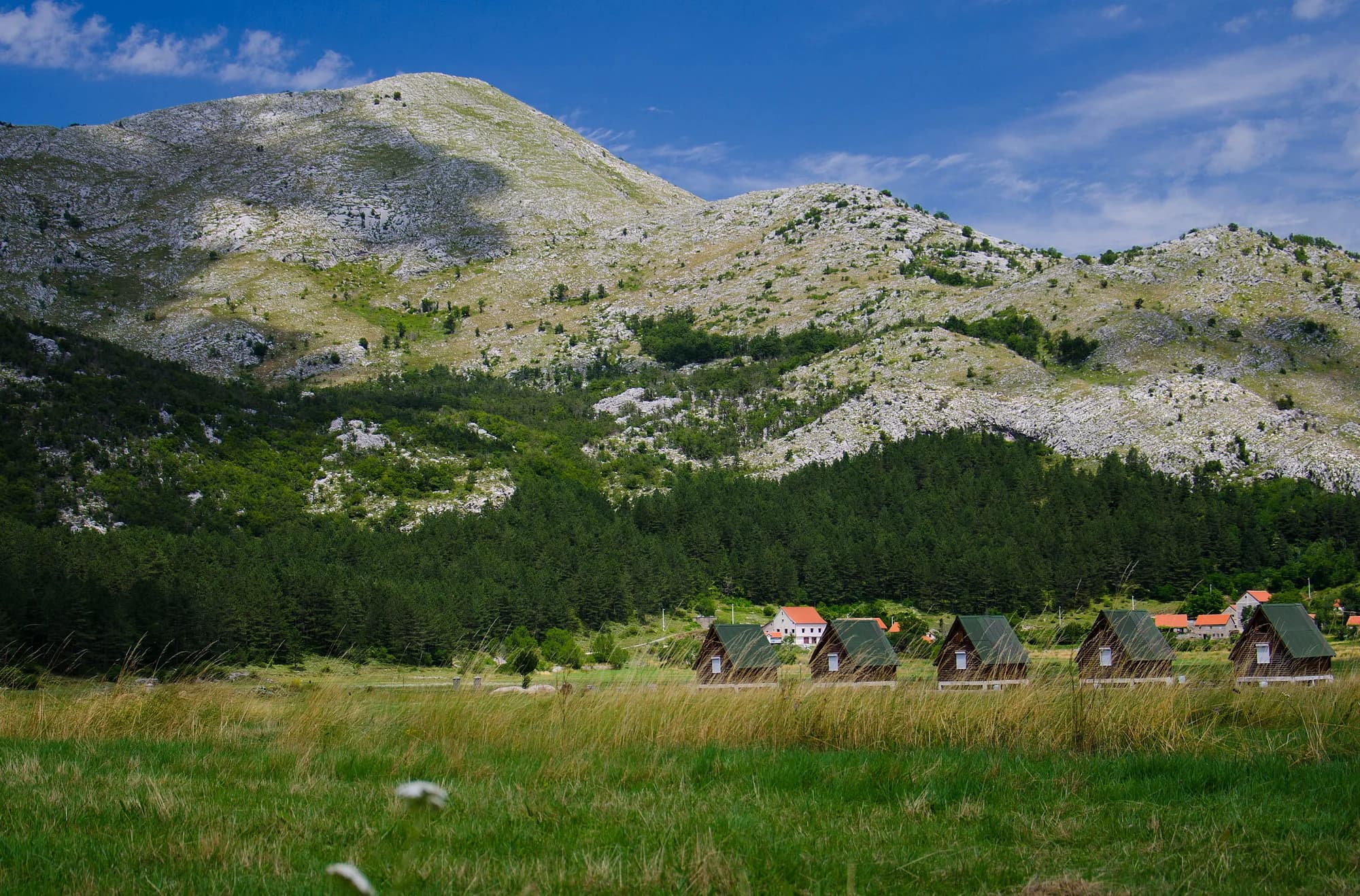 Nei dintorni, non la cima
N. 3 · Parco nazionale · 1749 m
Lovćen
The black mountain the country is named after, and the one every visitor sees from the Kotor serpentines.
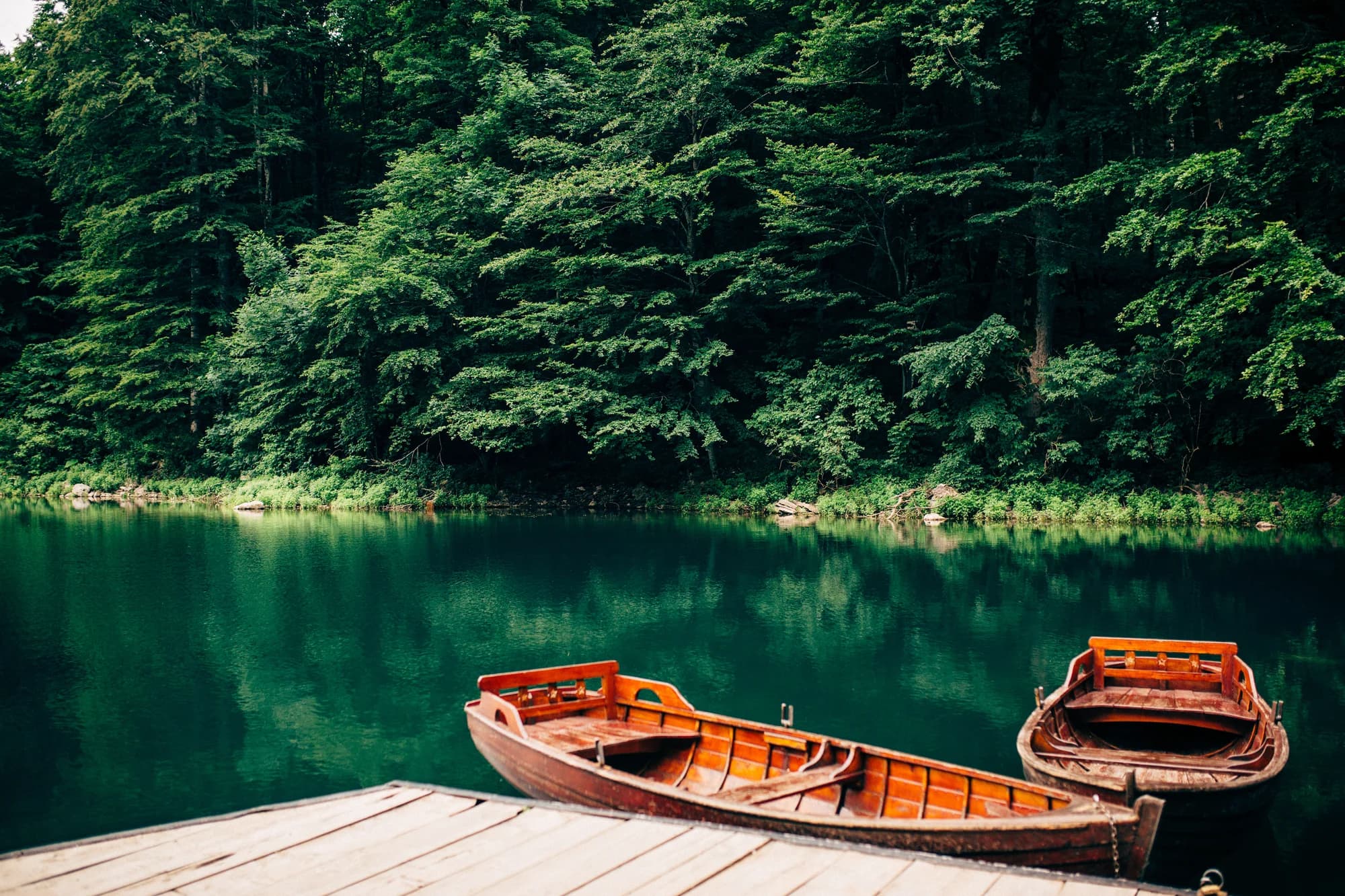
N. 4 · Parco nazionale · 2139 m
Biogradska Gora
Neve nel 57% dei giorni di gennaio
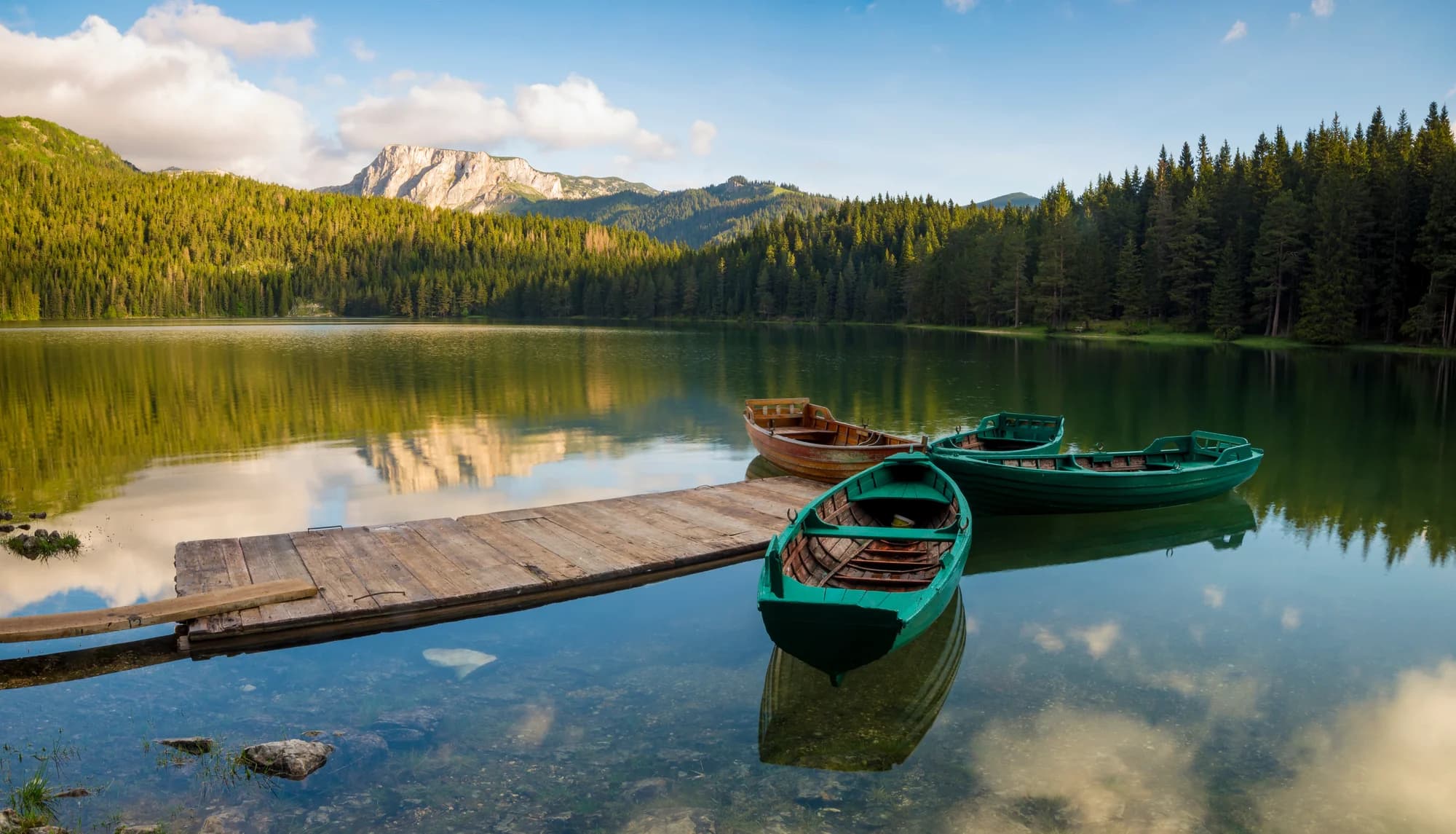
One of the last primeval forests in Europe, and the reason the park exists: trees that have never been cut, some of them five hundred years old, around a glacial lake you can walk round in an hour on the flat.
N. 6 · Cima · 2523 m
Bobotov Kuk
Neve nel 69% dei giorni di gennaio
Durmitor’s best-known summit and the one most people mean when they say they climbed a mountain in Montenegro.
Cima · 1894 m
Zubački Kabao
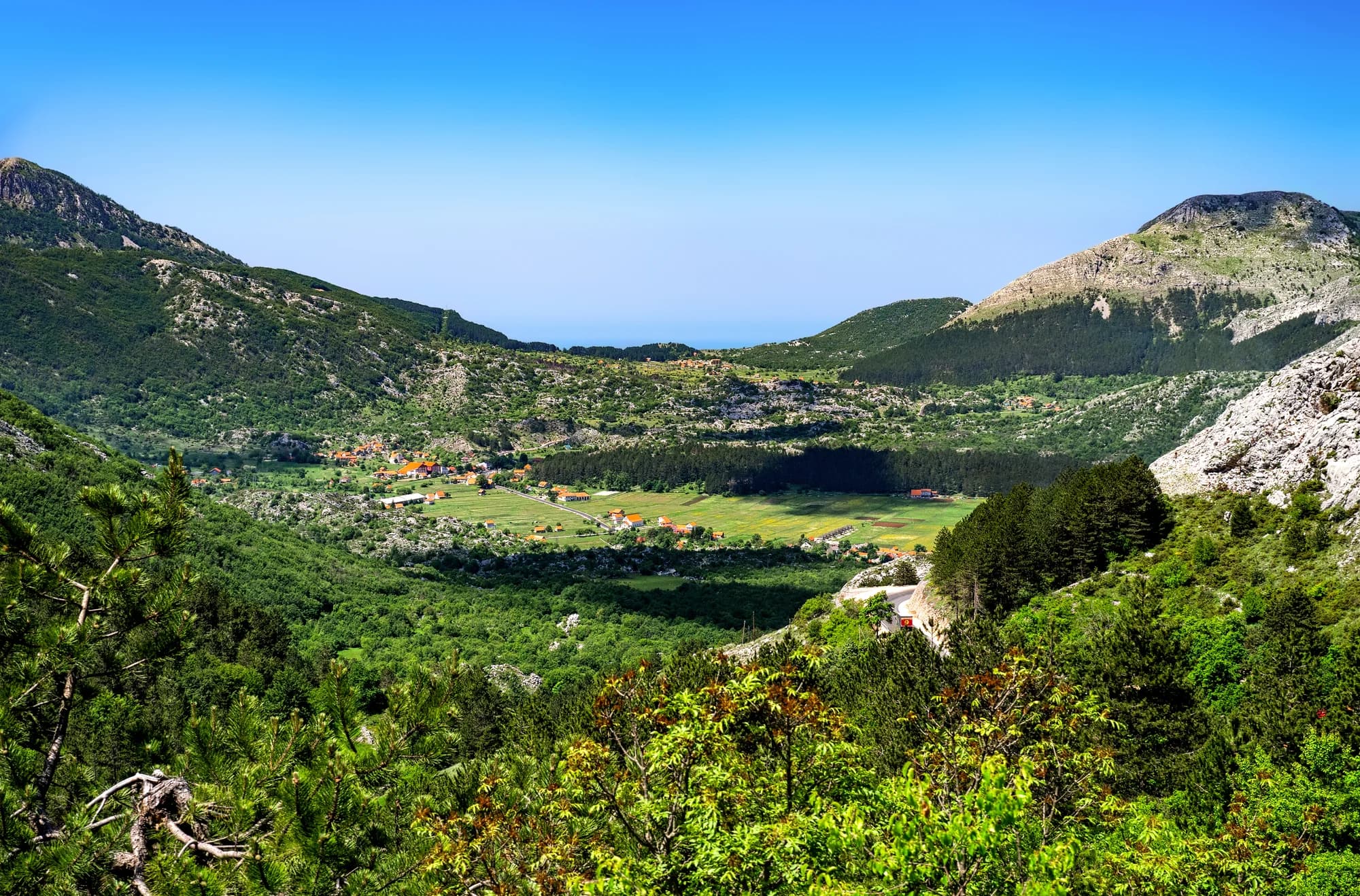
The highest point of Orjen, the massif directly behind Herceg Novi, and one of the strangest places in the country: a bare limestone desert of sinkholes and karst at 1,900 m, an hour above a subtropical coast..
 Nei dintorni, non la cima
Cima · 1748 m
Štirovnik
The true summit of Lovćen, a hundred metres above the mausoleum that everyone drives to and almost nobody walks.
Cima · 1594 m
Rumija
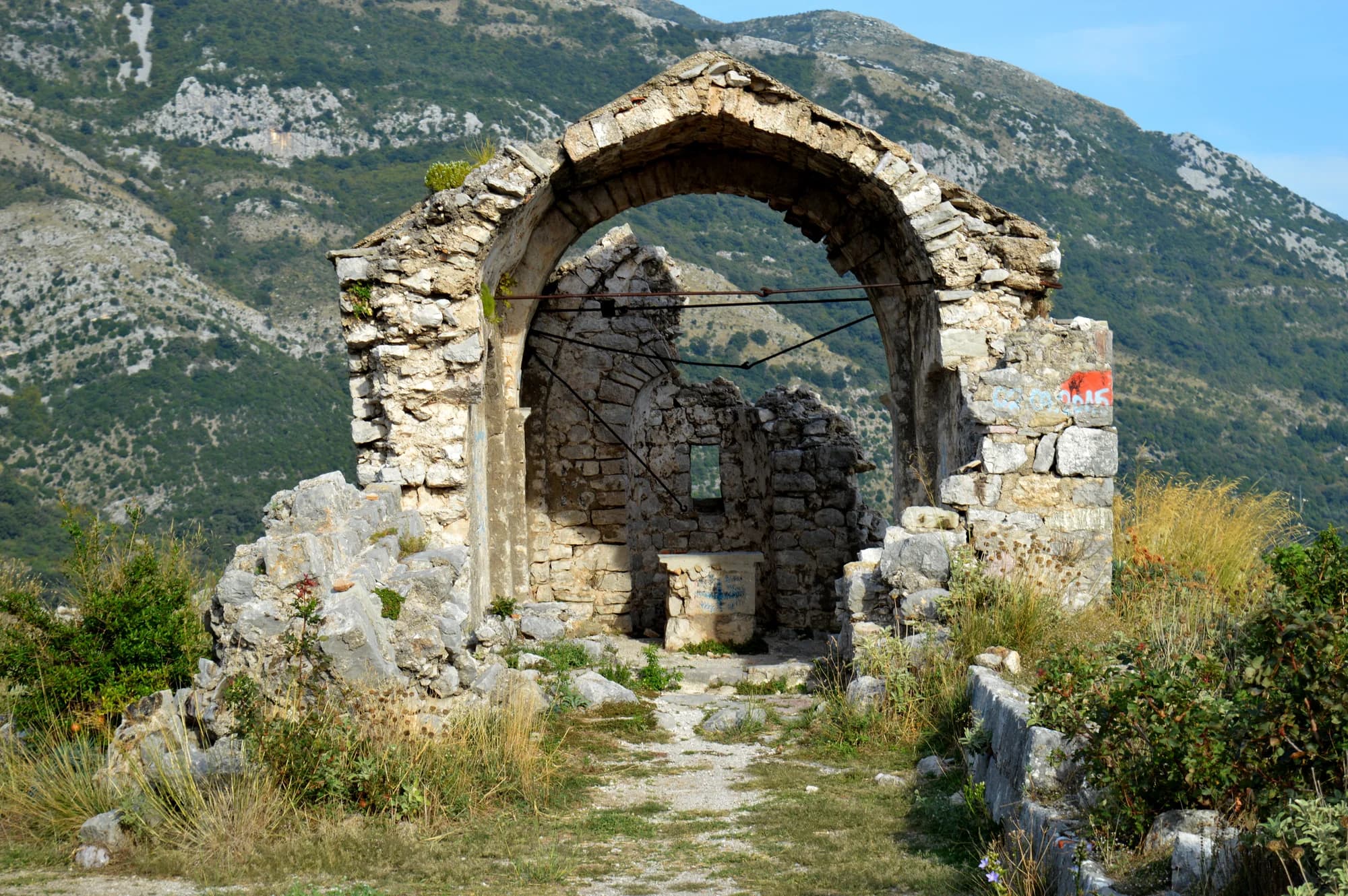
The ridge that separates Lake Skadar from the Adriatic, which means the summit has the sea on one side and the lake on the other — the single best view in the south of the country.