Die Geschichte ist aus erzählerischen Gründen dramatisiert. Die Orte, Daten, Verkäufe, Summen, der Brief und die Rückkehr sind dokumentiert.
I · Der Fluss
Hinter mir liegt Skutari. Vor mir die Straße nach Durrës und dahinter das Meer. Unter dem Boot die Bojana, die das Wasser der Berge zur Adria trägt. Neben mir der Franzose, der mit mir aus der Festung gekommen ist. Wir können uns den Luxus nicht leisten, wie Männer ohne Herren auszusehen. Wir sehen aus wie das, was wir sind: zwei Flüchtige, die durch fremdes Land ziehen.
Seit ich frei bin, habe ich schon einen Fehler gemacht. Ich bin zu einem Richter gegangen.
In Skutari erfuhr ich, dass der Richter mit dem Mann verwandt war, dem ich gehört hatte. Das Recht stand nicht außerhalb des Hauses; es führte dorthin zurück. Also brachen wir auf. Jeder Ruderschlag über den Fluss bringt uns weiter fort von jenem Richter, jenem Besitzer, jener Festung, deren Namen die italienische Überlieferung Sciablac schreiben wird.
Die Überlieferung nennt unser Boot nur eine barca. Sie nennt keine Stunde, keinen Eigner, keine Takelung. Sie nennt die Richtung, und sie nennt die Männer aus Dulcigno, die ihren Kurs ändern und auf uns zuhalten, bevor wir ihr folgen können.1
Einen Tag vielleicht, vielleicht weniger, habe ich niemandem gehört.
Männer kommen auf uns zu. Die ersten Männer, die mich gefangen nahmen, haben mir meine Zukunft genommen. Diese Männer nehmen mir die Flucht, die ich daraus gemacht hatte.
Es ist nicht das erste Mal, dass ich verkauft werde.
II · Siebenundzwanzig Zecchini
1750 verlasse ich Bologna, fünfundzwanzig Jahre alt, um mein Glück zu suchen. Die Wendung überlebt mich: in cerca di fortuna.
Zweieinhalb Jahrhunderte später klingt das fast unbeschwert, als wäre das Glück eine Stadt, die ich erreichen könnte, wenn ich nur weit genug ginge.
Ich finde Arbeit als Diener eines venezianischen Offiziers. Für mich ist das kein Dienst an einem Reich. Für mich ist das Lohn. Fünf oder sechs Jahre lang verliert mich die Überlieferung vollständig: kein Weg, kein Schiff, nicht einmal der Name des Offiziers.
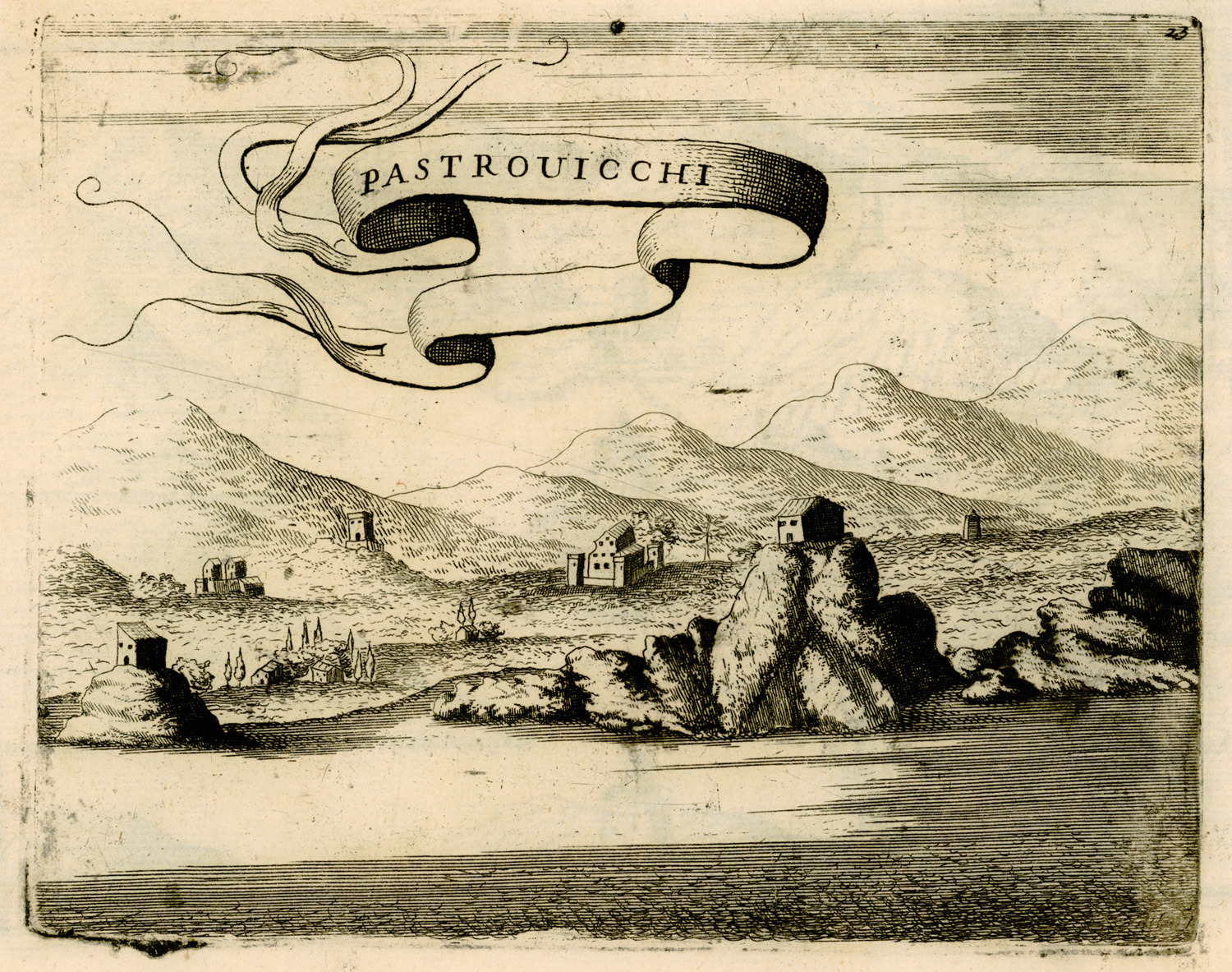
Als sie mich wiederfindet, packen mich Männer nahe einem Ort, den die Druckschrift Pastruich schreibt. Bologna wird sie Montenegriner nennen. Es bewahrt keinen Namen, keine Fahne, keine Beschwerde, keinen Auftrag, keine Anklage gegen mich. Es bewahrt, was dann geschieht: Sie setzen einen Preis für mich fest.1

Erster überlieferter Preis: 27 venezianische Zecchini.
Etwa zwei Jahreslöhne eines Bauarbeiters.
In den Städten des venezianischen Festlands verdiente ein Bauarbeiter in denselben Jahren eineinviertel bis eineinhalb Lire am Tag, und ein Zecchino war etwa zweiundzwanzig Lire wert. Mein erster Preis entsprach ungefähr zwei Jahren Arbeit eines Tagelöhners.2
Der Käufer befehligt eine Festung, die in der Abrechnung Sciablac heißt. Schreibweise, Geografie, Chronologie und der Status als osmanisch gehaltene Festung deuten sehr wahrscheinlich auf Žabljak Crnojevića. Dies bleibt eine begründete Identifizierung und keine unmittelbare Aussage der Quelle. Der Kommandant wird als Türke beschrieben. In seinem Haus, so die Abrechnung, werde ich mit Gewalt bedrängt, dem Christentum abzuschwören, und der Druck bringt mich beinahe um. Sie bewahrt nicht den Raum, nicht das Werkzeug, nicht die Worte. Ich werde sie nicht nachliefern.
Korrektur, 5. Oktober 2026: Wir identifizieren „Sciablac“ nun wahrscheinlich als Žabljak Crnojevića und haben beide Karten entsprechend aktualisiert, nach einem Hinweis unseres Lesers Sinisa.
Heutiger Bezug: Paštrovići bezeichnet den Küstenbezirk um das heutige Sveti Stefan; das „Pastruich“ der Broschüre wird vorläufig dort verortet.
Ich lebe dort etwa ein Jahr. Ich finde einen anderen Gefangenen, einen Franzosen, und gemeinsam kommen wir heraus. Wir erreichen Skutari. Wir erfahren, wer der Richter ist. Wir wenden uns nach Durrës.

| Zeitraum | Was die Überlieferung hergibt |
|---|---|
| 1750 | Verlässt Bologna |
| 5–6 Jahre | Route und Alltag nicht überliefert |
| c. 1755–56 | Bei den Paštrovići ergriffen |
| ≈ 1 Jahr | Festgehalten in „Sciablac“ (wahrscheinlich Žabljak Crnojevića) |
| ≈ 7 Monate | In Ulcinj festgehalten und weiterverkauft |
| Mehrere Jahre | Arbeit in Tripolis |
| 1761–62 | Brief, Lösegeld, Rückkehr |
Die leeren Abschnitte gehören zum Befund. Die Überlieferung wird genau dort ausführlich, wo Betti verlegt, bepreist oder losgekauft wird.
Die Überlieferung · Wer hat ihn verschleppt?
Bettis Dienstherr war ein fremder Souverän, der eine Küste überwachte, die er nicht vollständig beherrschte. Der Bezirk Paštrovići, der sich mit großer Sicherheit hinter dem „Pastruich“ der Druckschrift verbirgt, regierte sich unter venezianischer Oberhoheit selbst: durch eine Versammlung und gewählte Richter. Er schuldete Venedig Kriegsdienst, und einen ansässigen venezianischen Beamten gab es dort nicht.3
Im Februar 1755 bat Montenegros Metropolit Vasilije Petrović die russische Kaiserin um Schutz – gegen das Osmanische Reich und gegen Venedig. Noch im selben Jahr beschloss Venedig, ihn vergiften zu lassen. 1756 griffen osmanische Truppen Montenegro an.4 Die Männer, die in diesen Monaten den Diener eines venezianischen Offiziers ergriffen, können sich gegen einen Besatzer gewehrt, eine alte örtliche Rechnung beglichen, Beute gemacht oder mit einem schutzlosen Mann Handel getrieben haben. Andernorts beschuldigen venezianische Akten namentlich genannte Paštrovići genau eines solchen Menschenhandels; diese Akten sind Anklagen eines Staates, der seine Untertanen überwachte, keine Urteile.5
Die Druckschrift fragt nie danach. Sie nennt die Häscher Montenegriner und verzeichnet den Preis.
III · Sieben Monate in Dulcigno
Hände am Dollbord. Das andere Boot liegt längsseits, bevor der Franzose ausgesprochen hat, was es ist.
Die Männer kommen aus Dulcigno, dem Hafen, der heute Ulcinj heißt. Ihre Namen kenne ich nicht. Ich weiß nicht, ob sie die Überfahrt beobachtet haben oder einfach auf uns gestoßen sind. Ich kenne das jähe Schwinden des Abstands, den Augenblick, in dem aus einem Weg ein geschlossener Raum wird.
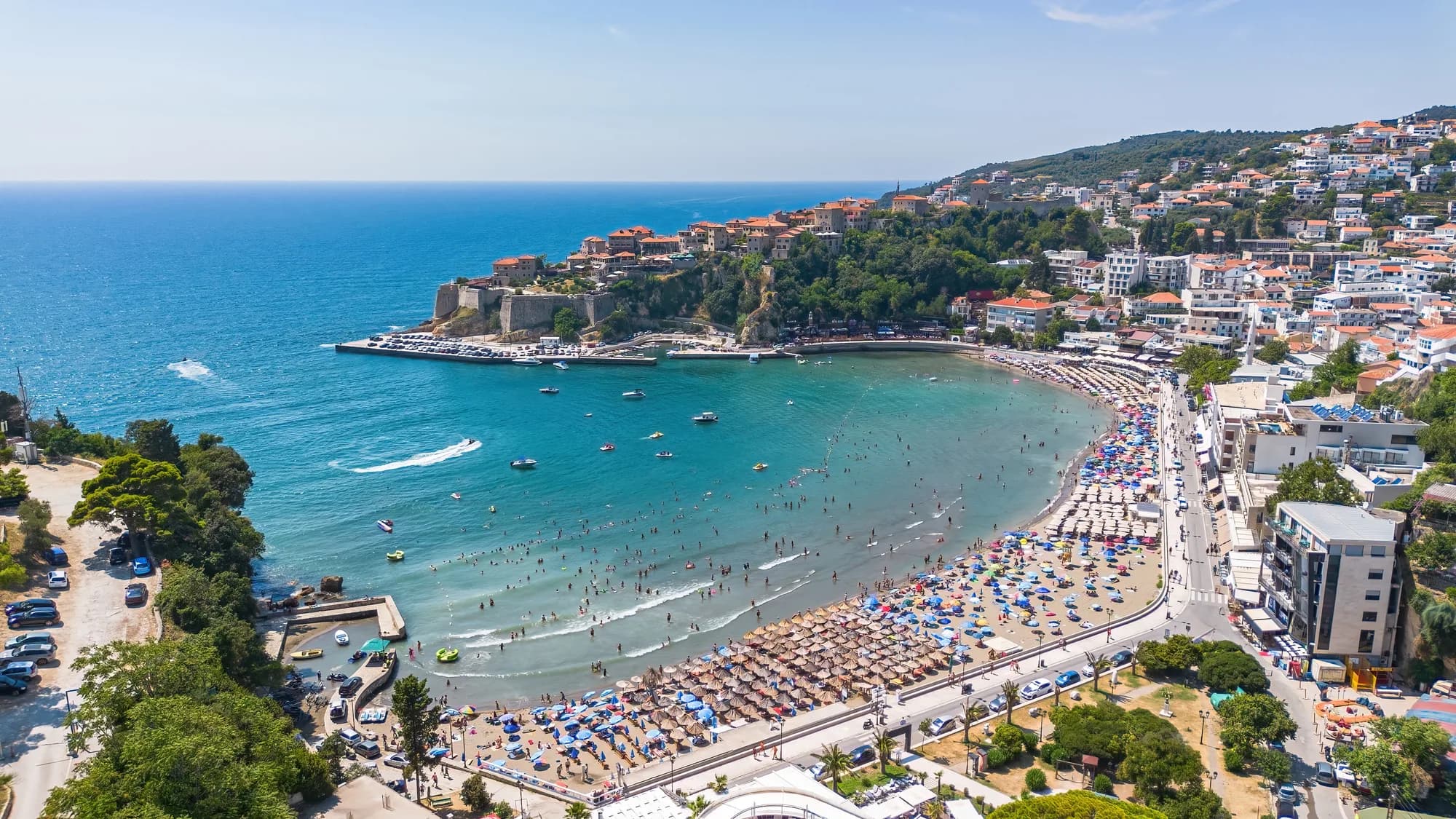
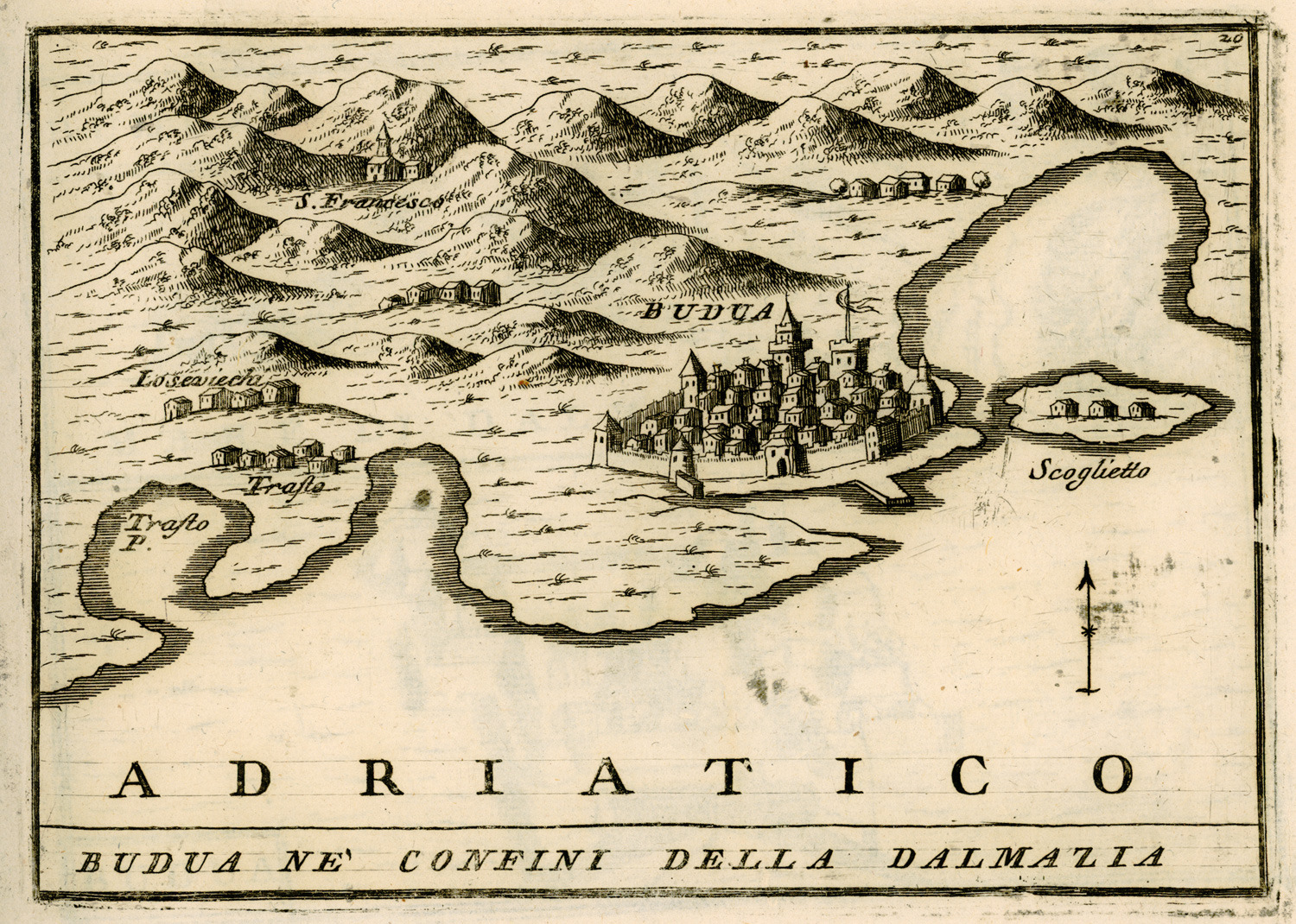
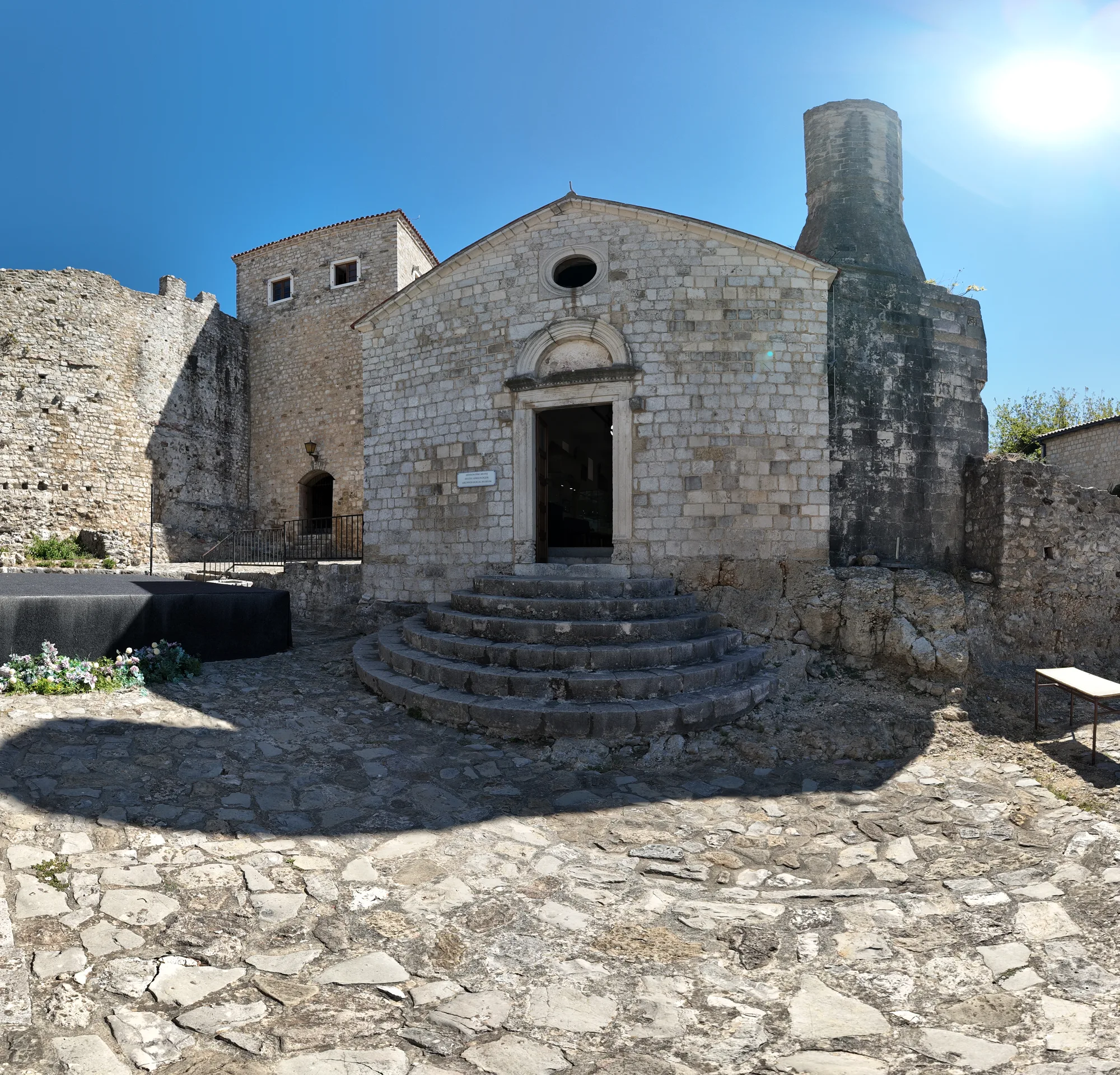
Auf einem Felskeil erhebt sich die Stadt aus der Adria. Vom Fluss her schneiden ihre Mauern eine harte Kante in den Himmel. Ich betrete sie, ohne mich dafür entschieden zu haben.

Die Männer, die mich greifen, sind osmanische Untertanen, weil Dulcigno ein osmanischer Hafen ist. Das macht sie nicht zu Offizieren mit einem Befehl aus Istanbul. Istanbul befiehlt dieser Küste vielmehr immer wieder, damit aufzuhören. Die Befehle müssen wiederholt werden.6
In Dulcigno werde ich an einen Verwandten des Paschas verkauft.1
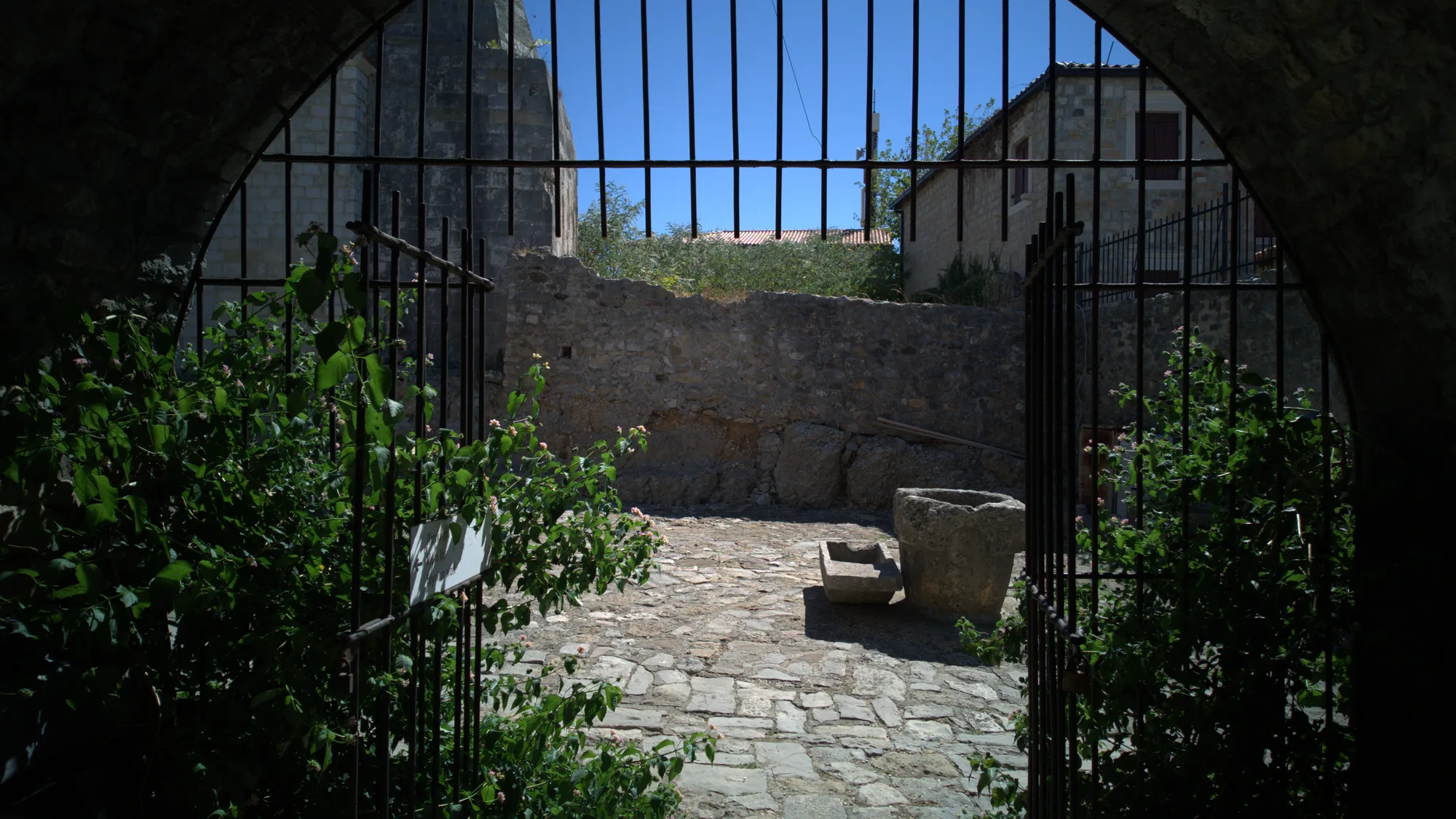
Keine erhaltene Zeile verlegt diesen Verkauf auf den gepflasterten Platz, den man Besuchern heute als Sklavenplatz zeigt. Die ehrliche Szene ist härter, weil sie kleiner ist: Jemand besitzt mich, jemand anderes zahlt, und man zwingt mich, mit dem Käufer mitzugehen.
Das Schild und die Überlieferung
| Was Besuchern erzählt wird | Was die Überlieferung sagt |
|---|---|
Die Tourismusorganisation von Ulcinj schreibt, die Stadt sei bis zur Mitte des siebzehnten Jahrhunderts „zu einem bedeutenden Sklavenmarkt geworden“, verweist auf den Besuch des osmanischen Reisenden Evliya Çelebi von 1662 und nennt für die Jahre zwischen 1708 und 1712 „etwa 200 Sklaven zum Verkauf“. Ein Platz in der Altstadt wird Besuchern als Sklavenplatz präsentiert.9 | Betti wurde in Dulcigno verkauft, zweimal, an Verwandte des Paschas. Keine auffindbare Quelle nennt den Ort des einen oder des anderen Verkaufs. Der Handel als Ganzes ist unbestritten; die Pflastersteine sind es nicht. Auf dieser Seite heißt es „in Ulcinj verkauft“, bis ein Dokument sagt, wo. Lesen Sie auf dieser Website den Beitrag über den Platz und die Cervantes-Legende. |
Ich versuche zu fliehen. Der Versuch bringt mich fast um. Mein Besitzer tut mit dem Risiko, was Besitzer mit Risiken tun: Er verkauft es. Der zweite Käufer ist ein weiterer Verwandter des Paschas. Ich versuche es erneut und scheitere erneut. Mit jedem Fluchtversuch lernen die Menschen um mich herum besser, wie man mich hält. Jeder Verkauf verwandelt ihre Unannehmlichkeit in das Eigentum eines anderen.
Sieben Monate lang ist Ulcinj keine malerische Altstadt und keine für Besucher aufpolierte Piratengeschichte. Es ist der Abstand zwischen einer Tür und dem, der sie bewacht. Es ist ein Hafen, der einen Menschen landeinwärts in einen Haushalt lenken kann oder seewärts auf einen größeren Markt.
Drei Briefe aus Ulcinj
Eine echte Stimme · Dokumente, keine RekonstruktionUlcinj, 20. Juni 1691. Eine Gruppe von Gefangenen, die in der Stadt festgehalten wurde, schrieb nach Hause und warnte: Kehre ihr Bote nicht bis zur Frist mit dem Lösegeld zurück, werde man sie nach Nordafrika weiterverkaufen. Auf die Rückseite ihres Hilferufs hatten ihre Besitzer eine Liste von Waren geschrieben, die mit dem Geld zu schicken seien: Keramik, Tuch, Dinge für den Haushalt.
Ulcinj, 9. August 1667. Francesco Antonio Ascentij schrieb nach drei Jahren in der Stadt an seine Mutter, auf Papier von ihr, das er ein zweites Mal beschrieb, weil er sich eigenes nicht leisten konnte.
Ulcinj, 1739. Nicola Sarcinelli, zwölf Jahre alt, schrieb an seinen Vater, flehte um Lösegeld und berichtete von Gewalt. Sein Schicksal ist nicht vollständig bekannt.10
Menschen auf der einen Seite des Blattes; Konsumwünsche auf der anderen.
Ein Schiff trifft aus Tripolis ein.
Die Überlieferung · Piraten, Kaufleute oder beides?
Venedig nannte die Handelskonkurrenten aus Ulcinj gewohnheitsmäßig Piraten, und osmanische Untersuchungen kamen mitunter zu dem Schluss, die Beschuldigten seien rechtmäßige Kaufleute und Frachtfahrer. Der albanische Historiker Ardian Muhaj legt anhand venezianischer und albanischer Dokumente dar, dass die Flotte von Ulcinj im achtzehnten Jahrhundert in erster Linie dem Handel diente und die Kaperfahrt eine kleinere Tätigkeit war, geprägt von Rivalität und Vergeltung.7
Doch osmanische Reichsregister verzeichnen auch namentlich genannte Kapitäne aus Ulcinj, die geschützte Schiffe aufbrachten und deren Besatzungen gegen Lösegeld freigaben. 1756, ungefähr zur Zeit von Bettis Überfahrt, nahm ein Schiff aus Ulcinj bei Dubrovnik einen österreichischen Adligen gefangen und ließ ihn für 126 Goldstücke frei; ein weiterer Eintrag hält fest, dass Ali Hoca in jenem Jahr einundzwanzig Menschen von einem venezianischen Schiff verschleppte, obwohl zuvor seine Verhaftung angeordnet worden war.8 Die Regierung in Istanbul unterschied den rechtmäßigen Seekrieg von der gesetzlosen Raubfahrt und wies die Küste wieder und wieder an, damit aufzuhören. Sie musste sich wiederholen, weil die Autorität auf dem Weg vom Palast zum Kai schwächer wurde.6
Tragfähig ist deshalb die Wendung Räuber aus Ulcinj, die von einem osmanischen Hafen aus operieren: Männer innerhalb eines imperialen Systems, die von dessen lokalen Netzwerken profitieren, ohne deshalb seine Marine zu sein.
IV · Der Mann, den die Abrechnung auslässt
Ich verlasse die Stadt an Bord jenes Schiffes, weil man mich gegen einen anderen Menschen tauscht.
Die Überlieferung beschreibt ihn nach seiner Hautfarbe und nach sonst nichts: ein namenloser schwarzer Gefangener, weitergereicht vom Schiff aus Tripolis an meinen Besitzer in Ulcinj, dazu, wie ein späterer Historiker ergänzt, fünfzehn Zecchini zum Ausgleich der Abrechnung.11 Ich gehe an seiner Stelle nach Süden. Er geht an meine.
Ich kann das nicht erzählen, als zählte allein meine Freiheit. Ich bin ein weißer Italiener, den man in die Sklaverei verschleppt; der Mann, der in die andere Richtung gereicht wurde, ist von der Überlieferung noch weiter reduziert worden: auf eine Beschreibung und einen Preis. Mein Name hat sich erhalten, weil eine Institution in Bologna einen Grund hatte, ihn aufzubewahren. Seiner hat sich nicht erhalten, weil niemand in Tripolis oder Ulcinj einen Grund hatte, ihn aufzuschreiben.
Die Abrechnung folgt mir aufs Schiff. Ihn lässt sie beim Tausch zurück.
Die Küste bleibt zurück. Ulcinj hat mich nach Süden verkauft.


V · Eine Rechnung über 130 Zecchini
In Tripolis werde ich an Mamet Cajà verkauft, den ersten Minister des Beys. Er wurde in Neapel als Christ geboren.
Der italienische Bericht nennt ihn einen Renegaten, das Wort für einen Europäer, der zum Islam übergetreten und in einem muslimischen Staat aufgestiegen ist.11 Es ist als Vorwurf gemeint. Für mich ist es eine Auskunft über den Markt: Ein Italiener kann hier einen Italiener besitzen, und das Christentum hat niemanden davon abgehalten, mich zu verkaufen. An diesem Meer ist Identität keine Mauer. Sie ist eine Tür, durch die Geld, Ehrgeiz und Angst immer wieder hindurchgehen.
Nach etwa sechs Monaten gibt Mamet Cajà mich an den Bey weiter, und der Bey schickt mich zur Schwerarbeit an den öffentlichen Bauten. Es vergehen Jahre, die die Überlieferung nicht in Tage zerlegt.
Was mich rettet, ist nicht die Reinheit und nicht das Reich. Es ist Papier.
Am 6. Juli 1761 verlässt ein Brief Tripolis, adressiert an meinen Vater in Bologna. Mit ihm reist ein Zeugnis von Pater Filippo da Montevarchi, dem dortigen apostolischen Präfekten, das bestätigt, dass es mich gibt und dass ich festgehalten werde.1 Die erhaltenen Zusammenfassungen geben mir die Worte des Briefes nicht zurück. Ich weiß nur, was das Papier bewirkte, als es ankam.
Mein Körper wird zu Korrespondenz.
Mein Vater trägt es zu den Männern von Santa Maria della Neve, der Bologneser Bruderschaft, die christliche Gefangene loskauft. Am 11. Oktober 1761 beschließen sie, meinen Fall zu übernehmen. Ihr Netz läuft über Ambrogio di Sant’Agostino, einen unbeschuhten Trinitarier in Livorno, und Cosimo Conti, den kaiserlichen Konsul in Tripolis.12 Niemand in dieser Kette hat mich je gesehen. Jeder in ihr entscheidet, was ich wert bin.
Die erste Zahl, die Bologna erreicht, lautet: 110 tripolitanische Zecchini. Es ist ein Schreibfehler. Die berichtigte Forderung beträgt 210, und Bologna lehnt sie ab. Am 10. Januar 1762 begrenzt die Bruderschaft ihre Ausgaben auf 160 und hebt die Grenze dann auf 180 an. Die Männer, denen ich gehöre, bestehen auf einer Zahl; die Männer, die mich zurückwollen, bestehen auf einer kleineren. Ich bin die einzige Partei dieser Verhandlung, die nicht im Raum ist.12
| Ort | Von → an | Betrag | Anmerkung |
|---|---|---|---|
| Bei „Pastruich“ | Montenegrinische Entführer → Kommandant von „Sciablac“ | 27 venezianische Zecchini | Rund zwei Jahreslöhne eines Bauarbeiters |
| Ulcinj | Räuber aus Ulcinj → ein Verwandter des Paschas | nicht überliefert | Erster Verkauf vor Ort |
| Ulcinj | Erster Besitzer → ein zweiter Verwandter des Paschas | nicht überliefert | Nach fast tödlichem Fluchtversuch weiterverkauft |
| Hafenfront von Ulcinj | Zweiter Besitzer → Schiff aus Tripolis | ein Mann + 15 Zecchini | Getauscht gegen einen namentlich nicht genannten schwarzen Gefangenen; die 15 Zecchini stammen aus einer späteren Rekonstruktion |
| Tripolis | Mamet Cajà, dann der Bey | nicht überliefert | Schwerarbeit an öffentlichen Bauten |
| Tripolis ↔ Bologna | Besitzer ↔ Santa Maria della Neve | 110 · 210 · 160 · 180 tripolitanische Zecchini | Schreibfehler · Forderung abgelehnt · erste Obergrenze · erhöhte Obergrenze |
| Tripolis | Lösegeld gezahlt | 130 tripolitanische Zecchini | Vor Vermittlern, Überweisungen und Überfahrt |
| Bologna | Rechnungsbuch der Bruderschaft, alle Kosten | 1.940 Lire 18 Soldi (bolognesisch) | Kostenaufstellung noch nicht aufgefunden |
Die Währungen sind verschieden und werden nicht ineinander umgerechnet. Verkaufs- und Lösegeldsummen nach dem Ragguaglio von 1762 und der Akte der Bruderschaft in der Rekonstruktion von Anastasi; die Lohnentsprechung nach Ferlitos Veroneser Abrechnungen.2
Niemand musste Gebt uns das Geld, sonst … schreiben. Die Drohung war, dass man mich behielt, dass man mich arbeiten ließ, dass man mich weiterverkaufen konnte – und die Breite des Meeres zwischen meinem Vater und mir. Andere Gefangene in Ulcinj hatten es deutlich gesagt. 1691 schrieb eine Gruppe von ihnen nach Hause, wenn ihr Bote das Lösegeld nicht bis zum festgesetzten Termin bringe, werde man sie nach Nordafrika weiterverkaufen.10 Ich war das, was sie zu werden fürchteten. Ich war bereits weiterverkauft worden.
Das Lösegeld wird bei 130 Zecchini festgemacht, ohne die Kosten für Vermittler, Überweisungen und Überfahrt. Das Rechnungsbuch der Bruderschaft wird für den gesamten Vorgang 1.940 bolognesische Lire und 18 Soldi verzeichnen.12
Ein Brief reist, bevor Betti es kann
- Betti und Pater Filippo da Montevarchi — Brief und Gefangenschaftszeugnis (Tripolis · 6. Juli 1761)
- Bettis Vater → Santa Maria della Neve — Fall angenommen; Geld bewilligt (Bologna · 11. Okt. 1761)
- Ambrogio di Sant’Agostino, Unbeschuhter Trinitarier — koordiniert die Verhandlung (Livorno)
- Cosimo Conti, kaiserlicher Konsul — schließt den Loskauf ab (Tripolis)
- Betti — als frei gemeldet; kehrt zurück; Prozession 21. Nov. (Livorno → Bologna · Aug.–Nov. 1762)
Fünf Menschen bewegten vierzehn Monate lang Papier und Geld. Keiner von ihnen hatte Betti je gesehen.12
Am 29. August 1762 wissen die Männer in Bologna bereits, dass ich frei bin und Livorno erreicht habe.12
VI · Die Prozession
Ende September erreiche ich Bologna, zwölf Jahre, nachdem ich es verlassen habe, um mein Glück zu machen. Über den genauen Tag gehen die späteren Berichte um einige Tage auseinander.1

Am 21. November führt mich die Bruderschaft durch die Stadt.12 Ich bin der Beweis, dass der Loskauf der Gefangenen funktioniert: ein zurückgebrachter Leib, ein bewährtes Liebeswerk, ein Gefangener, der durchgehalten hat, Christ geblieben und heimgekommen ist. In jenem Jahr setzt ein bolognesischer Drucker sechzehn Seiten über mich. Das Heft nennt die Priester, die Vermittler und die Summen.14
Es hat weniger Anlass zu fragen, was ich für die venezianische Macht tat, als man mich zum ersten Mal ergriff, oder warum Venedig den politischen Anführer jenes Volkes zu vernichten suchte, unter dem man mich gefangen nahm, oder wie eine osmanische Regierung, die Überfälle immer wieder verbot, weiterhin durch jene Häuser regierte, die kauften, was die Räuber heranschafften. Die Loskaufliteratur zog lieber eine Grenze zwischen den Religionen. Mein Weg führte durch Systeme, die ineinander verflochten waren.
Auch Bologna hielt in eben diesen Jahren versklavte Muslime. Christliche wie muslimische Gemeinwesen kauften die Ihren los und beuteten zugleich die Gefangenen der Gegenseite aus.13
Der einzige Bericht über Bettis Gefangenschaft, nach dem Katalogeintrag (SBN UBOE078792). Die vollständige digitale Reproduktion des Archiginnasio-Exemplars wurde für diese Überarbeitung ausgewertet.
Ragguaglio della schiavitù prima in Dulcigno, e poi in Tripoli di Barbaria di Gian-Marco Betti cittadino bolognese, e del riscatto fattone l’anno 1762. Bologna: Longhi, 1762. 16 S.14
Die Überlieferung · Was das Heft wollte
Der einzige Bericht über Bettis Gefangenschaft ist ein sechzehnseitiges Ragguaglio, das 1762 in Bologna von jener Einrichtung gedruckt wurde, die ihn losgekauft hat. Es sind keine Erinnerungen von seiner Hand. Erzählungen dieser Art hielten einen gelungenen Loskauf fest, erbauten die Leser und brachten das Geld für den nächsten ein. Salvatore Bono warnt, dass die geschilderten Leiden zu diesem Zweck gesteigert sein konnten.1
Die Schrift ist bei Routen, Personen und Zahlungen genau und schweigt über die Beweggründe. Das macht sie nicht falsch. Es macht sie interessengeleitet.
Ich würde Ihnen gern erzählen, was ich am Morgen nach der Prozession tat. Genau dort endet die Überlieferung. Sie sagt nicht, ob ich in dem Glauben aufwachte, eine verschlossene Tür gehöre jemand anderem, oder wie mein Vater nach zwölf Jahren aussah, oder ob Bologna mir kleiner vorkam oder unfassbar weit.
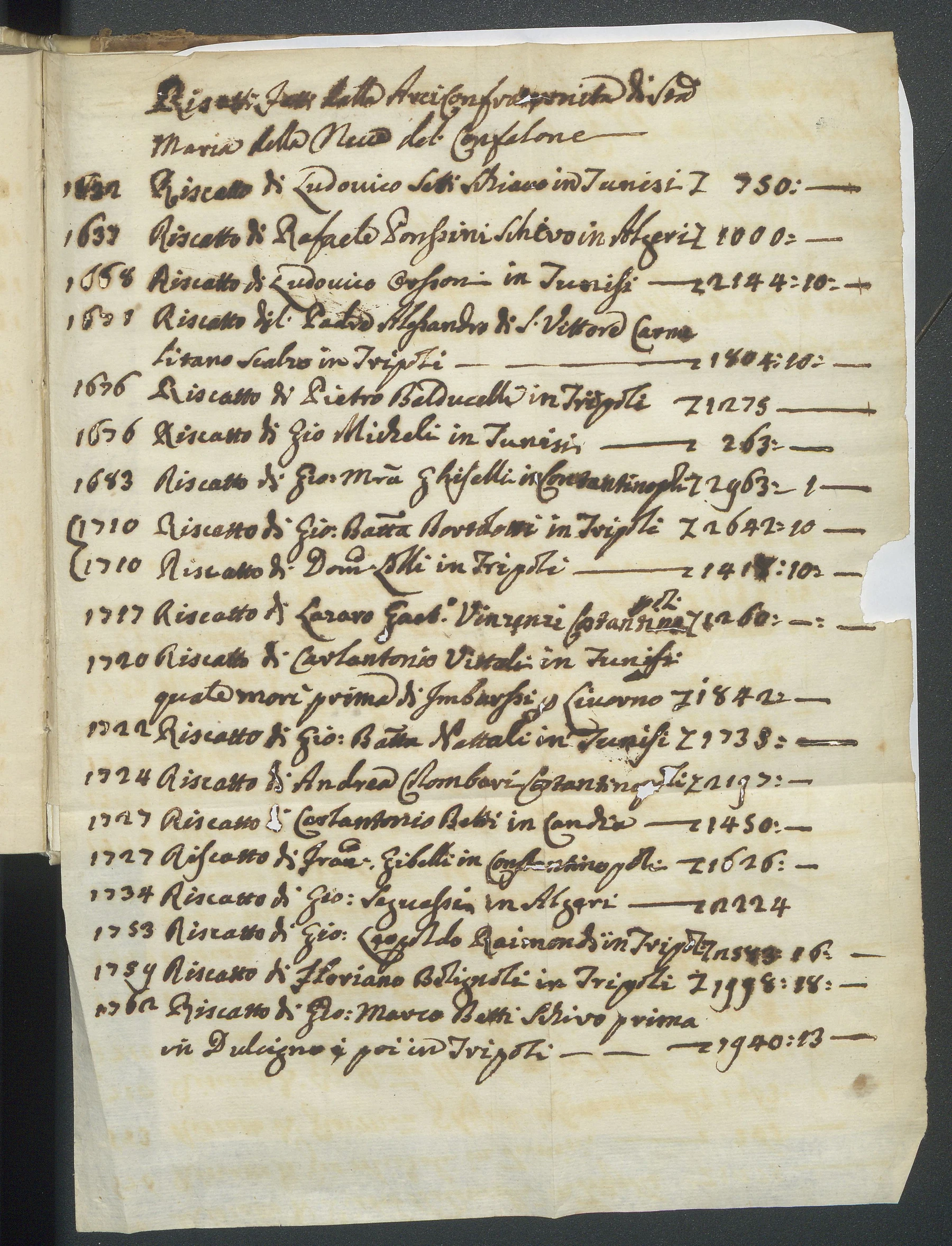
Der handschriftliche Betti-Eintrag
Italienische Transkription: „1762 Riscatto di Gio: Marco Betti Schiavo prima in Dulcigno e poi in Tripoli — £ 1940:13.“
Englische Übersetzung: „1762. Ransom of Gio. [Giovanni] Marco Betti, enslaved first in Dulcigno and then in Tripoli — 1.940 lire and 13 soldi.“
Eine zweite handschriftliche Zusammenfassung in Bild 016 wiederholt Bettis Namen, die Folge Dulcigno–Tripolis und den Betrag 1.940:13. Das handschriftliche, £-ähnliche Zeichen steht für Lire; der Doppelpunkt zwischen Lire und Soldi folgt der Quelle.
Vollständige englische Übersetzung herunterladen (PDF)
Hinweis zur Übersetzung: Diese Leseübersetzung wurde aus den gescannten Seiten mit OCR- und maschinellen Übersetzungswerkzeugen erstellt und anschließend redaktionell geprüft. Sie ist keine diplomatische Transkription; für den genauen Wortlaut und die Paginierung sind die Scans maßgeblich.
Irgendwo südlich von mir verrichtet ein Mann, dessen Namen niemand aufgeschrieben hat, meine Arbeit, oder er ist weiterverkauft worden, oder er ist tot. Die Seite, die meinen Namen bewahrte, bewahrte seinen nicht.
An der Bojana währte die Freiheit eine Flussbreite lang. In Tripolis wurde sie zu einer Rechnung. In Bologna druckten Männer meine Rückkehr als Triumph.
Die Seite hält den Preis fest. Sie hält nicht fest, was der Preis in mir zurückließ.

Helfen Sie, die Überlieferung zu erweitern
Fünf Dinge, nach denen wir suchen:
- Bettis Brief vom 6. oder 7. Juli 1761 und das Gefangenschaftszeugnis von Pater Filippo da Montevarchi oder die früheste Abschrift eines der beiden.
- Archivio di Stato di Bologna, Santa Maria della Neve, busta 31: die Ratsbeschlüsse vom 11. Oktober 1761, 10. Januar 1762 und 29. August 1762 sowie der Eintrag im Rechnungsbuch zu dem Vorgang.
- Eine unmittelbare dokumentarische Bestätigung, dass die in der Schrift „Sciablac“ genannte Festung Žabljak Crnojevića war.
- Alles über den Franzosen, der mit Betti floh, oder über den Mann, der in Ulcinj gegen ihn getauscht wurde.
- Alle Dokumente, Berichte und frühen Darstellungen, aus denen hervorgeht, wo in Ulcinj Gefangene verkauft wurden.
Wenn Sie etwas besitzen, das Betti, die Paštrovići, Ulcinj, Tripolis oder den Gefangenenhandel im weiteren Sinne betrifft — ein Dokument, ein Familienpapier, eine Hafen- oder Gerichtsakte, die Fotografie eines Originals oder wissenschaftliche Literatur, gleich in welcher Sprache —, schreiben Sie uns bitte und nennen Sie das Archiv oder die Sammlung, mit Datumsangaben und Signaturen, soweit Sie sie haben. Zusendungen werden mit der erhaltenen Überlieferung abgeglichen, bevor etwas geändert wird.
Quellen und Methode
Die Geschichte ist aus erzählerischen Gründen dramatisiert und in Bettis Ich-Form erzählt. Die Quelle bewahrt keine Lebenserinnerung von seiner Hand; sie bewahrt eine institutionelle Erzählung, Ratsbeschlüsse aus dem Archiv und den Vermerk über seinen Brief und sein Gefangenschaftszeugnis.
Das vollständige sechzehnseitige Ragguaglio (SBN UBOE078792) wurde für diese Überarbeitung ausgewertet. Aussagen, die von der Akte Santa Maria della Neve (Archivio di Stato di Bologna, b. 31) abhängen — darunter die Beschlüsse der Bruderschaft und der Eintrag im Rechnungsbuch — bleiben Michele Anastasis Rekonstruktion zugeschrieben und müssen anhand der Archivalien überprüft werden. Die drei Gefangenenbriefe werden nach Robert C. Davis beschrieben; die Einsicht in die Originale steht noch aus.
Die erste Verschleppung nahe „Pastruich“ lässt sich nicht einordnen. Die zweite, durch Männer aus Dulcigno an der Bojana, ist klarer bezeugt, doch die Belege zeigen nicht, dass sie mit osmanischem Auftrag handelten. Keine der aufgefundenen Quellen verortet Betti auf dem Platz, der heute Sklavenplatz heißt.
- Michele Anastasi, „Per sollievo de’ schiavi cristiani: L’Opera Pia del Riscatto a Bologna in età moderna“ (Diss., Università di Parma, 2025), S. 159–61, gestützt auf das Ragguaglio von 1762 und Archivio di Stato di Bologna, Santa Maria della Neve, b. 31. Salvatore Bono, Lumi e corsari: Europa e Maghreb nel Settecento (Morlacchi, 2005), S. 113, 125–26, gibt den Ablauf wieder und weist darauf hin, dass die in der Schrift geschilderten Leiden übertrieben sein könnten.
- Löhne: Carmelo Ferlito, „For an analysis of the living cost in Verona during the XVIII century“ (MPRA 67827, 2006), S. 4–7, nach den Rechnungsbüchern des Monte di Pietà: Bauarbeiter 1,25–1,5 Lire venete am Tag in den Jahren 1756–62, Meister 2,5–3; rund 300 Lire im Jahr galten in Venedig als Existenzminimum für einen alleinstehenden Arbeiter. Der venezianische Zecchino wurde mit etwa 22 Lire venete angesetzt. Die Umrechnung ist nur ein Anhaltspunkt: Ein Zecchino in montenegrinischer Hand muss nicht zu venezianischen Kursen gehandelt worden sein, und die 130 tripolitanischen Zecchini des Lösegelds sind eine andere Einheit.
- Ivan Božić, Branko Pavićević und Ilija Sindik, Hrsg., Paštrovske isprave XVI–XVIII vijeka, I (Cetinje, 1959), S. 5–10; II (Budva, 1990), S. 5–9. Die Herausgeber beschreiben die venezianische Herrschaft von 1423 bis 1797 mit örtlicher Versammlung, gewählten Richtern und ohne ansässigen venezianischen Vertreter; sie verzeichnen zudem die Venedig geschuldete Militärpflicht.
- Metropolit Vasilije Petrović, Bittschrift an Kaiserin Elisabeth, 7. Februar 1755, RGADA, fond 15, Akte 108, Bl. 5–5v, Abschrift; Gligor Stanojević, „Crna Gora u doba vladike Vasilija Petrovića“, zur venezianischen Entscheidung von 1755 und zum osmanischen Feldzug von 1756.
- Tina Ugrinić und Marija Knežević, „Odnosi između dvije jadranske obale (Boka Kotorska i Italija)“, Matica 71 (2017), S. 281–82, 291–92. Anklagen des Staates, keine Urteile, die aus sich heraus beweiskräftig wären.
- Maria Pia Pedani, The Ottoman-Venetian Border (15th–18th Centuries) (Edizioni Ca’ Foscari, 2017), S. 38–44; Haruka Suemori, „The Ottoman Anti-Piracy Regime in the Mediterranean Sea and Its Practice in the Adriatic Sea“, Annals of Japan Association for Middle East Studies 38, Nr. 1 (2022), S. 95–117.
- Ardian Muhaj, “Aspekte nga detaria e Ulqinit në shek. XVII–XVIII”, Revista Albanon 4, Nr. 4 (2020).
- Melik Seletli, „18. Yüzyılda Adriyatik’te Korsanlık: Ülgün Örneği“ (Masterarbeit, Universität Istanbul, 2023), Fälle aus osmanischen Registern für das Jahr 1756, darunter BOA, A.DVN.DVE.d. 60/4, hüküm 35, sowie die Akten zu Ali Hoca; die direkte Einsicht in die Register steht noch aus.
- Tourismusorganisation von Ulcinj, „Slave trade in Ulcinj“, abgerufen am 10. September 2026. Die Seite belegt, wie das Erbe heute gedeutet wird; ein Dokument, das den Markt verortet, führt sie nicht an.
- Robert C. Davis, Christian Slaves, Muslim Masters (Palgrave Macmillan, 2003), S. 142–43, 165–66, mit Verweis auf Archivio Apostolico Vaticano, Gonfalone, b. 1144, fol. 552 (20. Juni 1691) und fol. 118 (Ascentij, 9. August 1667) sowie Archivio di Stato di Napoli, Santa Casa della Redenzione dei Cattivi, b. 16, Fall 3247 (Sarcinelli, 1739). Dargestellt nach Davis; die Einsicht in die Originale steht noch aus.
- Bono, Lumi e corsari, S. 125–26, zum Tausch gegen einen namentlich nicht genannten schwarzen Gefangenen zuzüglich 15 Zecchini und zu Mamet Cajà als neapolitanischem Konvertiten und erstem Minister des Beys.
- Archivio di Stato di Bologna, Santa Maria della Neve, b. 31, Versammlungen vom 11. Oktober 1761, 10. Januar 1762 und 29. August 1762, rekonstruiert bei Anastasi, S. 159–61. Die Korrektur 110/210, die Obergrenzen von 160 und 180, die endgültigen 130, die Gesamtsumme des Rechnungsbuchs von 1.940 Lire 18 Soldi und die Prozession vom 21. November 1762 folgen dieser Rekonstruktion und müssen vor der Veröffentlichung an den Originalen überprüft werden.
- Raffaella Sarti, “Bolognesi schiavi dei ‘Turchi’ e schiavi ‘turchi’ a Bologna tra Cinque e Settecento”, Quaderni storici 2 (2001), S. 437–74.
- Istituto Centrale per il Catalogo Unico, SBN-Datensatz UBOE078792, Ragguaglio della schiavitù prima in Dulcigno, e poi in Tripoli di Barbaria di Gian-Marco Betti cittadino bolognese, e del riscatto fattone l’a. 1762 (Bologna: Longhi, 1762), 16 S. Exemplare in der Biblioteca comunale dell’Archiginnasio (drei) und in der Biblioteca d’arte e di storia di San Giorgio in Poggiale (eines).
- Kartengrundlage: Natural Earth 1:10m. Die Linien zeigen die belegte Abfolge, keine gesicherten Straßen oder Seewege. „Pastruich“ ist vorläufig in den Paštrovići verortet; „Sciablac“ wird vorläufig als Festung Žabljak Crnojevića identifiziert und eingezeichnet. Zur Geschichte der Festung und ihrem osmanischen Status siehe Žabljak Crnojevića.