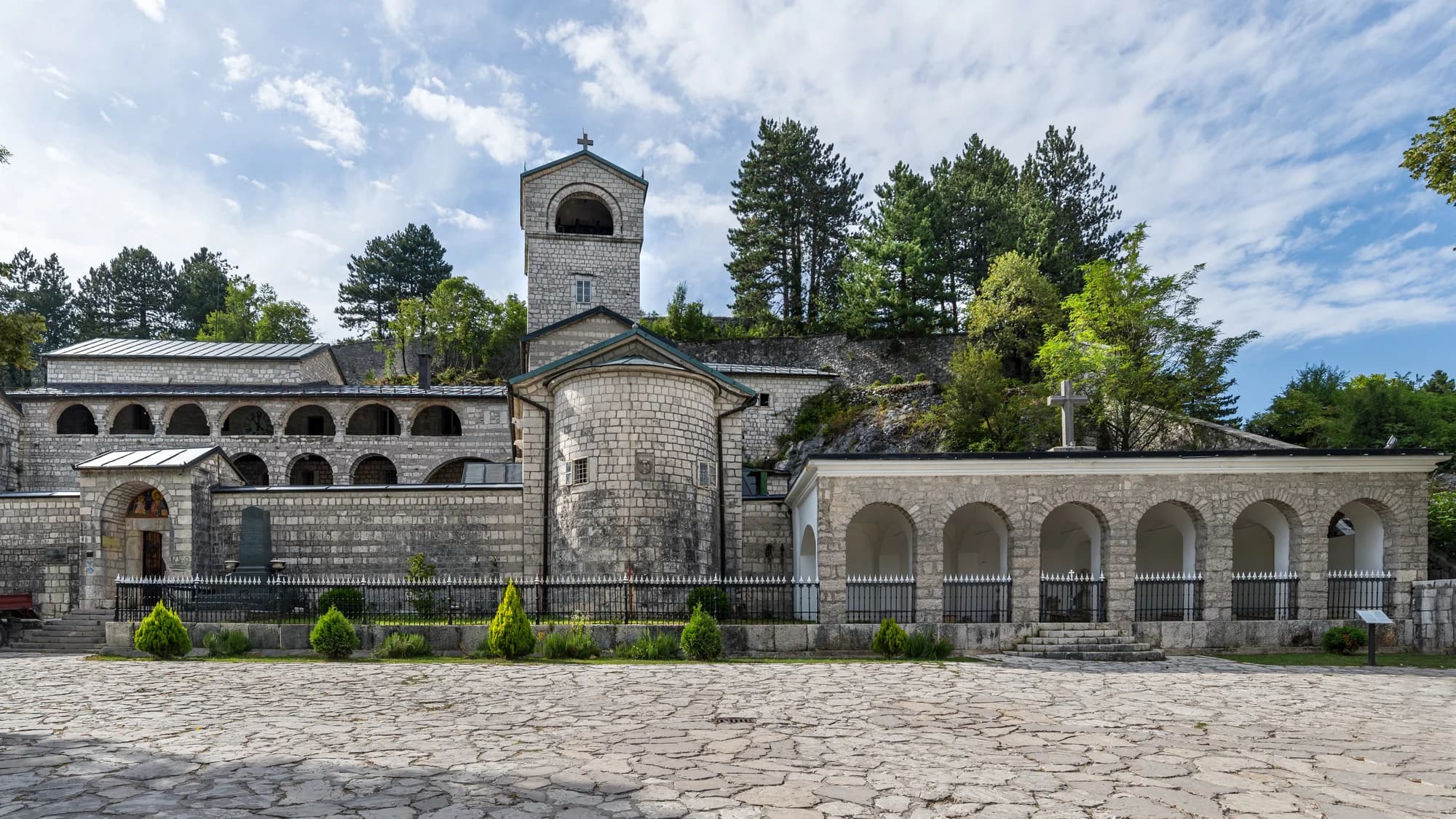
"What language do they speak in Montenegro?" has a short answer and a long one. The short answer is Montenegrin, and you will be understood anywhere in the country using it. The long answer involves two alphabets, four closely related standard languages that are mutually intelligible, a significant Albanian-speaking population in the south, and two letters that exist in Montenegrin and nowhere else. None of it will stop you ordering a coffee, but knowing how it fits together explains a lot of what you will see written on signs, menus and number plates.
The official language
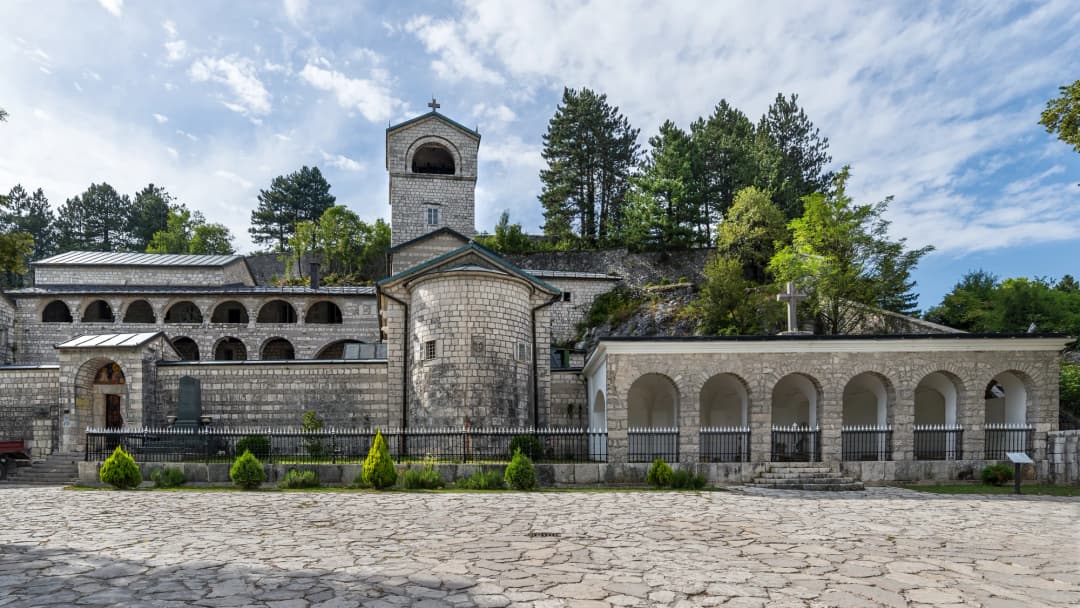
Montenegrin — crnogorski — has been the official language since the 2007 constitution. Serbian, Bosnian, Croatian and Albanian are also in official use, and in several municipalities Albanian has co-official status alongside Montenegrin.
In practical terms, Montenegrin, Serbian, Bosnian and Croatian are variants of one shared language that linguists usually treat as a single system. A Montenegrin, a Serb, a Bosnian and a Croat can hold a conversation without any difficulty whatsoever. The distinctions between the standards are real but small: some vocabulary, some spelling conventions, and the split described below. If you have learned any of the four, you can use it here.
Two alphabets, both official
Montenegro writes in both Latin and Cyrillic, and both are constitutionally equal. In daily life the Latin alphabet dominates: most signage, menus, newspapers, advertising and websites use it, and it is what you will meet as a visitor almost all of the time.
Cyrillic appears on some official documents, church buildings, monuments, older signage and in parts of the north. The two map onto each other letter for letter, so Црна Гора and Crna Gora are the same word written two ways.
That word is worth knowing: Crna Gora means "Black Mountain". It is what the country calls itself. "Montenegro" is the Venetian rendering of the same phrase, which stuck in the rest of Europe because Venice ran the coast for four centuries.
Ś and Ź: the two letters you will only see here
Montenegrin orthography, standardised in 2009, added two letters that the other standards do not use: ś and ź (in Cyrillic, с́ and з́). They represent soft sounds roughly between "sh" and "sy", and between "zh" and "zy".
You will see them in words like śutra (tomorrow) and iźelica (glutton), though usage varies and many Montenegrins write sjutra instead. If you spot a letter you do not recognise on a sign, this is probably it, and it is the single clearest marker that what you are reading is Montenegrin rather than Serbian or Croatian.
Ijekavian and ekavian — the split that explains the spelling
The most visible difference across the region is how an old Slavic vowel came down into the modern languages. Montenegrin, Bosnian and Croatian are ijekavian; standard Serbian as spoken in Serbia is ekavian.
In practice one word is written and said two ways:
- milk — mlijeko (Montenegro) / mleko (Serbia)
- girl — djevojka / devojka
- river — rijeka / reka
- beautiful — lijepo / lepo
- where — gdje / gde
There is a small currency case that catches people out. Montenegro uses the euro, and in Montenegrin it is euro, plural eura. In Serbian it is evro, plural evra. You will hear both in the country. The continent, confusingly, is Evropa in both.
Albanian in the south
Albanian is the first language of a substantial community in the south and east, and is in official use in several municipalities. You will hear it, and see bilingual signage, in Ulcinj, in Tuzi outside Podgorica, around Ostros on the southern shore of Lake Skadar, and in Plav and Gusinje under the Prokletije mountains.
This is not a fringe presence: in Ulcinj municipality Albanian speakers are the majority, and the town's cultural life, food and calendar reflect it.
Will English get you by?
On the coast, comfortably. In Kotor, Budva, Tivat and Herceg Novi, anyone working in hospitality will speak good English, menus are translated, and younger people generally speak it well.
Inland and in the north it thins out quickly. In the mountain villages you may find yourself with an older host who speaks no English at all — and, in this country, will feed you anyway. A translation app that works offline is worth having before you leave the coast, because mobile signal is unreliable in the canyons.
Other languages turn up for historical reasons: Russian is widely understood in parts of Budva and the Bar area, Italian on the coast, and German and Albanian in specific communities.
Pronunciation: it is easier than it looks
The single most useful thing to know is that spelling is completely phonetic. One letter is one sound, always, with no silent letters and no exceptions to memorise. Once you know the letters, you can pronounce any word you can read.
- c = "ts" as in cats — Cetinje is TSE-ti-nye
- č = "ch" as in church (hard); ć = a softer "ch", closer to "tyu"
- š = "sh"; ž = the "s" in measure
- đ = "j" as in jam (soft); dž = a harder "j"
- j = "y" as in yes — Budva's neighbour Jaz is "yaz"
- r can act as a vowel — Crna Gora is TSER-na GO-ra
Stress usually falls early in the word, and never on the last syllable.
Phrases worth having
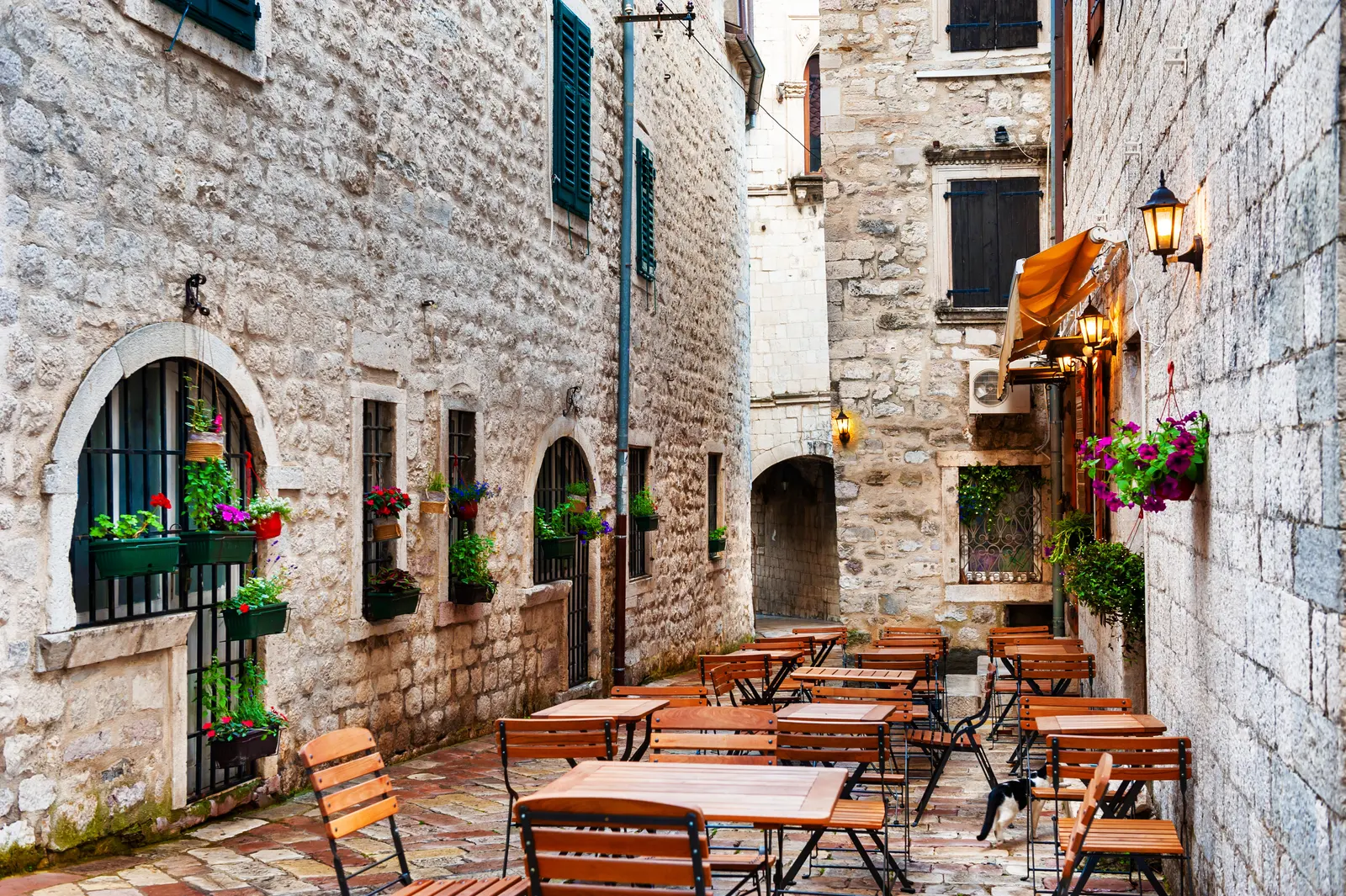
Locals are used to visitors speaking no Montenegrin at all, so even a little goes a long way.
- Dobar dan (DO-bar dan) — good day. The safe all-purpose greeting.
- Dobro jutro — good morning. Dobro veče — good evening.
- Zdravo / Ćao — hello / hi, informal. Ćao also works for goodbye.
- Doviđenja (do-vi-JE-nya) — goodbye, formal.
- Hvala (HVA-la) — thank you. Hvala lijepo — thank you very much.
- Molim — please, you're welcome, and "pardon?" all at once.
- Izvinite — excuse me, sorry.
- Da / Ne — yes / no.
- Govorite li engleski? — do you speak English?
- Ne razumijem — I don't understand.
- Gdje je…? (g-dye ye) — where is…?
- Koliko košta? — how much is it?
- Račun, molim — the bill, please.
- Živjeli! (ZHIV-ye-li) — cheers. You will need this one.
- Prijatno — enjoy your meal; also said when leaving a table.
- Dobrodošli — welcome. You will see it written everywhere.
A note on names you will read
Place names on signs are the local forms, and they are not always what your map app shows in English. A few that catch people out: Kotor is Kotor, but Cattaro on old buildings is the same town; Skadarsko jezero is Lake Skadar; Ada Bojana is the island at the Albanian border; and Sveti Stefan means Saint Stephen. On road signs, Podgorica is often shortened to PG.
Two words worth recognising because they appear in dozens of place names: gora or brdo for mountain or hill, and jezero for lake.