Trettiotre människor bor i Njeguši. Fältet runt byn gav Montenegro dess dynasti och dess skyddade skinka — tjugofem hårnålskurvor ovanför Kotorbukten.
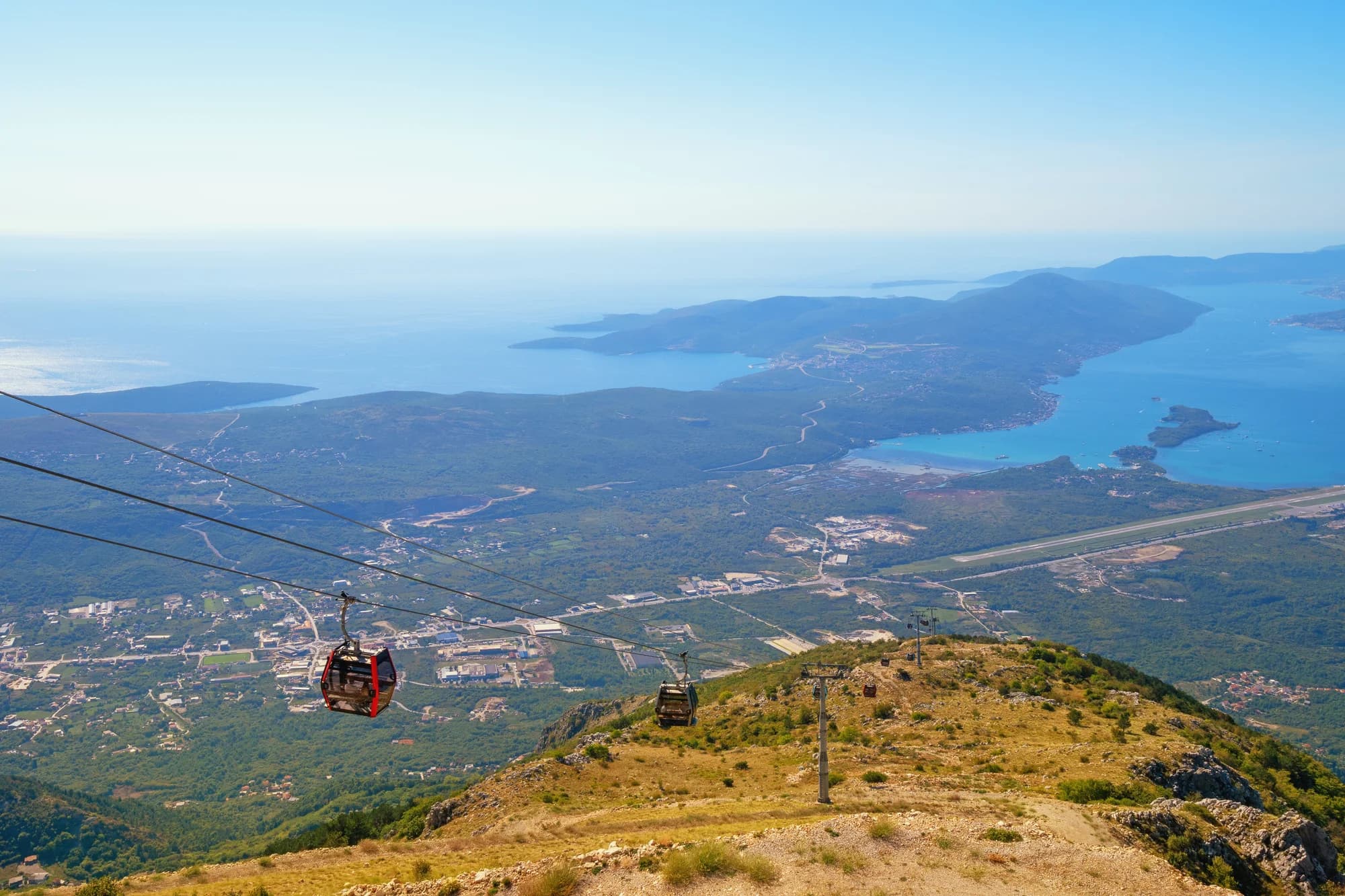
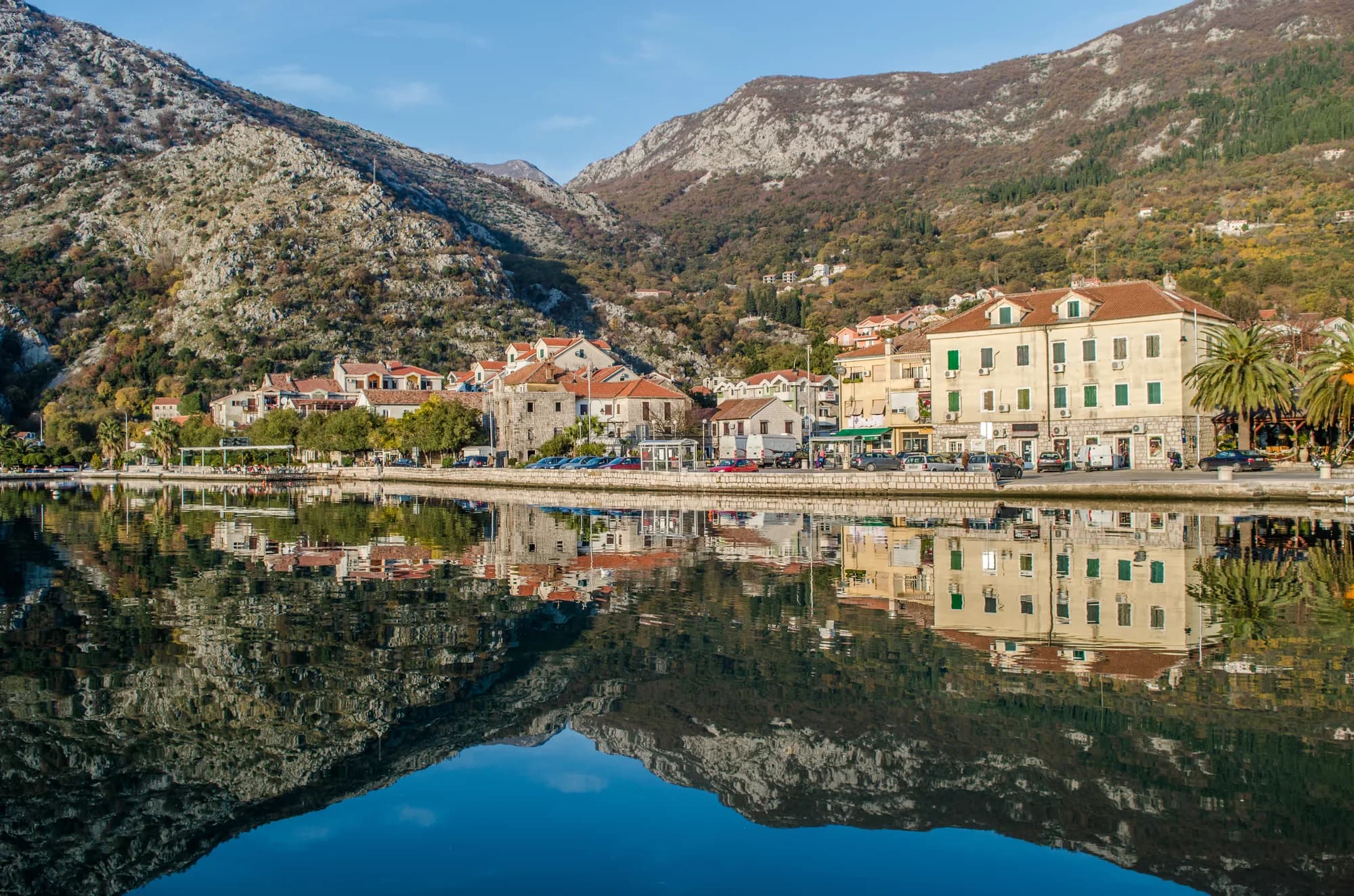
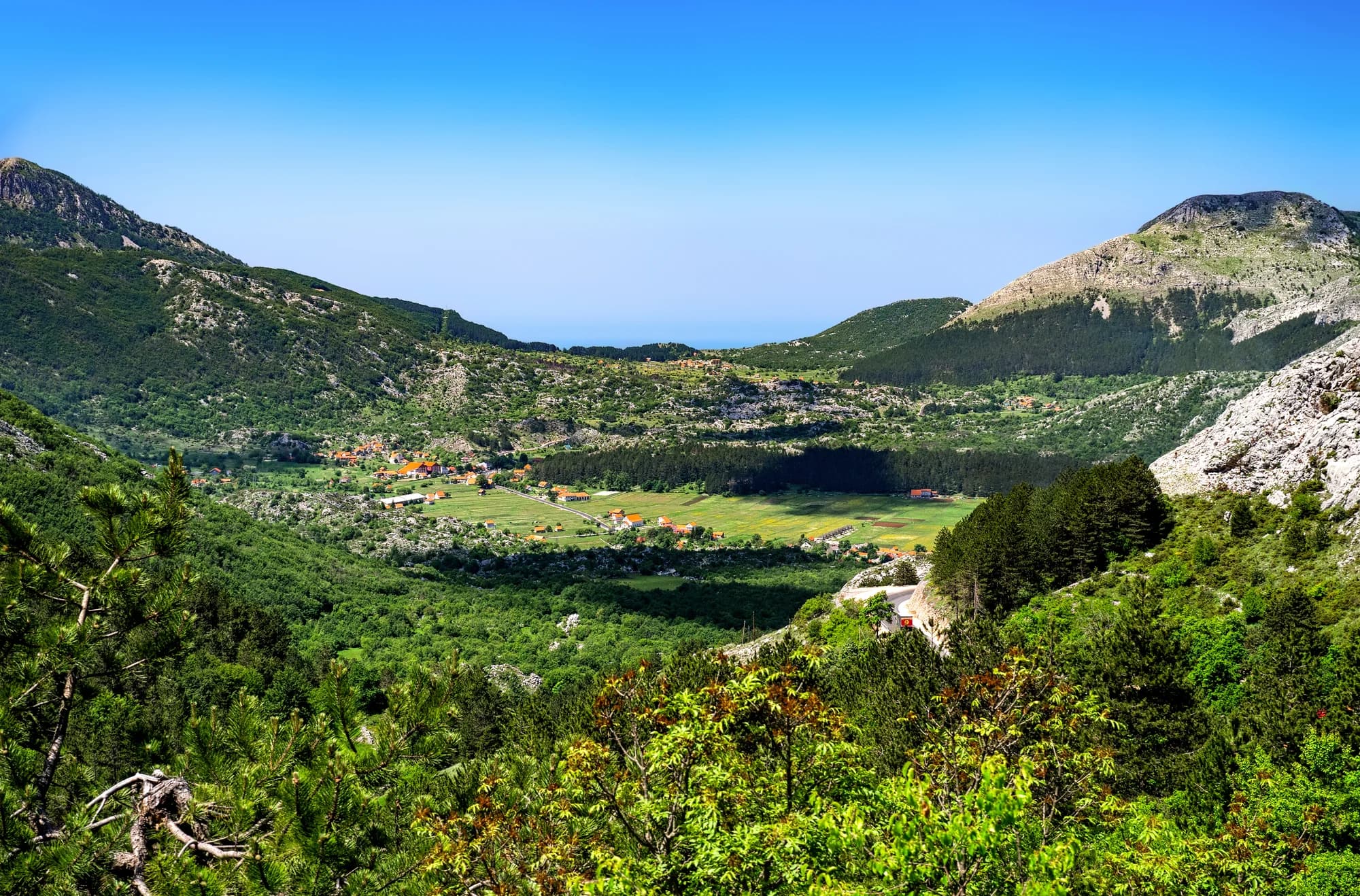
Njeguši är en bergsby belägen mellan Mount Lovćen och Bay of Kotor, känd som födelseorten för Petrović-Njegoš-dynastin som styrde Montenegro i århundraden. Byn är lika berömd för sina kulinariska traditioner och producerar Montenegros finaste rökt skinka (njeguški pršut) och hemgjord ost, lagrad i bergsluft. Besökare passerar genom på den historiska vägen mellan Kotor och Cetinje och stannar för att smaka på lokala delikatesser vid familjedrivna försäljningsstånd med vidsträckta utsikter över bukten längre ned.
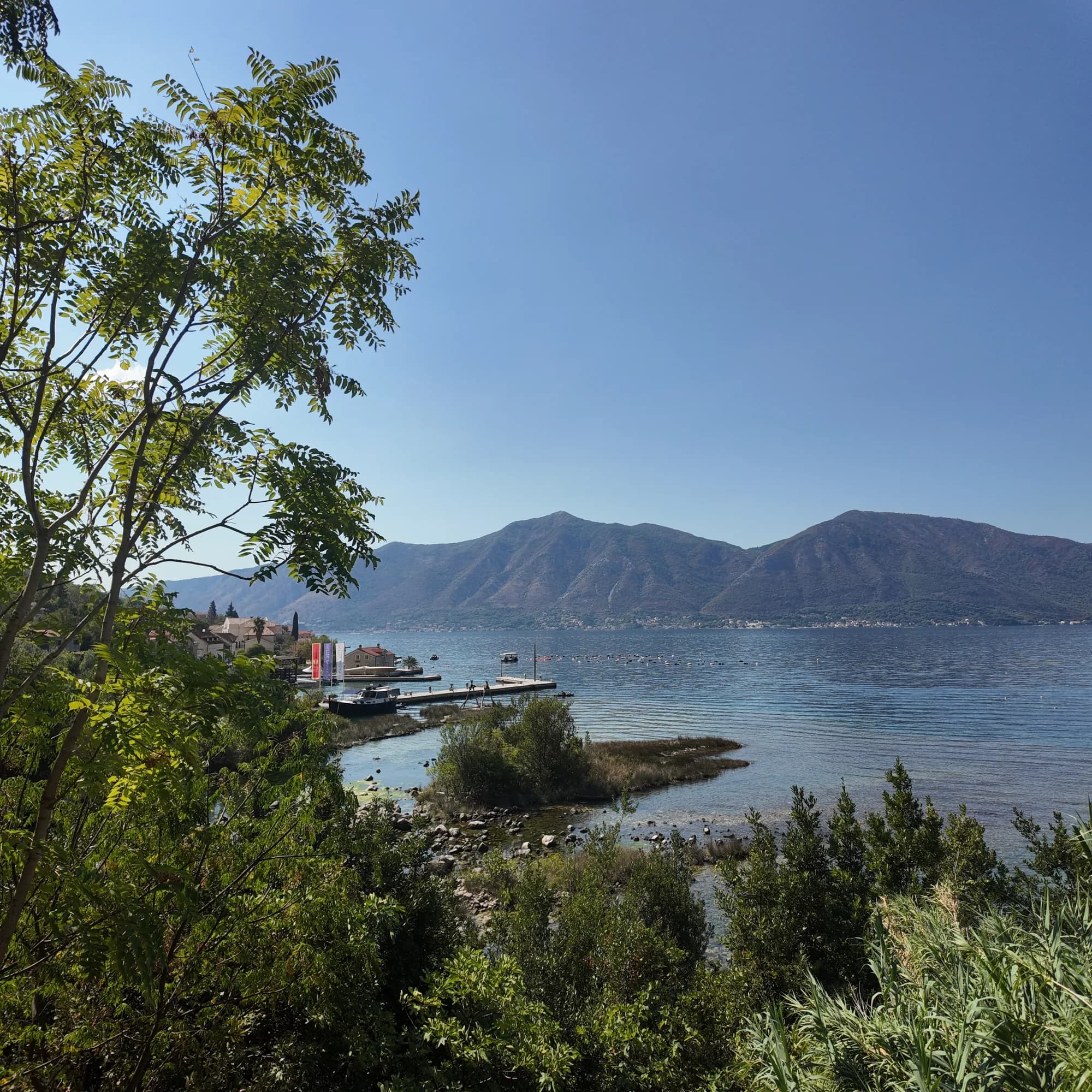
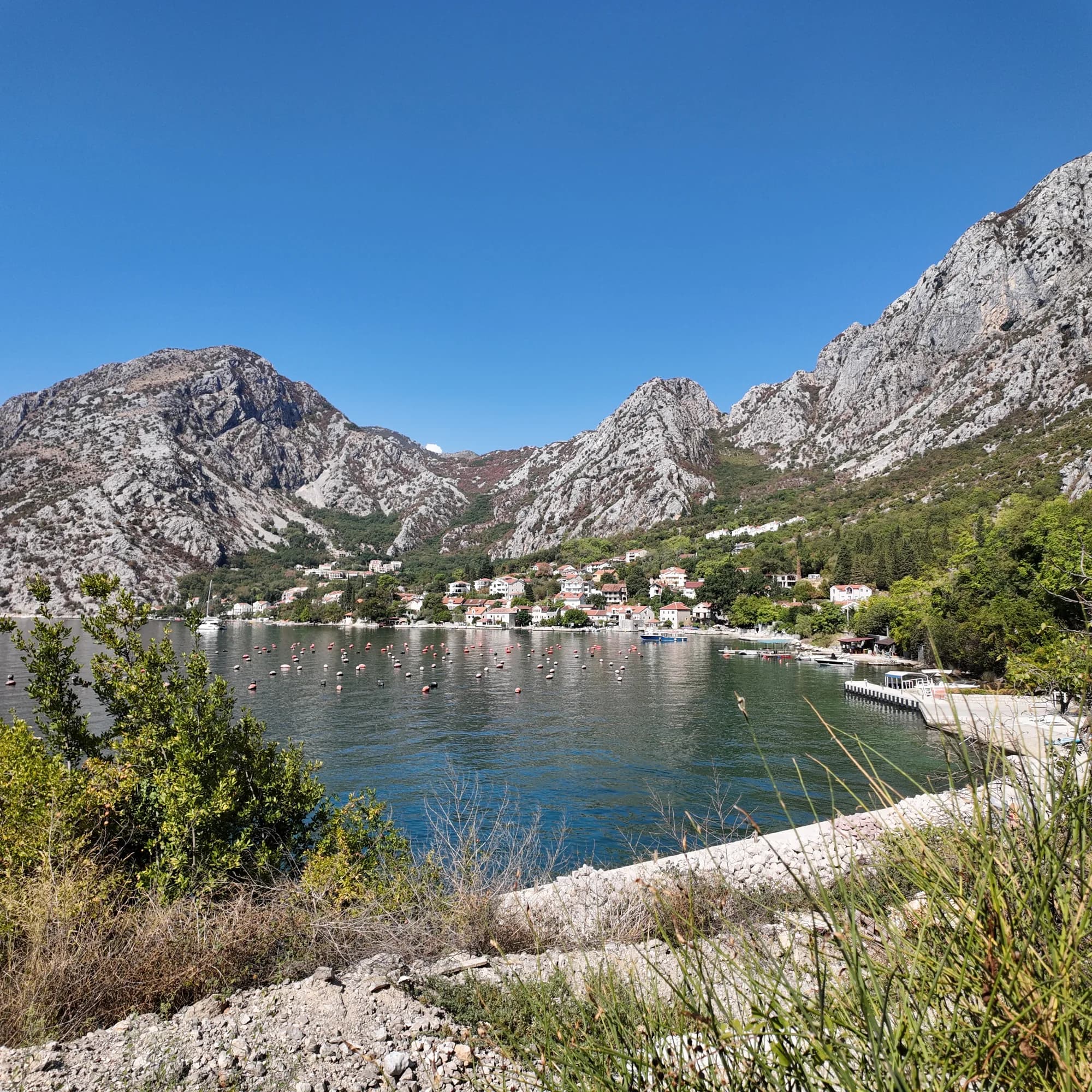
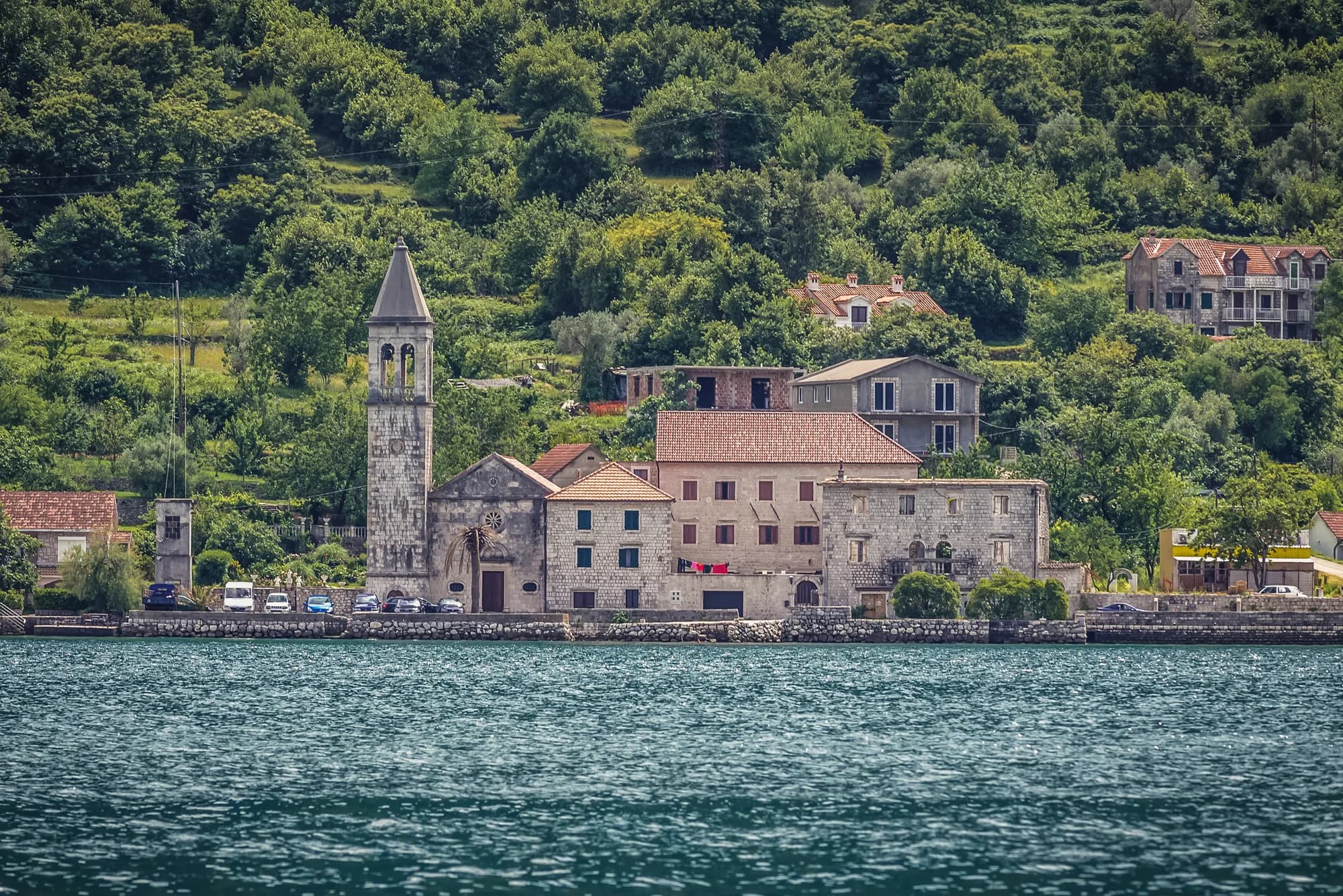
Bilder från Njeguši
Fältet, by för by
Invånare per ort i Njeguško polje, folkräkningen 2023
Tvåhundrafjorton invånare i de fem småbyar som fortfarande har en publicerad siffra. Dugi Do är markerad ”z” — lagen sekretessbelägger alla siffror under tio — och Majstori och Žanjev Do är registrerade helt utan invånare. År 1927 räknade stammen 450 hushåll.
MONSTAT, folkräkningen 2023, ortsnivå
Vilka besöker Montenegro
Andel av utländska gästers övernattningar, 2025
MONSTAT · 2025
Vilka bor här
Folkräkningar, Njeguši kommun
Njeguši är en ort på ett fält som stammen en gång fyllde: 450 hushåll 1927, fördelade på byarna i poljet och småbyarna ovanför och nedanför. Där sex hushåll utgör en by hoppar kurvan — 17 invånare 2003, 35 år 2011, 33 år 2023.
Fältet som försåg härskarna
Det som förändrades här under fem sekler var vilken av fältets egna släkter som ledde landet. Bredderna är skalenliga: Petrovićvladikorna från Njeguši styrde Montenegro i 155 år.
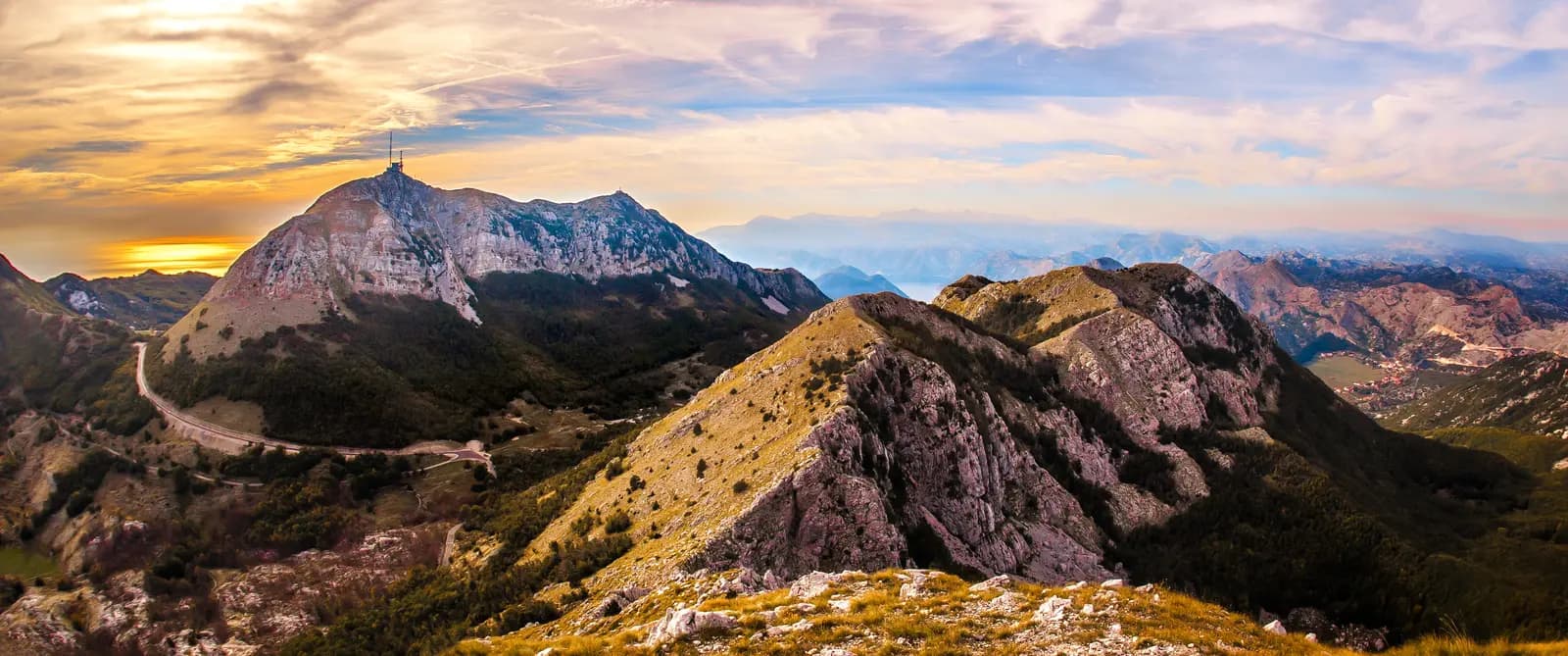
Vägen från Kotor: från havsnivå till sadeln Krstac, sedan ner på fältet
Josip Šilović Slade, en ingenjör från Trogir, drog upp Montenegros första kärrväg mellan 1878 och 1884: 36,3 km från Kotor till Cetinje, högst fem meter bred, klättrande från en meter till nästan tusen i tjugofem 180º-svängar, ingen av dem brantare än 8 %. Profilen samplad enligt SRTM 30 m i 21 jämnt fördelade punkter längs de 20,9 km till Njeguši, plus sadeln Krstac på 944 m.
En dag på vägen
Njeguši följer Kotorvägens tider — enligt 2026 års föreskrift går trafiken i serpentinerna i en riktning i taget från 25 maj till 15 oktober
09:00Njeguši → Kotor är förbjudet från kl. 08.00, så morgontrafiken i hårnålskurvorna går enbart uppför
14:00under en timme är sträckan Krstac–Trojica stängd i båda riktningarna
16:00födelsehuset i Erakovići stänger kl. fem, 11 april till 15 november
1813
Under tiden, år 1813
Året då poeten föddes på fältet
Njeguši,13 november 1813: Radivoje ”Rade” Petrović föds i Erakovići, i huset som hans farbror Petar I hade byggt 1779 — det mellersta av Tomo Petrovićs och Ivana Prorokovićs fem barn, modern från Mali Zalaz vid fältets norra kant. Vid tolv års ålder lär munkarna i Cetinje honom att läsa och skriva; vid sexton är han furstbiskop av Montenegro; vid trettiosju är han död, efter att ha skrivit Gorski vijenac.
The Boka —samma år förklarar Petar I, den regerande vladikan och även han född i Njeguši, Kotorbukten förenad med Montenegro. År 1815 har det österrikiska kejsardömet annekterat bukten till Dalmatien, och ingen kärrväg förbinder fältet med den förrän 1884.
Leipzig,16–19 oktober 1813: omkring 560 000 soldater möts i Folkslaget vid Leipzig, Napoleonkrigens största drabbning, och Napoleon förlorar Tyskland.
London,28 januari 1813: T. Egerton i Whitehall ger ut Stolthet och fördom i tre band.
Röster
“Vid jul var festandet här tygellöst. Korvarna som hängde över en svag härdeld åkte in i lågorna; i nästa hus slogs servisen, bänkarna och ett fönster sönder, och ingen var berusad. Skålar, tvål och kakor bars bort, åts upp eller gavs till fattigare hus — och ingen var arg eller sörjde skadan, eftersom man ansåg att Gud skulle ersätta den.”
Pavle Rovinski, rysk etnograf i Montenegro
Översatt från sammanfattningen av Rovinskis skildring av julen i Njeguši i ortens artikel på serbiska Wikipedia, som hänvisar till Ровински (1998), s. 126.
“Njeguši, av Njeguš — personnamnet, med samma rot som Njegomir och Njegoslav.”
Konstantin Jireček, historiker över det medeltida Balkan
Jirečeks härledning, ställd mot Ilija Ruvaracs äldre tolkning, som härledde namnet från en grundare vid namn Njeguš som förekommer i en latinsk urkund från omkring år 1000 som Negusius Podcupica. Båda återges i serbiska Wikipedias artikel om stammen.
Jämför alla hotell i Njeguši
Sök bland tusentals hotell och lägenheter med aktuella priser.
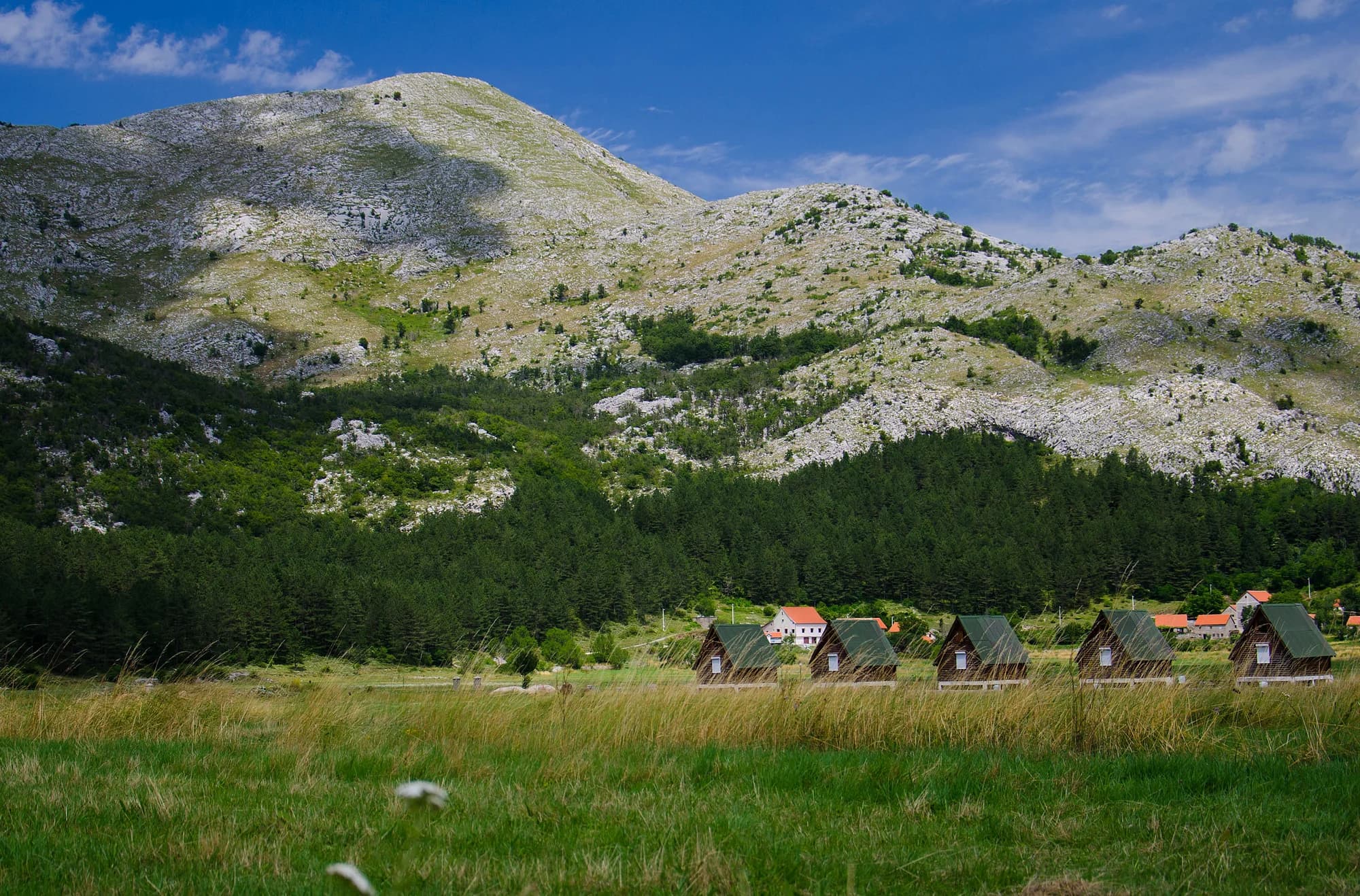
Njeguši är en by på Lovćenplatån på omkring 900 meters höjd, vid den gamla vägen mellan Kotor och Cetinje. Det är ungefär 45 minuter uppför serpentinerna från bukten, inne i Lovćens nationalpark, och består av några stenbyar kring ett grönt karstfält.
Varför är Njeguši känt?
Av två skäl: det är stambyn för ätten Petrović Njegoš som styrde Montenegro, och den har gett namn åt landets mest kända lufttorkade skinka. Petar II Petrović Njegoš, furstbiskop och poet, föddes här 1813.
Vad är njeguški pršut?
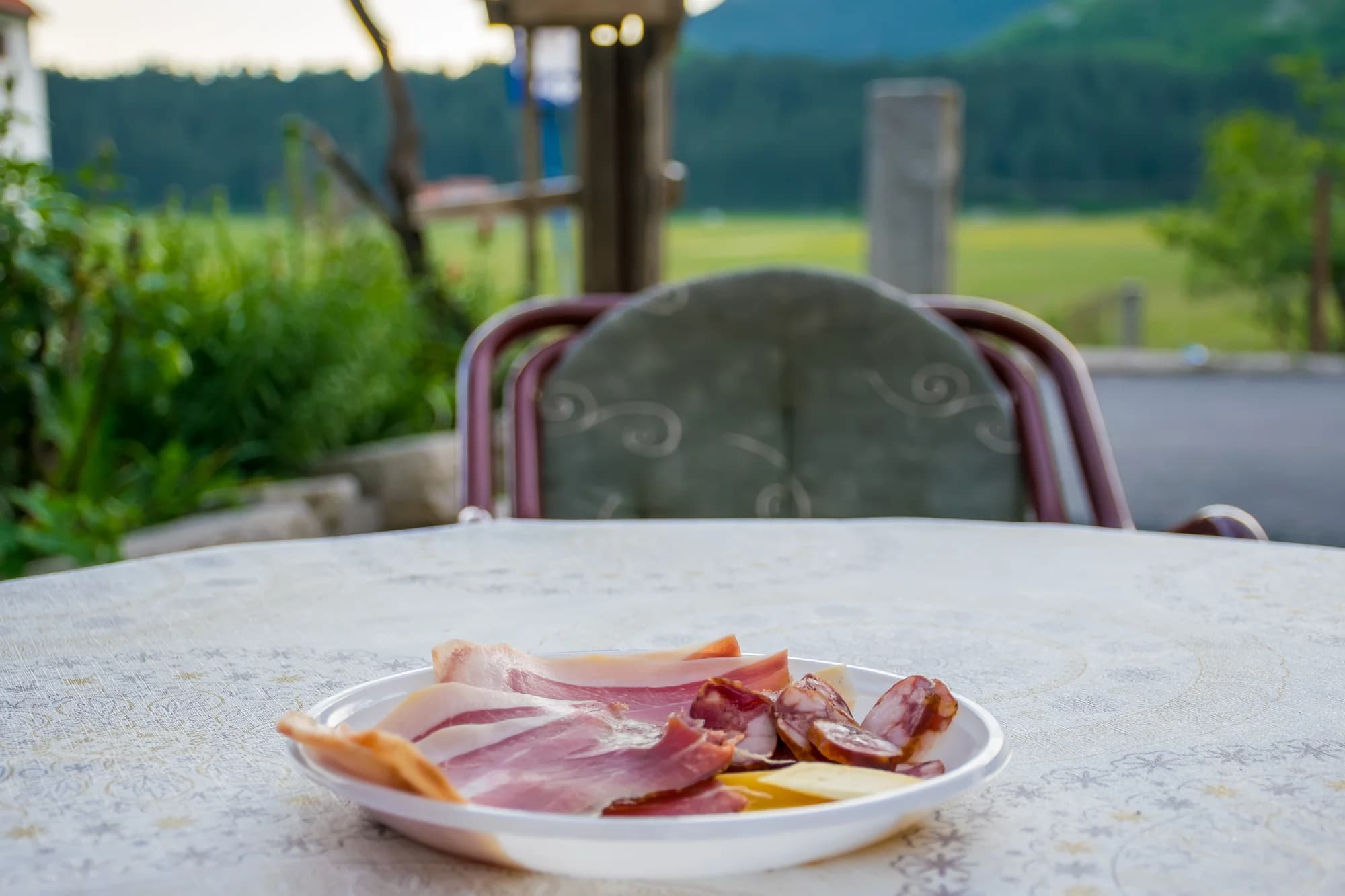
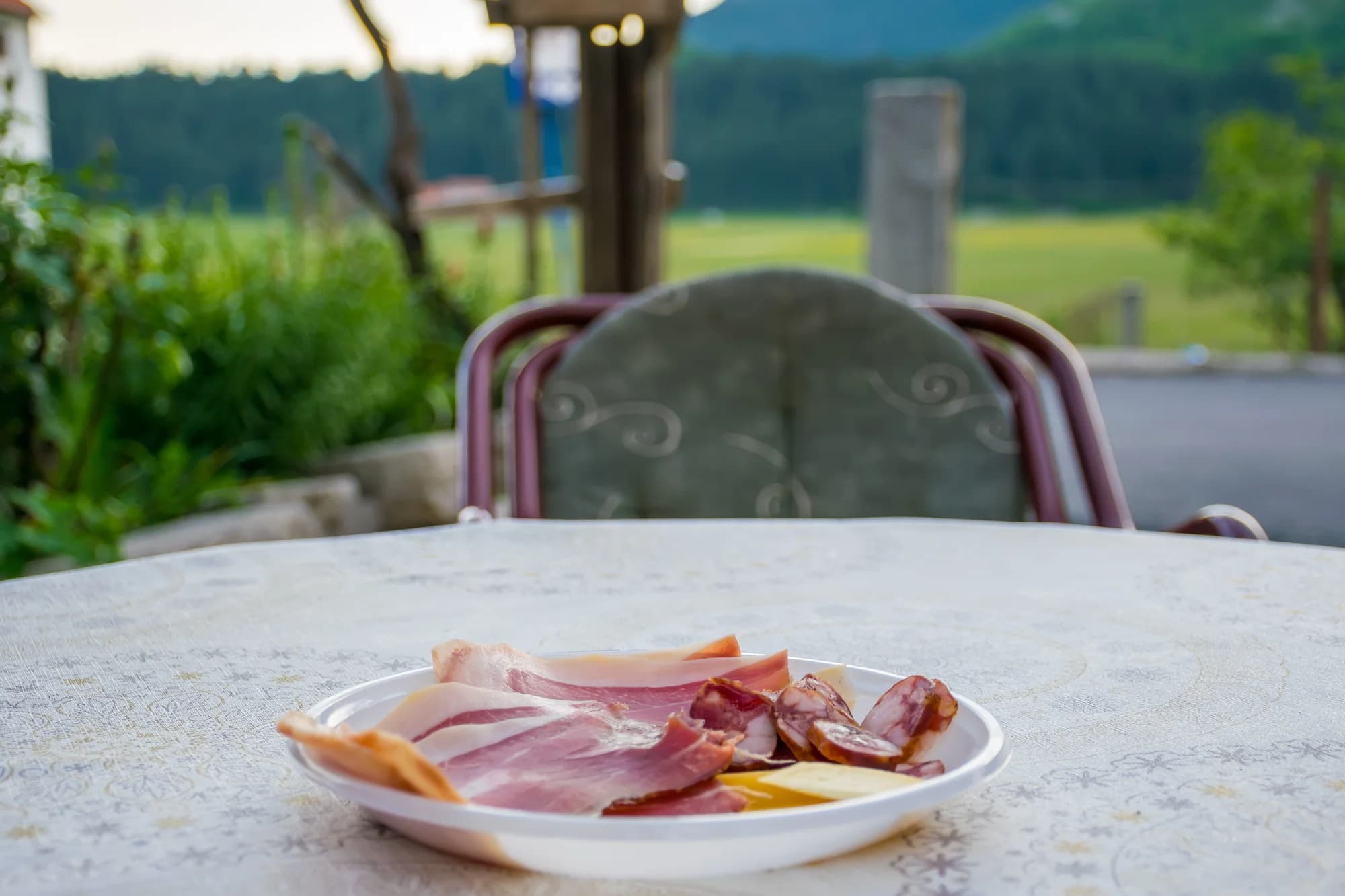
Skinka som saltas, röks över bok och sedan lufttorkas i draget som stryker över platån — mötet mellan havsluft och bergsluft får äran för smaken. Den serveras i papperstunna skivor, oftast med den lokala osten i olja och ett glas rakija.
Kan man besöka Njegoš födelsehus?
Ja. Familjehuset i byn är öppet som ett litet museum, med tidstypiska rum och föremål knutna till dynastin. Det är blygsamt, och just det är poängen: det visar hur enkelt Montenegros härskare faktiskt levde.
Är bilturen upp värd det?
Vägen från Kotor är lika mycket attraktionen som byn — tjugofem hårnålskurvor med bukten som öppnar sig nedanför i varenda en. Den är smal och långsam och körs helst uppför från Kotor, vilket också är åt det håll trafiken mest går.
Hur länge bör man stanna?
En timme eller två. Ät, se huset, gå ut på fältet, och fortsätt sedan till Cetinje eller upp till Njegoš mausoleum. De flesta kombinerar det med Lovćen på en enda dagsutflykt från kusten.
Har Njeguši en flygplats?
Nej — den närmaste är Tivat flygplats (TIV), 23 km bort via väg.
Hur långt är det från Njeguši till Cetinje?
9,8 km längs väg, ungefär 16 min med bil.
Är Njeguši säkert?
Storbritanniens utrikesdepartement (FCDO) avråder inte från resor till Montenegro; råden sågs senast över 13 augusti 2026. Det är deras bedömning av landet som helhet, inte vår och ingen dom över Njeguši — läs den själv innan du reser. Nödnumret i Montenegro är 112.
Den lokala tallriken
Njeguški pršut
Montenegro registrerade namnet 2016, och registreringen är ett recept: ett grislår med ben, svål och fettet under, torrsaltat med havssalt, rökt över den långsamma glöden av torr bok, sedan torkat och lagrat i minst nio månader. Det skyddade namnet tillhör bara skinkor tillverkade inom Njegušiområdet — byarna i poljet, de två Zalazi, Žanjev Do, Mirac, Majstori och småbyarna upp till Krstac. ”Bergsskinka” på en meny är en beskrivning, inte beteckningen.
Var Familjekonoborna längs den gamla Kotorvägen, ute på själva fältet
folkräkningen 2023, orten Njeguši — 61 personer bodde här 1948
1435
Grundad
Njeguši i de venetianska arkiven, med en styrka på 400 hus
901 m
Höjd över havet
botten av Njeguško polje, uppmätt vid byn enligt SRTM
23 km
Flygplats
till Tivat (TIV) på väg, en halvtimme nedför — Podgorica (TGD) ligger 55 km bort
1952
Parken
nationalparken Lovćen, 62,2 km² — byn ligger inom den
MONSTAT, Broj stanovnika po naseljima, Popis 2023 · sr.wikipedia (Njeguši; Njegušistammen) · en.wikipedia (Lovćen) · vägavstånd uppmätta på OpenStreetMap-data, höjder enligt SRTM 30 m
Hur lång tid behöver du i Njeguši?
Några timmar
1Uppför från Kotor på R-1 — tjugofem hårnålskurvor, från fyra meter till niohundra, och under säsong är det förbjudet att köra uppför efter 14.00
2Njegošs födelsehus i Erakovići: en enhet inom Nationalmuseet, 09.00–17.00 från 11 april till 15 november
3Pršut och ost på en konoba ute på fältet
4Velika Gospođa, stammens katedralkyrka och den största i poljet
Två timmar, och det mesta är bilresan — vilket är poängen.
En hel dag
1Kotor tidigt, innan bussarna når murarna
2Serpentinerna upp till sadeln Krstac, 944 m
3Njeguši: födelsehuset, sedan en lång lunch på fältet
4Jezerski vrh på 1 657 m och Meštrovićs marmormausoleum, färdigt 1974
5Ner längs östra sidan till Cetinje, 21 km vidare
Den klassiska färden över berget — från kusten till den gamla huvudstaden, med Njeguši som gångjärn.
Var ska man bo i Njeguši
Njeguško polje
Bäst för att vakna på själva fältet — Erakovići (93 invånare) och Raičevići (52) är de två småbyarna med fler än femtio invånare kvar, och båda ligger inom den skyddade pršutens område
Nationalparken Lovćen
Bäst för parkens egna bungalower och tältplatser innanför gränsen, €30 respektive €3 per dag enligt prislistan
Cetinje, 21 km österut
Bäst för den gamla kungliga huvudstaden — hotell, museer och middag, en halvtimme bort på vägen som byggdes om 2018
Kotor, 21 km nedför
Bäst för bukten och havet, med hela klättringen kvar framför dig på morgonen