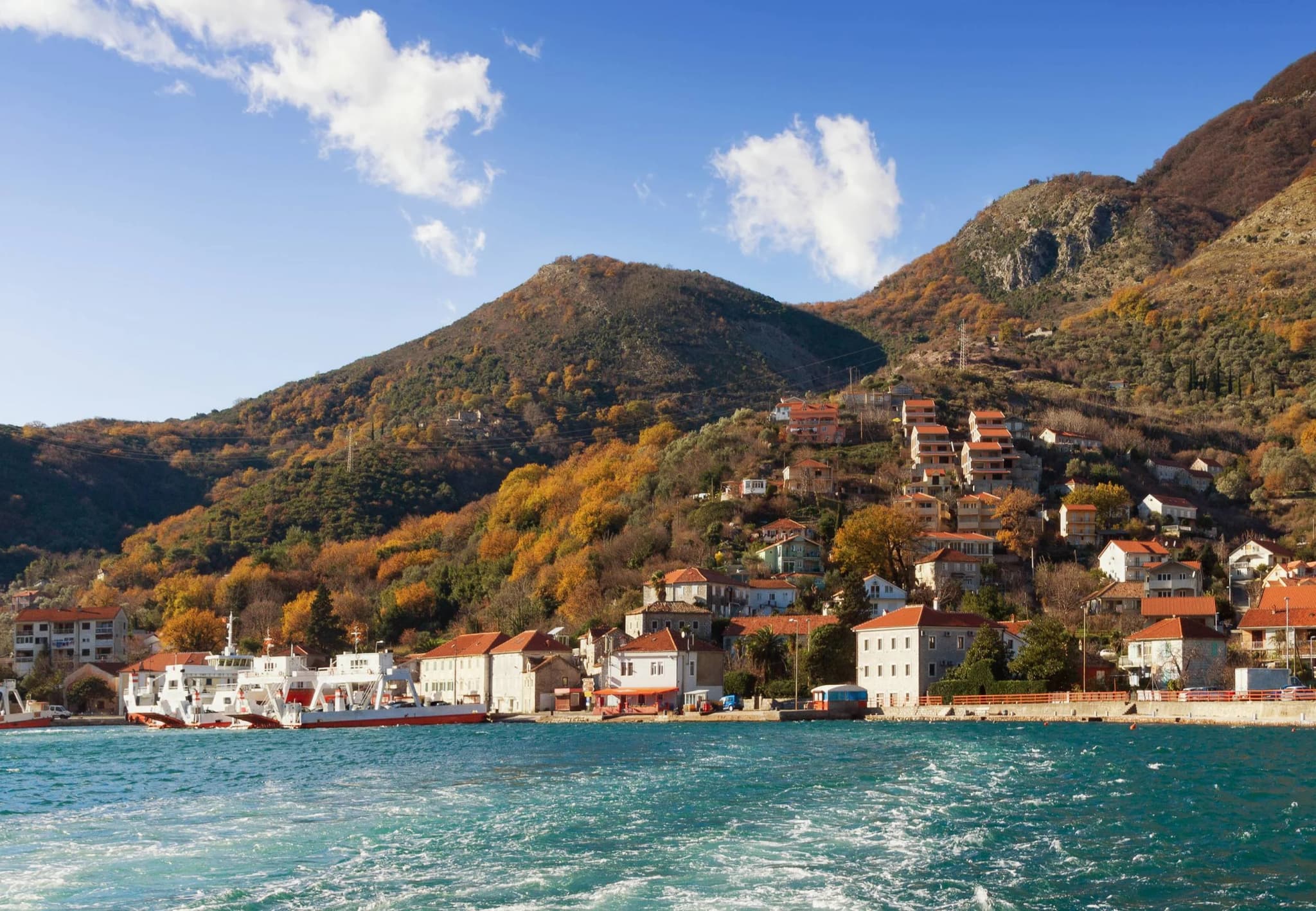
Lipci
Lipci is a small settlement on the northern shore of the Bay of Kotor, between Risan and Morinj, where the slopes of Orjen drop steeply to the water and leave only a narrow strip for the coastal road and a line of stone houses. It is a quiet place of a few dozen homes, small jetties and clear water, with almost no tourism infrastructure of its own — and it holds one of the most important prehistoric sites on the eastern Adriatic. A short, steep climb above the village leads to a natural rock overhang where prehistoric people left a group of drawings in reddish pigment: deer with branching antlers, hunting scenes, boats, and geometric and solar symbols. They are generally attributed to the Bronze Age, thousands of years old, and the combination of ships with land animals is read as evidence of a community already living between the sea and the mountain. The site is signposted from the road and free to visit, and the figures read best in soft morning or late-afternoon light rather than the glare of midday. The surroundings reward a slower stop. Risan, a few kilometres east, is the oldest settlement in the bay — capital of the Illyrian queen Teuta and later a Roman town, with second-century floor mosaics including the sleeping figure of Hypnos preserved under cover. Morinj lies the other way, with shingle beaches, cold river water running to the sea and a reputation for fish restaurants. The Kamenari–Lepetane ferry crosses the narrows nearby, cutting the drive to Tivat and Budva. Lipci suits travellers interested in archaeology and in the quieter, working side of the bay, and anyone based in Herceg Novi, Perast or Kotor looking for a half-day detour. Spring and autumn are ideal: the path is dry, the light is low and warm, and the bay is at its calmest. Summer works too, though the north shore offers little shade at midday.