Šavnik
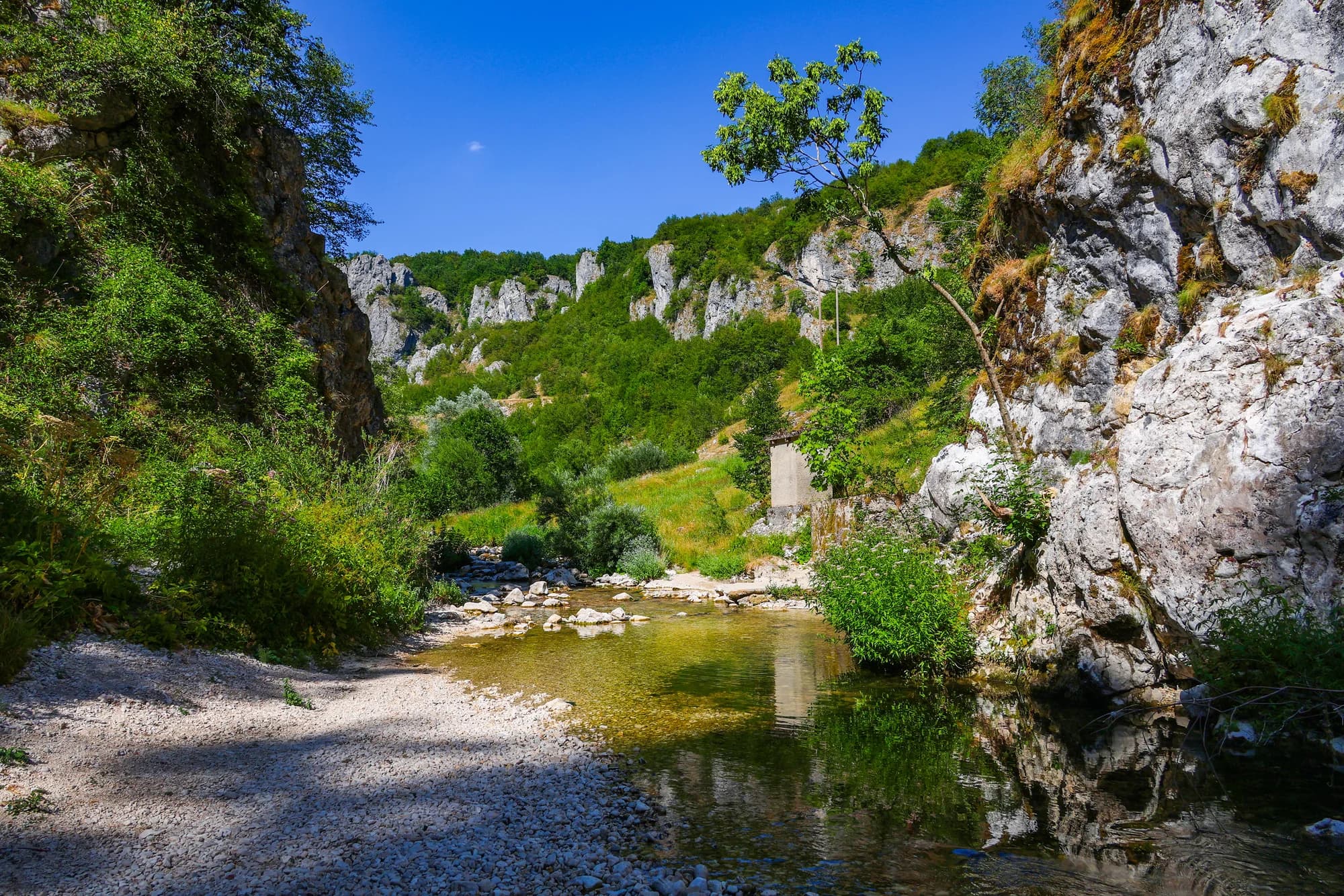
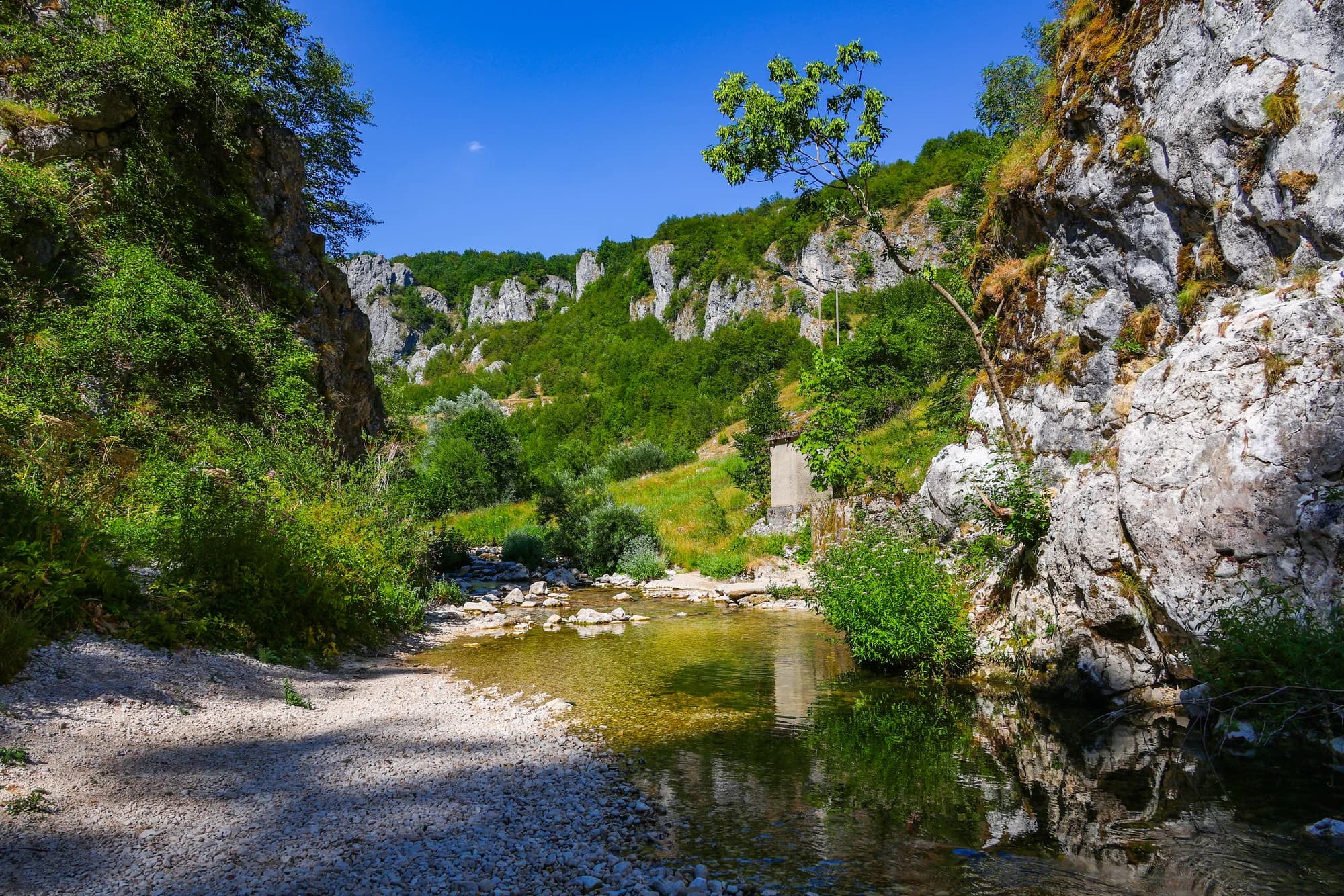
Šavnik lies in the mountains of northern Montenegro, in a narrow valley where the Bukovica, Bijela and Šavnik rivers come together. It is one of the country's smallest and least-populated municipalities, and one of the least visited: a single main street, a handful of shops, and beyond them ridgelines and pasture in every direction. The roads in are slow and scenic, climbing over passes that stay under snow well into spring. What Šavnik offers is not infrastructure but space, highland Montenegro with almost nobody in it. The landmark is the Komarnica Canyon, whose sheer limestone walls rival those of the better-known Tara gorge. Its most famous stretch is Nevidio, the "unseen one", so tight in places that the walls nearly close overhead and the canyon floor stayed unexplored until a team from Nikšić first passed through it in 1965. Nevidio is now one of the best-known and most demanding canyoning routes in the Balkans, run only with guides and only in the late-summer window when the water drops. Above the canyon, the Durmitor massif and the plateaus around Žabljak are close enough for a day out. The other draw is the Piva Monastery, a drive west through the mountains. When the reservoir behind the Mratinje dam flooded its original site in the 1970s, the sixteenth-century church was dismantled and rebuilt piece by piece on higher ground, its frescoes lifted and reset section by section in a rescue that took more than a decade to finish. Šavnik suits travellers who want mountains without crowds: canyoning, hiking, trout streams, and villages where the rhythm still follows the livestock. Come between June and September, when the passes are clear and the canyon runs low enough to enter. Expect simple guesthouses rather than hotels, and plan meals and fuel around the town itself rather than assuming you will find either along the way.