Plužine
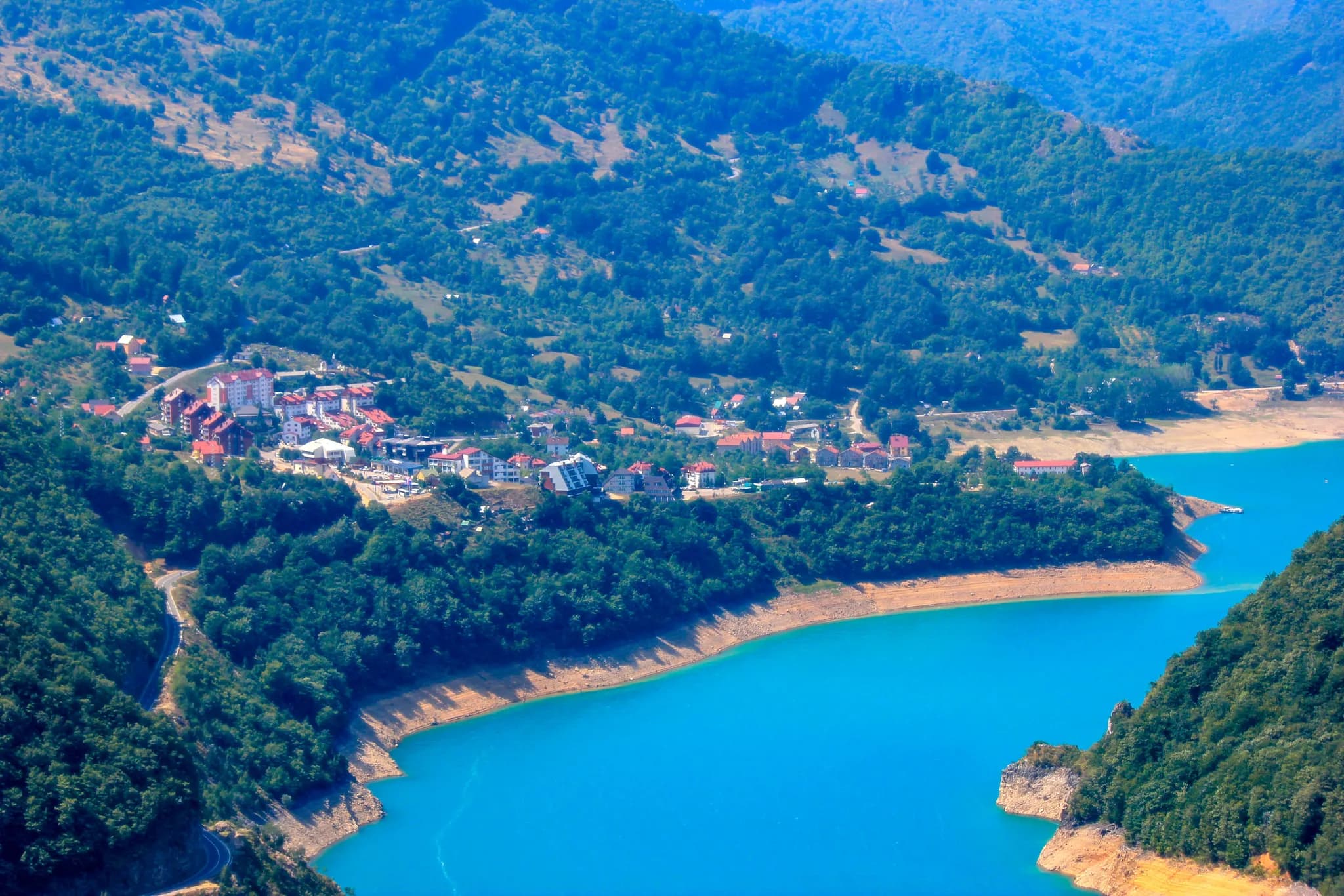
Plužine stands above Piva Lake in Montenegro's north-west, a small town on a reservoir whose water is an improbable turquoise against the grey and green of the canyon walls. The lake was created when the Piva was dammed in the 1970s, and the town itself was rebuilt on higher ground as the water rose. The approach from Nikšić, threading a series of tunnels cut into the cliff with the lake appearing and disappearing below, is one of the most striking drives in the country. The same project produced the town's most remarkable monument. Piva Monastery, founded in the 16th century, was dismantled and moved stone by stone to a new site above the waterline over more than a decade, its frescoes lifted and re-laid section by section. It is still a working monastery, and the paintings, among the largest surviving fresco cycles in Montenegro, came through intact. The old riverbed and the ground the monastery once stood on now lie under the reservoir. Plužine is mostly a base for what surrounds it. Kayaks and small boats go out on the lake, which is deep, cold and quiet; the Komarnica canyon and the western flank of Durmitor are within reach; and at Šćepan Polje, where the Piva meets the Tara at the Bosnian border, the rafting trips through the deepest river gorge in Europe begin. Above the town, mountain pastures and shepherds' huts stay in use through the short summer. It suits people who come for landscape and activity rather than nightlife: rafters, kayakers, hikers, drivers and photographers. The season runs from May to early October, with rafting at its best in late spring when the Tara is high and again in the warm weeks of August. Winters bring heavy snow and much of the tourist infrastructure closes. Accommodation is modest, mainly guesthouses and small hotels, and the food is mountain food.