Overview
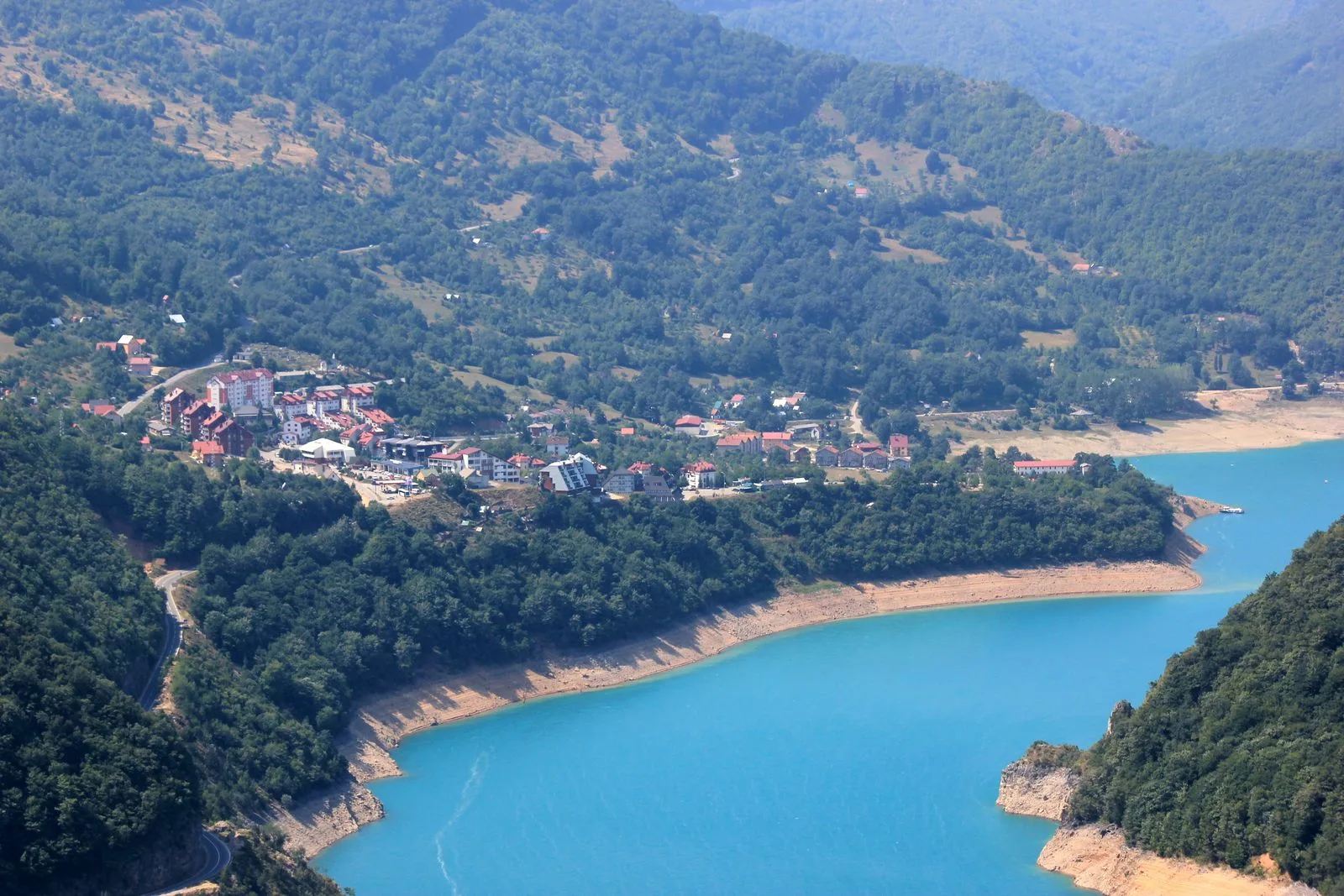
Plužine is a small mountain town nestled in northwestern Montenegro, perched on the shores of the stunning Piva Lake. With a population of around 1,200 residents, this hidden gem offers visitors a unique blend of dramatic natural beauty, rich history, and outdoor adventure. The town serves as the gateway to some of Montenegro’s most spectacular landscapes, including the emerald waters of Piva Lake, the deep Piva Canyon, and proximity to Durmitor National Park, a UNESCO World Heritage Site.
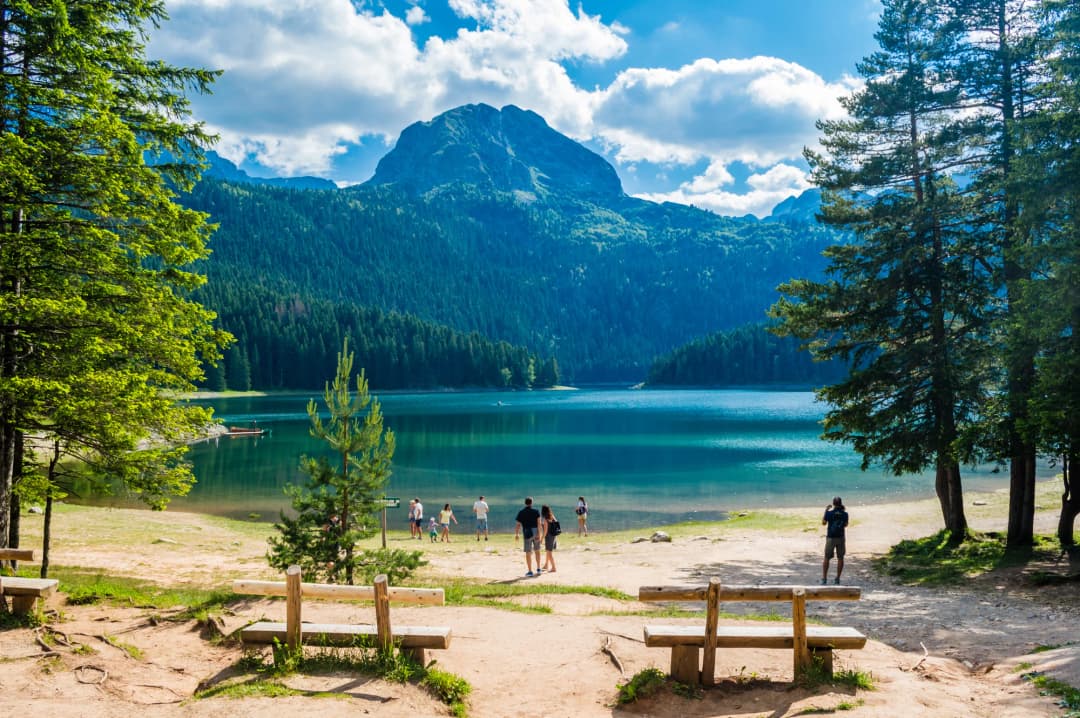
Unlike the crowded coastal towns, Plužine maintains a laid-back, authentic atmosphere perfect for travelers seeking to escape the tourist masses and immerse themselves in Montenegro’s untamed wilderness.
Top Attractions
Piva Lake (Pivsko Jezero)
The centerpiece of the region, Piva Lake is an artificial reservoir of breathtaking beauty. Formed in 1975 when the Piva River was dammed, the lake stretches 45 kilometers in length and reaches depths of over 200 meters in some places. At an elevation of 675 meters above sea level, it holds the distinction of being one of the world’s most elevated artificial reservoirs.
The lake’s most striking feature is its remarkable turquoise and emerald-green color, a result of the pristine mountain water and limestone geology. The water is so clean it’s drinkable, making Piva Lake the largest reservoir of drinking water in Europe. Surrounded by towering cliffs and dense pine forests, the lake creates an otherworldly landscape where trees appear to grow directly from bare stone along the shoreline.
Activities at Piva Lake: - Boat Tours: Organized cruises take visitors through the dramatic canyon, with stops at the Oteša Cave (accessible only by water) and Podvođe Bay, one of the most photogenic spots on the lake with crystal-clear green-blue waters perfect for swimming. - Swimming: Summer water temperatures reach approximately 22°C, ideal for refreshing dips. - Fishing: The lake is rich with trout, carp, and traditional Balkan fish species. Fishing permits are required. - Kayaking and Stand-Up Paddleboarding: The calm waters offer perfect conditions for these activities, providing unique perspectives of the canyon walls. - Wildlife Watching: The area is home to diverse wildlife, including brown bears, wolves, deer, Eurasian eagle-owls, and golden eagles that nest in the surrounding cliffs.
Piva Canyon
Piva Canyon ranks among Europe’s deepest gorges, stretching 33 kilometers with depths reaching up to 1,200 meters. The canyon is carved between the mountains of Bioč, Volujak, Maglić, and Pivska Planina, creating a dramatic landscape of limestone cliffs and dense forests.
The road through Piva Canyon offers one of Montenegro’s most spectacular drives, winding through 56 small rocky tunnels carved into the canyon walls. The engineering feat of this road allows drivers to experience the canyon’s dramatic vertical walls, with viewpoints offering breathtaking vistas of the turquoise lake below.
Kruška Viewpoint: Located just 5 kilometers from Plužine center along the main road to Žabljak, this lookout provides one of the most stunning panoramas in Montenegro. The view encompasses the emerald-green waters of Piva Lake, surrounded by steep cliffs, with the outline of Plužine visible in the distance. Photographers particularly treasure this spot during morning and evening hours when the light emphasizes the mountain contours.
Piva Monastery (Manastir Piva)
The Piva Monastery stands as one of Serbia’s most significant Orthodox religious sites and a testament to extraordinary preservation efforts. Founded in 1573 (some sources cite 1575) and completed in 1586 by Metropolitan Bishop Savatije Sokolović of Zahumlje and Herzegovina (who later became Serbian Orthodox Patriarch), it represents the largest Serbian Orthodox church constructed during Ottoman occupation in the 16th and 17th centuries.
When the Mratinje Dam threatened to submerge the original monastery location, a monumental 12-year relocation project (1969-1982) moved the entire structure stone by stone to its current position, two kilometers from Plužine. The project included removing and replacing over 1,000 fresco fragments covering 1,260 square meters. Today, visitors can admire these well-preserved frescoes and the richly carved iconostasis in their new location, standing as a powerful symbol of cultural preservation.
The U.S. Embassy’s Ambassador’s Fund for Cultural Preservation has supported conservation work at Piva Monastery, recognizing its cultural and historical significance.
Mratinje Dam
One of Europe’s highest dams, the Mratinje Dam stands 220 meters (720 feet) tall, creating the impressive Piva Lake. This concrete arch dam, completed in 1975-1976, measures 268 meters long and ranges from 4.5 meters thick at the crest to 36 meters thick at the base. The dam was designed by “Energoprojekt” from Belgrade, with construction carried out by “Hidrotehnika.”
The Piva Hydroelectric Plant, built into the mountain below the dam, has a design capacity of 360 MW (some sources cite 342 MW) with three generating units. Due to specific topographical features, the entire facility was installed underground. The plant primarily operates in peak mode, able to start quickly and synchronize to the 220 kV electric grid.
Viewing the dam provides a striking perspective on the engineering achievement that transformed this region and the sheer scale of the canyon it spans.
Trnovačko Lake (Trnovačko Jezero)
Known as the “mountain heart” of Montenegro, Trnovačko Lake is a glacial lake famous for its distinctive heart-like shape. Located at an altitude of 1,517 meters in the northern part of Montenegro near the Bosnia and Herzegovina border, the lake sits cradled in the embrace of the Maglić, Volujak, Bioč, and Trnovački Durmitor mountains.
The lake measures approximately 800 meters in length and 700 meters in width, with a maximum depth of 9 meters. Its crystal-clear waters display a vibrant turquoise hue that changes with the light, creating a stunning contrast against the surrounding peaks.
Hiking to Trnovačko Lake: The trail from the nearest road access takes about 1.5 hours at a leisurely pace, winding through lush forests and scenic meadows before revealing the lake’s stunning setting. The hike is suitable for hikers of all levels, from beginners to experienced trekkers. With vehicle access, the trek can be shortened to just 5 kilometers from Prijevor. In summer, the water temperature reaches up to 22°C, making it perfect for a refreshing swim after the hike.
Nature & Outdoor Activities
Piva Regional Nature Park
Declared on April 22, 2015 (Earth Day), Piva became Montenegro’s first regional nature park. The landscape is characterized by dense forests, limestone plateaus, and spectacular canyons formed by the Tara, Piva, Komarnica, and Sušica rivers. The park protects diverse ecosystems rich in flora and fauna, making it a paradise for nature enthusiasts and wildlife photographers.
Tara River Rafting
The Tara River, which flows into the Piva at Šćepan Polje on the Montenegro-Bosnia border, offers some of Europe’s most thrilling whitewater rafting. The Tara Canyon is the deepest canyon in continental Europe (up to 1,300 meters deep) and a UNESCO World Heritage Site as part of Durmitor National Park.
The Classic Rafting Route: The main trip from Brstnovica to Šćepan Polje covers 18 action-packed kilometers featuring approximately 21 intense rapids. The 2-3 hour journey takes rafters through pristine wilderness where the water is so clean it’s nicknamed the “Tear of Europe” and is safe to drink directly from the river.
Numerous rafting centers operate in the region, offering professional guides, high-quality equipment, and often combining rafting with accommodation in traditional ethno villages along the riverbanks. Plužine, located about 27 kilometers from Šćepan Polje, serves as a convenient base for arranging Tara rafting adventures.
Zip Line Over Piva Lake
For adrenaline seekers, the zip line over Piva Lake offers an unforgettable experience. The cable stretches 1,400 meters across the turquoise waters, with riders reaching speeds of 65 km/h while suspended high above the lake. The bird’s-eye view of the transparent lake and surrounding mountains provides an incredible feeling of freedom combined with a serious adrenaline rush.
Details: - Season: April to November - Operating hours: 9 AM to 7 PM - Minimum age: 7 years - Maximum group size: 15 people
Via Ferrata Piva
Via Ferrata routes in Piva Canyon offer guided climbing experiences combining hiking, climbing, and breathtaking views. These protected climbing routes feature fixed cables, ladders, and bridges that allow climbers of various skill levels to safely navigate otherwise inaccessible cliff faces. Professional guides provide all necessary equipment and instruction, making this an accessible adventure for those seeking something beyond traditional hiking.
Hiking Trails
Stabanska Lakes Trail: Starting from Stabna village, 15 kilometers from Plužine, this 13-kilometer trail leads through unspoiled nature to two pristine mountain lakes. The well-marked path climbs gradually through dense deciduous and pine forests to reach Small Stabansko Lake (1,194 meters elevation) and then Big Stabansko Lake (1,325 meters elevation).
Big Stabansko Lake is an authentic natural pearl, covering approximately 42,000 square meters with a maximum depth of 9 meters and measuring 300 meters in length. Its emerald-green waters reach temperatures of 16-20°C in summer, making for a refreshing swim. The hike is rated easy to moderate and is available from May to October.
Other Hiking Options: The region offers numerous other trails, including routes to nearby mountain peaks, through the Brezna Valley with its characteristic birch forests, and connecting paths to Durmitor National Park.
Proximity to Durmitor National Park
Plužine is one of three municipalities (along with Žabljak and Pljevlja) that govern Durmitor National Park, a UNESCO World Heritage Site inscribed in 1980. The park is surrounded by three main canyons: the western Piva River Canyon, the southern Komarnica River Canyon, and the northern Tara River Canyon.
While Žabljak serves as the main tourist base for Durmitor, Plužine offers a quieter, less crowded alternative with excellent access to the park’s western side. The drive from Plužine to Žabljak takes approximately 49 minutes, making day trips entirely feasible.
Šćepan Polje Border Crossing
This small settlement in Plužine Municipality marks the border between Montenegro and Bosnia and Herzegovina. Located at the confluence of the Tara and Piva rivers, which merge here to form the Drina River, Šćepan Polje serves as an important crossing point.
The settlement was named after Herzog Stjepan Vukčić Kosača, a medieval nobleman known locally as Herceg Šćepan. Above the settlement stands the ruins of medieval Soko Grad, one of Stjepan’s favorite residences, destroyed by the Ottomans during their conquest of the Kingdom of Bosnia.
For travelers, Šćepan Polje represents the starting or ending point for Tara River rafting adventures and provides access to Bosnia’s Sutjeska National Park.
Practical Information
When to Visit
Best Overall Time: May-June and September-October offer mild weather, spectacular natural scenery, and fewer crowds. These shoulder seasons are ideal for hiking, rafting, and enjoying the mountains without summer heat or winter cold.